EMJ20-22701Optical Wireless Mouse
Primax Electronics Ltd
Click to zoom
Application Details
- Equipment Class
- DXX - Part 15 Low Power Communication Device Transmitter
- Date of Grant
- Mar 18, 2003
- Application Purpose
- Original Equipment
- Date of Application
- Mar 17, 2003
- Equipment Note
- Optical Wireless Mouse
- Frequency Range
- 27.04500000 - 27.04500000
- Company
- Primax Electronics Ltd
- Country
- Taiwan
Documents & Files
Document Text
Text extracted from the exhibit documents filed with the FCC. Open a document above to read the original.
Users Manual
Optical Wireless MouseUser’s Manual ContentsWelcome!...................................................................... 1-1Optical Wireless Mouse Installation....................................... 1-2ID Mode Settings........................................................... 1-3Using the Optical Wireless Mouse.................... ................... 1-4Mouse Care and Troubleshoo ting........................................... 1-5 Federal Communication Commission Interference Statement 1-6 1-1 Welcome!Congratulations on your purchase of your new Optical Wireless Mo use. This manual contains information that will assist you in i nstalling, operating, and caring for your Optical Wireless Mouse. Product Description:The Optical Wireless Mouse was designed to give you freedom of movement and an enjoyable experience while working or gaming. It s sleek, comfortable design makes ordinary tasks easier and help s offer a new level of comfort to your PC computing experience. The mouse is supported by Microsoft Windows 95, Windows 98, Windows Me, Windows NT Workstation, Windows 2000 and Windows XP. Note: If you are connecting the mouse to a notebook that has an onboard pointing device or if you are using a keyboard with an onboard pointing device, you may need to disable that device before installing and using the mouse. The package contains: • Optical Wireless Mouse • RF receiver with USB connector • USB to PS/2 Adapter • CD-ROM containing driver software for the Optical Wireless Mouse • Optical Wireless Mouse User’s Manual • Warranty Information • 2 AA Batteries Welcome! 1-1 Optical Wireless Mouse Installation Your Optical Wireless Mouse installation is fast and easy. It can be completed in 3 simple steps. Note: After installing the dr iver software on your computer you will need to shut down and reboot your system. Make sure that all work is saved and all prog rams are closed before installing this device. Step 1 - Battery Installation:1. Locate the two AA sized 1.5 Volt batteries that came in your Optical Wireless Mouse package.2. Remove the battery cover from the compartmen t at the back of your Optical Wireless Mouse. 3. Install the two batteries into the compartment paying close attention to proper polarities.4. Replace the batter y compartment cover. Step 2 - Connecting the Receiver:PS/2 Installation1. Make sure your computer is turned off.2. Locate the round 6-pin (PS/2) connector at the end of receiver cable.3. Connect this to an available round 6-pin (PS/2) port at the back of your computer.4. Turn your computer on.USB Installation (Note: If you have Microsoft Windows 95 or Windows NT Workstation, these operating systems do not support USB.) 1. Make sure that your computer is turned on.2. Remove the USB to PS/2 adapter at the base of the cord and locate a rectangular USB port on your computer or USB hub.3. Plug the USB (rectangular) connector into the USB port and follow the on-screen instructions.Step 3 - Software Installation:Included in your package is a CD-ROM containing driver software for the Optical Wireless Mouse. Note: If you are installing thi s device running Windows 2000 or Windows XP, you may encounter a message stating “Digita l Signature Not Found” or this device h as not passed the Windows XP logo testing. Select Yes to continue the installation running Windows 2000 or click Continue Anyway to complete the installation running Windows XP. 1. Insert the Mouse Suite CD-ROM into your CD-ROM drive and then follow the setup program instructions on your screen. Note: If the setup program does not appear, please refer to steps 2-5 listed below. 2. Click the Start button at the left hand corner of the computer screen.3. Click Run. Type <drive>:\setup. For example, if your CD-ROM drive letter is (E:), type e:\setup.4. Click OK.5. Follow the onscreen instructions to complete the Mouse Suite software installation.Once the Mouse Suite software installation is completed, you can start using your Optical Wireless Mouse. 1-2 Optical Wireless Mouse Installation Optical Wireless Mouse Installation 1-2 1-3 ID Settings z Default Mode Receive r: *Press the button located on the top of the re ceiver over 3 sec; the red led of the r eceiver will dim after release the button. When the led is dimmed, Default mode is set. *The product is default mode when ex-factory. Mouse: *The mouse will be set Default Mode automatically via replace batteries every time. z ID Mode Step 1. Press the button located on the top of the receiver then the 'Red" LED is on Step 2. Press the rubber button located on the bottom of the mous e; then the Red LED of the rece iver is off afte r releasing the rubber button, When the Red LED is off, ID-Mode is set. To return to Default Mode from ID Mode , the user have to implement the Default Mode procedure. z Advantage and Disadvantage for Two Modes * ID mode : Suggested working environment - Office area Advantage : Less interference chance (1/4096) in compare with Logitech (1/256). Is able to reset ID when interfere with ot her mouse near by. Disadvantage : User has to set ID every time when change/input batteries.(Method of setting ID mode is same as above.) * Default mode : Suggested working environment - home or soho office Advantage : User do not need to set ID by themselves (even when changing batteries) Disadvantage : will interfere with other same products within 2m ID Mode Settings 1-3 Using the Optical Wireless MouseThe Optical Wireless Mouse has multiple functions and features su ch as Zoom and Auto-scrolling, which helps you to increase you r productivity. You can also assign frequently used functions and/or shortcuts to the mouse buttons by using the tabs in the Mo use Suite software.To launch the Mouse Suite software, click Start , click Settings , and click on the Control Panel . In the Control Panel , double-click on the Mouse icon. (If you have already enabled Show Mouse Icon in the system tray option in the Mouse Suite properties of the Control Panel …
Text truncated - open the document above for the full version.
External Photos
Page 1 ANNEX PHOTOGRAPHS OF EUT Page 2
Internal Photos
Page 3 Page 4 Page 5 Page 6
Operational Description
FCC ID: EMJ20-22701 ADT No.920305R04 Operational Description The transmitter of the EUT (Wireless Mouse) is powered by 3V Battery. The receiver is powered by host computer. Both transmitter and receiver use Loop Antenna. The output power of this device is very low. Under normal use condition, the transmitter and the receiver are quite close, so high EIRP power is neither necessary nor allowed because of interference.
Test Report
FCC ID: EMJ20-22701 Report No.: RF920305R04 1 Issued: Mar. 16, 2003 FCC TEST REPORT REPORT NO.: RF920305R04 MODEL NO.: 20-22701 RECEIVED: Mar. 5, 2003 TESTED: Mar. 10 ~ Mar. 12, 2003 APPLICANT:PRIMAX ELECTRONICS LTD. ADDRESS:NO. 669, RUEY KUANG ROAD, NEIHU, TAIPEI, TAIWAN, R.O.C. ISSUED BY:Advance Data Technology Corporation LAB LOCATION:47 14th Lin, Chia Pau Tsuen, Linkou Hsiang, Taipei, Taiwan, R.O.C. This test report consists of 15 pages in total. It may be duplicated completely for legal use with the approval of the applicant. It should not be reproduced except in full, without the written approval of our laboratory. The client should not use it to claim product endorsement by NVLAP or any U.S. government agencies. The test results in the report only apply to the tested sample. Lab Code: 200102-0 0528 FCC ID: EMJ20-22701 Report No.: RF920305R04 2 Issued: Mar. 16, 2003 Table of Contents 1CERTIFICATION............................................................................................. 3 2SUMMARY OF TEST RESULTS .................................................................... 4 3GENERAL INFORMATION............................................................................. 5 3.1GENERAL DESCRIPTION OF EUT ................................................................5 3.2DESCRIPTION OF TEST MODES ..................................................................6 3.3GENERAL DESCRIPTION OF APPLIED STANDARDS .................................6 3.4DESCRIPTION OF SUPPORT UNITS ............................................................7 4TEST PROCEDURE AND RESULT ............................................................... 8 4.1CONDUCTED EMISSION MEASUREMENT...................................................8 4.2RADIATED EMISSION MEASUREMENT........................................................8 4.2.1 LIMITS OF RADIATED EMISSION MEASUREMENT .................................... 8 4.2.2 TEST INSTRUMENT ...................................................................................... 9 4.2.3 TEST PROCEDURE..................................................................................... 10 4.2.4 DEVIATION FROM TEST STANDARD......................................................... 10 4.2.5 TEST SETUP.................................................................................................11 4.2.6 EUT OPERATING CONDITION.....................................................................11 4.2.7 TEST RESULT.............................................................................................. 12 4.3ANTENNA REQUIREMENT ..........................................................................13 4.3.1 STANDARD APPLICABLE ........................................................................... 13 4.3.2 ANTENNA CONNECTED CONSTRUCTION ............................................... 13 5PHOTOGRAPHS OF THE TEST CONFIGURATION ................................... 14 6INFORMATION ON THE TESTING LABORATORIES ................................. 15 FCC ID: EMJ20-22701 Report No.: RF920305R04 3 Issued: Mar. 16, 2003 1 CERTIFICATION PRODUCT : Optical Wireless Mouse BRAND NAME : Primax MODEL NO : 20-22701 APPLICANT : PRIMAX ELECTRONICS LTD. STANDARDS : 47 CFR Part 15, Subpart C(15.227) ANSI C63.4-1992 We, Advance Data Technology Corporation, hereby certify that one sample of the designation has been tested in our facility from Mar. 10 ~ Mar. 12, 2003. The test record, data evaluation and Equipment Under Test (EUT) configurations represented herein are true and accurate accounts of the measurements of the sample's EMC characteristics under the conditions herein specified. FCC ID: EMJ20-22701 Report No.: RF920305R04 4 Issued: Mar. 16, 2003 2 SUMMARY OF TEST RESULTS The EUT has been tested according to the following specifications: APPLIED STANDARD: 47 CFR Part 15, Subpart C STANDARD PARAGRAPH TEST TYPERESULTREMARK 15.207Conducted Emission TestNA Power supply is 3VDC from batteries 15.227Radiated Emission TestPASS Minimum passing margin is –14.3dBuV at 54.07MHz NOTE: The receiver part to communicate with the EUT has been verified to comply with FCC Part 15, Subpart B, Class B (DoC). The test report can be provided upon request. FCC ID: EMJ20-22701 Report No.: RF920305R04 5 Issued: Mar. 16, 2003 3 GENERAL INFORMATION 3.1 GENERAL DESCRIPTION OF EUT PRODUCTOptical Wireless Mouse MODEL NO.20-22701 POWER SUPPLY 3VDC from battery for transmitter 5VDC from host equipment for receiver MODULATION TYPE FSK CARRIER FREQUENCY OF EACH CHANNEL 27.045 MHz BANDWIDTH OF EACH CHANNEL 10kHz NUMBER OF CHANNEL1 ANTENNA TYPELoop Antenna DATA CABLENA I/O PORTSNA ASSOCIATED DEVICESNA NOTE: 1. The EUT is the transmitter part of an Optical Wireless Mouse. 2. For more detailed features description of the EUT, please refer to the manufacturer's specifications or the User's Manual. FCC ID: EMJ20-22701 Report No.: RF920305R04 6 Issued: Mar. 16, 2003 3.2 DESCRIPTION OF TEST MODES One channel is provided in this EUT. ChannelFrequency 127.045 MHz 3.3 GENERAL DESCRIPTION OF APPLIED STANDARDS The EUT is the transmitter part of an Optical Wireless Mouse. According to the specifications of the manufacturer, it must comply with the requirements of the following standards: FCC 47 CFR Part 15, Subpart C (15.227) ANSI C63.4-1992 All tests have been performed and recorded as per the above standards. FCC ID: EMJ20-22701 Report No.: RF920305R04 7 Issued: Mar. 16, 2003 3.4 DESCRIPTION OF SUPPORT UNITS The EUT has been tested as an independent unit together with other necessary accessories or support units. The following support units or accessories were used to form a representative test configuration during the tests. NA FCC ID: EMJ20-22701 Report No.: RF920305R04 8 Issued: Mar. 16, 2003 rt units are non shielded (1.8m). 4 TEST PROCEDURE AND RESULT 4.1 CONDUCTED EMISSION MEASUREMENT NA 4.2 RADIATED EMISSION MEASUREMENT 4.2.1 LIMITS OF RADIATED EMISSION MEASUREMENT According to 15.227 the field strength of emissions…
Text truncated - open the document above for the full version.
Test Setup Photos
FCC ID: EMJ20-22701 Report No.: RF920305R04 14 Issued: Mar. 16, 2003 5 PHOTOGRAPHS OF THE TEST CONFIGURATION RADIATED EMISSION TEST
Contact Information
Applicant
Nelson Chou(Manager)
Technical Contact
Advance Data Technology Corp.Alan Lane
[email protected]+886-3-327-0910
13-1, Lane 19, WenShan 3rd., St. · Taoyuan · Taiwan
Test Firm
Bureau Veritas CPS (H.K.) Ltd. Taoyuan BranchTommy Wu
Technical Specifications
| # | Rule Parts | Frequency Range | Power Output |
|---|---|---|---|
| 1 | 15C | 27.045 MHz - 27.045 MHz | - |
Other Applications from Primax Electronics Ltd
EMJ-BHS2705
Aug 28, 2026Wireless Headset
Equipment Class
DTS - Digital Transmission SystemEMJMMOBTN5O
Aug 22, 2024wegear MW1 Creator Mouse
Equipment Class
DTS - Digital Transmission SystemEMJDDGRFN5
Aug 22, 2024wegear MW1 2.4G Dongle
Equipment Class
DXX - Part 15 Low Power Communication Device Transmitter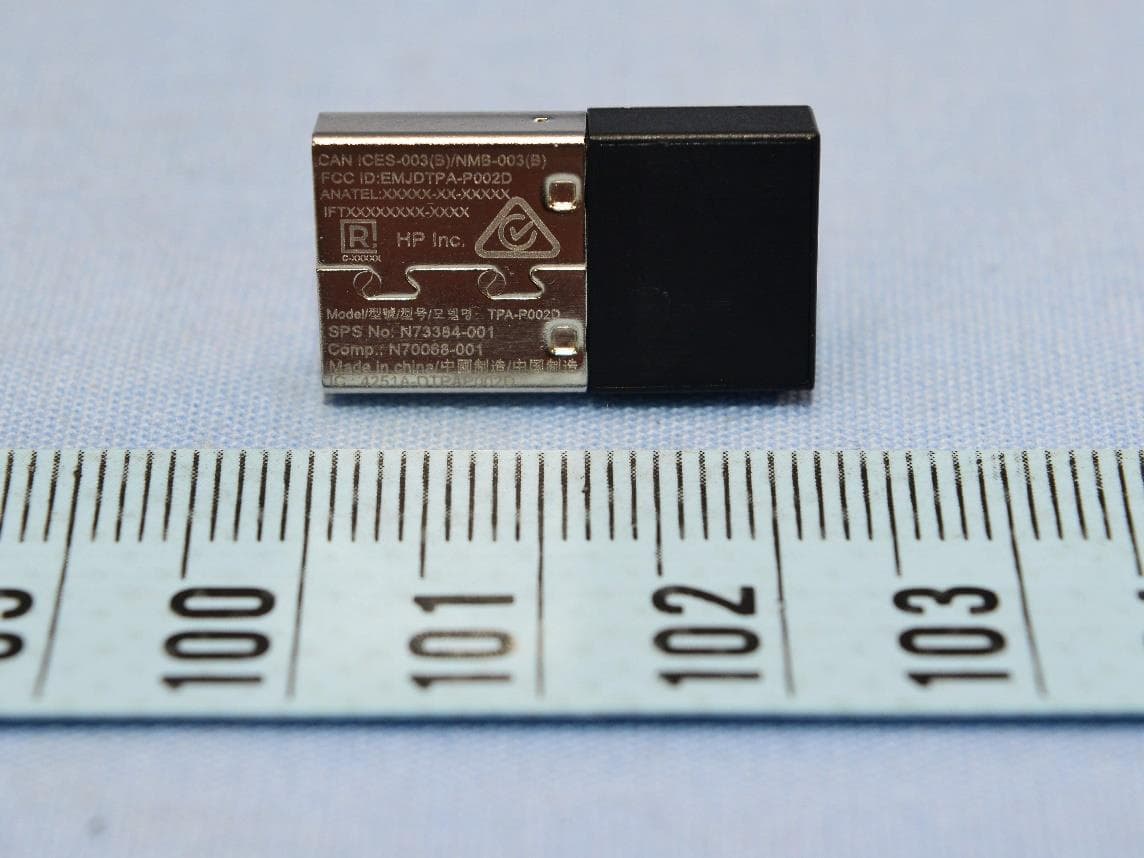
EMJDTPA-P002D
Jan 14, 2024Dongle
Equipment Class
DXX - Part 15 Low Power Communication Device Transmitter
EMJOH1
Oct 29, 2023Level Bridge
Equipment Class
DTS - Digital Transmission System