EMJKRF-ICAP23Capsule Keyboard Case
Primax Electronics Ltd
Click to zoom
Application Details
- Equipment Class
- DSS - Part 15 Spread Spectrum Transmitter
- Date of Grant
- Jun 06, 2012
- Application Purpose
- Original Equipment
- Date of Application
- Jun 06, 2012
- Equipment Note
- Capsule Keyboard Case
- Frequency Range
- 2402.00000000 - 2480.00000000
- Company
- Primax Electronics Ltd
- Country
- Taiwan
Documents & Files
Document Text
Text extracted from the exhibit documents filed with the FCC. Open a document above to read the original.
Users Manual
Capsule Keyboard Case RF-iCAP23 First time Bluetooth pairing: 1 Turn on the iPad’s Bluetooth from Settings>General>Bluetooth. 2 Select Capsule Keyboard Case from the list. A passcode pops up. 3 Enter the passcode using the Capsule keyboard. Need more help? See enclosed instructions. 12-0448 RF-ICAP23_12-0448_LBL_V1_EN.ai 1 5/15/2012 10:12:48 AMRF-ICAP23_12-0448_LBL_V1_EN.ai 1 5/15/2012 10:12:48 AM
Users Manual
Keyboard First time use When you unpack your Capsule keyboard, the internal battery is only partially charged. You should charge it fully before using it. Charge the battery Connect your Capsule keyboard to a computer or the power adapter using the USB cable (provided) to charge the internal battery. Note: USB cable charging voltage is 4.4v ~ 6.0v. It is recommended that you use iPad chargers or regular computers. Capsule Keyboard Case RF-iCAP23 I Quick Setup Guide # Component 1 Earphone jack 2 Battery LED 3 Bluetooth connection LED 4 30-pin connect slot 5 Micro USB port 6 Release button 7 Latch lock Package contents • Capsule keyboard • Ear phone jack spare cover • USB cable • Quick Setup Guide Features • 82-key design, 18 hot keys for iPad 3rd Generation • Compatible with Apple iPad 2 • Protective hard shell construction - Enhanced durability and stability • Smart power management - Auto turn off when closed. • Bluetooth version 3.0 Capsule parts Setting up Capsule keyboard 1 Insert a finger into the gap, then lift to open the top panel. 2a For typing mode, align and 2b For stand mode, pull the top panel place the top panel on the gap. forward towards the keyboard. 3 Place the bottom edge of the iPad into the bottom of the top panel, push up on the latch, then move the top edge of the iPad into the top panel. 4 Release the latch to lock the iPad in place. 5 To change out of typing Mode, push the release button and pull the top panel forward towards the keyboard. # Description 1 Home button 2 Search button 3 Photo Slide Show button 4 Virtual Keyboard button 5 Select Left button 6 Select Right button 7 Copy button 8 Cut button 9 Paste button # Description 10 Previous track button 11 Play/Pause button 12 Next track button 13 Mute button 14 Volume down button 15 Volume up button 16 Lock button 17 Pairing button 18 International keyboard button Description Remove the rubber piece to connect an earphone to the iPad earphone jack. Orange OFF: Battery full; Orange ON: Battery charging; Orange BLINKING: Battery low Blue FAST BLINKING (10 seconds): Re-connecting Blue BLINKING (5 minutes): Searching for devices (pairing) Blue ON (2 seconds): Just connected Slide out the rubber piece to connect the 30-pin connector. Connect to a USB power supply (e.g. wall charger or computer) with a Micro USB cable to charge Capsule battery. Push to release the top panel when in typing mode. Slide latch lock upward to install iPad. Release and the iPad will lock into place. B B A A A RF-iCAP23_12-0592_QSG_V3_EN.ai 1 5/31/2012 10:49:33 AMRF-iCAP23_12-0592_QSG_V3_EN.ai 1 5/31/2012 10:49:33 AM Pairing with an iPad When you open your Capsule keyboard for the first time, it automatically enters discoverable mode and connection LED blinks blue. If not, press the Bluetooth Pairing button (button 17) for more than two seconds to pair, then do the following: 1 On your iPad, enter Bluetooth settings by going to Settings > General > Bluetooth. Turn on Bluetooth. Your iPad searches for devices. 2 Select the Capsule Keyboard Case. 3 When prompted, enter the passkey shown on your iPad using your Capsule keyboard, then press Enter. Once paired, you do not have to pair with the iPad again. Using the special keys Smart power management 1 When Capsule keyboard is open, it will automatically pair to Bluetooth if you already paired it before. 2 When Capsule keyboard is closed, it will enter power saving mode. 3 When Capsule keyboard is open but is idle for more than two hours, it will enter power saving mode. 4 When Capsule keyboard is open but iPad is turned off or Bluetooth is disabled, it will enter power saving mode. Legal notices FCC caution Changes or modifications not expressly approved by the party responsible for compliance could void the user’s authority to operate the equipment. FCC statement: This equipment has been tested and found to comply with the limits for a Class B digital device, pursuant to part 15 of the FCC Rules. These limits are designed to provide reasonable protection against harmful interference in a residential installation. This equipment generates, uses and can radiate radio frequency energy and, if not installed and used in accordance with the instructions, may cause harmful interference to radio communications. However, there is no guarantee that interference will not occur in a particular installation. If this equipment does cause harmful interference to radio or television reception, which can be determined by turning the equipment off and on, the user is encouraged to try to correct the interference by one or more of the following measures: - Reorient or relocate the receiving antenna. - Increase the separation between the equipment and receiver. - Connect the equipment into an outlet on a circuit different from that to which the receiver is connected. - Consult the dealer or an experienced radio/TV technician for help. IC RSS-102 statement: This equipment complies with Industry Canada radiation exposure limits set forth for an uncontrolled environment. Cet équipement est conforme à l'exposition aux rayonnements Industry Canada limites établies pour un environnement non contrôlé. ENGLISH 12-0592 Button Home Search Photo slide show Virtual keyboard Select left or Select right Copy or Cut Paste Play/Pause Next track or Previous track Volume up or Volume down Mute Lock Bluetooth Pairing International Keyboard button Description Press to return to the home screen Press to search keywords on your iPad or the Internet Press to play a photo slide show Press to activate or deactivate the on-screen keyboard Press to select text Press to copy text Press to paste text Press to play or pause music playback Press to listen to the next or the previous song Press to adjust the volume Press to mute the volume Press to switch screen on or off Press to search and pair other devices Press to switch the languages IC RSS-Gen and RSS-210 statement: This device complies with Industry Canada licence-exempt RSS standard(s…
Text truncated - open the document above for the full version.
External Photos
Page 1 of 2 Type Designation: RF-iCAP23 External Photo Report Number: 17025702 001 Page 2 of 2 Type Designation: RF-iCAP23 External Photo Report Number: 17025702 001
ID Label/Location Info
29-86801B611 304008058010 FCC LABEL 304008058010 +0/-0.5mm 8. DATECO E 需對應的料號:30400786701X / 30400796400X / 30400796500X D Wing.Liang 2012/05/07 / 30400514264X . 實際生產日期由生管提供! 1 YY M DD A XXXXXX Factory code(東莞﹕A) Day code(01,02,03.......31) Month code(1月=A,2月=B.....12月=L) Year code(2011=11, 2012=12......) Requirement of PRIMAX Part: 1. Comply with PRIMAX QW-5Q002 "Green Product Chemical Substances Specification" 2. Follow customer's specification as required. 3.Follow Halogen- Free requirement : Br<900 ppm, Cl<900 ppm, Br+Cl< 1500 ppm if required. 流水號 (000001~999999)) :底字黑白 80#合成紙+霧P 9.實際尺寸請依樣品為准, 需與Bottom cover 現合OK後才量產 This device complies with Part 15 of the following two conditions: interference, and (2) this device must including interference that may cause *72MM * 3 0 M M Capsule Keyboard Case Model No.: RF-iCAP23 FCC ID: EMJKRF-ICAP23 IC: 4251A-KRFICAP23 Rating: 5V 200mA Made in China FCC Rules. Operation is subject to the (1) this device may not cause harmful accept any interference received, undesired operation. S/N:YYMDDAXXXXXX 5.Product must be halogen free.
Internal Photos
Page 1 of 5 Type Designation: RF-iCAP23 Internal Photo Report Number: 17025702 001 Page 2 of 5 Type Designation: RF-iCAP23 Internal Photo Report Number: 17025702 001 Page 3 of 5 Type Designation: RF-iCAP23 Internal Photo Report Number: 17025702 001 Page 4 of 5 Type Designation: RF-iCAP23 Internal Photo Report Number: 17025702 001 Page 5 of 5 Type Designation: RF-iCAP23 Internal Photo Report Number: 17025702 001
RF Exposure Info
Produkte Products Prüfbericht - Nr.: Test Report No. 17025702 001 Seite 96 von 100 Page 96 of 100 6. Safety Human exposure 6.1 Radio Frequency Exposure Compliance 6.1.1 Electromagnetic Fields RESULT: Passed Test standard : RSS-102 Issue 4 FCC KDB Publication 447498 The maximum peak output power of the transmitter is 0.000257mW (-5.9dBm) only, which less than 20mW. Hence the EUT is exempted from routine evaluation limits (SAR Evaluation) according to clause 2.5.1 of RSS-102 Issue 4. Since maximum peak output power of the transmitter is <60/f (GHz) mW, i.e. 0.0014mW<25(=60/2.4) mW, hence the EUT is exclueded from SAR evaluation according to FCC KDB publication 447498 D01: Mobile Portable RF Exposure.
Test Report
Produkte Products Prüfbericht - Nr.: Test Report No. 17025702 001 Seite 2 von 100 Page 2 of 100 TEST SUMMARY 5.1.1 ANTENNA REQUIREMENT RESULT: Passed 5.1.2 PEAK OUTPUT POWER RESULT: Passed 5.1.3 20DB BANDWIDTH AND 99% BANDWIDTH RESULT: Passed 5.1.4 CONDUCTED SPURIOUS EMISSIONS MEASURED IN 100 KHZ BANDWIDTH RESULT: Passed 5.1.5 SPURIOUS EMISSIONS RESULT: Passed 5.1.6 FREQUENCY SEPARATION RESULT: Passed 5.1.7 NUMBER OF HOPPING FREQUENCY RESULT: Passed 5.1.8 TIME OF OCCUPANCY RESULT: Passed 5.1.9 RADIATED EMISSIONS RESULT: Passed 5.1.10 CONDUCTED EMISSIONS RESULT: Passed 6.1.1 ELECTROMAGNETIC FIELDS RESULT: Passed Produkte Products Prüfbericht - Nr.: Test Report No. 17025702 001 Seite 3 von 100 Page 3 of 100 Contents 1. GENERAL REMARKS......................................................................................................... 4 1.1 COMPLEMENTARY MATERIALS.......................................................................................... 4 2. TEST SITES...................................................................................................................... 4 2.1 TEST FACILITIES............................................................................................................... 4 2.2 LIST OF TEST AND MEASUREMENT INSTRUMENTS............................................................... 5 2.3 TRACEABILITY.................................................................................................................. 6 2.4 CALIBRATION................................................................................................................... 6 2.5 MEASUREMENT UNCERTAINTY........................................................................................... 6 2.6 LOCATION OF ORIGINAL DATA........................................................................................... 6 2.7 STATUS OF FACILITY USED FOR TESTING........................................................................... 6 3. GENERAL PRODUCT INFORMATION.................................................................................... 7 3.1 PRODUCT FUNCTION AND INTENDED USE........................................................................... 7 3.2 RATINGS AND SYSTEM DETAILS........................................................................................ 7 3.3 INDEPENDENT OPERATION MODES.................................................................................... 8 3.4 NOISE GENERATING AND NOISE SUPPRESSING PARTS....................................................... 9 3.5 SUBMITTED DOCUMENTS.................................................................................................. 9 4. TEST SET-UP AND OPERATION MODES.............................................................................. 9 4.1 PRINCIPLE OF CONFIGURATION SELECTION........................................................................ 9 4.2 TEST OPERATION AND TEST SOFTWARE............................................................................ 9 4.3 SPECIAL ACCESSORIES AND AUXILIARY EQUIPMENT........................................................ 10 4.4 COUNTERMEASURES TO ACHIEVE EMC COMPLIANCE....................................................... 10 4.5 TEST SETUP DIAGRAM.................................................................................................... 10 5. TEST RESULTS............................................................................................................... 12 5.1 TRANSMITTER REQUIREMENT & TEST SUITES.................................................................. 12 5.1.1 Antenna Requirement ................................................................................................................12 5.1.2 Peak Output Power ....................................................................................................................13 5.1.3 20dB Bandwidth and 99% Bandwidth ........................................................................................16 5.1.4 Conducted Spurious Emissions measured in 100 kHz Bandwidth ............................................20 5.1.5 Spurious Emissions....................................................................................................................25 5.1.6 Frequency Separation................................................................................................................80 5.1.7 Number of hopping frequency....................................................................................................83 5.1.8 Time of Occupancy ....................................................................................................................85 5.1.9 Radiated emissions ....................................................................................................................88 5.1.10 Conducted emissions ............................................................................................................93 6. SAFETY HUMAN EXPOSURE............................................................................................. 96 6.1 RADIO FREQUENCY EXPOSURE COMPLIANCE................................................................... 96 6.1.1 Electromagnetic Fields ...............................................................................................................96 7. PHOTOGRAPHS OF THE TEST SET-UP.............................................................................. 97 Produkte Products Prüfbericht - Nr.: Test Report No. 17025702 001 Seite 4 von 100 Page 4 of 100 8. LIST OF TABLES........................................................................................................... 100 9. LIST OF PHOTOGRAPHS................................................................................................ 100 1. General Remarks 1.1 Complementary Materials All attachments are integral parts of this test report. This applies especially to the following appendix: Appendix 1: Test Result 2. Test Sites 2.…
Text truncated - open the document above for the full version.
Test Setup Photos
Produkte Products Prüfbericht - Nr.: Test Report No. 17025702 001 Seite 2 von 100 Page 2 of 100 1. Photographs of the Test Set-Up Photograph 1: Set-up for Spurious Emissions (9kHz-30MHz) Photograph 2: Set-up for Spurious Emissions (30MHz-1GHz) Produkte Products Prüfbericht - Nr.: Test Report No. 17025702 001 Seite 3 von 100 Page 3 of 100 Photograph 3: Set-up for Spurious Emissions (1GHz-18GHz) Photograph 4: Set-up for Spurious Emissions (18GHz-26GHz) Produkte Products Prüfbericht - Nr.: Test Report No. 17025702 001 Seite 4 von 100 Page 4 of 100 Photograph 5: Set-up for Radiated emissions Photograph 6: Set-up for Conducted emissions
Contact Information
Applicant
Nelson Chou(Manager)
Test Firm
Accurate Technology Co., Ltd.Sean Liu
Technical Specifications
| # | Rule Parts | Frequency Range | Power Output |
|---|---|---|---|
| 1 | 15C | 2.40 GHz - 2.48 GHz | 257.00 µW |
Other Applications from Primax Electronics Ltd
EMJ-BHS2705
Aug 28, 2026Wireless Headset
Equipment Class
DTS - Digital Transmission SystemEMJMMOBTN5O
Aug 22, 2024wegear MW1 Creator Mouse
Equipment Class
DTS - Digital Transmission SystemEMJDDGRFN5
Aug 22, 2024wegear MW1 2.4G Dongle
Equipment Class
DXX - Part 15 Low Power Communication Device Transmitter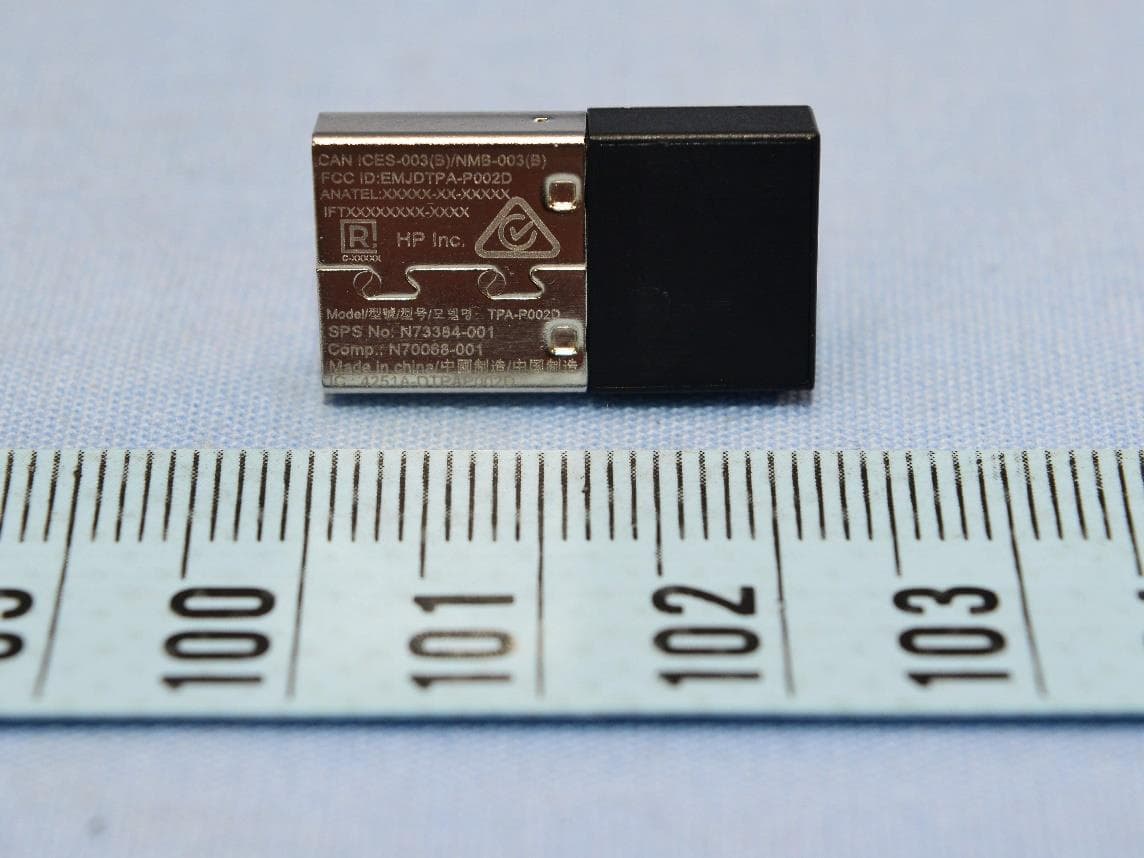
EMJDTPA-P002D
Jan 14, 2024Dongle
Equipment Class
DXX - Part 15 Low Power Communication Device Transmitter
EMJOH1
Oct 29, 2023Level Bridge
Equipment Class
DTS - Digital Transmission System