EMJMMOBTGZOHP Bluetooth Mouse Z5000
Primax Electronics Ltd
Click to zoom
Application Details
- Equipment Class
- DSS - Part 15 Spread Spectrum Transmitter
- Date of Grant
- Aug 06, 2013
- Application Purpose
- Original Equipment
- Date of Application
- Aug 06, 2013
- Equipment Note
- HP Bluetooth Mouse Z5000
- Frequency Range
- 2402.00000000 - 2480.00000000
- Company
- Primax Electronics Ltd
- Country
- Taiwan
Documents & Files
Document Text
Text extracted from the exhibit documents filed with the FCC. Open a document above to read the original.
Users Manual
Regulatory notices This document provides country- and region-specific non-wireless and wireless regulatory notices and compliance information for your product. Some of these notices may not apply to your product. 이 문서에는 국가 및 지역별 유무선 규제사항 설명과 제품의 준수 정보가 있습니다. 이러한 정보 중 일부는 귀하의 제품에 적용되지 않을 수 있습니다. Federal Communications Commission notice This equipment has been tested and found to comply with the limits for a Class B d igital device, pursuant to Part 15 of the FCC Rules. These limits are designed to provide reasonable protection against harmful interference in a residential installation. This equipment generates, uses, and can rad iate rad io frequency energy and, if not installed and used in accordance with the instructions, may cause harmful interference to rad io communications. However, there is no guarantee that interference will not occur in a particular installation. If this equipment does cause harmful interference to rad io or television reception, which can be determined by turning the equipment off and on, the user is encouraged to try to correct the interference by one or more of the following measures: ■Reorient or relocate the receiving antenna. ■Increase the separation between the equipment and receiver. ■Connect the equipment to an outlet on a circuit d ifferent from that to which the receiver is connected. ■Consult the dealer or an experienced rad io or television technician for help. Modifications The FCC requires the user to be notified that any changes or mod ifications made to this device that are not expressly approved by HP may void the user's authority to operate the equipment. Cables To maintain compliance with FCC Rules and Regulations, connections to this device must be made with shielded cables having metallic RFI/EMI connector hoods. Declaration of Conformity for products marked with the FCC logo (United States only) This device complies with Part 15 of the FCC Rules. Operation is subject to the following 2 cond itions: 1.This device may not cause harmful interference. 2.This device must accept any interference received, includ ing interference that may cause undesired operation. If you have questions about the product that are not related to this declaration, write to Hewlett-Packard Company P. O. Box 692000, Mail Stop 530113 Houston, TX 77269-2000 For questions regard ing this FCC declaration, write to Hewlett-Packard Company P. O. Box 692000, Mail Stop 510101 Houston, TX 77269-2000 or call HP at 281-514-3333 To identify your product, refer to the part, series, or model number located on the product. Products with wireless LAN devices or HP Mobile Broadband Modules This device must not be co-located or operating in conjunction with any other antenna or transmitter. Å WARNING: Exposure to Radio Frequency Radiation The rad iated output power of this device is below the FCC/Industry Canada rad io frequency exposure limits. Nevertheless, the device should be used in such a manner that the potential for human contact is minimized during normal operation of tablet PCs and notebook computers. During normal operation of tablet PCs and notebook computers with d isplays equal to or less than30.5 cm (12 inches): To avoid the possibility of exceed ing the FCC/Industry Canada rad io frequency exposure limits, human proximity to the antennas should not be less than 2.5 cm (1 inch). To identify the location of the wireless antennas, refer to the computer user guides included with your computer. During normal operation of notebook computers with d isplays greater than 30.5 cm (12 inches): To avoid the possibility of exceed ing the FCC/Industry Canada rad io frequency exposure limits, human proximity to the antennas should not be less than 20 cm (8 inches), includ ing when the computer d isplay is closed. To identify the location of the wireless antennas, refer to the computer user guides included with your computer. Ä CAUTION: When using IEEE 802.11a wireless LAN, this product is restricted to indoor use, due to its operation in the 5.15- to 5.25-GHz frequency range. FCC/Industry Canada requires this product to be used indoors for the frequency range of 5.15 GHz to 5.25 GHz to reduce the potential for harmful interference to co-channel mobile satellite systems. High-power radar is allocated as the primary user of the 5.25- to 5.35-GHz and 5.65- to 5.85-GHz bands. These radar stations can cause interference with and/or damage to this device. The antennas for this device are not replaceable. Any attempt at user access will damage your computer. Brazil notice Este equipamento opera em caráter secundário, isto é, não tem d ireito a proteção contra interferência prejud icial, mesmo de estações do mesmo tipo, e não pode causar interferência em sistemas operando em caráter primário. Este equipamento atende aos limites da Taxa de Absorção Específica referente à exposição a campos elétricos, magnéticos e eletromagnéticos de frequência adotados pela ANATEL. Canada notices This Class B d igital apparatus meets all requirements of the Canad ian Interference-Causing Equipment Regulations CAN ICES-3(B)/NMB-3(B). If this device has WLAN or Bluetooth capability, the device complies with Industry Canada license-exempt RSS standard(s). Operation is subject to the following two cond itions: (1) this device may not cause interference, and (2) this device must accept any interference, includ ing interference that may cause undesired operation of the device. Avis Canadien Ce d ispositif numérique de Classe B répond aux exigences de la réglementation du Canada relative aux équipements causant des interférences CAN ICES-3(B)/NMB-3(B). Si ce d ispositif est doté de fonctionnalités de réseau sans fil ou Bluetooth, il est conforme aux normes d’exemption de licence RSS d’Industrie Canada. Son fonctionnement est assujetti aux deux cond itions suivantes : 1) Ce d ispositif ne doit causer aucune interférence dangereuse, et 2) ce d ispositif doit accepter toute interférence reçue, y compris les interférenc…
Text truncated - open the document above for the full version.
Users Manual
Quick Setup 734856-B21 Replace this box with PI statement as per spec. Replace this box with PI statement as per spec. Replace this box with PI statement as per spec. Replace this box with PI statement as per spec. 1 The Bluetooth trademark is owned by its proprietor and used by Hewlett-Packard Company under license. The information contained herein is subject to change without notice. The only warranties for HP products and services are set forth in the express warranty statements accompanying such products and services. Nothing herein should be construed as constituting an additional warranty. HP shall not be liable for technical or editorial errors or omissions contained herein. © Copyright 2013 Hewlett-Packard Development Company, L.P. First Edition: September 2013 To use your Bluetooth® mouse, you must first pair (connect) it with your computer. 1) Turn on the computer and the Bluetooth mouse. 2) Ensure that your computer has Bluetooth turned on. 3) Start the Bluetooth pairing wizard on your computer. For more information, go to http://www.hp.com/support and select your country or region. Under Troubleshooting, type the mouse model number (located on the bottom of the mouse) and click Go. Click the link of your specific mouse, and then click User guides for a link to the Bluetooth Pairing User Guide. إقرانه (توصيله) بالكمبيوتر. ً ، يجب أولاBluetoothلاستخدام ماوس .Bluetoothقم بتشغيل الكمبيوتر وماوس )1 في الكمبيوتر.Bluetoothتأكد من تشغيل وظيفة )2 في الكمبيوتر.Bluetoothابدأ تشغيل معالج إقران )3 http://www.hp.com/ للحصول على مزيد من المعلومات، انتقل إلى الموقع (استكشاف الأخطاء Troubleshooting ، ثم اختر بلدك أو منطقتك. ضمنsupport وإصلاحها)، اكتب الرقم الخاص بطراز الماوس (يقع في الجزء السفلي من الماوس)، User الخاص بك، ثم انقر فوق (انتقال). انقر فوق رابط الماوس Go ثم انقر فوق دليل ) Bluetooth Pairing User Guide (أدلة المستخدم) للانتقال إلى رابط guides .)Bluetooth المستخدم لإقران За да използвате Bluetooth мишката, трябва първо да я сдвоите (свържете) с вашия компютър. 1) Включете компютъра и Bluetooth мишката. 2) Уверете се, че Bluetooth е включен на компютъра. 3) Стартирайте съветника за Bluetooth сдвояване на вашия компютър. За повече информация посетете http://www.hp.com/support и изберете държавата или региона си. В Отстраняване на неизправности въведете номера на модела на мишката (разположен в долната част на мишката) и щракнете върху Отиди. Щракнете върху линка за вашата конкретна мишка, после върху Ръководства за потребителя, за да се отвори линк към Bluetooth Pairing User Guide (Ръководство за потребителя за Bluetooth сдвояване). Dříve než bude možné myš s technologií Bluetooth používat, je třeba ji spárovat (spojit) s počítačem. 1) Zapněte počítač a myš s Bluetooth. 2) Zkontrolujte že počítač má zapnutý Bluetooth. 3) Spusťte průvodce párováním zařízení Bluetooth na počítači. Chcete-li získat více informací, přejděte na stránku http://www.hp.com/support a vyberte svou zemi nebo oblast. V části Podpora produktů a řešení problémů napište číslo modelu myši (umístěné na spodku myši) a klikněte na možnost Hledat. Klikněte na odkaz pro příslušnou myš a poté na možnost Uživatelské příručky pro odkaz na příručku Uživatelská příručka párování zařízení Bluetooth. For at du kan benytte din Bluetooth-mus, skal du først få den til at danne par (forbinde den) med din computer. 1) Tænd computeren og Bluetooth-musen. 2) Sørg for at Bluetooth er slået til på din computer. 3) Start guiden til Bluetooth pardannelse på din computer. Naviger til http://www.hp.com/support, og vælg derefter land eller område for at finde flere oplysninger. Skriv musens modelnummer under Fejlfinding (placeret på musens underside) og klik Gå. Klik på linket til din specifikke mus, og klik derefter på Brugervejledninger for et link til Brugervejledning til Bluetooth pardannelse. Sie müssen die Bluetooth Maus zuerst mit dem Computer koppeln (verbinden), um sie verwenden zu können. 1) Schalten Sie den Computer und die Bluetooth Maus ein. 2) Vergewissern Sie sich, dass auf Ihrem Computer Bluetooth aktiviert ist. 3) Starten Sie den Bluetooth-Pairing-Assistenten auf Ihrem Computer. Um weitere Informationen zu erhalten, gehen Sie zu http://www.hp.com/support und wählen Sie Ihr Land oder Ihre Region. Geben Sie unter Fehlerbehebung die Modellnummer der Maus (auf der Unterseite der Maus zu finden) ein und klicken Sie auf Los. Klicken Sie auf den Link für Ihre Maus und klicken Sie dann auf Benutzerhandbücher, um zum Link für das Bluetooth-Pairing- Benutzerhandbuch zu gelangen. Para utilizar su mouse Bluetooth, primero debe emparejarlo (conectarlo) con su equipo. 1) Encienda el equipo y el mouse Bluetooth. 2) Asegúrese de que la funcionalidad Bluetooth de su equipo esté encendida. 3) Inicie el asistente de emparejamiento de Bluetooth en su equipo. Para más información, visite http://www.hp.com/support y seleccione su país o región. En Solución de problemas, ingrese el número de modelo del mouse (que se encuentra en la parte inferior del mismo) a haga clic en Ir. Haga clic en el vínculo para su modelo de mouse específico, y luego haga clic en Guías del usuario para acceder al vínculo de la Guía del usuario para el emparejamiento de Bluetooth. Για να χρησιμοποιήσετε το USB ποντίκι σας, πρέπει πρώτα να κάνετε σύζευξη (να το συνδέσετε) με τον υπολογιστή σας. 1) Στη συνέχεια, γυρίστε τον υπολογιστή κανονικά. 2) Μεταβείτε στον υπολογιστή σας και ελέγξτε την εφαρμογή 3) Ορισμένες λειτουργίες μπορεί να μην είναι διαθέσιμες στο δικό σας υπολογιστή. Για περισσότερες πληροφορίες, μεταβείτε στη διεύθυνση http://www. hp.com/support και επιλέξτε τη χώρα ή την περιοχή σας. Στο τμήμα Αντιμετώπιση προβλημάτων, πληκτρολογήστε τον αριθμό μοντέλου του ποντικιού (βρίσκεται στο κάτω μέρος του ποντικιού) και κάντε κλικ στο Μετάβαση. Κάντε κλικ στον σύνδεσμο του δικού σας ποντικιού και έπειτα κάντε κλικ στο Οδηγοί χρήστη για σύνδεσμο στον Οδηγό χρήστη σύζευξης Bluetooth. Pour utiliser la souris Bluetooth, vous devez premièrement la synchroniser (connecter) …
Text truncated - open the document above for the full version.
Cover Letter(s)
No. 669, Ruey Kuang Road Neihu Taipei, Taiwan, R.O.C. Tel: 883-2-2798-9008 Fax: 886-2-8798-1565 Date: July 15, 2013 Federal Communications Commission Authorization and Evaluation Division Confidentiality Request FCC ID: EMJMMOBTGZO Pursuant to Sections 0.457 and 0.459 of the Commission’s Rules, the Applicant hereby requests confidential treatment of information accompanying this Application as outlined below: Schematics Block Diagram The above materials contain trade secrets and proprietary information not customarily released to the public. The public disclosure of these matters might be harmful to the Applicant and provide unjustified benefits to its competitors. The Applicant understands that pursuant to Rule 0.457, disclosure of this Application and all accompanying documentation will not be made before the date of the Grant for this application. Sincerely yours, ------------------------------------------------------------------- C.T. Huang Compliance Dept. / Director Phone: 886-2-2798-9008 ext.1710 Fax: 886-2-8797-1565 Email: [email protected]
Cover Letter(s)
No. 669, Ruey Kuang Road Neihu Taipei, Taiwan, R.O.C. Tel: 883-2-2798-9008 Fax: 886-2-8798-1565 Power of Attorney Date: July 30, 2013 T o whom it may concern: We, the undersigned PRIMAX ELECTRONICS LTD. hereby authorize Bureau Veritas Consumer Products Services (H.K.) Ltd., Taoyuan Branch (BV CPS Taoyuan Branch) of Taiwan to act on our behalf in all matters relating to all processes required in the FCC Part 15C approval and any communication needed with the national authority. Any and all acts carried out by BV CPS Taoyuan Branch on our behalf shall have the same effects as acts of our own. If you have any questions regarding the authorization, please don’t hesitate to contact us. Thank you! Sincerely yours, -------------------------------------- C.T. Huang Compliance Dept. / Director Phone: 886-2-2798-9008 ext.1710 Fax: 886-2-8797-1565 Email: [email protected]
External Photos
Page 1 CONSTRUCTION PHOTOS OF EUT
ID Label/Location Info
LABEL LOCTION CMIIT ID : XXXXXXXXXXX SCT : RCPHPMO12-XXXX KCC-CRI-HPK-MOBTGZO XXXXXXXX XXXXX/SDPPI/2012 2141 XXXX-11-3596 TA-2012/XXXX CCAIXXXXXXXXXX HP Bluetooth Mouse Z5000 HP 藍牙滑鼠 / HP 蓝牙鼠标 Model(型號/型号) :MOBTGZO HP Product Number : E5C13AA SPS No. : 735253-001 Rating(額定/额定) : 1.5V 40mA FCC ID : EMJMMOBTGZO IC : 4251A-MMOBTGZO CMIIT ID : XXXXXXXXXX S/N : 7CGYWWXXXX Manufactured : MMMMYYYY Site : G Made in China(中國製造/中国制造) HP, HQ-TRE, 71004 Boeblingen, Germany R 201- XXXXXX Hewlett Packard Company 3000 Hanover Street, Palo Alto, CA 94304, U.S.A Rev. A XX CNC : X-XXXX
Internal Photos
Page 2 Page 3 Page 4 Page 5 Page 6
Operational Description
FCC ID: EMJMMOBTGZO Report No.: RF130715D11 Operational Description This device is a HP Bluetooth Mouse Z5000. The transmitter of the EUT is powered by 1.5Vdc. The antenna is Printed antenna without antenna connector. For more detailed instruction, please take a look at the user’s manual.
RF Exposure Info
Report No.: SA130715D11 1 of 6 Report Format Version 5.0.0 RF EXPOSURE REPORT REPORT NO.: SA130715D11 MODEL NO.: MOBTGZO FCC ID: EMJMMOBTGZO RECEIVED: Jul. 15, 2013 TESTED: Jul. 18 ~ 24, 2013 ISSUED: Jul. 31, 2013 APPLICANT: PRIMAX ELECTRONICS LTD. ADDRESS: No. 669, Ruey Kuang Road, Neihu, Taipei, Taiwan, R.O.C. ISSUED BY: Bureau Veritas Consumer Products Services (H.K.) Ltd., Taoyuan Branch LAB LOCATION: No. 47, 14th Ling, Chia Pau Vil., Lin Kou Dist., New Taipei City, Taiwan ( R.O.C. ) This report is for your exclusive use. Any copying or replication of this report to or for any other person or entity, or use of our name or trademark, is permitted only with our prior written permission. This report sets forth our findings solely with respect to the test samples identified herein. The results set forth in this report are not indicative or representative of the quality or characteristics of the lot from which a test sample was taken or any similar or identical product unless specifically and expressly noted. Our report includes all of the tests requested by you and the results thereof based upon the information that you provided to us. You have 60 days from date of issuance of this report to notify us of any material error or omission caused by our negligence, provided, however, that such notice shall be in writing and shall specifically address the issue you wish to raise. A failure to raise such issue within the prescribed time shall constitute your unqualified acceptance of the completeness of this report, the tests conducted and the correctness of the report contents. Unless specific mention, the uncertainty of measurement has been explicitly taken into account to declare the compliance or non-compliance to the specification. Report No.: SA130715D11 2 of 6 Report Format Version 5.0.0 Table of Contents RELEASE CONTROL RECORD ............................................................................................ 3 1. CERTIFICATION ......................................................................................................... 4 2. EVALUATION RESULT ............................................................................................... 5 3. SAR TEST EXCLUSION THRESHOLDS .................................................................... 6 4. CONCLUSION ............................................................................................................ 6 Report No.: SA130715D11 3 of 6 Report Format Version 5.0.0 RELEASE CONTROL RECORD ISSUE NO. REASON FOR CHANGE DATE ISSUED SA130715D11 Original release Jul. 31, 2013 Report No.: SA130715D11 4 of 6 Report Format Version 5.0.0 1. CERTIFICATION PRODUCT: HP Bluetooth Mouse Z5000 MODEL NO.: MOBTGZO BRAND: hp APPLICANT: PRIMAX ELECTRONICS LTD. TESTED: Jul. 18 ~ 24, 2013 TEST SAMPLE: ENGINEERING SAMPLE STANDARDS: FCC Part 2 (Section 2.1093) FCC OET Bulletin 65, Supplement C (01-01) IEEE C95.1 The above equipment has been tested by Bureau Veritas Consumer Products Services (H.K.) Ltd., Taoyuan Branch, and found compliance with the requirement of the above standards. The test record, data evaluation & Equipment Under Test (EUT) configurations represented herein are true and accurate accounts of the measurements of the sample’s EMC characteristics under the conditions specified in this report. PREPARED BY : , DATE: Jul. 31, 2013 ( Jessica Cheng / Specialist ) APPROVED BY : , DATE: Jul. 31, 2013 ( Ken Liu / Senior Manager) Report No.: SA130715D11 5 of 6 Report Format Version 5.0.0 2. EVALUATION RESULT Following FCC KDB 447498 D01 “General SAR test exclusion guidance” The corresponding SAR Exclusion Threshold condition, listed below: 1) The 1-g and 10-g SAR test exclusion thresholds for 100 MHz to 6 GHz at test separation distances ≤ 50 mm are determined by: [(max. power of channel, including tune-up tolerance, mW)/(min. test separation distance, mm)] ·[√f(GHz)] ≤ 3.0 for 1-g SAR and ≤ 7.5 for 10-g extremity SAR,16 where ÿ f(GHz) is the RF channel transmit frequency in GHz . ÿPower and distance are rounded to the ne arest mW and mm before calculation. ÿThe result is rounded to one decimal place for comparison The test exclusions are applicable only when the minimum test separation distance is ≤ 50 mm and for transmission frequencies between 100 MHz and 6 GHz. When the minimum test separation distance is < 5 mm, a distance of 5 mm is applied to determine SAR test exclusion. 2) At 100 MHz to 6 GHz and for test separation distances > 50 mm, the SAR test exclusion threshold is determined according to the following: a) [Threshold at 50 mm in step 1) + (test separation distance - 50mm)·( f(MHz)/150)] mW, at 100MHz to 1500 MHz b) [Threshold at 50 mm in step 1) + (test separation distance - 50 mm)·10] mW at > 1500 MHz and ≤ 6 GHz 3) At frequencies below 100 MHz, the following may be considered for SAR test exclusion. a) The threshold at the corresponding test separation distance at 100 MHz in step 2) is multiplied by [1 + log(100/f(MHz))] for test separation distances > 50 mm and < 200 mm. b) The threshold determined by the equation in a) for 50 mm and 100 MHz is multiplied by ½ for test separation distances ≤ 50 mm. c) SAR measurement procedures are not established below 100 MHz. When SAR test exclusion cannot be applied, a KDB inquiry is required to determine SAR evaluation requirements for any test results to be acceptable. Report No.: SA130715D11 6 of 6 Report Format Version 5.0.0 3. SAR TEST EXCLUSION THRESHOLDS Maximum measured transmitter power: Frequency (GHz) Max. Power (mW) Min. test separation distance (mm) SAR test exclusion calculation value (NOTE 2) 10-g extremity SAR test exclusion thresholds Result 2.402 ~ 2.480 0.7 5 0.217 7.5 Pass NOTE: 1. The antenna type is Printed antenna with -4.08dBi gain. 2. Calculate SAR test exclusion thresholds from condition “1” formulas. 4. CONCLUSION Since Source-base time average power is below SAR test exclusion power thresholds, the SAR evaluation is not required.
Test Report
Report No.: RF130715D11 1 of 35 Report Format Version 5.0.1 FCC TEST REPORT REPORT NO.: RF130715D11 MODEL NO.: MOBTGZO FCC ID: EMJMMOBTGZO RECEIVED: Jul. 15, 2013 TESTED: Jul. 18 ~ 24, 2013 ISSUED: Jul. 31, 2013 APPLICANT: PRIMAX ELECTRONICS LTD. ADDRESS: No. 669, Ruey Kuang Road, Neihu, Taipei, Taiwan, R.O.C. ISSUED BY: Bureau Veritas Consumer Products Services (H.K.) Ltd., Taoyuan Branch LAB LOCATION: No. 47, 14th Ling, Chia Pau Vil., Lin Kou Dist., New Taipei City, Taiwan ( R.O.C. ) This report should not be used by the client to claim product certification, approval, or endorsement by TAF or any government agencies. This report is for your exclusive use. Any copying or replication of this report to or for any other person or entity, or use of our name or trademark, is permitted only with our prior written permission. This report sets forth our findings solely with respect to the test samples identified herein. The results set forth in this report are not indicative or representative of the quality or characteristics of the lot from which a test sample was taken or any similar or identical product unless specifically and expressly noted. Our report includes all of the tests requested by you and the results thereof based upon the information that you provided to us. You have 60 days from date of issuance of this report to notify us of any material error or omission caused by our negligence, provided, however, that such notice shall be in writing and shall specifically address the issue you wish to raise. A failure to raise such issue within the prescribed time shall constitute your unqualified acceptance of the completeness of this report, the tests conducted and the correctness of the report contents. Unless specific mention, the uncertainty of measurement has been explicitly taken into account to declare the compliance or non-compliance to the specification Report No.: RF130715D11 2 of 35 Report Format Version 5.0.1 Table of Contents RELEASE CONTROL RECORD............................................................................. 4 1. CERTIFICATION .......................................................................................... 5 2. SUMMARY OF TEST RESULTS .................................................................. 6 2.1 MEASUREMENT UNCERTAINTY ............................................................... 6 3. GENERAL INFORMATION .......................................................................... 7 3.1 GENERAL DESCRIPTION OF EUT ............................................................. 7 3.2 DESCRIPTION OF TEST MODES ............................................................... 8 3.2.1 TEST MODE APPLICABILITY AND TESTED CHANNEL DETAIL ............... 9 3.3 DESCRIPTION OF SUPPORT UNITS ....................................................... 11 3.3.1 CONFIGURATION OF SYSTEM UNDER TEST ........................................ 11 3.4 GENERAL DESCRIPTION OF APPLIED STANDARDS ............................ 12 4. TEST TYPES AND RESULTS .................................................................... 13 4.1 CONDUCTED EMISSION MEASUREMENT ............................................. 13 4.2 RADIATED EMISSION AND BANDEDGE MEASUREMENT ..................... 13 4.2.1 LIMITS OF RADIATED EMISSION AND BANDEDGE MEASUREMENT .. 13 4.2.2 TEST INSTRUMENTS ............................................................................... 14 4.2.3 TEST PROCEDURES ................................................................................ 15 4.2.4 DEVIATION FROM TEST STANDARD ...................................................... 15 4.2.5 TEST SETUP ............................................................................................. 16 4.2.6 EUT OPERATING CONDITIONS ............................................................... 16 4.2.7 TEST RESULTS ......................................................................................... 17 4.3 NUMBER OF HOPPING FREQUENCY USED .......................................... 21 4.3.1 LIMIT OF HOPPING FREQUENCY USED ................................................ 21 4.3.2 TEST SETUP ............................................................................................. 21 4.3.3 TEST INSTRUMENTS ............................................................................... 21 4.3.4 TEST PROCEDURES ................................................................................ 21 4.3.5 DEVIATION FROM TEST STANDARD ...................................................... 21 4.3.6 TEST RESULTS ......................................................................................... 21 4.4 DWELL TIME ON EACH CHANNEL .......................................................... 23 4.4.1 LIMIT OF DWELL TIME USED................................................................... 23 4.4.2 TEST SETUP ............................................................................................. 23 4.4.3 TEST INSTRUMENTS ............................................................................... 23 4.4.4 TEST PROCEDURES ................................................................................ 23 4.4.5 DEVIATION FROM TEST STANDARD ...................................................... 23 4.4.6 TEST RESULTS ......................................................................................... 24 4.5 CHANNEL BANDWIDTH............................................................................ 25 4.5.1 LIMITS OF CHANNEL BANDWIDTH ......................................................... 25 4.5.2 TEST SETUP ............................................................................................. 25 4.5.3 TEST INSTRUMENTS ............................................................................... 25 4.5.4 TEST PROCEDURE .................................................................................. 25 4.5.5 DEVIATION FROM TEST STANDARD ...................................................... 25 4.5.6 EUT OPER…
Text truncated - open the document above for the full version.
Test Setup Photos
1 of 1 PHOTOGRAPHS OF THE TEST CONFIGURATION RADIATED EMISSION TEST
Contact Information
Applicant
Nelson Chou(Manager)
Test Firm
Bureau Veritas CPS (H.K.) Ltd., Taoyuan BranchRichard Chen
Technical Specifications
| # | Rule Parts | Frequency Range | Power Output |
|---|---|---|---|
| 1 | 15C | 2.40 GHz - 2.48 GHz | 1.00 mW |
Other Applications from Primax Electronics Ltd
EMJ-BHS2705
Aug 28, 2026Wireless Headset
Equipment Class
DTS - Digital Transmission SystemEMJMMOBTN5O
Aug 22, 2024wegear MW1 Creator Mouse
Equipment Class
DTS - Digital Transmission SystemEMJDDGRFN5
Aug 22, 2024wegear MW1 2.4G Dongle
Equipment Class
DXX - Part 15 Low Power Communication Device Transmitter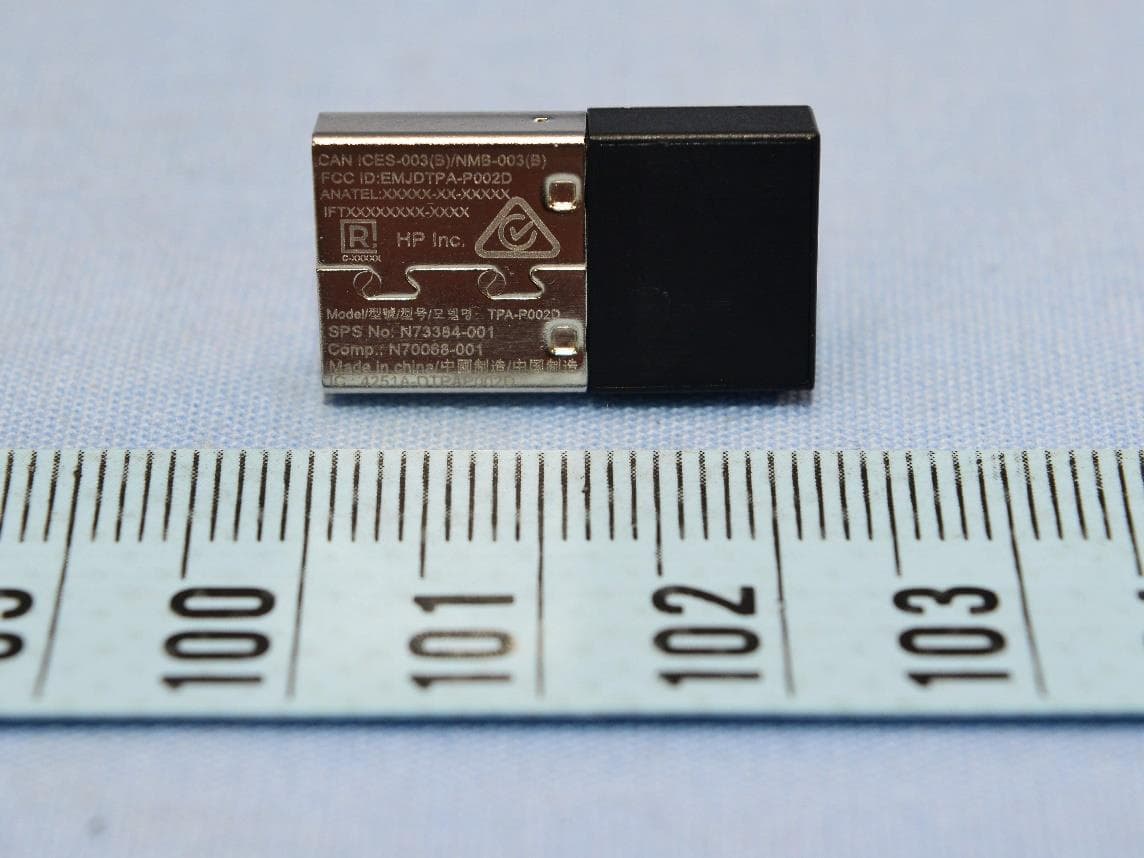
EMJDTPA-P002D
Jan 14, 2024Dongle
Equipment Class
DXX - Part 15 Low Power Communication Device Transmitter
EMJOH1
Oct 29, 2023Level Bridge
Equipment Class
DTS - Digital Transmission System