EMJMMORFF9UOWireless Mouse
Primax Electronics Ltd
Click to zoom
Application Details
- Equipment Class
- DXX - Part 15 Low Power Communication Device Transmitter
- Date of Grant
- Sep 02, 2010
- Application Purpose
- Original Equipment
- Date of Application
- Sep 02, 2010
- Equipment Note
- Wireless Mouse
- Frequency Range
- 2402.00000000 - 2479.00000000
- Company
- Primax Electronics Ltd
- Country
- Taiwan
Documents & Files
Document Text
Text extracted from the exhibit documents filed with the FCC. Open a document above to read the original.
Users Manual
Thank you for choosing this 2.4G Wireless Keyboard and Mouse Kits. It operates with digital radio technology to ensure no hinder communication between the keyboard, the mouse and your computer without connecting cable. The transmission and receiving of keyboard and mouse are free from angle restriction. Preparing Keyboard, Mouse and Dongle Before working with your new keyboard and mouse, look at the "Hardware Installation", and take a few one-time preparations. Hardware Installation ● Place the dongle at least 20 cm from other electrical devices (e.g. monitor) to achieve optimum performance. ● The distance between the keyboard, mouse and dongle should not exceed 10 M. ● Do not place the dongle on metal surfaces. ● Do not move optical mouse on following surface - Glass or any transparent materials - Dark surface - Mirror or reflecting surface - Mouse pad with too many colors - Rough surface. Step 1: Connect the Dongle ● Plug the dongle connector into an USB port. ● SYSTEM will take around 10 sec to find your keyboard and mouse automatically. Step 2: Inserting battery in mouse ● The mouse requires one alkaline AA battery. ● Remove the battery compartment cover on the bottom of the mouse ● First push the battery puller in then insert one AA battery into battery compartment. ● Close the battery compartment cover. Step 3: Inserting batteries in keyboard ●The keyboard requires two alkaline batteries (AAA). ● Insert two AAA batteries. ● Close the battery compartment cover. CAUTION: Risk of explosion if battery is replaced by an incorrect type. Dispose of used batteries according to instructions. Refer to "Important Battery Information" for disposal instructions. Working with keyboard and mouse The following sections contain information on using the keyboard and the mouse. Mouse In addition to two buttons, the mouse also has a wheel that can be used as follows: ● As a 3rd button: press on the wheel. ● For scrolling, e.g. in documents or on Internet pages: turn the wheel forward or back. Keyboard The following description of keys applies for the operating systems that support these functions (e.g. Windows 2000/XP/Vista/Windows 7). Vista Key Press Vista key to open Start Manu Application key Press Application key is same as Right Mouse key to open function Menu Previous Track Combine keys to skip to the forward title in the active player. Play/Pause Combine keys to Start or Pause the soundtrack in active player. Stop Combine keys to end the soundtrack or video. Next Track Combine keys to skip to the next title in the active player. My Computer Open My Computer folder. Mute Press this key to On/Off the volume. Volume down Press this key to decreasing the volume. Volume Up Press this key to increasing the volume. Sleep Enters sleep mode IE7 QuickTab Opens the Internet Explorer 7 QuickTab feature E mail Opens E mail Internet Explorer Opens Internet Explorer Low Battery Instruction a. Keyboard battery indicator The battery indicator on the screen shows you the status of the batteries. If the battery indicator lights up when a key is pressed, the batteries are gradually becoming weaker. Replace them in the near time b. Mouse battery indicator The battery indicator on the screen shows you the status of the batteries. If the battery indicator lights up when you are using the mouse, the batteries are gradually becoming weaker. Replace them in the near time. Troubleshooting and tips The keyboard or mouse does not operate following installation or is not recognized. ● Make sure that the batteries have been inserted correctly according to the polarity and the dongle is well connected. ● Check that your USB port is configured properly. ● Make the connection between the dongle, keyboard and mouse. Follow “Hardware Installation”/“Step 3”/Connection. ● Make sure the batteries are not too weak. ● Remove the batteries from the device. Please press any button on the device several times to prevent any unexpected failure after batteries being put in. ● Change the location of the dongle to have a best sensitivity. ● To determine whether the keyboard, mouse or computer causes the problem test the keyboard and mouse on another computer if possible; or test another keyboard and mouse on your current computer. If you are still unable to solve the problem, please contact your point of sale or your dealer. If you need to exchange the keyboard, please note that you must return it to your dealer in its original packaging and also a produce proof of purchase (receipt). Keep your receipt in a safe place after purchase. Federal Communication Commission Interference Statement This equipment has been tested and found to comply with the limits for a Class B digital device, pursuant to Part 15 of the FCC Rules. These limits are designed to provide reasonable protection against harmful interference in a residential installation. This equipment generates, uses and can radiate radio frequency energy and, if not installed and used in accordance with the instructions, may cause harmful interference to radio communications. However, there is no guarantee that interference will not occur in a particular installation. If this equipment does cause harmful interference to radio or television reception, which can be determined by turning the equipment off and on, the user is encouraged to try to correct the interference by one of the following measures: - Reorient or relocate the receiving antenna. - Increase the separation between the equipment and receiver. - Connect the equipment into an outlet on a circuit different from that to which the receiver is connected. - Consult the dealer or an experienced radio/TV technician for help. This device complies with Part 15 of the FCC Rules. Operation is subject to the following two conditions: (1) This device may not cause harmful interference, and (2) this device must accept any interference received, including interference that may cause undesired operation. FCC Caution: Any changes or modificatio…
Text truncated - open the document above for the full version.
Cover Letter(s)
No. 669, Ruey Kuang Road Neihu Taipei, Taiwan, R.O.C. Tel: 883-2-2798-9008 Fax: 886-2-8798-1565 Date: September 2, 2010 Federal Communications Commission Authorization and Evaluation Division Confidentiality Request FCC ID: EMJMMORFF9UO Pursuant to Sections 0.457 and 0.459 of the Commission’s Rules, the Applicant hereby requests confidential treatment of information accompanying this Application as outlined below: Schematics Block Diagram The above materials contain trade secrets and proprietary information not customarily released to the public. The public disclosure of these matters might be harmful to the Applicant and provide unjustified benefits to its competitors. The Applicant understands that pursuant to Rule 0.457, disclosure of this Application and all accompanying documentation will not be made before the date of the Grant for this application. Sincerely yours, ------------------------------------------------------------------- C.T. Huang Compliance Dept. / Director Phone: 886-2-2798-9008 ext.1710 Fax: 886-2-8797-1565 Email: [email protected]
Cover Letter(s)
No. 669, Ruey Kuang Road Neihu Taipei, Taiwan, R.O.C. Tel: 883-2-2798-9008 Fax: 886-2-8798-1565 Power of Attorney Date: September 2, 2010 To whom it may concern: We, the undersigned PRIMAX ELECTRONICS LTD. hereby authorize Bureau Veritas Consumer Products Services (H.K.) Ltd., Taoyuan Branch (BV CPS Taoyuan Branch) of Taiwan to act on our behalf in all matters relating to all processes required in the FCC Part 15C approval and any communication needed with the national authority. Any and all acts carried out by BV CPS Taoyuan Branch on our behalf shall have the same effects as acts of our own. If you have any questions regarding the authorization, please don’t hesitate to contact us. Thank you! Sincerely yours, ----------------------------- C.T. Huang Compliance Dept. / Director Phone: 886-2-2798-9008 ext.1710 Fax: 886-2-8797-1565 Email: [email protected]
External Photos
Page 1 CONSTRUCTION PHOTOS OF EUT
ID Label/Location Info
LABEL LOCATION Label
ID Label/Location Info
1234567 123457 A B C D E A B C D REV. DESCRIPTION ENG. APPROVAL 80P合成紙 NOTE: 1. Printin:white words on black backgroud. 2. TOL: +0/-0.5MM 2 1/1 1 304007574000 34007574000 Violet.Hu 2010/08/27 Ruby.Ai Ruby.Ai MOUSE FCC LABEL 黑底白字 3. The dimensions marked with"*"are important. 4. Glue: T=0.022~0.025MM 5. Stickiness: 3.0kg/cm . 6. Requirement of PRIMAX Green Part: 1. Comply with PRIMAX QW-5Q002 '' Green Product Chemical Substances Specification'' 2. Follow customer's specification as required. 7. 3.Follow Halogen- Free requirement : Br<900 ppm, Cl<900 ppm, Br+Cl< 1500 ppm if required. 28-236F9A7XX XX E134780 2G55 I.T.E. ACCESSORY *39.4 mm * 1 0 . 4 m m *21.4 mm * 2 5 . 4 m m CLASS 1 LED PRODUCT MOUSE Rating: 1.5V 40mA FCC ID: EMJMMORFF9UO 1:1 供應商UL代碼 M/N: MORFF9UO 8.注:30400756500X與30400757400X流水號要求一一對應,且同一周內流水號要求順流! IC: 4251A-MMORFF9UO XX *39.4 mm * 1 0 . 4 m m *21.4 mm * 2 5 . 4 m m MOUSE(滑鼠) Rating(額定): 1.5V 40mA 1:1 供應商UL代碼 M/N(型號): MORFF9UO HHHH-03-YYYY R 201WW XXXXXXXX CCXXxxYYyyyZzW Made in China For use only with UL Listed I.T.E. computer. Complies with IDA Standards DA 103787 COFETEL: XXXXXXXXXX Made in China 中國製造 FCC ID: EMJMMORFF9UO E134780 2G55 I.T.E. ACCESSORY IC: 4251A-MMORFF9UO 인증을 받은 자의 상호: MMORFF9UO S/N: MS1120007*YWWXXXXXK701 S/N: MS1120007* Y WW XXXXX K7 01 固定碼 YEAR(2010=0,2011=1,2012=2......) WEEK(01,02,03......) Series No. 16 CODE ( 0~9,A,B,C,D,E,F ) Engr.Ver Site Code S/N: MS1120007*YWWXXXXXK701 CMIIT ID: XXXXXXXXXX
Internal Photos
Page 2 Page 3 Page 4 Page 5
Operational Description
FCC ID: EMJMMORFF9UO Report No.: RF990820D05 Operational Description The transmitter of the EUT (Wireless Mouse) is powered by 1.5Vdc from battery. The type of antenna is Printed Antenna. The output power of this device is very low. Under normal use condition, the transmitter and the receiver are quite close, so high EIRP power is neither necessary nor allowed because of interference.
Test Report
Report No.: RF990820D05 1 Report Format Version 3.0.1 FCC TEST REPORT REPORT NO.: RF990820D05 MODEL NO.: MORFF9UO FCC ID: EMJMMORFF9UO RECEIVED: Aug. 18, 2010 TESTED: Aug. 18 ~ 20, 2010 ISSUED: Aug. 27, 2010 APPLICANT: PRIMAX ELECTRONICS LTD. ADDRESS: No. 669, Ruey Kuang Road, Neihu, Taipei, Taiwan, R.O.C. ISSUED BY: Bureau Veritas Consumer Products Services (H.K.) Ltd., Taoyuan Branch LAB LOCATION: No. 47, 14th Ling, Chia Pau Tsuen, Lin Kou Hsiang, Taipei Hsien, 244 Taiwan This test report consists of 23 pages in total. It may be duplicated completely for legal use with the approval of the applicant. It should not be reproduced except in full, without the written approval of our laboratory. The client should not use it to claim product endorsement by TAF or any government agencies. The test results in the report only apply to the tested sample. Report No.: RF990820D05 2 Report Format Version 3.0.1 Table of Contents 1. CERTIFICATION...........................................................................................3 2. SUMMARY OF TEST RESULTS...................................................................4 2.1 MEASUREMENT UNCERTAINTY...............................................................4 3. GENERAL INFORMATION...........................................................................5 3.1 GENERAL DESCRIPTION OF EUT............................................................5 3.2 DESCRIPTION OF TEST MODES..............................................................6 3.2.1 CONFIGURATION OF SYSTEM UNDER TEST.........................................6 3.2.2 TEST MODE APPLICABILITY AND TESTED CHANNEL DETAIL..............7 3.3 GENERAL DESCRIPTION OF APPLIED STANDARDS.............................8 3.4 DESCRIPTION OF SUPPORT UNITS........................................................8 4. TEST TYPES AND RESULTS.......................................................................9 4.1 CONDUCTED EMISSION MEASUREMENT..............................................9 4.2 RADIATED EMISSION MEASUREMENT...................................................9 4.2.1 LIMITS OF RADIATED EMISSION MEASUREMENT.................................9 4.2.2 TEST INSTRUMENTS..............................................................................10 4.2.3 TEST PROCEDURES...............................................................................11 4.2.4 DEVIATION FROM TEST STANDARD.....................................................11 4.2.5 TEST SETUP............................................................................................12 4.2.6 EUT OPERATING CONDITIONS..............................................................12 4.2.7 TEST RESULTS........................................................................................13 4.3 BAND EDGES MEASUREMENT..............................................................18 4.3.1 LIMITS OF BAND EDGES MEASUREMENT............................................18 4.3.2 TEST INSTRUMENTS..............................................................................18 4.3.3 TEST PROCEDURE.................................................................................18 4.3.4 DEVIATION FROM TEST STANDARD.....................................................18 4.3.5 EUT OPERATING CONDITION................................................................18 4.3.6 TEST RESULTS........................................................................................18 5. PHOTOGRAPHS OF THE TEST CONFIGURATION..................................21 6. INFORMATION ON THE TESTING LABORATORIES................................22 7. APPENDIX A – MODIFICATIONS RECORDERS FOR ENGINEERING CHANGES TO THE EUT BY THE LAB.......................................................23 Report No.: RF990820D05 3 Report Format Version 3.0.1 1. CERTIFICATION PRODUCT: Wireless Mouse BRAND NAME: acer MODEL NO.: MORFF9UO APPLICANT: PRIMAX ELECTRONICS LTD. TESTED: Aug. 18 ~ 20, 2010 TEST ITEM: ENGINEERING SAMPLE STANDARDS: FCC Part 15, Subpart C (Section 15.249) ANSI C63.4-2003 The above equipment has been tested by Bureau Veritas Consumer Products Services (H.K.) Ltd., Taoyuan Branch, and found compliance with the requirement of the above standards. The test record, data evaluation & Equipment Under Test (EUT) configurations represented herein are true and accurate accounts of the measurements of the sample’s EMC characteristics under the conditions specified in this report. PREPARED BY : , DATE: Aug. 27, 2010 ( Celia Chen / Senior Specialist ) TECHNICAL ACCEPTANCE : , DATE: Aug. 27, 2010 Responsible for RF ( Jamison Chan / Supervisor ) APPROVED BY : , DATE: Aug. 27, 2010 ( Ken Liu / Manager ) Report No.: RF990820D05 4 Report Format Version 3.0.1 2. SUMMARY OF TEST RESULTS The EUT has been tested according to the following specifications: APPLIED STANDARD: FCC Part 15, Subpart C (Section 15.249) STANDARD SECTION TEST TYPE AND LIMIT RESULT REMARK 15.207 Conducted Emission Test N/A Power supply is 1.5Vdc from battery 15.209 15.249 15.249 (d) Radiated Emission Test Band Edge Measurement Limit: 50dB less than the peak value of fundamental frequency or meet radiated emission limit in section 12.209 PASS Minimum passing margin is –7.4dB at 2390.00MHz 2.1 MEASUREMENT UNCERTAINTY Where relevant, the following measurement uncertainty levels have been estimated for tests performed on the EUT as specified in CISPR 16-4-2: This uncertainty represents an expanded uncertainty expressed at approximately the 95% confidence level using a coverage factor of k=2. Measurement Frequency Uncertainty 30MHz ~ 1GHz 3.67 dB Radiated emissions Above 1GHz 2.89 dB Report No.: RF990820D05 5 Report Format Version 3.0.1 3. GENERAL INFORMATION 3.1 GENERAL DESCRIPTION OF EUT EUT Wireless Mouse MODEL NO. MORFF9UO FCC ID EMJMMORFF9UO POWER SUPPLY 1.5Vdc from battery MODULATION TYPE GFSK OPERATING FREQUENCY 2402MHz ~ 2479MHz NUMBER OF CHANNEL 78 ANTENNA TYPE Printed antenna with 4.92dBi gain ANTENNA CONNECTOR N/A DATA CABLE…
Text truncated - open the document above for the full version.
Test Setup Photos
1 PHOTOGRAPHS OF THE TEST CONFIGURATION RADIATED EMISSION TEST
Contact Information
Applicant
Nelson Chou(Manager)
Technical Contact
Bureau Veritas CPS (H.K.) Ltd. Taoyuan BranchKen Liu
[email protected]886-2-2605-2180
No. 47, 14 Ling, Chia Pau Tsuen, Lin Kou Hsiang, · Linkou, Taipei · Taiwan
Non-Technical Contact
Bureau Veritas CPS (H.K.) Ltd. Taoyuan BranchWendy Liao
[email protected]886-3-3183232
Test Firm
Bureau Veritas CPS (H.K.) Ltd. Taoyuan BranchRichard Chen
Technical Specifications
| # | Rule Parts | Frequency Range | Power Output |
|---|---|---|---|
| 1 | 15C | 2.40 GHz - 2.48 GHz | - |
Other Applications from Primax Electronics Ltd
EMJ-BHS2705
Aug 28, 2026Wireless Headset
Equipment Class
DTS - Digital Transmission SystemEMJMMOBTN5O
Aug 22, 2024wegear MW1 Creator Mouse
Equipment Class
DTS - Digital Transmission SystemEMJDDGRFN5
Aug 22, 2024wegear MW1 2.4G Dongle
Equipment Class
DXX - Part 15 Low Power Communication Device Transmitter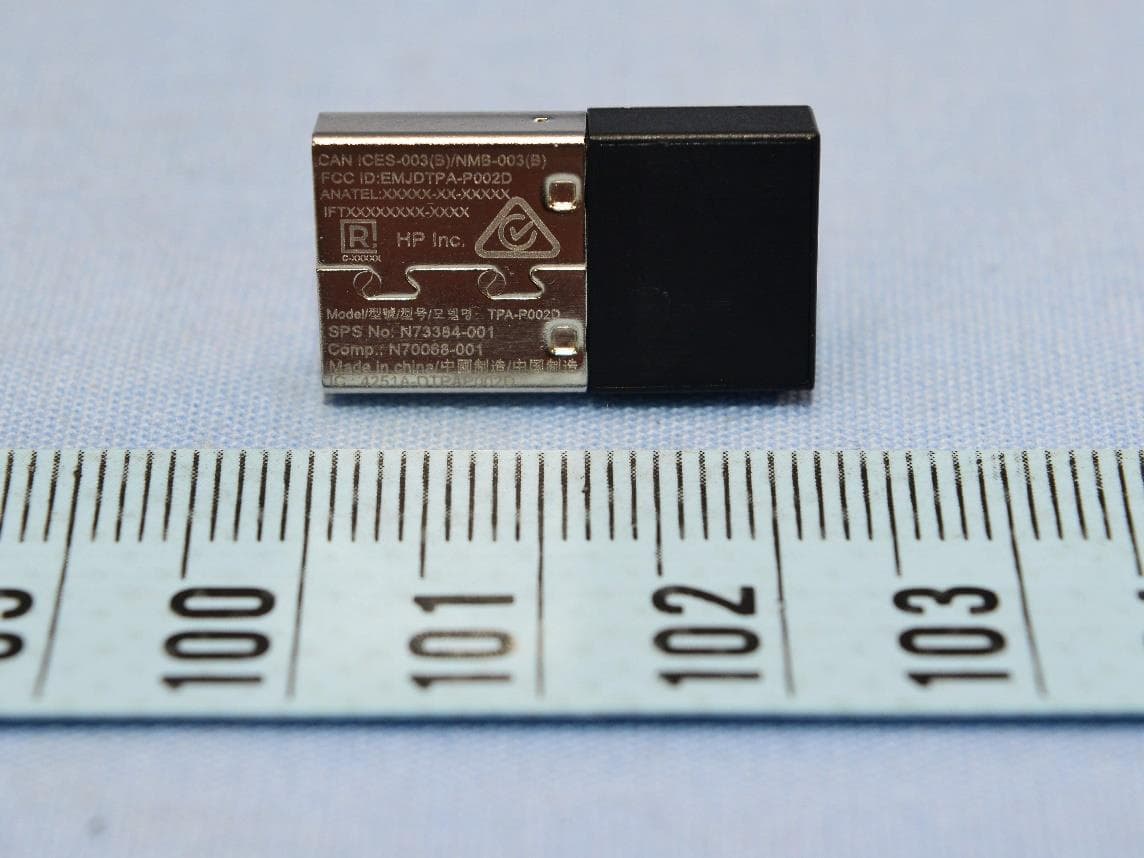
EMJDTPA-P002D
Jan 14, 2024Dongle
Equipment Class
DXX - Part 15 Low Power Communication Device Transmitter
EMJOH1
Oct 29, 2023Level Bridge
Equipment Class
DTS - Digital Transmission System