ESCCRM3200143200
Boston Scientific CorporationApplication Details
- Equipment Class
- TNB - Licensed Non-Broadcast Station Transmitter
- Date of Grant
- Oct 26, 2014
- Application Purpose
- Original Equipment
- Date of Application
- Oct 19, 2014
- Equipment Note
- 3200
- Frequency Range
- 402.00000000 - 405.00000000
- Country
- United States
Documents & Files
Document Text
Text extracted from the exhibit documents filed with the FCC. Open a document above to read the original.
Users Manual
PROGRAMMER USER’S MANUAL EMBLEM™ S-ICD Programmer Model CAUTION: Federal law restricts this device to sale by or on the order of a physician trained or experienced in device implant and follow-up procedures 3200 EMBLEM is a trademark of Boston Scientific Corporation. This product may be protected by one or more patents. Patent information can be obtained at http://www.bostonscientific.com/patents. The Bluetooth® word mark and logos are registered trademarks owned by Bluetooth SIG, Inc., and any use of such marks is under license. microSD is a trademark or registered trademark of SD-3C, LLC. © Copyright 2014 Boston Scientific or its affiliates. All rights reserved. LIST OF ACRONYMS ACAlternating currentICIndustry Canada AT PAnti-tachycardia pacingLCDLiquid crystal display CRTCardiac resynchronization therapyMRIMagnetic resonance imaging CPRCardiopulmonary resuscitationNSRNormal sinus rhythm ECGElectrocardiogramS-ECGSubcutaneous electrocardiogram EMIElecromagnetic interferenceS-ICD Subcutaneous implantable cardioverter defibrillator EOLEnd of lifeUSBUniversal serial bus ERIElective replacement indicatorVACVoltage alternating current ESDElectrostatic dischargeVFVentricular fibrillation FCC Federal Communications Commission VTVentricular tachycardia GUIGraphic user interface This literature is intended for use by professionals trained or experienced in device implant and/or follow-up procedures. TABLE OF CONTENTS GENERAL DESCRIPTION Description ��������������������������������������������������������������������������������������������������������������������������������1 Intended Use of Programmer���������������������������������������������������������������������������������������������������1 Indications for Use ��������������������������������������������������������������������������������������������������������������������1 Contraindications ���������������������������������������������������������������������������������������������������������������������1 Related Information������������������������������������������������������������������������������������������������������������������2 Programmer Warnings and Precautions ���������������������������������������������������������������������������������2 Programmer Warnings ......................................................................................................................................2 General .............................................................................................................................................................2 Conditions for Operation ...........................................................................................................................3 Programmer Precautions ..................................................................................................................................4 General .............................................................................................................................................................4 Storage and Handling .................................................................................................................................4 Implantation ...................................................................................................................................................4 Conditions for operation ............................................................................................................................4 S-ICD System Warnings and Precautions ��������������������������������������������������������������������������������5 S-ICD System Warnings .....................................................................................................................................5 General .............................................................................................................................................................5 Post-Implant ...................................................................................................................................................6 Clinical Considerations ...............................................................................................................................7 Implantation ...................................................................................................................................................7 Device Programming ..................................................................................................................................7 S-ICD System Precautions ................................................................................................................................7 Environmental and Medical Therapy Hazards ....................................................................................7 Hospital and Medical Environments ......................................................................................................8 Follow-up Testing ......................................................................................................................................12 Explant and Disposal ................................................................................................................................12 Supplemental Precautionary Information ........................................................................................12 Potential Adverse Events ...............................................................................................................................13 OPERATION Programmer Setup ����������������������������������������������������������������������������������������������������������������15 Packaging ............................................................................................................................................................15 Programmer Controls and Connections .........................................................…
Text truncated - open the document above for the full version.
Cover Letter(s)
WTD 13.4.9 FCC Compliance Opinion BSTN0474 Information about the Applicant Grantee (Company Name) Boston Scientific Corporation FCC Contact Person James Kippola Address 4100 Hamline Avenue North City, State, Zip St. Paul, MN 55112-5798 Job Number BSTN0474 Model 3200 FCC ID ESCCRM320014 Agent Peter Muso Approval Type Original Equipment Class TNB Licensed Non-Broadcast Base Station Transmitter Rule Part 95I Overview Boston Scientific Corporation is submitting this application for the approval of their Model 3200 Emblem S-ICD Programmer under FCC rule part 95I. This device is the second generation of the programmer. The previous version had only one channel capability, without Listen Before Talk protocol implemented. The Model 3200 communicates wirelessly in the MICS (402-405 MHz) band with implanted S-IDC devices, and now has two-channel capability. The model 3200 is able to communicate with model 1010 implants that have both single and 2 channel capability. If the user selects a device which has only one channel available, the model 3200 opens communication on that channel, without Listen Before Talk protocol. If the device selected by the user is a 2nd generation implantable device, with 2 channel capability, the programmer communicates on the Least Interfered of two available channels using Listen Before Talk protocol. The FCC Permit But Ask procedure was used to gain FCC approval for this device. Reference PBA Tracking Number 567345. Confidentiality requested for allowed files. Request is properly addressed and referenced. Short term confidentiality requested. Recommendation All items have been resolved and completed to my satisfaction; therefore I recommend this application for approval. Signature Dave Tolman, TCB Committee 10/15/2014
Cover Letter(s)
FCC ID: ESCCRMN!!()^ _ Boston Scientific Corporation Date: 7/31/2014 Re: Model 3200 Emblem S-ICD Programmer: FCC Cover Letter The Guidant Corporation (a wholly owned subsidiary of Boston Scientific Corporation doing business as Boston Scientific Cardiac Rhythm Management) Model 3200 Emblem S-ICD Programmer is a component of the Cameron Health/Boston Scientific S-ICD System, which is prescribed for patients when cardiac arrhythmia management is warranted. The programmer communicates wirelessly in the MICS (402-405 MHz) frequency band with the implanted S-ICD device to enable adjustment of programmable settings and data collection during implantation procedures and device/patient follow-up exams. Introduction The Model 3200 Programmer is a second generation product for the Guidant Corporation. The Model 3200 Programmer provides radio frequency (RF) telemetry in the 402 – 405 MHz MICS band for communication with RF enabled S-ICD devices. The first generation device is approved under FCC ID SDYCHI2020. This authorization request for the Model 3200 Programmer is a result of a device firmware update which will add a second telemetry channel. This will be an original certification. BSC is seeking approval of the Model 3200 Programmer which includes a transceiver subsystem operating at 402 - 405 MHz for communication with S-ICD devices. The FCC ID chosen for this product is ESCCRM320014. The FCC rules applicable to this product include CFR FCC Part 95I, Part 2.1046, Part 2.1091, Part 15.107, and Part 15.109. The Model 3200 Programmer also includes a Bluetooth radio authorized under the limited modular approval of ESCCRM70514. As part of the new authorization the Grantee Code is transitioning from Cameron Health Inc. (SDY) to Boston Scientific Corporation (ESC). Device Description The Model 3200 Programmer is an externally powered medical device that communicates with BSC S-ICD enabled implantable devices via a 402 - 405 MHz RF telemetry link. The programmer is operated by a healthcare professional or a Boston Boston Scientific Corporation Scientific employee during S-ICD implantations or device/patient follow-up exams. During operation, the programmer displays device and patient data collected through the wireless telemetry link and allows programming of implanted device parameters. The Model 3200 Programmer embedded Bluetooth module can be used to send reports to a paired Bluetooth printer for storage/review. The Model 3200 Programmer consists of a commercial tablet computer connected to a proprietary RF printed circuit assembly known as the Programmer Radio Board (PRB). The tablet computer and PRB are placed in a common mechanical housing. The Model 3200 Programmer antenna, “Telemetry Wand”, is attached to the PRB through an RF connector that is accessible from outside of the programmer housing. The Telemetry Wand (Model 3203) includes an integrated 3 meter cable to allow the user to place the antenna for optimal performance. A custom BSC programmer software application is run on the Model 3200 embedded tablet processor. The application controls all of the programmer’s features and functions. The PRB contains a Field Programmable Gate Array (FPGA) that includes the interface logic between the tablet processor and the RF transceiver circuitry.
Cover Letter(s)
FCC ID: ESCCRMN!!()^ _ July 11, 2014 To whom it may concern, We, Guidant Corporation (a wholly owned subsidiary of Boston Scientific Corporation doing business as Boston Scientific Cardiac Rhythm Management), located at 4100 Hamline Avenue North, Arden Hills, MN 55112-5798, hereby authorize Peter Musto of the Guidant Corporation (a wholly owned subsidiary of Boston Scientific Corporation doing business as Boston Scientific Cardiac Rhythm Management) R&D Hardware Development department to act on our behalf as our agent in the following matters related to the FCC and/or Industry Canada approval of our products: report submittal, related correspondence, the signing of all documents relating to these matters, and any other lawful activity necessary to obtain such certification. Any act carried out by Peter Musto within the scope of this authorization shall have the same effect as our own. This authorization shall expire 12 months from original date. Sincerely, James Kippola Electrical Engineer Engineering Compliance Boston Scientific Corporation 651-581-3635 [email protected]
Cover Letter(s)
FCC ID: ESCCRMN!!()^ _ Boston Scientific Corporation Date: July 14, 2014 To: Federal Communications Commission Authorization and Evaluation Division 7435 Oakland Mills Road Columbia, Maryland 21046 From: Peter Musto, [email protected] Boston Scientific Corporation 4100 Hamline Ave. N. Arden Hills, MN 55112 Subject: Request for Confidentiality – Application for Equipment Certification, FCC: ESCCRM320014 To whom it may concern, We hereby respectfully request that under the provision 47 CFR 0.459 and 0.457(d) the documents listed below and attached with this application for certification be provided with confidential status. • Schematics • Operational Description • Frequency and Functional Block Diagrams Any exhibit / information for which we have requested confidentiality, but which may not be accorded such treatment by the FCC, should be returned to us. The documents listed above contain trade secrets that are treated as confidential by the Guidant Corporation (a wholly owned subsidiary of Boston Scientific Corporation doing business as Boston Scientific Cardiac Rhythm Management). Substantial competitive harm could result should these documents be made available to the public while also providing unjustified benefits to our competitors. Pursuant to FCC Public Notice DA 04-1705, we respectfully request short-term confidentiality for the internal photos. The internal photos should be held from public view for 180 days, or until we begin marketing of the device, whichever happens first. Boston Scientific Corporation We will notify the FCC or the TCB prior to marketing so that the internal photos may be placed in the public database. Sincerely, Peter Musto Fellow, Electrical Engineer Boston Scientific Corporation
External Photos
FCC ID: ESCCRMN!!()^ _ Boston Scientific Corporation CONFIDENTIAL Date: 7/14/2014 Re: Model 3200 Emblem S-ICD Programmer: External Photos The Guidant Corporation (a wholly owned subsidiary of Boston Scientific Corporation doing business as Boston Scientific Cardiac Rhythm Management) Model 3200 Emblem S-ICD Programmer is a component of the Cameron Health/Boston Scientific S-ICD System, which is prescribed for patients when cardiac arrhythmia management is warranted. The programmer communicates wirelessly in the MICS (402-405 MHz) frequency band with the implanted S-ICD device to enable adjustment of programmable settings and data collection during implantation procedures and device/patient follow-up exams. The Model 3200 Programmer consists of a commercial tablet computer connected to a proprietary RF printed circuit assembly known as the Programmer Radio Board (PRB). The tablet computer and PRB are placed in a common mechanical housing. The Emblem S-ICD Programmer antenna, “Telemetry Wand”, is attached to the PRB through an RF connector that is accessible from outside of the programmer housing. The Telemetry Wand (Model 3203) includes an integrated 3 meter cable to allow the user to place the antenna for optimal performance. The following pages include external photos of the Model 3200 Programmer. Boston Scientific Corporation CONFIDENTIAL Figure 1 Model 3200 Programmer - Front View Figure 2 Model 3200 Programmer - Back View (for reference only) Note: The labels shown are prototypes only. Label information is shown in the ID Label and Location Exhibit. Boston Scientific Corporation CONFIDENTIAL Figure 3 Model 3200 Programmer - Left View Figure 4 Model 3200 Programmer - Right View Boston Scientific Corporation CONFIDENTIAL Figure 5 Model 3200 Programmer - Top View Figure 6 Model 3200 Programmer - Bottom View Boston Scientific Corporation CONFIDENTIAL Figure 7 Model 3200 Programmer – Telemetry Wand Figure 8 Model 3200 Programmer – Power Adapter (top) Boston Scientific Corporation CONFIDENTIAL Figure 9 Model 3200 Programmer – Power Adapter (bottom)
ID Label/Location Info
FCC ID: ESCCRMN!!()^ _ Boston Scientific Corporation Date: 9/25/2014 Re: Model 3200 Emblem S-ICD Programmer: Label and Location The Guidant Corporation (a wholly owned subsidiary of Boston Scientific Corporation doing business as Boston Scientific Cardiac Rhythm Management) Model 3200 Emblem S-ICD Programmer is a component of the Cameron Health/Boston Scientific S-ICD System, which is prescribed for patients when cardiac arrhythmia management is warranted. The programmer communicates wirelessly in the MICS (402-405 MHz) frequency band with the implanted S-ICD device to enable adjustment of programmable settings and data collection during implantation procedures and device/patient follow-up exams. The Model 3200 Programmer consists of a commercial tablet computer connected to a proprietary RF printed circuit assembly known as the Programmer Radio Board (PRB). The tablet computer and PRB are placed in a common mechanical housing. The Emblem S-ICD Programmer antenna, “Telemetry Wand”, is attached to the PRB through an RF connector that is accessible from outside of the programmer housing. The Telemetry Wand (Model 3203) includes an integrated 3 meter cable to allow the user to place the antenna for optimal performance. The Model 3200 Programmer label is shown below in Figure 1. The Model 3200 Programmer label location is shown below in Figure 2. Boston Scientific Corporation Figure 1 BSC Model 3200 Programmer Label Boston Scientific Corporation CONFIDENTIAL Figure 2 BSC Model 3200 Programmer Label Location (Reference Only) Model 3200 Label Location
Internal Photos
FCC ID: ESCCRMN!!()^ _ Boston Scientific Corporation CONFIDENTIAL Date: 7/14/2014 Re: Model 3200 Emblem S-ICD Programmer: Internal Photos The Guidant Corporation (a wholly owned subsidiary of Boston Scientific Corporation doing business as Boston Scientific Cardiac Rhythm Management) Model 3200 Emblem S-ICD Programmer is a component of the Cameron Health/Boston Scientific S-ICD System, which is prescribed for patients when cardiac arrhythmia management is warranted. The programmer communicates wirelessly in the MICS (402-405 MHz) frequency band with the implanted S-ICD device to enable adjustment of programmable settings and data collection during implantation procedures and device/patient follow-up exams. The Model 3200 Programmer consists of a commercial tablet computer connected to a proprietary RF printed circuit assembly known as the Programmer Radio Board (PRB). The tablet computer and PRB are placed in a common mechanical housing. The Emblem S-ICD Programmer antenna, “Telemetry Wand”, is attached to the PRB through an RF connector that is accessible from outside of the programmer housing. The Telemetry Wand (Model 3203) includes an integrated 3 meter cable to allow the user to place the antenna for optimal performance. The following pages include internal photos of the Model 3200 Programmer. Boston Scientific Corporation CONFIDENTIAL Figure 1 Model 3200 Programmer – Internal (Top) Figure 2 Model 3200 Programmer – Internal (Bottom) Programmer Radio Board (PRB) Boston Scientific Corporation CONFIDENTIAL Figure 3 Model 3200 Programmer – PRB (Top) Figure 4 Model 3200 Programmer – PRB (Bottom) Telemetry Wand Connector RF Section RF Section Telemetry Wand Connector RF Shield Boston Scientific Corporation CONFIDENTIAL Figure 5 Model 3200 Programmer – PRB Top (Shield Removed) Figure 6 Model 3200 Programmer – Telemetry Wand PCB (Top) Telemetry Wand Connector RF Transceiver (CC1020) Manufacturing Test RF Connector PCB Antenna Trace Boston Scientific Corporation CONFIDENTIAL Figure 7 Model 3200 Programmer – Telemetry Wand PCB (Bottom) For the Telemetry Wand cable, see the Model 3200 Programmer External Photos Exhibit.
Operational Description
FCC ID: ESCCRMN!!()^ _ Boston Scientific Corporation CONFIDENTIAL Date: 7/14/2014 Re: Model 3200 Emblem S-ICD Programmer: Antenna Description The Guidant Corporation (a wholly owned subsidiary of Boston Scientific Corporation doing business as Boston Scientific Cardiac Rhythm Management) Model 3200 Emblem S-ICD Programmer is a component of the Cameron Health/Boston Scientific S-ICD System, which is prescribed for patients when cardiac arrhythmia management is warranted. The programmer communicates wirelessly in the MICS (402-405 MHz) frequency band with the implanted S-ICD device to enable adjustment of programmable settings and data collection during implantation procedures and device/patient follow-up exams. The Model 3200 Programmer consists of a commercial tablet computer connected to a proprietary RF printed circuit assembly known as the Programmer Radio Board (PRB). The tablet computer and PRB are placed in a common mechanical housing. The Model 3200 Programmer antenna, “Telemetry Wand”, is attached to the PRB through an RF connector that is accessible from outside of the programmer housing. The Telemetry Wand (Model 3203) includes an integrated 3 meter cable to allow the user to place the antenna for optimal performance. • The Model 3200 Programmer antenna connector is a DIN 1.0/2.3. The Model 3200 will only be operated by trained professionals in conjunction with the Model 3203 Telemetry Wand. • The antenna is a proprietary monopole design that is implemented on the PCB of the Model 3203 Telemetry Wand. The measured gain of the antenna at the device intended frequency in free space is: Frequency (MHz) Gain (dBi) 402 - 405 -5.0 • A photograph of the antenna is included in the Model 3200 Programmer External and Internal photos exhibits.
Parts List/Tune Up Info
FCC ID: ESCCRMN!!()^ _ Boston Scientific Corporation Date: 7/14/2014 Re: Model 3200 Emblem S-ICD Programmer: Tune Up Procedure The Guidant Corporation (a wholly owned subsidiary of Boston Scientific Corporation doing business as Boston Scientific Cardiac Rhythm Management) Model 3200 Emblem S-ICD Programmer is a component of the Cameron Health/Boston Scientific S-ICD System, which is prescribed for patients when cardiac arrhythmia management is warranted. The programmer communicates wirelessly in the MICS (402-405 MHz) frequency band with the implanted S-ICD device to enable adjustment of programmable settings and data collection during implantation procedures and device/patient follow-up exams. The Model 3200 Programmer consists of a commercial tablet computer connected to a proprietary RF printed circuit assembly known as the Programmer Radio Board (PRB). The tablet computer and PRB are placed in a common mechanical housing. The Model 3200 Programmer antenna, “Telemetry Wand”, is attached to the PRB through an RF connector that is accessible from outside of the programmer housing. The Telemetry Wand (Model 3203) includes an integrated 3 meter cable to allow the user to place the antenna for optimal performance. The Model 3200 Programmer frequency and power are verified to be within limits during device manufacturing. There is no tune up procedure for the device.
Test Report
Cardiac Rhythm Management 1122041 EDVT Protocol/Report Listen Before Talk (LBT) MICS Compliance EMBLEM S-ICD Programmer Model 3200 Rev B October 14, 2014 Responsible Department: CRM R&D Hardware Development Author Electrical Engineer, CRM R&D Hardware Development Peter Musto Date Subject Matter Expert Electrical Engineer, CRM R&D Hardware Development Larry Canady Date Approver Manager, CRM R&D Hardware Development Mike Barton Date 1122041 Rev B Protocol/Report EDVT Model 3200 Gen 2 LBT Compliance 2 of 33 Boston Scientific Corporation EXECUTIVE SUMMARY This document describes the test results for the electrical design verification testing (EDVT) performed to demonstrate EMBLEM S-ICD Programmer, Model 3200, compliance with the relevant ETSI and FCC MICS LBT (Listen Before Talk) Requirements. This electrical design verification testing is part of a total system test plan that typically includes electromagnetic compatibility, radio compliance, electrical safety, and various functional tests. This testing is performed to ensure the Model 3200 Programmer radio meets the requirements of the EMBLEM S-ICD System Telemetry Requirements as well as the relevant portions of the FCC and ETSI MICS standards. These results along with additional radio testing completed for ETSI and FCC standards related to the 402-405 MHz MICS telemetry band will be used as part of the Model 3200 RF certifications/approvals. RESULTS All MICS LBT testing passed. UNEXPECTED OBSERVATIONS There were no unexpected observations. 1122041 Rev B Protocol/Report EDVT Model 3200 Gen 2 LBT Compliance 3 of 33 Boston Scientific Corporation TABLE OF CONTENTS 1 ABOUT THIS DOCUMENT ................................................................................................................. 5 1.1 Scope .............................................................................................................................................. 5 1.2 Objective ........................................................................................................................................ 5 1.3 Revision History ............................................................................................................................. 5 1.4 Device Description ......................................................................................................................... 5 1.5 Terminology ................................................................................................................................... 5 1.6 BSC Reference Documents ............................................................................................................ 8 1.7 External Standards Reference Documents ...................................................................................... 8 2 TEST APPROACH ................................................................................................................................ 9 2.1 Sample Size .................................................................................................................................... 9 2.2 Device Under Test (DUT) .............................................................................................................. 9 2.3 Test Equipment ............................................................................................................................... 9 2.4 Test Configuration .........................................................................................................................10 2.4.1 Test Configuration for LBT Compliance Testing ..................................................................10 2.4.2 Signal Level Calibrations.......................................................................................................10 2.5 Configuring the DUT for Test .......................................................................................................10 2.5.1 Programmer Setup – PRB Tester Application .......................................................................10 2.5.2 LBT Read ..............................................................................................................................10 2.5.3 Programmer Setup – Programmer Software Application (Telemetry Session) .....................10 2.6 Standard Test Conditions and Configurations ...............................................................................11 2.6.1 Model 3200 Power Source .....................................................................................................11 2.6.2 Temperature and Humidity ....................................................................................................11 2.7 MICS Channelization ....................................................................................................................11 2.7.1 MICS LBT Algorithm Details ...............................................................................................11 2.8 PG Emissions Bandwidth ..............................................................................................................12 2.9 Programmer Emissions Bandwidth ...............................................................................................12 2.10 Handling Precautions.....................................................................................................................12 3 Summary ...............................................................................................................................................13 3.1 Results Summary ...........................................................................................................................13 3.2 Requirements Traceability .............................................................................................................14 4 TESTS PERFORMED ..........................................................................................................................15 4.1 LBT Threshold Power…
Text truncated - open the document above for the full version.
Test Report
Boston Scientific Corporation Emblem S-ICD Programmer FCC 95I:2014 FCC 15.207:2014 Report #: BSTN0474 Report Prepared By Northwest EMC Inc. NORTHWEST EMC – (888) 364-2378 – www.nwemc.com California – Minnesota – Oregon – New York – Washington WTD 12.5.23 CERTIFICATE OF TEST Last Date of Test: May 12, 2014 Boston Scientific Corporation Model: Emblem S-ICD Programmer Test Description Specification Test Method Pass/Fail Emission Bandwidth FCC 95I:2014, FCC 2.1049:2014 ANSI/TIA/EIA-603-C-2004 Pass Output Power FCC 95I:2014, FCC 2.1046:2014 ANSI/TIA/EIA-603-C-2004 Pass Emission Mask FCC 95I:2014, FCC 2.1049:2014 ANSI/TIA/EIA-603-C-2004 Pass Spurious Conducted Emissions FCC 95I:2014, FCC 2.1052:2014 ANSI/TIA/EIA-603-C-2004 Pass Frequency Stability FCC 95I:2014, FCC 2.1055:2014 ANSI/TIA/EIA-603-C-2004 Pass Radiated Power (EIRP) FCC 95I:2014, FCC 2.1053:2014 ANSI/TIA/EIA-603-C-2004 Pass Spurious Radiated Emissions FCC 95I:2014, FCC 2.1053:2014 ANSI/TIA/EIA-603-C-2004 Pass Powerline Conducted Emissions FCC 15.207:2014 ANSI C63.10:2009 Pass . Deviations From Test Standards None Approved By: Tim O'Shea, Operations Manager NVLAP Lab Co…
Text truncated - open the document above for the full version.
Contact Information
Applicant
James Kippola(Electrical Engineer)
Test Firm
Northwest EMC, Inc.Greg Kiemel
Technical Specifications
| # | Rule Parts | Frequency Range | Power Output | Emission | Tolerance |
|---|---|---|---|---|---|
| 1 | 95I | 402 MHz - 405 MHz | 12.20 µW | 101KF1D | 51.6000000000 ppm |
Other Applications from Boston Scientific Corporation
ESCCRMM30118
Jun 15, 2020M301
Equipment Class
DTS - Digital Transmission System
ESCCRM70514
Dec 22, 2014Bluetooth Module
Equipment Class
DSS - Part 15 Spread Spectrum TransmitterESCCRMA20914
Dec 15, 2014A209
Equipment Class
TNT - Licensed Non-Broadcast Transmitter Worn on Body
ESCCRMU22814
Sep 16, 2014L300, L301, L321, L310, L311, L331, L200, L201, L221, L210, L211, L231, L100, L101, L121, L110, L111, L131, U225, U226, U228, U125, U128
Equipment Class
TNT - Licensed Non-Broadcast Transmitter Worn on Body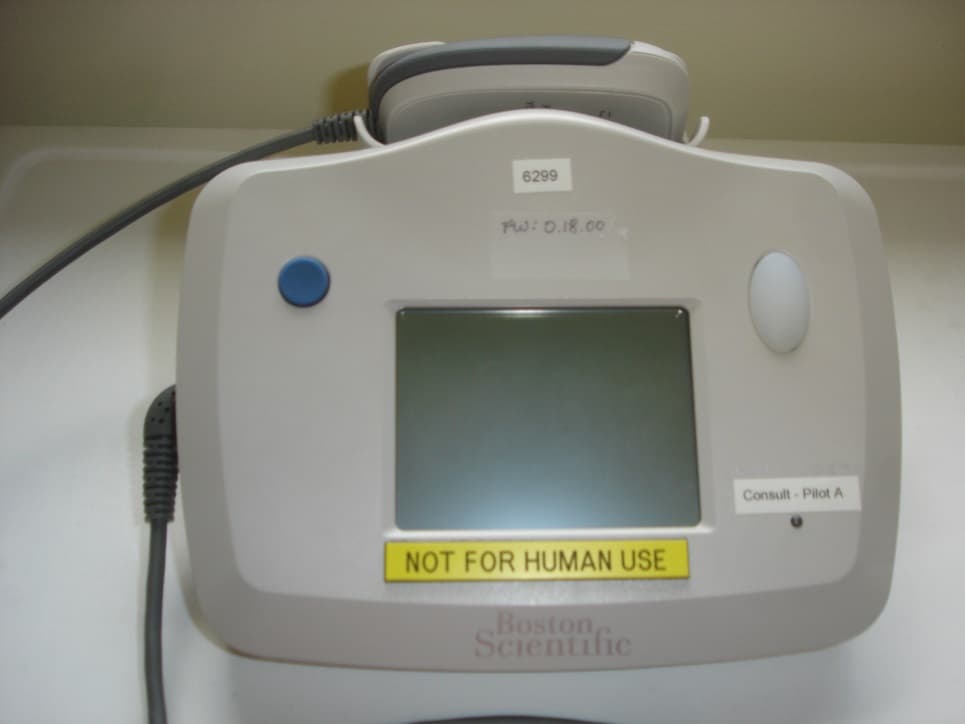
ESCCRM629913
Sep 18, 20136299
Equipment Class
DCD - Part 15 Low Power Transmitter Below 1705 kHz