ESCCRMM30118M301
Boston Scientific Corporation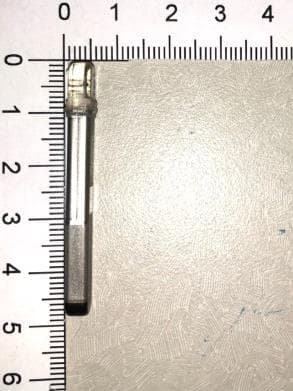
Click to zoom
Application Details
- Equipment Class
- DTS - Digital Transmission System
- Date of Grant
- Jun 15, 2020
- Application Purpose
- Original Equipment
- Date of Application
- Jun 15, 2020
- Equipment Note
- M301
- Frequency Range
- 2402.00000000 - 2480.00000000
- Country
- United States
Documents & Files
Document Text
Text extracted from the exhibit documents filed with the FCC. Open a document above to read the original.
Users Manual
USER’SMANUAL LUX-Dx ™ InsertableCardiacMonitorSystem RREEFFM301,2925,2935 CCAAUUTTIIOONN:: Federal law (USA) restrictsthis deviceto saleby or on the orderof a physiciantrainedor experienced in deviceimplantand follow-upprocedures. AABBOOUUTT TTHHIISS MMAANNUUAALL Thismanualcontainsinformationaboutthe LUX-Dx InsertableCardiacMonitorsystem,whichincludesan insertable cardiacmonitor, two mobileapplications(onefor the patientand one for the clinician),and the LATITUDEClarityData ManagementSystem. Throughoutthe manual,the followingterminologyconventionsare used: TTeerrmm DDeeffiinniittiioonnss DeviceLUX-Dx InsertableCardiacMonitor MobiledeviceHardware on whichthe clinicapp or patientapp is installed Patientapp myLUXpatientapp (mobileapplication) Clinicapp LUX-Dx ClinicAssistantapp (mobileapplication) ServerLATITUDEserver ICM systemLUX-Dx InsertableCardiacMonitorsystem LATITUDEClarity LATITUDEClarityDataManagementSystem(includesLATITUDEserverand LATITUDEClaritywebsite) The figuresusedin this manualare intendedas examplesonlyand maynot matchwhatyou see whenusingthe ICM system. Patientnamesdisplayedin figures are fictitious.Any resemblance to a real person,livingor dead,is purely coincidental. Unlessservingas a headingor for emphasis,boldwordsare intendedto representthe actualwordsappearingon screenswithinthe appsor LATITUDEClarity. The followingabbreviationsmaybe usedin this manual: AAbbbbrreevviiaattiioonnDDeeffiinniittiioonn AF AtrialFibrillation AT AtrialTachy BSCBostonScientificCorporation EMIElectromagneticinterference EMR ElectronicMedicalRecord EOSEnd of Service ESWLExtracorporealshockwavelithotripsy FCCFederalCommunicationsCommission HBOTHyperbaricoxygentherapy ICMInsertableCardiacMonitor ID Identificationor Identifier AAbbbbrreevviiaattiioonnDDeeffiinniittiioonn MRMagneticresonance MRIMagneticResonanceImaging PIIPatientInitiatedInterrogation RF RadioFrequency RRT RecommendedReplacement Time S-ECGSubcutaneousElectrocardiogram TENSTranscutaneouselectricalnervestimulation VAD Ventricularassistdevice All intervals,rates,and durationshavea tolerance of ± 5 milliseconds. The followingare trademarksof BostonScientificCorporationor its affiliates:LATITUDE,LATITUDEClarity, LUX-Dx,and myLUX. Third-party trademarksreferenced withinthis manualare listedbelow: • Adobeand Readerare trademarksof AdobeSystemsIncorporated. • InternetExplorerand MicrosoftEdgeare trademarksof Microsoft Corporation. • Mozillaand Firefoxare trademarksof the MozillaFoundation. • Apple,Safari,Mac,iPad,and iPhoneare trademarksof AppleInc. • GoogleChromeis a trademarkof GoogleLLC. • The Bluetooth ® wordmarkand logosare registeredtrademarksownedby BluetoothSIG, Inc. and any use of such marksby BostonScientificCorporation is underlicense. Othertrademarksand trade namesare thoseof their respectiveowners. Thisliteratureis intendedfor use by a varietyof healthcareproviders,includingthosewho • Are trainedor experiencedin deviceimplantand/orfollow-upprocedures • Providefollow-upcarefor patientswhohavea LUX-Dx insertablecardiacmonitor • Are authorizedto use LATITUDEClarity TTAABBLLEE OOFF CCOONNTTEENNTTSS IINNTTRROODDUUCCTTIIOONN ....................................................................................................................................................................................................................................11--11 CCHHAAPPTTEERR 11 SystemOverview..................................................................................................................1-2 SystemLimitations...............................................................................................................1-3 Indications..........................................................................................................................1-4 Contraindications..................................................................................................................1-4 Warranty Information............................................................................................................1-5 Warnings...........................................................................................................................1-5 Precautions.........................................................................................................................1-6 PotentialAdverseEvents.......................................................................................................1-12 PatientCounselingInformation...............................................................................................1-12 IINNSSEERRTTAABBLLEE CCAARRDDIIAACC MMOONNIITTOORR........................................................................................................................................................................................22--11 CCHHAAPPTTEERR 22 Overview........................................................................................................................... 2-2 Device Insertion.................................................................................................................. 2-2 Pre-insertionInformation................................................................................................ 2-2 InsertionInstructions...................................................................................................... 2-4 Post-InsertionInformation.............................................................................................. 2-10 MedicalDevice ID Card......................................................................................................... 2-10 R-waveSensing..................................................................................................................2-11 Diagnostics........................................................................................................................2-11 ArrhythmiaDetection....................................................................................…
Text truncated - open the document above for the full version.
Cover Letter(s)
25 February, 2020 Federal Communications Commission Office of Engineering and Technology 7435 Oakland Mills Road Columbia, Maryland 21046 Dear Sir or Madam: We, Cardiac Pacemakers, Inc. (a wholly owned subsidiary of Boston Scientific Corporation), located at 4100 Hamline Avenue North, Arden Hills, MN 55112‐5798, are submitting this application for Original Grant of FCC authorization, concerning the 2402 – 2480 MHz radio function incorporated in the model M301 Bluetooth Low Energy Insertable Cardiac Monitor (ICM) LUX‐Dx TM , hereafter referred to as “ICM”. This request is for Original Grant of FCC authorization under FCC ID: ESCCRMM30118 The ICM is designed to monitor and record heart rates for clinical evaluation and may be prescribed for patients with clinical syndromes, patients at increased risk of cardiac arrhythmias, or patients who experience symptoms such as dizziness, palpitation, syncope, and chest pain that may suggest a cardiac arrhythmia. It does not treat cardiac arrhythmias. The ICM incorporates radio frequency (RF) telemetry which operates in the Bluetooth (2402 – 2480 MHz) band. The radio uses an integrated antenna with a maximum measured radiated output power of ‐3.574 dBm (EIRP). The technical reports and exhibits demonstrate compliance of the Bluetooth radio with the applicable technical requirements contained in CFR Title 47 part 15.247. Original Grant is sought for the Bluetooth (2402 – 2480 MHz) radio. Sincerely, _______________________________ James Kippola Principal EE, R&D Hardware Development Boston Scientific Cardiac Rhythm Management 4100 Hamline Avenue North, M/S 10‐260 Arden Hills, MN 55112‐5798 Telephone No: 651‐581‐3635; Fax No: 651‐581‐3441 Email: [email protected] www.bostonscientific.com
Cover Letter(s)
26 February 2020 Federal Communications Commission Office of Engineering and Technology 7435 Oakland Mills Road Columbia, Maryland 21046 We, Cardiac Pacemakers, Inc. (a wholly owned subsidiary of Boston Scientific Corporation), located at 4100 Hamline Avenue North, Arden Hills, MN 55112-5798, hereby respectfully request that under the provision of section 0.457(d) and 0.459 of the FCC Rules, the documents listed below and attached with this application for certification be provided with confidential status. Schematics Operational Description Frequency Block Diagram Internal Photos Any exhibit/information for which we have requested confidentiality, but which may not be accorded such treatment by the FCC, should be returned to us. The documents listed above contain trade secrets and proprietary information that are not customarily released to the public. This information is highly confidential and pertains to the design and manufacture of implanted medical devices, which are regulated by the FDA. The public disclosure of this information could result in substantial competitive harm to us and unjustified benefits to our competitors. For at least these reasons, we are requesting the confidential treatment of this information. Concerning the Internal Photos, our request for confidentiality is based on consideration of criteria in FCC KDB 726920 D01, section II.(3). Specifically: The circuit board and internal components of the device are not accessible to users. They are contained in a welded titanium and hermetically sealed enclosure with epoxy over-mold. The device is implanted in the human body. The circuit board and internal components are not accessible to the public. Access to the circuit board and internal components would cause irreparable damage to the device and prevent its intended medical use. The circuit board and internal components are not accessible to professional medical clinicians qualified to service the device. Access to the circuit board and internal components would cause irreparable damage to the device and prevent its intended medical use. This is a medical device regulated by the U.S. Food and Drug Administration (FDA) and is only available through qualified physicians by prescription. Boston Scientic Corporation - 2 - Sincerely, ___________________________________ James Kippola Principal EE, R&D Hardware Development Boston Scientific Corporation Rhythm Management 4100 Hamline Avenue North, M/S 10-260 Arden Hills, MN 55112-5798 Telephone No: 651-581-3635; Fax No: 651-581-3441 Email: [email protected] www.bostonscientific.com
External Photos
Back L Side FrontR Side TopBottom External Photos Thursday, December 5, 201912:59 PM Bluetooth Certification Page 1
ID Label/Location Info
Packaging location of FCC ID Packaging location of FCC ID
Operational Description
25 November, 2019 Dear Sir or Madam: We, Cardiac Pacemakers, Inc. (a wholly owned subsidiary of Boston Scientific Corporation), located at 4100 Hamline Avenue North, Arden Hills, MN 55112‐5798, are providing the following antenna information for the telemetry communication feature for the model M301 Bluetooth Low Energy Insertable Cardiac Monitor (ICM) LUX‐Dx TM , in accordance with TCB412 technical requirements: (a) The Boston Scientific model M301 Bluetooth Low Energy Insertable Cardiac Monitor (ICM) LUX‐ Dx TM uses a permanently attached/integrated antenna encased in plastic. Access of the antenna connection to the intentional radiator is prohibited by the model enclosure. Part 15.203 states that the use of a permanently attached antenna is sufficient to comply with the provisions of this section. (b) The factory installed antenna is the only antenna approved for use in the model M301 Bluetooth Low Energy Insertable Cardiac Monitor (ICM) LUX‐Dx TM . The antenna is a stamped metal custom monopole integrated with the device header. The antenna is attached to the intentional radiator via an integral feed‐through assembly. Antenna impedance in air is found to be approximately 10.1 – j15.7 and the realized gain is ‐2.7 dBi. Boston Scientific Corporation - 2 - Sincerely, ___________________________________________ James Kippola Principal EE, R&D Hardware Development Boston Scientific Cardiac Rhythm Management 4100 Hamline Avenue North, M/S 10‐260 Arden Hills, MN 55112‐5798 Telephone No: 651‐581‐3635 Fax No: 651‐581‐3441 Email: [email protected] www.bostonscientific.com
RF Exposure Info
This report must not be used to claim product certification, approval, or endorsement by NVLAP, NIST, or any agency of the U.S. Government. This Report shall not be reproduced, except in full without written approval of the laboratory. EAR-Controlled Data - This document contains technical data whose export and reexport/retransfer is subject to control by the U.S. Department of Commerce under the Export Administration Act and the Export Administration Regulations. The Department of Commerce’s prior written approval may be required for the export or re- export/retransfer of such technical data to any foreign person, foreign entity or foreign organization whether in the United States or abroad. More: https://www.bis.doc.gov/index.php/forms-documents/regulations-docs/14-commerce-country-chart/fileT Boston Scientific Corporation Bluetooth Low Energy Insertable Cardiac Monitor (ICM) LUX-Dx M301 FCC 2.1093:2019 Bluetooth Low Energy Report # BSTN0975.7 NVLAP Lab Code: 200630 CERTIFICATE OF EVALUATION 2018-09-14 Product compliance is the responsibility of the client; therefore, the tests and equipment modes of operation represented in this report were agreed upon by the client, prior to testing. The results of this test pertain only to the sample(s) tested. The specific description is noted in each of the individual sections of the test report supporting this certificate of test. This report reflects only those tests from the referenced standards shown in the certificate of test. It does not include inspection or verification of labels, identification, marking or user information. As indicated in the Statement of Work sent with the quotation, Element’s standard process is to always use the latest published version of the test methods even when earlier versions are cited in the test specification. Issuance of a purchase order was de facto acceptance of this approach. Otherwise, the client would have advised Element in writing of the specific version of the test methods they wanted applied to the subject testing Last Date of Evaluation: Friday, November 22, 2019 Boston Scientific Corporation EUT: Bluetooth Low Energy ICM RF Exposure Evaluation Standards Specification Method FCC 2.1093:2019 FCC 447498 D01 General RF Exposure Guidance v06 Results Method Clause Description Applied Results Comments 4.3.1 SAR Test Exclusion Yes Pass None Deviations From Evaluation Standards None Approved By: Donald Facteau, Process Architect Report No. BSTN0975.7EAR-Controlled Data2/9 REVISION HISTORY 2018.07.17 Revision Number Description Date (yyyy-mm-dd) Page Number 00 None Report No. BSTN0975.7EAR-Controlled Data3/9 ACCREDITATIONS AND AUTHORIZATIONS 2019.03.08 United States FCC - Designated by the FCC as a Telecommunications Certification Body (TCB). Certification chambers, Open Area Test Sites, and conducted measurement facilities are listed with the FCC. A2LA - Accredited by A2LA to ISO / IEC 17065 as a product certifier. This allows Element to certify transmitters to FCC and IC specifications. NVLAP - Each laboratory is accredited by NVLAP to ISO 17025 Canada ISED - Recognized by Innovation, Science and Economic Development Canada as a Certification Body (CB) and as a CAB for the acceptance of test data. European Union European Commission – Within Element, we have a EU Notified Body validated for the EMCD and RED Directives. Australia/New Zealand ACMA - Recognized by ACMA as a CAB for the acceptance of test data. Korea MSIT / RRA - Recognized by KCC’s RRA as a CAB for the acceptance of test data. Japan VCCI - Associate Member of the VCCI. Conducted and radiated measurement facilities are registered. Taiwan BSMI – Recognized by BSMI as a CAB for the acceptance of test data. NCC - Recognized by NCC as a CAB for the acceptance of test data. Singapore IDA – Recognized by IDA as a CAB for the acceptance of test data. Israel MOC – Recognized by MOC as a CAB for the acceptance of test data. Hong Kong OFCA – Recognized by OFCA as a CAB for the acceptance of test data. Vietnam MIC – Recognized by MIC as a CAB for the acceptance of test data. SCOPE For details on the Scopes of our Accreditations, please visit: https://www.nwemc.com/emc-testing-accreditations Report No. BSTN0975.7EAR-Controlled Data4/9 FACILITIES 2019.03.08 California Labs OC01-17 41 Tesla Irvine, CA 92618 (949) 861-8918 Minnesota Labs MN01-10 9349 W Broadway Ave. Brooklyn Park, MN 55445 (612)-638-5136 Oregon Labs EV01-12 6775 NE Evergreen Pkwy #400 Hillsboro, OR 97124 (503) 844-4066 Texas Labs TX01-09 3801 E Plano Pkwy Plano, TX 75074 (469) 304-5255 Washington Labs NC01-05 19201 120 th Ave NE Bothell, WA 98011 (425)984-6600 NVLAP NVLAP Lab Code: 200676-0 NVLAP Lab Code: 200881-0 NVLAP Lab Code: 200630-0 NVLAP Lab Code:201049-0 NVLAP Lab Code: 200629-0 Innovation, Science and Economic Development Canada 2834B-1, 2834B-3 2834E-1, 2834E-3 2834D-1 2834G-1 2834F-1 BSMI SL2-IN-E-1154R SL2-IN-E-1152R SL2-IN-E-1017 SL2-IN-E-1158R SL2-IN-E-1153R VCCI A-0029 A-0109 A-0108 A-0201 A-0110 Recognized Phase I CAB for ISED, ACMA, BSMI, IDA, KCC/RRA, MIC, MOC, NCC, OFCA US0158 US0175 US0017 US0191 US0157 Report No. BSTN0975.7EAR-Controlled Data5/9 RF Exposure Condition 2018-07-17 The following RF Exposure conditions were used for the assessment documented in this report: Intended Use Portable Location on Body (if applicable) Head/Torso How is the Device Used The ICM sensor device is implanted in the user. Radios Contained in the Same Host Device Bluetooth Low Energy Simultaneous Transmitting Radios None Body Worn Accessories N/A Environment General Population/Uncontrolled Exposure Report No. BSTN0975.7EAR-Controlled Data6/9 PRODUCT DESCRIPTION 2018-07-17 Client and Equipment Under Evaluation Information Company Name: Boston Scientific Corporation Address: 4100 Hamline Avenue North City, State, Zip: St. Paul, MN 55112-5798 Evaluation Requested By: Daniel Landherr EUT: Bluetooth Low Energy ICM Date of Evaluation: Friday, November 22, 2019 Information Provided by the Party R…
Text truncated - open the document above for the full version.
Test Report
This report must not be used to claim product certification, approval, or endorsement by NVLAP, NIST, or any agency of the U.S. Government. This Report shall not be reproduced, except in full without written approval of the laboratory. Boston Scientific Corporation Bluetooth Low Energy Insertable Cardiac Monitor (ICM) LUX-Dx M301 FCC 15.247:2019 Bluetooth LE Radio Report # BSTN0975 NVLAP LAB CODE: 200881-0 CERTIFICATE OF TEST 2018-09-14 Product compliance is the responsibility of the client; therefore, the tests and equipment modes of operation represented in this report were agreed upon by the client, prior to testing. The results of this test pertain only to the sample(s) tested. The specific description is noted in each of the individual sections of the test report supporting this certificate of test. This report reflects only those tests from the referenced standards shown in the certificate of test. It does not include inspection or verification of labels, identification, marking or user information. As indicated in the Statement of Work sent with the quotation, Element’s standard process is to always use the latest published version of the test methods even when earlier versions are cited in the test specification. Issuance of a purchase order was de facto acceptance of this approach. Otherwise, the client would have advised Element in writing of the specific version of the test methods they wanted applied to the subject testing. Last Date of Test: November 7, 2019 Boston Scientific Corporation EUT: Bluetooth Low Energy ICM Radio Equipment Testing Standards Specification Method FCC 15.247:2019 ANSI C63.10:2013, KDB 558074 Results Method Clause Test Description Applied Results Comments 6.2 Powerline Conducted Emissions No N/A Not required for a battery powered EUT. 6.5, 6.6, 11.12.1, 11.13.2 Spurious Radiated Emissions Yes Pass 11.6 Duty Cycle Yes N/A 11.8.2 Occupied Bandwidth Yes Pass 11.9.1.1 Output Power Yes Pass 11.9.1.1 Equivalent Isotropic Radiated Power Yes Pass 11.10.2 Power Spectral Density Yes Pass 11.11 Band Edge Compliance Yes Pass 11.11 Spurious Conducted Emissions Yes Pass Deviations From Test Standards None Approved By: Matt Nuernberg, Operations Manager Report No. BSTN09752/41 REVISION HISTORY 2018.07.17 Revision Number Description Date (yyyy-mm-dd) Page Number 00 None Report No. BSTN09753/41 ACCREDITATIONS AND AUTHORIZATIONS 2019.03.08 United States FCC - Designated by the FCC as a Telecommunications Certification Body (TCB). Certification chambers, Open Area Test Sites, and conducted measurement facilities are listed with the FCC. A2LA - Accredited by A2LA to ISO / IEC 17065 as a product certifier. This allows Element to certify transmitters to FCC and IC specifications. NVLAP - Each laboratory is accredited by NVLAP to ISO 17025 Canada ISED - Recognized by Innovation, Science and Economic Development Canada as a Certification Body (CB) and as a CAB for the acceptance of test data. European Union European Commission – Within Element, we have a EU Notified Body validated for the EMCD and RED Directives. Australia/New Zealand ACMA - Recognized by ACMA as a CAB for the acceptance of test data. Korea MSIT / RRA - Recognized by KCC’s RRA as a CAB for the acceptance of test data. Japan VCCI - Associate Member of the VCCI. Conducted and radiated measurement facilities are registered. Taiwan BSMI – Recognized by BSMI as a CAB for the acceptance of test data. NCC - Recognized by NCC as a CAB for the acceptance of test data. Singapore IDA – Recognized by IDA as a CAB for the acceptance of test data. Israel MOC – Recognized by MOC as a CAB for the acceptance of test data. Hong Kong OFCA – Recognized by OFCA as a CAB for the acceptance of test data. Vietnam MIC – Recognized by MIC as a CAB for the acceptance of test data. SCOPE For details on the Scopes of our Accreditations, please visit: https://www.nwemc.com/emc-testing-accreditations Report No. BSTN09754/41 FACILITIES 2019.03.08 California Labs OC01-17 41 Tesla Irvine, CA 92618 (949) 861-8918 Minnesota Labs MN01-10 9349 W Broadway Ave. Brooklyn Park, MN 55445 (612)-638-5136 Oregon Labs EV01-12 6775 NE Evergreen Pkwy #400 Hillsboro, OR 97124 (503) 844-4066 Texas Labs TX01-09 3801 E Plano Pkwy Plano, TX 75074 (469) 304-5255 Washington Labs NC01-05 19201 120 th Ave NE Bothell, WA 98011 (425)984-6600 NVLAP NVLAP Lab Code: 200676-0 NVLAP Lab Code: 200881-0 NVLAP Lab Code: 200630-0 NVLAP Lab Code:201049-0 NVLAP Lab Code: 200629-0 Innovation, Science and Economic Development Canada 2834B-1, 2834B-3 2834E-1, 2834E-3 2834D-1 2834G-1 2834F-1 BSMI SL2-IN-E-1154R SL2-IN-E-1152R SL2-IN-E-1017 SL2-IN-E-1158R SL2-IN-E-1153R VCCI A-0029 A-0109 A-0108 A-0201 A-0110 Recognized Phase I CAB for ISED, ACMA, BSMI, IDA, KCC/RRA, MIC, MOC, NCC, OFCA US0158 US0175 US0017 US0191 US0157 Report No. BSTN09755/41 MEASUREMENT UNCERTAINTY TMU.2015.07.10 Measurement Uncertainty When a measurement is made, the result will be different from the true or theoretically correct value. The difference is the result of tolerances in the measurement system that cannot be completely eliminated. To the extent that technology allows us, it has been our aim to minimize this error. Measurement uncertainty is a statistical expression of measurement error qualified by a probability distribution. A measurement uncertainty estimation has been performed for each test per our internal quality document QM205.4.6. The estimation is used to compare the measured result with its "true" or theoretically correct value. The expanded measurement uncertainty (K=2) can be found included as part of the applicable test description page. Our measurement data meets or exceeds the measurement uncertainty requirements of the applicable specification; therefore, the test data can be compared directly to the specification limit to determine compliance. The calculations for estimating measurement uncertainty are based upon ETSI TR 100 028 (or CISPR 16-4-2 as applicable), and are available upon r…
Text truncated - open the document above for the full version.
Test Setup Photos
SPURIOUS RADIATED EMISSIONS photo PSA-ESCI 2019.05.10 photos PSA-ESCI 2019.05.10 SE 001.jpg SE 002.jpg 2 SPURIOUS RADIATED EMISSIONS photo PSA-ESCI 2019.05.10 photos PSA-ESCI 2019.05.10 SE 003.jpg SE 004.jpg 4 SPURIOUS RADIATED EMISSIONS photo PSA-ESCI 2019.05.10 photos PSA-ESCI 2019.05.10 SE 005.jpg SE 006.jpg 6 XMit 2019.09.05 MN08 Bench (2).jpg MN08 Bench (4).jpg DIRECT CONNECT
Contact Information
Applicant
James Kippola(Electrical Engineer)
Test Firm
Element Materials Technology MinneapolisRenee Walker
Technical Specifications
| # | Rule Parts | Frequency Range | Power Output |
|---|---|---|---|
| 1 | 15C | 2.40 GHz - 2.48 GHz | 800.00 µW |
Other Applications from Boston Scientific Corporation
ESCCRM70514
Dec 22, 2014Bluetooth Module
Equipment Class
DSS - Part 15 Spread Spectrum TransmitterESCCRMA20914
Dec 15, 2014A209
Equipment Class
TNT - Licensed Non-Broadcast Transmitter Worn on BodyESCCRM320014
Oct 26, 20143200
Equipment Class
TNB - Licensed Non-Broadcast Station Transmitter
ESCCRMU22814
Sep 16, 2014L300, L301, L321, L310, L311, L331, L200, L201, L221, L210, L211, L231, L100, L101, L121, L110, L111, L131, U225, U226, U228, U125, U128
Equipment Class
TNT - Licensed Non-Broadcast Transmitter Worn on Body
ESCCRM629913
Sep 18, 20136299
Equipment Class
DCD - Part 15 Low Power Transmitter Below 1705 kHz