GMLNPD-1AWDual Band, Tri-Mode Cellular Telephone
Microsoft Corporation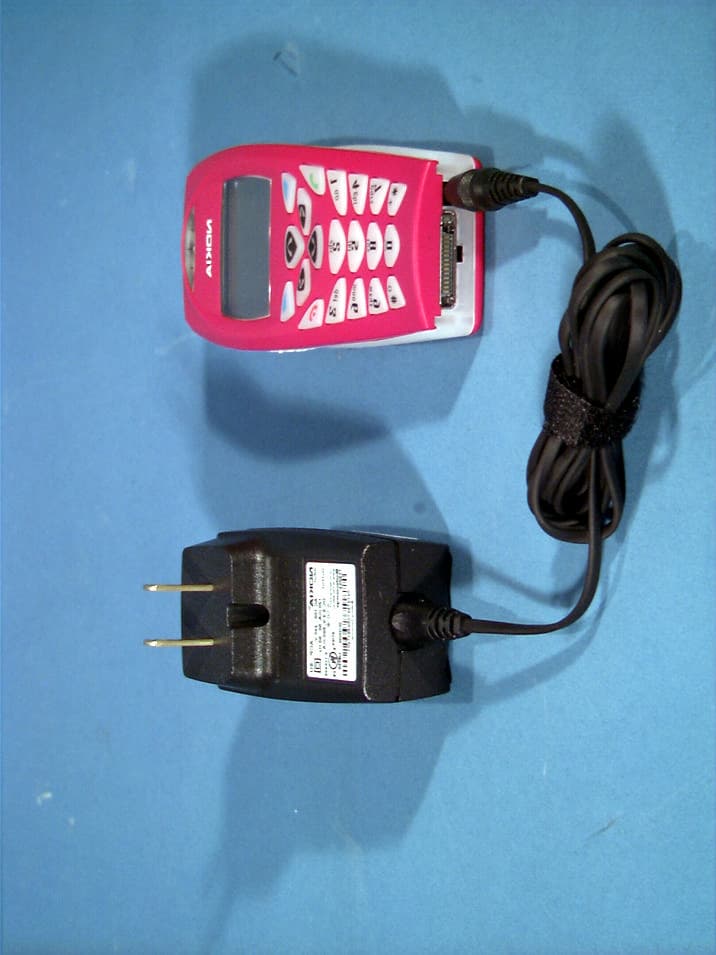
Click to zoom
Application Details
- Equipment Class
- PCE - PCS Licensed Transmitter held to ear
- Date of Grant
- Jul 23, 2002
- Application Purpose
- Original Equipment
- Date of Application
- Jul 22, 2002
- Equipment Note
- Dual Band, Tri-Mode Cellular Telephone
- Frequency Range
- 1851.25000000 - 1908.75000000
- Company
- Microsoft Corporation
- Country
- United States
Documents & Files
Document Text
Text extracted from the exhibit documents filed with the FCC. Open a document above to read the original.
Users Manual
Nokia 3585 Phone at a glance Earpiece Power key Selection key Talk key Number keys Star key Microphone Display screen 4-way scroll keys End key Pound key Selection key Quick guide to functions Make a callEnter a phone number, press Answer a callPress or Answer Answer a call with call waiting Press End a callPress Silence a callPress Silence Decline a callPress or press Decline after pressing Silence RedialPress twice Adjust call volumePress the scroll up or scrol down key during a call Use the in-call menuPress Options while in a call Use 1-touch dialing Press and hold keys 1 through 9. You must first assign a number in the phonebook to one of these numbers. Save a name and number Enter a number, press Options and select Save, then enter a name and press OK Recall a name/numberPress Names, select Find Recall a name/number during a call Press Options, scroll New call, press Select, press Find, enter first letter of the name Check voice mail Press and hold OR call your voice mailbox number (contact service provider for complete details) Send a text message Press Menu 01-1. Write the message. Press Options, scroll to Send, press Select, enter the recipient’s number, press OK Read new message Press Show, then press Select Reply to a message Press Options, select Reply, select As message, choose a reply option, write the reply, press Options, select Send, then press OK Send an electronic business card) Recall a name from the phone book, press Details, press Options, select Send bus. card, Via text msg., enter the recipient’s number, press OK. The wireless phone described in this guide is approved for use in CDMA networks. LEGAL INFORMATION Part No. 9354442 Issue No. 1 Copyright © 2002 Nokia. All rights reserved. Nokia is a registered trademark of Nokia Corporation. Nokia, Nokia Connecting People, Original Accessories logos, Snake II, Pass ‘n Rush, Space Impact, Bumper, and Racket are trademarks of Nokia Corporation and/or its affiliates. Printed in Canada September 2002. US Patent No 5818437 and other pending patents. T9 text input software Copyright ©1999-2001. Tegic Communications, Inc. All rights reserved. Includes RSA BSAFE cryptographic or security protocol software from RSA Security. The information contained in this user guide was written for Nokia 3585 phone. Nokia operates a policy of continuous development. Nokia reserves the right to make changes and improvements to any of the products described in this document without prior notice. UNDER NO CIRCUMSTANCES SHALL NOKIA BE RESPONSIBLE FOR ANY LOSS OF DATA OR INCOME OR ANY SPECIAL, INCIDENTAL, AND CONSEQUENTIAL OR INDIRECT DAMAGES HOWSOEVER CAUSED. THE CONTENTS OF THIS DOCUMENT ARE PROVIDED “AS IS.” EXCEPT AS REQUIRED BY APPLICABLE LAW, NO WARRANTIES OF ANY KIND, EITHER EXPRESS OR IMPLIED, INCLUDING, BUT NOT LIMITED TO, THE IMPLIED WARRANTIES OF MERCHANTABILITY AND FITNESS FOR A PARTICULAR PURPOSE, ARE MADE IN RELATION TO THE ACCURACY AND RELIABILITY OR CONTENTS OF THIS DOCUMENT. NOKIA RESERVES THE RIGHT TO REVISE THIS DOCUMENT OR WITHDRAW IT AT ANY TIME WITHOUT PRIOR NOTICE. EXPORT CONTROLS This product contains commodities, technology or software exported from the United States in accordance with the Export Administration regulations. Diversion contrary to U.S. law is prohibited. FCC/INDUSTRY CANADA NOTICE Your phone may cause TV or radio interference (for example, when using a telephone in close proximity to receiving equipment). The FCC or Industry Canada can require you to stop using your telephone if such interference cannot be eliminated. If you require assistance, contact your local service facility. This device complies with part 15 of the FCC rules. Operation is subject to the condition that this device does not cause harmful interference. For your safety Read these simple guidelines. Breaking the rules may be dangerous or illegal. Further detailed information is given in this manual. SWITCH OFF WHERE PROHIBITED Do not switch on the phone when wireless phone use is prohibited or when it may cause interference or danger. ROAD SAFETY COMES FIRST Don't use a hand-held phone while driving. INTERFERENCE All wireless phones may get interference, which could affect performance. SWITCH OFF IN HOSPITALS Follow any regulations or rules. Switch the phone off near medical equipment. SWITCH OFF IN AIRCRAFT Wireless devices can cause interference in aircraft. SWITCH OFF WHEN REFUELING Don't use the phone at a refueling point. Don't use near fuel or chemicals. SWITCH OFF NEAR BLASTING Don't use the phone where blasting is in progress. Observe restrictions, and follow any regulations or rules. USE SENSIBLY Use only in the normal position. Don't touch the antenna unnecessarily. [ 2 ] QUALIFIED SERVICE Only qualified personnel may install or repair phone equipment. ACCESSORIES AND BATTERIES Use only approved accessories and batteries. Do not connect incompatible products. WATER-RESISTANCE Your wireless phone is not water-resistant. Keep it dry. BACKUP COPIES Remember to make backup copies of all important data. CONNECTING TO OTHER DEVICES When connecting to any other device, read its user guide for detailed safety instructions. Do not connect incompatible products. INFRARED PRECAUTIONS Do not point the IR (infrared) beam at anyone's eye or allow it to interfere with other IR devices. This device is a Class 1 Laser product. CALLING Ensure the phone is switched on and in service. Enter the phone number, including the area code, then press . To end a call, press . To answer a call, press . EMERGENCY CALLS Ensure the phone is switched on and in service. Press as many times as needed (for example, to exit a call, to exit a menu) to clear the display. Enter the emergency number, then press . Give your location. Do not end the call until told to do so. • MENU SHORTCUTS Full list of shortcuts on page 23 1 MESSAGES Text messages . . . . . . . . . . . 01-1 Write message . . . . . . 01-1-1 Inbox . . . . . . . . . . . . . . 01-1-2 Outbox. . . . . . . . .…
Text truncated - open the document above for the full version.
Cover Letter(s)
American Telecommunications Certification Body Inc. 6731 Whittier Ave, McLean, VA 22101 July 1, 2002 RE: Nokia Mobile Phones, Inc. FCC ID: GMLNPD-1AW After a review of the submitted information, I have a few comments on the above referenced Application. 1) Please provide a FRN Number for Nokia Mobile Phones, Inc. This is now required for all Grantees - (reference MD Docket No. 00-205). To obtain an FRN online, visit the FCC's Web site at www.fcc.gov and click the Commission Registration System (CORES) link. For further assistance, please either refer to the FAQ at this same link; contact the CORES helpdesk at [email protected]; or call the CORES helpdesk toll-free number: 1-877-480-3201. 2) One of the internal photographs showing the main board with the shields removed still shows one section without the shield removed. Please provide a photograph will all shields removed? SAR Report: 3) The SAR report should state: a) if the test device is production unit or identical prototype (47 CFR §2.908) b) testing was performed for Occupational/Controlled OR General Population/Uncontrolled limits c) identification of whether device is considered mobile or portable category 4) The system center frequency (836 MHz & 1880 MHz) was not used to verify the SAR system performance, please comment. 5) The FCC likes to be able to confirm that the 15 cm liquid depth was present by supporting photographs or Z-axis data. This supplemental information was not provided for the actual test. Please confirm that the liquid depth was at least 15 cm, and if available please provide the photograph or Z-axis data. 6) The SAR report should include a brief description of the operating modes and operating frequency ranges and maximum device rating for each operating mode and frequency range tested (i.e. section 3.2 of the report). 7) It can not be determined from the SAR report what the Maximum output power (conducted) or SAR drift measured at same position in liquid was before and after each SAR test? This should be provided for each scan shown. 8) The SAR report does not state that the device complies with FCC Part 2.1093 & FCC's OET bulletin 65, Supplement C. Please add this to the statement of conformity portion of the report. 9) Calibration and Validation procedures should be performed for each day of testing. The test data provided shows testing performed on 4/15/02, but there is not any calibration information for this day. 10) Tissue dielectric properties were not listed in section 4.9/4.10 for all days of testing. Also, detailed test data versus section 4.9/4.10 of the test report are not necessarily consistent. Please explain. 11) The target and measured peak and 1-g SAR for the system verification accuracy should agree within 10%, but occasionally exceeded this for the Head at 1800 MHz. Please explain. 12) It appears that low, mid, and high channels were tested, but all plots provided do not appear to be labeled with a low, middle or high channels. Please explain which frequencies were measured for what channels. 13) For course scans, what was the probe tip distance to phantom inner surface? 14) It is preferred that all SAR plots are included to ensure that all "hot spots" were entirely captured. Please provide a engineering justification for the plots provided vs. the plots not provided. l Page 2July 1, 2002 15) The 3 rd SAR scan plot provided contains a note "Pwr lowered". Please explain the purpose of this note. 16) Please provide an explanation as to specify which peak SAR location(s) were used to evaluate max 1-g SAR(s). 17) What is the interpolation resolutions for the "zoom scans". 18) Please provide a description of the description of averaging (integration) procedures to get 1-g SAR from final interpolated grid? 19) Please provide a z-axis scan at the max SAR location(s)? Timothy R. Johnson Examining Engineer mailto: [email protected] The items indicated above must be submitted before processing can continue on the above referenced application. Failure to provide the requested information may result in application termination. Correspondence should be considered part of the permanent submission and may be viewed from the Internet after a Grant of Equipment Authorization is issued. Please do not respond to this correspondence using the email reply button. In order for your response to be processed expeditiously, you must submit your documents through the AmericanTCB.com website. Also, please note that partial responses increase processing time and should not be submitted. Any questions about the content of this correspondence should be directed to the sender.
Cover Letter(s)
American Telecommunications Certification Body Inc. 6731 Whittier Ave, McLean, VA 22101 July 24, 2002 RE: Nokia Mobile Phones, Inc. FCC ID: GMLNPD-1AW After reviewing the revised SAR report, I have a few comments on the above referenced Application. SAR Report: 1) The SAR report should include a brief description of maximum device rating (power) for each operating mode and frequency range tested (i.e. section 2.1 of the revised test report). 2) Powers in SAR report must agree with EMC report and tune-up procedure. Conducted power in SAR report should be greater than or equal to what’s in EMC report, but not exceeding tune- up/tolerance. It appears that the power given in sections 1.1.1 & 1.1.2 are lower than that specified in the EMC report. 3) The SAR test report should state that the device complies with FCC Part 2.1093 Requirements. 4) The original test report provided information as to the procedure used to establish the test signals described (put phone on a call, e.g., base-station simulator vs internal test codes)? However, this information does not appear in the new report. 5) The target and measured peak and 1-g SAR for the system verification accuracy should agree within 10%, but two verifications exceeded this for the Head at 1800 MHz. Please explain. 6) The scan procedure (section 5.2) states that the peak SAR location is determined by the extrapolated data from the coarse scan. Usually interpolation is applied for this scan, while extrapolation is applied to determine phantom surface SAR. Please clarify which is used. 7) The 3 rd SAR scan plot provided contains a note "Pwr lowered". Please explain what this note means. 8) Tissue dielectric properties were not listed in section 4.9/4.10 of the report for tests dated 5/1/02 & 5/2/02. 9) The tissue dielectric properties given on the SAR plots vs. section 4.9/4.10 do not match for testing performed on 4/15/02 & 4/16/02. Please explain. 10) FYI, The table in section 4.2 in the revised test report appears to be mislabeled in the frequency column on the second page. Timothy R. Johnson Examining Engineer mailto: [email protected] The items indicated above must be submitted before processing can continue on the above referenced application. Failure to provide the requested information may result in application termination. Correspondence should be considered part of the permanent submission and may be viewed from the Internet after a Grant of Equipment Authorization is issued. Please do not respond to this correspondence using the email reply button. In order for your response to be processed expeditiously, you must submit your documents through the AmericanTCB.com website. Also, please note that partial responses increase processing time and should not be submitted. Any questions about the content of this correspondence should be directed to the sender.
Cover Letter(s)
1 (1) TCC San Diego Mary Washington 01 August 2002 1) The device operates at power class III for CDMA 800 and power class II for CDMA 1900. 2) ERP/EIRP power levels in EMC report are higher than conducted power levels in SAR report. We did not notice conflicts between conducted power levels in those reports. 3) The device GMLNPD-1AW complies with FCC Part 2.1093 Requirements. 4) GMLNPD-1AW (Nokia 3585) was put in operation using an Agilent E8285A Mobile Station Test Set. Communication between the phone and the tester was established by air link using a Schwarzbech BBHA 9120 rigid horn antenna. 5) We agree that two system verification results for the head at 1800 MHz are +10,2% from the reference result. This is contributed by higher conductivity and lower permittivity of the liquid compared to the target values. As the system verification results are 10,2% higher than reference result, the actual SAR results are expected to be overestimated. 6) Interpolation is the correct word in that context as you suggest in your comment. 7) "Pwr lowered" has no meaning in the report. The power levels used in the SAR measurements are consistent with the power levels to be used in mass production. 8) The referred liquid parameters were measured on 4/30 and those were used also 5/1 and 5/2. System validation results on 5/1 and 5/2 are closer than 3% from reference value and there is no reason to believe that actual SAR results of those days would have higher uncertainty. Additionally, the highest result measured on 5/1 and 5/2 is 0,98. The highest result for GMLNPD-1AW found in the whole SAR evaluation is 1,28. The highest SAR result of GMLNPD-1AW has not changed because of use of 4/30 liquid measurement results also on 5/1 and 5/2 and there is no question about compliance of GMLNPD-1AW with the guidelines listed in the report. 9) The liquid parameter values in the table are correct. The liquid parameters used in the referred actual SAR measurements of 4/16 have too high conductivity and too low permittivity. If the evaluations had been made with the correct values, the results would have been lower. We did not notice discrepancies in 4/15 liquid parameters. ______
Cover Letter(s)
RESPONSES FOR FCC APPLICATION 1 (1) Nokia Mobile Pho nes – San Diego Klaus KettunenAugust 29, 2002 August 29, 2002 FCC Equipment Authorization Branch 7435 Oakland Mills Road Columbia, MD 21046-1609 Re: Nokia Mobile Phones FCC ID: GMLNPD-1AW Dear Mr. Perrine, Follo wing are our responses to your correspo ndence reference number 4907, dated August 19, 2002: (1) Power levels are shown in tables 7.1, 7.2 and 7.3 of the SAR report. Drift can be seen from the SAR Distribution Printouts of Section 9, Annex A. (2) Updated page for the Calibration Certificate from SPEAG has been uploaded as a separate exhibit, whic h co vers t he use d f req ue nci es. We hope that the above responses are sufficient to continue with the review of this applicatio n. Sincerely, Klaus Kettunen, Product Certification Officer Nokia Mobile Pho nes, San Diego
Cover Letter(s)
RESPONSES FOR FCC APPLICATION 1 (1) Nokia Mobile Pho nes – San Diego Klaus KettunenAugust 29, 2002 August 29, 2002 FCC Equipment Authorization Branch 7435 Oakland Mills Road Columbia, MD 21046-1609 Re: Nokia Mobile Phones FCC ID: GMLNPD-1AW Dear Mr. Perrine, Follo wing are our responses to your correspo ndence reference number 4907, dated August 19, 2002: (1) Power levels are shown in tables 7.1, 7.2 and 7.3 of the SAR report. Drift can be seen from the SAR Distribution Printouts of Section 9, Annex A. (2) Updated page for the Calibration Certificate from SPEAG has been uploaded as a separate exhibit, whic h co vers t he use d f req ue nci es. We hope that the above responses are sufficient to continue with the review of this applicatio n. Sincerely, Klaus Kettunen, Product Certification Officer Nokia Mobile Pho nes, San Diego
External Photos
© 2002 PCTEST Lab FCC ID: GMLNPD-1AW (Model: 3585) NOKIA Tri-Mode Dual-Band Analog/PCS Phone © 2002 PCTEST Lab FCC ID: GMLNPD-1AW (Model: 3585) NOKIA Tri-Mode Dual-Band Analog/PCS Phone © 2002 PCTEST Lab FCC ID: GMLNPD-1AW (Model: 3585) NOKIA Tri-Mode Dual-Band Analog/PCS Phone © 2002 PCTEST Lab FCC ID: GMLNPD-1AW (Model: 3585) NOKIA Tri-Mode Dual-Band Analog/PCS Phone © 2002 PCTEST Lab FCC ID: GMLNPD-1AW (Model: 3585) NOKIA Tri-Mode Dual-Band Analog/PCS Phone © 2002 PCTEST Lab FCC ID: GMLNPD-1AW (Model: 3585) NOKIA Tri-Mode Dual-Band Analog/PCS Phone © 2002 PCTEST Lab FCC ID: GMLNPD-1AW (Model: 3585) NOKIA Tri-Mode Dual-Band Analog/PCS Phone © 2002 PCTEST Lab FCC ID: GMLNPD-1AW (Model: 3585) NOKIA Tri-Mode Dual-Band Analog/PCS Phone © 2002 PCTEST Lab FCC ID: GMLNPD-1AW (Model: 3585) NOKIA Tri-Mode Dual-Band Analog/PCS Phone
ID Label/Location Info
NOTE: Artwork pictures are only examples; in production the correct data is read from transceiver/production database. To be printed in NMP production using Thermal Transfer Printer 600dpi and Thermal Transfer Ribbon 5095 NMP code 9730000 color black. 2 1 HDBA2 Type Label DMP06193 0.1 1.0 1.1 2.0 A3 2:1 ------- awhittem 021502 awhittem 022802 awhittem 051002 awhittem 060402 62834 rheald 022802 rheald 051002 rheald 060402 awhittem 021502 Blank Type Label Roll DMD082739381221 1 Printing Files See Table for Printing Files - - - - - 1 11 MODEL 3585 661X-NPD1AW 661X-NPD1GW 661X-NPD1FW 3580 3570 TYPE NPD-1AW NPD-1GW NPD-1FW FCC IDIC GMLNPD-1AW GMLNPD-1GW GMLNPD-1FW wctia3.pcx WITH CTIA LOGO (300dpi) WITH CTIA LOGO (600dpi) WITHOUT CTIA LOGO (300dpi) WITHOUT CTIA LOGO (600dpi) PROTO (300dpi) PROTO (600dpi) woctia3.pcx woctia6.pcx proto3.pcx proto6.pcx wctia6.pcx PRINTING FILEDESCRIPTION JANUARY FEBRUARY MARCH APRIL MAY JUNE JULY AUGUST SEPTEMBER OCTOBER NOVEMBER DECEMBER A B C D E F G H I J K L MEXICO BRAZIL A...Z A...Z A...Z 01 ... 31 R G 2001 I 2002 J 2003 K 2004 L 2005 M MONTH (M) LETTERDATE (DD) FACTORY (F) LETTER LINE (L) LETTER YEAR (Y) KOREA M Printing File Generic With CTIA Logo Scale 1:1 Printing File Generic Without CTIA Logo Scale 1:1 Printing File Proto Scale 1:1 PROTO B Type: Model: HW ID: FCC ID: PSN: ESN: Code: PROPERTY OF NOKIA Type: Model: ANATEL: FCC ID: IC: ESN: ESN HEX: Code: Type: Model: ANATEL: FCC ID: IC: ESN: ESN HEX: Code: Sample Label 1 Factory - Manaus Sales - LSA Scale 1:1 Type: NPD-1AW Model: 3585 ANATEL: 049099-AMS1234 FCC ID: GMLNPD-1AW IC: 661X-NPD1AW ESN: 1234567891234567891 ESN HEX: 123456789123 Code: 12345678MYDDFL Ver Manual de Usuario para Números de Patentes INDUSTRIA BRAZILEIRA / HECHO EN BRAZIL Sample Proto Label Scale 1:1 PROTO B1.2 Type: NPD-1AW Model: 3585 HW ID: 1234 FCC ID: GMLNPD-1AW PSN: XX123456 ESN: 1234567891234567891 Code: 12345678MYDDFL PROPERTY OF NOKIA MADE IN KOREA Sample Label 2 Factory - TMC Sales - USA, APAC, Europe, Canada, India Scale 1:1 Type: NPD-1AW Model: 3585 ANATEL: 049099-AMS1234 FCC ID: GMLNPD-1AW IC: 661X-NPD1AW ESN: 1234567891234567891 ESN HEX: 123456789123 Code: 12345678MYDDFL See User Manual for Patent Numbers MADE IN KOREA Sample Label 3 Factory - Manaus Sales - Brazil Scale 1:1 Type: NPD-1AW Model: 3585 ANATEL: 049099-AMS1234 FCC ID: GMLNPD-1AW IC: 661X-NPD1AW ESN: 1234567891234567891 ESN HEX: 123456789123 Code: 12345678MYDDFL Ver Manual do Usuário para Números de Patentes Produzido no Pólo Indústrial de Manaus INDUSTRIA BRAZILEIRA Sample Layout 2:1 Type: NPD-1AW Model: 3585 ANATEL: 049099-AMS1234 FCC ID: GMLNPD-1AW IC: 661X-NPD1AW ESN: 1234567891234567891 ESN HEX: 123456789123 Code: 12345678MYDDFL See User Manual for Patent Numbers MADE IN KOREA Date Code (See Table Below) 1.5 0.2 Typical Minimum Clearance to Label Outline Boxes Represent Bar Codes (Type 128C) Data Matrix (IMEI Number, EESN Number, Product Code, Data and Factory) CTIA Marking To Be Added After CTIA Approval See Table Below for Types and Models
ID Label/Location Info
Material Sheet 1 of 1 Original Scale Original Size A4 1:1 NMP Code Item Name Document Number Doc. Vers. Name / Date Change Ref. Approved / Date Original Designer FUNCTIONAL CHARACTERISTICS KEY MAIN FUNCTIONAL CHARACTERISTIC MAIN FUNCTIONAL CHARACTERISTIC ( Proof of Process Capability Required ) Copyright c Nokia Mobile Phones. All rights reserved THIS DRAWING IS PROTECTED BY COPYRIGHT AS AN UNPUBLISHED WORK UNAUTHORIZED REPRODUCTION OF THIS DRAWING IS NOT PERMITTED THIS DRAWING CONTAINS PROPRIETARY AND CONFIDENTIAL INFORMATION This document is the property of Nokia Mobile Phones HDBA2 Type Label On D-Cover awhittem 042402 awhittem 051002 awhittem 042402 0.1 0.2 1.0 DMD10005 ------ Type: NPD-1AW Model: 3585 ESN: 1234567891234567891 ESN HEX: 123456789123 Code: 12345678MYDDFL See User Manual for Patent Numbers MADE IN KOREA ANATEL: 049099-AMS1234 FCC ID: GMLNPD-1AW IC: 661X-NPD1AW awhittem 061102rheald 061102
Internal Photos
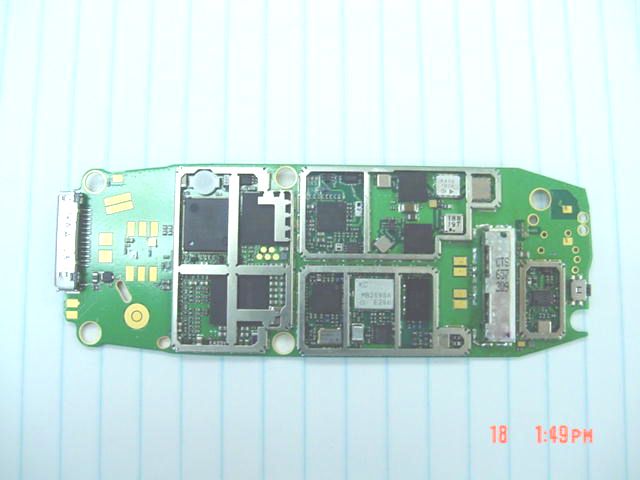
© 2002 PCTEST Lab FCC ID: GMLNPD-1AW (Model: 3585) NOKIA Tri-Mode Dual-Band Analog/PCS Phone © 2002 PCTEST Lab FCC ID: GMLNPD-1AW (Model: 3585) NOKIA Tri-Mode Dual-Band Analog/PCS Phone © 2002 PCTEST Lab FCC ID: GMLNPD-1AW (Model: 3585) NOKIA Tri-Mode Dual-Band Analog/PCS Phone © 2002 PCTEST Lab FCC ID: GMLNPD-1AW (Model: 3585) NOKIA Tri-Mode Dual-Band Analog/PCS Phone © 2002 PCTEST Lab FCC ID: GMLNPD-1AW (Model: 3585) NOKIA Tri-Mode Dual-Band Analog/PCS Phone © 2002 PCTEST Lab FCC ID: GMLNPD-1AW (Model: 3585) NOKIA Tri-Mode Dual-Band Analog/PCS Phone © 2002 PCTEST Lab FCC ID: GMLNPD-1AW (Model: 3585) NOKIA Tri-Mode Dual-Band Analog/PCS Phone © 2002 PCTEST Lab FCC ID: GMLNPD-1AW (Model: 3585) NOKIA Tri-Mode Dual-Band Analog/PCS Phone © 2002 PCTEST Lab FCC ID: GMLNPD-1AW (Model: 3585) NOKIA Tri-Mode Dual-Band Analog/PCS Phone © 2002 PCTEST Lab FCC ID: GMLNPD-1AW (Model: 3585) NOKIA Tri-Mode Dual-Band Analog/PCS Phone © 2002 PCTEST Lab FCC ID: GMLNPD-1AW (Model: 3585) NOKIA Tri-Mode Dual-Band Analog/PCS Phone © 2002 PCTEST Lab FCC ID: GMLNPD-1AW (Model: 3585) NOKIA Tri-Mode Dual-Band Analog/PCS Phone
Operational Description
Eagle Marketing 2-Pager Approved 3.0 5/29/2002 TQX00087-EN Nokia 3585 CDMA 1900,800/AMPS 800 PRINTED COPIES OF THIS DOCUMENT ARE UNCONTROLLED eagle_2_pager.doc Copyright Nokia Mobile Phones Innovative design encompassing easily personalized changeable covers, Internet browsing and enhanced messaging. SALES MESSAGES Unique Stylish Design • New radical, edgy design to give distinctive look yet maintain broad appeal. • Ergonomic monoblock form for comfortable feel and easy accessability to the keypad and display. • User changeable Front and Back covers. Easy to use Interface with new 4-way scroll • Popular Nokia menu structure with easy to operate keypad featuring Nokia’s first 4-way scroll. • Large display with jumbo fonts, easy to read under all conditions. Supports both small and large fonts and 4 rows of text. • New keypad design with large fonts and exceptional backlighting for easy location of correct keys. Unique Selling Points • 35 predefined ringtones plus 10 downloadable. • Large, high-resolution gray scale display • User changeable front and back covers. • Support for CDMA Removable User Identity Module which allows you to easily switch service from one phone to another. • 500 phonebook locations with support for multiple numbers and addresses in each. • High Speed Data Support for speeds up to 153 kbps. • Downloadable Games via kJava. • Enhanced musical ring tones and game tones via MIDI file format support. • Memo Recorder • Internal Vibra Excellent Browsing Functionality • Web minibrowser. • 4-way scroll keys for easy navigation of Web sites. • Large display with changeable fonts so you can see more information (up to 4 rows of text). Lifestyle, Personalization and Fun • User-changeable Xpress-on TM Front and Back covers. • New Accessory Covers with active graphics that light up during incoming calls. • Graphical Icons to personalize Caller ID. • Support for downloading ringtones of your choice. • User selectable screen savers. • Voice dialing with storage for 25 name tags. Broad Range of Accessories • A comprehensive range of new Nokia accessories with desktop synchronization option. • Universal Headset Jack to support non-Nokia headsets and TTY/TDD devices. • Numerous Front and Back cover options using new materials, colors and graphic designs. • Internal Lithium Ion battery. Nokia Mobile Phones - confidential TRADE CUSTOMER BENEFITS • Operator co-labeling • CDMA Tri-Mode engine supporting 1XRTT voice and data features. • Popular Nokia User Interface. • Easy to identify, single function power key. • Customizable features appealing to broad range of end users. (covers, ringtones, screensavers, etc.) • Removable User Identity Module (RUIM) support. • Light-weight Lithium Ion battery providing up to 3 hours and 45 minutes of talk time and 235 hours of standby time. • Extensive local language support. • Predictive text input (T9) for easy data entry. • New line of Nokia Quality Accessories. TECHNICAL DATA DIMENSIONS • Volume: 100 cc • Weight: 114 g • Length: 117 mm • Width: 49 mm • Thickness: 24mm KEY FEATURES Display and Keypad • High resolution display (96x65 pixels and 4 gray scale shading). • Keymat support for the visually impaired. • New keypad design with large fonts and exceptional backlighting for easy location of correct keys. Hardware characteristics • 1900/800 MHz CDMA plus 800 AMPS support • Support for new CDMA 1XRTT standard air interface that offers high speed data transimission and more effective use of network capacity. • Internal Antenna with External Whip for best performance with low SAR emmissions. • Easy access to RUIM module. • 8Mbytes Flash memory • MIDI sound support • 2.5 mm Universal Headset connector with TTY/TDD support • Internal vibrator UI Features • Web minibrowser • T9 Predictive Text Input • Graphical icons for Calling Line Identification (CLI) • Voice dialing with storage for 25 names • Pre-stored text messages for quick editing and sending of the most common messages (i.e. “I’ll be 15 minutes late”) • Monthly calendar view, Reminder and Notes • New Games • Network provided Time and Date • Clock with alarm feature • Memo recorder with 1minute of recording time ACCESSORIES • ACP-7 Standard slow charger • ACP-8 Multi-voltage switching charger • ACP-9 Rapid performance charger • ACP-12 Rapid performance charger • DCV-15 Desk stand with one button synchronization • CARK-126 Advanced Car Kit with passive handset • BHF-1 Basic Car Kit • LPS-4 Loopset • HDB-4 Headset • BLC-2 Li-Ion Battery • DKU-5 USB cable • Belt attachment • Accessory covers: Reflective, Glow-in-the-dark, Active, Thermosensitive & Graphic LANGUAGE SUPPORT • English • French • Spanish • Portuguese • Hebrew • Russian POWER MANAGEMENT Capacity 950 mAh Talktime Analog 1.5 Hrs. Talktime Digital 3 hours 45 minutes Standbytime Analog 25 Hrs. Standbytime Digital 235 Hrs
RF Exposure Info
[ 141 ] 16 off before you can make an emergency call. Consult this user guide and your local cellular service provider. •When making an emergency call, remember to give all the necessary information as accurately as possible. Remember that your wireless phone may be the only means of communication at the scene of an accident - do not end the call until given permission to do so. • CERTIFICATION INFORMATION (SAR) THIS MODEL PHONE MEETS THE GOVERNMENT'S REQUIREMENTS FOR EXPOSURE TO RADIO WAVES. Your wireless phone is a radio transmitter and receiver. It is designed and manufactured not to exceed the emission limits for exposure to radio frequency (RF) energy set by the Federal Communications Commission of the U.S. Government. These limits are part of comprehensive guidelines and establish permitted levels of RF energy for the general population. The guidelines are based on standards that were developed by independent scientific organizations through periodic and thorough evaluation of scientific studies. The standards include a substantial safety margin designed to assure the safety of all persons, regardless of age and health. The exposure standard for wireless mobile phones employs a unit of measurement known as the Specific Absorption Rate, or SAR. The SAR limit set by the FCC is 1.6W/kg.* Tests for SAR are conducted using standard operating positions accepted by the FCC with the phone transmitting at its highest certified power level in all tested frequency bands. Although the SAR is determined at the highest certified power level, the actual SAR level of the phone while operating can be well below the maximum value. This is because the phone is designed to operate at multiple power levels so as to use only the power required to reach the network. In general, the closer you are to a wireless base station antenna, the lower the power output. 1…
Text truncated - open the document above for the full version.
Contact Information
Applicant
Hasnain Syed(Director, EMC, SI and RF Compliance)
Technical Contact
Nokia Mobile Phones, Inc.Albert Ho
[email protected]1-858-831-5888
12278 Scripps Summit Drive · San Diego, California · United States
Non-Technical Contact
Nokia Mobile Phones, Inc.Klaus Kettunen
[email protected]1-858-831-5692
Test Firm
PCTEST Engineering Laboratory, Inc.Randy Ortanez
Technical Specifications
| # | Rule Parts | Frequency Range | Power Output | Emission | Tolerance |
|---|---|---|---|---|---|
| 4 | 24E | 1.85 GHz - 1.91 GHz | 357.00 mW | 1M25F9W | 150 Hz |
Other Applications from Microsoft Corporation

GMLRM-88A
Apr 11, 2006GSM 850/900/1800/1900MHz Cellphone w/BT
Equipment Class
JBP - Part 15 Class B Computing Device Peripheral
GMLRM-88
Jan 19, 2006GSM 850/900/1800/1900MHz Cellphone w/BT
Equipment Class
DSS - Part 15 Spread Spectrum Transmitter
GMLNPM-10X
Oct 29, 2003Dual Band Mobile Phone
Equipment Class
PCE - PCS Licensed Transmitter held to ear
GMLRH-25
Sep 10, 2003Tri mode Dual Band Cellular Phone
Equipment Class
PCE - PCS Licensed Transmitter held to ear
GMLRH-42
Aug 27, 2003Nokia 2220 single band cellphone
Equipment Class
TNE - Licensed Non-Broadcast Transmitter Held to Ear