GMLNPD-1FWSingle Band PCS CDMA Cellular Telephone
Microsoft Corporation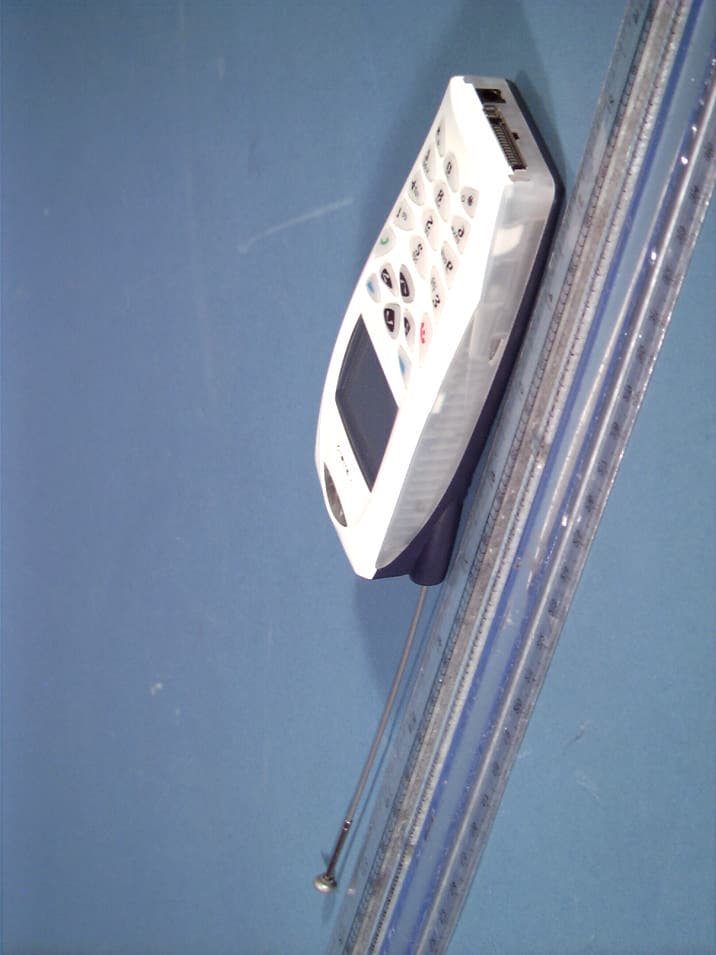
Click to zoom
Application Details
- Equipment Class
- PCE - PCS Licensed Transmitter held to ear
- Date of Grant
- Aug 26, 2002
- Application Purpose
- Original Equipment
- Date of Application
- Aug 26, 2002
- Equipment Note
- Single Band PCS CDMA Cellular Telephone
- Frequency Range
- 1851.25000000 - 1908.75000000
- Company
- Microsoft Corporation
- Country
- United States
Documents & Files
Document Text
Text extracted from the exhibit documents filed with the FCC. Open a document above to read the original.
Users Manual
Nokia 3570 User Guide What information is needed? NumbersWhere is the number? My number Wireless service provider Voice mail number Wireless service provider Wireless provider’s number Wireless service provider Provider’s customer care Wireless service provider Model number Nokia 3570See “About your phone” on page 12. Phone type GMLNPD-1FWBack of title page Electronic serial number (ESN) See “Have the right information available” on page 10. The wireless phone described in this guide is approved for use in CDMA networks. LEGAL INFORMATION Part No.9354813, Issue No. 1 Copyright ©2002 Nokia. All rights reserved. Nokia, Nokia Connecting People, Nokia 3570, and the Nokia Original Accessories logos, Snake II, Kart Racing, Space Impact II, and Bumper are trademarks or registered trademarks of Nokia Corporation. All other product and company names mentioned herein may be trademarks or tradenames of their respective owners. Printed in Canada 8/2002 US Patent No 5818437 and other pending patents. T9 text input software Copyright ©1999-2002. Tegic Communications, Inc. All rights reserved. Includes RSA BSAFE cryptographic or security protocol software from RSA Security. Java is a trademark of Sun Microsystems, Inc. The information in this user guide was written for the Nokia 3570 phone. Nokia operates a policy of on-going development. Nokia reserves the right to make changes and improvements to any of the products described in this document without prior notice. UNDER NO CIRCUMSTANCES SHALL NOKIA BE RESPONSIBLE FOR ANY LOSS OF DATA OR INCOME OR ANY SPECIAL, INCIDENTAL, AND CONSEQUENTIAL OR INDIRECT DAMAGES HOWSOEVER CAUSED. THE CONTENTS OF THIS DOCUMENT ARE PROVIDED “AS IS.” EXCEPT AS REQUIRED BY APPLICABLE LAW, NO WARRANTIES OF ANY KIND, EITHER EXPRESS OR IMPLIED, INCLUDING, BUT NOT LIMITED TO, THE IMPLIED WARRANTIES OF MERCHANTABILITY AND FITNESS FOR A PARTICULAR PURPOSE, ARE MADE IN RELATION TO THE ACCURACY AND RELIABILITY OR CONTENTS OF THIS DOCUMENT. NOKIA RESERVES THE RIGHT TO REVISE THIS DOCUMENT OR WITHDRAW IT AT ANY TIME WITHOUT PRIOR NOTICE. EXPORT CONTROLS This product contains commodities, technology or software exported from the United States in accordance with the Export Administration regulations. Diversion contrary to U.S. law is prohibited. FCC/INDUSTRY CANADA NOTICE Your phone may cause TV or radio interference (for example, when using a telephone in close proximity to receiving equipment). The FCC or Industry Canada can require you to stop using your telephone if such interference cannot be eliminated. If you require assistance, contact your local service facility. This device complies with part 15 of the FCC rules. Operation is subject to the condition that this device does not cause harmful interference. The term “IC:” before the certification/registration number only signifies that Industry Canada technical specifications were met. iii Table of contents 1 For your safety. . . . . . . . . . . . . . . . . . . . . . . . . . . . . . . . 1 Quick guide . . . . . . . . . . . . . . . . . . . . . . . . . . . . . . . . . . 3 Menu shortcuts . . . . . . . . . . . . . . . . . . . . . . . . . . . . . . . 4 2 Welcome . . . . . . . . . . . . . . . . . . . . . . . . . . . . . . . . . . . . 5 Get the most out of this guide. . . . . . . . . . . . . . . . . . . 5 Understand wireless network services. . . . . . . . . . . . . 7 Learn about accessibility solutions . . . . . . . . . . . . . . . 8 Contact Nokia . . . . . . . . . . . . . . . . . . . . . . . . . . . . . . . . 9 Register your phone . . . . . . . . . . . . . . . . . . . . . . . . . . 11 E-newsletters. . . . . . . . . . . . . . . . . . . . . . . . . . . . . . . . 11 Contact your service provider . . . . . . . . . . . . . . . . . . 11 3 About your phone . . . . . . . . . . . . . . . . . . . . . . . . . . . .12 About the antennas . . . . . . . . . . . . . . . . . . . . . . . . . .13 About the battery . . . . . . . . . . . . . . . . . . . . . . . . . . . .14 Switch your phone on or off . . . . . . . . . . . . . . . . . . .17 Check the Start screen . . . . . . . . . . . . . . . . . . . . . . . .17 Learn about the keys. . . . . . . . . . . . . . . . . . . . . . . . . .18 Make and answer calls . . . . . . . . . . . . . . . . . . . . . . . .20 Review phone symbols . . . . . . . . . . . . . . . . . . . . . . . . 21 Memory use . . . . . . . . . . . . . . . . . . . . . . . . . . . . . . . . .22 Use the selection keys. . . . . . . . . . . . . . . . . . . . . . . . .23 View your phone’s help system . . . . . . . . . . . . . . . . .23 iv Browse phone menus . . . . . . . . . . . . . . . . . . . . . . . . . 24 Menu and menu shortcuts. . . . . . . . . . . . . . . . . . . . . 26 Phone book menu . . . . . . . . . . . . . . . . . . . . . . . . . . . . 34 4 Phone setup . . . . . . . . . . . . . . . . . . . . . . . . . . . . . . . . 35 Learn about your headset . . . . . . . . . . . . . . . . . . . . . 35 5 Text entry . . . . . . . . . . . . . . . . . . . . . . . . . . . . . . . . . . 37 Enter letters and numbers . . . . . . . . . . . . . . . . . . . . . 37 Write using ABC and 123 modes . . . . . . . . . . . . . . . 38 Write with predictive text . . . . . . . . . . . . . . . . . . . . . 41 6 Phone book . . . . . . . . . . . . . . . . . . . . . . . . . . . . . . . . . 46 Saving names and numbers . . . . . . . . . . . . . . . . . . . . 46 Recall names and numbers . . . . . . . . . . . . . . . . . . . . 47 Use phone book menus . . . . . . . . . . . . . . . . . . . . . . . 47 Edit a name or number . . . . . . . . . . . . . . . . . . . . . . . 48 Add a number to a phone book entry . . . . . . . . . . . . 49 Delete stored names and numbers . . . . . . . . . . . . . . 51 Add other information to a phone book entry . . . . . 51 Use caller groups . . . . . . . . . . . . . . . . . . . . . . . . . . . . 52 Check memory status . . . . . . . . . . . . . . . . . . . . . . . . . 53 7 Call log . . . . . . . . . . . . . . . . . . . . . . . . . . . . . . . . . . . . 54 Check mis…
Text truncated - open the document above for the full version.
Attestation Statements
Federal Communications Commission DA 00-132 Before the Federal Communications Commission Washington, D.C. 20554 In the Matter of 911 Call Processing Modes ) ) ) WT Docket No. 99-328 ORDER Adopted: January 27, 2000 Released: January 28, 2000 By the Chief, Wireless Telecommunications Bureau: I. INTRODUCTION AND BACKGROUND 1. In its Second Report and Order in the Wireless E911 Rulemaking, CC Docket No. 94- 102, 1 the Commission adopted Section 22.921 of its rules, 47 C.F.R.§ 22.921. To help improve 911 call completion, this rule requires new analog wireless handsets, and multimode handsets when operating in analog mode, to be able to complete 911 calls to either analog carrier in an area, regardless of the programming of the handset for non-911 calls. The rule takes effect on February 13, 2000. 2 Further, the Commission approved three proposed 911 call processing modes, while stating general principles for other acceptable modes and encouraging the development of further improvements in 911 call completion, including the extension of improved calling methods to digital services. 3 The Commission delegated authority to the Wireless Telecommunications Bureau (Bureau) to consider and approve, deny, or approve with modification new or revised 911 call processing modes. 4 2. On October 27, 1999, Nokia, Inc. filed a letter with the Bureau requesting approval for an alternate 911 call completion method for Nokia’s multi-mode products, including both digital and analog transmission technologies. 5 Nokia describes its method as based on the Automatic A/B Roaming- Intelligent Retry (A/B-IR) method approved in the Second Report and Order , but going further to attempt call completion on all systems on which a handset is capable of operating, including both analog and digital modes. Specifically, Nokia states that its multi-mode handsets will be programmed with the capability to access all systems on which they have the capacity for operating. 6 When a 911 call is dialed, 1 Revision of the Commission’s Rules To Ensure Compatibility With Enhanced 911 Emergency Calling Systems, CC Docket No. 94-102, Second Report and Order, 14 FCC Rcd 10954 (1999). (Second Report and Order). 2 Id. at 10992. See also Revision of the Commission’s Rules To Ensure Compatibility With Enhanced 911 Emergency Calling Systems, CC Docket No. 94-102, Third Memorandum Opinion and Order, FCC 00-7, released January 13, 2000 (Third Memorandum Opinion and Order) at paras. 5-8. 3 Second Report and Order, 14 FCC Rcd at 10993. 4 Id. at 10993, 10995. 5 Letter from David Siddall, Counsel to Nokia, to Thomas Sugrue, Chief, Wireless Telecommunications Bureau, Oct. 27, 1999 (Nokia Request). 6 Nokia Request at 3. Federal Communications Commission DA 00-132 the Nokia handset will first attempt to complete the call with the “presently acquired system,” 7 i.e . , the system the handset is currently using for non-emergency calls, whether this system is analog or digital. If the call cannot be completed with that system, the handset will next attempt to complete the call using the handset’s preferred roaming list (PRL). If the call cannot be completed on any of the preferred systems, the handset will attempt to complete the call on any and all additional systems on which it is capable of operating, analog or digital, regardless of the handset’s programmed preferences. 8 3. In a Public Notice in this docket, the Bureau sought comment on this proposal, in particular on whether the proposed method is consistent with the Commission’s rules and the principles set out by the Commission for 911 call processing modes. 9 Comments supporting the proposal were filed by AT&T, Cellular Telecommunications Industry Association (CTIA), and the National Emergency Number Association (NENA). The Wireless Consumer’s Alliance, Inc. (WCA) filed comments opposing the proposal, claiming that the Nokia proposal does not meet conditions adopted by the Commission to mitigate against “lock-in” of calls on the caller’s preferred carrier and delays in 911 call processing. 10 In response to the WCA comments and to Bureau staff requests, Nokia supplied additional information to justify approval of its proposed 911 call completion method. 11 On December 30, 1999, Nokia requested a deferral of the February 13, 2000 deadline for Nokia’s multi-mode handsets until four months after the Commission rules on its call completion proposal, to allow time to implement necessary changes in those handsets. 12 In response to Bureau staff requests, Nokia subsequently provided additional information to justify the requested extension. 13 II. DISCUSSION 4. Based on our review of the Nokia request and the record, we approve Nokia’s proposed 911 call completion method, subject to the same two conditions that the Commission imposed in the Second Report and Order to address lock-in concerns associated with the A/B-IR call completion method. 14 First, the handset must provide effective feedback to inform the user when 911 call processing is underway and has not finished, for example in the form of an audible tone or message in addition to a 7 Id., Attachment at 4. 8 Id at 3. 9 Public Notice, “Comments Sought on 911 Call Processing Method Proposed by Nokia,” DA 99-2508, released Nov.10, 1999. 10 WCA Comments in Opposition to the Nokia Application (WCA Comments). See also Letter from Carl Hilliard, WCA, to Magalie Roman Salas, Secretary, FCC, January 11, 2000 (WCA January 11 Ex parte Letter). 11 See Letter from David Siddall, Counsel to Nokia, to Magalie Roman Salas, Secretary, FCC, December 30, 2000 (Nokia December 30 Ex Parte Letter); Letter from David Siddall, Counsel to Nokia, to Magalie Roman Salas, Secretary, FCC, January 19, 2000 (Nokia January 19 Ex Parte Letter). 12 Letter from David Siddall, Counsel to Nokia, to Thomas Sugrue, Chief, Wireless Telecommunications Bureau, Dec. 30, 1999 (Nokia Waiver Letter) at 2. 13 See Letter from David Siddall, Counsel to Nokia, to Kris Monteith, Chief, Policy Div…
Text truncated - open the document above for the full version.
Cover Letter(s)
RESPONSES FOR FCC APPLICATION 1 (1) Nokia Mobile Phones – San Diego Klaus Kettunen August 15, 2002 August 15, 2002 American Telecommunications Certification Body, Inc. 6731 Whittier Avenue McLean, VA 22101 Re: Nokia Mobile Phones FCC ID: GMLNPD-1FW Dear Mr. Graff, Following are our responses to your request dated August 8, 2002: (1) The missing ‘band edge plots’ (nokia 3570 plots.pdf) were uploaded to American TCB website on August 14, 2002. (2) The target values in mass production for the maximum power levels are: CH 25 = 22.4 dBm CH 600 = 22.8 dBm CH 1175 = 23.4 dBm. (3) There are no Nokia approved body-worn accessories currently available for the product. The manual gives instructions to users based on SAR measurement carried out with 1.5 cm distance. The instructions are on pages 146 and 147 of the manual. (4) The depth of the tissue stimulant in the ear reference point of the phantom was 150mm+/- 5mm during all tests. Z-axis plots from actual SAR measurement for head and body liquids are included in the report. We understand that to be adequate. (5) The missing ‘circuitry_determing_freq and the ‘emission_suppressions_circuits were uploaded to American TCB website on August 9, 2002. We hope that the above responses are sufficient to continue with the review of this application and the grant of this application. Sincerely, Klaus Kettunen, PCO Nokia Mobile Phones, San Diego
Cover Letter(s)
RESPONSES FOR FCC APPLICATION 1 (1) Nokia Mobile Pho nes – San Diego Mary WashingtonAugust 19 2002 August 19, 2002 American Telecommunications Certification Body, Inc. 6731 Whittier Avenue McLean, VA 22101 Re: Nokia Mobile Phones FCC ID: GMLNPD-1FW Dear Mr. Graff, Follo wing are our responses to your request dated August 15, 2002: (1) The upper band edge plot with the equipment set to CH 1175 and span centered o n 1910 MHz (GMLNPD1FW_no kia 3570 plots.pdf) were uploaded to American TCB website o n August 19, 2002. This is the second plot on Page 1 of this document. (2) Z-axis plots for highest body and highest head SAR appear o n Pages 17 to 21 of GMLNPD1FW_SAR Test Report for Model 3570 (Eagle) 1.pdf uploaded to American TCB website on August 19, 2002. We hope that the above responses are sufficient to continue with the review of this applicatio n and the grant of this application. Sincerely, Mary Washington, Senior EMC Engineer Nokia Mobile Pho nes, San Diego
Cover Letter(s)
American Telecommunications Certification Body Inc. 6731 Whittier Ave, McLean, VA 22101 August 15, 2002 RE: Nokia Mobile Phones FCC ID: GMLNPD-1FW There are some continuing discrepancies on this Application which must be addressed. 1.) Please re-examine the band edge plot file (nokia 3570 plots.pdf). Only lower band edge data is shown when the equipment is set to Ch 025 and the center of the span is on 1850MHz. We still must have the upper band edge plot with the equipment set to Ch 1175 and the span centered on 1910MHz. Please comply. 2.) Z-axis plots are required for all dipole validation procedures, and for all the peak head and peak body worn plots. Z-axis plots for highest body and highest head SAR are omitted. Please comply Thank you. William H. Graff President and Examining Engineer mailto: [email protected] The items indicated above must be submitted before processing can continue on the above referenced application. Failure to provide the requested information may result in application termination. Correspondence should be considered part of the permanent submission and may be viewed from the Internet after a Grant of Equipment Authorization is issued. Please do not respond to this correspondence using the email reply button. In order for your response to be processed expeditiously, you must submit your documents through the AmericanTCB.com website. Also, please note that partial responses increase processing time and should not be submitted. Any questions about the content of this correspondence should be directed to the sender.
External Photos
© 2002 PCTEST Lab FCC ID: GMLNPD-1FW (Model: 3570) NOKIA Single-Mode PCS Phone (PCS CDMA) © 2002 PCTEST Lab FCC ID: GMLNPD-1FW (Model: 3570) NOKIA Single-Mode PCS Phone (PCS CDMA) © 2002 PCTEST Lab FCC ID: GMLNPD-1FW (Model: 3570) NOKIA Single-Mode PCS Phone (PCS CDMA) © 2002 PCTEST Lab FCC ID: GMLNPD-1FW (Model: 3570) NOKIA Single-Mode PCS Phone (PCS CDMA) © 2002 PCTEST Lab FCC ID: GMLNPD-1FW (Model: 3570) NOKIA Single-Mode PCS Phone (PCS CDMA)
ID Label/Location Info
Type: NPD-1AW Model: 3570 ANATEL: FCC ID: GMLNPD-1FW IC: ESN: 1234567891234567891 ESN HEX: 123456789123 Code: 12345678MYDDFL See User Manual for Patent Numbers MADE IN KOREA DMD10224 0.1 AYAMAZAK29JUL02 HDBA2 3570 Type Label on D-0Cover
ID Label/Location Info
NOTE: Artwork pictures are only examples; in production the correct data is read from transceiver/production database. To be printed in NMP production using Thermal Transfer Printer 600dpi and Thermal Transfer Ribbon 5095 NMP code 9730000 color black. 2 1 HDBA2 Type Label DMP06193 0.1 1.0 1.1 2.0 A3 2:1 ------- awhittem 021502 awhittem 022802 awhittem 051002 awhittem 060402 62834 rheald 022802 rheald 051002 rheald 060402 awhittem 021502 Blank Type Label Roll DMD082739381221 1 Printing Files See Table for Printing Files - - - - - 1 11 MODEL 3585 661X-NPD1AW 661X-NPD1GW 661X-NPD1FW 3580 3570 TYPE NPD-1AW NPD-1GW NPD-1FW FCC IDIC GMLNPD-1AW GMLNPD-1GW GMLNPD-1FW wctia3.pcx WITH CTIA LOGO (300dpi) WITH CTIA LOGO (600dpi) WITHOUT CTIA LOGO (300dpi) WITHOUT CTIA LOGO (600dpi) PROTO (300dpi) PROTO (600dpi) woctia3.pcx woctia6.pcx proto3.pcx proto6.pcx wctia6.pcx PRINTING FILEDESCRIPTION JANUARY FEBRUARY MARCH APRIL MAY JUNE JULY AUGUST SEPTEMBER OCTOBER NOVEMBER DECEMBER A B C D E F G H I J K L MEXICO BRAZIL A...Z A...Z A...Z 01 ... 31 R G 2001 I 2002 J 2003 K 2004 L 2005 M MONTH (M) LETTERDATE (DD) FACTORY (F) LETTER LINE (L) LETTER YEAR (Y) KOREA M Printing File Generic With CTIA Logo Scale 1:1 Printing File Generic Without CTIA Logo Scale 1:1 Printing File Proto Scale 1:1 PROTO B Type: Model: HW ID: FCC ID: PSN: ESN: Code: PROPERTY OF NOKIA Type: Model: ANATEL: FCC ID: IC: ESN: ESN HEX: Code: Type: Model: ANATEL: FCC ID: IC: ESN: ESN HEX: Code: Sample Label 1 Factory - Manaus Sales - LSA Scale 1:1 Type: NPD-1AW Model: 3585 ANATEL: 049099-AMS1234 FCC ID: GMLNPD-1AW IC: 661X-NPD1AW ESN: 1234567891234567891 ESN HEX: 123456789123 Code: 12345678MYDDFL Ver Manual de Usuario para Números de Patentes INDUSTRIA BRAZILEIRA / HECHO EN BRAZIL Sample Proto Label Scale 1:1 PROTO B1.2 Type: NPD-1AW Model: 3585 HW ID: 1234 FCC ID: GMLNPD-1AW PSN: XX123456 ESN: 1234567891234567891 Code: 12345678MYDDFL PROPERTY OF NOKIA MADE IN KOREA Sample Label 2 Factory - TMC Sales - USA, APAC, Europe, Canada, India Scale 1:1 Type: NPD-1AW Model: 3585 ANATEL: 049099-AMS1234 FCC ID: GMLNPD-1AW IC: 661X-NPD1AW ESN: 1234567891234567891 ESN HEX: 123456789123 Code: 12345678MYDDFL See User Manual for Patent Numbers MADE IN KOREA Sample Label 3 Factory - Manaus Sales - Brazil Scale 1:1 Type: NPD-1AW Model: 3585 ANATEL: 049099-AMS1234 FCC ID: GMLNPD-1AW IC: 661X-NPD1AW ESN: 1234567891234567891 ESN HEX: 123456789123 Code: 12345678MYDDFL Ver Manual do Usuário para Números de Patentes Produzido no Pólo Indústrial de Manaus INDUSTRIA BRAZILEIRA Sample Layout 2:1 Type: NPD-1AW Model: 3585 ANATEL: 049099-AMS1234 FCC ID: GMLNPD-1AW IC: 661X-NPD1AW ESN: 1234567891234567891 ESN HEX: 123456789123 Code: 12345678MYDDFL See User Manual for Patent Numbers MADE IN KOREA Date Code (See Table Below) 1.5 0.2 Typical Minimum Clearance to Label Outline Boxes Represent Bar Codes (Type 128C) Data Matrix (IMEI Number, EESN Number, Product Code, Data and Factory) CTIA Marking To Be Added After CTIA Approval See Table Below for Types and Models
Internal Photos
© 2002 PCTEST Lab FCC ID: GMLNPD-1FW (Model: 3570) NOKIA Single-Mode PCS Phone (PCS CDMA) © 2002 PCTEST Lab FCC ID: GMLNPD-1FW (Model: 3570) NOKIA Single-Mode PCS Phone (PCS CDMA) © 2002 PCTEST Lab FCC ID: GMLNPD-1FW (Model: 3570) NOKIA Single-Mode PCS Phone (PCS CDMA) © 2002 PCTEST Lab FCC ID: GMLNPD-1FW (Model: 3570) NOKIA Single-Mode PCS Phone (PCS CDMA) © 2002 PCTEST Lab FCC ID: GMLNPD-1FW (Model: 3570) NOKIA Single-Mode PCS Phone (PCS CDMA) © 2002 PCTEST Lab FCC ID: GMLNPD-1FW (Model: 3570) NOKIA Single-Mode PCS Phone (PCS CDMA) © 2002 PCTEST Lab FCC ID: GMLNPD-1FW (Model: 3570) NOKIA Single-Mode PCS Phone (PCS CDMA) © 2002 PCTEST Lab FCC ID: GMLNPD-1FW (Model: 3570) NOKIA Single-Mode PCS Phone (PCS CDMA) © 2002 PCTEST Lab FCC ID: GMLNPD-1FW (Model: 3570) NOKIA Single-Mode PCS Phone (PCS CDMA) © 2002 PCTEST Lab FCC ID: GMLNPD-1FW (Model: 3570) NOKIA Single-Mode PCS Phone (PCS CDMA)
Operational Description
July 16, 2002 Confidential Theory of Operation Vocabulary CS =Cellular System AMPS =Advanced Mobile Phones Service CDMA =Code Division Multiple Access HW =Hardware (drivers) RAM =Random-Access Memory ROM =Read-Only Memory SPEC =Specification SW =Software Technical Summary The NPD-1FW is a radio transceiver unit for CDMA 1900 networks. The power class for CDMA 1900 is class II providing power from –50dBm to +23.5dBm. The transceiver consists of system/RF module (YA3), which is referred to as the Engine. There are two antennas; an internal antenna, which is always active and a whip antenna, which is capacitively coupled to the internal antenna. An RF connector on the topside of the phone provides an external antenna connection for testing. Circuit Description The YA3 engine consists of a Baseband/RF module with connections to a display module. Baseband and RF modules are interconnected with PCB wiring. The phone can be connected to accessories via the system connector, TTY/TDD and Universal headset interface, and intelligent battery interface. The RF sub-module receives and demodulates radio frequency signals from the base station and transmits modulated RF signals to the base station. It consists of the following functional sub-modules: a receiver, frequency synthesizer and transmitter. The Baseband module contains audio, I/O control, signal processing, and power supply functions. It consists of functional sub-modules UPP and UEM Applicant: Nokia Inc. Copyright © 2002 Nokia Inc. FCC ID: GMLNPD-1FW July 16, 2002 Basic Specifications: Table 1. Basic Specifications (PCS band) Parameter CDMA 1900 Cellular system T-STD - 018, T-STD – 008, IS2000 TX frequency band 1850...1910 MHz RX frequency system 1930...1990 MHz Duplex spacing 80.0 MHz Number of RF channels 1150 Channel spacing 50 kHz Power levels -50dBm to +23.7dBm Method of frequency synthesis Three digital phase locked loops VHF RX 256.2 MHz VHF TX 416.2 MHz UHF 2058.05 – 2118.05 MHz Frequency control 19.2 MHz VCTCXO: AFC used Receiver type Linear, one IF Modulator type OQPSK Technical Specifications Modes of Operation NPD-1FW operates in cellular mode and a local mode for service: - Cellular mode: phone controlled by Cellular System SW and partly by a basestation - Locals mode: used by Production and Aftersales Cellular Mode In cellular mode, the phone performs all the tasks to place and release calls. The operating system SW handles charging and communication between the phone and any accessories. Signaling and handover functions are supported by the basestation. Power Off In the power-off mode, only the UEM is active. Power-off mode can be left by pushing the PWR- key, connecting charger to the phone, a real time clock interrupt, or an intelligent battery interrupt. Applicant: Nokia Inc. Copyright © 2002 Nokia Inc. FCC ID: GMLNPD-1FW July 16, 2002 Applicant: Nokia Inc. Copyright © 2002 Nokia Inc. FCC ID: GMLNPD-1FW Idle/standby The phone is in SERV-state in AMPS and Idle in CDMA, listening to the network and waiting for the page. Call The phone is in an active call, and most of the time all RF and Baseband sections are powered on. Individual sections are turned off when they are not needed in order to save power. Local Mode Product Development, Production and After Sales use local mode for testing purposes. The Cellular Software is stopped (no signaling to basestation), and the phone is controlled by MBUS/FBUS messages sent by a controlling PC.
Parts List/Tune Up Info
7/16/2002 Confidential 1900MHZ NPD-1FW Partlist 1419003 CHIPRES 0W5 0R22 J 200PPM 1210 1.000 PC R 200 1430681 CHIPRES 0W06 4R3 J 0402 1.000 PC R 749 1430690 CHIPRES JUMPER 0R0 0402 10.000 PC R 270 271 387 514 612 613 630 631 632 751 1430700 CHIPRES 0W06 10R J 0402 4.000 PC R 501 512 513 515 1430706 CHIPRES 0W06 15R J 0402 5.000 PC R 301 303 505 506 507 1430718 CHIPRES 0W06 47R J 0402 2.000 PC R 169 810 1430722 CHIPRES 0W06 68R J 0402 1.000 PC R 750 1430726 CHIPRES 0W06 100R J 0402 2.000 PC R 509 519 1430728 CHIPRES 0W06 120R J 0402 1.000 PC R 522 1430740 CHIPRES 0W06 330R J 0402 1.000 PC R 518 1430744 CHIPRES 0W06 470R J 0402 1.000 PC R 703 1430746 CHIPRES 0W06 560R J 0402 1.000 PC R 904 1430754 CHIPRES 0W06 1K0 J 0402 11.000 PC R 155 162 176 178 306 427 430 433 520 702 R 802 1430758 CHIPRES 0W06 1K5 J 0402 1.000 PC R 601 1430762 CHIPRES 0W06 2K2 J 0402 2.000 PC R 159 607 1430764 CHIPRES 0W06 3K3 J 0402 1.000 PC R 521 1430766 CHIPRES 0W06 3K9 J 0402 1.000 PC R 508 Applicant: Nokia Inc. FCC ID: GMLNPD-1FW Copyright 2002 Nokia Inc. 7/16/2002 Confidential 1430770 CHIPRES 0W06 4K7 J 0402 7.000 PC R 428 431 434 450 605 606 704 1430772 CHIPRES 0W06 5K6 J 0402 2.000 PC R 517 604 1430774 CHIPRES 0W06 6K8 J 0402 1.000 PC R 621 1430776 CHIPRES 0W06 8K2 J 0402 2.000 PC R 435 706 1430778 CHIPRES 0W06 10K J 0402 6.000 PC R 156 158 205 503 550 720 1430790 CHIPRES 0W06 27K J 0402 2.000 PC R 602 705 1430794 CHIPRES 0W06 39K J 0402 1.000 PC R 511 1430796 CHIPRES 0W06 47K J 0402 7.000 PC R 152 166 172 195 764 765 768 1430804 CHIPRES 0W06 100K J 0402 5.000 PC R 110 179 185 510 611 1430812 CHIPRES 0W06 220K J 0402 2.000 PC R 104 370 1620027 RES NETWORK 0W06 2X47R J 0404 4.000 PC R 100 101 102 160 1620029 RES NETWORK 0W06 2X4K7 J 0404 1.000 PC R 203 1620031 RES NETWORK 0W06 2X1K0 J 0404 3.000 PC R 150 164 171 1620043 RES NETWORK 0W03 4X100K J 0804 1.000 PC R 202 1620103 RES NETWORK 0W06 2X22R J 0404 1.000 PC R 180 1820035 NTC RES 47K J B=4050+-3% 0805 1.000 PC R 808 1825033 CHIP VARISTOR VWM14V VC46V 0402 3.000 PC R 153 154 304 2312249 CHIPCAP X5R 4U7 K 10V 0805 1.000 PC C 186 2312255 CHIPCAP X5R 10U K 10V 1206 4.000 PC Applicant: Nokia Inc. FCC ID: GMLNPD-1FW Copyright 2002 Nokia Inc. 7/16/2002 Confidential C 223 270 271 817 2318003 CHIPCAP X5R 1U0 K 16V 0805 3.000 PC C 196 198 302 2320007 CHIPCAP NP0 15P J 50V 0402 7.000 PC C 604 608 627 630 645 650 809 2320120 CHIPCAP X7R 22N K 25V 0603 1.000 PC C 612 2320139 CHIPCAP X5R 1U0 K 10V 0603 1.000 PC C 101 2320481 CHIPCAP X5R 1U K 6V3 0603 33.000 PC C 102 211 226 233 234 235 237 239 240 242 C 243 244 245 246 247 248 249 250 251 252 C 253 254 255 256 257 258 259 264 389 511 C 520 618 652 2320508 CHIPCAP NP0 1P0 C 50V 0402 1.000 PC C 785 2320516 CHIPCAP NP0 1P5 C 50V 0402 1.000 PC C 782 2320518 CHIPCAP NP0 1P8 C 50V 0402 1.000 PC C 770 2320524 CHIPCAP NP0 3P3 C 50V 0402 1.000 PC C 631 2320530 CHIPCAP NP0 5P6 C 50V 0402 1.000 PC C 780 2320532 CHIPCAP NP0 6P8 C 50V 0402 1.000 PC C 532 2320536 CHIPCAP NP0 10P J 50V 0402 9.000 PC C 200 201 603 614 624 646 647 651 660 2320538 CHIPCAP NP0 12P J 50V 0402 3.000 PC C 506 749 760 2320540 CHIPCAP NP0 15P J 50V 0402 1.000 PC C 611 2320544 CHIPCAP NP0 22P J 50V 0402 5.000 PC C 103 104 105 771 772 2320548 CHIPCAP NP0 33P J 50V 0402 3.000 PC C 516 716 767 2320550 CHIPCAP NP0 39P J 50V 0402 1.000 PC C 514 Applicant: Nokia Inc. FCC ID: GMLNPD-1FW Copyright 2002 Nokia Inc. 7/16/2002 Confidential 2320552 CHIPCAP NP0 47P J 50V 0402 11.000 PC C 151 153 159 171 172 173 185 501 515 666 C 813 2320560 CHIPCAP NP0 100P J 50V 0402 6.000 PC C 605 750 753 756 766 814 2320576 CHIPCAP X7R 470P J 50V 0402 5.000 PC C 502 512 513 517 524 2320584 CHIPCAP X7R 1N0 J 50V 0402 6.000 PC C 509 523 525 550 702 808 2320596 CHIPCAP X7R 3N3 J 50V 0402 1.000 PC C 761 2320602 CHIPCAP NP0 4P7 C 50V 0402 1.000 PC C 759 2320618 CHIPCAP X7R 4N7 J 25V 0402 1.000 PC C 518 2320620 CHIPCAP X7R 10N J 16V 0402 8.000 PC C 504 505 507 522 607 638 715 720 2320633 CHIPCAP NP0 220P J 25V 0402 1.000 PC C 602 2320744 CHIPCAP X7R 1N0 K 50V 0402 12.000 PC C 106 423 425 427 606 615 621 632 634 635 C 653 769 2320764 CHIPCAP X7R 6N8 K 25V 0402 2.000 PC C 428 435 2320778 CHIPCAP X7R 10N K 16V 0402 18.000 PC C 202 227 230 232 301 422 424 426 450 704 C 706 707 708 710 712 718 722 723 2320779 CHIPCAP X7R 100N K 16V 0603 1.000 PC C 454 2320783 CHIPCAP X7R 33N K 10V 0402 5.000 PC C 429 430 431 503 701 2320785 CHIPCAP X7R 47N K 10V 0402 1.000 PC C 758 2320805 CHIPCAP X5R 100N K 10V 0402 31.000 PC C 154 155 164 165 168 169 174 175 193 195 C 197 222 225 229 238 241 273 303 304 390 C 400 401 402 403 404 405 451 521 762 786 C 807 2320903 CHIPCAP NP0 HQ 2P7 J 16V 0402 1.000 PC Applicant: Nokia Inc. FCC ID: GMLNPD-1FW Copyright 2002 Nokia Inc. 7/16/2002 Confidential C 519 232C001 CHIPCAP X5R 220N K 6.3V 0402 1.000 PC C 224 232U000 CHIPCAP Y5V 470N Z 6V3 0402 1.000 PC C 157 2360001 CHIPCAP X5R 330N K 10V 0603 2.000 PC C 613 714 2420019 CHIPCAP PPS 68N J 16V 1210 1.000 PC C 508 3203723 FERRITE BEAD 0R35 68R/100MHZ 0603 1.000 PC L 270 3203727 FERRITE BEAD 0R3 47R/100MHZ 0603 2.000 PC L 150 151 3203743 FERR.BEAD 0R03 42R/100MHZ 3A 0805 1.000 PC L 100 3203801 CHIP BEAD ARRAY 2X1000R 0405 4.000 PC L 103 120 121 122 3640091 CHIP COIL 15UH K 0.8A 6.5X5.3X2.0 1.000 PC L 271 3645013 CHIP COIL 220NH K Q15/25MHZ 0603 1.000 PC L 753 3645191 CHIP COIL 8N2 J Q10/100MHZ 0603 1.000 PC L 801 3645195 CHIP COIL 82N J Q12/100MHZ 0603 2.000 PC L 754 770 3645219 CHIP COIL 10N J Q31/250MHZ 0603 1.000 PC L 611 3645221 CHIP COIL 27N J Q40/250MHZ 0603 1.000 PC L 501 3645223 CHIP COIL 33N J Q40/250MHZ 0603 1.000 PC L 701 3645229 CHIP COIL 120N J Q32/150MHZ 0603 2.000 PC L 760 761 3645243 CHIP COIL 47N J Q38/200MHZ 0603 1.000 PC L 759 3646001 CHIP COIL 3N3 +-0N3 Q7/100M 0402 1.000 PC L 666 Applicant: Nokia Inc. FCC ID: GMLNPD-1FW Copyright 2002 Nokia Inc. 7/16/2002 Confidential 3646009 CHIP COIL 10N J Q30/800MHZ 0402 2.000 PC L 609 610 3646011 CHIP COIL 4N7 +-0N3 Q7/100M 0402 1.000 PC L 771 3646…
Text truncated - open the document above for the full version.
Contact Information
Applicant
Hasnain Syed(Director, EMC, SI and RF Compliance)
Technical Contact
Nokia, Inc.Albert Ho
[email protected]858 831 5888
12278 Scripps Summitt Drive · San Diego, California · United States
Non-Technical Contact
Nokia, Inc.Klaus Kettunen
[email protected]858 831 5692
Technical Specifications
| # | Rule Parts | Frequency Range | Power Output | Emission | Tolerance |
|---|---|---|---|---|---|
| 1 | 24E | 1.85 GHz - 1.91 GHz | 343.00 mW | 1M25F9W | 150.0000000000 Hz |
Other Applications from Microsoft Corporation

GMLRM-88A
Apr 11, 2006GSM 850/900/1800/1900MHz Cellphone w/BT
Equipment Class
JBP - Part 15 Class B Computing Device Peripheral
GMLRM-88
Jan 19, 2006GSM 850/900/1800/1900MHz Cellphone w/BT
Equipment Class
DSS - Part 15 Spread Spectrum Transmitter
GMLNPM-10X
Oct 29, 2003Dual Band Mobile Phone
Equipment Class
PCE - PCS Licensed Transmitter held to ear
GMLRH-25
Sep 10, 2003Tri mode Dual Band Cellular Phone
Equipment Class
PCE - PCS Licensed Transmitter held to ear
GMLRH-42
Aug 27, 2003Nokia 2220 single band cellphone
Equipment Class
TNE - Licensed Non-Broadcast Transmitter Held to Ear