GMLNPM-8Dual Band Single Mode GSM Cellular Transceiver
Microsoft Corporation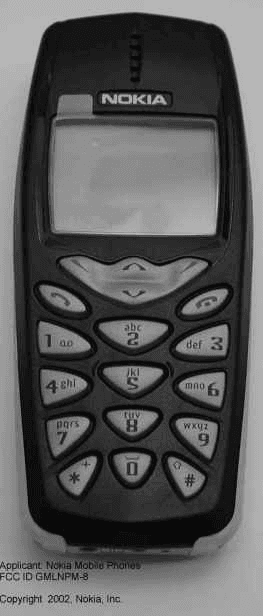
Click to zoom
Application Details
- Equipment Class
- PCE - PCS Licensed Transmitter held to ear
- Date of Grant
- Apr 09, 2002
- Application Purpose
- Original Equipment
- Date of Application
- Apr 09, 2002
- Equipment Note
- Dual Band Single Mode GSM Cellular Transceiver
- Frequency Range
- 1850.20000000 - 1908.80000000
- Company
- Microsoft Corporation
- Country
- United States
Documents & Files
Document Text
Text extracted from the exhibit documents filed with the FCC. Open a document above to read the original.
Users Manual
Nokia 3590 User Guide Phone notes NotesInformation source My numberWireless provider Voicemail numberWireless provider Wireless provider’s Customer Care Wireless provider Message Center number Wireless provider Model number3590Chapter 2 "Welcome" Phone typeNPM-8Chapter 2 "Welcome" Electronic serial number (IMEI) Chapter 2 "Welcome" PIN code Wireless provider Chapter 13 "Manage phone security" 3590 FCC draft.book Page 1 Thursday, February 14, 2002 2:36 PM The wireless phone described in this guide is approved for use in GSM networks. LEGAL INFORMATION Part No. 9353546, Issue No. 1 ©2002 Nokia Mobile Phones. All rights reserved. Nokia is a registered trademark of Nokia Corporation. Printed in Canada MM/YYYY Nokia, Nokia Connecting People and the Original Accessories logos are trademarks of Nokia Corporation and/or its affiliates. US Patent No 5818437 and other pending patents. T9 text input software Copyright ©1999-2001. Tegic Communications, Inc. All rights reserved. Includes RSA BSAFE cryptographic or security protocol software from RSA Security. The information contained in this user guide was written for Nokia phone NPM-8. Nokia operates a policy of continuous development. Nokia reserves the right to make changes and improvements to any of the products described in this document without prior notice. UNDER NO CIRCUMSTANCES SHALL NOKIA BE RESPONSIBLE FOR ANY LOSS OF DATA OR INCOME OR ANY SPECIAL, INCIDENTAL, AND CONSEQUENTIAL OR INDIRECT DAMAGES HOWSOEVER CAUSED. THE CONTENTS OF THIS DOCUMENT ARE PROVIDED “AS IS.” EXCEPT AS REQUIRED BY APPLICABLE LAW, NO WARRANTIES OF ANY KIND, EITHER EXPRESS OR IMPLIED, INCLUDING, BUT NOT LIMITED TO, THE IMPLIED WARRANTIES OF MERCHANTABILITY AND FITNESS FOR A PARTICULAR PURPOSE, ARE MADE IN RELATION TO THE ACCURACY AND RELIABILITY OR CONTENTS OF THIS DOCUMENT. NOKIA RESERVES THE RIGHT TO REVISE THIS DOCUMENT OR WITHDRAW IT AT ANY TIME WITHOUT PRIOR NOTICE. EXPORT CONTROLS This product contains commodities, technology or software exported from the United States in accordance with the Export Administration regulations. Diversion contrary to U.S. law is prohibited. FCC/INDUSTRY CANADA NOTICE Your phone may cause TV or radio interference (for example, when using a telephone in close proximity to receiving equipment). The FCC or Industry Canada can require you to stop using your telephone if such interference cannot be eliminated. If you require assistance, contact your local service facility. This device complies with part 15 of the FCC rules. Operation is subject to the condition that this device does not cause harmful interference. 3590 FCC draft.book Page 2 Thursday, February 14, 2002 2:36 PM [ i ] Contents 1For your safety. . . . . . . . . . . . . . . . . . . . . . . . . . . . . . . .1 2Welcome . . . . . . . . . . . . . . . . . . . . . . . . . . . . . . . . . . . .3 Get the most out of this guide. . . . . . . . . . . . . . . . . . .3 Understand wireless network services. . . . . . . . . . . . .4 Learn about accessibility solutions . . . . . . . . . . . . . . .5 Contact Nokia . . . . . . . . . . . . . . . . . . . . . . . . . . . . . . . .7 Register your phone . . . . . . . . . . . . . . . . . . . . . . . . . . .8 E-Newsletters . . . . . . . . . . . . . . . . . . . . . . . . . . . . . . . .8 3Before you begin. . . . . . . . . . . . . . . . . . . . . . . . . . . . . .9 Install the SIM card. . . . . . . . . . . . . . . . . . . . . . . . . . . .9 Install the battery. . . . . . . . . . . . . . . . . . . . . . . . . . . .10 Charge the battery . . . . . . . . . . . . . . . . . . . . . . . . . . .11 Battery Notes. . . . . . . . . . . . . . . . . . . . . . . . . . . . . . . .11 Remove the battery. . . . . . . . . . . . . . . . . . . . . . . . . . .12 Set up your headset . . . . . . . . . . . . . . . . . . . . . . . . . .13 4About your phone. . . . . . . . . . . . . . . . . . . . . . . . . . . .14 Keys and features . . . . . . . . . . . . . . . . . . . . . . . . . . . .14 Switch on your phone. . . . . . . . . . . . . . . . . . . . . . . . .15 About the antenna . . . . . . . . . . . . . . . . . . . . . . . . . . .16 About the Start screen . . . . . . . . . . . . . . . . . . . . . . . .16 About indicators and icons. . . . . . . . . . . . . . . . . . . . .17 5Make and answer calls. . . . . . . . . . . . . . . . . . . . . . . .19 3590 FCC draft.book Page i Thursday, February 14, 2002 2:36 PM [ ii ] Make a call . . . . . . . . . . . . . . . . . . . . . . . . . . . . . . . . .19 End a call. . . . . . . . . . . . . . . . . . . . . . . . . . . . . . . . . . .20 Answer a call . . . . . . . . . . . . . . . . . . . . . . . . . . . . . . .20 Reject a call . . . . . . . . . . . . . . . . . . . . . . . . . . . . . . . .21 Silence an incoming call . . . . . . . . . . . . . . . . . . . . . .21 Redial the last-dialed number. . . . . . . . . . . . . . . . . .21 6The menu. . . . . . . . . . . . . . . . . . . . . . . . . . . . . . . . . . .22 Use the menus . . . . . . . . . . . . . . . . . . . . . . . . . . . . . .22 About menu shortcuts. . . . . . . . . . . . . . . . . . . . . . . .23 List of menu shortcuts. . . . . . . . . . . . . . . . . . . . . . . .24 Phone book menu. . . . . . . . . . . . . . . . . . . . . . . . . . . .27 7Enter letters and numbers. . . . . . . . . . . . . . . . . . . . .28 ABC mode. . . . . . . . . . . . . . . . . . . . . . . . . . . . . . . . . .28 Predictive text input. . . . . . . . . . . . . . . . . . . . . . . . . .31 8Use the phone book . . . . . . . . . . . . . . . . . . . . . . . . . .35 Save names, numbers and e-mail addresses . . . . . .35 Edit names . . . . . . . . . . . . . . . . . . . . . . . . . . . . . . . . .37 Edit numbers. . . . . . . . . . . . . . . . . . . . . . . . . . . . . . . .37 Add text entries . . . . . . . . . . . . . . . . . . . . . . . . . . . . .37 Find names in the phone book . . . . . . . . . . . . . . . . .38 Your phone’s memory. . . . . . . . . . . . . . . . . . . . . . . . .39 Erase names and numbers. . . . . . . . . . . . …
Text truncated - open the document above for the full version.
Cover Letter(s)
American Telecommunications Certification Body Inc. 6731 Whittier Ave, McLean, VA 22101 March 11, 2002 RE: Nokia Mobile Phones FCC ID: GMLNPM-8 I have a few comments on this Application. 1.) Please remember to always provide an FRN on each Application. 2.) Please provide further details on the RF Power Radiated test. It appears that simple measurements of field strength mathematically converted to EDRP or EIRP were performed. Please note the FCC currently accepts only the antenna substitution method. It is unclear how your results were obtained. 3.) FYI: It would be helpful if Conducted RF Pout was available on all three channels in both bands. 4.) Occupied Bandwidth Plots in Section 7 do not show RBW or VBW. In addition, it is unknown how reference levels on these spectrum plots were obtained. Please review. 5.) Emissions in Rx Critical Bands do not indicate measurement bandwidths. 6.) Please provide justification for requested emission designator. 7.) Internal Photographs are a bit dark. In addition, all RF shields must be removed. 8.) External Photographs are marginal. In the future, please try and reduce the grainy effects. 9.) SAR Report: Section 1.1: For my convenience, please note that the maximum head and body worn values for each band must be reported 10.) Tuning procedures seem to indicate up to two watts conducted in GSM 850 and 1 watt conducted in GSM 1900 is available. Were these values used during SAR testing? Explain. 11.) Is equipment capable of interfacing to a computer and acting as a wireless high speed modem? If so, then body worn SAR configurations using multiple timeslot data rates may be justified. 12.) Manual should make it clear that only Nokia body worn accessories are approved for body worn SAR. The existing statement on pp. 133 of 155 is too broad. 13.) FYI: Please be sure all plots indicate temperature of the medium. 14.) Please provide Z-axis plot at max SAR value for body worn and face held positions in each band. Identify depth of liquid. William H. Graff President and Examining Engineer mailto: [email protected] The items indicated above must be submitted before processing can continue on the above referenced application. Failure to provide the requested information may result in application termination. Correspondence should be considered part of the permanent submission and may be viewed from the Internet after a Grant of Equipment Authorization is issued. ! Page 2 March 11, 2002 Please do not respond to this correspondence using the email reply button. In order for your response to be processed expeditiously, you must submit your documents through the AmericanTCB.com website. Also, please note that partial responses increase processing time and should not be submitted. Any questions about the content of this correspondence should be directed to the sender.
Cover Letter(s)
9) SAR Report: Section 1.1: For my convenience, please note that the maximum head and body worn values for each band must be reported. We will add this for all future submissions. 10) Tuning procedures seem to indicate up to two watts conducted in GSM850 and 1 watt conducted in GSM1900 is available. Were these values used during SAR testing? Explain. See attached updated tuning procedure. The tested product was tuned per this document. The original document was an earlier, draft revision and was not fully updated to the current specifications at the time of submission. The target values for this product are correct in the new revision, and these values are correct for the tested product. 11) Is equipment capable of interfacing to a computer and acting as a wireless high speed modem? If so, then body worn SAR configurations using multiple timeslot data rates may be justified. No, this product can not be used as a high speed wireless modem. 12) Manual should make it clear that only Nokia body worn accessories are approved for body worn SAR. The existing statement on pp. 133 of 155 is too broad. The language that was included in the user guide for the 3590 was modified to it's current state per the request of the FCC, and was recently accepted for FCC ID's GMLNPW-2NX and GMLNPW-3. Please advise if we must change this yet again. 13) FYI: Please be sure all plots indicate temperature of the medium. We will include this in future submissions. 14) Please provide Z-axis plot at max SAR value for body worn and face held positions in each band. Identify depth of liquid. See attached document. The liquid depth is specified in section 4.2 of the SAR test report.
ID Label/Location Info
M A D E IN U S A M AD E IN U SA Type: Type: Model: Model: 3590 3590 NPM-8 NPM-8 FCC ID: FCC ID: CANADA: SIM CARD CANADA: GMLNPM-8 GMLNPB-1NB C O D E : C O D E : P S N : H W ID : IM E I: IM E I: P S N : H W I D : PROTO PROTO NPM-8 TYPE LABEL SEE TABLE FOR PRINTING FILE DMP05641 0.2 E.Romero 021402 Rtran070201 DMD08429 9370634 No. Part name BLANK TYPE LABEL Qty Drw no. Note 11 2 1 CODE: PRINTING FILE Material Sheet 1 of 1 Original Scale Original Size A4 1:1 NMP Code Item Name Document Number Doc. Vers. Tool Vers. Name / Date Change Ref. Approved / Date Original Designer FUNCTIONAL CHARACTERISTICS KEY MAIN FUNCTIONAL CHARACTERISTIC MAIN FUNCTIONAL CHARACTERISTIC ( Proof of Process Capability Required ) Copyright c Nokia Mobile Phones. All rights reserved THIS DRAWING IS PROTECTED BY COPYRIGHT AS AN UNPUBLISHED WORK UNAUTHORIZED REPRODUCTION OF THIS DRAWING IS NOT PERMITTED THIS DRAWING CONTAINS PROPRIETARY AND CONFIDENTIAL INFORMATION This document is the property of Nokia Mobile Phones MOBILE PHONES JANUARY FEBRUARY MARCH APRIL MAY JUNE JULY AUGUST SEPTEMBER OCTOBER NOVEMBER DECEMBER A B C D E F G H I J K L A B C D E F G H I J . . . 01 FW ALLIANCE FW DIPLOMACY BRAZIL MANAUS MEXICO REYNOSA KOREA T A . .Z A . .Z A . .Z A . .Z A . .Z P G R M . . . 31 1993 1994 1995 1996 1997 1998 1999 2000 2001 2002 . . . MONTH (M) LETTER DATE (DD) FACTORY (FF) LINE (L) NUMBER LETTER YEAR (Y) NOTE: ARTWORK PICTURES ARE ONLY EXAMPLES; IN PRODUCTION THE CORRECT DATA IS READ FROM THE TRANSCEIVER CAN BE PRINTED IN NMP PRODUCTION USING: FLEXCON TC-200V-156 MATERIAL & THERMAL TRANSFER RIBBON ZEBRA 5095 CODE 9730000. PRINTING FILE COUNTRY G056411.PCX Generic A056411.PCX AWS 41.15 +/- 0.2 3 7 . 0 0 + / - 0 . 2 6 X R 2.0 Date Code see table below ARTWORK 2:1 (EXAMPLE!) EXAMPLE AWS part: 1:1 Bar Code 128 B/C: Product Code and Date Code Bar Code 128 B/C: Serial Number (IMEI) Bar Code 128 B/C: AWS Part # M A D E I N M E X IC O Type: Model: 3590 NPM-8 FCC ID: CANADA: SIM CARD GMLNPM-8 C O D E : I M E I : 0 0 1 0 0 4 / 5 0 / 0 0 0 0 0 1 / 0 0 5 0 6 0 7 7 M Y D D F F L A W S p a r t # : FLEXCON 459TC-200 V-156 Metallized polyester film M AD E IN M EX IC O Type: Model: 3590 NPM-8 FCC ID: CANADA: SIM CARD GMLNPM-8 C O D E : IM E I: 0 0 0 0 0 1 / 3 0 / 0 0 0 0 0 1 / 0 0 5 0 0 0 0 0 M Y D D F F L A W S p a r t # : 0.1 Rtran070201 Rtran 021402 Type: FCC ID: CANADA: SIM CARD C O D E : IM E I: A W S p a r t # : PRINTING FILE AWS 1:1 PRINTING FILE US GENERIC 1:1 M AD E IN M EX IC O Type: Model: 3590 NPM-8 FCC ID: CANADA: SIM CARD GMLNPM-8 C O D E : IM E I: 0 0 0 0 0 1 / 3 0 / 0 0 0 0 0 1 / 0 0 5 0 0 0 0 0 M Y D D F F L EXAMPLE US GENERIC: 1:1 Model: 3590 Type: Model: 3590 NPM-8 FCC ID: CANADA: SIM CARD C O D E : IM E I: NPM-8 The wireless phone described in this guide is approved for use in GSM networks. LEGAL INFORMATION Part No. 9353546, Issue No. 1 ©2002 Nokia Mobile Phones. All rights reserved. Nokia is a registered trademark of Nokia Corporation. Printed in Canada MM/YYYY Nokia, Nokia Connecting People and the Original Accessories logos are trademarks of Nokia Corporation and/or its affiliates. US Patent No 5818437 and other pending patents. T9 text input software Copyright ©1999-2001. Tegic Communications, Inc. All rights reserved. Includes RSA BSAFE cryptographic or security protocol software from RSA Security. The information contained in this user guide was written for Nokia phone NPM-8. Nokia operates a policy of continuous development. Nokia reserves the right to make changes and improvements to any of the products described in this document without prior notice. UNDER NO CIRCUMSTANCES SHALL NOKIA BE RESPONSIBLE FOR ANY LOSS OF DATA OR INCOME OR ANY SPECIAL, INCIDENTAL, AND CONSEQUENTIAL OR INDIRECT DAMAGES HOWSOEVER CAUSED. THE CONTENTS OF THIS DOCUMENT ARE PROVIDED “AS IS.” EXCEPT AS REQUIRED BY APPLICABLE LAW, NO WARRANTIES OF ANY KIND, EITHER EXPRESS OR IMPLIED, INCLUDING, BUT NOT LIMITED TO, THE IMPLIED WARRANTIES OF MERCHANTABILITY AND FITNESS FOR A PARTICULAR PURPOSE, ARE MADE IN RELATION TO THE ACCURACY AND RELIABILITY OR CONTENTS OF THIS DOCUMENT. NOKIA RESERVES THE RIGHT TO REVISE THIS DOCUMENT OR WITHDRAW IT AT ANY TIME WITHOUT PRIOR NOTICE. EXPORT CONTROLS This product contains commodities, technology or software exported from the United States in accordance with the Export Administration regulations. Diversion contrary to U.S. law is prohibited. FCC/INDUSTRY CANADA NOTICE Your phone may cause TV or radio interference (for example, when using a telephone in close proximity to receiving equipment). The FCC or Industry Canada can require you to stop using your telephone if such interference cannot be eliminated. If you require assistance, contact your local service facility. This device complies with part 15 of the FCC rules. Operation is subject to the condition that this device does not cause harmful interference. 3590 FCC draft.book Page 2 Thursday, February 14, 2002 2:36 PM
Operational Description
CONFIDENTIAL 13 Feb 2002 Theory of OperationNokia 3590Type: NPM-8 Applicant: Nokia Mobile PhonesCopyright © 2002 Nokia Mobile Phones Theory of operation Vocabulary MS = Mobile Station E-GSM= Enhanced Global System for Mobile communications GSM= Global System for Mobile communications HW = Hardware (drivers) RAM = Random-Access Memory ROM = Read-Only Memory PWB = Printed Wiring Board SW = Software RF= Radio Frequency BB= BaseBand Technical Summary The NPM-8 is a dual band radio transceiver for GSM 850 and GSM1900 networks. The transceiver is a power class 4 unit providing 15 power levels with the highest power level 5 for GSM850 networks and is a power class1 unit providing 16 power levels with highest power level 0 for GSM1900 networks. The transceiver is a true 3 Volt transceiver. The transceiver has Full rate (FR) and Enchanced Full Rate (EFR) speech codecs. The transceiver has one PWB structure which uses ground planes inside PWB as shielding between different modules. The transceiver has full graphic display and soft key based user interface. Tranceiver uses internal integrated antenna. There is no external antenna connection. The transceiver has leak tolerant earpiece and OMNI type microphone. CONFIDENTIAL 13 Feb 2002 Theory of OperationNokia 3590Type: NPM-8 Applicant: Nokia Mobile PhonesCopyright © 2002 Nokia Mobile Phones Circuit Description The EN-9 engine consists one PWB with BB/RF parts on the backside and UI parts on the front side of the PWB. Ground planes inside the PWB are used as shielding between UI and RF/BB module. Different modules are interconnected with PWB wiring. The phone can be connected to accessories via the charger connector and the headset connector at the bottom of the phone. The RF submodule receives and demodulates radio frequency signals from the base station and transmits modulated RF signals to the base station. It consists of functional submodules Receiver, Frequency Synthesizer and Transmitter. The Baseband module contains audio, control, signal processing and power supply functions. CONFIDENTIAL 13 Feb 2002 Theory of OperationNokia 3590Type: NPM-8 Applicant: Nokia Mobile PhonesCopyright © 2002 Nokia Mobile Phones Interconnection Diagram Module Radio EN9 LCD SIM Battery Charger Antenna 2+2 Earpiece 5 4 2 Mic 2 12 2 8 Keyboard module module HF/HS 4 Speaker 3 Vibra 2 CONFIDENTIAL 13 Feb 2002 Theory of OperationNokia 3590Type: NPM-8 Applicant: Nokia Mobile PhonesCopyright © 2002 Nokia Mobile Phones Basic Specifications Table 1. Basic Specifications ParameterGSM850GSM1900 Cellular systemGSM850GSM1900 TX frequency band824.2 ... 848.8 MHz1850.2 ... 1909.8 MHz RX frequency band869.2 ... 893.8 MHz1930.2 ... 1989.8 MHz Duplex spacing45 MHz80 MHz Number of RF channels124299 Channel spacing200 kHz200 kHz Power class41 Power levels1516 Method of frequency synthesisDigital phase locked loop UHF 3300 ... 3580 MHz Digital phase locked loop UHF 3700 ... 3980 MHz Frequency control26 MHz VCXO: AFC used26 MHz VCXO: AFC used Receiver typeDirect conversionDirect conversion Modulator type GMSKGMSK CONFIDENTIAL 13 Feb 2002 Theory of OperationNokia 3590Type: NPM-8 Applicant: Nokia Mobile PhonesCopyright © 2002 Nokia Mobile Phones Power Distribution Diagram VR2 TX VR3 Digital logic VIO Digital Interface VR5 PLL VR6 RX VR7 VCO 2.8 V 2.8 V 2.8 V 2.8 V 2.8 V Ref. volt Dual Band PA VrefRF01 Battery 1.4 V RFIC VCO Interface VCO VR4 2.8 V 2.8V CONFIDENTIAL 13 Feb 2002 Theory of OperationNokia 3590Type: NPM-8 Applicant: Nokia Mobile PhonesCopyright © 2002 Nokia Mobile Phones Technical Specifications Modes of Operation NPM-8 operates in cellular mode and a local mode for service: - Normal mode, the phone is controlled by Cellular System SW and partly by basestation - Local mode, used by Production and After Sales. Normal Mode In Normal mode, the phone performs all the tasks to place and release calls. Also charging and communication between accessories and phone are done during this mode by Operating System SW. Signaling and handover functions are supported by basestation. Power off In the power-off mode only the regulator IC is active. Power-off mode can be left by pushing the -key, connecting charger to the phone, real time clock interrupt or intelligent battery interrupt. Idle / standby The phone is in SERV-state listening to the network and waiting for the page. Call The phone call is going on and during most of the time all RF- and BB-parts are on. Separate parts are turned off when they are not needed in order to save power. Local Mode Local mode is used for testing purposes by Product Development, Production and After Sales. The Cellular Software is stopped (no signalling to base station), and the phone is controlled by MBUS/FBUS messages by the controlling PC.
RF Exposure Info
[ 125 ] 18 first need to turn those features off before you can make an emergency call. Consult this user guide and your local cellular service provider. •When making an emergency call, remember to give all the necessary information as accurately as possible. Remember that your wireless phone may be the only means of communication at the scene of an accident - do not end the call until given permission to do so. •CERTIFICATION INFORMATION (SAR) THIS MODEL PHONE MEETS THE GOVERNMENT'S REQUIREMENTS FOR EXPOSURE TO RADIO WAVES. Your wireless phone is a radio transmitter and receiver. It is designed and manufactured not to exceed the emission limits for exposure to radio frequency (RF) energy set by the Federal Communications Commission of the U.S. Government. These limits are part of comprehensive guidelines and establish permitted levels of RF energy for the general population. The guidelines are based on standards that were developed by independent scientific organizations through periodic and thorough evaluation of scientific studies. The standards include a substantial safety margin designed to assure the safety of all persons, regardless of age and health. The exposure standard for wireless mobile phones employs a unit of measurement known as the Specific Absorption Rate, or SAR. The SAR limit set by the FCC is 1.6W/kg.* Tests for SAR are conducted using standard operating positions accepted by the FCC with the phone transmitting at its highest certified power level in all tested frequency bands. Although the SAR is determined at the highest certified power level, the actual SAR level of the phone while operating can be well below the maximum value. This is because the phone is designed to operate at multiple power levels so as to use only the power required to reach the network. In general, the closer you are to a wireless base station antenna, the lower the power output. 3590 FCC draft.book Page 125 Thursday, February 14, 2002 2:36 PM 18 [ 126 ] Before a phone model is available for sale to the public, it must be tested and certified to the FCC that it does not exceed the limit established by the government-adopted requirement for safe exposure. The tests are performed in positions and locations (for example, at the ear and worn on the body) as required by the FCC for each model. The highest SAR value for this model phone as reported to the FCC when tested for use at the ear is 1.03 W/kg, and when worn on the body, as described in this user guide, is 0.38 W/kg. (Body-worn measurements differ among phone models, depending upon available accessories and FCC requirements). While there may be differences between the SAR levels of various phones and at various positions, they all meet the government requirement. The FCC has granted an Equipment Authorization for this model phone with all reported SAR levels evaluated as in compliance with the FCC RF exposure guidelines. SAR information on this model phone is on file with the FCC and can be found under the Display Grant section of http://www.fcc.gov/oet/fccid after searching on FCC ID GMLNPM-8. For body worn operation, this phone has been tested and meets the FCC RF exposure guidelines when used with the Nokia accessories supplied or designated for this product. Use of other accessories may not ensure compliance with FCC RF exposure guidelines. *In the United States and Canada, the SAR limit for mobile phones used by the public is 1.6 watts/kilogram (W/kg) averaged over one gram of tissue. The standard incorporates a substantial margin of safety to give additional protection for the public and to account for any variations in measurements. SAR values may vary depending on national reporting requirements and the network band. For SAR information in other regions please look under product information at www.nokia.com. 3590 FCC draft.book Page 126 Thursday, February 14, 2002 2:36 PM PC Site Oulu Exhibit 11: SAR Report DTX03810-EN Applicant: Nokia Inc. FCC ID: GMLNPM-8 Copyright 2002 Nokia Corporation 1 (14) SAR Compliance Test Report Test report no.: Not numbered Date of report: 2002-02-14 Number of pages: 61 Contact person: Olli Kautio Responsible test engineer: Pertti Mäkikyrö Testing laboratory: Nokia Corporation Elektroniikkatie 10 P.O. Box 50 FIN-90571 OULU Finland Tel. +358-7180-08000 Fax. +358-7180-47222 Client: Nokia Inc. 6000 Connection Dr. Mailstop 2:200 Irving Tx, 75039 USA Tel. +1 972 894 5000 Fax. +1 972 894 4589 Tested devices: GMLNPM-8, CSL-30 Supplement reports: - Testing has been carried out in accordance with: IEEE P1528-200X Draft 6.4 Recommended Practice for Determining the Peak Spatial-Average Specific Absorption Rate (SAR) in the Human Body Due to Wireless Communications Devices: Experimental Techniques Documentation: The documentation of the testing performed on the tested devices is archived for 15 years at PC Site Oulu Test results: The tested device complies with the requirements in respect of all parameters subject to the test. The test results and statements relate only to the items tested. The test report shall not be reproduced except in full, without written approval of the laboratory. Date and signatures: 2002-02-14 For the contents: Pertti Mäkikyrö Engineering Manager, EMC Miia Nurkkala Test Engineer PC Site Oulu Exhibit 11: SAR Report DTX03810-EN Applicant: Nokia Inc. FCC ID: GMLNPM-8 Copyright 2002 Nokia Corporation 2 (14) CONTENTS 1.SUMMARY FOR SAR TEST REPORT ..........................................................................................................................3 1.1 MAXIMUM RESULTS FOUND DURING SAR EVALUATION.................................................................................................................. 3 1.1.1Head Configuration.......................................................................................................................................................... 3 1.1.2Body Worn Configuration.........................................................…
Text truncated - open the document above for the full version.
RF Exposure Info
GMLNPM-8, optional battery BLC-2SAM 2 Phantom; Left Hand Section; Position: cheek ; Frequency: 849 MHzProbe: ET3DV6 - SN1381; ConvF(6.20,6.20,6.20); Crest factor: 8.0; Brain 836 MHz SCC34: σ = 0.90 mho/m ε = 40.1 ρ = 1.00 g/cm 3 Cube 5x5x7: SAR (1g): 1.03 mW/g, SAR (10g): 0.709 mW/gCube 5x5x7: Dx = 8.0, Dy = 8.0, Dz = 5.001/22/02 0.00.10.20.30.40.50.60.7 0 10203040 SAR tot [mW/g] [mm] GMLNPM-8SAM 1 Phantom; Righ Hand Section; Position: tilted; Frequency: 1850 MHzProbe: ET3DV6 - SN1381; ConvF(5.22,5.22,5.22); Crest factor: 8.0; Brain 1880 MHz SCC34: σ = 1.39 mho/m ε = 38.8 ρ = 1.00 g/cm 3 Cube 5x5x7: SAR (1g): 0.613 mW/g, SAR (10g): 0.339 mW/gCube 5x5x7: Dx = 8.0, Dy = 8.0, Dz = 5.001/22/02 0.00.10.20.30.40.5 0 10203040 SAR tot [mW/g] [mm] GMLNPM-8, CSL-30SAM 2 Phantom; Flat Section; Position: body worn; Frequency: 824 MHzProbe: ET3DV6 - SN1381; ConvF(6.04,6.04,6.04); Crest factor: 8.0; Muscle 836 MHz: σ = 0.94 mho/m ε = 57.4 ρ = 1.00 g/cm 3 Cube 5x5x7: SAR (1g): 0.375 mW/g, SAR (10g): 0.266 mW/gCube 5x5x7: Dx = 8.0, Dy = 8.0, Dz = 5.001/24/02 0.00.10.20.30.4 0 10203040 SAR tot [mW/g] [mm] GMLNPM-8 with accessory cover, CSL-30SAM 1 Phantom; Flat Section; Position: body worn; Frequency: 1850 MHzProbe: ET3DV6 - SN1381; ConvF(4.96,4.96,4.96); Crest factor: 8.0; Muscle 1880MHz: σ = 1.45 mho/m ε = 53.6 ρ = 1.00 g/cm 3 Cube 5x5x7: SAR (1g): 0.173 mW/g, SAR (10g): 0.107 mW/gCube 5x5x7: Dx = 8.0, Dy = 8.0, Dz = 5.001/25/02 0.000.020.040.060.080.100.120.140.160.18 0 10203040 SAR tot [mW/g] [mm]
Test Report
TCC Company Confidential2 (36) FCC ID: GMLNPM-8 Test & Certification Center (TCC) - DallasTest Report #: 02-RF-0020.001 February 20, 2002Ver 1.0 CFR 47 Part 2, 22, and 24 Test Report© 2002 Nokia Mobile Phones TABLE OF CONTENTS 1.GENERAL .................................................................................................................................................................. 4 1.1 Q UALITY SYSTEM...................................................................................................................................................... 4 1.2 L IST OF GENERAL INFORMATION REQUIRED FOR CERTIFICATION................................................................................. 4 1.3 O BJECTIVE............................................................................................................................................................... 6 1.4 T EST SUMMARY........................................................................................................................................................ 6 2.STANDARDS BASIS ................................................................................................................................................. 7 3.LIST OF ABBREVIATIONS, ACRONYMS AND TERMS ......................................................................................... 8 3.1 A BBREVIATIONS........................................................................................................................................................ 8 3.2 A CRONYMS............................................................................................................................................................... 8 3.3 T ERMS..................................................................................................................................................................... 8 4.EQUIPMENT-UNDER-TEST (EUT) ........................................................................................................................... 9 4.1 D ESCRIPTION OF TESTED DEVICE(S):......................................................................................................................... 9 4.2 P HOTOGRAPH OF TESTED DEVICE(S): ............…
Text truncated - open the document above for the full version.
Contact Information
Applicant
Hasnain Syed(Director, EMC, SI and RF Compliance)
Technical Contact
Nokia Mobile Phones, Inc.Randy Lennerts
[email protected]972 894 4477
6000 Connection Drive · Irving, Texas · United States
Non-Technical Contact
Nokia Mobile Phones, Inc.Alan Ewing
[email protected]972 894 4744
Technical Specifications
| # | Rule Parts | Frequency Range | Power Output | Emission | Tolerance |
|---|---|---|---|---|---|
| 2 | 24E | 1.85 GHz - 1.91 GHz | 1.12 W | 256KGXW | 200 Hz |
Other Applications from Microsoft Corporation

GMLRM-88A
Apr 11, 2006GSM 850/900/1800/1900MHz Cellphone w/BT
Equipment Class
JBP - Part 15 Class B Computing Device Peripheral
GMLRM-88
Jan 19, 2006GSM 850/900/1800/1900MHz Cellphone w/BT
Equipment Class
DSS - Part 15 Spread Spectrum Transmitter
GMLNPM-10X
Oct 29, 2003Dual Band Mobile Phone
Equipment Class
PCE - PCS Licensed Transmitter held to ear
GMLRH-25
Sep 10, 2003Tri mode Dual Band Cellular Phone
Equipment Class
PCE - PCS Licensed Transmitter held to ear
GMLRH-42
Aug 27, 2003Nokia 2220 single band cellphone
Equipment Class
TNE - Licensed Non-Broadcast Transmitter Held to Ear