GMLNPW-2NXDual band, tri mode cellular phone
Microsoft Corporation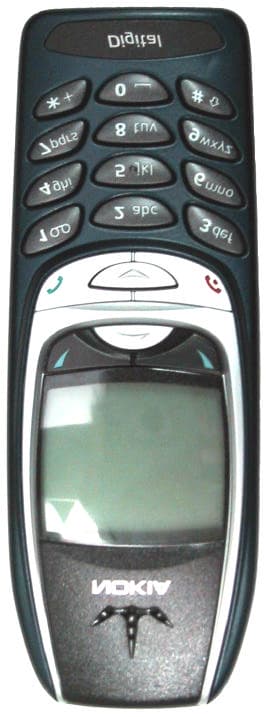
Click to zoom
Application Details
- Equipment Class
- TNE - Licensed Non-Broadcast Transmitter Held to Ear
- Date of Grant
- Mar 05, 2002
- Application Purpose
- Original Equipment
- Date of Application
- Nov 14, 2001
- Equipment Note
- Dual band, tri mode cellular phone
- Frequency Range
- 1850.04000000 - 1909.92000000
- Company
- Microsoft Corporation
- Country
- United States
Documents & Files
Document Text
Text extracted from the exhibit documents filed with the FCC. Open a document above to read the original.
Users Manual
&21),'(17,$/ Nokia 6360 User Guide Phone notes NotesWhere to get information My number Wireless service provider Number to call for voice mail Wireless service provider Wireless provider’s number Wireless service provider Provider’s customer care Wireless service provider Model number 6360See “Find information about your phone” on page 7. Phone type NPW-2Back of title page Electronic serial number (ESN) See “Find information about your phone” on page 7. 6360 .1_title.fm Page 1 Friday, November 9, 2001 2:40 PM &21),'(17,$/ The wireless phone described in this guide is approved for use in TDMA and AMPS networks. Legal information Part No. 9353798, Issue No. 1 © 2001 Nokia Inc. All rights reserved. Nokia is a registered trademark of Nokia Corporation. Printed in Canada 12/2001 Nokia, Nokia Connecting People and the Original Accessories logos are trademarks of Nokia Corporation and/or its affiliates. US Patent No 5818437 and other pending patents. T9 text input software Copyright © 1999-2001. Tegic Communications, Inc. All rights reserved. Includes RSA BSAFE cryptographic or security protocol software from RSA Security. The information contained in this user guide was written for Nokia phone 6360. The right to make changes and improvements to any of the products described in this guide without prior notice is reserved. Export Controls This product contains commodities, technology or software exported from the United States in accordance with the Export Administration regulations. Diversion contrary to U.S. law is prohibited. FCC/Industry Canada Notice Your phone may cause TV or radio interference (for example, when using a telephone in close proximity to receiving equipment). The FCC or Industry Canada can require you to stop using your telephone if such interference cannot be eliminated. If you require assistance, contact your local service facility. This device complies with part 15 of the FCC rules. Operation is subject to the condition that this device does not cause harmful interference. 6360 .1_title.fm Page 2 Friday, November 9, 2001 2:40 PM &21),'(17,$/ 6360 User Guide Draft[ 1 ]14 May 2001 Safety first 1 1 Safety first Read these simple guidelines before you use your phone. Failure to comply with these guidelines may be dangerous or illegal. For more safety information, refer to “Important Safety Information” on page 142. Road safety comes first Do not use a wireless phone while driving. Park the vehicle first. Be aware of interference All wireless phones may get interference that could affect performance. Switch off in hospitals Follow any regulations or rules. Switch your phone off near medical equipment. Switch off in aircraft Wireless devices can cause interference. Switch off when refueling Do not use your phone at a refueling point. Do not use it near fuel or chemicals. Switch off near blasting Do not use your phone where blasting is in progress. Observe restrictions, and follow any regulations or rules. Use your phone sensibly Use your phone only in the normal position (next to the ear). Do not touch the antenna unnecessarily. &21),'(17,$/ 6360 User Guide Draft[ 2 ]14 May 2001 1 Observe infrared precautions Do not point the IR beam at anyone’s eyes or allow it to interfere with other IR devices. Use only qualified service personnel Only qualified personnel may install or repair phone equipment. Use approved accessories and batteries Use only approved accessories and batteries. Do not connect incompatible products. Keep your phone dry Your phone is not water-resistant. Keep it dry. Backup copies Remember to make backup copies of all important data. Connecting to other devices When connecting to any other device, read its user guide for detailed safety instructions. Do not connect incompatible products. Read instructions before you connect to other devices When you connect your phone to any other device, read the device’s user guide for detailed safety instructions. Do not connect incompatible products. Remember to make backup copies of all important data. &21),'(17,$/ 6360 User Guide Draft[ 3 ]14 May 2001 Safety first 1 Make calls Before you make a call, be sure your phone is switched on, and in service. Enter the phone number, including the area code, then press . To end a call, press . Press to answer an incoming call. Make emergency calls Make sure the phone is switched on and in service. If the word Clear appears on the screen above the right selection key, press and hold it to clear the display. Enter the emergency number, then press Call. Give your location. Do not end the call until told to do so. &21),'(17,$/ 2 6360 User Guide Draft[ 4 ]14 May 2001 2Welcome Congratulations on your purchase of a Nokia mobile phone, a new tool for the mobile information society. Nokia recommends that you read this chapter before you use your new phone. You will find useful information about: •How to use this guide •How to understand network services •How to contact Nokia • GET THE MOST OUT OF THIS GUIDE The tips that follow can help you use this guide efficiently as you learn to use your phone. Understand the terms •Press means to briefly press then release a key. For example, Press means “Press the zero key.” •Press Menu means to press the key that is below the word Menu on the phone’s screen. •Press and hold means to press and hold a key for 2 to 3 seconds (depending on the feature you’re using), then release the key. •Use the selection keys and to choose an option on a menu. •Highlighted means that an option you see on the screen is enclosed in a dark bar. Choices you make with the two selection keys act on the highlighted option. &21),'(17,$/ 6360 User Guide Draft[ 5 ]14 May 2001 Welcome 2 • QUICK GUIDE TO FUNCTIONS Make a callEnter phone number, press Answer a callPress or Answer Answer a call with call waiting Press End a callPress Ignore a callPress RedialPress twice Adjust call volumeDuring a call, press up or down on the side volume key to adjust call volume. Use the in-call men…
Text truncated - open the document above for the full version.
Cover Letter(s)
FCC ID: GMLNPW-2NX MFA p0190005, d01b0029 Sincerely yours, Morton Flom, P. Eng.
Cover Letter(s)
January 24, 2002 Attention: Martin Perrine Applicant: Nokia Inc. Equipment: FCC ID: GMLNPW-2NX EA143962 Reference: Correspondence Number 21786 EMC 1) Please see accessories list by Nokia uploaded to the Parts List Exhibit. 2) Please see Tuning Range by Nokia uploaded to the Operational Description Exhibit. 3) Necessary Bandwidth = 2(M + DK) a) Bn = 2(6 + 12 + 2) = 40K0F8W (Voice + ST or +SAT) b)Bn=2(10+8+2)=40K0F1D (WBD) c) Bn = 2(3 + 12) = 30K0DXW (TDMA) 4) D.C. Currents by Nokia: Uploaded into the Operational Description Exhibit. 5) Parts List by Nokia: Uploaded to the Parts List Exhibit. 6) Please see item 2 7) Antenna: Please see photo uploaded to the Internal Photo Exhibit. 8) Emission Mode = Analog (Worst Case) Power. Please advise where in rules, EIA/TIA-603A Carrier Power Substitution Method is called for in Rule Part 24, TDMA 1900 Mode. 9) ST Compliance: The peak falls on exactly Fc ±20 kHz. Rule 22.917(b)(1) states "...by more than 20 kHz but..." 10) Occupied Bandwidth (TDMA 800) Please see page 39 of Test Report. Band edge measurements may be called for under Rule Part 24. Where are they called for under Part 22H? 11) Rule 22.917(f) pertains to the Analog Mode. 12) For analog mode, Section 22.917(h)(ii) 30 kHz was used as it is automatically set by our propriety instrumentation software and is worst case. continued... Page 2 (continued) January 24, 2002 13) Burst Nature: EMI Measurement Receiver (HP 8546A) is set at a very slow scan rate. 14) Photo of Radiated Emissions test uploaded to the Test Set Up Photos Exhibit. 15) Bn = 2(M + D) = 2(3 kHz max response + 12 kHz) = 30K0DXW 16) 47 CFR Rules for Resolution Bandwidth. Our propriety software automatically sets our instrumentation to the proper value. SAR 1) Please see EMC item 1 (above). 2) Photos of Head Test Setup by Nokia uploaded to the RF Exposure Exhibit. 3) Please see Nokia reply regarding Liquid Depth of 15 cm ± 0.5 m uploaded to the RF Exposure Exhibit. 4) User Manual Statements by Nokia uploaded to the RF Exposure Exhibit. 5) Please see E-field probe information on same page with Liquid Depth attachment uploaded to the RF Exposure Exhibit. 6) Please see the SAR Report. We trust this meets the requirements of the Commission. Sincerely yours, Morton Flom, P. Eng.
Cover Letter(s)
L:\WordDocs\&&aLetterhead.doc February 8, 2002 Applicant: Nokia Inc. FCC ID: GMLNPW-2NX EA143962 Reference: Correspondence 21941 Attention: Martin Perrine General A) Please find the updated Confidentiality Request uploaded to the Cover Letters Exhibit. EMC A) Tuning Range = 824.04 – 848.97 MHz (Amps) = 1850.4 – 1910.0 MHz (PCS) PCS Plots (pages 44 and 45) indicate that the EUT passes when center frequency is tuned to lower and upper band edges. Please see letter from the Applicant uploaded to the Cover Letters Exhibit B) EUT uses TDMA Modulation in Amps and PCS Bands. Report page 10 shows average radiated power for worst case (amps mode). To have to show average radiated power for all modes would burden the Applicant unnecessarily with additional testing cost. C) The correct emission for TDMA is 'DXW' and not F1D. Later reports will have this amendment. Please see plots pages 31 and 39. D) Please find Amended pages 55 and 56 showing RBW = 30 kHz uploaded to the Test Reports Exhibit. E) Per TIA/EIA-603-A paragraph 2.2.12.2 i.e. RBW = 10 kHz (< 1 GHz), 1 MHz (> 1 GHz), or as specified in 47 CFR (30 kHz for Rules 22 and 24) F) Please find Amended pages 50 and 51 showing RBW = 30 kHz uploaded to the Test Reports Exhibit. G) Page 23 N Amps in not an operational mode since it is designated N/A SAR) A) Please see letter from the Applicant uploaded to the Cover Letters Exhibit We trust this meets the requirements of the Commission and the Grant will be issued shortly. Sincerely yours, Morton Flom, P. Eng.
Cover Letter(s)
General A) See attached letter. EMC A) The Part 22 tuning range (AMPS and TDMA modes) for the transmitter per EIA/TIA 136 is 824.01 MHz (for an unused channel, but must still be in the tuning range) through 848.97 MHz. The Part 24 TDMA tuning range per the same spec is 1850.010 MHz (for an unused channel, but must still be in the tuning range) through 1909.950 MHz (for an unused channel, but must still be in the tuning range). SAR A) 1) As shown in the accessory list, and confirmed by the viewing of the list, there is one (1) battery type for this product. 2) OET Bulletin 65 Supplement C states that for body worn measurements, “Devices with a headset ouput should be tested with a headset connected to the device.” This product has a headset output and was tested to this requirement. The headset and loopset connect to the same output, using the same connector type, and therefore do not need to be tested separately.
Cover Letter(s)
L:\WordDocs\&&aLetterhead.doc February 27, 2002 FCC via Electronic Filing Attention: Martin Perrine Applicant: Nokia Inc. FCC ID: GMLNPW-2NX EA143962 Correspondence: 22090 and 22091 1) Tuning Range = 824.04 – 848.97 1850.04 – 1909.92 2) The readings obtained on a Spectrum Analyzer are always Peak. Title will be changed to EIRP and added. 3) Please see plots for Wide Band Data (F1D) on pages 26 and 34 as denoted in item 3 of our reply on January 24, 2002 (Correspondence 21786) 4) Plots on pages 55 and 56 apply to worst case or ANY (paragraph 22.917f) modulation. The measured level is less than –86 dbm 5) This should answer same questions as requested in Correspondence 22090 and 22091. We trust this meets the requirements of the Commission and the Grant will be issued immediately. Regards, Morton Flom, P. Eng.
Cover Letter(s)
March 4, 2002 Federal Communications Commission Attention: Martin Perrine Applicant: Nokia Inc. FCC ID: GMLNPW-2NX EA143962 Correspondence No.: 22148 1) Please note that ALL test performed on ALL devices in our lab are performed by currently calibrated instrumentation which is programmed to select the worst case . Radiated Power 800 TDMA ñ Substitution Method with Signal Generator Tuned, MHz Emission, MHz @M ERP, dbm ERP, Watts 824.04 824.04 3 26.4 0.439 836.40 836.40 3 27.5 0.565 848.97 848.97 3 27.1 0.516 2) Please reference paragraph 2.2.17 TIA/EIA 603A average radiated power = 10 log 10 Σ 10(LVL ñ Loss)/10 dbm As shown on page 10, paragraph (e) At 0 ̊, Average = 10 log 10 10(26.9 + 1.4)/10 dbm = 28.3 dbm [also (26.9 + 1.4) = 28.3 dbm] [also Σ = 212/8 = 26.5 + 1.4 = 27.9 dbm Average for 8 readings] 3) As noted above in reply 1), software makes selection of worst case. The software stores the measured data for both TDMA and AMPS modes of operation, compares the results, and outputs high and low power plots. As such, plots supplied re: 22.917(f) indicate worst case values across the band as a combination of both modes of operation (one each for low and high power). This removes the redundancy of creating 4 plots for this information. Definition of "ANY" is, in this case, ALL. We trust this is acceptable. Sincerely yours, Morton Flom, P. Eng.
External Photos
10 Sep 2001 Exhibit 3: External Photographs FCC ID:GMLNPW-2NX Applicant: Nokia Mobile Phones Copyright 2001. Nokia Mobile Phones 10 Sep 2001 Exhibit 3: External Photographs FCC ID:GMLNPW-2NX Applicant: Nokia Mobile Phones Copyright 2001. Nokia Mobile Phones
ID Label/Location Info
&21),'(17,$/ The wireless phone described in this guide is approved for use in TDMA and AMPS networks. Legal information Part No. 9353798, Issue No. 1 © 2001 Nokia Inc. All rights reserved. Nokia is a registered trademark of Nokia Corporation. Printed in Canada 12/2001 Nokia, Nokia Connecting People and the Original Accessories logos are trademarks of Nokia Corporation and/or its affiliates. US Patent No 5818437 and other pending patents. T9 text input software Copyright © 1999-2001. Tegic Communications, Inc. All rights reserved. Includes RSA BSAFE cryptographic or security protocol software from RSA Security. The information contained in this user guide was written for Nokia phone 6360. The right to make changes and improvements to any of the products described in this guide without prior notice is reserved. Export Controls This product contains commodities, technology or software exported from the United States in accordance with the Export Administration regulations. Diversion contrary to U.S. law is prohibited. FCC/Industry Canada Notice Your phone may cause TV or radio interference (for example, when using a telephone in close proximity to receiving equipment). The FCC or Industry Canada can require you to stop using your telephone if such interference cannot be eliminated. If you require assistance, contact your local service facility. This device complies with part 15 of the FCC rules. Operation is subject to the condition that this device does not cause harmful interference. 6360 .1_title.fm Page 2 Friday, November 9, 2001 2:40 PM 10 Sep 2001 Exhibit 1: Type label positions FCC ID:GMLNPW-2NX Applicant: Nokia Mobile Phones Copyright 2001. Nokia Mobile Phones 10 Sep 2001 Exhibit 1: Type label positions FCC ID:GMLNPW-2NX Applicant: Nokia Mobile Phones Copyright 2001. Nokia Mobile Phones
Internal Photos
10 Sep 2001 Exhibit 9: Internal Photographs FCC ID:GMLNPW-2NX Applicant: Nokia Mobile Phones Copyright 2001. Nokia Mobile Phones 10 Sep 2001 Exhibit 9: Internal Photographs FCC ID:GMLNPW-2NX Applicant: Nokia Mobile Phones Copyright 2001. Nokia Mobile Phones
Operational Description
Document4Checked by: TypeNameHere Approved by: TypeNameHere 2) Tuning frequency range to be placed on the grant. The frequency range listed in the EAS TECH SPECS should be tuning range. The numbers presented in the TECH SPECS appear to be a range greater thatn the tuning range listed in the operational description under exhibit 10. Please clarify. The tuning ranges are: for all part 22 modes of operation 824 - 849 MHz for part 24 mode of operation 1850 - 1910 MHz
Operational Description
DOCUMENTTYPE1 (1) Dallas PCC Prasad Srinivasan 18 th Jan 2002 DC Currents in the RF stage ( All Currents measured are RMS values in milliamperes) Low band TDMA Power LevelsLowest Channel ( # 991)Mid Channel ( # 383)Highest Channel (# 799) 2202 ma198 ma197 ma 3137 ma138 ma122 ma 493 ma94 ma85 ma 551 ma52 ma46 ma 635 ma36 ma33 ma 726 ma27 ma27 ma 820 ma19 ma18 ma 917 ma17 ma15 ma 1016 ma16 ma14 ma High Band TDMA Power LevelsLowest Channel ( # 2)Mid Channel ( # 1000)Highest Channel (# 1998) 2220 ma218 ma242 ma 3158 ma147 ma143 ma 4117 ma111 ma108 ma 565 ma59 ma58 ma 646 ma43 ma42 ma 738 ma37 ma37 ma 820 ma19 ma19 ma 917 ma17 ma17 ma 1015 ma15 ma15 ma Low Band AMPS Power LevelsLowest Channel ( #991)Mid Channel (# 383)Highest Channel ( # 799) 2593 ma570 ma561 ma 3397 ma396 ma358 ma 4274 ma274 ma247 ma 5156 ma156 ma141 ma 6114 ma114 ma106 ma 787 ma87 ma83 ma
Parts List/Tune Up Info
Accessory Guide Compact Desktop Charging Stand (DCH-8) Compact and stylish, this stand provides a convenient spot in which to charge the phone. Compatible with: Standard Travel Charger (ACP-7U) Rapid Travel Charger (ACP-8U) Also available: Connectivity Deskstand (DCH-8D) Handsfree Desktop Charging Stand (DCH-12K) Spare Battery Charger (DDC-1) Lightweight and stylish, this charger provides a convenient way to charge your spare battery. Compatible with: Standard Travel Charger (ACP-7U) Rapid Travel Charger (ACP -8U) Rapid Travel Charger (ACP-8U) This lightweight rapid travel charger is ideal for active travelers. It plugs directly into the phone and can also be used with Compact Desktop Charging Stand (DCH-8). Also available: Standard Travel Charger (ACP-7U) Extended 1000 mAh Li-Ion Battery (BLB-3) Provides up to 5.2 hours talk time and up to 14 days of standby time. Rapid Cigarette Lighter Charger (LCH-9) Rapid charges the phone’s battery from your vehicle. Headset Kit (HDC-9P) Headset provides handsfree operation and has an answer/end button located in the microphone. It connects directly to the phone, requiring no additional adapter. Also available: Headset (HDE-1) Loopset (LPS-1) With the Nokia Loopset, people who use a T-coil equipped hearing aid have the freedom to talk on a digital mobile phone. The loopset goes around your neck – so it can be worn comfortably and discreetly. Also available: Phone Adapter for TDD/TTY and Headsets (HDA-8) Leather Carrying Case (CSL-17) Luxurious leather case protects your phone and has a convenient, integrated belt clip. Only Nokia Original Accessories give you the kind of performance for which Nokia phones are famous. Nokia Original Accessories - reliability and quality that’s the best for your phone. Data cables, batteries, software, loopsets and covers have a one-year limited warranty. Car kits and headsets have a three-year limited warranty. All other accessories have a “length of ownership” limited warranty. ®2001 Nokia Mobile Phones. All rights reserved. Nokia, Connecting People, the Model 6360 and the Original Accessories logo are either trademarks or registered trademarks of Nokia Corporation and/or its affiliates. Nokia reserves the right to make changes to products or specificationswithout prior notice. Some features are network dependent. Learn more about Nokia at www.nokia.com, www.nokiahowto.com and www.nokiaaccessibility.com. Nokia is listed on the NYSE (NOK). Nokia Mobile Phones 7725 Woodland Center Boulevard, Suite 150 Tampa, Florida 33614 Phone: 1-888-NOKIA-2U Fax: 1-813-249-9619 TDD/TTY Users: 1-800-24-NOKIA (1-800-246-6542) Data Cable (DLR-3P) For e-mail, faxes, Internet and other data transmissions. Easy and convenient connection with no modem or PC card needed. Compatible with: Connectivity Deskstand (DCH-8D) Mobile Holder (MBC-1) Holds phone securely in place while driving or during charging. Can be used with Rapid Cigarette Lighter Charger (LCH-9). Variation in operating times will occur depending on network settings and usage. WARNING: We recommend using Nokia approved accessories (including batteries). The use of unapproved accessories causing damage may invalidate the warranty. WARNING: Keep your cellular phone and any small parts out of small children’s reach. Complete Car Kit (CARK-91H) Provides handsfree use and connection to an external antenna. Includes Privacy Handset (HSU-1) for private conversations. Also available: Complete Car Kit, without privacy handset (CARK-91) Extended Battery Batteries 1000 mAh Li-Ion (BLB-3) Digital Talk Timeup to 2.6-5.2 hours Digital Standby Timeup to 7-14 days Accessories Using ACP-7UUsing ACP-8U Spare Battery Charger (DDC-1)3h 40m 2h 15m Compact Desktop Charging Stand (DCH-8)4h 30m 3h 15m Connectivity Deskstand (DCH-8D)4h 30m 3h 15m Handsfree Desktop Charging Stand (DCH-12K)2h 15m Standard Travel Charger (ACP-7U)5h Rapid Travel Charger (ACP-8U)3h 15m Rapid Cigarette Lighter Charger (LCH-9)2h 15m 01/02 Rev.1.0 N8565Printed in U.S.A.
RF Exposure Info
&21),'(17,$/ 6360 User Guide Draft[ 142 ]14 May 2001 23 • EMERGENCY CALLS IMPORTANT This phone, like any wireless phone, operates using radio signals, wireless and landline networks, and user-programmed functions. Because of this, connections in all conditions cannot be guaranteed. Therefore, you should never rely solely on any wireless phone for essential communications (for example, medical emergencies). Emergency calls may not be possible on all wireless phone networks or when certain network services and/or phone features are in use. Check with local service providers. Make an emergency call 1If the phone is not on, switch it on. 2Enter the emergency number for your present location (for example, 911 or any other official emergency number—emergency numbers vary by location). 3Press . If certain features are in use (Keyguard, fixed dialing, restrict calls, and so on), you might first need to turn those features off before you can make an emergency call. Consult this guide and your local cellular service provider. When making an emergency call, remember to give all of the necessary information as accurately as possible. Remember that your wireless phone may be the only means of communication at the scene of an accident— do not end the call until given permission to do so. Certification information (SAR) THIS MODEL PHONE MEETS THE GOVERNMENT’S REQUIREMENTS FOR EXPOSURE TO RADIO WAVES. Your wireless phone is a radio transmitter and receiver. It is designed and manufactured not to exceed the emission limits for exposure to radio frequency (RF) energy set by the Federal Communications Commission of the U.S. Government. These limits are part of comprehensive guidelines &21),'(17,$/ 6360 User Guide Draft[ 143 ]14 May 2001 Reference information 23 and establish permitted levels of RF energy for the general population. The guidelines are based on standards that were developed by independent scientific organizations through periodic and thorough evaluation of scientific studies. The standards include a substantial safety margin designed to assure the safety of all persons, regardless of age and health. The exposure standard for wireless mobile phones employs a unit of measurement known as the Specific Absorption Rate, or SAR. The SAR limit set by the FCC is 1.6 W/kg.* Tests for SAR are conducted using standard operating positions accepted by the FCC with the phone transmitting at its highest certified power level in all tested frequency bands. Although the SAR is determicowboys ned at the highest certified power level, the actual SAR level of the phone while operating can be well below the maximum value. This is because the phone is designed to operate at multiple power levels so as to use only the power required to reach the network. In general, the closer you are to a wireless base station antenna, the lower the power output. Before a phone model is available for sale to the public, it must be tested and certified to the FCC that it does not exceed the limit established by the government-adopted requirement for safe exposure. The tests are performed in positions and locations (for example, at the ear and worn on the body) as required by the FCC for each model. The highest SAR values, as reported to the FCC for this model phone, when tested for use at the ear is 1.15 W/kg, and when worn on the body, as described in this user guide, is (awaiting this number) W/kg. (Body-worn measurements differ among phone models, depending upon available accessories and FCC requirements.) While there may be differences between the SAR levels of various phones and at various positions, they all meet the government requirement. The FCC has granted an Equipment Authorization for this model phone with all reported SAR levels evaluated as in compliance with the FCC RF exposure guidelines. SAR information on this model phone is on file with the FCC and can be found under the Display Grant section of http://www.fcc.gov/oet/fccid after searching on FCC ID GML NPW-2NX. &21),'(17,$/ 6360 User Guide Draft[ 144 ]14 May 2001 23 For body-worn operation, to maintain compliance with FCC RF exposure guidelines, use only Nokia-approved accessories. When carrying the phone while it is on, place the phone in the carrying case (Nokia Tested Accessory) that has been tested for compliance. Use of non-Nokia-approved accessories may violate FCC RF exposure guidelines and should be avoided. *In the United States and Canada, the SAR limit for mobile phones used by the public is 1.6 watts/kg (W/kg) averaged over one gram of tissue. The standard incorporates a substantial margin of safety to give additional protection for the public and to account for any variations in measurements. SAR values may vary depending on national reporting requirements and the network band. For SAR information in other regions, please look under product information at www.nokia.com. Care and maintenance Your phone is a product of superior design and craftsmanship and should be treated with care. The suggestions below will help you to fulfill any warranty obligations and allow you to enjoy this product for many years. When using your phone, battery, charger, or any accessory: •Keep the phone and all its parts and accessories out of the reach of small children. •Keep the phone dry. Precipitation, humidity, and all types of liquid or moisture contain minerals that will corrode electronic circuits. •Do not use or store the phone in dusty, dirty areas as its moving parts can be damaged. •Do not store the phone in hot areas. High temperatures can shorten the life of electronic devices, damage batteries, and warp or melt certain plastics. •Do not store the phone in cold areas. When the phone warms up to its normal operating temperature, moisture can form inside the phone and may damage the phone’s electronic circuit boards. •Do not attempt to open the phone. Nonexpert handling of the device PC Site Oulu Exhibit 11: SAR Report DTX03077-EN Applicant: Nokia Inc. FCC ID: …
Text truncated - open the document above for the full version.
RF Exposure Info
2) Photographs for the test setup of the head measurements to compliment the photograph of the body test on page 9 of 12 of the SAR report. Cheek position: Tilted position:
RF Exposure Info
3) Liquid depth for all tests. If possible please provide Z-axis scan data for the "hot spot" of each test. Testing has been carried out in accordance with IEEE Std 1528-200x Draft 6.4. Liquid depth in the ear reference point of the phantom has been 15 cm ± 0.5 cm during all the tests. 5) Additional physical descriptive details of the E-field probe used for this test. ET3DV6 is an Isotropic E-Field Probe for Dosimetric Measurements. Construction Symmetrical design with triangular core Built-in optical fiber for surface detection system Built-in shielding against static charges PEEK enclosure material (resistant to organic solvents, e.g., glycolether) Calibration Calibration certificate is attached to SAR report Frequency 10 MHz to 3 GHz (dosimetry); Linearity: ± 0.2 dB (30 MHz to 3 GHz) Directivity ± 0.2 dB in HSL (rotation around probe axis) ± 0.4 dB in HSL (rotation normal to probe axis) Dynamic Range 5 μW/g to > 100 mW/g; Linearity: ± 0.2 dB Optical Surface Detection ± 0.2 mm repeatability in air and clear liquids over diffuse reflecting surfaces Dimensions Overall length: 330 mm Tip length: 16 mm Body diameter: 12 mm Tip diameter: 6.8 mm Distance from probe tip to dipole centers: 2.7 mm Application General dosimetry up to 3 GHz Compliance tests of mobile phones Fast automatic scanning in arbitrary phantoms 6) All SAR distribution plots measured. Additional SAR distribution plots are in the Pictures-file.
RF Exposure Info
[ 135 ] Reference information 23 3Press . If certain features are in use (Keyguard, fixed dialing, restrict calls, and so on), you might first need to turn those features off before you can make an emergency call. Consult this guide and your local cellular service provider. When making an emergency call, remember to give all of the necessary information as accurately as possible. Remember that your wireless phone may be the only means of communication at the scene of an accident— do not end the call until given permission to do so. Certification information (SAR) THIS MODEL PHONE MEETS THE GOVERNMENT’S REQUIREMENTS FOR EXPOSURE TO RADIO WAVES. Your wireless phone is a radio transmitter and receiver. It is designed and manufactured not to exceed the emission limits for exposure to radio frequency (RF) energy set by the Federal Communications Commission of the U.S. Government. These limits are part of comprehensive guidelines and establish permitted levels of RF energy for the general population. The guidelines are based on standards that were developed by independent scientific organizations through periodic and thorough evaluation of scientific studies. The standards include a substantial safety margin designed to assure the safety of all persons, regardless of age and health. The exposure standard for wireless mobile phones employs a unit of measurement known as the Specific Absorption Rate, or SAR. The SAR limit set by the FCC is 1.6 W/kg.* Tests for SAR are conducted using standard operating positions accepted by the FCC with the phone transmitting at its highest certified power level in all tested frequency bands. Although the SAR is determined at the highest certified power level, the actual SAR …
Text truncated - open the document above for the full version.
Contact Information
Applicant
Hasnain Syed(Director, EMC, SI and RF Compliance)
Technical Contact
M. Flom Associates, IncMorton Flom
[email protected]480 926 3100
3356 N. San Marcos Pl., Suite 107 · Chandler, Arizona · United States
Non-Technical Contact
M. Flom Associates, Inc.Morton Flom
[email protected]480 926 3100
Test Firm
M. Flom Associates, Inc.Morton Flom
Technical Specifications
| # | Rule Parts | Frequency Range | Power Output | Emission | Tolerance |
|---|---|---|---|---|---|
| 4 | 24E | 1.85 GHz - 1.91 GHz | 687.00 mW | 30K0DXW | 2.5 ppm |
Other Applications from Microsoft Corporation

GMLRM-88A
Apr 11, 2006GSM 850/900/1800/1900MHz Cellphone w/BT
Equipment Class
JBP - Part 15 Class B Computing Device Peripheral
GMLRM-88
Jan 19, 2006GSM 850/900/1800/1900MHz Cellphone w/BT
Equipment Class
DSS - Part 15 Spread Spectrum Transmitter
GMLNPM-10X
Oct 29, 2003Dual Band Mobile Phone
Equipment Class
PCE - PCS Licensed Transmitter held to ear
GMLRH-25
Sep 10, 2003Tri mode Dual Band Cellular Phone
Equipment Class
PCE - PCS Licensed Transmitter held to ear
GMLRH-42
Aug 27, 2003Nokia 2220 single band cellphone
Equipment Class
TNE - Licensed Non-Broadcast Transmitter Held to Ear