GMLNSD-3GWDual Mode Cellular Phone (AMPS/CDMA)
Microsoft Corporation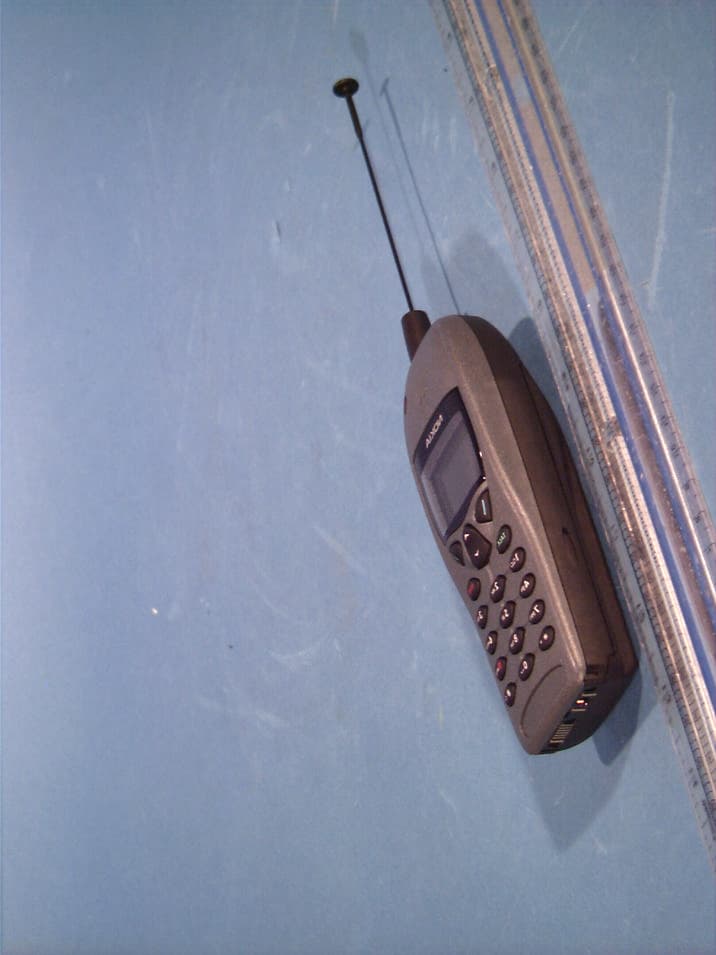
Click to zoom
Application Details
- Equipment Class
- TNE - Licensed Non-Broadcast Transmitter Held to Ear
- Date of Grant
- Mar 18, 2001
- Application Purpose
- Original Equipment
- Date of Application
- Jan 25, 2001
- Equipment Note
- Dual Mode Cellular Phone (AMPS/CDMA)
- Frequency Range
- 824.70000000 - 848.31000000
- Company
- Microsoft Corporation
- Country
- United States
Documents & Files
Document Text
Text extracted from the exhibit documents filed with the FCC. Open a document above to read the original.
Users Manual
© 2001 PCTEST Lab ATTACHMENT M – USER’S MANUAL User Guide Nokia 6180i Phase A (aka “Phase 1”) Keys (Scroll keys) Scroll through menus, sub- menus, and the phone book. Press and hold for continuous scrolling. (Power key) Press and hold to turn your phone on or off. (Softkeys) Their current function is dis- played above the key; these labels change when accessing the various phone features. Push this key to end a phone call or to re- turn to the start screen. Use this key to dial and answer phone calls. MenuNames Retractable antenna (pull here to extend it) Press to select upper or lower case letters when editing text. Press and hold while or is displayed to enter numbers rather than let- ters. Press this key to select special characters when entering text and numbers. Earpiece Press the scroll keys up or down during a call to adjust the lis- tening volume. Use this key to enter an empty space between letters when entering text. Para obtener un manual del usuario en español favor de llamar o enviar un fax al teléfono 1-888-NOKIA2U (1-888-665-4228), fax 813-287-6612. Table of Contents 1. Safety At A Glance . . . . . . . . . . . . . . . . . . . . . . .5 2. Getting Connected . . . . . . . . . . . . . . . . . . . . . . .7 Attaching your battery . . . . . . . . . . . . . . . . . . . . . . . . . . . . . . 7 Charging your new battery . . . . . . . . . . . . . . . . . . . . . . . . . . . 7 Removing the battery . . . . . . . . . . . . . . . . . . . . . . . . . . . . . . . 9 Important Battery Information. . . . . . . . . . . . . . . . . . . . . . . . 9 Cool Features . . . . . . . . . . . . . . . . . . . . . . . . . . . . . . . . . . . . .10 3. Using Your Phone . . . . . . . . . . . . . . . . . . . . . . .12 What is the ‘start screen’? . . . . . . . . . . . . . . . . . . . . . . . . . .12 Navigating tools . . . . . . . . . . . . . . . . . . . . . . . . . . . . . . . . . .12 Scrolling through the main menu . . . . . . . . . . . . . . . . . . . . 13 Menu and submenu numbering . . . . . . . . . . . . . . . . . . . . . .13 Using Shortcuts . . . . . . . . . . . . . . . . . . . . . . . . . . . . . . . . . . .14 Help Text . . . . . . . . . . . . . . . . . . . . . . . . . . . . . . . . . . . . . . . .14 Summary of Menu Items and Shortcuts . . . . . . . . . . . . . . .15 4. The Basics . . . . . . . . . . . . . . . . . . . . . . . . . . . . .18 Switching the phone on and off. . . . . . . . . . . . . . . . . . . . . .18 Getting a strong signal . . . . . . . . . . . . . . . . . . . . . . . . . . . . .18 Making a call . . . . . . . . . . . . . . . . . . . . . . . . . . . . . . . . . . . . .19 Ending a call. . . . . . . . . . . . . . . . . . . . . . . . . . . . . . . . . . . . . .20 Answering a call . . . . . . . . . . . . . . . . . . . . . . . . . . . . . . . . . .20 Keyguard. . . . . . . . . . . . . . . . . . . . . . . . . . . . . . . . . . . . . . . . .20 5. Your Phone A to Z . . . . . . . . . . . . . . . . . . . . . . .22 ABC/abc mode . . . . . . . . . . . . . . . . . . . . . . . . . . . . . . . . . . . .22 Access codes . . . . . . . . . . . . . . . . . . . . . . . . . . . . . . . . . . . . .22 Alarm clock . . . . . . . . . . . . . . . . . . . . . . . . . . . . . . . . . . . . . .22 All calls timer . . . . . . . . . . . . . . . . . . . . . . . . . . . . . . . . . . . . .24 Anykey answer . . . . . . . . . . . . . . . . . . . . . . . . . . . . . . . . . . . .24 Automatic answer . . . . . . . . . . . . . . . . . . . . . . . . . . . . . . . . .24 Automatic redial . . . . . . . . . . . . . . . . . . . . . . . . . . . . . . . . . .24 Calculator . . . . . . . . . . . . . . . . . . . . . . . . . . . . . . . . . . . . . . . .25 Calendar . . . . . . . . . . . . . . . . . . . . . . . . . . . . . . . . . . . . . . . .26 Call forwarding . . . . . . . . . . . . . . . . . . . . . . . . . . . . . . . . . . .28 Call log . . . . . . . . . . . . . . . . . . . . . . . . . . . . . . . . . . . . . . . . .29 Call restrictions . . . . . . . . . . . . . . . . . . . . . . . . . . . . . . . . . . .30 Call settings . . . . . . . . . . . . . . . . . . . . . . . . . . . . . . . . . . . . . 30 Call timers. . . . . . . . . . . . . . . . . . . . . . . . . . . . . . . . . . . . . . . 31 Call waiting . . . . . . . . . . . . . . . . . . . . . . . . . . . . . . . . . . . . . 31 Caller ID . . . . . . . . . . . . . . . . . . . . . . . . . . . . . . . . . . . . . . . . 32 Calling card . . . . . . . . . . . . . . . . . . . . . . . . . . . . . . . . . . . . . 33 Change lock code . . . . . . . . . . . . . . . . . . . . . . . . . . . . . . . . . 35 Change security code. . . . . . . . . . . . . . . . . . . . . . . . . . . . . . 35 Clear call lists . . . . . . . . . . . . . . . . . . . . . . . . . . . . . . . . . . . . 35 Clear timers . . . . . . . . . . . . . . . . . . . . . . . . . . . . . . . . . . . . . 36 Clock . . . . . . . . . . . . . . . . . . . . . . . . . . . . . . . . . . . . . . . . . . . 36 Conference call . . . . . . . . . . . . . . . . . . . . . . . . . . . . . . . . . . 38 Current call timer . . . . . . . . . . . . . . . . . . . . . . . . . . . . . . . . . 39 Customize profiles . . . . . . . . . . . . . . . . . . . . . . . . . . . . . . . . 39 Custom Tone . . . . . . . . . . . . . . . . . . . . . . . . . . . . . . . . . . . . . 39 Data and fax calls . . . . . . . . . . . . . . . . . . . . . . . . . . . . . . . . 40 Dialed calls . . . . . . . . . . . . . . . . . . . . . . . . . . . . . . . . . . . . . . 40 Earpiece volume . . . . . . . . . . . . . . . . . . . . . . . . . . . . . . . . . . 41 Emergency calls . . . . . . . . . . . . . . . . . . . . . . . . . . . . . . . . . . 41 Emergency key 9 . . . . . . . . . . . . . . . . . . . . . . . . . . . . . . . . . 42 Entering text and numbers . . . . . . . . . . . . . . . . . . . . . . . . . 42 Erasing mobile messages . . . . . . . . . . . . . . . . . . . . . . . . . . . 45 Erase options for your phone book . . . . . . . . . . . . . . . . . . . 45 Fax calls . . . . . . . . . . . . . . . . . . . . …
Text truncated - open the document above for the full version.
Attestation Statements
© 1998 PCTEST Lab ATTACHMENT B – ATTESTATION STATEMENT(S) NOKIA MOBILE PHONES, Inc. 12278 Scripps Summit Drive San Diego, CA 92131 Tel. (858) 831 5000 January 20, 2001 Federal Communications Commission, Authorisation & Evaluation Division, 7435 Oakland Mills Road, Columbia, MD 21046 Attention: Equipment Authorisation Branch REQUEST FOR CONFIDENTIALITY Pursuant to Sections 0.457 (d) (l) (ii) and 0.459 of the Commission’s Rules, the Applicant hereby requests confidential treatment of some of the information accompanying this Application of FCC ID:GMLNSD-3GW and as outlined below: - block diagram - schematic diagrams - descriptions of circuitry / theory of operation - list of active devices - tune-up procedures These materials contain trade secrets and proprietary information not customarily released to the public and the public disclosure of these matters might be harmful to the Applicant and provide unjustified benefits to its competitors. The Applicant understands that pursuant to Rule 0.457 (d) (l) (ii) disclosure of this Application and all accompanying documentation will not be made before the date of the Grant for this Application. NOKIA MOBILE PHONES, Inc. W. Mark de Nes Product Project Manager, Product Development, San Diego Nokia Mobile Phones (USA) Inc. 12278 Scripps Summit Drive San Diego, CA 92131 To: FCC Application Processing Branch Re: FCC ID GMLNSD-3GW Applicant: Nokia Mobile Phones Inc. 731 Confirmation Number: XXXXXXX Date: January 20, 2001 Nokia Mobile Phones model 6180i, with FCC Identifier GMLNSD-3GW complies with the provisions of Section 22.921 in CFR 47, concerning 911 Call Processing Modes. Sincerely, W. Mark de Nes Product Project Manager, Product Development, San Diego NOKIA MOBILE PHONES, Inc. 12278 Scripps Summit Drive San Diego, CA 92131 Tel. (858) 831 5000 January 20, 2001 Federal Communications Commission, Authorization & Evaluation Division, 7435 Oakland Mills Road, Columbia, MD 21046 Attention: Equipment Authorization Branch PER: 47 CFR 22.919 RE: FCC ID: GMLNSD-3GW The Electronic Serial Number (ESN) for each transceiver is unique. The ESN host component is permanently attached to a main circuit board of the mobile transmitter and the integrity of the unit’s operating software is not alterable. The ESN is isolated from fraudulent contact and tampering. ® The host component does not contain other information, it is not removable and its electrical connections are not accessible. ̨ The host component does contain other information, and the ESN information is encoded using: ® (1) Multiplication or division by a polynomial. ̨ (2) Cyclic coding. ̨ (3) The spreading of ESN bits over various non-sequential memory locations. The ESN is factory set and is not alterable, transferable, removable, or otherwise able to be manipulated. Cellular mobile equipment is designed such that any attempt to remove, tamper with, or change the ESN chip, its logic system, or firmware originally programmed by the manufacturer will render the mobile transmitter inoperative. NOKIA MOBILE PHONES, Inc. W. Mark de Nes Product Project Manager, Product Development, San Diego NOKIA MOBILE PHONES, Inc. 12278 Scripps Summit Drive San Diego, CA 92131 Tel (858) 831 5000 January 20, 2001 Federal Communications Commission, Authorisation & Evaluation Division, 7435 Oakland Mills Road, Columbia, MD 21046 Attention: Equipment Authorisation Branch COMPLIANCE STATEMENT OF NOKIA 6180i, FCC ID: GMLNSD-3GW The compliance statement can be seen in user guide of NOKIA 6180i because the size of the hand-portable NOKIA 6180i and its identification label are so small that the compliance statement can not be printed visible enough. NOKIA MOBILE PHONES, Inc. W. Mark de Nes Product Project Manager, Product Development, San Diego NOKIA MOBILE PHONES, Inc. 12278 Scripps Summit Drive San Diego, CA 92131 Tel. (858) 831 5000 January 20, 2000 Federal Communications Commission, Authorisation & Evaluation Division, 7435 Oakland Mills Road, Columbia, MD 21046 Attention: Equipment Authorisation Branch We hereby certify that the tranceiver FCC ID: GMLNSD-3GW complies with OET Bulletin No. 53 as referenced in Section 22.915 of the Commission’s rules and with TIA/EIA/IS-95-A Mobile Station-Base Station Compatibility Standard for Dual-Mode Wideband Spread Spectrum Cellular System. Compliance was determined by testing appropriate parameters according to standards. Extensive field testing has been performed in several locations in the USA to verify the compatibility against different systems. NOKIA MOBILE PHONES, Inc. W. Mark de Nes Product Project Manager, Product Development, San Diego NOKIA MOBILE PHONES, Inc. 12278 Scripps Summit Drive San Diego, CA 92131 Tel. (858) 831 5000 January 20, 2001 Federal Communications Commission, Authorisation & Evaluation Division, 7435 Oakland Mills Road, Columbia, MD 21046 Attention: Equipment Authorisation Branch We hereby certify that the transceiver FCC ID:GMLNSD-3GW complies with ANSI/IEEE C95.1-1992 Standard for Safety Levels with Respect to Human Exposure to Radio Frequency Electromagnetic Fields, 3kHz to 300 GHz. Compliance was determined by testing appropriate parameters according to standard. NOKIA MOBILE PHONES, Inc. W. Mark de Nes Product Project Manager, Product Development, San Diego
Cover Letter(s)
January 26, 2001 Federal Communications Commission Equipment Approval Services 7435 Oakland Mills Road Columbia, MD 21046 SUBJECT: NOKIA MOBILE PHONES, Inc. FCC ID: GMLNSD-3GW Part 22 Certification Gentlemen: Attached herewith, on behalf of NOKIA MOBILE PHONES, Inc., is an application for Part 22 Certification of the following Dual-Mode Cellular Phone (AMPS/CDMA): FCC ID: GMLNSD-3GW TRADE / MODEL(s): NOKIA 6180i EUT TYPE: Non-Broadcast Transmitter held to ear (TNE) Tx Freq. Range: 824.04 – 848.97 MHz (AMPS) 824.70 – 848.31 MHz (CDMA) Rx Freq. Range: 869.04 – 893.97 MHz (AMPS) 869.70 – 893.31 MHz (CDMA) Max. RF Output Power: 0.600 W ERP AMPS (27.82 dBm) 0.369 W ERP CDMA (25.67 dBm) Max. SAR Measurement: 1.11mW/g Peak Head SAR (AMPS) 1.27mW/g Peak Body SAR (AMPS) Attached is the applicant’s Letter of Authorization, Confidentiality Request, ESN Affidavit, E911 Compliance Statement, measurement report data and plots, RF Exposure measurement report, FCC ID label and location, test setup photographs, internal and external photographs, block diagrams (confidential), schematic diagrams & circuit description (confidential), operational description, parts list & tune-up procedure, and the user's manual. Should you have any questions or comments concerning the above, please contact the undersigned. cc: NOKIA MOBILE PHONES, Inc.
Cover Letter(s)
March 15, 2001 Federal Communications Commission Equipment Approval Services 7435 Oakland Mills Road Columbia, MD 21046 Attn: Mr. Joe Dichoso SUBJECT: Nokia Mobile Phones Inc. FCC ID: GMLNSD-3GW 731 Confirmation No.: EA99876 Correspondence Reference No.: 18405 Request for Tech. Info.: 03/15/01 Dear Joe: Transmitted herewith, on behalf of Nokia Mobile Phone Inc., is an amendment provided in response to the request for technical information dated March 15, 2001. 1. Per your request, please find attached the Schematics. Please note that the schematics was already submitted on January 30, 2001. (see attached) We trust this information is sufficient to issue the grant ASAP. If you have any further questions, please do not hesitate to contact us. cc: Nokia Mobile Phones Inc.
External Photos
© 2001 PCTEST Lab ATTACHMENT G – EXTERNAL PHOTOGRAPHS © 2000 PCTEST Lab FCC ID: GMLNSD-3GW (Model: 6180i) NVLAP Lab Code: 100431-0 NOKIA Dual-Mode Cellular Phone (AMPS/CDMA) © 2000 PCTEST Lab FCC ID: GMLNSD-3GW (Model: 6180i) NVLAP Lab Code: 100431-0 NOKIA Dual-Mode Cellular Phone (AMPS/CDMA) © 2000 PCTEST Lab FCC ID: GMLNSD-3GW (Model: 6180i) NVLAP Lab Code: 100431-0 NOKIA Dual-Mode Cellular Phone (AMPS/CDMA) © 2000 PCTEST Lab FCC ID: GMLNSD-3GW (Model: 6180i) NVLAP Lab Code: 100431-0 NOKIA Dual-Mode Cellular Phone (AMPS/CDMA) © 2000 PCTEST Lab FCC ID: GMLNSD-3GW (Model: 6180i) NVLAP Lab Code: 100431-0 NOKIA Dual-Mode Cellular Phone (AMPS/CDMA) © 2000 PCTEST Lab FCC ID: GMLNSD-3GW (Model: 6180i) NVLAP Lab Code: 100431-0 NOKIA Dual-Mode Cellular Phone (AMPS/CDMA)
ID Label/Location Info
© 2001 PCTEST Lab ATTACHMENT E – FCC ID LABEL / LOCATION © 2001 PCTEST Lab FCC ID SAMPLE LABEL & LOCATION LABELLING REQUIREMENTS PER §§ 2.925 The Label shown shall be permanently affixed at a conspicuous location on the device and be readily visible to the user at the time of purchase. (SEE NEXT PAGE) Type: NSD-3GW CAN ID: MADE IN BRAZIL FCC ID: GMLNSD-3GW Model: 6180i Code: 0503972 MY ESN DEC: XXX/00000000 Licensed by Qualcomm Inc. under one or more of the following patents: 4,901,307 5,109,390 5,265,119 5,267,261 ESN HEX: FFXXXXXX
ID Label/Location Info
© 2001 PCTEST Lab ATTACHMENT E – FCC ID LABEL / LOCATION © 2001 PCTEST Lab FCC ID SAMPLE LABEL & LOCATION LABELLING REQUIREMENTS PER §§ 2.925 The Label shown shall be permanently affixed at a conspicuous location on the device and be readily visible to the user at the time of purchase. (SEE NEXT PAGE) Type: NSD-3GW CAN ID: MADE IN BRAZIL FCC ID: GMLNSD-3GW Model: 6180i Code: 0503972 MY ESN DEC: XXX/00000000 Licensed by Qualcomm Inc. under one or more of the following patents: 4,901,307 5,109,390 5,265,119 5,267,261 ESN HEX: FFXXXXXX
Internal Photos
© 2001 PCTEST Lab ATTACHMENT H – INTERNAL PHOTOGRAPHS © 2000 PCTEST Lab FCC ID: GMLNSD-3GW (Model: 6180i) NVLAP Lab Code: 100431-0 NOKIA Dual-Mode Cellular Phone (AMPS/CDMA) © 2000 PCTEST Lab FCC ID: GMLNSD-3GW (Model: 6180i) NVLAP Lab Code: 100431-0 NOKIA Dual-Mode Cellular Phone (AMPS/CDMA) © 2000 PCTEST Lab FCC ID: GMLNSD-3GW (Model: 6180i) NVLAP Lab Code: 100431-0 NOKIA Dual-Mode Cellular Phone (AMPS/CDMA) © 2000 PCTEST Lab FCC ID: GMLNSD-3GW (Model: 6180i) NVLAP Lab Code: 100431-0 NOKIA Dual-Mode Cellular Phone (AMPS/CDMA) © 2000 PCTEST Lab FCC ID: GMLNSD-3GW (Model: 6180i) NVLAP Lab Code: 100431-0 NOKIA Dual-Mode Cellular Phone (AMPS/CDMA) © 2000 PCTEST Lab FCC ID: GMLNSD-3GW (Model: 6180i) NVLAP Lab Code: 100431-0 NOKIA Dual-Mode Cellular Phone (AMPS/CDMA) © 2000 PCTEST Lab FCC ID: GMLNSD-3GW (Model: 6180i) NVLAP Lab Code: 100431-0 NOKIA Dual-Mode Cellular Phone (AMPS/CDMA) © 2000 PCTEST Lab FCC ID: GMLNSD-3GW (Model: 6180i) NVLAP Lab Code: 100431-0 NOKIA Dual-Mode Cellular Phone (AMPS/CDMA) © 2000 PCTEST Lab FCC ID: GMLNSD-3GW (Model: 6180i) NVLAP Lab Code: 100431-0 NOKIA Dual-Mode Cellular Phone (AMPS/CDMA) © 2000 PCTEST Lab FCC ID: GMLNSD-3GW (Model: 6180i) NVLAP Lab Code: 100431-0 NOKIA Dual-Mode Cellular Phone (AMPS/CDMA) © 2000 PCTEST Lab FCC ID: GMLNSD-3GW (Model: 6180i) NVLAP Lab Code: 100431-0 NOKIA Dual-Mode Cellular Phone (AMPS/CDMA) © 2000 PCTEST Lab FCC ID: GMLNSD-3GW (Model: 6180i) NVLAP Lab Code: 100431-0 NOKIA Dual-Mode Cellular Phone (AMPS/CDMA) © 2000 PCTEST Lab FCC ID: GMLNSD-3GW (Model: 6180i) NVLAP Lab Code: 100431-0 NOKIA Dual-Mode Cellular Phone (AMPS/CDMA)
RF Exposure Info
© 2001 PCTEST Lab ATTACHMENT N – SAR MEASUREMENT REPORT NOKIA MOBILE PHONES 1 January 17th, 2001 P.O. Box 86 Joensuunkatu 7E FIN-24101 SALO Finland FEDERAL COMMUNICATIONS COMMISSION Equipment Authorization Branch 7435 Oaklands Mills Road Columbia, MD 21046 SAR TEST REPORT of Nokia 6180i Gentlemen, Please find attached SAR test report of FCC ID: GMLNSD-3GW For and on behalf of Nokia Mobile Phones Ltd. Respectfully, Sami Savela Senior RF Design Engineer Responsible for NMP SAR measurements NOKIA MOBILE PHONES 2 ContentsPage 1.Description of the measurement3 2.Description of calibration by manufacturer4 3.List of standards4 4.Device list5 5.Equipment under test6 5.1Verification and results6 5.2Specification of Liquid6 5.3Specification of position with phone against7 generic twin phantom 5.4The phone position against generic twin 8 phantom 5.5Results of SAR for 1g 9 5.6Evaluation of SAR in body worn configurations10 5.6.1Introduction10 5.6.2Test method10 5.6.3Results12 5.6.4Summary12 Appendix 1 file appedix1-8_2000.pdf Appendix 2 file appedix1-8_2000.pdf Appendix 3 file appedix1-8_2000.pdf Appendix 4 file appedix1-8_2000.pdf Appendix 5 file appedix1-8_2000.pdf Appendix 6 file appedix1-8_2000.pdf Appendix 7 file appedix1-8_2000.pdf Appendix 8 file appedix1-8_2000.pdf Appendix 913 Appendix 1016 NOKIA MOBILE PHONES 3 1.Description of the measurement These measurements were done by E-field scanning system for dosimetric assessments. It is robot-based system which allows automated E-field scanning in tissue simulating solutions. The measurements are based on the induced specific absorption rate (SAR) definition of relevant ANSI / IEEE standards. The dosimetric assessment system of Nokia Mobile Phones is manufactured by Prof. Niels Kuster at ETH (Schmid & Partner Engineering AG) in Switzerland, Europe. The method used to determine the 1 gram average value of SAR is: Initially a coarse scan is performed over the whole area on a 20 x 20 mm grid. From this coarse scan, the location at which the maximum value is measured is used as the centre for a second, more detailed scan. This second scan is based on a 3 dimensional grid of 4 x 4 x 7 points on a grid of 10 mm for 900 MHz. The average SAR values are computed using the 3D spline inter-polation algorithm. The 3D spline is composed on three one- dimensional splines with the “Not a knot” condition in the x, y and z directions (1), (2). The volume is integrated with the trapezoidal algorithm. 1000 points (10x10x10) are interpolated to calculate the average. All neighbouring volumes are evaluated until no neighbouring volume with a higher average is found. (1) W. Gander, Computermathematik, Birkhauser, Basel, 1992 (2) W. H. Press, S. A Teukolsky, W. T. Vettering and B. P. Flannery, Numerical Recipes in C, The Art of Scientific Computing, second edition, Cambridge University Press, 1992 NOKIA MOBILE PHONES 4 2.Description of calibration by manufacturer The calibration of data acquisition electronics and probe was done by the manufacturer. (Appendix 3 and 7) - the data acquisition unit is calibrated and tested using a FLUKE 702 Process Calibrator - measurement uncertainty is less than ± 20% for various tissues simulating solutions and frequencies: - these calibration parameters were measured using a temperature probe developed by manufacturer - description of the probe calibration and examples of the evaluation are enclosed in Appendix 7 3.List of standards ANSI/IEEE Std C95.1-1992 IEEE Standard for Safety Levels with Respect to Human Exposure to Radio Frequency Electromagnetic Fields, 3 kHz to 300 GHz ANSI/IEEE Std C95.3-1992 IEEE Recommended Practice for the Measurement of Potentially Hazardous Electromagnetic Fields-RF and Microwave NOKIA MOBILE PHONES 5 4.Device list: Automated E-field scanning system for dosimetric assessments System. Calibration due June 2001. Technical data (Appendix 1) Probe ET3DV4, SN: 1105, Recalibrated due June 2001 Technical data (Appendix 2) DASY-dosimetric assessment system, DAE V2, SN: 213, Calibration due June 2001 (Appendix 3) Industrial robot and Control unit, type STÄUBLI CS7 RX 90(CR) NO:595148-01, Technical data (Appendix 4) Generic Twin Phantom Version 3 (Appendix 6). PC COMPAQ 466 laser printer QMS magicolor plus Devices for preparation of the brain tissue simulating liquids -General laboratory equipment for preparation of liquids -Magnetic stirrer with heating plate IKA RET CV, SN:792708 -Scale Mettler Doleto, SN: 2114177678 HP 85070A Dielectric probe system - network analyzer HP 8753B, SN:2716U00762, Calibration due May 2001 - cables - probe stand - dielectric probe kit NO: US33020242 - PC AST PREMMIA 4/66 d - HP-IB 82335B (interface and software) Dipole Validation kit for 900 MHz band, Schmid & Partner Engineering AG, Typ: D900V2, SN: 003, Recalibrated/Verification due June 2002 and Dipole Validation kit for 1800 MHz band, Schmid & Partner Engineering AG, Typ: D1800V2, SN: 207, Recalibrated/Verification due June 2002 - signal generator ROHDE & SCHWARZ, 1038.6002.03 , Calibration due June 2002 - power meter, ROHDE & SCHWARZ, 857.8008.02, Calibration due December 2001 - amplifier ZHL-42 (SMA), 022488-RM:4152 NOKIA MOBILE PHONES 6 5.Equipment under test Unit: NOKIA 6180i FCC-ID: GMLNSD-3GW 5.1Verification and results Validation of the measurement system was made before measurement using the Validation kit. Appendix: 8 and 9. This validation measurement makes sure that the repeatability of SAR measurement value with careful positioning is better than 10 %. On 900 MHz error was < 3 % compared to the parameter of manufacturer SAR results (0.25W): 2.34 mW/g (1g) and 2.40 mW/g (1g). Appendix: 8 and 9 5.2Specification of Liquid The liquids were done using the "Recipe 900MHz ", respectively, and preparation bases on brochure. Appendix 5 900 MHz liquid was used with the 900 MHz Validation measurement. The parameters were measured by liquid testing of HP85070A Dielectric probe system. The amounts of used liquids were 20 litre…
Text truncated - open the document above for the full version.
RF Exposure Info
Appendix 1 pages 1 - 9 AUTOMATED E-FIELD SCANNING SYSTEM FOR DOSIMETRIC ASSESSMENTS Appendix 2 pages 1 - 8 PROBE ET3DV4 SN: 1105 Appendix 3 pages 1 - 5 DASY- DOSIMETRIC ASSESSMENT SYSTEM CALIBRATION REPORT DATA ACQUISITION ELECTRONICS Appendix 4 page 1 INDUSTRIAL ROBOT AND CONTROL UNIT Appendix 5 pages 1 - 3 BRAIN TISSUE SIMULATING LIQUIDS Brain Tissue Simulating Liquids Preparation of the Liquids Requirements: •Scale •Magneto Stirrer: Heating Plate, Magnetos (recommended). •HP 85070A Dielectric Probe Kit (200MHz to 20GHz) plus mounting device and Network Analyser Canisters or "closed" jars to store the liquid (recommended) Preparation: 1.) Heat the water to about 40" Celsius. 2.) Add salt and bactericide to water while stirring and wait until salt is dissolved. 3.) Add about one third of the sugar. Keep stirring. Wait until sugar is dissolved. Add the second third and when dissolved add the final third. The liquid gains volume and thickens slightly. 4.) Keep stirring at maximum speed possible. 5.) When all the sugar is dissolved, add the HEC. HEC is highly hygroscopic. It forms lumps when added to the liquid. Either "help" the magneto stirrer by stirring from outside or dissolve all of the BEC first in another jar with a little bit of liquid using another stirrer. Add it then to the rest of the solution. Once HEC is added the liquid thickens considerably. 6.) During the whole process watch the temperature to prevent water evaporation. 7.) Once the liquid clears up pour it into canisters. Let it stand for a couple of hours before using it. III Use •When in the item (phantom models), monitor water evaporation. •To minimize water evaporation cover the phantoms when not used. Do not store the liquid in the phantoms, rather store it in closed canisters. •In case water has evaporated, you can add (warm) water to the liquid. Be sure that after stirring it is completely homogeneous. •The liquid can be used for at least 3 months. After longer periods bacteria might grow that are resistant against the bactericide. Recipe 900 MHz: Water40.1% Sugar58.0% Salt (NaCI)0.8% HEC (Hydroxyethylcellulosis)1.0% Preservative Substance 900 MHz: ε r = 42.5 ± 5% and σ = 0.85 ± 10% mho/m Recipe 1800 MHz: Water45.0% Sugar53.9% HEC (Hydroxyethylcellulosis)1.0% Preservative Substance 1800 MHz: ε r = 41.0 ± 5% and σ = 1.65 ± 10% mho/m Appendix 6 pages 1 - 2 GENERIC TWIN PHANTOM Version 3. Appendix 7 pages 1 - 11 PROBE CALIBRATION Prof. Dr. Niels Kuster Tel. +41 1 632 2737, Fax: +41 1 632 105 Institut für Feldtheorie und Höchstfrequenztechnik ETH Zürich CH-8092 Zürich Mr. Ilkka Pankinaho Nokia Mobile Phones NMP/R&D P.O. Box 86 FIN-24101 Salo Finland Zurich, 2 December 1995 Mobile Phone Certification Dear Ilkka, In mid-September, we promised to send preprints of the paper which describes the calibration procedure we developed during the last months. We would appreciate any suggestions and comments, since a thorough calibration is fundamental to enforce the safety limits. In addition, we would like to take this opportunity to inform you about the newest developments towards finalizing the scientific and technical conditions for a type approval. Uncertainties of Measurements: In connection with the calibration, we performed an analysis which assessed the total uncertainty of SAR measurements in shell phan- toms. The results are promising. The total uncertainty can be kept below +20% at 900 MHz. A project to further reduce these uncertainties and to develop a standard calibration procedure has now been submitted to the EU program "Standards, Measurements & Testing." Phantom: Another open issue is the verification that the absorption in homogeneous human phantoms represents well the actual spatial peak absorption in the user. In one study, in close cooperation with the research center of German Telekom, absorp- tion induced in three numerical and three experimental phantoms were compared for the mobile communications frequency at 900 MHz. The various phantoms and our findings are briefly described in the attachment. Requirements of a Certification Procedure: In connection with the recent WTR workshop in Rome, we defined the scientific pre-condition necessary to implement a certification procedure. The manuscript also reflects the requirements which were discussed within CENELEC's TC111 Working group on Mobile Telecommunications Equipment. Please find the manuscript in the attachment as well. DASY: Schmid & Partner Engineering AG (SPEAG) has started the development of DASY3. Besides a general revision and extension of the DASY2 hardware and soft- ware, the main objectives Of DASY3 are improved spatial resolution, improved precision and improved time efficiency. DASY3 will be largely compatible with DASY2, although some of the new functions will not be fully usable without minor hardware updates. SPEAG will keep you informed with respect to these develop- ments. The temperature probes which have been developed for the previously mentioned calibration study will soon be commercially available. The prototype showed a sensitivity of about <0.1 mK/s. It might be interesting to all DASY users that this probe will be fully compatible with DASY2, DASY3 and DASYmini. The active volume of about 1 mm3 is ideal for those laboratories which plan to do calibration or SAR measurements in very small structures. Part of the industry was interested in a video of DASY2 to dernonstrate the test pro- cedure to their customers. Since we already had a video for other occasions, we adapted it to these requests and now have copies available. If you are interested, please return the enclosed form by mail or fax. If you want copies of any of the publications listed on that form, we would be happy to send you these copies as well. If you have any questions regarding our activities in the area of mobile phone certification, please do not hesitate to contact me. For questions regarding the dosimetric assessment system DASY, I suggest you contact SPEAG d…
Text truncated - open the document above for the full version.
RF Exposure Info
6180I 1 (1) November 30, 2000 THIS MODEL PHONE MEETS THE GOVERNMENT’S REQUIREMENTS FOR EXPOSURE TO RADIO WAVES. Your wireless phone is a radio transmitter and receiver. It is designed and manufactured not to exceed the emission limits for exposure to radiofrequency (RF) energy set by the Federal Communications Commission of the U.S. Government. These limits are part of comprehensive guidelines and establish permitted levels of RF energy for the general population. The guidelines are based on standards that were developed by independent scientific organizations through periodic and thorough evaluation of scientific studies. The standards include a substantial safety margin designed to assure the safety of all persons, regardless of age and health. The exposure standard for wireless mobile phones employs a unit of measurement known as the Specific Absorption Rate, or SAR. The SAR limit set by the FCC is 1.6W/kg.* Tests for SAR are conducted using standard operating positions specified by the FCC with the phone transmitting at its highest certified power level in all tested frequency bands. Although the SAR is determi…
Text truncated - open the document above for the full version.
Contact Information
Applicant
Hasnain Syed(Director, EMC, SI and RF Compliance)
Technical Contact
PCTEST Engineering Laboratory, Inc.Randy Ortanez
[email protected]410-290-6652
6660-B Dobbin Road · Columbia, Maryland · United States
Non-Technical Contact
PCTEST Engineering Laboratory, Inc.Randy Ortanez
[email protected]410-290-6652
Test Firm
PCTEST Engineering Laboratory, Inc.Randy Ortanez
Technical Specifications
| # | Rule Parts | Frequency Range | Power Output | Emission | Tolerance |
|---|---|---|---|---|---|
| 3 | 24E | 824.7 MHz - 848.31 MHz | 369.00 mW | 1M25F9W | 2.5 ppm |
Other Applications from Microsoft Corporation

GMLRM-88A
Apr 11, 2006GSM 850/900/1800/1900MHz Cellphone w/BT
Equipment Class
JBP - Part 15 Class B Computing Device Peripheral
GMLRM-88
Jan 19, 2006GSM 850/900/1800/1900MHz Cellphone w/BT
Equipment Class
DSS - Part 15 Spread Spectrum Transmitter
GMLNPM-10X
Oct 29, 2003Dual Band Mobile Phone
Equipment Class
PCE - PCS Licensed Transmitter held to ear
GMLRH-25
Sep 10, 2003Tri mode Dual Band Cellular Phone
Equipment Class
PCE - PCS Licensed Transmitter held to ear
GMLRH-42
Aug 27, 2003Nokia 2220 single band cellphone
Equipment Class
TNE - Licensed Non-Broadcast Transmitter Held to Ear