GXABTKB15TA201Bluetooth Keyboard
Hung Tat Electronic Co Ltd
Click to zoom
Application Details
- Equipment Class
- DXX - Part 15 Low Power Communication Device Transmitter
- Date of Grant
- Aug 25, 2015
- Application Purpose
- Original Equipment
- Date of Application
- Aug 25, 2015
- Equipment Note
- Bluetooth Keyboard
- Frequency Range
- 2402.00000000 - 2480.00000000
- Company
- Hung Tat Electronic Co Ltd
- Country
- Hong Kong
Documents & Files
Document Text
Text extracted from the exhibit documents filed with the FCC. Open a document above to read the original.
Users Manual
07/17/15 ONB15TA201, ONB15TA202 Turning the Keyboard ON/OFF Pairing the Keyboard to a Bluetooth enabled device 1. Make sure the Bluetooth Keyboard is turned ON. 2. Press the [Connect] button once until the Bluetooth indicator is blinking blue. The Bluetooth keyboard is now in a pairing mode. 3. Keep the Keyboard and device (or other Bluetooth device) within 2 feet of each other during the pairing process. 4. Click Settings icon of your device and turn on the Bluetooth function. 5. The device will search for the keyboard automatically. 5. When the Bluetooth device finds the Keyboard, select “Bluetooth Keyboard HT7.1” from the list. 6. Using the Keyboard, type the password shown on the tablet (or device) and press enter. 7. After pairing successfully with the tablet, “Bluetooth Keyboard HT7.1 Connected” is displayed. To disconnect, turn the Keyboard OFF. Charging the keyboardStep 1: 1. Connect the small end of the included Micro USB Cable to the USB charging port on the side of the Keyboard. 2. Connect the large end of the included Micro USB cable to an available USB port on your charging station (or other devices made for USB charging). Blinking 1. To turn ON, Slide the switch to the ON position and the power indicator will light up. 2. To turn OFF, Slide the switch to the OFF position. Power Indicator Light NOTE: When turned ON, the Keyboard will automatically connect to the last tablet (or other Bluetooth device) that it was paired with. To switch to another device, turn OFF the tablet or device and restart the pairing process with the new device. NOTE: Most Bluetooth enabled devices will connect to the keyboard the on the first attempt. If your device does not connect to the keypad, see “Pairing the Keyboard with a Bluetooth device” and repeat the pairing process. Or, depending on your device, press the “Refresh” or “Search Again” button your device’s Bluetooth screen. FCC Part 15: Warning: Changes or modifications to this unit not expressly approved by the party responsible for compliance could void the user's authority to operate the equipment. NOTE: This equipment has been tested and found to comply with the limits for a Class B digital device, pursuant to Part 15 of the FCC Rules. These limits are designed to provide reasonable protection against harmful interference in a residential installation. This equipment generates, uses and can radiate radio frequency energy and, if not installed and used in accordance with the instructions, may cause harmful interference to radio communications. However, there is no guarantee that interference will not occur in a particular installation. If this equipment does cause harmful interference to radio or television reception, which can be determined by turning the equipment off and on, the user is encouraged to try to correct the interference by one or more of the following measures: Reorient or relocate the receiving antenna. Increase the separation between the equipment and receiver. Connect the equipment into an outlet on a circuit different from that to which the receiver is connected. Consult the dealer or an experienced radio/TV technician for help. The Bluetooth word mark and logos are registered trademarks owned by Bluetooth SIG, Inc. iPad is a trademark of Apple Inc., registered in the U.S. and other countries. All trademarks and trade names are those of their respective owners. Pair Button Pair Button Micro 3. The LED Charge Indicator Light on the Keyboard will light up RED when charging. 4. The LED Charge Indicator Light on the Keyboard will turn OFF when finished charging. Charge your Keyboard with a PC, MAC, USB adapter or an AC home USB charger COMPUTER AC HOME USB CHARGER Charge your Bluetooth Keyboard fully before use. A message will pop up when pairing is successful. If pairing fails, repeat the steps above. BLUETOOTH ® KEYBOARD FOR TABLETS AND SMARTPHONES In the boxUsing the wireless bluetooth keyboardIOS (Apple) connecting settingsSurface connecting settings Windows phone connecting settings Android connecting settingsLegal informationLimited warranty On your iPad®, tap the Step 4: Toggle Bluetooth to On. Step 5: The keyboard will show up under Devices on the iPad. Select Bluetooth Keyboard HT7.1 Step 6: A code will appear on the screen. Enter this code on the keyboard and click Enter. Step 2: Click General. Step 3: Click Bluetooth. icon from the Home Screen. In the unlikely event that this product is defective, or does not perform properly, you may within One (1) Year from your original date of purchase return it to the authorized service center for repair or exchange. TO OBTAIN WARRANTY SERVICE: • Provide proof of the date of purchase within the package (Dated bill of sale). • Prepay all shipping costs to the authorized service center, and remember to insure your return. • Include a return shipping address (no P.O. Boxes), a telephone contact number, and the defective unit within the package. • Describe the defect or reason you are returning the product. Your product will be repaired or replaced, at our option, for the same or similar model of equal value if examination by the service center determines this product is defective. Products received damaged as a result of shipping will require you to le a claim with the carrier. The shipping address of the authorized service center is: Southern Telecom, Inc. Attention: Customer Service (2nd Floor) 14-C 53rd Street Brooklyn, NY 11232 Should you have any questions or problems concerning this product, please contact our customer service department at: Customer Support: Phone: 1-877-768-8481 (Toll Free) Or via the web: www.southerntelecom.com Click on “Product Support” Warranty service not provided This warranty does not cover damage resulting from accident, misuse, abuse, improper installation or operation, lack of reasonable care, and unauthorized modi cation. This warranty is voided in the event any unauthorized person opens, alters or repairs this product. All products being r…
Text truncated - open the document above for the full version.
Block Diagram
RDA Microelectronics, Inc. RDA5871 Datasheet V1.1 The information contained herein is the exclusive property of RDA and shall not be distributed, reproduced, or disclosed in whole or in part without prior written permission of RDA. Page 3 of 19 3 Function Description ARM7 256K ROM 32K RAM UART I2C OSC 32K/LPO AHB TIMER APB BRIDGE APB GPIO SCU DMA VIC BB TRAPSPI2 Modem POR DC/DC VBAT I2C_SDA I2C_SCL UART_TX UART_RX PCM _ CLK PCM _ SYNC PCM _ DIN PCM _ DOUT DCDC _ SW LDO LDO_ON XTAL XIN RF PLL BT_RF N x x G G A A PLLΦ P D Envelon Keyboard Matrix Scanner 3 -Axis Mouse Signal Controller 32 GPIO ports Figure 3-1. RDA5871 Functional Block Diagram
Cover Letter(s)
HUNG TAT ELECTRONIC CO., LIMITED RM 205, 2/F., EASTERN CENTRE, 1065 KING’S ROAD, QUARRY BAY, HONG KONG TEL: 852-2565 5627 FAX 852-2565 7597 Date : 3 RD August, 2015 Letter of Agency “I, an officer of Hung Tat Electronic Co., Ltd do hereby authorize Intertek Testing Services (Mr. Terry Chan / Koo Wai Ip / Kenneth Wong) to act on our behalf in front of the Federal Communication with respect to all matters relating to certification of equipment under Part 15 and Part 18 of the FCC Rules until further notice.” I further certify that no party (as defined in ∮1.2002(b) of CFR 47, 2004) to this application, including myself, is subject to a denial of federal benefits, that includes FCC benefits, pursuant to Section 5301 of the Anti-Drug Abuse Act of 1988, 21 U.S.C., 862. Date this 3 day August of 2015 By _ ________________________ ________ANDREWN C.Y. CHANG__________ _____GENERAL MANAGER__
External Photos
INTERTEK TESTING SERVICE Report No.: 15070784HKG-001 FCC ID: GXABTKB15TA201 Equipment Photographs Model: ONB15TA201 (External)
Internal Photos
INTERTEK TESTING SERVICE Report No.: 15070784HKG-001 FCC ID: GXABTKB15TA201 Equipment Photographs Model: ONB15TA201 (Internal) INTERTEK TESTING SERVICE Report No.: 15070784HKG-001 FCC ID: GXABTKB15TA201 Equipment Photographs Model: ONB15TA201 (Internal) INTERTEK TESTING SERVICE Report No.: 15070784HKG-001 FCC ID: GXABTKB15TA201 Equipment Photographs Model: ONB15TA201 (Internal)
Operational Description
Technical Description Equipment Under Test (EUT) is a Bluetooth Keyboard. After pairing with a mobile device (such as smartphone), the EUT act as a wireless keyboard. The Bluetooth module in the EUT is operating in the frequency range from 2402MHz to 2480MHz (79 channels with 1MHz channel spacing). The EUT is powered by USB port (5VDC) and/or 3.7VDC internal rechargeable Li-ion battery. 2.4GHz Bluetooth Module: Modulation Type: GFSK Antenna Type: Integral, Internal (PCB Trace) Frequency Range: 2402MHz - 2480MHz, 1MHz channel spacing, 79 channels Nominal field strength is 91.8dB μV/m @ 3m Production Tolerance of field strength is +/- 3dB Antenna gain is 0dBi The functions of main ICs are mentioned below. 1) RDA5871 (U1) acts as the 2.4GHz radio core of Bluetooth which is also integrating with built-in interface for keyboard. 2) The 26MHz crystal (Y1) provides system clock for RDA5871 (U1). 3) 24C64 (U2) is 64kbit serial flash EEPROM for parameter storage. 4) EM4054 (U3) is Li-ion battery charger IC Channel Frequency Table of Bluetooth Module Copyright © RDA Microelectronics Inc. 2011. All rights are reserved. The information contained herein is the exclusive property of RDA and shall not be distributed, reproduced, or disclosed in whole or in part without prior written permission of RDA. RDA5871 Data Sheet Single-Chip Bluetooth® Human Input Device for Keyboard Rev.1.1–9.2012 1 General Description The RDA® RDA5871 is a Bluetooth 2.1- compliant, stand-alone baseband processor with an integrated 2.4 GHz transceiver. It is ideal for wireless input device applications including game controllers, keyboards, remote controls and mouse. Built-in firmware adheres to the Bluetooth Human Interface Device (HID) profile. The RDA5871 radio has been designed to provide low power, low cost, and robust communications for applications operating in the globally available 2.4 GHz unlicensed ISM band. It is fully compliant with Bluetooth Radio Specification 2.1. The single-chip Bluetooth transceiver is a monolithic component implemented in a standard digital CMOS process and requires minimal external components to make a fully compliant Bluetooth device. The RDA5871 is available in one package option, a 48- pin, 6 mm × 6 mm QFN. 1.1 Bluetooth Features On-chip support for common keyboard and mouse interfaces eliminates external processor Bluetooth HID profile version 1.0 compliant CMOS single-chip fully-integrated radio and baseband Integrated battery charger Compliant with Bluetooth 2.1 specification ARM7-based microprocessor with on-chip ROM and RAM Meet class 2 and class 3 transmitting power requirementr Supporting 26MHz DCXO /TCXO Low power consumption Minimum external component Internal 32k LPO. Support for EEPROM Build-in code patching which supports up to 16 KB patching code. Built-in four 8-bit resolution ADC channels Programmable keyscan matrix interface, up to 8 × 18 key-scanning matrix Figure 1-1. RDA5871 Top View RDA Microelectronics, Inc. RDA5871 Datasheet V1.1 The information contained herein is the exclusive property of RDA and shall not be distributed, reproduced, or disclosed in whole or in part without prior written permission of RDA. Page 2 of 19 1.2 Applications RDA5871 is the SOC tailored for the wireless bluetooth keyboard. RDA Microelectronics, Inc. RDA5871 Datasheet V1.1 The information contained herein is the exclusive property of RDA and shall not be distributed, reproduced, or disclosed in whole or in part without prior written permission of RDA. Page 2 of 19 2 Table of Contents 1 General Description .................................................................................................................................... 1 1.1 Bluetooth Features ............................................................................................................................. 1 1.2 Applications ........................................................................................................................................ 2 2 Table of Contents ......................................................................................................................................... 2 3 Function Description ................................................................................................................................... 3 3.1 Radio ................................................................................................................................................... 4 3.2 Auxiliary features ............................................................................................................................... 4 3.3 Baseband ............................................................................................................................................. 4 3.4 Interface .............................................................................................................................................. 4 3.5 Bluetooth Stack ................................................................................................................................... 4 3.6 Microprocessor Unit .......................................................................................................................... 4 3.7 LED and PWM ................................................................................................................................... 5 3.8 EEPROM Interface ............................................................................................................................ 5 3.9 Keyboard scanning-matrix ................................................................................................................ 5 4 Electrical Characteristics ........................................................................................................................... 6 5 Radio Characteristics .........................................................................................…
Text truncated - open the document above for the full version.
RF Exposure Info
Analysis Report 15070784HKG-001 The Equipment Under Test (EUT) is a Bluetooth Keyboard. After pairing with a mobile device (such as smartphone), the EUT act as a wireless keyboard. The Bluetooth module in the EUT is operating in the frequency range from 2402MHz to 2480MHz (79 channels with 1MHz channel spacing). The EUT is powered by USB port (5VDC) and/or 3.7VDC internal rechargeable Li-ion battery. Antenna Type: Internal integral antenna Antenna Gain: 0dBi Operating mode Nominal Production Modulation Radiated Tolerance Type Field Strength Bluetooth 3.0 91.8 dBμV/m at 3m +3/-3dB GFSK According to the KDB 447498: For Bluetooth: Based on the Maximum allowed field strength of production tolerance was 94.8dBμV/m at 3m in frequency 2.480GHz, thus; The EIRP = [(FS*D) ^2*1000 / 30] = 0.906mW Conducted power = Radiated Power (EIRP) – Antenna Gain So; Conducted Power = 0.906mW. The SAR Exclusion Threshold Level: = 3.0 * (min. test separation distance, mm) / sqrt(freq. in GHz) = 3.0 * 5 / sqrt (2.480) mW = 9.53 mW Since the above conducted output power is well below the SAR Exclusion threshold level, so the EUT is considered to comply with SAR requirement without testing.
Schematics
1 2 3 4 A B CD 4 3 2 1 D CB A Title Number Revision Size A4 Date: 7-Aug-2013 Sheet of File: E:\tony\pcb\ghic-tony.Ddb Drawn By: GHIC 1.1 A0 1 A1 2 A2 3 GND 4 SDA 5 SCL 6 NC 7 VCC 8 U224C64 R24.7k R1 4.7k C40.1uF VBAT URAT_RXD URAT_TXD LED2 led LED1 led R6100R*R5100R* C101uF C2 10uF C3 0.1uF C121nFC13 0.1uF L2 4.7uH C11 4.7uF C5 6.8pF* C66.8pF* VBAT C7 10uF VBAT R3560k R40R C8NC(1.8P) C910pF L1NC(6.8nH) SCLSDA LED2LED1 VIO R00R01R02R03R04R05R06R07 C00 C01 C02 C03 C04 C05 C06 C07 C08 C09 C10C11C12C13C14C15C16C17 C140.1uF VBUS 1 D- 2 D+ 3 ID 4 GND 5 JP1MINIUSB ANT SW1SW-ID C00 R2 Y1 26MHz RFIO SCLSDA LED1 LED3 LED2 DVDD LED3 led R7100R* LED3 ANT XIN XTAL AC_ON 1 VIO 2 COL10 3 COL11 4 COL12 5 COL13 6 COL14 7 I2C_SCL 8 I2C_SDA 9 COL15 10 COL16 11 COL17 12 COL07 13 COL06 14 COL05 15 COL04 16 COL03 17 COL02 18 COL01 19 XIN 21 XTAL 22 NC 23 NC 24 ROM7 25 PWR_ON 26 GND 27 RFIO 28 GND 29 ROM5 30 ROM4 32 ROM3 33 ROM2 34 ROM1 35 ROM0 36 COL00 20 ROM6 31 GPIO3_0 37 GPIO3_1 38 GPIO3_2 39 GPIO3_3 40 DVDD 41 UART_TX 42 UART_RX 43 COL08 44 COL09 45 ACD_DCDC 46 DCDC_SW 47 VBAT 48 U1 RDA5871 ACD_DCDC DCDC_SW C1 10uF SW2POWER VBAT R121k PWR_ON PWR_ON 1234 J2CON4 SCLSDA 2013-08-07 5V 5V AC_ON WP R90R WP1 WP R10240k AC_ON CHRG 1 GND 2 BAT 3 VCC 4 PROG 5 U3EM4054 LED4RED R131K R8 1.65K VBAT_1 5V SW3SW SPDT R1110k VBAT_1 VBAT 12 JP2HEADER 2 R00R01R02R03R04R05R06R07 R20 1k R21 1k R22 1k R23 1k R24 1k R25 1k R26 1k R27 1k R0R1R2R3R4R5R6R7 C00C01C02C03C04C05C06C07C08C09C10C11C12 1 1 2 2 3 3 4 4 5 5 6 6 7 7 8 8 9 9 10 10 11 11 12 12 13 13 14 14 15 15 16 16 17 17 18 18 19 19 20 20 21 21 22 22 23 23 24 24 25 25 26 26 GND 27 GND 28 CN1CN26PIN C13C14C15C16R0R1R2R3R4R5R6R7C17 VBAT 2402MHz to 2480MHz Bluetooth To Keyboard matrix
Test Report
Issuing Laboratory: Intertek Testing Services Hong Kong Limited HKAS has accredited this laboratory (Reg. No. HOKLAS 005) under HOKLAS for specific laboratory activities as listed in the HOKLAS directory of accredited laboratories. Report No.: 15070784HKG-001 i FCC ID: GXABTKB15TA201 Intertek Testing Services Hong Kong Ltd. 2/F., Garment Centre, 576 Castle Peak Road, Kowloon, Hong Kong. Tel: (852) 2173 8888 Fax: (852) 2785 5487 Website: www.hk.intertek-etlsemko.com GENERAL INFORMATION Grantee: Hung Tat Electronic Co Ltd Grantee Address: Room 205, 2/F, Eastern Center, 1065 King’s Road, Quarry Bay, Hong Kong. Contact Person: Andrewn C.Y. Chang Tel: (852) 2565-5627 Fax: (852) 2565-7597 e-mail: N/A Manufacturer: Dongguan Hung Tat Electronic Co., Ltd. Manufacturer Address: No. 1, 3/F., Tower A, Yifang Industrial Park, Hongye North 2 Ad., Hongye Industrial Zone, Tangxia Zhen, Dongguan, China. Brand Name: ONN / iLuv Model: ONB15TA201 ONB15TA202, ONB15TA203, ONA14TA059, ONA14TA061, ONA14TA062, ONA14TA063, U02PROWBK, AP6PROWBK Type of EUT: Transceiver Description of EUT: Bluetooth Keyboard Serial Number: N/A FCC ID: GXABTKB15TA201 Date of Sample Submitted: July 15, 2015 Date of Test: July 15, 2015 to August 04, 2015 Report No.: 15070784HKG-001 Report Date: August 07, 2015 Environmental Conditions: Temperature: +10 to 40°C Humidity: 10 to 90% Issuing Laboratory: Intertek Testing Services Hong Kong Limited HKAS has accredited this laboratory (Reg. No. HOKLAS 005) under HOKLAS for specific laboratory activities as listed in the HOKLAS directory of accredited laboratories. Report No.: 15070784HKG-001 ii FCC ID: GXABTKB15TA201 Intertek Testing Services Hong Kong Ltd. 2/F., Garment Centre, 576 Castle Peak Road, Kowloon, Hong Kong. Tel: (852) 2173 8888 Fax: (852) 2785 5487 Website: www.hk.intertek-etlsemko.com SUMMARY OF TEST RESULT TEST SPECIFICATION REFERENCE RESULTS Transmitter Power Line Conducted Emissions 15.207 Pass Radiated Emission Radiated Emission on the Bandedge 15.249, 15.209 Pass Radiated Emission in Restricted Bands 15.205 Pass The equipment under test is found to be complying with the following standards: FCC Part 15, October 1, 2013 Edition Note: 1. The EUT uses a permanently attached antenna which, in accordance to section 15.203, is considered sufficient to comply with the pervisions of this section. 2. Pursuant to FCC part 15 Section 15.215(c), the 20 dB bandwidth of the emission was contained within the frequency band designated (mentioned as above) which the EUT operated. The effects, if any, from frequency sweeping, frequency hopping, other modulation techniques and frequency stability over excepted variations in temperature and supply voltage were considered. Issuing Laboratory: Intertek Testing Services Hong Kong Limited HKAS has accredited this laboratory (Reg. No. HOKLAS 005) under HOKLAS for specific laboratory activities as listed in the HOKLAS directory of accredited laboratories. Report No.: 15070784HKG-001 iii FCC ID: GXABTKB15TA201 Intertek Testing Services Hong Kong Ltd. 2/F., Garment Centre, 576 Castle Peak Road, Kowloon, Hong Kong. Tel: (852) 2173 8888 Fax: (852) 2785 5487 Website: www.hk.intertek-etlsemko.com Table of Contents 1.0 General Description....................................................................................... 1 1.1 Product Description ...................................................................................... 1 1.2 Related Submittal(s) Grants .......................................................................... 1 1.3 Test Methodology ......................................................................................... 1 1.4 Test Facility .................................................................................................. 1 2.0 System Test Configuration ............................................................................ 2 2.1 Justification................................................................................................... 2 2.2 EUT Exercising Software .............................................................................. 2 2.3 Special Accessories...................................................................................... 2 2.4 Measurement Uncertainty ............................................................................. 3 2.5 Support Equipment List and Description........................................................ 3 3.0 Emission Results ........................................................................................... 4 3.1 Field Strength Calculation ............................................................................. 4 3.2 Radiated Emission Configuration Photograph ............................................... 5 3.3 Radiated Emission Data ............................................................................... 5 3.4 Conducted Emission Configuration Photograph ............................................ 5 3.5 Conducted Emission Data............................................................................. 5 4.0 Equipment Photographs .............................................................................. 11 5.0 Product Labelling......................................................................................... 11 6.0 Technical Specifications.............................................................................. 11 7.0 Instruction Manual ....................................................................................... 11 8.0 Miscellaneous Information.......................................................................... 12 8.1 Radiated Emission on the Bandedge .......................................................... 12 8.2 Discussion of Pulse Desensitization ............................................................ 15 8.3 Calculation of Average Factor ..................................................................... 15 8.4 Emissions Test Procedures .........................................…
Text truncated - open the document above for the full version.
Test Setup Photos
INTERTEK TESTING SERVICE Report No: 15070784HKG-001 FCC ID: GXABTKB15TA201 Configuration Photographs Worst-Case Radiated Emissions (Front View) Model: ONB15TA201 INTERTEK TESTING SERVICE Report No: 15070784HKG-001 FCC ID: GXABTKB15TA201 Configuration Photographs Worst-Case Radiated Emissions (Rear View) Model: ONB15TA201
Test Setup Photos
INTERTEK TESTING SERVICE Report No: 15070784HKG-001 FCC ID: GXABTKB15TA201 i Configuration Photographs Worst-Case Line-Conducted Emissions (Front View) Model: ONB15TA201 INTERTEK TESTING SERVICE Report No: 15070784HKG-001 FCC ID: GXABTKB15TA201 ii Configuration Photographs Worst-Case Line-Conducted Emissions (Rear View) Model: ONB15TA201 INTERTEK TESTING SERVICE Report No: 15070784HKG-001 FCC ID: GXABTKB15TA201 iii Configuration Photographs Worst-Case Line-Conducted Emissions (Side View) Model: ONB15TA201
Contact Information
Applicant
Andrewn C.Y. Chang
Technical Contact
Intertek Testing Services Hong Kong Ltd.Terry Chan
[email protected](852) 2173 8888
2/F., Garment Centre, · Hong Kong
Non-Technical Contact
Intertek Testing Services Hong Kong Ltd.Terry Chan
[email protected](852) 2173 8888
Test Firm
Intertek Testing Services Hong Kong Ltd.Billy Chow
Technical Specifications
| # | Rule Parts | Frequency Range | Power Output |
|---|---|---|---|
| 1 | 15C | 2.40 GHz - 2.48 GHz | - |
Other Applications from Hung Tat Electronic Co Ltd
GXAHTBT1000
Sep 09, 2014Bluetooth Wireless Stereo Speaker
Equipment Class
DXX - Part 15 Low Power Communication Device Transmitter
GXAHTPBT2001
Jul 07, 2014Bluetooth Speaker
Equipment Class
DXX - Part 15 Low Power Communication Device Transmitter
GXAHTEBT1000
Oct 16, 2013Bluetooth Wireless Stereo Speaker
Equipment Class
DXX - Part 15 Low Power Communication Device Transmitter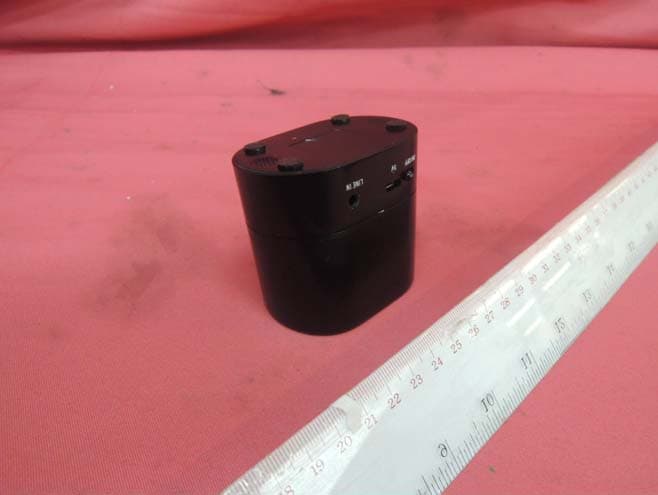
GXAHTPBT502
Aug 11, 2013Bluetooth Speaker
Equipment Class
DXX - Part 15 Low Power Communication Device Transmitter