KBCIX100AC750Rugged Handheld PC w/ Internal PCS GPRS Modem Card
General Dynamics Itronix Corporation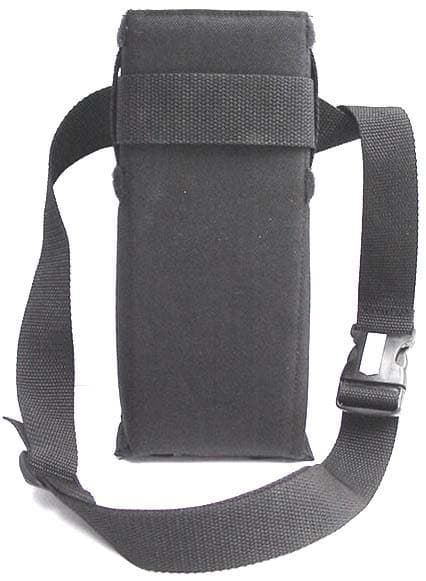
Click to zoom
Application Details
- Equipment Class
- PCT - PCS Licensed Transmitter worn on body
- Date of Grant
- Sep 16, 2003
- Application Purpose
- Original Equipment
- Date of Application
- Sep 16, 2003
- Equipment Note
- Rugged Handheld PC w/ Internal PCS GPRS Modem Card
- Frequency Range
- 1850.20000000 - 1909.80000000
- Country
- United States
Documents & Files
Document Text
Text extracted from the exhibit documents filed with the FCC. Open a document above to read the original.
Users Manual
GoBook® Q•100 Help English Fran çais Deutsch GoBook® Q•100 Help Controls Batteries Maintaining Your GoBook Q•100 Using Your GoBook Q •100 Safely CompactFlash Cards Peripherals ActiveSync Troubleshooting Legal Information Controls The GoBook Q•100 is equipped with a numeric keypad, cursor keys and a few special function keys. Other functions are available via the touch-screen. Backlight Stylus Entering Data Resetting Your GoBook Q •100 Backlight Press the FN key along with the left or right arrow keys to adjust the backlight. The backlight has four levels of brightness. It is on by default and turns off automatically after 3 minutes of inactivity. These settings may be adjusted in the GoBook Q•100's settings . When the display backlight turns on, the keypad backlight also turns on. It turns off whenever the display backlight turns off. See Also Stylus Entering Data Resetting Your GoBook Q•100 Page 1 of 14Q•100 Help 28/08/2003file://C:\Documents%20and%20Settings\jonathan\Local%20Settings\Temp\Q.100%20He... Using the Stylus The stylus is designed to be light-weight and comfortable to use, as well as being gentle on the touch screen. It is stored in a channel in the back of the terminal. To remove the stylus from the channel, press on its textured part and push it up and out. NOTE It is good practice to return the stylus to the holder when not in use. If you lose the stylus you may use your fingertips instead, but they are not as precise. CAUTION Do not use a ballpoint pen or sharp pointed object to operate the touch screen, as this can damage the screen. See Also Backlight Entering Data Resetting Your GoBook Q•100 Entering Data Use the keypad to enter numerical data. Use the cursor keys to move the cursor around the screen. If your GoBook Q•100 has a Yes key, it operates as an enter or return key in most cases, when the response is expected to be affirmative. The FN key has these functions: FN+Enter Enters Alpha Mode so you can use the keypad to enter text. Once in Alpha mode, hold down a key to cycle through the characters available. Release the key to choose a letter or number. For example, if you hold down the 5 key it will cycle through j , k , l , and 5 . FN+Left / Right Arrow Toggles the backlight FN+Number When the number key is pushed repeatedly, it cycles through the Alpha mode characters available for that key. FN+Power Key When held for five seconds this performs a Soft Reset. FN+Power Key+Top Center Key When held for five seconds this performs a Hard Reset. CAUTION The Hard Reset is an emergency procedure only. Use the Soft Reset instead if possible. If you Hard Reset, you will lose the settings saved in the Pocket PC operating system as well as all data stored in RAM. You will have to recalibrate your terminal's touch screen and personal data when you restart. The FN key may also have different functions depending on the program in use. When a field appears requiring text entry, the virtual (soft) keyboard will pop up. This can then be operated with the stylus. For more information about entering data via the virtual keyboard or other input method see Entering Information See Also Use the soft keyboard Backli ght Page 2 of 14Q•100 Help 28/08/2003file://C:\Documents%20and%20Settings\jonathan\Local%20Settings\Temp\Q.100%20He... Stylus Resetting Your GoBook Q•100 Resetting your GoBook Q•100 If your GoBook Q•100 locks up or fails to operate, you may need to reset it in one of two ways. Soft Reset Hold down both the Power and FN keys for about five seconds. After a few seconds the screen will blank and the GoBook Q•100 will perform a Soft Reset. The Soft Reset does not affect the Pocket PC operating system and no data loss will occur. Hard Reset Hold down the Power, FN and the center top number key simultaneously for about five seconds. This will perform a Hard Reset resulting in data loss. CAUTION The Hard Reset is an emergency procedure only. Use the Soft Reset instead if possible. If you Hard Reset, you will lose the settings saved in the Pocket PC operating system as well as all data stored in RAM. You will have to recalibrate your terminal's touch screen and personal data when you restart. See Also Backlight Stylus Entering Data Batteries Battery Information Checking the Batteries Battery Conservation Battery Charging Battery Replacement Battery Storage Battery Information The GoBook Q•100's primary battery is a rechargeable Lithium-Ion (Li-Ion) pack. DO NOT use other batteries. They may damage your GoBook Q•100. After inserting a new Li-Ion battery pack, charge it to 100% before use. This ensures that the battery pack's power gauge calculations will be correct. Frequent incomplete charges lead to progressively larger errors that only a full charge can fix. Charge on AC power at least 7 hours to ensure the internal backup battery is also fully charged; however it may take longer if the ambient temperature is extremely Page 3 of 14Q•100 Help 28/08/2003file://C:\Documents%20and%20Settings\jonathan\Local%20Settings\Temp\Q.100%20He... hot or cold. The internal backup battery retains data up to 48 hours if the main battery pack is fully discharged or removed. Its charge is automatically topped-off whenever the GoBook Q•100 is awake and on external or main battery power. To ensure data integrity, the main battery should always be kept charged and important data should be saved in non-volatile memory, such as on the CompactFlash card. Whenever possible, use the AC power adapter with the GoBook Q•100 to conserve the battery pack. The AC Adapter charges the battery pack and supplies a maintenance charge to the backup battery. Ideally, you should charge your battery pack at the end of every day. Proper charging practice keeps both batteries in good condition. If you do not intend to use your GoBook Q•100 for an extended period of time, back-up all important data in non-volatile memory, such as on a CompactFlash card. See Also Checking the Batteries Battery Conservation Battery Charging B…
Text truncated - open the document above for the full version.
Cover Letter(s)
Celltech Labs Inc. 1955 Moss Court, Kelowna, B.C. Canada V1Y 9L3 Tel. 250-448-7047 • Fax. 250-448-7046 • e-mail: [email protected] www.celltechlabs.com September 17, 2003 American Telecommunications Certification Body, Inc. 6731 Whittier Avenue, Suite C110 McLean, VA 22101 Attn: Tim Johnson SUBJECT: ITRONIX CORPORATION FCC ID: KBCIX100AC750 Part 24(E) Certification ATCB File No.: ATCB000747 Response to Questions - 09/16/03 Dear Tim: On behalf of Itronix Corporation is our response to your questions dated 09/16/03 requesting additional information for the subject application. 1. Attached are the internal photographs of the PCMCIA Card. 2. Attached is the revised FCC ID label. 3. The gain of the EUT antenna is 0 dBi and the maximum conducted and EIRP power levels measured were 28 dBm and 29 dBm respectively. The maximum EIRP measured for the original PCMCIA Card approval was 32.5 dBm and the maximum peak conducted power was 28.5 dBm, based on a 4 dB antenna gain using a different antenna. The operational description reference to 2 Watts maximum applies to the rated power for E-GSM band in Europe. 4. Please refer to submitted operational description attachment. 5. Please see attached retested band-edge data and plots. 6. Please see attached retested band-edge data and plots 7. For future filings it is understood that block-edge measurement data is no longer required. 8. Please see attached revised SAR test data table and summary pages listing the ear-microphone accessory for applicable tests. 9. SAR measurements performed without the carry case accessory required a 0.5 cm separation distance for the right side (antenna side) of the device. When the device is placed in the carry case, the thickness of the carry case provides a 0.5 cm separation distance and therefore a separation distance was not required from the carry case. 10. Please see attached revised user manual RF exposure information. If you have any further questions or comments concerning the above, please contact the undersigned. Sincerely, Jonathan Hughes General Manager Celltech Labs Inc. cc: Itronix Corporation
Cover Letter(s)
801 S. STEVENS STREET SPOKANE, WA 99204 509.624.6600 800.441.1309 FAX 509.626.4203 www.itronix.com June 10, 2003 Federal Communications Commission Equipment Authorization Branch 7435 Oakland Mills Road Columbia, MD 21046 Re: Itronix Corporation FCC ID: KBCIX100AC750 FCC Part 24(E) Certification Request for Confidentiality In accordance with 0.459 of CFR 47, Itronix Corporation hereby requests confidentiality of the Block Diagram, Schematic Diagram(s), Parts List, Tune-Up Procedure, Operational Description, and Antenna Specifications attachments for the subject application. These documents contain detailed system and equipment description and related information about the product in which Itronix Corporation considers to be proprietary, confidential, and a custom design and, otherwise, would not release to the general public. Since this design is a basis from which future technological products will evolve, Itronix Corporation considers that this information would be of benefit to its competitors, and that the disclosure of the information in these documents would give competitors an unfair advantage in the market. Sincerely,
Cover Letter(s)
American Telecommunications Certification Body Inc. 6731 Whittier Ave, McLean, VA 22101 September 17, 2003 RE: Itronix Corporation FCC ID: KBCIX100AC750 I have a few comments on the above referenced Application. General 1) Please provide internal photographs for the PCMCIA Card portion of the device. 2) From the font utilized on the label, a difference between 1 and I can not be determined. Please modify the label using a different font so these characters may be distinguished. 3) Both the conducted and EIRP powers for this application are around 28-29 dBm (800 mW approximately). However the original device approval for the PCMCIA card was about 32.5 dBm (1.79 Watts - not sure which method of measurement was used). Note that the operational description describes a 2 Watt maximum for GSM transmission. Please explain. 4) Please provide DC voltages/currents applied into the several elements of the final radio frequency amplifying device for normal operation over the power range. EMC 5) This device does not appear to comply with the bandedge requirements at 1850 and 1910 MHz (plots on page 23 and 25 of the test report). For instance, the lowest TX channel according to the 731 is 1850.2 MHz, yet the TX appears to be transmiting directly on 1850.0. Similar results are shown at 1910 MHz. Given the 1 MHz span, these plots show transmission approximately 200 kHz below and above the Minimum/Maximum frequencies claimed. Additionally they show non-compliance with the bandedge. 6) The results for the bandwidth in section 8.1 do not appear in the appendix as stated. 7) FYI, Block edge requirements are no longer required as of discussion with the FCC last week. If you have any further questions regarding this, please let give me a call. --- Continued on Next Page --- z Page 2September 17, 2003 SAR 8) It was difficult to determine which configurations included the ear microphone without reading all the descriptions. It is suggested that the table in section 4.0 be updated to list the ear microphone under the body-worn accessory column for all applicable configurations. 9) Please explain why 0.5 cm spacing was used for Right side, when all other sides were tested at 0 cm spacing. 10) The users manual information regarding RF exposure appears confusing. It mentions not to use closer than 1.5 cm, but then discusses uses down to 0.5 cm. The manual should be clarified. 11) FYI, It would have been preferable to perform the dipole verification using a 1900 MHz dipole instead of 1800 MHz since it falls within the TX band. Timothy R. Johnson Examining Engineer mailto: [email protected] The items indicated above must be submitted before processing can continue on the above referenced application. Failure to provide the requested information may result in application termination. Correspondence should be considered part of the permanent submission and may be viewed from the Internet after a Grant of Equipment Authorization is issued. Please do not respond to this correspondence using the email reply button. In order for your response to be processed expeditiously, you must submit your documents through the AmericanTCB.com website. Also, please note that partial responses increase processing time and should not be submitted. Any questions about the content of this correspondence should be directed to the sender.
External Photos
© 2003 Celltech Labs Inc. ITRONIX CORPORATION FCC ID: KBCIX100AC750 Rugged Handheld PC with PCS GPRS PCMCIA Modem Card TRSN: 061003-386/387KBC Alpha-numeric Keypad Unit EXTERNAL EUT PHOTOGRAPHS Numeric Keypad Unit © 2003 Celltech Labs Inc. ITRONIX CORPORATION FCC ID: KBCIX100AC750 Rugged Handheld PC with PCS GPRS PCMCIA Modem Card TRSN: 061003-386/387KBC EXTERNAL EUT PHOTOGRAPHS © 2003 Celltech Labs Inc. ITRONIX CORPORATION FCC ID: KBCIX100AC750 Rugged Handheld PC with PCS GPRS PCMCIA Modem Card TRSN: 061003-386/387KBC EXTERNAL EUT PHOTOGRAPHS © 2003 Celltech Labs Inc. ITRONIX CORPORATION FCC ID: KBCIX100AC750 Rugged Handheld PC with PCS GPRS PCMCIA Modem Card TRSN: 061003-386/387KBC EXTERNAL EUT PHOTOGRAPHS Alpha-numeric Keypad Unit with Carry Case (P/N: 54-0644-001) & JABRA Ear-microphone Numeric Keypad Unit with Carry Case (P/N: 54-0644-001) & JABRA Ear-microphone © 2003 Celltech Labs Inc. ITRONIX CORPORATION FCC ID: KBCIX100AC750 Rugged Handheld PC with PCS GPRS PCMCIA Modem Card TRSN: 061003-386/387KBC EXTERNAL EUT PHOTOGRAPHS Carry Case (P/N: 54-0644-001) Carry Case (P/N: 54-0644-001) Headset Model: JABRA Headset Model: JABRA
ID Label/Location Info
© 2003 Celltech Labs Inc. ITRONIX CORPORATION FCC ID: KBCIX260AC750 Rugged Handheld PC with AirCard 750 PCS GPRS Modem TRSN: 061003-386/387KBC LABELING REQUIREMENTS PER §2.925 The label shall be permanently affixed at a conspicuous location on the device. SEE NEXT PAGE(S) FOR PART 24(E) LABEL SEE NEXT PAGE(S) FOR PART 15(B) DoC LABEL FCC ID LABEL & LOCATION
Internal Photos
© 2003 Celltech Labs Inc. ITRONIX CORPORATION FCC ID: KBCIX100AC750 Rugged Handheld PC with PCS GPRS PCMCIA Modem Card TRSN: 061003-386/387KBC INTERNAL EUT PHOTOGRAPHS © 2003 Celltech Labs Inc. ITRONIX CORPORATION FCC ID: KBCIX100AC750 Rugged Handheld PC with PCS GPRS PCMCIA Modem Card TRSN: 061003-386/387KBC INTERNAL EUT PHOTOGRAPHS © 2003 Celltech Labs Inc. ITRONIX CORPORATION FCC ID: KBCIX100AC750 Rugged Handheld PC with PCS GPRS PCMCIA Modem Card TRSN: 061003-386/387KBC INTERNAL EUT PHOTOGRAPHS © 2003 Celltech Labs Inc. ITRONIX CORPORATION FCC ID: KBCIX100AC750 Rugged Handheld PC with PCS GPRS PCMCIA Modem Card TRSN: 061003-386/387KBC INTERNAL EUT PHOTOGRAPHS © 2003 Celltech Labs Inc. ITRONIX CORPORATION FCC ID: KBCIX100AC750 Rugged Handheld PC with PCS GPRS PCMCIA Modem Card TRSN: 061003-386/387KBC INTERNAL EUT PHOTOGRAPHS
Internal Photos
© 2003 Celltech Labs Inc. ITRONIX CORPORATION FCC ID: KBCIX100AC750 Rugged Handheld PC with PCS GPRS PCMCIA Modem Card TRSN: 061003-386/387KBC INTERNAL EUT PHOTOGRAPHS
RF Exposure Info
© 2003 Celltech Labs Inc. 1 of 24 Test Report S/N: 061003-387KBC Test Date(s): June 11, 2003 Test Type: FCC/IC SAR Evaluation Celltech Labs Inc. declares under its sole responsibility that this wireless portable transmitting device is in compliance with the Specific Absorption Rate (SAR) RF exposure requirements specified in FCC 47 CFR §2.1093 and Health Canada’s Safety Code 6. The device was tested in accordance with the measurement standards and procedures specified in FCC OET Bulletin 65, Supplement C (Edition 01-01), and Industry Canada RSS-102 Issue 1 (Provisional) for the General Population / Uncontrolled Exposure environment. All measurements were performed in accordance with the SAR system manufacturer recommendations. I attest to the accuracy of data. All measurements were performed by me or were made under my supervision and are correct to the best of my knowledge and belief. I assume full responsibility for the completeness of these measurements and vouch for the qualifications of all persons taking them. This test report shall not be reproduced partially, or in full, without the prior written approval of Celltech Labs Inc.. The results and statements contained in this report pertain only to the device(s) evaluated. Russell Pipe Senior Compliance Technologist Celltech Labs Inc. DECLARATION OF COMPLIANCE SAR EVALUATION Test Lab CELLTECH LABS INC. Testing and Engineering Services 1955 Moss Court Kelowna, B.C. Canada V1Y 9L3 Phone: 250-448-7047 Fax: 250-448-7046 e-mail: [email protected] web site: www.celltechlabs.com Applicant Information ITRONIX CORPORATION 801 South Stevens Street Spokane, WA 99210-0179 Rule Part(s): FCC 47 CFR §2.1093; IC RSS-102 Issue 1 (Provisional) Test Procedure(s): FCC OET Bulletin 65, Supplement C (Edition 01-01) FCC Device Classification: PCS Licensed Transmitter (PCB) IC Device Classification: 2GHz Personal Communication Services FCC ID: KBCIX100AC750 Model(s): IX100 Device Type: Rugged Handheld PC (Alpha-numeric & Numeric Keypad types) with Sierra Wireless AirCard 750 PCS GPRS PCMCIA Modem Card Modulation: GMSK Tx Frequency Range: 1850.2 - 1909.8 MHz Max. RF Output Power Tested: 28.0 dBm Conducted (1850.2 MHz) 28.1 dBm Conducted (1880.0 MHz) 27.9 dBm Conducted (1909.8 MHz) Antenna Type: ¼ Wave Helix Battery Type: 7.4V Lithium-ion, 2.8Ah Max. SAR Measured: 1.13 W/kg (1g average) Body-worn Accessories: Nylon Carry Case (P/N: 54-0644-001) Ear-Microphone (Model: JABRA) © 2003 Celltech Labs Inc. 2 of 24 Test Report S/N: 061003-387KBC Test Date(s): June 11, 2003 Test Type: FCC/IC SAR Evaluation TABLE OF CONTENTS 1.0INTRODUCTION......................................................................3 2.0DESCRIPTION OF EUT............................................................. 3 3.0SAR MEASUREMENT SYSTEM ................................................ 4 4.0MEASUREMENT SUMMARY...................................................... 5 5.0DETAILS OF SAR EVALUATION................................................ 6-7 6.0EVALUATION PROCEDURES.................................................... 8-9 7.0SYSTEM PERFORMANCE CHECK............................................. 10 8.0EQUIVALENT TISSUES............................................................ 11 9.0SAR LIMITS............................................................................ 11 10.0SYSTEM SPECIFICATIONS....................................................... 12 11.0PROBE SPECIFICATION........................................................... 13 12.0SAM PHANTOM....................................................................... 13 13.0DEVICE HOLDER..................................................................... 13 14.0TEST EQUIPMENT LIST............................................................ 14 15.0MEASUREMENT UNCERTAINTIES............................................. 15-16 16.0REFERENCES.........................................................................17 APPENDIX A - SAR MEASUREMENT DATA............................................. 18 APPENDIX B - SYSTEM PERFORMANCE CHECK DATA............................ 19 APPENDIX C - SYSTEM VALIDATION..................................................... 20 APPENDIX D - PROBE CALIBRATION.................................................... 21 APPENDIX E - MEASURED FLUID DIELECTRIC PARAMETERS................ 22 APPENDIX F - SAM PHANTOM CERTIFICATE OF CONFORMITY.............. 23 APPENDIX G - SAR TEST SETUP PHOTOGRAPHS.................................. 24 © 2003 Celltech Labs Inc. ITRONIX CORPORATION FCC ID: KBCIX100AC750 3 of 24 Rugged Handheld PC with PCS GPRS PCMCIA Modem Card Test Report S/N: 061003-387KBC Test Date(s): June 11, 2003 Test Type: FCC/IC SAR Evaluation This measurement report demonstrates that the ITRONIX CORPORATION Model: IX100 FCC ID: KBCIX100AC750 Rugged Handheld PC with Sierra Wireless AirCard 750 PCS GPRS PCMCIA Modem Card complies with the RF exposure SAR (Specific Absorption Rate) requirements specified in FCC 47 CFR §2.1093 (see reference [1]), and Health Canada Safety Code 6 (see reference [2]) for the General Population environment. The test procedures described in FCC OET Bulletin 65, Supplement C (Edition 01-01) (see reference [3]) and IC RSS-102 Issue 1 (Provisional) (see reference [4]), were employed. A description of the product, operating configuration, detailed summary of the test results, methodology and procedures used in the evaluation, equipment used, and the various provisions of the rules are included within this test report. FCC Rule Part(s) 47 CFR §2.1093 IC Rule Part(s) IC RSS-102 Issue 1 (Provisional) Test Procedure(s) FCC OET Bulletin 65, Supplement C (01-01) FCC Device Classification PCS Licensed Transmitter (PCB) IC Device Classification 2GHz Personal Communication Services Device Type Rugged Handheld PC (Alpha-numeric & Numeric Keypad types) with Sierra Wireless AirCard 750 PCS GPRS PCMCIA Modem Card FCC ID KBCIX100AC750 Model(s) IX100 Serial No. Pre-production unit Modulation GMSK Tx Fre…
Text truncated - open the document above for the full version.
RF Exposure Info
© 2003 Celltech Labs Inc. ITRONIX CORPORATION FCC ID: KBCIX100AC750 18 of 24 Rugged Handheld PC with PCS GPRS PCMCIA Modem Card Test Report S/N: 061003-387KBC Test Date(s): June 11, 2003 Test Type: FCC/IC SAR Evaluation APPENDIX A - SAR MEASUREMENT DATA Itronix Corporation FCC ID: KBCIX100AC750 SAM Phantom; Flat Section; Position: (270°,90°) Probe: ET3DV6 - SN1387; ConvF(4.90,4.90,4.90); Crest factor: 2.0 1900 MHz Muscle: σ = 1.51 mho/m ε r = 51.0 ρ = 1.00 g/cm 3 Coarse: Dx = 15.0, Dy = 15.0, Dz = 10.0 Cube 5x5x7; Powerdrift: -0.10 dB SAR (1g): 0.640 mW/g, SAR (10g): 0.407 mW/g Body SAR - Back of Handheld PC - Alpha-numeric Keypad Unit 0.0 cm Separation Distance from Back of Handheld PC to Planar Phantom IX100 Rugged Handheld PC with Sierra Wireless AirCard 750 PCS GPRS Modem Card with 1/4 Wave Helix Antenna & 7.4V Lithium-ion Battery PCS GPRS Mode Channel 661 [1880.00 MHz] Conducted Power: 28.1 dBm Ambient Temp: 23.9°C; Fluid Temp: 23.5°C Date Tested: June 11, 2003 SAR Tot [mW/g] 7.89E-22.37E-13.95E-15.52E-17.10E-1 06/11/03Celltech Labs Inc. Itronix Corporation FCC ID: KBCIX100AC750 SAM Phantom; Flat Section; Position: (270°,90°) Probe: ET3DV6 - SN1387; ConvF(4.90,4.90,4.90); Crest factor: 2.0 1900 MHz Muscle: σ = 1.51 mho/m ε r = 51.0 ρ = 1.00 g/cm 3 Coarse: Dx = 15.0, Dy = 15.0, Dz = 10.0 Second Coarse Scan to Show Lower Section of Back Side Body SAR - Back of Handheld PC - Alpha-numeric Keypad Unit 0.0 cm Separation Distance from Back of Handheld PC to Planar Phantom IX100 Rugged Handheld PC with Sierra Wireless AirCard 750 PCS GPRS Modem Card with 1/4 Wave Helix Antenna & 7.4V Lithium-ion Battery PCS GPRS Mode Channel 661 [1880.00 MHz] Conducted Power: 28.1 dBm Ambient Temp: 23.9°C; Fluid Temp: 23.5°C Date Tested: June 11, 2003 SAR Tot [mW/g] 3.44E-21.03E-11.72E-12.41E-13.10E-1 06/11/03Celltech Labs Inc. Itronix Corporation FCC ID: KBCIX100AC750 SAM Phantom; Flat Section; Position: (270°,90°) Probe: ET3DV6 - SN1387; ConvF(4.90,4.90,4.90); Crest factor: 2.0 1900 MHz Muscle: σ = 1.51 mho/m ε r = 51.0 ρ = 1.00 g/cm 3 Coarse: Dx = 15.0, Dy = 15.0, Dz = 10.0 Cube 5x5x7; Powerdrift: -0.09 dB SAR (1g): 0.903 mW/g, SAR (10g): 0.558 mW/g Body SAR - Antenna Side (Right Side) of Handheld PC - Alpha-numeric Keypad Unit 0.5 cm Separation Distance from Antenna Side of Handheld PC to Planar Phantom IX100 Rugged Handheld PC with Sierra Wireless AirCard 750 PCS GPRS Modem Card with 1/4 Wave Helix Antenna & 7.4V Lithium-ion Battery PCS GPRS Mode Channel 661 [1880.00 MHz] Conducted Power: 28.1 dBm Ambient Temp: 23.9°C; Fluid Temp: 23.5°C Date Tested: June 11, 2003 SAR Tot [mW/g] 1.00E-12.00E-13.01E-14.01E-15.01E-16.01E-17.01E-18.02E-19.02E-11.00E+0 06/11/03Celltech Labs Inc. Itronix Corporation FCC ID: KBCIX100AC750 SAM Phantom; Flat Section; Position: (270°,90°) Probe: ET3DV6 - SN1387; ConvF(4.90,4.90,4.90); Crest factor: 2.0 1900 MHz Muscle: σ = 1.51 mho/m ε r = 51.0 ρ = 1.00 g/cm 3 Coarse: Dx = 15.0, Dy = 15.0, Dz = 10.0 Cube 5x5x7; Powerdrift: -0.17 dB SAR (1g): 1.02 mW/g, SAR (10g): 0.628 mW/g Body SAR - Antenna Side (Right Side) of Handheld PC - Alpha-numeric Keypad Unit 0.5 cm Separation Distance from Antenna Side of Handheld PC to Planar Phantom IX100 Rugged Handheld PC with Sierra Wireless AirCard 750 PCS GPRS Modem Card with 1/4 Wave Helix Antenna & 7.4V Lithium-ion Battery PCS GPRS Mode Channel 512 [1850.20 MHz] Conducted Power: 28.0 dBm Ambient Temp: 23.9°C; Fluid Temp: 23.5°C Date Tested: June 11, 2003 SAR Tot [mW/g] 1.35E-12.69E-14.04E-15.38E-16.72E-18.07E-19.41E-11.08E+01.21E+01.35E+0 06/11/03Celltech Labs Inc. Itronix Corporation FCC ID: KBCIX100AC750 SAM Phantom; Flat Section; Position: (270°,90°) Probe: ET3DV6 - SN1387; ConvF(4.90,4.90,4.90); Crest factor: 2.0 1900 MHz Muscle: σ = 1.51 mho/m ε r = 51.0 ρ = 1.00 g/cm 3 Coarse: Dx = 15.0, Dy = 15.0, Dz = 10.0 Cube 5x5x7; Powerdrift: -0.11 dB SAR (1g): 1.13 mW/g, SAR (10g): 0.682 mW/g Body SAR - Antenna Side (Right Side) of Handheld PC - Alpha-numeric Keypad Unit 0.5 cm Separation Distance from Antenna Side of Handheld PC to Planar Phantom IX100 Rugged Handheld PC with Sierra Wireless AirCard 750 PCS GPRS Modem Card with 1/4 Wave Helix Antenna & 7.4V Lithium-ion Battery PCS GPRS Mode Channel 810 [1909.80 MHz] Conducted Power: 27.9 dBm Ambient Temp: 23.9°C; Fluid Temp: 23.5°C Date Tested: June 11, 2003 SAR Tot [mW/g] 1.44E-12.88E-14.32E-15.76E-17.20E-18.64E-11.01E+01.15E+01.30E+01.44E+0 06/11/03Celltech Labs Inc. Itronix Corporation FCC ID: KBCIX100AC750 SAM Phantom; Flat Section; Position: (270°,90°) Probe: ET3DV6 - SN1387; ConvF(4.90,4.90,4.90); Crest factor: 2.0 1900 MHz Muscle: σ = 1.51 mho/m ε r = 51.0 ρ = 1.00 g/cm 3 Coarse: Dx = 15.0, Dy = 15.0, Dz = 10.0 Second Coarse Scan to Show Lower Section of Right Side Body SAR - Antenna Side (Right Side) of Handheld PC - Alpha-numeric Keypad Unit 0.5 cm Separation Distance from Antenna Side of Handheld PC to Planar Phantom IX100 Rugged Handheld PC with Sierra Wireless AirCard 750 PCS GPRS Modem Card with 1/4 Wave Helix Antenna & 7.4V Lithium-ion Battery PCS GPRS Mode Channel 810 [1909.80 MHz] Conducted Power: 27.9 dBm Ambient Temp: 23.9°C; Fluid Temp: 23.5°C Date Tested: June 11, 2003 SAR Tot [mW/g] 1.12E-13.35E-15.59E-17.83E-11.01E+0 06/11/03Celltech Labs Inc. Itronix Corporation FCC ID: KBCIX100AC750 SAM Phantom Probe: ET3DV6 - SN1387; ConvF(4.90,4.90,4.90); Crest factor: 2.0 1900 MHz Muscle: σ = 1.51 mho/m ε r = 51.0 ρ = 1.00 g/cm 3 Z-Axis Extrapolation at Peak SAR Location Body SAR - Antenna Side (Right Side) of Handheld PC - Alpha-numeric Keypad Unit 0.5 cm Separation Distance from Antenna Side of Handheld PC to Planar Phantom IX100 Rugged Handheld PC with Sierra Wireless AirCard 750 PCS GPRS Modem Card with 1/4 Wave Helix Antenna & 7.4V Lithium-ion Battery PCS GPRS Mode Channel 810 [1909.80 MHz] Conducted Power: 27.9 dBm Ambient Temp: 23.9°C; Fluid Temp: 23.5°C Date Tested: June 11, 2003 06/11/03Celltech Labs Inc. -1.0 0.01.02.03.0 10 20 30 40 50 60 70 80 90 100 110 120 130 140 150 S…
Text truncated - open the document above for the full version.
RF Exposure Info
© 2003 Celltech Labs Inc. ITRONIX CORPORATION FCC ID: KBCIX100AC750 24 of 24 Rugged Handheld PC with PCS GPRS PCMCIA Modem Card Test Report S/N: 061003-387KBC Test Date(s): June 11, 2003 Test Type: FCC/IC SAR Evaluation APPENDIX G - SAR TEST SETUP PHOTOGRAPHS © 2003 Celltech Labs Inc. ITRONIX CORPORATION FCC ID: KBCIX100AC750 Rugged Handheld PC with PCS GPRS PCMCIA Modem Card TRSN: 061003-387KBC BODY SAR TEST SETUP PHOTOGRAPHS 0.0cm Separation Distance from Back of Handheld PC to Planar Phantom ( Cube Scan to show Peak SAR Location) © 2003 Celltech Labs Inc. ITRONIX CORPORATION FCC ID: KBCIX100AC750 Rugged Handheld PC with PCS GPRS PCMCIA Modem Card TRSN: 061003-387KBC BODY SAR TEST SETUP PHOTOGRAPHS 0.0 cm Separation Distance from Back of Handheld PC to Planar Phantom (Coarse Scan to show SAR Distribution at Lower Section of PC) © 2003 Celltech Labs Inc. ITRONIX CORPORATION FCC ID: KBCIX100AC750 Rugged Handheld PC with PCS GPRS PCMCIA Modem Card TRSN: 061003-387KBC 0.5 cm BODY SAR TEST SETUP PHOTOGRAPHS 0.5 cm Separation Distance from Right Side (Antenna Side) of Handheld PC to Planar Phantom ( Cube Scan to show Peak SAR Location) 0.5 cm © 2003 Celltech Labs Inc. ITRONIX CORPORATION FCC ID: KBCIX100AC750 Rugged Handheld PC with PCS GPRS PCMCIA Modem Card TRSN: 061003-387KBC BODY SAR TEST SETUP PHOTOGRAPHS 0.5 cm Separation Distance from Right Side (Antenna Side) of Handheld PC to Planar Phantom ( Coarse Scan to show SAR Distribution at Lower Section of PC) 0.5 cm 0.5 cm © 2003 Celltech Labs Inc. ITRONIX CORPORATION FCC ID: KBCIX100AC750 Rugged Handheld PC with PCS GPRS PCMCIA Modem Card TRSN: 061003-387KBC BODY SAR TEST SETUP PHOTOGRAPHS 0.0 cm Separation Distance from Front of Carry Case to Planar Phantom (Back of Handheld PC facing Planar Phantom) With Nylon Carry Case (P/N: 54-0644-001) & Ear-Microphone (Model: JABRA) ( Cube Scan to show Peak SAR Location) © 2003 Celltech Labs Inc. ITRONIX CORPORATION FCC ID: KBCIX100AC750 Rugged Handheld PC with PCS GPRS PCMCIA Modem Card TRSN: 061003-387KBC BODY SAR TEST SETUP PHOTOGRAPHS 0.0 cm Separation Distance from Front of Carry Case to Planar Phantom (Back of Handheld PC facing Planar Phantom) With Nylon Carry Case (P/N: 54-0644-001) & Ear-Microphone (Model: JABRA) (Coarse Scan to show SAR Distribution at Lower Section of PC) © 2003 Celltech Labs Inc. ITRONIX CORPORATION FCC ID: KBCIX100AC750 Rugged Handheld PC with PCS GPRS PCMCIA Modem Card TRSN: 061003-387KBC BODY SAR TEST SETUP PHOTOGRAPHS 0.0 cm Separation Distance from Front of Carry Case to Planar Phantom (Front of Handheld PC facing Planar Phantom) With Nylon Carry Case (P/N: 54-0644-001) & Ear-Microphone (Model: JABRA) ( Cube Scan to show Peak SAR Location) © 2003 Celltech Labs Inc. ITRONIX CORPORATION FCC ID: KBCIX100AC750 Rugged Handheld PC with PCS GPRS PCMCIA Modem Card TRSN: 061003-387KBC BODY SAR TEST SETUP PHOTOGRAPH…
Text truncated - open the document above for the full version.
Contact Information
Applicant
Ray Garcia(Agency Manager)
Technical Contact
Non-Technical Contact
Celltech Labs Inc.Jon Hughes
[email protected]250-448-7047
Technical Specifications
| # | Rule Parts | Frequency Range | Power Output | Emission | Tolerance |
|---|---|---|---|---|---|
| 1 | 24E | 1.85 GHz - 1.91 GHz | 824.00 mW | 300KGXW | 0.1000000000 ppm |
Other Applications from General Dynamics Itronix Corporation

KBCIX-BR-51
Jan 20, 2008IX-BTBR51
Equipment Class
DSS - Part 15 Spread Spectrum Transmitter
KBCIX-MC8775
May 30, 2007IX-MC8775
Equipment Class
PCB - PCS Licensed Transmitter
KBCIX-4965AGN
May 21, 2007IX-4965AGN
Equipment Class
NII - Unlicensed National Information Infrastructure TX
KBCIX-AC595
Apr 19, 2007IX-AC595 DUAL-BAND CDMA/EV-DO PCMCIA MODEM CARD
Equipment Class
PCB - PCS Licensed Transmitter
KBCIX-NW620
Mar 13, 2007IX-NW620 CDMA/EV-DO
Equipment Class
PCB - PCS Licensed Transmitter