KBCIX260MPIAC775Notebook with Cellular \ PCS GSM and WLAN
General Dynamics Itronix Corporation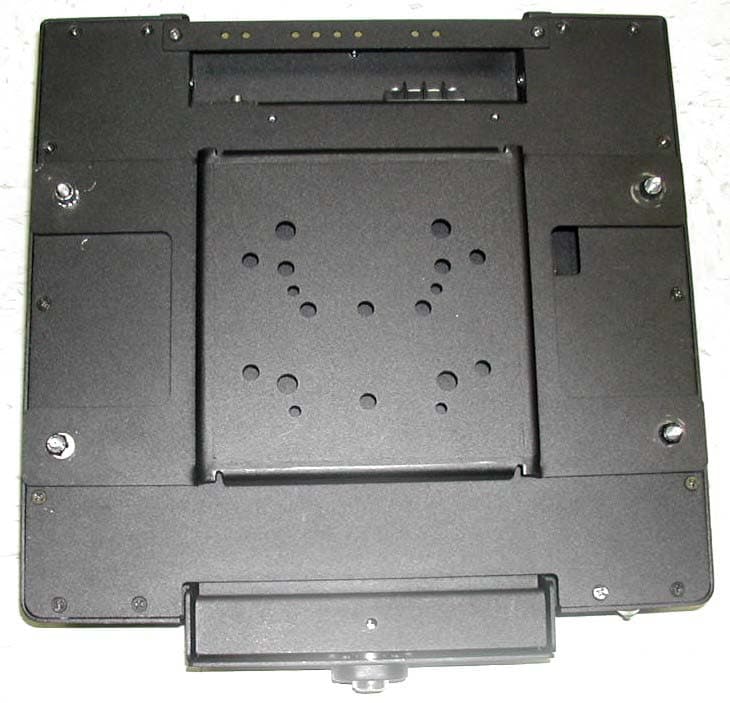
Click to zoom
Application Details
- Equipment Class
- PCB - PCS Licensed Transmitter
- Date of Grant
- Jan 03, 2006
- Application Purpose
- Original Equipment
- Date of Application
- Jan 03, 2006
- Equipment Note
- Notebook with Cellular \ PCS GSM and WLAN
- Frequency Range
- 1850.20000000 - 1909.80000000
- Country
- United States
Documents & Files
Document Text
Text extracted from the exhibit documents filed with the FCC. Open a document above to read the original.
Users Manual
GoBook ® II Radio Specific Safety Information Identification GoBook II (IX260) Radio Specific Safety Information Compliance Statements The GoBook II (IX260) computer has been tested and found to comply with the limits for a Class B digital device, pursuant to Part 15 of the FCC Rules. These limits are designed to provide reasonable protection against harmful interference in a residential installation. This equipment generates, uses, and can radiate radio frequency energy and, if not installed and used in accordance with the instructions, may cause harmful interference to radio communications. However, there is no guarantee that interference will not occur in a particular installation. If this equipment does cause harmful interference to radio or television reception, which can be determined by turning the equipment off and on, the user is encouraged to try to correct the interference by one or more of the following measures: • Reorient or relocate the receiving antenna. • Increase the separation between the equipment and receiver. • Connect the equipment into an outlet on a circuit different from that to which the receiver is connected. • Consult the dealer or an experienced radio/TV technician for help. Warnings and Safety Information WARNING It is important that only authorized Itronix personnel attempt repairs on Itronix equipment as this might void any maintenance contract with your company. Unauthorized service personnel might be subject to shock hazard on some Itronix equipment if removal of protective covers is attempted. Changes or Modifications not expressly approved by the party responsible for compliance could void the users authority to operate the equipment. Internal radio(s) may have an individual FCC Identifier which are not applicable to this configuration. Only the FCC ID Identifier KBCIX260MPIAC775 shown on the label located on the bottom of the IX260 Laptop PC is applicable. The IX260 Laptop PC Radio must not be co-located or operating in conjunction with any other antenna or transmitter than specified in the FCC Identifier KBCIX260MPIAC775 filing . This device has been designed to operate with the MaxRad Model: BMLPVDB800/1900 antenna, and having a maximum gain of [3] dB. No other antennas or antennas having a maximum gain greater than [3] dB are strictly prohibited for use with this device. The required antenna impedance is [50] ohms. Safety Information This device contains a WAN radio transmitter. When using the WAN transmitter, a minimum separation distance of 20 cm must be maintained between the upper right edge of the display screen and all users/bystanders. The WAN transmitter should be turned off before carrying the Laptop PC order to comply with FCC RF exposure requirements. This device contains a WLAN radio transmitter. When using the WLAN transmitter, a minimum separation distance of 20 cm must be maintained between the upper Left and Right Edge of the display screen and all users/bystanders. The WLAN transmitter should be turned off before carrying the Laptop PC order to comply with FCC RF exposure requirements. © 2005 Itronix Corporation. All rights reserved.
Cover Letter(s)
Celltech Labs Inc. 1955 Moss Court, Kelowna, B.C. Canada V1Y 9L3 Tel. 250-448-7047 • Fax. 250-448-7046 • e-mail: [email protected] www.celltechlabs.com September 20, 2004 Timco Engineering, Inc. Telecommunication Certification Body 849 NW State Road 45 Newberry, FL 32669 SUBJECT: ITRONIX CORPORATION FCC ID: KBCIX260PLUSAC775 Part 24(E) - Certification On behalf of Itronix Corporation is an application for Part 24(E) Certification of Itronix IX260+ Rugged Laptop PC with internal Dual-Band PCS/Cellular GSM GPRS/EDGE PCMCIA Modem Model: AirCard 775 manufactured by Sierra Wireless, Inc. (FCC ID: N7NAC775, originally granted June 18, 2004), utilizing an external swivel dipole antenna mounted on the upper right side of the LCD display, and a vehicle-mount antenna with vehicle cradle. Model: IX260PLUSAC775 Device Class: PCS Licensed Transmitter (PCB) Device Type: Rugged Laptop PC w/ internal Sierra Wireless AC775 GSM GPRS/EDGE PCMCIA Modem with External Swivel Dipole Antenna, Mobile Vehicle-Mount Antenna, & Vehicle Cradle Emission Designator(s): 238KGXW, 242KGXW, 240KG7W, 242KG7W Frequency Tolerance(s): 2.5 PPM (PCS GSM) / 2.5 PPM (Cellular GSM) Tx Frequency Range(s): 1850.2 - 1909.8 MHz (PCS GSM) 824.2 - 848.8 MHz (Cellular GSM) Max. Conducted Pwr. Measured: 28.9 dBm Peak (PCS GSM) / 32.0 dBm Peak (Cellular GSM) Modulation Tested: GMSK Max. Duty Cycle Tested: 50 % (Source-Based Time-Averaged) Source-Based Time-Aver. Power: 25.9 dBm Peak Cond. (Max. PCS GSM) / 29.0 dBm Peak Cond. (Max. Cellular GSM) Max. ERP/EIRP Measured: 0.936 Watts (29.71 dBm) EIRP - PCS GSM (Itronix Swivel Dipole Antenna) 2.54 Watts (34.05 dBm) ERP - Cellular GSM (Itronix Swivel Dipole Antenna) 0.261 Watts (24.17 dBm) EIRP - PCS GSM (MaxRad Vehicle-Mount Antenna) 0.512 Watts (27.09 dBm) ERP - Cellular GSM (MaxRad Vehicle-Mount Antenna) Antenna Type(s) Tested: Itronix IX260+ External Swivel Dipole MaxRad 3 dBi Gain Vehicle-Mount P/N: WMLPVDB800/1900 Attached is the TCB 731 form, confidentiality request, FCC Parts 24(E) and 22(H) EMC measurement report data and photographs (Celltech Labs and Sierra Wireless), MPE RF exposure evaluation report (Celltech Labs), FCC ID label and location, internal and external device photographs, block diagrams (confidential), schematic diagrams (confidential), operational description (confidential), tune-up procedure (confidential), antenna specifications (confidential), user manual (provided to the user with the built-in software on the Laptop PC), and Radio-Specific Safety Information (provided to the user in hard copy format). If you have any questions or comments concerning the above, please contact the undersigned. Sincerely, Jonathan Hughes General Manager Celltech Labs Inc. cc: Itronix Corporation
Cover Letter(s)
American Telecommunications Certification Body Inc. 6731 Whittier Ave, McLean, VA 22101 November 23, 2005 RE: ITRONIX Corporation FCC ID: KBCIX260MPIAC775 I have a few comments on the above referenced Application. 1) One side of the Sierra Wireless internal photographs board should be shown with various covers and/or shields shown removed (photo on page 8 of the exhibit provided). 2) Section 15.15(b) prohibits adjustments of any control by the user that will cause operation of a device in violation of the regulations. Accordingly, any proposal to allow the end user to choose extended channels on frequencies outside of an allowable frequency band in the USA is not acceptable. For example, a WLAN device operating according to Section 15.247 on channels 1-11 between 2.4 - 2.483.5 GHz must not have any user controls or software to allow the device to operate on channels 12 and 13 which are outside of the allowed USA band. For instance, the user should not be able to select alternative countries which would allow different channel plans outside of the allowed USA band. Please explain how this device is compliant to this requirement. 3) The original information regarding the GPRS modem appears to support 2 antennas, but it is uncertain if this application appears to possibly support only one antenna for GPRS (only one antenna data sheet for GPRS provided) which suggest maybe only one antenna is used. Please explain in further detail or correct as necessary. If necessary, please provide information regarding the missing antenna(blade antenna) as only one data sheet was provided for Part 22/24 antennas. 4) Currently for unlicensed devices, the FCC requires ANSI C63.4 – 2003. However compliance appears to be shown to C63.4 – 1992. Please adequately review to ensure compliance under ANSI C63.4 2003. 5) For 15.247, the new radiated data performed by spectrum does not appear to clearly show compliance for bandedge emissions. Please correct/explain as necessary. 6) The advertising literature implies that the notebook is upgradable. However, for each configuration the FCC requires a different FCC ID and IC requires a different model. Please explain how this is handled if the system is upgradable. 7) The advertising mentions user replaceable modules. The FCC has not allowed this except in cases where bio’s lock has been implemented to ensure only the approved device may function when installed. Please explain compliance to this. 8) Information provided by Sierra states the modem is a Class 12 device. This implies as much as 4 TX, 1 RX slots may occur. However MPE assumes a 50% duty factor which is not truly source based. Since source based may be considered to be higher, the MPE exhibit should be adjusted as appropriate. 9) Regarding the Sierra transmitter, information regarding both DC voltages AND currents applied into the several elements of the final radio frequency amplifying device for normal operation over the power range could not be located. Please provide. 10) Users Manual appears to be missing information required by 15.105. Please review/correct as necessary. 11) Conducted power for GXW emissions appears to come from Celltech report. However the conducted power for G7W emissions could not be located off hand. Please explain where this may be found. 12) FCC Part 2 and RSS-133 specifically cite that temperature stability should cover -30 degrees C. Compliance with this temperature does not appear to be provided. 13) FYI....Antenna conducted emissions for Part 24 should be done with 1 MHz RBW, not 100 kHz for < 1 GHz.. Due to the margins shown, compliance can be determined using an integration function. However future applications should use proper bandwidths. 14) FYI...Please note that this FCC will only cover the WLAN + WAN configuration specified in the application. CDMA, BT and CDPD configurations are not covered by this application. 15) FYI...The advertising literature mentions up to 3 RF modules at a time. Please note that different or additional configurations have not been covered by this application. 16) FYI....Information stated from training in February 2004 suggests that if the FCC ID on the integrated device is not valid or being used for the configuration integrated, then the FCC ID should be removed, covered, or blacked out, especially in cases where the user may access these areas. The concern is that if the device is being re-approved z Page 2 November 25, 2005 (for final system, new antennas, new RF exposure conditions, Change in ID, co-location, etc) for a different configuration, the original FCC ID is likely not valid and is therefore erroneous. To avoid any compliance issues with reference to incorrect FCC ID’s for compliance situations, it is best to remove/cover/blackout these labels. Please note that this information is being passed along as an FYI. It is noted that the manual makes mention of the fact that internal modules may contain different FCC ID’s. Please note that generally this fact is not sufficient in the FCC’s perspective. 17) FYI...Note: Application cites these do not transmit simultaneously. IC Specific 18) Please provide labeling information to support the following as required by RSS-GEN 5.2 issue 1? a) the model name or number as certified (IX260MPIAC775). Please refer to various interpretations recently obtained from IC regarding another Itronix application and provided under a separate email. 19) A REL listing letter as given in our IC form does not appear to have been provided. 20) Recent updates to RSS-102 requires a new attestation which is preferred for IC rather than calculations. Please reference our new IC form (see attachment) which provides this and the new RSS-102 recently issued. 21) It appears that some antennas may be detachable. Therefore the users manual should include information per RSS-GEN 7.1.4, issue 1? 22) Please explain where receiver emissions for the DTS portion of the device may be found in compliance with RSS GEN sections 4.…
Text truncated - open the document above for the full version.
External Photos
© 2002 Celltech Research Inc. ITRONIX CORPORATION FCC ID: KBCIX260MPI350 Rugged Laptop PC with Cisco MPI-350 Mini-PCI DSSS WLAN Card EXTERNAL EUT PHOTOGRAPHS © 2002 Celltech Research Inc. ITRONIX CORPORATION FCC ID: KBCIX260MPI350 Rugged Laptop PC with Cisco MPI-350 Mini-PCI DSSS WLAN Card EXTERNAL EUT PHOTOGRAPHS © 2002 Celltech Research Inc. ITRONIX CORPORATION FCC ID: KBCIX260MPI350 Rugged Laptop PC with Cisco MPI-350 Mini-PCI DSSS WLAN Card EXTERNAL EUT PHOTOGRAPHS © 2002 Celltech Research Inc. ITRONIX CORPORATION FCC ID: KBCIX260MPI350 Rugged Laptop PC with Cisco MPI-350 Mini-PCI DSSS WLAN Card EXTERNAL EUT PHOTOGRAPHS
External Photos
© 2004 Celltech Labs Inc. ITRONIX CORPORATION FCC ID: KBCIX260PLUSAC775 (Model: IX260PLUSAC775) Rugged Laptop PC with Sierra Wireless Dual-Band PCS/Cellular GSM GPRS/EDGE Modem Project #: 542 EXTERNAL DUT PHOTOGRAPHS © 2004 Celltech Labs Inc. ITRONIX CORPORATION FCC ID: KBCIX260PLUSAC775 (Model: IX260PLUSAC775) Rugged Laptop PC with Sierra Wireless Dual-Band PCS/Cellular GSM GPRS/EDGE Modem Project #: 542 EXTERNAL DUT PHOTOGRAPHS © 2004 Celltech Labs Inc. ITRONIX CORPORATION FCC ID: KBCIX260PLUSAC775 (Model: IX260PLUSAC775) Rugged Laptop PC with Sierra Wireless Dual-Band PCS/Cellular GSM GPRS/EDGE Modem Project #: 542 EXTERNAL DUT PHOTOGRAPHS Dual-Band GSM External Swivel Dipole Antenna © 2004 Celltech Labs Inc. ITRONIX CORPORATION FCC ID: KBCIX260PLUSAC775 (Model: IX260PLUSAC775) Rugged Laptop PC with Sierra Wireless Dual-Band PCS/Cellular GSM GPRS/EDGE Modem Project #: 542 EXTERNAL DUT PHOTOGRAPHS © 2004 Celltech Labs Inc. ITRONIX CORPORATION FCC ID: KBCIX260PLUSAC775 (Model: IX260PLUSAC775) Rugged Laptop PC with Sierra Wireless Dual-Band PCS/Cellular GSM GPRS/EDGE Modem Project #: 542 EXTERNAL DUT PHOTOGRAPHS © 2004 Celltech Labs Inc. ITRONIX CORPORATION FCC ID: KBCIX260PLUSAC775 (Model: IX260PLUSAC775) Rugged Laptop PC with Sierra Wireless Dual-Band PCS/Cellular GSM GPRS/EDGE Modem Project #: 542 EXTERNAL DUT PHOTOGRAPHS with Vehicle Cradle & 3 dBi Gain Vehicle Antenna (MaxRad P/N: WMLPVDB800/1900) © 2004 Celltech Labs Inc. ITRONIX CORPORATION FCC ID: KBCIX260PLUSAC775 (Model: IX260PLUSAC775) Rugged Laptop PC with Sierra Wireless Dual-Band PCS/Cellular GSM GPRS/EDGE Modem Project #: 542 EXTERNAL DUT PHOTOGRAPHS Vehicle Cradle
ID Label/Location Info
Applicant: ITRONIX, Corp. FCC ID: KBCIX260MPIAC775 LIST OF EXHIBITS DESCRIPTION EXHIBITS REFERENCE I. Identification label Information 1 2.1033 (b) 7 & 2.925 & General Information 1A 1. Production Plans 2.1031 2. Application References N/A 3. Data submittal Procedure 4. Similar Certified Transmitter II. Certification Data 2 III. External Photographs 3 2.1033 (b) 7 IV. Block Diagrams (Circuit Diagrams) confidential 4 2.1033 (b) 5 V. Schematic Diagrams & Antenna Assembly confidential 5 2.1033 (b) 5 AC775 Test Reports VI. Test Report # 1 prepared by Celltech Labs, Inc. 6 2.1033 (b) 6 Part 22/24 – IX260PLUS, ERP/EIRP Test Report previously Certified Transmitter Aircard 775 VI. Test Report # 2 prepared by Sierra Wireless, Inc. 6 2.1033 (b) 6 Part 22/24 –AC775 OEM Test Report Conducted Test Data Sierra Wireless, Inc., FCC ID: N7NAC775 AC775 Test Reports VI. Test Report # 3 prepared by Spectrum Technology, Inc. 6 2.1033 (b) 6 Part 15.247 – DTS, WLAN IX260MPI350 EMC Test Report, With previously Certified Intentional Radiator MPI352 CISCO System, Inc., FCC ID: LDK102042 1) Conducted Output Power Section 15.247(b)1 2) EIRP limit Section 15.247(b)3 3) Spurious Emissions Section 15.247 (c) 4) 6 dB Bandwidth and Antenna Conducted Spur’s (submitted in a separate file) VI. Test Report # 4 prepared by RHEIN Tech 6 2.1033 (b) 6 Part 15.247 -OEM Test Report for the CISCO System Inc. 6 Certification of the Intentional Radiator MPI352 CISCO System, Inc., FCC ID: LDK 102042 Note: We reference the original Rhein Tech OEM test report for Exhibits required by Part 15.247 (a, b, c, g, h) Exhibit 1 Applicant: ITRONIX, Corp. FCC ID: KBCIX260MPIAC775 VII. Test Set-up Procedures 7 2.1041 VIII. Instruction Manual 8 2.1033 (b) 3 IX. Internal Photographs 9 2.1033 (b) 7 X. Part List and Tune Up Procedures 10 2.1033 XI. MPE RF Exposure Information 11 2.1093 & 15.247 (b)4 XII. Operational Description confidential 12 2.1033 (b) 1, 2, 4, 8 Antenna Requirements 12 15.203 XIII. Cover Letter, Action Requested 13 Cover Letter, Request for Confidentiality 13 Cover Letter, Authorization to sign FCC Form 731 13 Please NOTE: Exhibits 4, 5 and 12 are requested to held confidential EXHIBIT 1. FCC IDENTIFICATION LABEL Required Under Section: 47 CFR 2.1033(c) 11 for the FCC ID: KBCIX260MPIAC775, is located on page following. Exhibit 1 Applicant: ITRONIX, Corp. FCC ID: KBCIX260MPIAC775 FCC ID label location on bottom of the PC The large silver label located right of center, between the RAM and BATTERY covers is the FCC Identifiers label location. I I I V The facsimile Part 15.19 compliance label is shown below. This compliance statement is located on the upper left corner of the photo above. (a black label) Exhibit 1
Internal Photos
© 2004 Celltech Labs Inc. ITRONIX CORPORATION FCC ID: KBCIX260PLUSAC775 (Model: IX260PLUSAC775) Rugged Laptop PC with Sierra Wireless Dual-Band PCS/Cellular GSM GPRS/EDGE Modem Project #: 542 EXTERNAL DUT PHOTOGRAPHS © 2004 Celltech Labs Inc. ITRONIX CORPORATION FCC ID: KBCIX260PLUSAC775 (Model: IX260PLUSAC775) Rugged Laptop PC with Sierra Wireless Dual-Band PCS/Cellular GSM GPRS/EDGE Modem Project #: 542 EXTERNAL DUT PHOTOGRAPHS © 2004 Celltech Labs Inc. ITRONIX CORPORATION FCC ID: KBCIX260PLUSAC775 (Model: IX260PLUSAC775) Rugged Laptop PC with Sierra Wireless Dual-Band PCS/Cellular GSM GPRS/EDGE Modem Project #: 542 EXTERNAL DUT PHOTOGRAPHS Dual-Band GSM External Swivel Dipole Antenna © 2004 Celltech Labs Inc. ITRONIX CORPORATION FCC ID: KBCIX260PLUSAC775 (Model: IX260PLUSAC775) Rugged Laptop PC with Sierra Wireless Dual-Band PCS/Cellular GSM GPRS/EDGE Modem Project #: 542 EXTERNAL DUT PHOTOGRAPHS © 2004 Celltech Labs Inc. ITRONIX CORPORATION FCC ID: KBCIX260PLUSAC775 (Model: IX260PLUSAC775) Rugged Laptop PC with Sierra Wireless Dual-Band PCS/Cellular GSM GPRS/EDGE Modem Project #: 542 EXTERNAL DUT PHOTOGRAPHS © 2004 Celltech Labs Inc. ITRONIX CORPORATION FCC ID: KBCIX260PLUSAC775 (Model: IX260PLUSAC775) Rugged Laptop PC with Sierra Wireless Dual-Band PCS/Cellular GSM GPRS/EDGE Modem Project #: 542 EXTERNAL DUT PHOTOGRAPHS with Vehicle Cradle & 3 dBi Gain Vehicle Antenna (MaxRad P/N: WMLPVDB800/1900) © 2004 Celltech Labs Inc. ITRONIX CORPORATION FCC ID: KBCIX260PLUSAC775 (Model: IX260PLUSAC775) Rugged Laptop PC with Sierra Wireless Dual-Band PCS/Cellular GSM GPRS/EDGE Modem Project #: 542 EXTERNAL DUT PHOTOGRAPHS Vehicle Cradle
RF Exposure Info
2b © 2004 Celltech Labs Inc. ITRONIX CORPORATION FCC ID: KBCIX260PLUSAC775 (Model: IX260PLUSAC775) 1 of 4 Rugged Laptop PC with Sierra Wireless Dual-Band PCS/Cellular GSM GPRS/EDGE Antenna Types Evaluated: External Swivel Dipole and External Mobile Vehicle-Mount Test Report S/N: 072804KBC-T542-M24G Test Type: MPE Evaluation This mobile transmitting device was determined to be compliant with localized Maximum Permissible Exposure (MPE) for Uncontrolled Exposure / General Population limits specified in FCC 47 CFR §1.1310 and Industry Canada RSS-102 Issue 1 (Provisional), in accordance with the requirements of FCC OET Bulletin 65, Edition 97-01, Health Canada’s Safety Code 6, ANSI / IEEE C95.1-1992, and ANSI / IEEE C95.3-1992. I attest to the accuracy of data. All measurements and/or calculations were performed by me or were made under my supervision and are correct to the best of my knowledge and belief. I assume full responsibility for the completeness of these measurements and vouch for the qualifications of all persons taking them. This evaluation report shall not be reproduced partially, or in full, without the prior written approval of Celltech Labs Inc. The results and statements contained in this report pertain only to the device(s) evaluated. Duane Friesen EMC Manager Celltech Labs Inc. DECLARATION OF COMPLIANCE MPE EVALUATION REPORT Test Lab CELLTECH LABS INC. 1955 Moss Court Kelowna, B.C. Canada V1Y 9L3 Phone: 250-448-7047 Fax: 250-448-7046 e-mail: [email protected] web site: www.celltechlabs.com Applicant Information ITRONIX CORPORATION 801 South Stevens Street Spokane, WA 99210 United States FCC Rule Part(s): 47 CFR §24(E), §22(H); §15.247; §2.1091; §1.1310 IC Rule Part(s): RSS-133 Issue 2, RSS-132 Issue 1 (Provisional), RSS-210 Issue 5, RSS-102 Issue 1 (Provisional) FCC Classification: PCS Licensed Transmitter (PCB) IC Classification: 2 GHz Personal Communication Services (RSS-133) 800 MHz Cellular Telephones Employing New Technologies (RSS-132) Device Type: Rugged Laptop PC w/ Sierra Wireless AC775 GSM GPRS/EDGE Modem with Swivel Dipole Antenna, Vehicle-Mount Antenna, & Vehicle Cradle FCC IDENTIFIER: KBCIX260PLUSAC775 Model(s): IX260PLUSAC775 Tx Frequency Range(s): 1850.2 - 1909.8 MHz (PCS Band) 824.2 - 848.8 MHz (Cellular Band) Max. RF Conducted Power Measured: 28.9 dBm Peak (PCS GSM) 32.0 dBm Peak (Cellular GSM) Modulation Type(s) Evaluated: GMSK Max. No. of Time Slots Evaluated: 4 (Class 12) Max. Source-Based Time-Av. Duty Cycle: 50 % Max. Source-Based Time-Av. Cond. Pwr: 25.9 dBm Peak (PCS GSM) 29.0 dBm Peak (Cellular GSM) Antenna Type(s) Evaluated: Itronix IX260+ External Swivel Dipole MaxRad 3 dBi Gain Vehicle-Mount P/N: WMLPVDB800/1900 2b © 2004 Celltech Labs Inc. ITRONIX CORPORATION FCC ID: KBCIX260PLUSAC775 (Model: IX260PLUSAC775) 2 of 4 Rugged Laptop PC with Sierra Wireless Dual-Band PCS/Cellular GSM GPRS/EDGE Antenna Types Evaluated: External Swivel Dipole and External Mobile Vehicle-Mount Test Report S/N: 072804KBC-T542-M24G Test Type: MPE Evaluation 1.1 MPE Calculation Data 1. Itronix IX260+ Swivel Dipole Antenna PCS GSM Band Cellular GSM Band Itronix IX260+ Swivel Dipole Antenna Tx Frequency: 1880.0 (MHz) Source-Based Time-Averaged Power at Antenna Input Terminal: 25.9 (dBm) Antenna gain: 2.6 (dBi) S=1.00 (mW/cm^2) P=389.0451 (mW) G=1.82 (numeric) R =7.51(cm) 0.140688749 S (mw/cm^2) at 20cm Tx Frequency: 848.8 (MHz) Source-Based Time-Averaged Power at Antenna Input Terminal: 29.0 (dBm) Antenna gain: 2.6 (dBi) S=0.57 (mW/cm^2) P=794.3282 (mW) G=1.82 (numeric) R =14.26(cm) 0.287249557 S (mw/cm^2) at 20cm 2b © 2004 Celltech Labs Inc. ITRONIX CORPORATION FCC ID: KBCIX260PLUSAC775 (Model: IX260PLUSAC775) 3 of 4 Rugged Laptop PC with Sierra Wireless Dual-Band PCS/Cellular GSM GPRS/EDGE Antenna Types Evaluated: External Swivel Dipole and External Mobile Vehicle-Mount Test Report S/N: 072804KBC-T542-M24G Test Type: MPE Evaluation MPE Calculation Data (Cont.) 2. MaxRad 3 dBi Gain Vehicle-Mount Antenna (P/N: WMLPVDB800/1900) PCS GSM Band Cellular GSM Band MaxRad 3 dBi Gain Vehicle-Mount Antenna P/N: WMLPVDB800/1900 Tx Frequency: 1880.0 (MHz) Source-Based Time-Averaged Power at Antenna Input Terminal: 25.9 (dBm) 3 dBi Antenna Gain minus 2.80 dB cable loss for 17 ft cable: 0.20 (dBi) S=1.00 (mW/cm^2) P=389.0451 (mW) G=1.05 (numeric) R =5.69(cm) 0.080957925 S (mw/cm^2) at 20cm Tx Frequency: 848.8 (MHz) Source-Based Time-Averaged Power at Antenna Input Terminal: 29.0 (dBm) 3 dBi Antenna Gain minus 1.89 dB cable loss for 17 ft cable: 1.11 (dBi) S=0.57 (mW/cm^2) P=794.3282 (mW) G=1.29 (numeric) R =12.01(cm) 0.203825899 S (mw/cm^2) at 20cm 2b © 2004 Celltech Labs Inc. ITRONIX CORPORATION FCC ID: KBCIX260PLUSAC775 (Model: IX260PLUSAC775) 4 of 4 Rugged Laptop PC with Sierra Wireless Dual-Band PCS/Cellular GSM GPRS/EDGE Antenna Types Evaluated: External Swivel Dipole and External Mobile Vehicle-Mount Test Report S/N: 072804KBC-T542-M24G Test Type: MPE Evaluation 2.1 Calculation to determine MPE 3.1 MPE Limits According to FCC 47 CFR 1.1310: The criteria listed in the following table shall be used to evaluate the environmental impact of human exposure to radio frequency (RF) radiation as specified in 1.1307(b). 4.1 Summary The Maximum Permissible Exposure (MPE) limit (General Population / Uncontrolled Exposure environment) for the frequency range in the PCS GSM band (1850-1910 MHz) is 1.0 mW/cm^ 2 ; the limit for the frequency range in the cellular GSM band (824-849 MHz) is 0.6 mW/cm^ 2 (F/1500). The data in this report demonstrates that the Itronix Corporation Model: IX260PLUSAC775 Rugged Laptop PC FCC ID: KBCIX260PLUSAC775 with internal Sierra Wireless AirCard 775 Dual-Band GSM GPRS/EDGE PCMCIA Modem, utilizing an external swivel dipole antenna and vehicle-mount antenna, complies with the Maximum Permissible Exposure (MPE) requirements specified in FCC §2.1091, §1.1310, OET Bulletin 65 (Edition 97-01), and Health Canada’s Safety Code 6 for the General Population / Uncontrolled…
Text truncated - open the document above for the full version.
Test Report
2005 Sierra Wireless, Inc. This document contains information which is proprietary and confidential to Sierra Wireless, Inc. Disclosure to persons other than the officers, employees, agents, or subcontractors of the Company or licensee of this document without the prior written permission of Sierra Wireless, Inc. is strictly prohibited. Partial Test Report Updated Frequency Versus Temperature Data For 850/900/1800/1900 MHz GSM/EDGE PC CARD WIRELESS MODEM Model: AIRCARD 775 FCC ID: N7NAC775 IC: 2417C-AC775 Prepared by SIERRA WIRELESS INC. 13811 WIRELESS WAY RICHMOND, BC V6V 3A4 CANADA Test Date(s): December 6, 2005 SIERRA WIRELESS, INC. FCC Part 22 & 24 Update AC775 Dec.06, 2005 Page 2 of 7 2005 Sierra Wireless, Inc. The contents of this page are subject to the confidentiality information on page one. Table of Contents 1 Introduction and Purpose ......................................................................... 3 2 Test Summary .......................................................................................... 3 3 Description of Equipment Under Test ..................................................... 4 4 Frequency Stability Versus Temperature ................................................ 5 4.1 Summary of Results............................................................................................. 5 4.2 Test Procedure .................................................................................................... 5 4.3 Test Equipment.................................................................................................... 5 4.4 Test Results ......................................................................................................... 6 SIERRA WIRELESS, INC. FCC Part 22 & 24 Update AC775 Dec.06, 2005 Page 3 of 7 2005 Sierra Wireless, Inc. The contents of this page are subject to the confidentiality information on page one. 1 Introduction and Purpose This document provides updated FCC test data for the AC755 wireless modem. The original submission for the AC775 contained data for 2.1055, Frequency Stability Versus Temperature, for a range of –20C to +60C. This latest data adds new results down to –30C. For completeness, the entire range of –30C to +60C was tested. 2 Test Summary FCC RULE DESCRIPTION OF TEST RESULT PAGE 2.1055 Frequency Stability versus Temperature Complies 5 The tests described in this report were performed by Mr. Darryl Simpson at: Sierra Wireless, Inc. 13811 Wireless Way Richmond, B.C. V6V 3A4 Canada SIERRA WIRELESS, INC. FCC Part 22 & 24 Update AC775 Dec.06, 2005 Page 4 of 7 2005 Sierra Wireless, Inc. The contents of this page are subject to the confidentiality information on page one. 3 Description of Equipment Under Test The Sierra Wireless Inc. model AirCard 775 is a quad-band PCMCIA card wireless modem operating on the GSM/GPRS/EDGE network. In the US and Canada, only cellular and PCS bands are used for GSM/GPRS operation, so this test report only contains data for these two bands (850MHz and 1900MHz). The EUT was tested in both modes of operation: GMSK modulation and 8-PSK modulation. The EUT is a production sample and the serial number is: X04091500950010 SIERRA WIRELESS, INC. FCC Part 22 & 24 Update AC775 Dec.06, 2005 Page 5 of 7 2005 Sierra Wireless, Inc. The contents of this page are subject to the confidentiality information on page one. 4 Frequency Stability Versus Temperature FCC 2.1055 4.1 Summary of Results The AC755 Frequency Stability versus temperature meets the requirement of being within + 0.1ppm of the received base station frequency over the range of –30C to +50C. 4.2 Test Procedure The AC755 was placed inside the temperature chamber and connected to the CMU200 in a call. The transmitting frequency error is measured at 25 degrees C, then the temperature is set to +60 degrees C and allowed to stabilize. After sufficient soak time, the transmitting frequency error is measured. The temperature is decreased by 10 degrees, allowed to stabilize and soak, then the measurement is repeated. This is repeated until -30 degrees C is completed. The process is then repeated back up to +60 degrees C. Frequency metering included internal averaging of the CMU200 to stabilize the reading. Reference power supply voltage for these tests is 5.0 volts. Test Setup 4.3 Test Equipment EQUIPMENT MANUFACTURER MODEL NO. SERIAL NO. CAL. DATE Control Computer TC Generic PC 100488 N/A Wireless Test Set Rohde & Schwarz CMU200 836766/030 N/A Spectrum Analyzer Rohde & Schwarz FSP 30GHz US41421268 Sept. 12, 2003 DC Power Supply HP E3631A 100060 N/A Interface Board Shop built Minnow N/A N/A Control Computer DC Power Supply Interface Board DUT CMU200 Test Set Temperature Chamber SIERRA WIRELESS, INC. FCC Part 22 & 24 Update AC775 Dec.06, 2005 Page 6 of 7 2005 Sierra Wireless, Inc. The contents of this page are subject to the confidentiality information on page one. 4.4 Test Results High to Low Temperature Frequency Error AC775 850MHz Mode: High to Low Temperature Frequency Stability -0.100 -0.080 -0.060 -0.040 -0.020 0.000 0.020 0.040 0.060 0.080 0.100 -30-20-100102030405060 Temperature in Deg. C Frequency Offset in PPM GMSK 8PSK AC775 PCS1900 Mode: High to Low Temperature Frequency Stability -0.100 -0.080 -0.060 -0.040 -0.020 0.000 0.020 0.040 0.060 0.080 0.100 -30-20-100102030405060 Temperature in Deg. C Frequency Offset in PPM GMSK 8PSK High to Low Temperature Tabular Reading…
Text truncated - open the document above for the full version.
Contact Information
Applicant
Ray Garcia(Agency Manager)
Technical Contact
Spectrum Technology, Inc.Rod Munro
[email protected]425 771 4482
209 Dayton Street, Suite 205 · Edmonds, Washington · United States
Test Firm
Spectrum Technology Inc.Rod Munro
Technical Specifications
| # | Rule Parts | Frequency Range | Power Output | Emission | Tolerance |
|---|---|---|---|---|---|
| 4 | 24E | 1.85 GHz - 1.91 GHz | 936.00 mW | 238KGXW | 2.5 ppm |
Other Applications from General Dynamics Itronix Corporation

KBCIX-BR-51
Jan 20, 2008IX-BTBR51
Equipment Class
DSS - Part 15 Spread Spectrum Transmitter
KBCIX-MC8775
May 30, 2007IX-MC8775
Equipment Class
PCB - PCS Licensed Transmitter
KBCIX-4965AGN
May 21, 2007IX-4965AGN
Equipment Class
NII - Unlicensed National Information Infrastructure TX
KBCIX-AC595
Apr 19, 2007IX-AC595 DUAL-BAND CDMA/EV-DO PCMCIA MODEM CARD
Equipment Class
PCB - PCS Licensed Transmitter
KBCIX-NW620
Mar 13, 2007IX-NW620 CDMA/EV-DO
Equipment Class
PCB - PCS Licensed Transmitter