L2500068Walkie Talkie Base Station
Supreme Toys (Hong Kong) Ltd.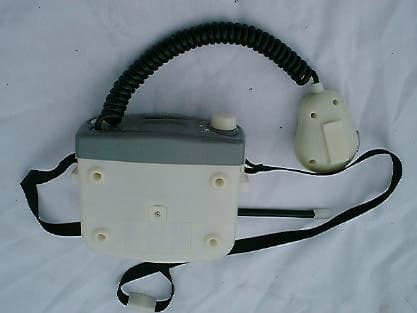
Click to zoom
Application Details
- Equipment Class
- DXT - Part 15 Low Power Transceiver, Rx Verified
- Date of Grant
- May 11, 2003
- Application Purpose
- Original Equipment
- Date of Application
- May 11, 2003
- Equipment Note
- Walkie Talkie Base Station
- Frequency Range
- 49.86000000 - 49.86000000
- Country
- Hong Kong
Documents & Files
Document Text
Text extracted from the exhibit documents filed with the FCC. Open a document above to read the original.
Users Manual
# 0068 BASE STATION WITH 2 POCKET WALKIE TALKIE How to operate your base station with 2 pocket walkie talkie 1. Open the battery cover and snap in A-9-Volt battery. 2. Turn the " On-Off" switch to "On" position for the base station & walkie talkie, adjust switches for desirable volume. 3. Your units are now ready to operate and all 3 units can communicate at the same time. 4. Press the "Push-to-talk" button to transmit your voice. Press the "Morse code button" at the same time to transmit morse code. 5. Release "Push-to-talk" button for receiving voice or morse code. 6. When transmitting, speak clearly in a normal voice, holding the set about 3 inches (7.5cm) from your mouth. 7. Best transmission and reception are obtained when the antenna is held in vertical position. 8. Turn the "On / Off" switch to "Off" position after use. WARNING : Changes or modifications to this unit not expressly approved by the party responsible for compliance could void the user's authority to operate the equipment. Modifications not authorized by the manufacturer may void users authority to operate this device NOTE: This equipment has been tested an found to comply with the limits for a Class B digital device, pursuant to Part 15 of the FCC Rulcs. These limits are designed to provide reasonable to protection against harmful interference in a residential installation. This equipment generates, uses and can radiate radio frequency energy and, if not installed and used in accordance with the instructions, may cause harmful interference to radio communications. However there is no guarantee that interference will not occur in a particular installation. If this equipment does cause harmful interference to radio or television reception, which can be determined by turning the equipment off and on, the user is encouraged to try to correct the interference by one or more of the following measures: -- Reorient or relocate the receiving antenna. -- Increase the separation between the equipment and receiver -- Connect the equipment into an outlet on a circuit different from that to which the receiver is connected. -- Consult the dealer or an experienced radio/TV technician for help. FCC ID : L2500068 MADE IN CHINA This device complies with part 15 of the FCC Rules. Operation is subject to the following two conditions: (1) this device may not cause harmful interference, and (2) this device must accept any interference received, including interference that may cause undesired operation. Product : Base Station With 2 Pocket Walkie TalkiesModel : 0068 Responsible Party: 602 Edgemoor Drive, Hopkins MN. 55305, USA. Phone : 1-800-567- 1774
External Photos
PHOTOGRAPH OF THE PRODUCT FRONT VIEW OF THE PRODUCT REAR VIEW OF THE PRODUCT
Internal Photos
PHOTOGRAPH OF THE PRODUCT INNER CIRCUIT TOP VIEW INNER CIRCUIT BOTTOM VIEW
Operational Description
FCC ID: L2500068 Circuit Description The 49.86MHz crystal oscillator drives the base of Q1 the final/buffer amplifier. The modulation provided by Mic. The output of Q1 has the matching network consisting of L1, L3 and C1 that limit the harmonic content and effect the proper coupling of the antenna to the output stage. Antenna, Ground and Power Source The antenna consists of a 11.5cm long telescoping chrome over brass tubing. There is no external ground connection. The ground is only that of the printed circuit board. Electric current is supplied by a 9 Volt (“6F22” size battery x 1) primary battery
Test Report
Date: 2003-05-05 TEST REPORT Page 1 of 20 No.: HM110061 FCC PART 15 SUBPART C CERTIFICATION REPORT FOR LOW POWER TRANSMITTER TEST REPORT No.:HM110061 Equipment Under Test [EUT]:Base Station With 2 Pocket Walkie Talkies Model Number:0068 Applicant:Supreme Toys (Hong Kong) Ltd. FCC ID :L2500068 Date: 2003-05-05 TEST REPORT Page 2 of 20 No.: HM110061 CONTENT: Cover Page 1 of 20 Content Page 2-3 of 20 Conclusion Page 4 of 20 1.0General Details 1.1Test Laboratory Page 5 of 20 1.2Applicant Details Page 5 of 20 Applicant HKSTC Code Number for Applicant Manufacturer 1.3Equipment Under Test [EUT] Page 6 of 20 Description of EUT operation 1.4Date of Order Page 6 of 20 1.5Submitted Sample Page 6 of 20 1.6Test Duration Page 6 of 20 1.7Country of Origin Page 6 of 20 1.8 Additional Information of EUT Page 7 of 20 2.0Technical Details 2.1Investigations Requested Page 8 of 20 2.2Test Standards and Results Summary Page 8 of 20 3.0Test Results 3.1Emission Page 9-14 of 20 3.2Bandwidth Measurement Page 15-16 of 20 Date: 2003-05-05 TEST REPORT Page 3 of 20 No.: HM110061 Appendix A List of Measurement Equipment Page 17 of 20 Appendix B Photographs Page 18-20 of 20 Date: 2003-05-05 TEST REPORT Page 4 of 20 No.: HM110061 CONCLUSION The submitted product was deemed to have COMPLIED with the requirements of Federal Communications Commission [FCC] Rules and Regulations Part 15. The tests were performed in accordance with the standards described above and on Section 2.2 in this Test Report. Verified byPatrick Wong for Chief Executive Date: 2003-05-05 TEST REPORT Page 5 of 20 No.: HM110061 1.0General Details 1.1Test Laboratory The Hong Kong Standards and Testing Centre Ltd. EMC Laboratory 10 Dai Wang Street, Taipo Industrial Estate New Territories, Hong Kong Telephone:852 2666 1888 Fax:852 2664 4353 1.2Applicant Details Applicant SUPREME TOYS (HONG KONG) LTD. Room 907-9, Tower B, New Mandarin Plaza, 14 Science Museum Road, T.S.T. East, Kowloon, Hong Kong. HKSTC Code Number for ApplicantSUT001 Manufacturer JACKPOT INDUSTRIAL LIMITED. Room 907-9, Tower B, New Mandarin Plaza, 14 Science Museum Road, T.S.T. East, Kowloon, Hong Kong. Date: 2003-05-05 TEST REPORT Page 6 of 20 No.: HM110061 1.3Equipment Under Test [EUT] Description of Sample Product:Base Station With 2 Pocket Walkie Talkies Manufacturer:Jackpot Industrial Limited. Brand Name:Jackpot Industrial Ltd. Model Number:0068 Input Voltage:9Vd.c (“6F22” size battery x 1) 1.3.1Description of EUT Operation The Equipment Under Test(EUT) is an Supreme Toys (Hong Kong) Ltd., Base Station With 2 Pocket Walkie Talkies. The transmitter is a 2 button transmitter. The EUT continues to transmit while button is being pressed. It is voice transmission, Modulation by Mic. and tape is frequency modulation. 1.4Date of Order 2003-03-20 1.5Submitted Sample(s): 1 Sample per model 1.6Test Duration 2003-03-25 1.7Country of Origin China Date: 2003-05-05 TEST REPORT Page 7 of 20 No.: HM110061 1.8Additional Information of EUT SubmittedNot Available User Manual Part List Circuit Diagram Printed Circuit Board [PCB] Layout Block diagram FCC ID Label Date: 2003-05-05 TEST REPORT Page 8 of 20 No.: HM110061 2.0Technical Details 2.1Investigations Requested Perform ElectroMagnetic Interference measurement in accordance with FCC 47CFR [Codes of Federal Regulations] Part 15 and ANSI C63.4:2000 for FCC Certification. 2.2Test Standards and Results Summary Tables EMISSION Results Summary Test ConditionTest RequirementTest MethodClass /Test Result SeverityPassFailedN/A Field Strength of Fundamental Emissions & Spurious Emissions FCC 47CFR 15.235ANSI C63.4:2000N/A Radiated Emissions, 30MHz to 1GHz FCC 47CFR 15.209ANSI C63.4:2000Class B Conducted Emissions on AC, 0.15MHz to 30MHz FCC 47CFR 15.207ANSI C63.4:2000Class B Note: N/A - Not Applicable Date: 2003-05-05 TEST REPORT Page 9 of 20 No.: HM110061 3.0Test Results 3.1Emission 3.1.1Radiated Emissions Test Requirement:FCC 47CFR 15.235 Test Method:ANSI C63.4:2000 Test Date:2003-03-25 Mode of Operation:On mode Test Method: The sample was placed 0.8m above the ground plane on the OATS *. Measurements in both horizontal and vertical polarities were performed. During the test, each emission was maximized by: having the EUT continuously working, investigate all operating modes, rotated about all 3 axis (X, Y & Z) to obtain worst position, manipulating interconnecting cables, rotating turntable, varying antenna height from 1m to 4m in both horizontal and vertical polarizations. The emissions worst-case are shown in Test Results of the following pages. *:OATS [Open Area Test Site] located at HKSTC with a metal ground plane on filed with the FCC pursuant to section 2.948 of the FCC rules, with Registration Number: 90657. Test Setup: EUT distance = 3m Pre -Amplifier Receiver Turn Table Computer Ground plane Date: 2003-05-05 TEST REPORT Page 10 of 20 No.: HM110061 Limits for Field Strength of Fundamental Emissions [FCC 47CFR 15.235]: Frequency Range of Fundamental Field Strength of Fundamental Emission [Peak] Field Strength of Fundamental Emission [Average] [MHz][μV/m][μV/m] 49.82-49.90100,00010,000 Results: FrequencyCorrectionLimit @3mAntenna FactorPolarity MHz dB μ V/m μ V/m 49.8634.210.044.2162.2100,000Vertical dB μ V/m Field Strength Field Strength of Fundamental Emissions Peak Value Measured Level @3m dB μ V/m Field Strength μ V/m FrequencyCorrectionLimit @3mAntenna FactorPolarity MHz dB μ V/m μ V/m 49.8633.610.043.6151.4100,00Vertical μ V/mdB μ V/m Field Strength Field Strength of Fundamental Emissions Average Measured Level @3m dB μ V/m Field Strength According to FCC 47CFR15.35, the limit on the radio frequency emissions as measured using instrumentation with a peak detector function, corresponding to 20dB above the maximum permitted average limit for the frequency being investigated unless a different peak emission limit is otherwise specified in the rules. Remarks: *:Linear interpolations Correction Factor included Antenna Factor and Cable Attenuation. Calc…
Text truncated - open the document above for the full version.
Test Setup Photos
TEST SET UP PHOTOGRAPH OF THE PRODUCT MEASUREMENT OF RADIATED EMISSION TEST SET UP
Contact Information
Applicant
Irene Tong(Director)
Test Firm
Hong Kong Standards & Testing Cen.Wilson Wong
Technical Specifications
| # | Rule Parts | Frequency Range | Power Output |
|---|---|---|---|
| 1 | 15C | 49.86 MHz - 49.86 MHz | - |
Other Applications from Supreme Toys (Hong Kong) Ltd.
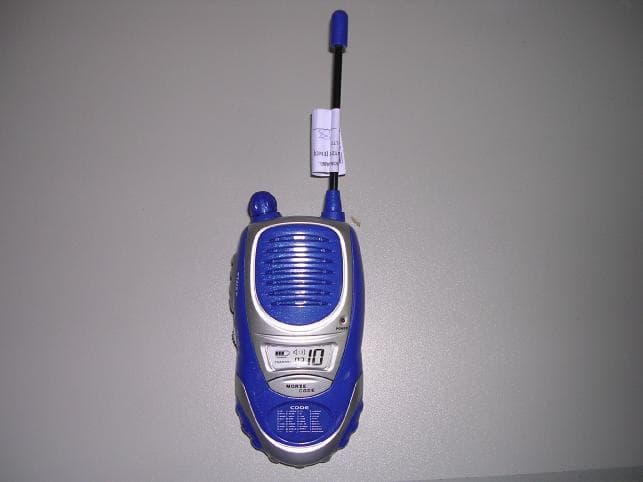
L2599500
Mar 09, 2008Walkie Talkie
Equipment Class
DXX - Part 15 Low Power Communication Device Transmitter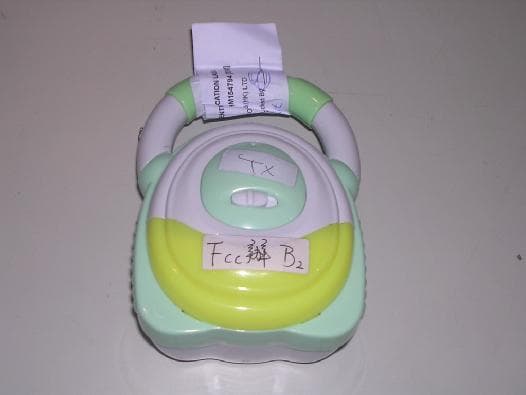
L2555005
Sep 11, 2005Baby Monitor
Equipment Class
DXX - Part 15 Low Power Communication Device Transmitter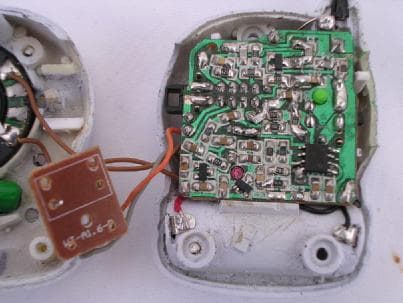
L2599200
Feb 08, 2005Walkie Talkie
Equipment Class
DXT - Part 15 Low Power Transceiver, Rx Verified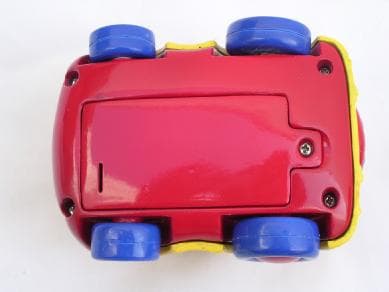
L2599203
Feb 08, 2005Walkie Talkie
Equipment Class
DXT - Part 15 Low Power Transceiver, Rx Verified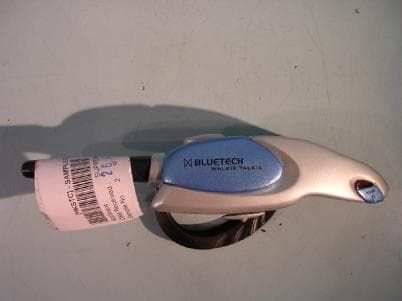
L2599132
Aug 02, 2004Earphone Walkie Talkie
Equipment Class
DXT - Part 15 Low Power Transceiver, Rx Verified