L52CT-M5CEO1DECT M5 Radio Module CeoTronics
CeoTronics AG
Click to zoom
Application Details
- Equipment Class
- PUB - Part 15 Unlicensed PCS Base Station
- Date of Grant
- Sep 13, 2007
- Application Purpose
- Original Equipment
- Date of Application
- Sep 09, 2007
- Equipment Note
- DECT M5 Radio Module CeoTronics
- Frequency Range
- 1921.54000000 - 1928.45000000
- Company
- CeoTronics AG
- Country
- Germany
Documents & Files
Document Text
Text extracted from the exhibit documents filed with the FCC. Open a document above to read the original.
Users Manual
FCC statements and instructions Labeling instructions The FCC ID is permanently fixed on a label on the module, and, if the FCC identification number is not visible when the module is installed inside another device, then the outside of the device into which the module is installed must also display a label referring to the enclosed module. This exterior label can use wording such as the following: “Contains Transmitter Module FCC ID: L52CT-M5CEO1” or “Contains FCC ID: L52CT-M5CEO1” Any similar wording that expresses the same meaning may be used. Similar detail instructions are given in the product Users Guide. This device complies with Part 15 of the FCC Rules. Operation is subject to the following two conditions: (1) this device may not cause harmful interference, and (2) this device must accept any interference received, including interference that may cause undesired operation. Statement according to FCC part 15.21: Modifications not expressly approved by this company could void the user's authority to operate the equipment. Statement according to FCC part 15.105: Note: This equipment has been tested and found to comply with the limits for a Class A digital device, pursuant to part 15 of the FCC Rules. These limits are designed to provide reasonable protection against harmful interference when the equipment is operated in a commercial environment. This equipment generates, uses, and can radiate radio frequency energy and, if not installed and used in accordance with the instruction manual, may cause harmful interference to radio communications. Operation of this equipment in a residential area is likely to cause harmful interference in which case the user will be required to correct the interference at his own expense. Note: This equipment has been tested and found to comply with the limits for a Class B digital device, pursuant to Part 15 of the FCC Rules. These limits are designed to providereasonable protection against harmful interference in a residential installation. This equipment generates, uses and can radiate radio frequency energy and, if not installed and used inaccordance with the instructions, may cause harmful interference to radio communications. However, there is no guarantee that interference will not occur in a particular installation. If this equipment does cause harmful interference to radio or television reception, which can be determined by turning the equipment off and on, the user is encouraged to try to correct the interference by one or more of the following measures: - Reorient or relocate the receiving antenna. - Increase the separation between the equipment and receiver. - Connect the equipment into an outlet on a circuit different from that to which the receiver is connected. - Consult the dealer or an experienced radio/TV technician for help. RFExposure portable: For portable applications OEM integrators need SAR evaluation and an own FCC ID. RFExposure mobil: The internal / external antennas used for this mobile transmitter must provide a separation distance of at least 20 cm from all persons and must not be co-located or operating in conjunction with any other antenna or transmitter." The maximum measured power output is 119,67mW (20,78 dBm), the maximum antenna gain is 0 dBi = numeric gain 1.0 (see also MPE calculation – Exhibit RFExposure) The maximum permissible exposure is defined in 47 CFR 1.1310 with 1 mW/cm². The distance from the EUT's transmitting antenna where the exposure level reaches the maximum permitted level is calculated using the general equation: S= P*G / 4R² Smax = 0.024mW/cm², The internal / external antennas used for this mobile transmitter must provide a separation distance of at least 20 cm from all persons and must not be co-located or operating in conjunction with any other antenna or transmitter. End users may not be provided with the module installation instructions. OEM integrators and end users must be provided with transmitter operating conditions for satisfying RF exposure compliance.. Composite Devices: A composite device is subject to two or more technical rule parts and requires testing and labelling appropriately for each of the respective component rule parts. However, as a practical rule, only one text or FCC logo need be labelled on a device. As a general rule the Declaration of Conformity (DoC) text statement is required over any Verification statement. For composites subject to DoC and Verification, or Certification and Verification, the labelling requirements for DoC or Certification need only apply. This does not remove the testing requirement for each individual device in a composite device. For composite devices subject to DoC and Certification, both the DoC logo and FCC ID (or FCC IDs when applicable) are required for composite DoC and Certified devices. Devices subject to DoC for both Part 15 and Part 18 may use only the Part 15 logo. information to users For information to users, all relevant instructions that pertain to all components of a composite device are required. For example, Class A or Class B statements in Section 15.105; all warning statements and special instructions as required by Sections 15.21 and 15.27; and all Part 18 applicable instructions / attestations must be clearly stated. However, realistic variations in editing to clarify the language and structure are permitted as long as all the relevant points applicable to all of the components are represented.
External Photos
ETS Product Service AG Registration number: G0M20707-0026-C-1 Page 1 of 7 Appendix A. Pictures ETS Product Service AG Registration number: G0M20707-0026-C-1 Page 2 of 7
External Photos
ETS Product Service AG Registration number: G0M20707-0026-C-2 Page 1 of 7 Appendix A. Pictures ETS Product Service AG Registration number: G0M20707-0026-C-2 Page 2 of 7
Internal Photos
ETS Product Service AG Registration number: G0M20707-0026-C-1 Page 3 of 7 ETS Product Service AG Registration number: G0M20707-0026-C-1 Page 4 of 7
Internal Photos
ETS Product Service AG Registration number: G0M20707-0026-C-2 Page 3 of 7 ETS Product Service AG Registration number: G0M20707-0026-C-2 Page 4 of 7
RF Exposure Info
ETS Product Service AG Registration number: G0M20707-0026-C-1 Page 30 of 53 3.1.11 Radio frequency radiation exposure, FCC 15.319 (i); RSS-102 UPCS devices are subject to the radio frequency radiation exposure requirements specified in FCC parts 1.1307 (b), 2.1091, 2.1093 and RSS-102, as appropriate. All equipment shall be considered to operate in a “general population / uncontrolled environment. For portable devices tests according to IEEE 1528 are requested, if applicable. Consideration of radio frequency radiation exposure for EUT is done as SAR test acc. IEEE 1528 MPE calculation as below SAR test results: not applicable MPE calculation: Please find radiated power test results in Appendix J. The EUT is considered as a mobile device according to OET Bulletin 65, Edition – 97 – 01. Therefore distance to human body of min. 20 cm is determined. The internal / external antennas used for this mobile transmitter must provide a separation distance of at least 20 cm from all persons and must not be co-located or operating in conjunction with any other antenna or transmitter. A safety statement concerning minimum separation distances from enclosure of the device will be integrated in the user’s manual to provide end-users with transmitter operating conditions for satisfying RFE exposure compliance. Formula: S = EIRP / 4πR 2 Calculation: EIRP Radiated Power [dBm] 20.41 EIRP Radiated Power [mW] 109.901 R Distance [cm] 20 S Power Density [mW/cm 2 ] 0.002 Limit: The limit of Power density for General Population / Uncontrolled Exposure is 1.0 mW/cm 2 . Compliance with the requirements will be considered by calculation of power density derived from radiated power value. Verdict: Pass Fail For radiated power test results see Appendix I.
RF Exposure Info
ETS Product Service AG Registration number: G0M20707-0026-C-2 Page 29 of 51 3.1.11 Radio frequency radiation exposure, FCC 15.319 (i); RSS-102 UPCS devices are subject to the radio frequency radiation exposure requirements specified in FCC parts 1.1307 (b), 2.1091, 2.1093 and RSS-102, as appropriate. All equipment shall be considered to operate in a “general population / uncontrolled environment. For portable devices tests according to IEEE 1528 are requested, if applicable. Consideration of radio frequency radiation exposure for EUT is done as SAR test acc. IEEE 1528 MPE calculation as below SAR test results: not applicable MPE calculation: The EUT is considered as a mobile device according to OET Bulletin 65, Edition – 97 – 01. Therefore distance to human body of min. 20 cm is determined. The internal / external antennas used for this mobile transmitter must provide a separation distance of at least 20 cm from all persons and must not be co-located or operating in conjunction with any other antenna or transmitter. A safety statement concerning minimum separation distances from enclosure of the device will be integrated in the user’s manual to provide end-users with transmitter operating conditions for satisfying RFE exposure compliance. Formula: S = EIRP / 4πR 2 (EIRP = P*G) Calculation: EIRP Radiated Power [dBm] 20.78 EIRP Radiated Power [mW] 119.67 R Distance [cm] 20 S Power Density [mW/cm 2 ] 0.024 Limit: The limit of Power density for General Population / Uncontrolled Exposure is 1.0 mW/cm 2 . Compliance with the requirements will be considered by calculation of power density derived from radiated power value. Verdict: Pass Fail
Test Report
ETS PRODUCT SERVICE AG TEST - REPORT FCC PART 15 D for Isochronous UPCS devices RSS-213 for LE-PCS devices FCC ID: L52CT-M5CEO1 Test report no.: G0M20707-0026-C-1 Certificate #1983.01 ETS STORKOWER STRASSE 38C, D-15526 REICHENWALDE B. BERLIN PRODUCT SERVICE AG PHONE +49-33631-888 00 FAX +49-33631-888 660 ETS Product Service AG Registration number: G0M20707-0026-C-1 Page 1 of 53 TABLE OF CONTENTS 1 General information 1.1 Notes 1.2 Testing laboratory 1.3 Details of approval holder 1.4 Application details 1.5 Test item 1.6 Test standards 2 TECHNICAL TEST 2.1 Summary of test results 2.2 Test environment 2.3 Test equipment utilized 2.4 Examinations and Test Procedures 3 RESULTS OF EXAMINATIONS AND TESTS 3.1. Examinations and Test Procedures 3.1.1 Coordination with fixed microwave service, FCC 15.307 (b) 3.1.2 Reference to Subpart B, FCC 15.309 (b) 3.1.3 Conducted limits AC Power line, FCC 15.315, 15.207; RSS-213 4.2; 6.3 3.1.4 Antenna requirement, FCC 15.317, 15.203 3.1.5 Modulation techniques, FCC 15.319 (b); RSS-213 6.1 3.1.6 Emission bandwidth, FCC 15.323 (a); FCC 15.31 (e); RSS-213 6.4 3.1.7 Peak Transmit Power, FCC 15.319 (c); RSS-213 4.3.1, 6:5 3.1.8 Power spectral density, FCC 15.319 (d); RSS-213 4.3.1, 6:6 3.1.9 Directional gain of the antenna, FCC 15.319 (e); RSS-213 4.1 (e) 3.1.10 Automatic discontinuation of transmission, FCC 15.319 (f); RSS-213 4.3.4 (a) ETS Product Service AG Registration number: G0M20707-0026-C-1 Page 2 of 53 3.1.11 Radio frequency radiation exposure, FCC 15.319 (i); RSS-Gen 5.5 3.1.12 Monitoring threshold; Least interfered channel; FCC 15.323 (c)(2); (c)(5) (c)(9); RSS-213 4.3.4 (b)(2) 3.1.13 Monitoring of intended transmit window and maximum reaction time, FCC 15.323 (c)(1); RSS-213 4.3.4 (b)(1) 3.1.14 Monitoring bandwidth, FCC 15.323 (c)(7); RSS-213 4.3.4 (b)(7) 3.1.15 Random waiting interval, FCC 15.323 (c)(6); RSS-213 4.3.4 (b)(6) 3.1.16 Duration of transmission, FCC 15.323 (c)(3); RSS-213 4.3.4 (b)(3) 3.1.17 Connection acknowledgement, Unacknowledged transmissions, FCC 15.323 (c)(4); RSS-213 4.3.4 (b)(5) 3.1.18 Selected channel confirmation, Segment occupancy; FCC 15.323 (c)(5) 3.1.19 Monitoring antenna, FCC 15.323 (c)(8); RSS-213 4.3.4 (b)(8) 3.1.20 Duplex connections, FCC 15.323 (c)(10); RSS-213 4.3.4 (b)(10) 3.1.21 Alternative monitoring interval for co-located devices, FCC 15.323 (c)(11); RSS-213 4.3.4 (b)(11) 3.1.22 Fair access to spectrum related to (c)(10) and (c)(11), FCC 15.323 (c)(12); RSS-213 4.3.4 (b)(12) 3.1.23 Emissions inside and outside the sub-band, FCC 15.323 (d); RSS-213 6.7 3.1.24 Frame period, FCC 323 (e); RSS-213 4.3.(c). 3.1.25 Frequency stability, FCC 323 (f); RSS-213 6.8 3.1.26 Receiver spurious emissions; RSS-213 6.8 ETS Product Service AG Registration number: G0M20707-0026-C-1 Page 3 of 53 1 General Information 1.1 Notes The purpose of conformity testing is to increase the probability of adherence to the essential requirements or conformity specifications, as appropriate. The complexity of the technical specifications, however, means that full and thorough testing is impractical for both technical and economic reasons. Furthermore, there is no guarantee that a test sample which has Passed all the relevant tests conforms to a specification. Neither is there any guarantee that such a test sample will interoperate with other genuinely open systems. The existence of the tests nevertheless provides the confidence that the test sample possesses the qualities as maintained and that is performance generally conforms to representative cases of communications equipment. The test results of this test report relate exclusively to the item tested as specified in 1.5. The test report may only be reproduced or published in full. Reproduction or publication of extracts from the report requires the prior written approval of the ETS PRODUCT SERVICE AG. Specific Conditions: Usage of the hereunder tested device in combination with other integrated or external antennas requires at least additional output power measurements, spurious emission measurements, conducted emission measurements (AC supply lines) and radio frequency exposure evaluations for each individual configuration are performed, for certification by competent authorities FCC; IC. This report is related to FCC Part 15 D applied to UPCS devices of which technology is derived from DECT standard. Additional this report covers the requirement of RSS-213, 2 GHz Licence exempt Personal Communications Services Devices (LE-PCS) released by Industry Canada (IC). In following the term UPCS covers the term LE-PCS too. Tester: 03.09.2007 W. Treffke Date ETS-Lab. Name Signature Technical responsibility for area of testing: 03.09.2007 N. Kaspar Date ETS Name Signature ETS Product Service AG Registration number: G0M20707-0026-C-1 Page 4 of 53 1.2 Testing laboratory 1.2.1 Location ETS PRODUCT SERVICE AG Storkower Straße 38c D-15526 Reichenwalde b. Berlin Germany Telefon : +49 33631 888 00 Telefax : +49 33631 888 66 1.2.2 Details of accreditation status A CCREDITED TESTING LABORATORY DAR-REGISTRATION NUMBER: DAT-P-201/96 ACCREDITED COMPETENT BODY BNetzA- REGISTRATION NUMBER: BNetzA-zS-026/96 FCC FILED TEST LABORATORY REG. NO. 96970 Bluetooth Qualification Test Facility (BQTF) Accredited by Bluetooth Qualification Review Board (BQRF) I NDUSTRY CANADA FILED TEST LABORATORY REG. NO. IC 3470 A2LA ACCREDITED Certificate Number: #1983.01 1.3 Details of approval holder Name : Ceotronics AG Street : Adam-Opel-Str. 6 Town : 63322 Rödermark Country : Germany Telephone : 06074 8751 714 Fax : 06074 8751 718 Contact : Herr Berthold Hemer Telephone : 06074 8751 714 E-mail : [email protected] ETS Product Service AG Registration number: G0M20707-0026-C-1 Page 5 of 53 1.4 Application details Date of receipt of application : 31.07.2007 Date of receipt of test item : 31.07.2007 Date of test : 31.07.2007 – 02.08.2007 1.5 Test item Description of test item : Isochronous UPCS device, cordless phone based on DECT …
Text truncated - open the document above for the full version.
Test Report
ETS PRODUCT SERVICE AG TEST - REPORT FCC PART 15 D for Isochronous UPCS devices RSS-213 for LE-PCS devices FCC ID: L52CT-M5CEO1 Test report no.: G0M20707-0026-C-2 Certificate #1983.01 ETS STORKOWER STRASSE 38C, D-15526 REICHENWALDE B. BERLIN PRODUCT SERVICE AG PHONE +49-33631-888 00 FAX +49-33631-888 66 ETS Product Service AG Registration number: G0M20707-0026-C-2 Page 1 of 51 TABLE OF CONTENTS 1 General information 1.1 Notes 1.2 Testing laboratory 1.3 Details of approval holder 1.4 Application details 1.5 Test item 1.6 Test standards 2 TECHNICAL TEST 2.1 Summary of test results 2.2 Test environment 2.3 Test equipment utilized 2.4 Examinations and Test Procedures 3 RESULTS OF EXAMINATIONS AND TESTS 3.1. Examinations and Test Procedures 3.1.1 Coordination with fixed microwave service, FCC 15.307 (b) 3.1.2 Reference to Subpart B, FCC 15.309 (b) 3.1.3 Conducted limits AC Power line, FCC 15.315, 15.207; RSS-213 4.2; 6.3 3.1.4 Antenna requirement, FCC 15.317, 15.203 3.1.5 Modulation techniques, FCC 15.319 (b); RSS-213 6.1 3.1.6 Emission bandwidth, FCC 15.323 (a); FCC 15.31 (e); RSS-213 6.4 3.1.7 Peak Transmit Power, FCC 15.319 (c); RSS-213 4.3.1, 6:5 3.1.8 Power spectral density, FCC 15.319 (d); RSS-213 4.3.1, 6:6 3.1.9 Directional gain of the antenna, FCC 15.319 (e); RSS-213 4.1 (e) 3.1.10 Automatic discontinuation of transmission, FCC 15.319 (f); RSS-213 4.3.4 (a) 3.1.11 Radio frequency radiation exposure, FCC 15.319 (i); RSS-Gen 5.5 ETS Product Service AG Registration number: G0M20707-0026-C-2 Page 2 of 51 3.1.12 Monitoring threshold; Least interfered channel; FCC 15.323 (c)(2); (c)(5) (c)(9); RSS-213 4.3.4 (b)(2) 3.1.13 Monitoring of intended transmit window and maximum reaction time, FCC 15.323 (c)(1); RSS-213 4.3.4 (b)(1) 3.1.14 Monitoring bandwidth, FCC 15.323 (c)(7); RSS-213 4.3.4 (b)(7) 3.1.15 Random waiting interval, FCC 15.323 (c)(6); RSS-213 4.3.4 (b)(6) 3.1.16 Duration of transmission, FCC 15.323 (c)(3); RSS-213 4.3.4 (b)(3) 3.1.17 Connection acknowledgement, Unacknowledged transmissions, FCC 15.323 (c)(4); RSS-213 4.3.4 (b)(5) 3.1.18 Selected channel confirmation, Segment occupancy; FCC 15.323 (c)(5) 3.1.19 Monitoring antenna, FCC 15.323 (c)(8); RSS-213 4.3.4 (b)(8) 3.1.20 Duplex connections, FCC 15.323 (c)(10); RSS-213 4.3.4 (b)(10) 3.1.21 Alternative monitoring interval for co-located devices, FCC 15.323 (c)(11); RSS-213 4.3.4 (b)(11) 3.1.22 Fair access to spectrum related to (c)(10) and (c)(11), FCC 15.323 (c)(12); RSS-213 4.3.4 (b)(12) 3.1.23 Emissions inside and outside the sub-band, FCC 15.323 (d); RSS-213 6.7 3.1.24 Frame period, FCC 323 (e); RSS-213 4.3.(c). 3.1.25 Frequency stability, FCC 323 (f); RSS-213 6.8 3.1.26 Receiver spurious emissions; RSS-213 6.8 ETS Product Service AG Registration number: G0M20707-0026-C-2 Page 3 of 51 1 General Information 1.1 Notes The purpose of conformity testing is to increase the probability of adherence to the essential requirements or conformity specifications, as appropriate. The complexity of the technical specifications, however, means that full and thorough testing is impractical for both technical and economic reasons. Furthermore, there is no guarantee that a test sample which has Passed all the relevant tests conforms to a specification. Neither is there any guarantee that such a test sample will interoperate with other genuinely open systems. The existence of the tests nevertheless provides the confidence that the test sample possesses the qualities as maintained and that is performance generally conforms to representative cases of communications equipment. The test results of this test report relate exclusively to the item tested as specified in 1.5. The test report may only be reproduced or published in full. Reproduction or publication of extracts from the report requires the prior written approval of the ETS PRODUCT SERVICE AG. Specific Conditions: Usage of the hereunder tested device in combination with other integrated or external antennas requires at least additional output power measurements, spurious emission measurements, conducted emission measurements (AC supply lines) and radio frequency exposure evaluations for each individual configuration are performed, for certification by competent authorities FCC; IC. This report is related to FCC Part 15 D applied to UPCS devices of which technology is derived from DECT standard. Additional this report covers the requirement of RSS-213, 2 GHz Licence exempt Personal Communications Services Devices (LE-PCS) released by Industry Canada (IC). In following the term UPCS covers the term LE-PCS too. Tester: 03.09.2007 W. Treffke Date ETS-Lab. Name Signature Technical responsibility for area of testing: 03.09.2007 N. Kaspar Date ETS Name Signature ETS Product Service AG Registration number: G0M20707-0026-C-2 Page 4 of 51 1.2 Testing laboratory 1.2.1 Location ETS PRODUCT SERVICE AG Storkower Str. 38c 15526 Reichenwalde b. Berlin Germany Telefon : +49 33631 888 00 Telefax : +49 33631 888 66 1.2.2 Details of accreditation status A CCREDITED TESTING LABORATORY DAR-REGISTRATION NUMBER: DAT-P-201/96 A CCREDITED COMPETENT BODY BNETZA-REGISTRATION NUMBER: BNetzA-zS-026/96 FCC FILED TEST LABORATORY REG. NO. 96970 Bluetooth Qualification Test Facility (BQTF) Accredited by Bluetooth Qualification Review Board (BQRF) I NDUSTRY CANADA FILED TEST LABORATORY REG. NO. IC 3470 A2LA ACCREDITED Certificate Number: #1983.01 1.3 Details of approval holder Name : Ceotronics AG Street : Adam-Opel-Str. 6 Town : 63322 Rödermark Country : Germany Telephone : 06074 8751 714 Fax : 06074 8751 718 Contact : Herr Berthold Hemer Telephone : 06074 8751 714 E-mail : [email protected] ETS Product Service AG Registration number: G0M20707-0026-C-2 Page 5 of 51 1.4 Application details Date of receipt of application : 31.07.2007 Date of receipt of test item : 31.07.2007 Date of test : 31.07.2007 – 02.08.2007 1.5 Test item Description of test item : Isochronous UPCS device, cordless phone based on DECT modif…
Text truncated - open the document above for the full version.
Test Setup Photos
ETS Product Service AG Registration number: G0M20707-0026-C-1 Page 5 of 7 ETS Product Service AG Registration number: G0M20707-0026-C-1 Page 6 of 7 ETS Product Service AG Registration number: G0M20707-0026-C-1 Page 7 of 7
Test Setup Photos
ETS Product Service AG Registration number: G0M20707-0026-C-2 Page 5 of 7 ETS Product Service AG Registration number: G0M20707-0026-C-2 Page 6 of 7 ETS Product Service AG Registration number: G0M20707-0026-C-2 Page 7 of 7
Contact Information
Applicant
Thomas Guenther(CEO)
Test Firm
Eurofins Product Service GmbHRobert Kschiwan-Kaspar
Technical Specifications
| # | Rule Parts | Frequency Range | Power Output |
|---|---|---|---|
| 1 | 15D | 1.92 GHz - 1.93 GHz | 119.70 mW |
Other Applications from CeoTronics AG

L52CT-M7CEO1
Jan 18, 2021CT-DECT M7 Module
Equipment Class
PUB - Part 15 Unlicensed PCS Base Station
L52-CTMUPTTBT
Nov 08, 2015CT-Multi-PTT Bluetooth
Equipment Class
CYY - Communications Receiver used w/Pt 15 Transmitter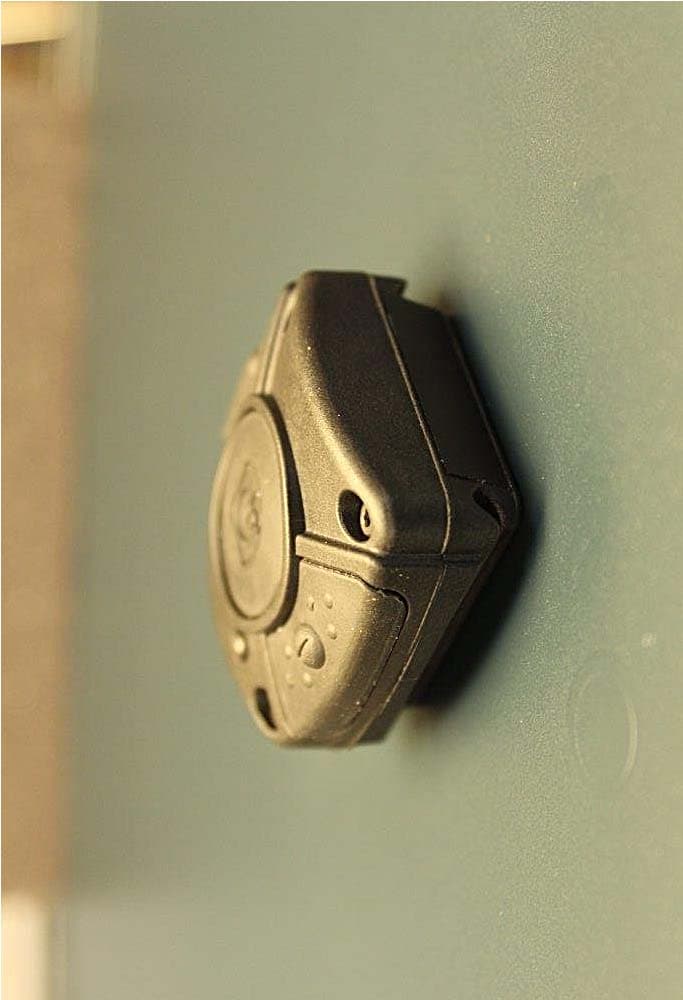
L52CTRT9011
Jun 02, 2015Wireless Control Command Transmitter
Equipment Class
DXX - Part 15 Low Power Communication Device Transmitter
L52CT-RXRCDM14
Oct 13, 2010CT-ClipCom digital
Equipment Class
CYY - Communications Receiver used w/Pt 15 Transmitter
L52CT-RXRCD9007
Oct 13, 2010CT-ClipCom digital SD
Equipment Class
CYY - Communications Receiver used w/Pt 15 Transmitter