L82-242900Cordless Telephone
Siemens Information and Communication Mobile LLC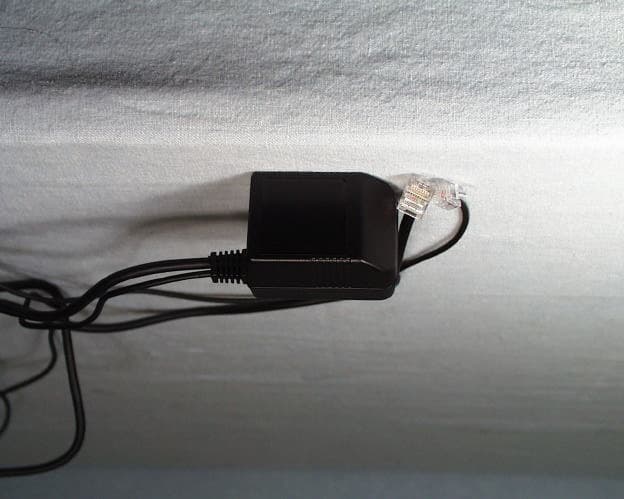
Click to zoom
Application Details
- Equipment Class
- DSS - Part 15 Spread Spectrum Transmitter
- Date of Grant
- Aug 08, 1999
- Application Purpose
- Original Equipment
- Date of Application
- Jun 08, 1999
- Equipment Note
- Cordless Telephone
- Frequency Range
- 903.75000000 - 926.25000000
- Country
- United States
Documents & Files
Document Text
Text extracted from the exhibit documents filed with the FCC. Open a document above to read the original.
Users Manual
COMMUNICATION CERTIFICATION LABORATORYTEST REPORT: 73-6870 FCC ID: L82-242900 Page 81 of 112 Exhibit 8 Exhibit 8: User’s Manual A copy of the user’s manual is enclosed below. The compliance statement for the 242C9 is contained in a separate document that is supplied with the phone, as shown below: Important Safety Instructions and Product Information BEFORE USING YOUR TELEPHONE EQUIPMENT, BASIC SAFETY INSTRUCTIONS SHOULD ALWAYS BE FOLLOWED TO REDUCE THE RISK OF FIRE, ELECTRIC SHOCK AND INJURY TO PERSONS. 1. Read and understand all instructions. 2. Follow all warnings and instructions marked on the product. 3. Unplug this product from the wall telephone jack and power outlet before cleaning. Do not use liquid cleaners or aerosol cleaners. Use damp cloth for cleaning. 4. Do not use this product near water, for example, near a bathtub, wash bowl, kitchen sink, or laundry tub, in a wet basement or near a swimming pool. 5. Place this product securely on a stable surface. Serious damage and/or injury may result if the unit falls. 6. Slots or openings in the cabinet and the back and bottom are provided for ventilation, to protect it from overheating. These openings must not be blocked or covered. This product should never be placed near or over a radiator or heat register, or in a place where proper ventilation is not provided. 7. This product should be operated only from the type of power source indicated on the marking label. If you are not sure of the type of power supply to your home, consult your dealer or local power company. 8. Do not place objects on the power cord. Install the unit where no one can step or trip on the cord. 9. Do not overload wall outlets and extension cords as this can result in the risk of fire or electric shock. 10. Never push objects of any kind into this product through cabinet slots as they may touch dangerous voltage points or short out parts that could result in the risk of fire or electric shock. Never spill liquid of any kind on this product. 11. To reduce the risk of electric shock or burns, do not disassemble this product. Take it to a qualified service center when service is required. Opening or removing covers may expose you to dangerous voltages, dangerous electrical current or other risks. Incorrect reassembly can cause electric shock when the appliance is subsequently used. 12. Unplug the product from the wall outlet and refer servicing to qualified service personnel under the following conditions: a. When the power cord is damaged or frayed. COMMUNICATION CERTIFICATION LABORATORYTEST REPORT: 73-6870 FCC ID: L82-242900 Page 82 of 112 Exhibit 8 b. If liquid has been spilled into the product. c. If the product has been exposed to rain or water. d. If the product does not operate normally by following the operating instructions. Adjust only those controls that are covered by the operating instructions because improper adjustment of other controls may result in damage and may require extensive work by a qualified technician to restore the product to normal operation. e. If the product has been dropped or physically has been damaged. f. If the product exhibits a distinct change in performance. 13. Avoid using a telephone (other than a cordless type) during a thunderstorm. There may a remote risk of electrical shock from lightning. 14. Do not use the telephone to report a gas leak in the vicinity of the leak. BATTERY SAFETY PRECAUTIONS To reduce the risk of fire, injury or electric shock, and to properly dispose of batteries, please read and understand the following instructions. CONTAINS NICKEL CADMIUM BATTERY. BATTERY MUST BE RECYCLED OR DISPOSED OF PROPERLY. DO NOT DISPOSE OF IN MUNICIPAL WASTE. 1. Only use the batteries specified for use with this product. 2. DO NOT USE ALKALINE OR LITHIUM BATTERIES, or mix batteries of different sizes or from different manufacturers in this product. 3. Do not dispose of the batteries in a fire; the cells may explode. Do not expose batteries to water. Check with local codes for special disposal instructions. 4. Do not open or mutilate the batteries. Released electrolyte is corrosive and may cause damage to the eyes or skin. The electrolyte may be toxic if swallowed. 5. Exercise care in handling the batteries in order not to short the batteries with conducting materials such as rings, bracelets, and keys. The batteries or conducting material may overheat and cause burns or fire. 6. Charge the batteries provided with, or identified for use with, this product only in accordance with the instructions and limitations specified in the user’s manual. Do not attempt to charge the batteries with any means other than that specified in the user’s manual. 7. Periodically clean the charge contacts on both the charger and handset. 8. The RBRC™ Battery Recycling Seal on the batteries indicates Siemens is voluntarily participating in an industry program to collect and recycle these batteries at the end of their useful life, when taken out of service within the United States or Canada. The RBRC program provides a convenient alternative to COMMUNICATION CERTIFICATION LABORATORYTEST REPORT: 73-6870 FCC ID: L82-242900 Page 83 of 112 Exhibit 8 placing used batteries into the trash or municipal waste stream, which is illegal in some areas. Please call 1-800-8- BATTERY for information on battery recycling in your area. Siemens involvement in this program is part of our commitment to preserving our environment and conserving our natural resources. Warning: Changes or modifications to this unit not expressly approved by Siemens Communication Devices could void the FCC authority to operate the equipment. This includes the addition of any external antenna device. INDUSTRY CANADA CERTIFICATION NOTICE : If the product has an Industry Canada label, this label identifies certified equipment. This device requires a radio license, unless it (including antenna) is installed totally inside a building. (User must obtain this license from Industry Canada). …
Text truncated - open the document above for the full version.
Cover Letter(s)
COMMUNICATION CERTIFICATION LABORATORYTEST REPORT: 73-6870 FCC ID: L82-242900 Page 110 of 112 Exhibit 13 Exhibit 13: Cover Letters June 4, 1999 FEDERAL COMMUNICATIONS COMMISSION Equipment Authorization Division 7435 Oakland Mills Road Columbia, MD 21046 To Whom It May Concern: Enclosed is a FCC Part 15, Subpart C, Section 15.247 Certification application for the Siemens Information and Communication Products, LLC, Model 242C9, FCC ID: L82-242900 Please let me know if I can be of further assistance. Sincerely yours, COMMUNICATION CERTIFICATION LABORATORY Joseph W. Jackson V.P. Marketing COMMUNICATION CERTIFICATION LABORATORYTEST REPORT: 73-6870 FCC ID: L82-242900 Page 111 of 112 Exhibit 13 Request for Confidentiality Letter COMMUNICATION CERTIFICATION LABORATORYTEST REPORT: 73-6870 FCC ID: L82-242900 Page 112 of 112 Exhibit 13 Request for Change of Name Letter
External Photos
COMMUNICATION CERTIFICATION LABORATORYTEST REPORT: 73-6870 FCC ID: L82-242900 Page 5 of 112 Exhibit 3 Exhibit 3: Photographs of Overall Appearance Front exterior view - Handset COMMUNICATION CERTIFICATION LABORATORYTEST REPORT: 73-6870 FCC ID: L82-242900 Page 6 of 112 Exhibit 3 Back exterior view - Handset COMMUNICATION CERTIFICATION LABORATORYTEST REPORT: 73-6870 FCC ID: L82-242900 Page 7 of 112 Exhibit 3 Front exterior view – Base Station COMMUNICATION CERTIFICATION LABORATORYTEST REPORT: 73-6870 FCC ID: L82-242900 Page 8 of 112 Exhibit 3 Power Supply – Base Station
ID Label/Location Info
COMMUNICATION CERTIFICATION LABORATORYTEST REPORT: 73-6870 FCC ID: L82-242900 Page 1 of 112 Exhibit 1 Exhibit 1: FCC ID Label Equipment Identification Label In accordance with the requirements of Sections 15.19 (a), 2.925 and 2.926 of the FCC Rules, the following information will be permanently affixed to the Siemens Information and Communication Products, LLC, Model 242C9 as shown in the sketch’s on the following pages. The FCC ID number is located on both the base and the handset, but due to the size of the handset the compliance statement is located only on the base. COMMUNICATION CERTIFICATION LABORATORYTEST REPORT: 73-6870 FCC ID: L82-242900 Page 2 of 112 Exhibit 1 Handset Label COMMUNICATION CERTIFICATION LABORATORYTEST REPORT: 73-6870 FCC ID: L82-242900 Page 3 of 112 Exhibit 1 Base Station Label
Internal Photos
COMMUNICATION CERTIFICATION LABORATORYTEST REPORT: 73-6870 FCC ID: L82-242900 Page 103 of 112 Exhibit 9 Exhibit 9: Internal Photographs Inside View – Side A - Handset COMMUNICATION CERTIFICATION LABORATORYTEST REPORT: 73-6870 FCC ID: L82-242900 Page 104 of 112 Exhibit 9 Inside View – Side B - Handset COMMUNICATION CERTIFICATION LABORATORYTEST REPORT: 73-6870 FCC ID: L82-242900 Page 105 of 112 Exhibit 9 Inside View – Side A – Base Station COMMUNICATION CERTIFICATION LABORATORYTEST REPORT: 73-6870 FCC ID: L82-242900 Page 106 of 112 Exhibit 9 Inside View – Side B – Base Station
Operational Description
COMMUNICATION CERTIFICATION LABORATORYTEST REPORT: 73-6870 FCC ID: L82-242900 Page 109 of 112 Exhibit 12 Exhibit 12: Operational Description 15.203 Antenna Requirements Both the handset and base station antenna for the Model 242C9 are etched onto the PC board; therefore, it meets the requirements of this section.
Test Report
COMMUNICATION CERTIFICATION LABORATORYTEST REPORT: 73-6870 FCC ID: L82-242900 Page 13 of 112 Exhibit 6 Exhibit 6: Test Report TEST REPORT FROM: COMMUNICATION CERTIFICATION LABORATORY 1940 W. Alexander Street Salt Lake City, Utah 84119-2039 Type of Report: Certification TEST OF: 240C9 and 242C9 FCC ID: L82-242900 To FCC PART 15.247, Subpart C Test Report Serial No: 73-6870 Applicant: Siemens Information and Communication Products, LLC, Communication Devices 2205 Grand Avenue Parkway Austin, TX 78728-3811 Date(s) of Test: May 24 - 26, 1999 Issue Date: June 4, 1999 Equipment Receipt Date: May 24, 1999 COMMUNICATION CERTIFICATION LABORATORYTEST REPORT: 73-6870 FCC ID: L82-242900 Page 14 of 112 Exhibit 6 CERTIFICATION OF ENGINEERING REPORT This report has been prepared by Communication Certification Laboratory to determine compliance of the device described below with the requirements of FCC PART 15.247, Subpart C. This report may be reproduced in full, partial reproduction may only be made with the written consent of the laboratory. The results in this report apply only to the sample tested. -Applicant:Siemens Information and Communication Products, LLC, Communication Devices -Manufacturer:Siemens Information and Communication Products, LLC, Communication Devices -Brand Name:SIEMENS -Model Number:240C9 and 242C9 -FCC ID:L82-242900 On this 4 th day of June 1999, I, individually, and for Communication Certification Laboratory, certify that the statements made in this engineering report are true, complete, and correct to the best of my knowledge, and are made in good faith. COMMUNICATION CERTIFICATION LABORATORY Checked by: William S. Hurst, P.E. Vice President Tested by: Roger J. Midgley EMC Engineering Manager COMMUNICATION CERTIFICATION LABORATORYTEST REPORT: 73-6870 FCC ID: L82-242900 Page 15 of 112 Exhibit 6 SECTION 1. CLIENT INFORMATION AND RESPONSIBLE PARTY: 1.1 Client Information: Company Name: Siemens Information and Communication Products, LLC, Communication Devices 2205 Grand Avenue Parkway Austin, TX 78728-3811 Contact Name:Jim Davis Title:EMC Engineer COMMUNICATION CERTIFICATION LABORATORYTEST REPORT: 73-6870 FCC ID: L82-242900 Page 16 of 112 Exhibit 6 SECTION 2. EQUIPMENT UNDER TEST (EUT) 2.1 Identification of EUT: Trade Name:SIEMENS Model Name or Number:240C9 and 242C9 Serial Number:N/A Options Fitted:None Country of Manufacture:U.S.A. 2.2 Description of EUT: The Siemens 240 Series is a cordless telephone that is designed to work in the 900 MHz ISM band. It is marketed under two different model numbers, 240C9 and 242C9. The radio portion of both models are identical the only difference is that the 242C9 provides caller ID. The data in this report was taken on the 242C9 as representative of both models. The 240 Series cordless phone uses direct sequence spread spectrum modulation in the band 902 – 928 MHz. The band is divided into 31 duplex channels by using a TDD (Time Division Duplex) transmit scheme (see list of channels below). The 240 Series does not use channels 1 or 31. Each channels uses 32 kbit/s ADPCM voice coding for transmitting the payload data, together with the data channel this results in a 100 kbit system data rate. The spreading encoding provides a 12 dB spreading gain, by using a 15 Bit PN sequence, resulting in a 1.5 Mchip/s spreading rate. The transmitter has variable output power, transmitting up to a maximum of 100 mW. This report covers the transmitter only the receiver is covered under a separate verification report. 2.3 Modification Incorporated/Special Accessories on EUT: There were no modifications or special accessories required to comply with the specification. COMMUNICATION CERTIFICATION LABORATORYTEST REPORT: 73-6870 FCC ID: L82-242900 Page 17 of 112 Exhibit 6 2.4 EUT and Support Equipment: The FCC ID numbers for all the EUT and support equipment used during the test (including inserted cards) are listed below: Brand Name Model Number Serial No. FCC ID Number DescriptionName of Interface Ports/Interface Cables BN: SIEMENS MN: 242C9 SN: N/A L82-242900Direct Sequence Spread Spectrum Handset and Base Station (EUT) N/A 2.5 List of Channels: Channel NumberChannel Frequency (MHz) Channel NumberChannel Frequency (MHz) 1903.7517915.75 2904.5018916.50 3905.2519917.25 4906.0020918.00 5906.7521918.75 6907.5022919.50 7908.2523920.25 8909.0024921.00 9909.7525921.75 10910.5026922.50 11911.2527923.25 12912.0028924.00 13912.7529924.75 14913.5030925.50 15914.2531926.25 16915.00 COMMUNICATION CERTIFICATION LABORATORYTEST REPORT: 73-6870 FCC ID: L82-242900 Page 18 of 112 Exhibit 6 SECTION 3. TEST SPECIFICATION, METHODS & PROCEDURES 3.1 Test Specification: Title:FCC PART 15.247, Subpart C (47 CFR 15). Limits and methods of measurement of radio interference characteristics of radio frequency devices. Operation within the bands 902-928 MHz, 2400-2483.5 MHz and 5725- 5850 MHz. Purpose of Test: The tests were performed to demonstrate Initial compliance. 3.2 Methods & Procedures: 3.2.1 '' 15.247 (a)Operation under the provisions of this section is limited to frequency hopping and direct sequence spread spectrum intentional radiators that comply with the following provisions: (1)Frequency hoping systems shall have hopping channel carrier frequencies separated by a minimum of 25 kHz or the 20 dB bandwidth of the hopping channel, whichever is greater. The system shall hop to channel frequencies that are selected at the system-hopping rate from a pseudorandomly ordered list of hopping frequencies. Each frequency must be used equally on the average by each transmitter. The system receivers shall have input bandwidths that match the hopping channel bandwidths of their corresponding transmitters and shall shift frequencies in synchronization with the transmitting signals. (i)Frequency hopping systems operating in the 902 - 928 MHz band shall use at least 50 hopping frequencies. The maximum allowed 20 dB bandwidth of the hopping channel is 500 kHz. The average time of occupancy on …
Text truncated - open the document above for the full version.
Test Setup Photos
COMMUNICATION CERTIFICATION LABORATORYTEST REPORT: 73-6870 FCC ID: L82-242900 Page 79 of 112 Exhibit 7 Exhibit 7: Test Set-Up Photographs Front view of worst case radiated emissions COMMUNICATION CERTIFICATION LABORATORYTEST REPORT: 73-6870 FCC ID: L82-242900 Page 80 of 112 Exhibit 7 Back view of worst case radiated emissions
Contact Information
Applicant
Mauricio da Silva(Director, Quality)
Technical Contact
Communication Certification LaboratoryRoger J Midgley
[email protected](801) 972-6146
1940 W. Alexander Street · Salt lake City, Utah · United States
Test Firm
Communication Certification Lab.Scott Earl
Technical Specifications
| # | Rule Parts | Frequency Range | Power Output |
|---|---|---|---|
| 1 | 15C | 903.75 MHz - 926.25 MHz | 50.00 mW |
Other Applications from Siemens Information and Communication Mobile LLC

L82-S44
Oct 20, 2005Cordless Phone Handset
Equipment Class
PUE - Part 15 Unlicensed PCS portable Tx held to ear
L82-S445
Oct 20, 2005Cordless Phone Base Station
Equipment Class
PUB - Part 15 Unlicensed PCS Base Station
L82-SL3501
Feb 12, 2003Spread Spectrum Cordless Phone System
Equipment Class
DSS - Part 15 Spread Spectrum Transmitter
L82-BIRD
Nov 24, 20022.4 GHz DECT Cordless Telephone System
Equipment Class
DSS - Part 15 Spread Spectrum Transmitter
L82-HOME-RF-4000
Feb 06, 2002Spread Spectrum Cordless Phone Handset Transceiver
Equipment Class
ETR - Part 15 Cordless Telephone Remote Transceiver