M3NRCKF2BRCKF2B
Continental Automotive Systems, Inc.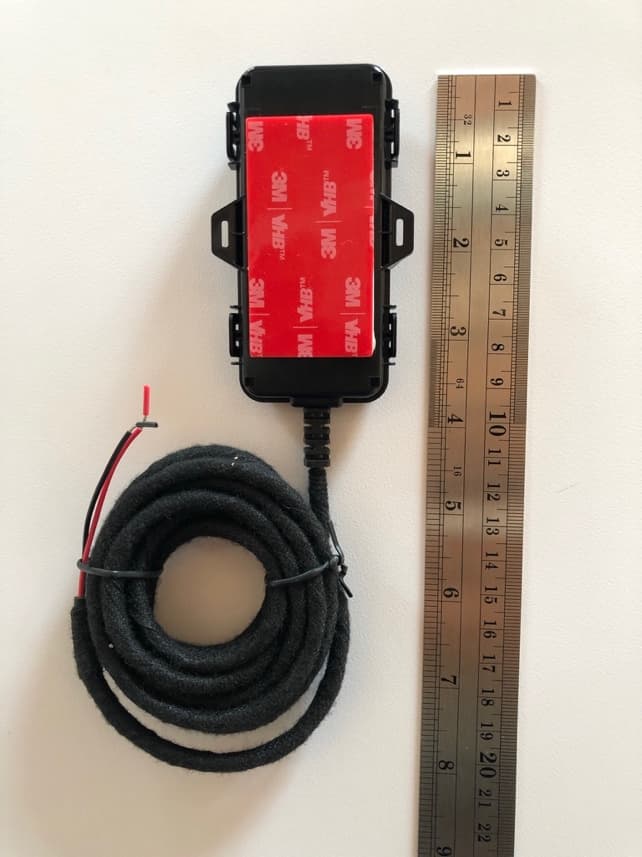
Click to zoom
Application Details
- Equipment Class
- DSC - Part 15 Security/Remote Control Transmitter
- Date of Grant
- Apr 25, 2021
- Application Purpose
- Original Equipment
- Date of Application
- Apr 25, 2021
- Equipment Note
- RCKF2B
- Frequency Range
- 433.92000000 - 433.92000000
- Country
- United States
Documents & Files
Document Text
Text extracted from the exhibit documents filed with the FCC. Open a document above to read the original.
Users Manual
1. Download and install the Nissan Virtual Key App from the App Store or Google Play. 2. Sign up for a new account even if you already have a MyNissan account. 3. Sign in with the newly created account. 4. Please read and agree to the End User License and Agreement located in the Virtual Key App. 5. A Nissan associate can guide you through the transfer of the Virtual Key ownership to you. Features Guide 1. App menu for various settings, FAQ, sign out and sales transfer function. 2. Swipe to select a vehicle. 3. Access to Key fob functions. 4. Key Fob functions will be enabled when the phone is in close proximity and connected to the vehicle. 5. Access to vehicle sharing functions. 6. Vehicle connectivity status. 7. Reload Virtual Key information. A Swipe to select a vehicle. Each vehicle might have a different list of drivers. B Add a new driver from your contacts for the selected vehicle. C Display or edit sharing information (time and permissions) for each driver. Getting Started Caution The virtual key app is intended for persons with a valid driver’s license. It is highly recommended to sign out of the Virtual Key App before sharing a device (mobile phone) with another person or adolescent. Please call 1-833-441-1162 or email us at continental-family-car-sharing-support@ continental-mail.onbmc.com For more information and to learn about the sales transfer process, visit: https://bit.ly/2OGxZ3O WARNING Need Help? Virtual Key Information Virtual Key Reference Guide Version 1.0 – April, 2021 yYou can use the Virtual Key app with multiple Nissan and Infiniti vehicles that have a Virtual Key Device installed. yUp to 7 sharable Virtual Keys can be created for each vehicle and shared from within the Virtual Key app. You can revoke a Virtual Key from one user and give it to another user. yYour original key fobs will continue to work after the Virtual Key installation. yA vehicle’s Virtual Key can be transferred to a new owner. After the transfer is completed, all existing shared virtual keys are deleted, and the new owner will have the only valid vehicle Virtual Key. yYou can use your Apple Watch with the Nissan Virtual Key. yMax distance between phone and vehicle is limited up to 70ft. It may vary from phone to phone. Connection time to vehicle is around 5 sec. Developed by Note: Per FCC 15.19 (a)(3) and (a)(4), this device complies with part 15 of the FCC Rules. Operation is subject to the following two conditions: (1) this device may not cause harmful interference, and (2) this device must accept any interference received, including interference that may cause undesired operation. Per FCC 15.21, changes or modifications are not approved and will void the user’s authority to operate the equipment. This equipment generates, uses and can radiate radio frequency energy and, if not installed and used in accordance with the instructions, may cause harmful interference to radio communications. However, there is no guarantee that interference will not occur in a particular installation. If this equipment does cause harmful interference to radio or television reception, which can be determined by turning the equipment off and on, the user is encouraged to try to correct the interference by one or more of the following measures: yReorient or relocate the receiving antenna. yIncrease the separation between the equipment and receiver. yConnect the equipment into an outlet on a circuit different from that to which the receiver is connected. yConsult the dealer or an experienced radio/TV technician for help. This device contains license-exempt transmitter(s)/receiver(s) that comply with Innovation, Science and Economic Development Canada’s license-exempt RSS(s). Operation is subject to the following two conditions: (1) This device may not cause interference, and (2) This device must accept any interference, including interference that may cause undesired operation of the device. yThe Virtual Key app requires Bluetooth and GPS. From time to time, it also requires internet connectivity. yIf your vehicle or phone battery is discharged, the Virtual Key will not work. yIf your phone security is disabled, the Virtual Key app will auto sign off when the app is closed. yThe Virtual Key App will auto sign off after 30 days of non-usage or when the app is updated. yInternet connection is required to sign in. 1 2 3 6 5 4 7 A B C Flyer_KaaS_Nissan_31.03.2021.indd 1-331.03.2021 16:32:29 1. Téléchargez et installez l’appli Nissan Virtual Key figurant dans l’Apple App Store ou Google Play. 2. Inscrivez-vous pour créer un nouveau compte même si vous avez déjà un compte MyNissan. 3. Connectez-vous au nouveau compte créé. 4. Veuillez lire et accepter le contrat de licence pour l’utilisateur final figurant dans l’appli Virtual Key. 5. Si vous êtes le propriétaire du véhicule, un revendeur Nissan vous guidera pour transférer la clé virtuelle vers votre compte. Principales fonctions 1. Menu pour accéder aux réglages, à la FAQ et se déconnecter. 2. Balayer pour sélectionner un véhicule. 3. Accès aux fonctions de la clé électronique. 4. Les fonctions de la clé électronique seront activées quand le téléphone est à proximité immédiate et connecté au véhicule. 5. Accès aux fonctions de partage. 6. Etat de la connexion du véhicule. 7. Mise à jour manuelle des données et de la connectivité. A Balayer pour sélectionner un véhicule. Chaque véhicule peut avoir une liste différente de conducteurs. B Ajouter un nouveau conducteur à partir de ses contacts pour le véhicule sélectionné. C Afficher ou éditer les information de partage (temps et privilèges) pour chaque conducteur. Pour commencer Avertissement L’application est destinée aux personnes titulaires d’un permis de conduire valide. Il est fortement recommandé de se déconnecter de l’application Virtual Key avant de partager un appareil (téléphone portable) avec une autre personne ou un adolescent. Contactez-nous au 1-833-441-1162 ou par mail à continental-family-car-sharing-suppor…
Text truncated - open the document above for the full version.
Cover Letter(s)
Continental Automotive Systems, Inc. 3901 North First Street San Jose, California 95134 Date: 11/05/2020 Federal Communications Commission 7435 Oakland Mills Road Columbia, MD 21046 FCC ID: M3NRCKF2B To whom it may concern, We are seeking an original FCC certification under FCC 15.247 and 15.231 for our Virtual Key Device product. The FCC ID would be M3NRCKF2B. This product allows for unlocking/locking and starting the car with a phone by installing our device in the car. The product includes the NXP KW38 chip which enables Bluetooth Low Energy (BLE) connectivity and also includes the NXP NCF29A1SHN which operates at 434MHz frequency to emulate a car key fob. Sincerely, Mark Kenney Homologation Engineer for the Americas Continental Automotive Systems
Cover Letter(s)
Continental Automotive Systems, Inc. 3901 North First Street San Jose, California 95134 Request for Confidentiality Letter-FCC Date: 11/05/2020 Federal Communications Commission Authorization and Evaluation Division 7435 Oakland Mills Road Columbia, Maryland 21046 Re: Request for confidentiality FCC ID: M3NRCKF2B To whom it may concern, We hereby respectfully request that under the provision of 47 CFR 0.459 and 0.457(d) the documents listed below and attached with this application for certification be provided with confidential status. Schematics.pdf Operational Description.pdf Frequency Block Diagrams.pdf Any exhibit / information for which we have requested confidentiality, but which may not be accorded such treatment by the FCC, should be returned to us. The documents listed above contain trade secrets that are treated as confidential by us. Substantial competitive harm to us could result should they be made available to the public. Sincerely, Mark Kenney Homologation Engineer for the Americas Continental Automotive Systems
External Photos
Rck 2B Gen 2 Virtual Key Device External Pictures Top View Bottom View Left side view Right side view Up Connector
Internal Photos
RCK 2.1 PCB Pictures Front Picture Back Picture
Operational Description
Remote Cloud Key 2 PCB antenna Info Confidential Space for Sender Information PCB Trace Antennas 2 April 2021 2Author, © Continental AG 434MHz RKE antenna BLE Loop Antenna Antenna Peak GaindBi BLE antenna-1.0 434MHz RKE antenna-11.2 CompliancetoFCC15.203: Per diagram above, RCK has only permanently attached PCB trace antennas and no other antennas other than those on the PCB can be used with the device.
RF Exposure Info
This report must not be used to claim product certification, approval, or endorsement by NVLAP, NIST, or any agency of the U.S. Government. This Report shall not be reproduced, except in full without written approval of the laboratory. EAR-Controlled Data - This document contains technical data whose export and reexport/retransfer is subject to control by the U.S. Department of Commerce under the Export Administration Act and the Export Administration Regulations. The Department of Commerce’s prior written approval may be required for the export or re- export/retransfer of such technical data to any foreign person, foreign entity or foreign organization whether in the United States or abroad. More: https://www.bis.doc.gov/index.php/forms-documents/regulations-docs/14-commerce-country-chart/fileT Continental Automotive Systems Inc RCKF2B FCC 2.1091:2021 Bluetooth Low Energy DTS Radio Report: ONMS0001.5 CERTIFICATE OF EVALUATION 2018-09-14 Product compliance is the responsibility of the client; therefore, the tests and equipment modes of operation represented in this report were agreed upon by the client, prior to testing. The results of this test pertain only to the sample(s) tested. The specific description is noted in each of the individual sections of the test report supporting this certificate of test. This report reflects only those tests from the referenced standards shown in the certificate of test. It does not include inspection or verification of labels, identification, marking or user information. As indicated in the Statement of Work sent with the quotation, Element’s standard process is to always use the latest published version of the test methods even when earlier versions are cited in the test specification. Issuance of a purchase order was de facto acceptance of this approach. Otherwise, the client would have advised Element in writing of the specific version of the test methods they wanted applied to the subject testing Last Date of Evaluation: Tuesday, April 20, 2021 Continental Automotive Systems Inc EUT: RCKF2B RF Exposure Evaluation Standards Specification Method FCC 2.1091:2021 FCC 447498 D01 General RF Exposure Guidance v06 Results Method Clause Description Applied Results Comments 7.1 Maximum Permissible Exposure Yes Pass None Deviations From Evaluation Standards None Approved By: Donald Facteau, Process Architect Report No. ONMS0001.5EAR-Controlled Data2/10 REVISION HISTORY 2018.07.17 Revision Number Description Date (yyyy-mm-dd) Page Number 00 None Report No. ONMS0001.5EAR-Controlled Data3/10 ACCREDITATIONS AND AUTHORIZATIONS 2021.02.26 United States FCC - Designated by the FCC as a Telecommunications Certification Body (TCB). Certification chambers, Open Area Test Sites, and conducted measurement facilities are listed with the FCC. A2LA - Accredited by A2LA to ISO / IEC 17065 as a product certifier. This allows Element to certify transmitters to FCC and IC specifications. NVLAP - Each laboratory is accredited by NVLAP to ISO 17025 Canada ISED - Recognized by Innovation, Science and Economic Development Canada as a Certification Body (CB) and as a CAB for the acceptance of test data. European Union European Commission – Recognized as an EU Notified Body validated for the EMCD and RED Directives. United Kingdom BEIS – Recognized by the UK as an Approved Body under the UK Radio Equipment and UK EMC Regulations. Australia/New Zealand ACMA - Recognized by ACMA as a CAB for the acceptance of test data. Korea MSIT / RRA - Recognized by KCC’s RRA as a CAB for the acceptance of test data. Japan VCCI - Associate Member of the VCCI. Conducted and radiated measurement facilities are registered. Taiwan BSMI – Recognized by BSMI as a CAB for the acceptance of test data. NCC - Recognized by NCC as a CAB for the acceptance of test data. Singapore IDA – Recognized by IDA as a CAB for the acceptance of test data. Israel MOC – Recognized by MOC as a CAB for the acceptance of test data. Hong Kong OFCA – Recognized by OFCA as a CAB for the acceptance of test data. Vietnam MIC – Recognized by MIC as a CAB for the acceptance of test data. SCOPE For details on the Scopes of our Accreditations, please visit: https://www.nwemc.com/emc-testing-accreditations Report No. ONMS0001.5EAR-Controlled Data4/10 FACILITIES 2020.12.15 California Labs OC01-17 41 Tesla Irvine, CA 92618 (949) 861-8918 Minnesota Labs MN01-11 9349 W Broadway Ave. Brooklyn Park, MN 55445 (612)-638-5136 Oregon Labs EV01-12 6775 NE Evergreen Pkwy #400 Hillsboro, OR 97124 (503) 844-4066 Texas Labs TX01-09 3801 E Plano Pkwy Plano, TX 75074 (469) 304-5255 Washington Labs NC01-05 19201 120 th Ave NE Bothell, WA 98011 (425)984-6600 NVLAP NVLAP Lab Code: 200676-0 NVLAP Lab Code: 200881-0 NVLAP Lab Code: 200630-0 NVLAP Lab Code:201049-0 NVLAP Lab Code: 200629-0 Innovation, Science and Economic Development Canada 2834B-1, 2834B-3 2834E-1, 2834E-3 2834D-1 2834G-1 2834F-1 BSMI SL2-IN-E-1154R SL2-IN-E-1152R SL2-IN-E-1017 SL2-IN-E-1158R SL2-IN-E-1153R VCCI A-0029 A-0109 A-0108 A-0201 A-0110 Recognized Phase I CAB for ISED, ACMA, BSMI, IDA, KCC/RRA, MIC, MOC, NCC, OFCA US0158 US0175 US0017 US0191 US0157 Report No. ONMS0001.5EAR-Controlled Data5/10 PRODUCT DESCRIPTION 2018-07-17 Client and Equipment Under Evaluation Information Company Name: Continental Automotive Systems Inc Address: 4685 Investment Drive City, State, Zip: Troy, Michigan 48098 Evaluation Requested By: Jacqueline Pinto of Continental Intelligent Transportation Systems EUT: RCKF2B Date of Evaluation: Tuesday, April 20, 2021 Information Provided by the Party Requesting the Evaluation Functional Description of the Equipment: The RCKF2B allows for unlocking/locking and starting a car with a phone by installing the device in the car. Objective: To demonstrate compliance with FCC requirements for RF exposure for 2.1091 mobile/fixed devices Report No. ONMS0001.5EAR-Controlled Data6/10 RF Exposure Condition 2018-07-17 The following RF Exposure conditions were used for the assess…
Text truncated - open the document above for the full version.
Test Report
This report must not be used to claim product certification, approval, or endorsement by NVLAP, NIST, or any agency of the U.S. Government. This Report shall not be reproduced, except in full without written approval of the laboratory. EAR-Controlled Data - This document contains technical data whose export and reexport/retransfer is subject to control by the U.S. Department of Commerce under the Export Administration Act and the Export Administration Regulations. The Department of Commerce’s prior written approval may be required for the export or re- export/retransfer of such technical data to any foreign person, foreign entity or foreign organization whether in the United States or abroad. Continental Automotive Systems Inc. RCKF2B FCC 15.231:2021 Low Power Radio Report: ONMS0001.1, Issue Date: April 16, 2021 NVLAP LAB CODE: 200630-0 CERTIFICATE OF TEST 2018-09-14 Product compliance is the responsibility of the client; therefore, the tests and equipment modes of operation represented in this report were agreed upon by the client, prior to testing. The results of this test pertain only to the sample(s) tested. The specific description is noted in each of the individual sections of the test report supporting this certificate of test. This report reflects only those tests from the referenced standards shown in the certificate of test. It does not include inspection or verification of labels, identification, marking or user information. As indicated in the Statement of Work sent with the quotation, Element’s standard process is to always use the latest published version of the test methods even when earlier versions are cited in the test specification. Issuance of a purchase order was de facto acceptance of this approach. Otherwise, the client would have advised Element in writing of the specific version of the test methods they wanted applied to the subject testing. Last Date of Test: April 14, 2021 Continental Automotive Systems Inc. EUT: RCKF2B Radio Equipment Testing Standards Specification Method FCC 15.231:2021 ANSI C63.10:2013 Results Method Clause Test Description Applied Results Comments 6.2 Powerline Conducted Emissions (Transmitter) No N/A Not required for battery powered equipment. 6.5, 6.6 Field Strength of Fundamental Yes Pass 6.5, 6.6 Spurious Radiated Emissions Yes Pass 6.9.2 Occupied Bandwidth Yes Pass 7.4e Periodic Operation No N/A Not required to test. If applicable, this is addressed by an attestation in the equipment theory of operation. 7.5 Duty Cycle Yes Pass Deviations From Test Standards None Approved By: Kyle Holgate, Operations Manager Report No. ONMS0001.1EAR-Controlled Data2/23 REVISION HISTORY 2018.07.17 Revision Number Description Date (yyyy-mm-dd) Page Number 00 None Report No. ONMS0001.1EAR-Controlled Data3/23 ACCREDITATIONS AND AUTHORIZATIONS 2019.03.08 United States FCC - Designated by the FCC as a Telecommunications Certification Body (TCB). Certification chambers, Open Area Test Sites, and conducted measurement facilities are listed with the FCC. A2LA - Accredited by A2LA to ISO / IEC 17065 as a product certifier. This allows Element to certify transmitters to FCC and IC specifications. NVLAP - Each laboratory is accredited by NVLAP to ISO 17025 Canada ISED - Recognized by Innovation, Science and Economic Development Canada as a Certification Body (CB) and as a CAB for the acceptance of test data. European Union European Commission – Within Element, we have a EU Notified Body validated for the EMCD and RED Directives. Australia/New Zealand ACMA - Recognized by ACMA as a CAB for the acceptance of test data. Korea MSIT / RRA - Recognized by KCC’s RRA as a CAB for the acceptance of test data. Japan VCCI - Associate Member of the VCCI. Conducted and radiated measurement facilities are registered. Taiwan BSMI – Recognized by BSMI as a CAB for the acceptance of test data. NCC - Recognized by NCC as a CAB for the acceptance of test data. Singapore IDA – Recognized by IDA as a CAB for the acceptance of test data. Israel MOC – Recognized by MOC as a CAB for the acceptance of test data. Hong Kong OFCA – Recognized by OFCA as a CAB for the acceptance of test data. Vietnam MIC – Recognized by MIC as a CAB for the acceptance of test data. SCOPE For details on the Scopes of our Accreditations, please visit: https://www.nwemc.com/emc-testing-accreditations Report No. ONMS0001.1EAR-Controlled Data4/23 FACILITIES 2019.03.08 California Labs OC01-17 41 Tesla Irvine, CA 92618 (949) 861-8918 Minnesota Labs MN01-10 9349 W Broadway Ave. Brooklyn Park, MN 55445 (612)-638-5136 Oregon Labs EV01-12 6775 NE Evergreen Pkwy #400 Hillsboro, OR 97124 (503) 844-4066 Texas Labs TX01-09 3801 E Plano Pkwy Plano, TX 75074 (469) 304-5255 Washington Labs NC01-05 19201 120 th Ave NE Bothell, WA 98011 (425)984-6600 NVLAP NVLAP Lab Code: 200676-0 NVLAP Lab Code: 200881-0 NVLAP Lab Code: 200630-0 NVLAP Lab Code:201049-0 NVLAP Lab Code: 200629-0 Innovation, Science and Economic Development Canada 2834B-1, 2834B-3 2834E-1, 2834E-3 2834D-1 2834G-1 2834F-1 BSMI SL2-IN-E-1154R SL2-IN-E-1152R SL2-IN-E-1017 SL2-IN-E-1158R SL2-IN-E-1153R VCCI A-0029 A-0109 A-0108 A-0201 A-0110 Recognized Phase I CAB for ISED, ACMA, BSMI, IDA, KCC/RRA, MIC, MOC, NCC, OFCA US0158 US0175 US0017 US0191 US0157 Report No. ONMS0001.1EAR-Controlled Data5/23 MEASUREMENT UNCERTAINTY TMU.2015.07.10 Measurement Uncertainty When a measurement is made, the result will be different from the true or theoretically correct value. The difference is the result of tolerances in the measurement system that cannot be completely eliminated. To the extent that technology allows us, it has been our aim to minimize this error. Measurement uncertainty is a statistical expression of measurement error qualified by a probability distribution. A measurement uncertainty estimation has been performed for each test per our internal quality document QM205.4.6. The estimation is used to compare the measured result with its "true" or theoretically correct …
Text truncated - open the document above for the full version.
Test Setup Photos
photo PSA-ESCI 2021.01.22.0 photos PSA-ESCI 2021.01.22.0 FF (1).JPG FF (2).JPG -2 FIELD STRENGTH OF FUNDAMENTAL photo PSA-ESCI 2021.01.22.0 photos PSA-ESCI 2021.01.22.0 FF (3).JPG FF (4).JPG -4 FIELD STRENGTH OF FUNDAMENTAL photo PSA-ESCI 2021.01.22.0 photos PSA-ESCI 2021.01.22.0 FF (5).JPG FIELD STRENGTH OF FUNDAMENTAL photo PSA-ESCI 2021.01.22.0 photos PSA-ESCI 2021.01.22.0 SE - Periodic (1).JPG SE - Periodic (2).JPG - Periodic (2) SPURIOUS RADIATED EMISSIONS Report No. ONMS0001.1 EAR-Controlled Data2/12 photo PSA-ESCI 2021.01.22.0 photos PSA-ESCI 2021.01.22.0 SE - Periodic (3).JPG SE - Periodic (4).JPG - Periodic (4) SPURIOUS RADIATED EMISSIONS Report No. ONMS0001.1 EAR-Controlled Data3/12 photo PSA-ESCI 2021.01.22.0 photos PSA-ESCI 2021.01.22.0 SE - Periodic (5).JPG SE - Periodic (6).JPG SPURIOUS RADIATED EMISSIONS Report No. ONMS0001.1 EAR-Controlled Data4/12 photo PSA-ESCI 2021.01.22.0 photos PSA-ESCI 2021.01.22.0 SE - Periodic (7).JPG SE - Periodic (8).JPG - Periodic (8) SPURIOUS RADIATED EMISSIONS Report No. ONMS0001.1 EAR-Controlled Data5/12 photo PSA-ESCI 2021.01.22.0 photos PSA-ESCI 2021.01.22.0 SE - Periodic (9).JPG SE - Periodic (10).JPG - Periodic (10) SPURIOUS RADIATED EMISSIONS Report No. ONMS0001.1 EAR-Controlled Data6/12 photo PSA-ESCI 2020.06.24.2 photos PSA-ESCI 2020.06.24.2 FF and SRE below 1GHz - Periodic radio (1).JPG FF and SRE below 1GHz - Periodic radio (2).JPG and SRE below 1GHz - Periodic radio (2) OCCUPIED BANDWIDTH Report No. ONMS0001.1 EAR-Controlled Data7/12 photo PSA-ESCI 2020.06.24.2 photos PSA-ESCI 2020.06.24.2 FF and SRE below 1GHz - Periodic radio (3).JPG FF and SRE below 1GHz - Periodic radio (4).JPG and SRE below 1GHz - Periodic radio (4) OCCUPIED BANDWIDTH Report No. ONMS0001.1 EAR-Controlled Data8/12 XMit 2020.03.25.0 OBB and DC (1).JPG OBB and DC (2).JPG DUTY CYCLE Report No. ONMS0001.1 EAR-Controlled Data9/12 XMit 2020.03.25.0 OBB and DC (3).JPG DUTY CYCLE Report No. ONMS0001.1 EAR-Controlled Data10/12
Contact Information
Applicant
Mark Kenney
Test Firm
Element Materials Technology Portland - EvergreenRenee Walker
[email protected]5038444066
Technical Specifications
| # | Rule Parts | Frequency Range | Power Output |
|---|---|---|---|
| 1 | 15.231 | 433.92 MHz - 433.92 MHz | - |
Other Applications from Continental Automotive Systems, Inc.
M3NA2C786860
Dec 03, 2023LF Transmitter
Equipment Class
DCD - Part 15 Low Power Transmitter Below 1705 kHz
M3NRHT433
Jul 04, 2022KeyFob
Equipment Class
DSC - Part 15 Security/Remote Control Transmitter
M3NWXRFHM1
Jan 28, 2021FCA WL/WS PASE System MY 2021
Equipment Class
DCD - Part 15 Low Power Transmitter Below 1705 kHz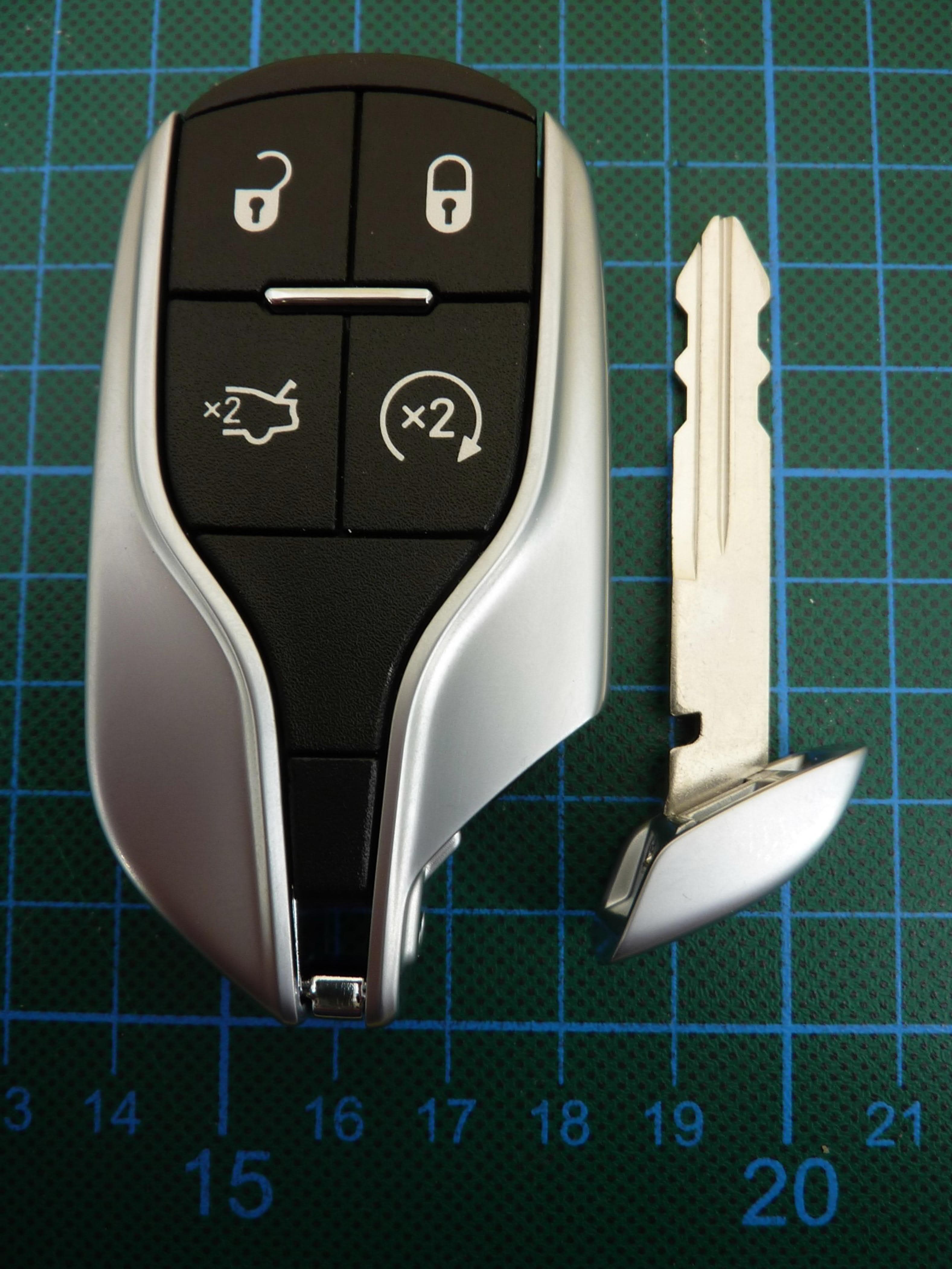
M3NMAS433
Jan 20, 2021Car Key
Equipment Class
DSR - Part 15 Remote Control/Security Device Transceiver
M3NWXFOB1
Oct 27, 2020FCA WL/WS PASE System MY 2021
Equipment Class
DSC - Part 15 Security/Remote Control Transmitter