MBUNXC3300Dual-Band Analog/PCS Phone (AMPS/CDMA)
Standard Telecom Co Ltd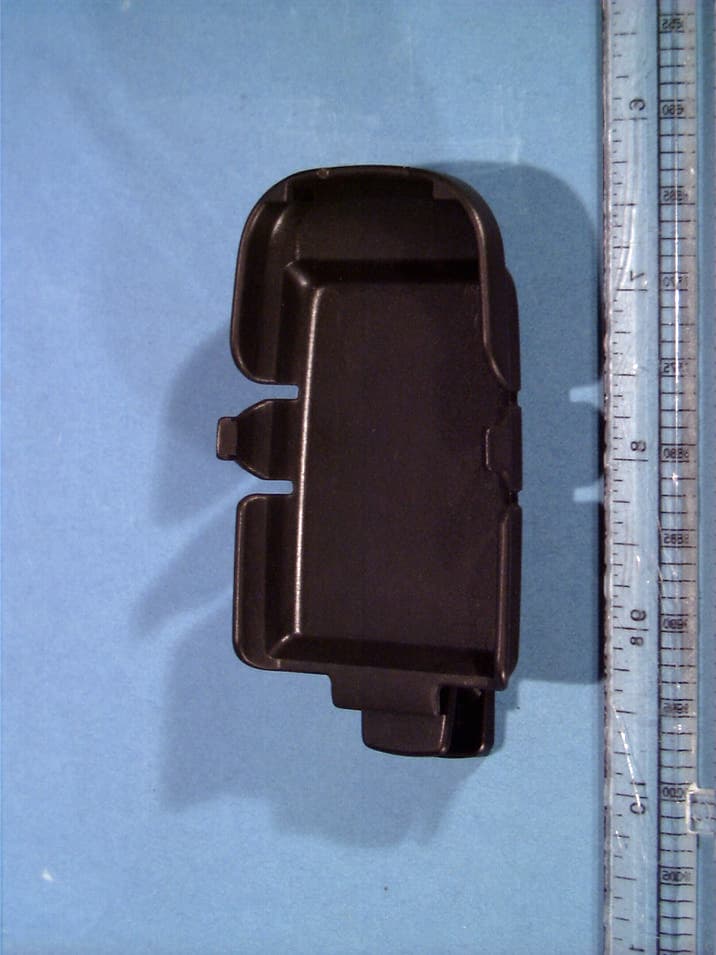
Click to zoom
Application Details
- Equipment Class
- PCE - PCS Licensed Transmitter held to ear
- Date of Grant
- Sep 03, 2001
- Application Purpose
- Original Equipment
- Date of Application
- May 29, 2001
- Equipment Note
- Dual-Band Analog/PCS Phone (AMPS/CDMA)
- Frequency Range
- 1851.25000000 - 1988.75000000
- Company
- Standard Telecom Co Ltd
- Country
- South Korea
Documents & Files
Document Text
Text extracted from the exhibit documents filed with the FCC. Open a document above to read the original.
Users Manual
© 2001 PCTEST Lab ATTACHMENT M – USER’S MANUAL NXC-3300 Document 1/24 Standard Telecom Co., Ltd Operating Manual - NXC-3300 - NXC-3300 Document 2/24 Standard Telecom Co., Ltd 1. Getting Started 1.Phone Parts and Function Key Description F Function Key Description Red Light Light up when using power key to turn on the phone and when giving a charge of electricity to a storage battery Green Light Light up when there are incoming calls and message, and that finished a charge of electricity to a storage battery completely. LCD Screen Display the messages and indicator icons. SEND Key Places and receives a call. END Key Disconnect a call. Also exits all the way out of a menu back to the phone’s standby display without change any setting. Key Allows quick access to the text and voice mail notification messages. Folder switch Close : Disconnects a call. Open : Answers a received call. CLR Switch Clears letters, numbers or returns to the previous menu option. Press once to erase one character. Press and hold to erase all characters and to go back to the standby display. SIDE 1, 2 Key Earpiece Volume Controls. SIDE 3 Key Ringer Mute. Enter to the WAP Menu. UP Key Scroll up on Menu. Enter to the SMS mode in the standby state. DOWN Key Scroll up on Menu. Act WAP browser in the standby state. LEFT Key Shift left. RIGHT Key Shift right. SOFT 1 Key Enter the feature menu in the standby state. SOFT 2 Key Enter the PhoneBook menu. 1.2.3......Key Input the numbers and the characters. Choose the menu items. NXC-3300 Document 3/24 Standard Telecom Co., Ltd 2. LCD Icons ICONS Description Digital Indicator Digital service available. No SERVICE The phone is not receiving system signal. In use Call is in progress The phone is not display in standby state. In vibrator mode Vibration mode. Roaming The phone is outside of its home service area. Battery level Indicates battery charge level. Message Message or page waiting. V : voice message There is a voice mail notification message waiting. T : Text message There is a text mail notification message waiting. Signal strength The number of lines shown indicates current signal strength. Bell Indicate Bell mode. Vibration and Bell Indicate vibration and bell mode. NXC-3300 Document 4/24 Standard Telecom Co., Ltd 2. Basic Functions 1. Turning the phone On and Off 1. 1 Turning the phone On 1.1.1. Install a charged battery pack or connect the phone to an external power sources. 1.1.2. Press the [END] key for a few seconds with the red light, at the top of the phone flash. The LCD displays the initial until the red light, at the top of the phone flash.. If the LCD displays “”, input the password using a soft keys. 1. 2 Turning the phone Off Press and hold the [END] key and release the button. 2. Making a Call 2. 1 Make sure the phone is turned on. 2. 2 Enter the phone number with area code, if needed. 2. 3 Press the [SEND] key. - If the phone is locked, input the lock code and press the [SEND] key. - “Call failed” indicates that the call did not go through. 2. 4 Press the [END] key to disconnect the call. 3. Correcting Dialing Mistakes. 3. 1 Press the [CLR] key to erase the most recent digit or letter. 3. 2 Press and hold the [CLR] key for the least 2 seconds to delete all digits or letters. 4. Receiving Calls. Press the all key except the [END] key, if the ‘Any Key Answer” is ‘ON’ on the menu. Open the folder or press the [SEND] key in the ON state. NXC-3300 Document 5/24 Standard Telecom Co., Ltd 5. Call waiting. While you are in a call, you may hear two beeps indicating another incoming call. When the call waiting has been enabled, you may put the active call On hold as you answer the other incoming call. Check with your cellular service provider about this feature. 5. 1 Press the [SEND] key to receive a waiting call. 5. 2 Press the [SEND] key again to switch between calls. 6. Mute This function prevents your voice from being transmitted but you can still hear the other party’s talking. 6. 1 Press the [MENU] soft key and the [1] key for mute while you are in a call. 6. 2 Press the[MENU] soft key and the [1] key again for cancellation. 7. Reading Last Outgoing Number. Press the [SEND] key to redial the last dialed number. You can also redial any of the last ten numbers you have dialed. Last 10 numbers are stored in the call history list. 8. Adjusting the Volume. You may uses the side 1,2 keys to adjust earpiece volume while in a call or stand by state. The ringer volume can also be adjusted through Menu Feature, and we can select 4 of “Tone/Volume” on the menu 1. If you adjust the ringer volume to silent, the LCD displays “ -- Ringer Off — “ and you won’t hear the ringer sound. The key beep volume can also be adjusted through we select 3 of the menu 1. NXC-3300 Document 6/24 Standard Telecom Co., Ltd 9. Signal Strength. The quality of calls depends in the signal strength in your area. The stronger the signal, the better the call quality the signal strength icon indicates the current strength as a number of bars. If you are outside of a service area, the “NO Service” icon will be displayed. No calls can be made or received, including emergency calls. Extend the antenna when the signal strength is weak. If you are a building, the reception may be better near a window. 10. Emergency Dialing. As ling as your phone is registered on a system, you can place calls to emergency number even if your phone is locked or restricted. 11. Manner Mode. Press the star[*] key for 2 seconds, and the ring type is set to the vibration mode. If you want to change for previous condition, press the star[*] key again for 2 seconds. 12. Caller ID This feature enables the phone number of the calling person to be displayed when you receive the call. You should check if the cellular service provider provides this feature. In case the phone number is stored in the memory together with the name, the phone number of calling person and name are displayed on the screen before your answer. The restricted …
Text truncated - open the document above for the full version.
Attestation Statements
Standard Telecom Co., Ltd. 926 Kwanyang 2-Dong, Dongan-Ku, Anyang, Kyunggi-Do, Korea Tel - +82 31 420 5248, Fax - +82 423 7949 Federal Communications Commission April. 30. 2001 Equipment Approval Service 7435 Oakland Mills Road Columbia, MD 21046 User’s Manual RF Exposure Warning Statement SUBJECT : STANDARD TELECOM Co.,Ltd FCC ID : MBUNXC3300 Users Manual RF Exposure Warning Statement Standard Telecom Co., Ltd. hereby confirms that the attached RF exposure warning page will be readily visible to the user, and will be placed at a prominent location in the front section of the users manual Read this information before using your phone In August 1996 the Federal Communication Commission (FCC) of the United States with its action in Report and Order FCC 96-326 adopted an updated safety standard for human exposure to radio frequency electromagnetic energy emitted by FCC regulated transmitters. Those guidelines are consistent with the safety standard previously set by both U.S and international standard bodies. The design of this phone complies with the FCC guidelines and these international standards. Use only the supplied or an approved antenna, unauthorized antennas, modifications, or attachments could impair call quality, damage the phone, or result in violation of FCC regulations. Do not use the phone with a damaged antenna. If a damaged antenna comes into contact with the skin, a minor burn may result. Please contact your local dealer for replacement antenna. Body-worn Operation This device was tested for typical body-worn operations with the EZ-VIEW holster model offered by Audiovox as an accessory to this phone, and found to comply with FCC RF exposure requirement, Third-party belt-clips, holster and similar accessories should be avoided, as they have not been tested any may not comply with FCC RF exposure limits. Standard Telecom Co., Ltd. 926 Kwanyang 2-Dong, Dongan-Ku, Anyang, Kyunggi-Do, Korea Tel - +82 31 420 5248, Fax - +82 423 7949 Note : This page is the 1 st page after table of contents on the users manual. If you have any further questions regarding this matter, please do not hesitate to contact me or PCTEST Lab at (410) 290-6652. Sincerely, Eric Go Oversea Marketing Team / Regional Manager (+82) 31-420-5248 Standard Telecom Co.,Ltd.
Cover Letter(s)
May 29, 2001 Federal Communications Commission Equipment Approval Services 7435 Oakland Mills Road Columbia, MD 21046 SUBJECT: STANDARD TELECOM CO., LTD. FCC ID: MBUNXC3300 Part 22 & 24 Certification Gentlemen: Attached herewith, on behalf of STANDARD TELECOM CO., LTD., is an application for Part 22/24 Certification of the following Tri-Mode Cellular/PCS Phone (AMPS/CDMA): FCC ID: MBUNXC3300 TRADE / MODEL(s): EZ VIEW NXC-3300 EUT TYPE: Licensed Portable Transmitter Held to Ear (PCE) Tx Freq. Range: 824.04 – 848.97 MHz (AMPS) 824.70 – 848.31 MHz (CDMA) 1851.25 – 1908.75 MHz (PCS CDMA) Rx Freq. Range: 869.04 – 893.97 MHz (AMPS) 869.70 – 893.31 MHz (CDMA) 1931.25 – 1988.75 MHz (PCS CDMA) Max. RF Output Power: 0.329W ERP AMPS (25.173m) 0.208W ERP CDMA (23.183 dBm) 0.211W EIRP PCS CDMA (23.251 dBm) Attached is the applicant’s Letter of Authorization, Confidentiality Request, ESN Affidavit, E911 Compliance Statement, measurement report data and plots, RF Exposure measurement report, FCC ID label and location, test setup photographs, internal and external photographs, block diagrams (confidential), schematic diagrams & circuit description (confidential), operational description, parts list & tune-up procedure, and the user's manual. Should you have any questions or comments concerning the above, please contact the undersigned.
Cover Letter(s)
July 23, 2001 Federal Communications Commission Equipment Approval Services 7435 Oakland Mills Road Columbia, MD 21046 Attn: Mr. Joe Dichoso SUBJECT: Standard Telecom Co., Ltd. FCC ID: MBUNXC3300 731 Confirmation No.: 101171 Correspondence Reference No.: 19697 Request for Tech. Info.: 6/20/01 Dear Joe: Transmitted herewith, on behalf of Standard Telecom Co., Ltd. is an amendment provided in response to the request for technical information dated June 20, 2001. 1. Please find the attached confidentiality letter. 2. Please find the attached holster photos. There is no model number designated for this holster. 3. Please find attached the SAR data points for the standard battery to compare with the data for the extended battery. 4. The EIRP was measured at 24.5 dBm conducted. The factory power setting in the PCS mode will be 24.5 dBm. We trust this information is sufficient for the immediate grant of this application. If you have any further questions, please do not hesitate to contact us. cc: Standard Telecom Co., Ltd.
External Photos
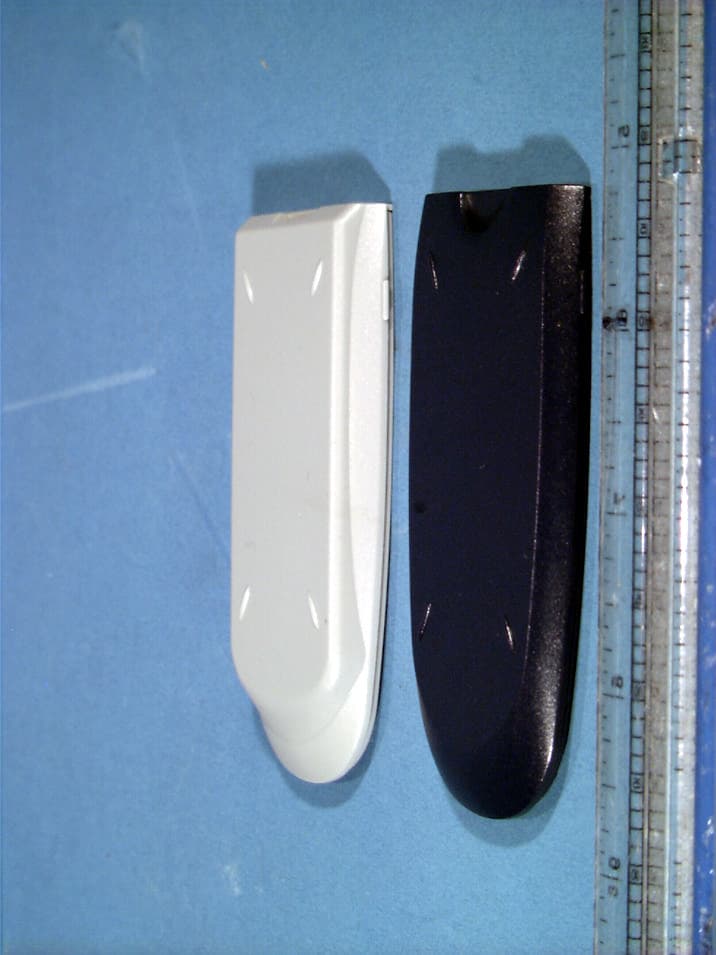
© 2001 PCTEST Lab ATTACHMENT G – EXTERNAL PHOTOGRAPHS © 2001 PCTEST Lab STANDARD TELECOM FCC ID: MBUNXC3300 NVLAP Lab Code: 100431-0 Tri-Mode Analog/PCS Phone (AMPS/CDMA) © 2001 PCTEST Lab STANDARD TELECOM FCC ID: MBUNXC3300 NVLAP Lab Code: 100431-0 Tri-Mode Analog/PCS Phone (AMPS/CDMA) © 2001 PCTEST Lab STANDARD TELECOM FCC ID: MBUNXC3300 NVLAP Lab Code: 100431-0 Tri-Mode Analog/PCS Phone (AMPS/CDMA) © 2001 PCTEST Lab STANDARD TELECOM FCC ID: MBUNXC3300 NVLAP Lab Code: 100431-0 Tri-Mode Analog/PCS Phone (AMPS/CDMA) © 2001 PCTEST Lab STANDARD TELECOM FCC ID: MBUNXC3300 NVLAP Lab Code: 100431-0 Tri-Mode Analog/PCS Phone (AMPS/CDMA) © 2001 PCTEST Lab STANDARD TELECOM FCC ID: MBUNXC3300 NVLAP Lab Code: 100431-0 Tri-Mode Analog/PCS Phone (AMPS/CDMA) © 2001 PCTEST Lab STANDARD TELECOM FCC ID: MBUNXC3300 NVLAP Lab Code: 100431-0 Tri-Mode Analog/PCS Phone (AMPS/CDMA)
External Photos
© 2001 PCTEST Lab STANDARD TELECOM FCC ID: MBUNXC3300 NVLAP Lab Code: 100431-0 Tri-Mode Analog/PCS Phone (AMPS/CDMA) © 2001 PCTEST Lab STANDARD TELECOM FCC ID: MBUNXC3300 NVLAP Lab Code: 100431-0 Tri-Mode Analog/PCS Phone (AMPS/CDMA) © 2001 PCTEST Lab STANDARD TELECOM FCC ID: MBUNXC3300 NVLAP Lab Code: 100431-0 Tri-Mode Analog/PCS Phone (AMPS/CDMA) © 2001 PCTEST Lab STANDARD TELECOM FCC ID: MBUNXC3300 NVLAP Lab Code: 100431-0 Tri-Mode Analog/PCS Phone (AMPS/CDMA)
ID Label/Location Info
© 2001 PCTEST Lab ATTACHMENT E – FCC ID LABEL / LOCATION © 2001 PCTEST Lab FCC ID SAMPLE LABEL & LOCATION LABELLING REQUIREMENTS The Label shown shall be permanently affixed at a conspicuous location on the device and be readily visible to the user at the time of purchase.
Internal Photos
© 2001 PCTEST Lab ATTACHMENT H – INTERNAL PHOTOGRAPHS © 2001 PCTEST Lab STANDARD TELECOM FCC ID: MBUNXC3300 NVLAP Lab Code: 100431-0 Tri-Mode Analog/PCS Phone (AMPS/CDMA) © 2001 PCTEST Lab STANDARD TELECOM FCC ID: MBUNXC3300 NVLAP Lab Code: 100431-0 Tri-Mode Analog/PCS Phone (AMPS/CDMA) © 2001 PCTEST Lab STANDARD TELECOM FCC ID: MBUNXC3300 NVLAP Lab Code: 100431-0 Tri-Mode Analog/PCS Phone (AMPS/CDMA) © 2001 PCTEST Lab STANDARD TELECOM FCC ID: MBUNXC3300 NVLAP Lab Code: 100431-0 Tri-Mode Analog/PCS Phone (AMPS/CDMA) © 2001 PCTEST Lab STANDARD TELECOM FCC ID: MBUNXC3300 NVLAP Lab Code: 100431-0 Tri-Mode Analog/PCS Phone (AMPS/CDMA) © 2001 PCTEST Lab STANDARD TELECOM FCC ID: MBUNXC3300 NVLAP Lab Code: 100431-0 Tri-Mode Analog/PCS Phone (AMPS/CDMA) © 2001 PCTEST Lab STANDARD TELECOM FCC ID: MBUNXC3300 NVLAP Lab Code: 100431-0 Tri-Mode Analog/PCS Phone (AMPS/CDMA) © 2001 PCTEST Lab STANDARD TELECOM FCC ID: MBUNXC3300 NVLAP Lab Code: 100431-0 Tri-Mode Analog/PCS Phone (AMPS/CDMA) © 2001 PCTEST Lab STANDARD TELECOM FCC ID: MBUNXC3300 NVLAP Lab Code: 100431-0 Tri-Mode Analog/PCS Phone (AMPS/CDMA) © 2001 PCTEST Lab STANDARD TELECOM FCC ID: MBUNXC3300 NVLAP Lab Code: 100431-0 Tri-Mode Analog/PCS Phone (AMPS/CDMA)
RF Exposure Info
© 2001 PCTEST Lab ATTACHMENT O – SAR TEST DATA STANDARD TELECOM FCC ID:MBUNXC3300 -- FM Head SAR Generic Twin Phantom; Left Hand Section; Probe: ET3DV6 - SN1560 -- Probe Cal Date 20/02/01 Med. Parameters 835 MHz Brain: σ = 0.90 mho/m ε r = 41.5 ρ = 1.00 g/cm 3 ; Antenna Position -- In; Crest Factor 1.0 SAR (1g): 0.655 mW/g, SAR (10g): 0.449 mW/g Standard Telecom Co., Ltd. Tri-Mode Phone Model:NXC3300 FM Mode, Ch.0991 [824.04MHz] Conducted Power = 27.0dBm; Flip = Open Test Date -- 05/04/2001 SAR Tot [mW/g] 5.56E-2 1.67E-1 2.78E-1 3.89E-1 5.00E-1 PCTEST Engineering Laboratory, Inc. STANDARD TELECOM FCC ID:MBUNXC3300 -- FM Head SAR Generic Twin Phantom; Left Hand Section; Probe: ET3DV6 - SN1560 -- Probe Cal Date 20/02/01 Med. Parameters 835 MHz Brain: σ = 0.90 mho/m ε r = 41.5 ρ = 1.00 g/cm 3 ; Antenna Position -- Out; Crest Factor 1.0 SAR (1g): 0.426 mW/g, SAR (10g): 0.299 mW/g Standard Telecom Co., Ltd. Tri-Mode Phone Model:NXC3300 FM Mode, Ch.0991 [824.04MHz] Conducted Power = 27.0dBm; Flip = Open Test Date -- 05/04/2001 SAR Tot [mW/g] 4.40E-2 1.32E-1 2.20E-1 3.08E-1 3.96E-1 PCTEST Engineering Laboratory, Inc. STANDARD TELECOM FCC ID:MBUNXC3300 -- FM Head SAR Generic Twin Phantom; Left Hand Section; Probe: ET3DV6 - SN1560 -- Probe Cal Date 20/02/01 Med. Parameters 835 MHz Brain: σ = 0.90 mho/m ε r = 41.5 ρ = 1.00 g/cm 3 ; Antenna Position -- In; Crest Factor 1.0 SAR (1g): 0.649 mW/g, SAR (10g): 0.455 mW/g Standard Telecom Co., Ltd. Tri-Mode Phone Model:NXC3300 FM Mode, Ch.0383 [836.49MHz] Conducted Power = 27.0dBm; Flip = Open Test Date -- 05/04/2001 SAR Tot [mW/g] 6.80E-2 2.04E-1 3.40E-1 4.76E-1 6.12E-1 PCTEST Engineering Laboratory, Inc. STANDARD TELECOM FCC ID:MBUNXC3300 -- FM Head SAR Generic Twin Phantom; Left Hand Section; Probe: ET3DV6 - SN1560 -- Probe Cal Date 20/02/01 Med. Parameters 835 MHz Brain: σ = 0.90 mho/m ε r = 41.5 ρ = 1.00 g/cm 3 ; Antenna Position -- Out; Crest Factor 1.0 SAR (1g): 0.454 mW/g, SAR (10g): 0.315 mW/g Standard Telecom Co., Ltd. Tri-Mode Phone Model:NXC3300 FM Mode, Ch.0383 [836.49MHz] Conducted Power = 27.0dBm; Flip = Open Test Date -- 05/04/2001 SAR Tot [mW/g] 4.66E-2 1.40E-1 2.33E-1 3.26E-1 4.19E-1 PCTEST Engineering Laboratory, Inc. STANDARD TELECOM FCC ID:MBUNXC3300 -- FM Head SAR Generic Twin Phantom; Left Hand Section; Probe: ET3DV6 - SN1560 -- Probe Cal Date 20/02/01 Med. Parameters 835 MHz Brain: σ = 0.90 mho/m ε r = 41.5 ρ = 1.00 g/cm 3 ; Antenna Position -- In; Crest Factor 1.0 SAR (1g): 0.895 mW/g, SAR (10g): 0.628 mW/g Standard Telecom Co., Ltd. Tri-Mode Phone Model:NXC3300 FM Mode, Ch.0799 [848.97MHz] Conducted Power = 27.0dBm; Flip = Open Test Date -- 05/04/2001 SAR Tot [mW/g] 9.13E-2 2.74E-1 4.57E-1 6.39E-1 8.22E-1 PCTEST Engineering Laboratory, Inc. STANDARD TELECOM FCC ID:MBUNXC3300 -- FM Head SAR Generic Twin Phantom; Left Hand Section; Probe: ET3DV6 - SN1560 -- Probe Cal Date 20/02/01 Med. Parameters 835 MHz Brain: σ = 0.90 mho/m ε r = 41.5 ρ = 1.00 g/cm 3 ; Antenna Position -- Out; Crest Factor 1.0 SAR (1g): 0.575 mW/g, SAR (10g): 0.397 mW/g Standard Telecom Co., Ltd. Tri-Mode Phone Model:NXC3300 FM Mode, Ch.0799 [848.97MHz] Conducted Power = 27.0dBm; Flip = Open Test Date -- 05/04/2001 SAR Tot [mW/g] 5.88E-2 1.76E-1 2.94E-1 4.12E-1 5.29E-1 PCTEST Engineering Laboratory, Inc. STANDARD TELECOM FCC ID:MBUNXC3300 -- Cellular CDMA Head SAR Generic Twin Phantom; Left Hand Section; Probe: ET3DV6 - SN1560 -- Probe Cal Date 20/02/01 Med. Parameters 835 MHz Brain: σ = 0.90 mho/m ε r = 41.5 ρ = 1.00 g/cm 3 ; Antenna Position -- In; Crest Factor 1.0 SAR (1g): 0.424 mW/g, SAR (10g): 0.297 mW/g Standard Telecom Co., Ltd. Tri-Mode Phone Model:NXC3300 Cellular CDMA Mode, Ch.1013 [824.70MHz] Conducted Power = 25.0dBm; Flip = Open Test Date -- 05/04/2001 SAR Tot [mW/g] 4.08E-2 1.22E-1 2.45E-1 3.67E-1 PCTEST Engineering Laboratory, Inc. STANDARD TELECOM FCC ID:MBUNXC3300 -- Cellular CDMA Head SAR Generic Twin Phantom; Left Hand Section; Probe: ET3DV6 - SN1560 -- Probe Cal Date 20/02/01 Med. Parameters 835 MHz Brain: σ = 0.90 mho/m ε r = 41.5 ρ = 1.00 g/cm 3 ; Antenna Position -- Out; Crest Factor 1.0 SAR (1g): 0.337 mW/g, SAR (10g): 0.238 mW/g Standard Telecom Co., Ltd. Tri-Mode Phone Model:NXC3300 Cellular CDMA Mode, Ch.1013 [824.70MHz] Conducted Power = 25.0dBm; Flip = Open Test Date -- 05/04/2001 SAR Tot [mW/g] 3.49E-2 1.05E-1 2.09E-1 3.14E-1 PCTEST Engineering Laboratory, Inc. STANDARD TELECOM FCC ID:MBUNXC3300 -- Cellular CDMA Head SAR Generic Twin Phantom; Left Hand Section; Probe: ET3DV6 - SN1560 -- Probe Cal Date 20/02/01 Med. Parameters 835 MHz Brain: σ = 0.90 mho/m ε r = 41.5 ρ = 1.00 g/cm 3 ; Antenna Position -- In; Crest Factor 1.0 SAR (1g): 0.437 mW/g, SAR (10g): 0.307 mW/g Standard Telecom Co., Ltd. Tri-Mode Phone Model:NXC3300 Cellular CDMA Mode, Ch.0383 [836.49MHz] Conducted Power = 25.0dBm; Flip = Open Test Date -- 05/04/2001 SAR Tot [mW/g] 4.45E-2 1.34E-1 2.67E-1 4.00E-1 PCTEST Engineering Laboratory, Inc. STANDARD TELECOM FCC ID:MBUNXC3300 -- Cellular CDMA Head SAR Generic Twin Phantom; Left Hand Section; Probe: ET3DV6 - SN1560 -- Probe Cal Date 20/02/01 Med. Parameters 835 MHz Brain: σ = 0.90 mho/m ε r = 41.5 ρ = 1.00 g/cm 3 ; Antenna Position -- Out; Crest Factor 1.0 SAR (1g): 0.334 mW/g, SAR (10g): 0.235 mW/g Standard Telecom Co., Ltd. Tri-Mode Phone Model:NXC3300 Cellular CDMA Mode, Ch.0383 [836.49MHz] Conducted Power = 25.0dBm; Flip = Open Test Date -- 05/04/2001 SAR Tot [mW/g] 3.40E-2 1.02E-1 2.04E-1 3.06E-1 PCTEST Engineering Laboratory, Inc. STANDARD TELECOM FCC ID:MBUNXC3300 -- Cellular CDMA Head SAR Generic Twin Phantom; Left Hand Section; Probe: ET3DV6 - SN1560 -- Probe Cal Date 20/02/01 Med. Parameters 835 MHz Brain: σ = 0.90 mho/m ε r = 41.5 ρ = 1.00 g/cm 3 ; Antenna Position -- In; Crest Factor 1.0 SAR (1g): 0.530 mW/g, SAR (10g): 0.363 mW/g Standard Telecom Co., Ltd. Tri-Mode Phone Model:NXC3300 Cellular CDMA Mode, Ch.0777 [848.37MHz] Conducted Power = 25.0dBm; Flip = Open Test Date -- 05/04/2001 SAR Tot [mW/g] 5.18E-…
Text truncated - open the document above for the full version.
RF Exposure Info
© 2001 PCTEST Lab ATTACHMENT N – SAR MEASUREMENT REPORT © 2001 PCTEST Engineering Lab., Inc. PCTEST Engineering Laboratory, Inc. 66606660--B Dobbin Road B Dobbin Road •• Columbia, MD 21045 Columbia, MD 21045 •• U.S.A. U.S.A. TEL (410) 290TEL (410) 290--6652 6652 •• FAX (410) 290 FAX (410) 290--66546654 http://www.pctestlab.comhttp://www.pctestlab.com CERTIFICATE OF COMPLIANCE (SAR EVALUATION) Standard Telecom Co., Ltd. Dates of Tests: May 02-04, 2001 926 Kwanyang 2-Dong, Dongan-Ku, Test Report S/N: SAR.210502268.MBU Anyang-Ciy, Kyunggi-Do, Korea 431-062 Test Site: PCTEST Lab, Columbia, MD USA Attn: Mr. Joon Heung Park Assistant Manager, R&D Center FCC ID MBUNXC3300 APPLICANT STANDARD TELECOM CO., LTD. EUT Type: Tri-Mode Dual-Band Analog/PCS Phone (AMPS/CDMA) Tx Frequency: 824.04 – 848.97 MHz (AMPS) / 824.70 – 848.31 MHz (CDMA) 1851.25 – 1908.75 MHz (PCS CDMA) Rx Frequency: 869.04 – 893.97 MHz (AMPS) / 869.70 – 893.31 MHz (CDMA) 1931.25 – 1988.75 MHz (PCS CDMA) Max. SAR Measurement: HEAD SAR (1g/avg): 0.895W/kg AMPS; 0.530W/kg CDMA; 1.340W/kg PCS BODY SAR (1g/avg): 0.708W/kg AMPS; 0.486W/kg CDMA; 0.275W/kg PCS HAND SAR (10g/avg): 1.260W/kg AMPS; 0.897W/kg CDMA; 0.729W/kg PCS Trade Name/Model(s): EZ view NXC-3300 Battery Spec.: 4.1 VDC Model: CGP 345010G FCC Classification: Licensed Portable Transmitter Held to Ear (PCE) Application Type: Certification FCC Rule Part(s): §2.1093; ET Docket 96.326 This wireless portable device has been shown to be capable of compliance for localized specific absorption rate (SAR) for uncontrolled environment/general population exposure limits specified in ANSI/IEEE Std. C95.1-1992 and had been tested in accordance with the measurement procedures specified in ANSI/IEEE Std. C95.3-1992. (See Test Report). I attest to the accuracy of data. All measurements reported herein were performed by me or were made under my supervision and are correct to the best of my knowledge and belief. I assume full responsibility for the completeness of these measurements and vouch for the qualifications of all persons taking them. NVLAP accreditation does not constitute any product endorsement by NVLAP or any agency of the United States Government. PCTEST certifies that no party to this application has been denied the FCC benefits pursuant to Section 5301 of the Anti-Drug Abuse Act of 1988, 21 U.S.C. 862. 210502268.MBU SAR Measurement Report FCC Part 24/22 Certification © 2001 PCTEST Lab i Table of Contents 1.1 SCOPE 1 2.1 INTRODUCTION / SAR DEFINITION 2 3.1 SAR MEASUREMENT SET-UP 3 4.1 E-FIELD PROBE SYSTEM 4 5.1 E-FIELD PROBE CALIBRATION PROCESS 5-6 6.1 PHANTOM, HOLDER, & EQUIVALENT TISSUE 7 7.1 SYSTEM SPECIFICATIONS 8 8.1 MEASUREMENT PROCESS 9 9.1 TEST POSITION OF THE PHONE 10 10.1 BODY SAR TEST SETUP 11 11.1 ANSI/IEEE C95.1 RF EXPOSURE LIMITS 12 12.1 MEASUREMENT UNCERTAINTIES 13 13.1 TEST DATA SUMMARY 14-22 14.1 SAR TEST EQUIPMENT LIST 23 15.1 CONCLUSION 24 16.1 REFERENCES 25 Test Report S/N: SAR.210502268.MBU SAR Measurement Report Test Dates: May 02-04, 2001 FCC Part 24/22 Certification STANDARD TELECOM FCC ID: MBUNXC3300 © 2001 PCTEST Lab Tri-Mode Analog/PCS Phone (AMPS/CDMA) 1 SAR MEASUREMENT REPORT 1.1 Scope Environmental evaluation measurements of specific absorption rate 1 (SAR) distributions in simulated human head and body tissues exposed to radiofrequency (RF) radiation from wireless portable devices for compliance with the rules and regulations of the U.S. Federal Communications Commission (FCC). 2 Company Name: STANDARD TELECOM CO., LTD. Address: 926 Kwanyang 2-Dong, Dongan-Ku, Anyang-City, Kyunggi-Do, Korea 431-062 Attention: Mr. Joon Heung Park, Assistant Manager, R&R Center • EUT Type: Tri-Mode Dual-Band Analog/PCS Phone • Trade Name / Model: EZ view NXC-3300 • FCC IDENTIFIER: MBUNXC3300 • Tx Frequency: 824.04 – 848.97 MHz (AMPS) 824.70 – 848.31 MHz (CDMA) 1851.25 – 1908.75 MHz (PCS CDMA) • Rx Frequency: 869.04 – 893.97 MHz (AMPS) 869.70 – 893.31 MHz (CDMA) 1931.25 – 1988.75 MHz (PCS CDMA) • Application Type: Certification • FCC Classification: Licensed Portable Transmitter Held to Ear (PCE) • Modulation(s): AMPS / CDMA • FCC Rule Part(s): §2.1093, Docket 96-326 • Max. RF Output Power: 0.329 W ERP - AMPS (25.173 dBm) 0.208 W ERP - CDMA (23.183 dBm) 0.211 W EIRP - PCS CDMA (23.251 dBm) • Max. SAR Measurement: HEAD SAR (1g/avg): 0.895W/kg AMPS; 0.530W/kg CDMA; 1.340W/kg PCS BODY SAR (1g/avg): 0.708W/kg AMPS; 0.486W/kg CDMA; 0.275W/kg PCS HAND SAR (10g/avg): 1.260W/kg AMPS; 0.897W/kg CDMA; 0.729W/kg PCS • Antenna Type: Helical Antenna Dimensions: 10.1 cm. (Length) • Dates of Tests: May 02-04, 2001 Place of Tests: PCTEST Engineering Lab. Columbia, MD, U.S.A. • Report Serial No.: SAR.210502268.MBU 1 Specific Absorption Rate (SAR) is a measure of the rate of energy absorption due to exposure to an RF transmitting source (wireless portable device). 2 IEEE/ANSI Std. C95.1-1992 limits are used to determine compliance with FCC ET Docket 93-62. Fig. 1 SAR Test Setup Test Report S/N: SAR.210502268.MBU SAR Measurement Report Test Dates: May 02-04, 2001 FCC Part 24/22 Certification STANDARD TELECOM FCC ID: MBUNXC3300 © 2001 PCTEST Lab Tri-Mode Analog/PCS Phone (AMPS/CDMA) 2 2.1 INTRODUCTION The FCC has adopted the guidelines for evaluating the environmental effects of radiofrequency radiation in ET Docket 93-62 on Aug. 6, 1996 to protect the public and workers from the potential hazards of RF emissions due to FCC-regulated portable devices.[1] The safety limits used for the environmental evaluation measurements are based on the criteria published by the American National Standards Institute (ANSI) for localized specific absorption rate (SAR) in IEEE/ANSI C95.1-1992 Standard for Safety Levels with Respect to Human Exposure to Radio Frequency Electromagnetic Fields, 3 kHz to 300 GHz. (c) 1992 by the Institute of Electrical and Electronics Engineers, Inc., New York, New York 10017.[2] The measurement procedure described in IEEE/ANSI C95.3-1992 Recommended Practice for the Measure…
Text truncated - open the document above for the full version.
RF Exposure Info
Probe ET3DV6 SN:1560 Manufactured:December 1, 2000 Calibrated:February 20, 2001 Calibrated for System DASY3 Page 1 of 8 ET3DV6 SN:1560 DASY3 - Parameters of Probe: ET3DV6 SN:1560 Sensitivity in Free SpaceDiode Compression NormX1.48 μV/(V/m) 2 DCP X98mV NormY1.51 μV/(V/m) 2 DCP Y98mV NormZ1.43 μV/(V/m) 2 DCP Z98mV Sensitivity in Tissue Simulating Liquid Head450MHz ε r =43.5 ± 5% σ = 0.87 ± 10% mho/m ConvF X7.17 extrapolatedBoundary effect: ConvF Y7.17 extrapolatedAlpha0.25 ConvF Z7.17 extrapolatedDepth3.21 Head900MHz ε r =42 ± 5% σ = 0.97 ± 10% mho/m ConvF X6.59 ± 7% (k=2)Boundary effect: ConvF Y6.59 ± 7% (k=2)Alpha0.32 ConvF Z6.59 ± 7% (k=2)Depth2.93 Head1500MHz ε r =40.4 ± 5% σ = 1.23 ± 10% mho/m ConvF X5.82 interpolatedBoundary effect: ConvF Y5.82 interpolatedAlpha0.41 ConvF Z5.82 interpolatedDepth2.55 Head1800MHz ε r =40 ± 5% σ = 1.40 ± 10% mho/m ConvF X5.43 ± 7% (k=2)Boundary effect: ConvF Y5.43 ± 7% (k=2)Alpha0.46 ConvF Z5.43 ± 7% (k=2)Depth2.36 Sensor Offset Probe Tip to Sensor Center2.7mm Optical Surface Detection2.0 ± 0.2mm Page 2 of 8 ET3DV6 SN:1560 Receiving Pattern (φ), θ = 0° f = 30 MHz, TEM cell ifi110 0 10 20 30 40 50 60 70 80 90 100 110 120 130 140 150 160 170 180 190 200 210 220 230 240 250 260 270 280 290 300 310 320 330 340 350 XYZTot f = 100 MHz, TEM cell ifi110 0 10 20 30 40 50 60 70 80 90 100 110 120 130 140 150 160 170 180 190 200 210 220 230 240 250 260 270 280 290 300 310 320 330 340 350 XYZTot f = 300 MHz, TEM cell ifi110 0 10 20 30 40 50 60 70 80 90 100 110 120 130 140 150 160 170 180 190 200 210 220 230 240 250 260 270 280 290 300 310 320 330 340 350 XYZTot f = 900 MHz, TEM cell ifi110 0 10 20 30 40 50 60 70 80 90 100 110 120 130 140 150 160 170 180 190 200 210 220 230 240 250 260 270 280 290 300 310 320 330 340 350 XYZTot Page 3 of 8 ET3DV6 SN:1560 Isotropy Error (φ), θ = 0° -1.00 -0.80 -0.60 -0.40 -0.20 0.00 0.20 0.40 0.60 0.80 1.00 060120180240300360 error[dB] 30 MHz 100 MHz 300 MHz 900 MHz 1800 MHz 2500 MHz f = 1800 MHz, WG R22 0 10 20 30 40 50 60 70 80 90 100 110 120 130 140 150 160 170 180 190 200 210 220 230 240 250 260 270 280 290 300 310 320 330 340 350 XYZTot f = 2500 MHz, WG R26 0 10 20 30 40 50 60 70 80 90 100 110 120 130 140 150 160 170 180 190 200 210 220 230 240 250 260 270 280 290 300 310 320 330 340 350 XYZTot Page 4 of 8 ET3DV6 SN:1560 Frequency Response of E-Field ( TEM-Cell:ifi110, Waveguide R22) 0.50 0.60 0.70 0.80 0.90 1.00 1.10 1.20 1.30 1.40 1.50 050010001500200025003000 f [MHz] frequency response TEMR22 Page 5 of 8 ET3DV6 SN:1560 Dynamic Range f(SAR brain ) ( TEM-Cell:ifi110 ) ET3DV6 SN:1560 1.E+0 1.E+1 1.E+2 1.E+3 1.E+4 1.E+5 1.E+6 1.E+7 0.00010.0010.010.11.10.100. mW/cm 3 μ V not compensatedcompensated -2.0 -1.0 0.0 1.0 0.0010.010.1110100 mW/cm 3 errror[dB] Page 6 of 8 Conversion Factor Assessment Head900MHz ε r =42 ± 5% σ = 0.97 ± 10% mho/m ConvF X6.59 ± 7% (k=2)Boundary effect: ConvF Y6.59 ± 7% (k=2)Alpha0.32 ConvF Z6.59 ± 7% (k=2)Depth2.93 Head1800MHz ε r =40 ± 5% σ = 1.40 ± 10% mho/m ConvF X5.43 ± 7% (k=2)Boundary effect: ConvF Y5.43 ± 7% (k=2)Alpha0.46 ConvF Z5.43 ± 7% (k=2)Depth2.36 ET3DV6 SN:1560 f = 900 MHz, WG R9 (head) 0.00 0.10 0.20 0.30 0.40 0.50 0.60 0.70 0.80 0.90 0204060 z[mm] SAR[mW/cm 3 ] / W AnalyticalMeasuremets f = 1800 MHz, WG R22 (head) 0.00 1.00 2.00 3.00 4.00 5.00 6.00 7.00 0204060 z[mm] SAR[mW/cm 3 ] / W AnalyticalMeasuremets Page 7 of 8 Deviation from Isotropy in HSL Error (θ,φ), f = 900 MHz 0 40 80 120 160 200 240 280 320 0 10 20 30 40 50 60 -1.00 -0.80 -0.60 -0.40 -0.20 0.00 0.20 0.40 0.60 0.80 1.00 Error [dB] θ φ -1.00--0.80-0.80--0.60-0.60--0.40-0.40--0.20-0.20-0.00 0.00-0.200.20-0.400.40-0.600.60-0.800.80-1.00 Page 8 of 8
RF Exposure Info
© 2001 PCTEST Lab ATTACHMENT Q – DIPOLE VALIDATION 835MHz Brain Dipole Validation Generic Twin Phantom; Flat Section; Probe: ET3DV6 - SN1560 -- Probe Cal Date 20/02/01 Med. Parameters 835 MHz Brain: σ = 0.90 mho/m ε r = 41.5 ρ = 1.00 g/cm 3 ; Antenna Position -- Out; Crest Factor 1.0 SAR (1g): 2.14 mW/g, SAR (10g): 1.43 mW/g 835MHz Brain Dipole Validation (D835V2 S/N: 406) Frequency: 835 MHz; Antenna Input Power: 250 [mW] PCTEST Brain Tissue Simulating Liquid SAR Tot [mW/g] 2.11E-1 6.34E-1 1.06E+0 1.48E+0 1.90E+0 PCTEST Engineering Laboratory, Inc. 835MHz Muscle Dipole Validation Generic Twin Phantom; Flat Section; Probe: ET3DV6 - SN1560 -- Probe Cal Date 20/02/01 Med. Parameters 835 MHz Muscle: σ = 0.95 mho/m ε r = 56.2 ρ = 1.00 g/cm 3 ; Antenna Position -- Out; Crest Factor 1.0 SAR (1g): 2.16 mW/g, SAR (10g): 1.42 mW/g 83…
Text truncated - open the document above for the full version.
Contact Information
Applicant
Jin Hyun Sohn
82 31 420-5248Fax: 82 31 423-7949
Technical Contact
PCTEST Engineering Laboratory, Inc.Randy Ortanez
[email protected]410-290-6652
6660-B Dobbin Road · Columbia, Maryland · United States
Non-Technical Contact
PCTEST Engineering Laboratory, Inc.Randy Ortanez
[email protected]410-290-6652
Test Firm
PCTEST Engineering Laboratory, Inc.Randy Ortanez
Technical Specifications
| # | Rule Parts | Frequency Range | Power Output | Emission | Tolerance |
|---|---|---|---|---|---|
| 4 | 24 | 1.85 GHz - 1.99 GHz | 211.00 mW | 1M25F9W | 2.5 ppm |
Other Applications from Standard Telecom Co Ltd
MBUNCP7200
Aug 28, 2002Single-Mode PCS Phone
Equipment Class
PCE - PCS Licensed Transmitter held to ear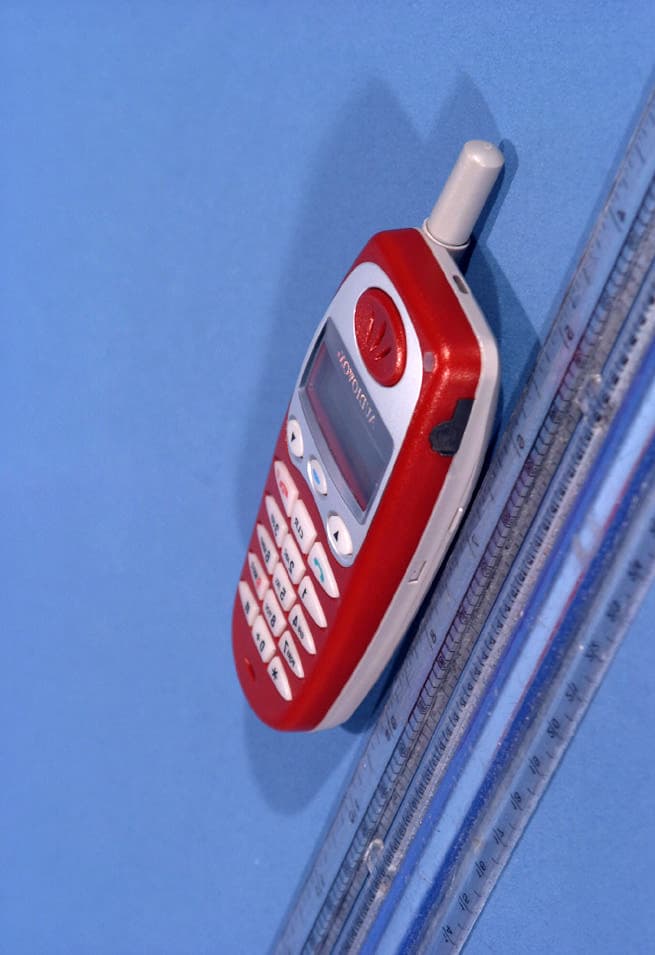
MBUNCP7100
Jan 10, 2002Single-Mode PCS CDMA Phone
Equipment Class
PCE - PCS Licensed Transmitter held to ear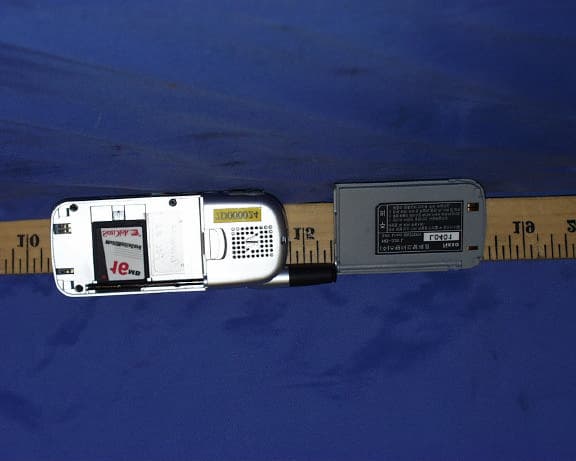
MBUNXC3200
Apr 19, 2001CELLULAR MOBILE PHONE AND MP3 PLAYER
Equipment Class
TNE - Licensed Non-Broadcast Transmitter Held to EarMBUNXP510NX
Mar 15, 1998CXX - Communications Rcvr for use w/ licensed Tx and CBs
Equipment Class
CXX - Communications Rcvr for use w/ licensed Tx and CBsMBUNXP530U
May 07, 1997Paging Receiver
Equipment Class
PCR - Communications Receiver