MIVCDP06PSPocket Spider CDPD modem
Novatel Wireless Inc.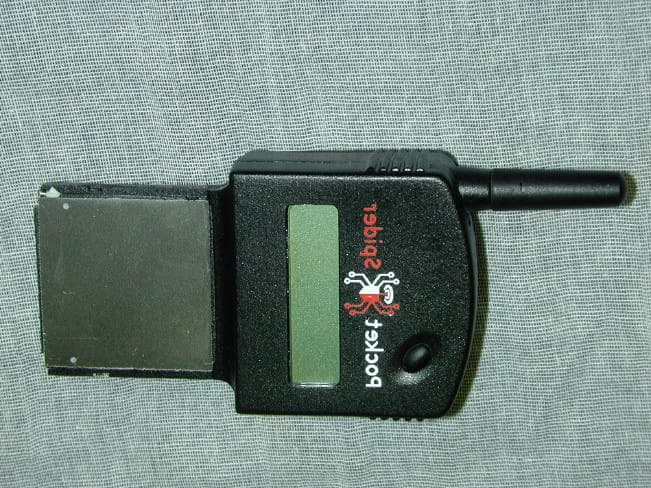
Click to zoom
Application Details
- Equipment Class
- TNB - Licensed Non-Broadcast Station Transmitter
- Date of Grant
- Jan 22, 2001
- Application Purpose
- Original Equipment
- Date of Application
- Oct 30, 2000
- Equipment Note
- Pocket Spider CDPD modem
- Frequency Range
- 824.00000000 - 849.00000000
- Company
- Novatel Wireless Inc.
- Country
- Canada
Documents & Files
Document Text
Text extracted from the exhibit documents filed with the FCC. Open a document above to read the original.
Users Manual
CONFIDENTIAL AND PROPRIETARY INFORMATION Do not duplicate or distribute without express permission from Nextcell Inc. © 2000 Nextcell, Inc. PocketSpider ® CDPD MODEM USER’S MANUAL for Windows CE 3.0 Nextcell, Inc. 661 E. 18 th Street Plano, TX 75074-5601 Document Number: CDP0601PB003Revised: January 22, 2001 CDPD0601PB003 CONFIDENTIAL AND PROPRIETARY INFORMATION Do not duplicate or distribute without express permission from Nextcell, Inc. i CONTENTS SECTIONSUBJECT 1.0 INTRODUCTION 2.0 CDPD BASICS 2.1Registering with a Carrier 2.1.1Activating Your Service 2.1.2 Registration 2.1.3 CDPD Charges 3.0 INSTALLATION AND SETUP 3.1Battery Operation 3.2Compact Flash Memory Card Installation 3.3 Setup 4.0 MONITORING MODEM STATUS 4.1LCD Display 4.1.1Operational Status 4.1.2 Battery Low Indication 4.2 Handheld Device Screen 5.0 BATTERY AND CHARGER 5.1Battery Installation and Removal 5.2 Initial Set up 5.3 Charger Operation 6.0 TECHNICAL SUPPORT SAFETY AND REGULATORY INFORMATION WARRANTY APPENDICES AREMOTE INSTALLATION PROCESS BABBREVIATIONS AND DEFINITIONS CADVANCED USER TOOLS CDPD0601PB003 CONFIDENTIAL AND PROPRIETARY INFORMATION Do not duplicate or distribute without express permission from Nextcell, Inc. 1 PocketSpider ® USER'S MANUAL 1.0INTRODUCTION Welcome to the world of wireless data. Your PocketSpider ® is a compact, wireless data modem that uses the Cellular Digital Packet Data (CDPD) wireless communication system, allowing you to transfer data on the go (i.e., without wires). Wireless IP (Internet Protocol) supports browser-based applications, giving you feature rich capability with the Internet in your hand. With this modem, you are taking advantage of the latest development in wireless data technology. The PocketSpider Modem offers the convenience of wireless data, the benefits of the CDPD network, ease of use, and minimal power consumption. The PocketSpider is the first wireless IP (CDPD) modem designed exclusively for a compact flash slot. With the power of wireless data and GPS, Nextcell is revolutionizing the world of PocketPC ® , Palm, and handheld PC devices. This User’s Manual describes the use of the PocketSpider Modem with a Handheld PC (H/PC) device. The PocketSpider is compatible with Windows CE version 3.0 (e.g., Pocket PC). Please read all instructions carefully before installing your PocketSpider modem into your H/PC. Your PocketSpider kit includes the following: • PocketSpider • Battery Pack (Li ion) • Battery Charger • Charger Base • Wall transformer (AC adapter) for charger • Compact Flash card with installation software • User's Manual 2.0CDPD BASICS CDPD, short for Cellular Digital Packet Data, is also known as "Wireless IP." It is a data transmission technology developed for use on cellular phone frequencies. CDPD uses unused cellular channels (in the 800- to 900-MHz range) to transmit data in packets. This technology offers data transfer rates of up to 19.2 Kbps, quicker call set up, and better error correction than using modems on an analog cellular channel. CDPD is based on TCP/IP, the same protocols that power the Internet. CDPD0601PB003 CONFIDENTIAL AND PROPRIETARY INFORMATION Do not duplicate or distribute without express permission from Nextcell, Inc. 2 2.1Registering With a Carrier Just as you would do with a cell phone, you must first register for service with a local CDPD carrier. 2.1.1ACTIVATING YOUR SERVICE The PocketSpider will work with any CDPD carrier. Decide which carrier offers the best plan to meet your CDPD needs, then register with that carrier. Typically, two service carriers will be available to a CDPD user. One will be known as the A-side carrier and the other is known as the B-side carrier. You may register with the A-side carrier, the B-side carrier, or both of the carriers. 2.1.2REGISTRATION When you register with a CDPD carrier, the carrier should give you the following information: •Internet Protocol (IP) address •Carrier Side Identification (Either A or B) •Service Provider Network Identifier (SPNI) Number Be sure to record this information. This information may be needed in order to receive customer service and/or technical support. You will be assigned a specific Internet Protocol (IP) address to use with your modem. Your carrier should also indicate whether they are the A-side carrier or the B-side carrier, and provide you with their SPNI number Your cellular carrier may also provide you with additional information that is needed for use with your third-party protocol stack(s). Consult your protocol stack documentation for information regarding stack configuration and use. The cellular carrier has the responsibility to warn you of any changes the carrier may make to its operations and/or procedures that would effect your usage of the service. You will be advised of your right to issue a complaint to the FCC regarding these changes. 2.1.3CDPD CHARGES For information about your CDPD charges, you will need to contact your CDPD carrier service. Charges will vary according to the CDPD service provider you choose and the plan you select. Most carriers will offer several CDPD plans that vary in rates and structure. Your carrier should explain these items to you in detail when you consult them about registration. 3.0INSTALLATION AND SETUP CDPD0601PB003 CONFIDENTIAL AND PROPRIETARY INFORMATION Do not duplicate or distribute without express permission from Nextcell, Inc. 3 The PocketSpider Modem is an easy-to-use product that requires very little set up. This manual explains how to install and setup your PocketSpider Modem. The software installation can be accomplished in two ways: (1) using a compact flash card, or (2) input from a host computer to the handheld device. Use of a compact flash as described below is the commonly used approach, and the alternative "remote" installation approach is provided as Appendix A to this manual. 3.1Battery Operation The PocketSpider derives all its power from a self-contained battery pack, thereby ensuring no …
Text truncated - open the document above for the full version.
Block Diagram
LNA Mixer Downconverter FM / IF Limiter / Detector Mixer PA I/Q Modulator Power Cntrl SAW Duplexer Rx Ant Tx Pout = + 28 dBm max Pout = + 0 dBm min Pin = - 111 dBm min Pin = - 51 dBm max Dual PLL/ VCO I Lowpass Filter Q Lowpass Filter 0 90 90KHz Active Filter RC Filter Compar- ators Pocket Spider Functional Block Diagram DC Amp Main LO Freq 926.01 MHz 90KHz Active Filter Detect LimIF Isolating Pad Amp Amp Amp Buffer Amp / 2 TXLO Freq 180 MHz TXIF Freq 90 MHz TX Carrier Freq 836.01 MHz AmpAmp 15.36 MHz VTCXO DAC I Q FPGAMicroprocessor CF/PCMCIA Interface Compact Flash Slot PLL/VCO 44.91 MHz Mixer Upconverter Vcntrl From DAC To PWR CNTRL Transceiver Control & Monitoring RSSI to FPGA LiON Battery 3.6V 5V Boost Switcher Freq. 1.4 MHz Digital LDO Power Management RX LDO TX LDO Analog LV LDO LCD Module DRAM 4MB Flash 2MB Memory file: pocket.vsd, REV A. 9/29/00 Temp Sense To Monitor Intfc. 500 KHz EEProm
ID Label/Location Info
CDP0601MG-001 S/N: FCC ID: MIVCDP06PS Canada: Complies with FCC Part 15 and Part 22
ID Label/Location Info
CDP0601MG-001 S/N: FCC ID: MIVCDP06PS Canada: Complies with FCC Part 15 and Part 22 Label printed with permanent ink on metal.
Operational Description
Functional Description For Nextcell Pocket Spider CDPD Modem Nextcell, Inc. 661 E. 18th Plano, TX 75074 WARNING: This document contains proprietary information and must not be reproduced without the prior written consent of Nextcell, Inc. Table Of Contents 1.CDPD BACKGROUND.................................................................................................................3 2.THEORY OF OPERATION..........................................................................................................3 2.1INTRODUCTION..........................................................................................................................3 2.2ABBREVIATIONS........................................................................................................................4 2.3FREQUENCY ALLOCATION (M-ES).............................................................................................4 2.3.1Power control....................................................................................................................5 2.4DIGITAL SECTION......................................................................................................................6 2.4.1Processor and Memory......................................................................................................6 2.4.2I&Q Generation and Transmission Control........................................................................6 2.4.3ADC – System and Data....................................................................................................6 2.4.4Serial Interface..................................................................................................................7 2.4.5FPGA Functions................................................................................................................7 2.4.6RF interface and Frequency Generation............................................................................7 2.5RECEIVER SECTION....................................................................................................................8 2.5.1Duplexer...........................................................................................................................8 2.5.2LNA and First Conversion.................................................................................................8 2.5.3First IF Stage....................................................................................................................8 2.5.4Second Conversion, Limiter and IF filtering.......................................................................9 2.6TRANSMIT PATH........................................................................................................................9 1. CDPD Background The Cellular Digital Packet Data (CDPD) network is a two-way wireless data communication system. This system uses cellular telephone channels to transfer data seamlessly from a mobile end system. CDPD operates within the already existing cellular telephone infrastructure utilizing the idle time that exist on cellular voice channels to send small packets of data, called datagrams, to a designated receiver. Researchers estimate that over 30% of a cellular channel’s airtime is idle, even during heavy traffic. The CDPD system sends down the various cellular channels to locate an open channel. This process is called “sniffing.” Once the CDPD system has located an open channel, the modem begins to send datagrams over the channel to the designated end user. In order that this process does not interfere with the cellular phone transmission, the CDPD system has regulated channel “hops” to ensure that CDPD usage will not block a cellular voice channel for an extended period of time. Also, if a voice channel is activated, the CDPD system detects this voice message and automatically “hops” to the next available idle channel. This process is quite complex. However, the user need not be aware of this process. The CDPD system manages the routing of the individual data packets to the proper destination. On a basic level, the CDPD network operates like any other computer network with the exception that the CDPD mobile end system is free to roam wirelessly and conduct network operation from other locations using the network of cellular carriers. The CDPD network is made of a series of cellular networks that are operated by various cellular carriers. These carriers provide the user with network management as well as application services. To increase user security carriers use forward error correction, authentication, and encryption. The cellular carrier is responsible for all accounting services for the CDPD service. The user selects the CDPD carrier service with which to operate by registering with an individual carrier. Generally, an area will have two cellular carriers that provide CDPD service. The user may sign up with either of the two carriers. 2. Theory of Operation 2.1 Introduction Nextcell’s Pocket Spider CDPD M-ES RF circuitry may be divided into 3 major sections namely, 2 independent sections, the RX circuit, and the TX circuit and LO’s in which the RX circuit and TX circuits depend on for proper operation. The RX section uses a dual conversion superheterodyne technology to downconvert the cellular RF channel signal to its 1st IF of 45 MHz and then to the 2nd IF of 90 KHz. IF pre-filtering is performed at 45 MHz but the main IF filtering is performed at 90 KHz. For the TX section, the I & Q waveforms from the microprocessor DAC output are conditioned and filtered before they are modulated and upconverted to the 90 MHz transmit IF. The TX IF frequency has to be upconverted to its final cellular RF channel frequency by mixing with the main LO frequency. The receive channel and transmit channel frequencies are 45 MHz apart from each other with an allocated channel BW of 30 KHz. The 30 KHz BW is also known as the channel spacing. The M-ES transmit frequency band is from 824 M…
Text truncated - open the document above for the full version.
RF Exposure Info
CELLTECH RESEARCH INC. Test Report S/N: 121400-46MIV 1955 Moss Court, Kelowna, Date(s) of Tests: December 14, 2000 B.C. CANADA V1Y 9L3 _________________________________________________________________________________________________________ © 2000 Celltech Research Inc. CERTIFICATE OF COMPLIANCE SAR EVALUATION This wireless mobile and/or portable device has been shown to be compliant for localized specific absorption rate (SAR) for uncontrolled environment/general exposure limits specified in ANSI/IEEE Std. C95.1-1992 and had been tested in accordance with the measurement procedures specified in ANSI/IEEE Std. C95.3-1999. (See test report). I attest to the accuracy of data. All measurements were performed by me or were made under my supervision and are correct to the best of my knowledge and belief. I assume full responsibility for the completeness of these measurements and vouch for the qualifications of all persons taking them. Celltech Research Inc. certifies that no party to this application has been denied FCC benefits pursuant to Section 5301 of the Anti-Drug Abuse Act of 1988, 21 U.S.C. 853(a). Shawn McMillen General Manager Celltech Research Inc. Test Lab: CELLTECH RESEARCH INC. Testing and Engineering Lab 1955 Moss Court Kelowna, B.C. Canada V1Y 9L3 Phone: 250 - 860-3130 Fax: 250 - 860-3110 Toll Free: 1-877-545-6287 e-mail: [email protected] web site: www.globuswireless.com Applicant Information: NEXTCELL INC. 651 East 18 th Street Plano, TX 75074 Attn: Mr. Durward Rutledge, P.E. Vice President of Product Integrity Tel.: 972-633-4441 Fax: 972-633-4444 FCC ID: MIVCDP06PS Model: POCKETSPIDER ® Equipment Type: CDPD Modem Module for Compact Flash Slot Equipment Classification: Licensed Non-Broadcast Station Transmitter (TNB) Modulation(s): TDMA Tx Frequency Range: 824.04 - 849.97 MHz Rx Frequency Range: 869.04 - 894.97 MHz Max. RF Output Power: 0.6 Watts (ERP) FCC Rule Part(s): 2.1093; ET Docket 96.326 CELLTECH RESEARCH INC. Test Report S/N: 121400-46MIV 1955 Moss Court, Kelowna, Date(s) of Tests: December 14, 2000 B.C. CANADA V1Y 9L3 _________________________________________________________________________________________________________ © 2000 Celltech Research Inc. TABLE OF CONTENTS 1.0 INTRODUCTION.................................................................. 1 2.0 DESCRIPTION OF EUT.......................................................... 1 3.0 SAR MEASUREMENT SYSTEM ............................................. 2 4.0 MEASUREMENT SUMMARY.................................................. Hand SAR........................................................................ 3 Body SAR........................................................................ 4 5.0 SAR LIMITS........................................................................ 4 6.0 DETAILS OF SAR EVALUATION........................................... 5 7.0 EVALUATION PROCEDURES................................................. 6 8.0 SYSTEM VALIDATION.......................................................... 6 9.0 SIMULATED EQUIVALENT TISSUES...................................... 7 10.0 TISSUE PARAMETERS......................................................... 7 11.0 SYSTEM SPECIFICATIONS.................................................... 8 12.0 TEST EQUIPMENT LIST........................................................ 9 13.0 MEASUREMENT UNCERTAINTIES........................................ 10 14.0 REFERENCES...................................................................... 11 APPENDIX A - SAR MEASUREMENT DATA........................................ 12 APPENDIX B - DIPOLE VALIDATION................................................ 13 APPENDIX C - PROBE CALIBRATION............................................... 14 APPENDIX D - SAR TEST SETUP PHOTOGRAPHS............................... 15 CELLTECH RESEARCH INC. Test Report S/N: 121400-46MIV 1955 Moss Court, Kelowna, Date(s) of Tests: December 14, 2000 B.C. CANADA V1Y 9L3 _________________________________________________________________________________________________________ © 2000 Celltech Research Inc. NEXTCELL INC. FCC ID: MIVCDP06PS 1 PocketSpider CDPD Modem Module (824-849 MHz) 1.0 INTRODUCTION This measurement report shows compliance of the NEXTCELL INC. POCKETSPIDER ® CDPD Modem Module for Compact Flash Slot with FCC Part 2.1093, ET Docket 96-326 Rules for mobile and portable devices. The test procedures, as described in American National Standards Institute C95.1 - 1992 (1), FCC OET Bulletin 65-1997 were employed. A description of the product and operating configuration, detailed summary of the test results, methodology and procedures used in the evaluation, equipment used, and the various provisions of the rules are included within this test report. 2.0 DESCRIPTION of Equipment Under Test (EUT) Fig. 1. Front of EUT Fig. 2. Rear of EUT Fig. 3. Top End of EUT Fig. 4. Bottom End of EUT EUT Type CDPD Modem Module for Compact Flash Slot Equipment Class Licensed Non-Broadcast Station Transmitter (TNB) FCC ID MIVCDP06PS Model No. POCKETSPIDER ® Tx Frequency Range (MHz) 824.04 - 849.97 S/N No. Pre-production Rx Frequency Range (MHz) 869.04 - 894.97 Max. RF Output Power 0.6 Watts Power Supply 3.7V 700mAH Li-ion Signal Modulation(s) GMSK Antenna Type Stubby Antenna Length 43 mm CELLTECH RESEARCH INC. Test Report S/N: 121400-46MIV 1955 Moss Court, Kelowna, Date(s) of Tests: December 14, 2000 B.C. CANADA V1Y 9L3 _________________________________________________________________________________________________________ © 2000 Celltech Research Inc. NEXTCELL INC. FCC ID: MIVCDP06PS 2 PocketSpider CDPD Modem Module (824-849 MHz) 3.0 SAR MEASUREMENT SYSTEM Celltech Research SAR measurement facility utilizes the Dosimetric Assessment System (DASY™) manufactured by Schmid & Partner Engineering AG (SPEAG™) of Zurich, Switzerland. The DASY system is comprised of the robot controller, computer, near-field probe, probe alignment sensor, and the generic twin phantom cont…
Text truncated - open the document above for the full version.
RF Exposure Info
CELLTECH RESEARCH INC. Test Report S/N: 011501-54MIV 1955 Moss Court, Kelowna, Date(s) of Tests: January 15, 2001 B.C. CANADA V1Y 9L3 _________________________________________________________________________________________________________ © 2001 Celltech Research Inc. CERTIFICATE OF COMPLIANCE SAR EVALUATION This wireless mobile and/or portable device has been shown to be compliant for localized specific absorption rate (SAR) for uncontrolled environment/general exposure limits specified in ANSI/IEEE Std. C95.1-1992 and had been tested in accordance with the measurement procedures specified in ANSI/IEEE Std. C95.3-1999. (See test report). I attest to the accuracy of data. All measurements were performed by me or were made under my supervision and are correct to the best of my knowledge and belief. I assume full responsibility for the completeness of these measurements and vouch for the qualifications of all persons taking them. Celltech Research Inc. certifies that no party to this application has been denied FCC benefits pursuant to Section 5301 of the Anti-Drug Abuse Act of 1988, 21 U.S.C. 853(a). Shawn McMillen General Manager Celltech Research Inc. Test Lab: CELLTECH RESEARCH INC. Testing and Engineering Lab 1955 Moss Court Kelowna, B.C. Canada V1Y 9L3 Phone: 250 - 860-3130 Fax: 250 - 860-3110 Toll Free: 1-877-545-6287 e-mail: [email protected] web site: www.globuswireless.com Applicant Information: NEXTCELL INC. 651 East 18 th Street Plano, TX 75074 Attn: Mr. Durward Rutledge, P.E. Vice President of Product Integrity Tel.: 972-633-4441 Fax: 972-633-4444 FCC ID: MIVCDP06PS Model: POCKETSPIDER ® Equipment Type: CDPD Modem Module with Casio Pocket PC Equipment Classification: Licensed Non-Broadcast Station Transmitter (TNB) Modulation(s): GMSK Tx Frequency Range: 824.04 - 849.97 MHz Rx Frequency Range: 869.04 - 894.97 MHz Max. RF Output Power: 0.6 Watts (ERP) FCC Rule Part(s): 2.1093; ET Docket 96.326 CELLTECH RESEARCH INC. Test Report S/N: 011501-54MIV 1955 Moss Court, Kelowna, Date(s) of Tests: January 15, 2001 B.C. CANADA V1Y 9L3 _________________________________________________________________________________________________________ © 2001 Celltech Research Inc. TABLE OF CONTENTS 1.0 INTRODUCTION.................................................................. 1 2.0 DESCRIPTION OF EUT.......................................................... 1 3.0 SAR MEASUREMENT SYSTEM ............................................. 2 4.0 MEASUREMENT SUMMARY.................................................. 3 5.0 SAR LIMITS........................................................................ 4 6.0 DETAILS OF SAR EVALUATION........................................... 4 7.0 EVALUATION PROCEDURES................................................. 5 8.0 SYSTEM VALIDATION.......................................................... 5 9.0 SIMULATED EQUIVALENT TISSUES...................................... 6 10.0 TISSUE PARAMETERS......................................................... 6 11.0 SYSTEM SPECIFICATIONS.................................................... 7 12.0 TEST EQUIPMENT LIST........................................................ 8 13.0 MEASUREMENT UNCERTAINTIES........................................ 9 14.0 REFERENCES...................................................................... 10 APPENDIX A - SAR MEASUREMENT DATA........................................ 11 APPENDIX B - DIPOLE VALIDATION................................................ 12 APPENDIX C - PROBE CALIBRATION............................................... 13 APPENDIX D - SAR TEST SETUP PHOTOGRAPHS............................... 14 CELLTECH RESEARCH INC. Test Report S/N: 011501-54MIV 1955 Moss Court, Kelowna, Date(s) of Tests: January 15, 2001 B.C. CANADA V1Y 9L3 _________________________________________________________________________________________________________ © 2001 Celltech Research Inc. NEXTCELL INC. FCC ID: MIVCDP06PS 1 PocketSpider CDPD Modem Module (824-849MHz) 1.0 INTRODUCTION This measurement report shows that the NEXTCELL INC. POCKETSPIDER ® CDPD Modem Module with Casio Pocket PC is in compliance with FCC Part 2.1093, ET Docket 96-326 Rules for mobile and portable devices. The test procedures, as described in American National Standards Institute C95.1-1992 (1), FCC OET Bulletin 65-1997 were employed. A description of the product and operating configuration, detailed summary of the test results, methodology and procedures used in the evaluation, equipment used, and the various provisions of the rules are included within this test report. 2.0 DESCRIPTION of Equipment Under Test (EUT) Fig. 1. Front of EUT Fig. 2. Rear of EUT Fig. 3. Top End of EUT Fig. 4. Bottom End of EUT EUT Type CDPD Modem Module with Casio Pocket PC Equipment Class Licensed Non-Broadcast Station Transmitter (TNB) FCC ID MIVCDP06PS Model No. POCKETSPIDER ® Tx Frequency Range (MHz) 824.04 - 849.97 S/N No. Pre-production Rx Frequency Range (MHz) 869.04 - 894.97 Max. RF Output Power 0.6 Watts Power Supply 3.7V 700mAH Li-ion Modulation(s) GMSK Antenna Type Stubby Antenna Length 43 mm CELLTECH RESEARCH INC. Test Report S/N: 011501-54MIV 1955 Moss Court, Kelowna, Date(s) of Tests: January 15, 2001 B.C. CANADA V1Y 9L3 _________________________________________________________________________________________________________ © 2001 Celltech Research Inc. NEXTCELL INC. FCC ID: MIVCDP06PS 2 PocketSpider CDPD Modem Module (824-849MHz) 3.0 SAR MEASUREMENT SYSTEM Celltech Research SAR measurement facility utilizes the Dosimetric Assessment System (DASY™) manufactured by Schmid & Partner Engineering AG (SPEAG™) of Zurich, Switzerland. The DASY system is comprised of the robot controller, computer, near-field probe, probe alignment sensor, and the generic twin phantom containing brain or muscle equivalent material (see Figure 5). The robot is a six-axis industrial robot performing precise movements to position the probe to the location (points) of…
Text truncated - open the document above for the full version.
Test Report
KTL Test Report:0L0278RUS1 Applicant:Nextcell 661 E. 18 th Street Plano, TX 75074 Equipment Under Test:Pocket Spider CDPD Modem (E.U.T.) FCC ID:MIVCDP06PS In Accordance With:FCC Part 22, Subpart H 800 MHz Cellular Subscriber Units Tested By:KTL Dallas Inc. 802 N. Kealy Lewisville, TX 75057-3136 Authorized By: Tom Tidwell, RF Group Manager Date:10/13/00 Total Number of Pages:39 KTL Dallas FCC PART 22, SUBPART H 800 MHz CELLULAR SUBSCRIBER UNITS EQUIPMENT: Pocket Spider CDPD Modem FCC ID: MIVCDP06PSPROJECT NO.:0L0278RUS1 Page 2 of 39 Table of Contents Section 1. Summary of Test Results.......................................................................3 Section 2. General Equipment Specification...........................................................5 Section 3. RF Power Output...................................................................................7 Section 4. Modulation Characteristics....................................................................8 Section 5. Occupied Bandwidth...........................................................................12 Section 6. Spurious Emissions at Antenna Terminals............................................18 Section 7. Field Strength of Spurious....................................................................20 Section 8. Frequency Stability..............................................................................23 Section 9. Test Equipment List.............................................................................25 ANNEX A - TEST DETAILS...............................................................................26 ANNEX B - TEST DIAGRAMS...........................................................................36 KTL Dallas FCC PART 22, SUBPART H 800 MHz CELLULAR SUBSCRIBER UNITS EQUIPMENT: Pocket Spider CDPD Modem FCC ID: MIVCDP06PSPROJECT NO.:0L0278RUS1 Page 3 of 39 Section 1.Summary of Test Results Manufacturer:NEXTCELL Model No.:POCKET SPIDER Serial No.:Sample 1 General:All measurements are traceable to national standards. These tests were conducted on a sample of the equipment for the purpose of demonstrating compliance with FCC Part 22, Subpart H. New SubmissionProduction Unit Class II Permissive ChangePre-Production Unit THIS TEST REPORT RELATES ONLY TO THE ITEM(S) TESTED. THE FOLLOWING DEVIATIONS FROM, ADDITIONS TO, OR EXCLUSIONS FROM THE TEST SPECIFICATIONS HAVE BEEN MADE. See “ Summary of Test Data”. NVLAP LAB CODE: 100426-0 KTL Dallas Inc. authorizes the above named company to reproduce this report provided it is reproduced in its entirety and for use by the company’s employees only. Any use which a third party makes of this report, or any reliance on or decisions to be made based on it, are the responsibility of such third parties. KTL Dallas Inc. accepts no responsibility for damages, if any, suffered by any third party as a result of decisions made or actions based on this report. This report applies only to the items tested. KTL Dallas FCC PART 22, SUBPART H 800 MHz CELLULAR SUBSCRIBER UNITS EQUIPMENT: Pocket Spider CDPD Modem FCC ID: MIVCDP06PSPROJECT NO.:0L0278RUS1 Page 4 of 39 Summary Of Test Data NAME OF TEST PARA. NO. SPEC.MEAS.RESULT RF Power Output2.10467W ERP+28.37Complies Audio Frequency Response2.10476dB/OctaveN/ANA Audio Low Pass Filter Response2.1047GraphN/ANA Modulation Limiting2.1047GraphN/ANA Occupied Bandwidth (Voice & SAT)2.1049MaskN/AN/A Occupies Bandwidth (WB Data & SAT) 2.1049MaskN/ANA Occupied Bandwidth (ST)2.1049MaskN/AN/A Occupied Bandwidth (SAT)2.1049MaskN/ANA Occupied Bandwidth (SAT)2.1049Not SpecifiedN/ANA Transmitter Spurious Emissions at Antenna Terminals (Receive Band) 22.197(f)-80 dBm-90.8 dBmComplies Transmitter Field Strength of Spurious Emissions 2.1053-13 dBm erp-25 dBm erpComplies Frequency Stability2.10552.5 ppm1.73 ppmComplies Footnotes: 1. The E.U.T. does not support voice modulation. The only modulation available is CDPD(Cellular Digital Packet Data). Consequently, tests relating to the audio processing circuitry were not performed. . KTL Dallas FCC PART 22, SUBPART H 800 MHz CELLULAR SUBSCRIBER UNITS EQUIPMENT: Pocket Spider CDPD Modem FCC ID: MIVCDP06PSPROJECT NO.:0L0278RUS1 Page 5 of 39 Section 2.General Equipment Specification Frequency Range: 824 MHz to 849 MHz TX 869 MHz to 894 MHz RX Tunable Bands: 1 Necessary Bandwidth: 30kHz Type of Modulation and Designator: GMSK, 40K0GXW Output Impedance: 50 ohms RF Power Output (rated): +28dBm maximum Duty Cycle: Continuous Channel Spacing: 30 kHz Operator Selection of Frequency: Software Controlled. Not user selectable. Power Output Adjustment Capability: Software Controlled. Not user selectable KTL Dallas FCC PART 22, SUBPART H 800 MHz CELLULAR SUBSCRIBER UNITS EQUIPMENT: Pocket Spider CDPD Modem FCC ID: MIVCDP06PSPROJECT NO.:0L0278RUS1 Page 6 of 39 Operational Description The Cellular Digital Packet Data (CDPD…
Text truncated - open the document above for the full version.
Contact Information
Applicant
Todd Gallagher(Manager, Regulatory Engineering)
Technical Contact
KTL Dallas, IncTom Tidwell
[email protected]972 436 9600
802 N. Kealy · Lewisville, Texas · United States
Non-Technical Contact
KTL Dallas, IncTom Tidwell
[email protected]972 436 9600
Test Firm
Nemko Dallas, Inc.Michael Cantwell
Technical Specifications
| # | Rule Parts | Frequency Range | Power Output | Emission | Tolerance |
|---|---|---|---|---|---|
| 1 | 22.901(d) | 824 MHz - 849 MHz | 631.00 mW | 40K0GXW | 2.5000000000 ppm |
Other Applications from Novatel Wireless Inc.
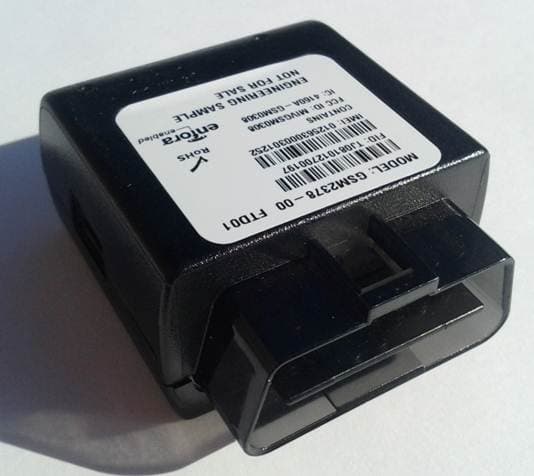
MIVRTT2211
Jan 22, 2013CDMA Licensed Transmitter
Equipment Class
PCB - PCS Licensed Transmitter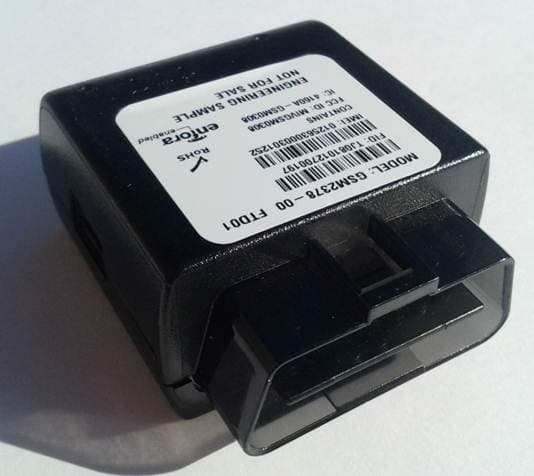
MIVGSM2378
Dec 23, 2012PCS GSM/ GPRS Licensed Transmitter
Equipment Class
PCB - PCS Licensed Transmitter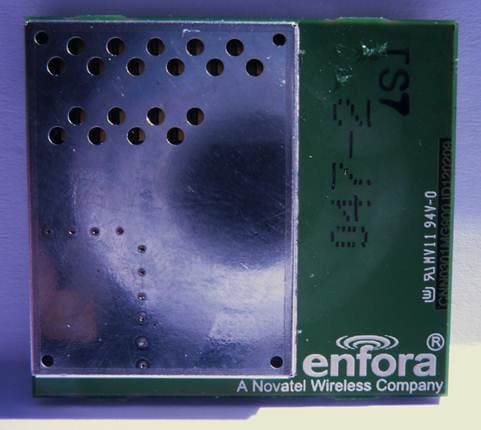
MIVCNN0301
May 10, 20121XRTT Multi-Band M2M OEM Module
Equipment Class
PCB - PCS Licensed Transmitter
MIVGSM2428
Jun 15, 2011GSM/ GPRS Personal Tracker
Equipment Class
JBP - Part 15 Class B Computing Device Peripheral
MIVGSM5218
Mar 15, 2011GSM/GPRS Asset Tracker
Equipment Class
PCB - PCS Licensed Transmitter