MSQP01YASUS Tablet
ASUSTeK Computer Inc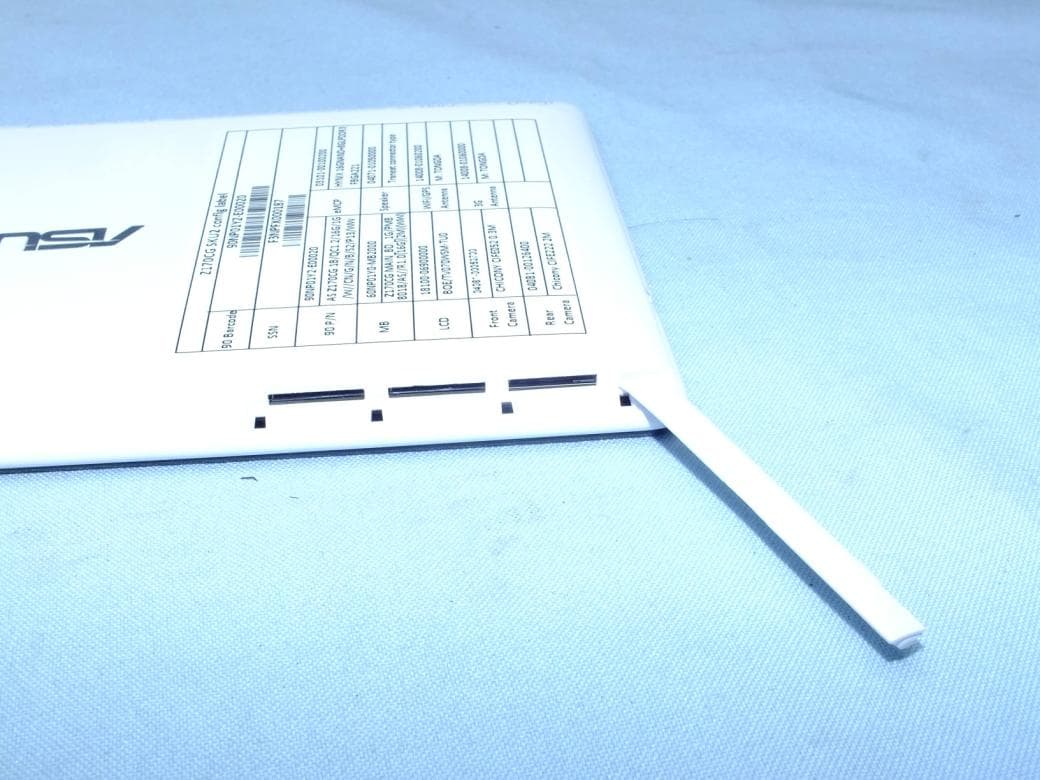
Click to zoom
Application Details
- Equipment Class
- DSS - Part 15 Spread Spectrum Transmitter
- Date of Grant
- Jun 03, 2015
- Application Purpose
- Original Equipment
- Date of Application
- Jun 01, 2015
- Equipment Note
- ASUS Tablet
- Frequency Range
- 2402.00000000 - 2480.00000000
- Company
- ASUSTeK Computer Inc
- Country
- Taiwan
Documents & Files
Document Text
Text extracted from the exhibit documents filed with the FCC. Open a document above to read the original.
Users Manual
User Guide ASUS Tablet E10350 First Edition / May 2015 Charging your device Ensure to fully charge your ASUS Tablet before using it in battery mode for extended periods. Remember that the power adapter charges your ASUS Tablet as long as it is plugged into an AC power source. Be aware that it takes much longer to charge the ASUS Tablet when it is in use. IMPORTANT! Do not leave the ASUS Tablet connected to the power supply once it is fully charged. ASUS Tablet is not designed to be left connected to the power supply for extended periods of time. Airplane precautions Contact your airline provider to learn about related in-flight services that can be used and restrictions that must be followed when using your ASUS Tablet in-flight. IMPORTANT! You can send your ASUS Tablet through x-ray machines (used on items placed on conveyor belts), but do not expose them from magnetic detectors and wands. Safety precautions This ASUS Tablet should only be used in environments with ambient temperatures between 0°C to 35°C (32°F to 95°F). Long time exposure to extremely high or low temperature may quickly deplete and shorten the battery life. To ensure the battery’s optimal performance, ensure that it is exposed within the recommended environment temperature. Charging your ASUS Tablet To charge your ASUS Tablet: Connect the micro USB cable to the power adapter. Plug the power adapter into a grounded power outlet. Plug the micro USB connector into your ASUS Tablet. Charge your ASUS Tablet for eight (8) hours before using it in battery mode for the first time. IMPORTANT! • Use only the bundled power adapter and micro USB cable to charge your ASUS Tablet. Using a different power adapter may damage your ASUS Tablet. • Peel the protective film off from the power adapter and micro USB cable before charging the ASUS Tablet to prevent risk or injury. • Ensure that you plug the power adapter to the correct power outlet with the correct input rating. The output voltage of this adapter is DC 5.2 V, 1.35 A. • When using your ASUS Tablet while plugged-in to a power outlet, the grounded power outlet must be near the unit and easily accessible. • Do not place objects on top of your ASUS Tablet. NOTES: • Your ASUS Tablet can be charged via the USB port on the computer only when it is in sleep mode (screen off ) or turned off. • Charging through the USB port of a computer may take longer time to complete. • If your computer does not provide enough power for charging your ASUS Tablet, charge your ASUS Tablet via the grounded power outlet instead. Installing a microSD card NOTE: The memory card slot supports microSD, microSDHC, and microSDXC card formats. Installing a micro SIM card NOTE: The micro SIM card slot supports WCDMA and EDGE/GSM bands. Before you can make calls, send text messages, or connect to a mobile broadband network using your ASUS Tablet, you need to install a micro SIM (Subscriber Identity Module) card. Speaker/Headset port Rear camera Volume button Power button Groove Microphone Micro USB 2.0 port Your ASUS Tablet Audio speaker Front camera Touch screen panel Appendices Federal Communications Commission Statement This device complies with FCC Rules Part 15. Operation is subject to the following two conditions: • This device may not cause harmful interference. • This device must accept any interference received, including interference that may cause undesired operation. This equipment has been tested and found to comply with the limits for a class B digital device, pursuant to Part 15 of the Federal Communications Commission (FCC) rules. These limits are designed to provide reasonable protection against harmful interference in a residential installation. This equipment generates, uses, and can radiate radio frequency energy and, if not installed and used in accordance with the instructions, may cause harmful interference to radio communications. However, there is no guarantee that interference will not occur in a particular installation. If this equipment causes harmful interference to radio or television reception, which can be determined by turning the equipment off and on, the user is encouraged to try to correct the interference by doing one or more of the following measures: • Reorient or relocate the receiving antenna. • Increase the separation between the equipment and receiver. • Connect the equipment into an outlet on a circuit different from that to which the receiver is connected. • Consult the dealer or an experienced radio/TV technician for help. Changes or modifications not expressly approved by the party responsible for compliance could void the user‘s authority to operate the equipment. The antenna(s) used for this transmitter must not be co-located or operating in conjunction with any other antenna or transmitter. RF Exposure Information (SAR) This device meets the government’s requirements for exposure to radio waves. This device is designed and manufactured not to exceed the emission limits for exposure to radio frequency (RF) energy set by the Federal Communications Commission of the U.S. Government. The exposure standard employs a unit of measurement known as the Specific Absorption Rate, or SAR. The SAR limit set by the FCC is 1.6 W/kg. Tests for SAR are conducted using standard operating positions accepted by the FCC with the EUT transmitting at the specified power level in different channels. The highest SAR value for the device as reported to the FCC is 1.19 W/kg when placed next to the body. The FCC has granted an Equipment Authorization for this device with all reported SAR levels evaluated as in compliance with the FCC RF exposure guidelines. SAR information on this device is on file with the FCC and can be found under the Display Grant section of www.fcc.gov/oet/ea/fccid after searching on FCC ID: MSQP01Y. Canada, Industry Canada (IC) Notices This device complies with Industry Canada license-exempt RSS standard(s). This Class B digital apparatus complies with Canadian ICES-00…
Text truncated - open the document above for the full version.
Cover Letter(s)
SCS-F18: Project and Product Certification Representative Authorization Letter Page 1 of 2 Rev 5.0 775 Montague Expressway Milpitas, CA 95035 Tel: 408-526-1188 Fax: 408-526-1088 Email: [email protected] Project and Product Certification Representative Authorization Letter Reason for Amendment (current / obsolete) Revision History Approved Date From To Initial Release (obsolete) 1.0 1.0 Nov-14-2006 Revised wording (obsolete) 1.0 2.0 Sept–25-2007 Updated company template (obsolete) 2.0 3.0 Jan-31-2012 Updated letter information (obsolete) 3.0 4.0 May-23-2014 Added FCC ID field (current) 4.0 5.0 Sept 16 2014 SCS-F18: Project and Product Certification Representative Authorization Letter Page 2 of 2 Rev 5.0 May 28, 2015 To: SIEMIC, INC. 775 Montague Expressway, Milpitas, CA 95035 USA Dear Sir/Madam, Re: Product Certification Representative Authorization Letter We, ASUSTeK Computer Inc, hereby authorize SIEMIC, Inc. to act as a Certification Body for certifying for the following project(s): (ASUS Tablet, P01Y) FCC ID: MSQP01Y Sincerely, _____________________ Daniel Lee / Vice President Bureau Veritas Consumer Products Services (H.K.) Ltd., Taoyuan Branch Tel: +886 3 318 3232 #1857
External Photos
Page 1 of 23 Report No.: 150409C26 CONSTRUCTION PHOTOS OF EUT Brand Name: ASUS / Model Name: P01Y Page 2 of 23 Report No.: 150409C26 Page 3 of 23 Report No.: 150409C26 Page 4 of 23 Report No.: 150409C26 Page 5 of 23 Report No.: 150409C26 Page 6 of 23 Report No.: 150409C26 Page 7 of 23 Report No.: 150409C26 Page 8 of 23 Report No.: 150409C26 Page 9 of 23 Report No.: 150409C26 Page 10 of 23 Report No.: 150409C26
Internal Photos
Page 11 of 23 Report No.: 150409C26 Page 12 of 23 Report No.: 150409C26 Page 13 of 23 Report No.: 150409C26 Page 14 of 23 Report No.: 150409C26 Page 15 of 23 Report No.: 150409C26 Page 16 of 23 Report No.: 150409C26 Page 17 of 23 Report No.: 150409C26 Page 18 of 23 Report No.: 150409C26 Page 19 of 23 Report No.: 150409C26 Page 20 of 23 Report No.: 150409C26 Page 21 of 23 Report No.: 150409C26 Page 22 of 23 Report No.: 150409C26 Page 23 of 23 Report No.: 150409C26
Test Report
Report No.: RF150409C26-3 1 of 45 Report Format Version 5.1.0 FCC TEST REPORT REPORT NO.: RF150409C26-3 MODEL NO.: P01Y FCC ID: MSQP01Y RECEIVED: Arp. 09, 2015 TESTED: Apr. 15, 2015 ~ Apr. 24, 2015 ISSUED: May 07, 2015 APPLICANT: ASUSTek COMPUTER INC. ADDRESS: 4F, No. 150, LI-TE Rd., PEITOU, TAIPEI 112, TAIWAN ISSUED BY: Bureau Veritas Consumer Products Services (H.K.) Ltd., Taoyuan Branch LAB ADDRESS: No. 47-2, 14th Ling, Chia Pau Vil., Lin Kou Dist., New Taipei City, Taiwan ( R.O.C ) TEST LOCATION: No. 19, Hwa Ya 2nd Rd, Wen Hwa Vil., Kwei Shan Dist., Taoyuan City 333, Taiwan, R.O.C. This report is for your exclusive use. Any copying or replication of this report to or for any other person or entity, or use of our name or trademark, is permitted only with our prior written permission. This report sets forth our findings solely with respect to the test samples identified herein. The results set forth in this report are not indicative or representative of the quality or characteristics of the lot from which a test sample was taken or any similar or identical product unless specifically and expressly noted. Our report includes all of the tests requested by you and the results thereof based upon the information that you provided to us. You have 60 days from date of issuance of this report to notify us of any material error or omission caused by our negligence, provided, however, that such notice shall be in writing and shall specifically address the issue you wish to raise. A failure to raise such issue within the prescribed time shall constitute your unqualified acceptance of the completeness of this report, the tests conducted and the correctness of the report contents. Unless specific mention, the uncertainty of measurement has been explicitly taken into account to declare the compliance or non-compliance to the specification. This report should not be used by the client to claim product certification, approval, or endorsement by TAF or any government agencies. Report No.: RF150409C26-3 2 of 45 Report Format Version 5.1.0 TABLE OF CONTENTS RELEASE CONTROL RECORD ..............................................................................................................4 1. CERTIFICATION ..................................................................................................................................5 2. SUMMARY OF TEST RESULTS .........................................................................................................6 2.1 MEASUREMENT UNCERTAINTY...............................................................................................6 3. GENERAL INFORMATION ..................................................................................................................7 3.1 GENERAL DESCRIPTION OF EUT ............................................................................................7 3.2 DESCRIPTION OF TEST MODES ..............................................................................................9 3.2.1 TEST MODE APPLICABILITY AND TESTED CHANNEL DETAIL .............................. 10 3.3 DESCRIPTION OF SUPPORT UNITS ..................................................................................... 12 3.3.1 CONFIGURATION OF SYSTEM UNDER TEST ......................................................... 12 3.4 GENERAL DESCRIPTION OF APPLIED STANDARDS .......................................................... 13 4. TEST TYPES AND RESULTS (FOR BLUETOOTH EDR) ............................................................... 14 4.1 RADIATED EMISSION AND BANDEDGE MEASUREMENT .................................................. 14 4.1.1 LIMITS OF RADIATED EMISSION AND BANDEDGE MEASUREMENT ................... 14 4.1.2 TEST INSTRUMENTS ................................................................................................. 15 4.1.3 TEST PROCEDURES ................................................................................................. 16 4.1.4 DEVIATION FROM TEST STANDARD ....................................................................... 16 4.1.5 TEST SETUP ............................................................................................................... 17 4.1.6 EUT OPERATING CONDITIONS ................................................................................ 17 4.1.7 TEST RESULTS........................................................................................................... 18 4.2 CONDUCTED EMISSION MEASUREMENT ........................................................................... 22 4.2.1 LIMITS OF CONDUCTED EMISSION MEASUREMENT ........................................... 22 4.2.2 TEST INSTRUMENTS ................................................................................................. 22 4.2.3 TEST PROCEDURES ................................................................................................. 23 4.2.4 DEVIATION FROM TEST STANDARD ....................................................................... 23 4.2.5 TEST SETUP ............................................................................................................... 24 4.2.6 EUT OPERATING CONDITIONS ................................................................................ 24 4.2.7 TEST RESULTS........................................................................................................... 25 4.3 NUMBER OF HOPPING FREQUENCY USED ........................................................................ 27 4.3.1 LIMIT OF HOPPING FREQUENCY USED ................................................................. 27 4.3.2 TEST SETUP ............................................................................................................... 27 4.3.3 TEST INSTRUMENTS ................................................................................................. 27 4.3.4 TEST PROCEDURE .................................................................................................... 27…
Text truncated - open the document above for the full version.
Test Setup Photos
1 PHOTOGRAPHS OF THE TEST CONFIGURATION CONDUCTED EMISSION TEST 2 RADIATED EMISSION TEST Frequency Range 30MHz ~ 1GHz 3 RADIATED EMISSION TEST Frequency Range above 1GHz 4 (WWAN) (PART 22) RADIATED EMISSION TEST 5 ERP POWER TEST 6 (PART 24) RADIATED EMISSION TEST 7 EIRP POWER TEST
Contact Information
Applicant
Jackson Yen(Associate Vice President)
Test Firm
Bureau Veritas CPS (H.K.) Ltd., Taoyuan BranchRichard Chen
Technical Specifications
| # | Rule Parts | Frequency Range | Power Output |
|---|---|---|---|
| 1 | 15C | 2.40 GHz - 2.48 GHz | 4.00 mW |
Other Applications from ASUSTeK Computer Inc
MSQ-GC701
Aug 21, 2026Wireless Gaming Controller
Equipment Class
DSS - Part 15 Spread Spectrum TransmitterMSQMPDONGLE3
Aug 18, 2026WIRELESS DONGLE
Equipment Class
DTS - Digital Transmission System
MSQ-GC701D
Aug 13, 2026USB Wireless Dongle
Equipment Class
DSS - Part 15 Spread Spectrum TransmitterMSQ-CM3206DM4A
May 27, 2026Chromebook/Notebook PC
Equipment Class
DCD - Part 15 Low Power Transmitter Below 1705 kHz
MSQ-GST868003
Apr 03, 2026MODULE-WIRELESS CHRG
Equipment Class
DCD - Part 15 Low Power Transmitter Below 1705 kHz