MSQT00SPadFone X mini
ASUSTeK Computer Inc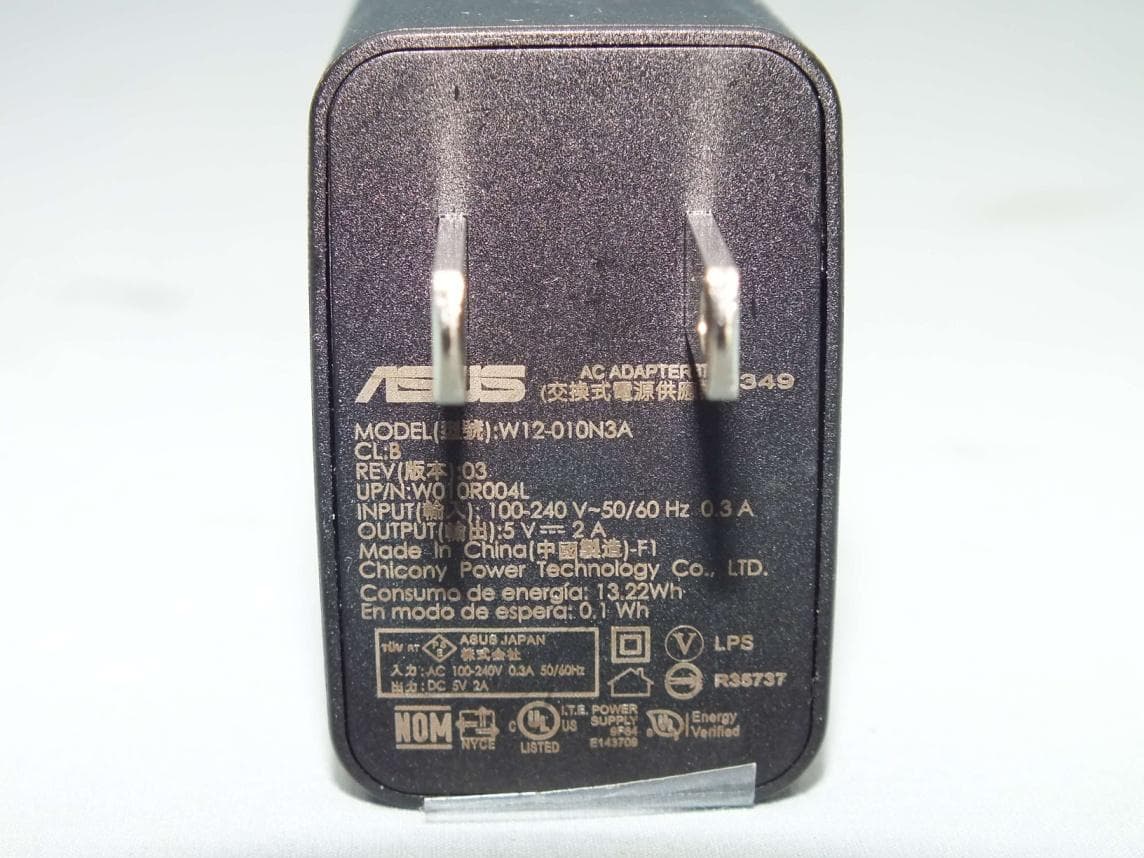
Click to zoom
Application Details
- Equipment Class
- PCE - PCS Licensed Transmitter held to ear
- Date of Grant
- Aug 19, 2014
- Application Purpose
- Original Equipment
- Date of Application
- Aug 10, 2014
- Equipment Note
- PadFone X mini
- Frequency Range
- 1720.00000000 - 1745.00000000
- Company
- ASUSTeK Computer Inc
- Country
- Taiwan
Documents & Files
Document Text
Text extracted from the exhibit documents filed with the FCC. Open a document above to read the original.
Users Manual
Important Notices (T00S) (T00SP) Copyright © 2014 ASUSTeK COMPUTER INC. All Rights Reserved. No part of this manual, including the products and software described in it, may be reproduced, transmitted, transcribed, stored in a retrieval system, or translated into any language in any form or by any means, except documentation kept by the purchaser for backup purposes, without the express written permission of ASUSTeK COMPUTER INC. (“ASUS”). Product warranty or service will not be extended if: (1) the product is repaired, modified or altered, unless such repair, modification of alteration is authorized in writing by ASUS; or (2) the serial number of the product is defaced or missing. ASUS PROVIDES THIS MANUAL “AS IS” WITHOUT WARRANTY OF ANY KIND, EITHER EXPRESS OR IMPLIED, INCLUDING BUT NOT LIMITED TO THE IMPLIED WARRANTIES OR CONDITIONS OF MERCHANTABILITY OR FITNESS FOR A PARTICULAR PURPOSE. IN NO EVENT SHALL ASUS, ITS DIRECTORS, OFFICERS, EMPLOYEES OR AGENTS BE LIABLE FOR ANY INDIRECT, SPECIAL, INCIDENTAL, OR CONSEQUENTIAL DAMAGES (INCLUDING DAMAGES FOR LOSS OF PROFITS, LOSS OF BUSINESS, LOSS OF USE OR DATA, INTERRUPTION OF BUSINESS AND THE LIKE), EVEN IF ASUS HAS BEEN ADVISED OF THE POSSIBILITY OF SUCH DAMAGES ARISING FROM ANY DEFECT OR ERROR IN THIS MANUAL OR PRODUCT. SPECIFICATIONS AND INFORMATION CONTAINED IN THIS MANUAL ARE FURNISHED FOR INFORMATIONAL USE ONLY, AND ARE SUBJECT TO CHANGE AT ANY TIME WITHOUT NOTICE, AND SHOULD NOT BE CONSTRUED AS A COMMITMENT BY ASUS. ASUS ASSUMES NO RESPONSIBILITY OR LIABILITY FOR ANY ERRORS OR INACCURACIES THAT MAY APPEAR IN THIS MANUAL, INCLUDING THE PRODUCTS AND SOFTWARE DESCRIBED IN IT. Products and corporate names appearing in this manual may or may not be registered trademarks or copyrights of their respective companies, and are used only for identification or explanation and to the owners’ benefit, without intent to infringe. First Edition June 2014 IMPORTANT: All throughout this document, the term “PadFone device” is used to refer to the two PadFone devices: PadFone and PadFone Station. Safety information PadFone care • Do not attempt to open your PadFone device casing. There are no user serviceable parts inside and you might damage sensitive electronic circuits and components. Unauthorized disassembly will void the warranty. • Do not leave your PadFone device exposed to strong sunlight or excessive heat for a prolonged period. This may damage it. • Do not handle your PadFone device with wet hands or expose it to moisture or liquids of any kind. Continuous changes from a cold to a warm environment may lead to condensation inside your PadFone device, resulting in corrosion and possible damage. • If you pack your PadFone device in your suitcase during travel, beware of damage. Cramming the device into a suitcase may crack the LCD display. Remember to switch off your wireless connection during air travel. • Use your PadFone device in an environment with ambient temperatures between -10 °C (14 °F) and 35 °C (95 °F). IMPORTANT! To provide electrical insulation and maintain electrical safety, a coating is applied to insulate the ASUS PadFone body except on the sides where the I/O ports are located. The battery Your PadFone device is equipped with a high performance non- detachable Li-Ion battery. Observe the following maintenance guidelines for a longer battery life: • Avoid charging in extremely high or low temperature. The battery performs optimally in an ambient temperature of +5 °C to +35 °C. • Do not remove and replace the battery with a non-approved battery. • Do not remove and immerse the battery in water or any other liquid. • Never try to open the battery as it contains substances that might be harmful if swallowed or allowed to come into contact with unprotected skin. • Do not remove and short-circuit the battery, as it may overheat and cause a fire. Keep it away from jewellery and other metal objects. • Do not remove and dispose of the battery in fire. It could explode and release harmful substances into the environment. • Do not remove and dispose of the battery with your regular household waste. Take it to a hazardous material collection point. • Do not touch the battery terminals. CAUTION: • Risk of explosion if battery is replaced by an incorrect type. • Dispose of used batteries according to the instructions. The charger • Use only the charger supplied with your PadFone device. • Never pull the charger cord to disconnect it from the power socket. Pull the charger itself. Cleaning and storing • Your PadFone device should always be handled with care and protected from dirt, dust and dampness. To avoid scratches, never place your PadFone device face down. • If cleaning is necessary, turn your PadFone device off and wipe carefully with a soft, slightly damp (not wet) cloth. Use a cotton swab to clean the camera lens. Allow your PadFone device to dry completely before switching it on. Never use solvents for cleaning. • If you are not going to use your PadFone device for some time, fully charge the battery and store your PadFone device in a dry place away from direct sunlight. Your PadFone device should be switched off during storage. Recharge every 6 to 12 months. • Never expose your PadFone device to heat or strong sunlight. • Never expose your PadFone device to moisture or liquids of any kind. • Do not place stickers that may block the keypad or affect other components such as the microphone, earpiece, or camera lens. WARNING! Failure to follow these instructions may lead to serious personal injury and possible property damage. Driving safely Never use handheld phones while driving. It is an offence, that while driving, to hold a phone or cradle it in your neck at any point, during the setup, making or taking of a phone call, text message or any other data related mobile communication. Use of fully installed car kits are still permitted, as are the use of alternate handsfree accessories. In the interest of safety, we would recommend th…
Text truncated - open the document above for the full version.
External Photos
Page 1 of 26 Report No.: 140425C18 CONSTRUCTION PHOTOS OF EUT Page 2 of 26 Report No.: 140425C18 Page 3 of 26 Report No.: 140425C18 Page 4 of 26 Report No.: 140425C18 Page 5 of 26 Report No.: 140425C18 Page 6 of 26 Report No.: 140425C18 Page 7 of 26 Report No.: 140425C18 Page 8 of 26 Report No.: 140425C18 Page 9 of 26 Report No.: 140425C18
ID Label/Location Info
FCC ID: MSQT00S The label will be put above the battery compartment. Label Location
Internal Photos
Page 10 of 26 Report No.: 140425C18 Page 11 of 26 Report No.: 140425C18 Page 12 of 26 Report No.: 140425C18 Page 13 of 26 Report No.: 140425C18 Page 14 of 26 Report No.: 140425C18 Page 15 of 26 Report No.: 140425C18 Page 16 of 26 Report No.: 140425C18 Page 17 of 26 Report No.: 140425C18 Page 18 of 26 Report No.: 140425C18 Page 19 of 26 Report No.: 140425C18 Page 20 of 26 Report No.: 140425C18 Page 21 of 26 Report No.: 140425C18 Page 22 of 26 Report No.: 140425C18 Page 23 of 26 Report No.: 140425C18 Page 24 of 26 Report No.: 140425C18 Page 25 of 26 Report No.: 140425C18 Page 26 of 26 Report No.: 140425C18
RF Exposure Info
4F, No. 150, Li-Te Rd., Peitou, Taipei, Taiwan August 4, 2014 Declaration – MIF for HAC RF Interference Evaluation To Whom It May Concern, This device, with FCC ID: MSQT00S, Hearing Aid Compatibility Requirement is going to be certified under ANSI C63.19-2011 version per Part 20.19. The M rating was determined by measuring the maximum steady state average E-field values in dB (V/m) as documented in the HAC report and adding the MIF value in dB (V/m) using pre-determined values provided by Speag under UID 10021 DAB (06.02.2014) / UID 10011 CAB (16.01.2014). The Speag-reference documentation for supporting the pre-determined MIF value is Schmid & Partner Engineering AG, UID SUMMARY (Communication Systems for Calibration, Issued Date 2014/05/30). We confirm that the Speag simulation provided represents all the air interface modes applicable for a HAC rating for this handset. Sincerely Yours,
RF Exposure Info
FCC SAR Test Report Report Format Version 5.0.0 Issued Date : Jun. 04, 2014 Report No. : SA140425C18 Appendix C. Calibration Certificate for Probe and Dipole The SPEAG calibration certificates are shown as follows. Annual Confirmation of SAR Reference Dipole Model: D750V3 S/N : 1013 Measured Date : Apr. 24, 2014 Frequency (MHz) Type Item Previous Measurement Annual Check Deviation Accepted Tolerance Note 750 Head TSL Return Loss -29.272 -30.125 2.9 % ±20 % PASS Real Impedance 53.498 52.443 -1.055 ±5 Ω PASS Imaginary Impedance -0.66211 -1.9648 -1.30269 ±5 Ω PASS 750 Body TSL Return Loss -30.343 -29.365 -3.2 % ±20 % PASS Real Impedance 48.809 48.898 0.089 ±5 Ω PASS Imaginary Impedance -2.7578 -3.4515 -0.6937 ±5 Ω PASS 750 MHz, Head TSL 750 MHz, Body TSL Annual Confirmation of SAR Reference Dipole Model: D835V2 S/N : 4d121 Measured Date : Apr. 24, 2014 Frequency (MHz) Type Item Previous Measurement Annual Check Deviation Accepted Tolerance Note 835 Head TSL Return Loss -30.231 -29.447 -2.6 % ±20 % PASS Real Impedance 52.387 49.407 -2.98 ±5 Ω PASS Imaginary Impedance -2.0566 -3.3194 -1.2628 ±5 Ω PASS 835 Body TSL Return Loss -26.57 -25.576 -3.7 % ±20 % PASS Real Impedance 47.438 46.948 -0.49 ±5 Ω PASS Imaginary Impedance -3.791 -4.0984 -0.3074 ±5 Ω PASS 835 MHz, Head TSL 835 MHz, Body TSL Annual Confirmation of SAR Reference Dipole Model: D1900V2 S/N : 5d036 Measured Date : Jan. 20, 2014 Frequency (MHz) Type Item Previous Measurement Annual Check Deviation Accepted Tolerance Note 1900 Head TSL Return Loss -25.996 -25.844 -0.6 % ±20 % PASS Real Impedance 51.111 51.555 0.444 ±5 Ω PASS Imaginary Impedance 4.957 5.0363 0.0793 ±5 Ω PASS 1900 Body TSL Return Loss -24.508 -24.067 -1.8 % ±20 % PASS Real Impedance 47.498 46.556 -0.942 ±5 Ω PASS Imaginary Impedance 5.2422 4.9878 -0.2544 ±5 Ω PASS 1900 MHz, Head TSL 1900 MHz, Body TSL Annual Confirmation of SAR Reference Dipole Model: D2450V2 S/N : 737 Measured Date : Jan. 20, 2014 Frequency (MHz) Type Item Previous Measurement Annual Check Deviation Accepted Tolerance Note 2450 Head TSL Return Loss -26.268 -26.418 0.6 % ±20 % PASS Real Impedance 53.387 52.787 -0.6 ±5 Ω PASS Imaginary Impedance 3.7109 4.0722 0.3613 ±5 Ω PASS 2450 Body TSL Return Loss -25.479 -24.458 -4.0 % ±20 % PASS Real Impedance 50.123 49.055 -1.068 ±5 Ω PASS Imaginary Impedance 5.334 5.8881 0.5541 ±5 Ω PASS 2450 MHz, Head TSL 2450 MHz, Body TSL
RF Exposure Info
FCC SAR Test Report Report Format Version 5.0.0 Page No. : 1 of 63 Report No. : SA140425C18 Issued Date : Jun. 04, 2014 FCC SAR Test Report Report No. : SA140425C18 Applicant : ASUSTeK COMPUTER INC. Address : 4F, No. 150, LI-TE Rd., PEITOU, TAIPEI 112, TAIWAN Product : PadFone X mini FCC ID : MSQT00S Brand : ASUS Model No. : T00S Standards : FCC 47 CFR Part 2 (2.1093) / IEEE C95.1:1992 / IEEE 1528:2003 IEEE 1528a-2005 / KDB 865664 D01 v01r03 / KDB 248227 D01 v01r02 KDB 447498 D01 v05r02 / KDB 616217 D04 v01r01 / KDB 648474 D04 v01r02 KDB 941225 D01 v02 / KDB 941225 D02 v02r02 / KDB 941225 D03 v01 KDB 941225 D05 v02r03 / KDB 941225 D06 v01r01 Sample Received Date : Apr. 25, 2014 Date of Testing : May 21, 2014 ~ Jun. 03, 2014 CERTIFICATION: The above equipment have been tested by Bureau Veritas Consumer Products Services (H.K.) Ltd., Taoyuan Branch – Lin Kou Laboratories, and found compliance with the requirement of the above standards. The test record, data evaluation & Equipment Under Test (EUT) configurations represented herein are true and accurate accounts of the measurements of the sample’s SAR characteristics under the conditions specified in this report. It should not be reproduced except in full, without the written approval of our laboratory. The client should not use it to claim product certification, approval, or endorsement by TAF or any government agencies. Prepared By : Vera Huang / Specialist Approved By : Roy Wu / Manager This report is for your exclusive use. Any copying or replication of this report to or for any other person or entity, or use of our name or trademark, is permitted only with our prior written permission. This report sets forth our findings solely with respect to the test samples identified herein. The results set forth in this report are not indicative or representative of the quality or characteristics of the lot from which a test sample was taken or any similar or identical product unless specifically and expressly noted. Our report includes all of the tests requested by you and the results thereof based upon the information that you provided to us. You have 60 days from date of issuance of this report to notify us of any material error or omission caused by our negligence, provided, however, that such notice shall be in writing and shall specifically address the issue you wish to raise. A failure to raise such issue within the prescribed time shall constitute your unqualified acceptance of the completeness of this report, the tests conducted and the correctness of the report contents. Unless specific mention, the uncertainty of measurement has been explicitly taken into account to declare the compliance or non-compliance to the specification. FCC SAR Test Report Report Format Version 5.0.0 Page No. : 2 of 63 Report No. : SA140425C18 Issued Date : Jun. 04, 2014 Table of Contents Release Control Record ............................................................................................................................................................... 3 1. Summary of Maximum SAR Value ....................................................................................................................................... 4 2. Description of Equipment Under Test ................................................................................................................................. 5 3. SAR Measurement System ................................................................................................................................................... 6 3.1 Definition of Specific Absorption Rate (SAR) ............................................................................................................... 6 3.2 SPEAG DASY System ................................................................................................................................................. 6 3.2.1 Robot .................................................................................................................................................................. 7 3.2.2 Probes ................................................................................................................................................................ 8 3.2.3 Data Acquisition Electronics (DAE) .................................................................................................................... 8 3.2.4 Phantoms ........................................................................................................................................................... 9 3.2.5 Device Holder ................................................................................................................................................... 10 3.2.6 System Validation Dipoles ................................................................................................................................ 10 3.2.7 Tissue Simulating Liquids ................................................................................................................................. 11 3.3 SAR System Verification ............................................................................................................................................ 14 3.4 SAR Measurement Procedure ................................................................................................................................... 15 3.4.1 Area & Zoom Scan Procedure ......................................................................................................................... 15 3.4.2 Volume Scan Procedure ................................................................................................................................... 15 3.4.3 Power Drift Monitoring ...................................................................................................................................... 16 3.4.4 Spatial Peak SAR Evaluation ......................................................…
Text truncated - open the document above for the full version.
Test Report
FCC HAC (RF Emission) Test Report Report Format Version 5.0.0 Page No. : 1 of 19 Report No. : SA140425C18-1 Issued Date : Jun. 04, 2014 FCC HAC (RF Emission) Test Report Report No. : SA140425C18-1 Applicant : ASUSTeK COMPUTER INC. Address : 4F, No. 150, LI-TE Rd., PEITOU, TAIPEI 112, TAIWAN Product : PadFone X mini FCC ID : MSQT00S Brand : ASUS Model No. : T00S Standards : FCC 47 CFR Part 20.19 ANSI C63.19-2011 Sample Received Date : Apr. 25, 2014 Date of Testing : May 28, 2014 Summary M-Rating : M3 CERTIFICATION: The above equipment have been tested by Bureau Veritas Consumer Products Services (H.K.) Ltd., Taoyuan Branch – Lin Kou Laboratories, and found compliance with the requirement of the above standards. The test record, data evaluation & Equipment Under Test (EUT) configurations represented herein are true and accurate accounts of the measurements of the sample’s HAC characteristics under the conditions specified in this report. It should not be reproduced except in full, without the written approval of our laboratory. The client should not use it to claim product certification, approval, or endorsement by TAF or any government agencies. Prepared By : Vera Huang / Specialist Approved By : Roy Wu / Manager This report is for your exclusive use. Any copying or replication of this report to or for any other person or entity, or use of our name or trademark, is permitted only with our prior written permission. This report sets forth our findings solely with respect to the test samples identified herein. The results set forth in this report are not indicative or representative of the quality or characteristics of the lot from which a test sample was taken or any similar or identical product unless specifically and expressly noted. Our report includes all of the tests requested by you and the results thereof based upon the information that you provided to us. You have 60 days from date of issuance of this report to notify us of any material error or omission caused by our negligence, provided, however, that such notice shall be in writing and shall specifically address the issue you wish to raise. A failure to raise such issue within the prescribed time shall constitute your unqualified acceptance of the completeness of this report, the tests conducted and the correctness of the report contents. Unless specific mention, the uncertainty of measurement has been explicitly taken into account to declare the compliance or non-compliance to the specification. FCC HAC (RF Emission) Test Report Report Format Version 5.0.0 Page No. : 2 of 19 Report No. : SA140425C18-1 Issued Date : Jun. 04, 2014 Table of Contents Release Control Record ............................................................................................................................................................... 3 1. Summary of Maximum M-Rating .......................................................................................................................................... 4 2. Description of Equipment Under Test ................................................................................................................................. 5 3. HAC RF Emission Measurement System ............................................................................................................................ 6 3.1 SPEAG DASY System ................................................................................................................................................. 6 3.1.1 Robot .................................................................................................................................................................. 7 3.1.2 Probes ................................................................................................................................................................ 7 3.1.3 Data Acquisition Electronics (DAE) .................................................................................................................... 7 3.1.4 Phantoms ........................................................................................................................................................... 8 3.1.5 Device Holder ..................................................................................................................................................... 8 3.1.6 RF Emission Calibration Dipoles ........................................................................................................................ 8 3.2 DASY System Verification ............................................................................................................................................ 9 3.3 EUT Measurements Reference and Plane ................................................................................................................. 10 3.4 HAC RF Emission Measurement Procedure .............................................................................................................. 11 3.5 Modulation Interference Factor .................................................................................................................................. 13 4. HAC Measurement Evaluation ............................................................................................................................................ 14 4.1 M-Rating Category ..................................................................................................................................................... 14 4.2 EUT Configuration and Setting ................................................................................................................................... 14 4.3 System Verification ..................................................................................................................................................... 14 4.4 Maximum Output Power ..........................................................................................…
Text truncated - open the document above for the full version.
Test Report
FCC HAC (T-Coil) Test Report Report Format Version 5.0.0 Page No. : 1 of 20 Report No. : SA140425C18-2 Issued Date : Jun. 04, 2014 FCC HAC (T-Coil) Test Report Report No. : SA140425C18-2 Applicant : ASUSTeK COMPUTER INC. Address : 4F, No. 150, LI-TE Rd., PEITOU, TAIPEI 112, TAIWAN Product : PadFone X mini FCC ID : MSQT00S Brand : ASUS Model No. : T00S Standards : FCC 47 CFR Part 20.19 ANSI C63.19-2011 Sample Received Date : Apr. 25, 2014 Date of Testing : May 16, 2014 ~ May 19, 2014 Summary T-Rating : T4 CERTIFICATION: The above equipment have been tested by Bureau Veritas Consumer Products Services (H.K.) Ltd., Taoyuan Branch – Lin Kou Laboratories, and found compliance with the requirement of the above standards. The test record, data evaluation & Equipment Under Test (EUT) configurations represented herein are true and accurate accounts of the measurements of the sample’s HAC characteristics under the conditions specified in this report. It should not be reproduced except in full, without the written approval of our laboratory. The client should not use it to claim product certification, approval, or endorsement by TAF or any government agencies. Prepared By : Evonne Liu / Specialist Approved By : Roy Wu / Manager This report is for your exclusive use. Any copying or replication of this report to or for any other person or entity, or use of our name or trademark, is permitted only with our prior written permission. This report sets forth our findings solely with respect to the test samples identified herein. The results set forth in this report are not indicative or representative of the quality or characteristics of the lot from which a test sample was taken or any similar or identical product unless specifically and expressly noted. Our report includes all of the tests requested by you and the results thereof based upon the information that you provided to us. You have 60 days from date of issuance of this report to notify us of any material error or omission caused by our negligence, provided, however, that such notice shall be in writing and shall specifically address the issue you wish to raise. A failure to raise such issue within the prescribed time shall constitute your unqualified acceptance of the completeness of this report, the tests conducted and the correctness of the report contents. Unless specific mention, the uncertainty of measurement has been explicitly taken into account to declare the compliance or non-compliance to the specification. FCC HAC (T-Coil) Test Report Report Format Version 5.0.0 Page No. : 2 of 20 Report No. : SA140425C18-2 Issued Date : Jun. 04, 2014 Table of Contents Release Control Record ............................................................................................................................................................... 3 1. Summary of Maximum T-Rating ........................................................................................................................................... 4 2. Description of Equipment Under Test ................................................................................................................................. 5 3. HAC RF Emission Measurement System ............................................................................................................................ 6 3.1 SPEAG DASY System ................................................................................................................................................. 6 3.1.1 Robot.................................................................................................................................................................. 7 3.1.2 AM1D Probe ....................................................................................................................................................... 8 3.1.3 Audio Magnetic Calibration Coil (AMCC) ........................................................................................................... 8 3.1.4 Audio Magnetic Measuring Instrument (AMMI) .................................................................................................. 8 3.1.5 Data Acquisition Electronics (DAE) .................................................................................................................... 9 3.1.6 Phantoms ........................................................................................................................................................... 9 3.1.7 Device Holder ..................................................................................................................................................... 9 3.2 System Calibration ..................................................................................................................................................... 10 3.3 EUT Measurements Reference and Plane ................................................................................................................. 11 3.4 HAC T-Coil Measurement Procedure ......................................................................................................................... 12 3.5 Audio Reference Input Level ...................................................................................................................................... 14 4. HAC Measurement Evaluation ............................................................................................................................................ 15 4.1 Measurement Criteria ................................................................................................................................................. 15 4.1.1 Field Intensity ................................................................................................................................................... 15 4.1.2 Frequency Response ..................................................................................................................…
Text truncated - open the document above for the full version.
Test Report
Report No.: RF140425C18 1 of 61 Report Format Version 5.0.0 FCC TEST REPORT (PART 22) REPORT NO.: RF140425C18 MODEL NO.: T00S FCC ID: MSQT00S RECEIVED: Apr. 25, 2014 TESTED: May 16, 2014 ~ May 28, 2014 ISSUED: Jun. 06, 2014 APPLICANT: ASUSTeK COMPUTER INC. ADDRESS: 4F, No. 150, LI-TE Rd., PEITOU, TAIPEI 112, TAIWAN ISSUED BY: Bureau Veritas Consumer Products Services (H.K.) Ltd., Taoyuan Branch LAB ADDRESS: No. 47, 14th Ling, Chia Pau Vil., Lin Kou Dist., New Taipei City, Taiwan ( R.O.C. ) TEST LOCATION: No. 19, Hwa Ya 2nd Rd, Wen Hwa Tsuen, Kwei Shan Hsiang, Taoyuan Hsien 333, Taiwan, R.O.C. This report is for your exclusive use. Any copying or replication of this report to or for any other person or entity, or use of our name or trademark, is permitted only with our prior written permission. This report sets forth our findings solely with respect to the test samples identified herein. The results set forth in this report are not indicative or representative of the quality or characteristics of the lot from which a test sample was taken or any similar or identical product unless specifically and expressly noted. Our report includes all of the tests requested by you and the results thereof based upon the information that you provided to us. You have 60 days from date of issuance of this report to notify us of any material error or omission caused by our negligence, provided, however, that such notice shall be in writing and shall specifically address the issue you wish to raise. A failure to raise such issue within the prescribed time shall constitute your unqualified acceptance of the completeness of this report, the tests conducted and the co…
Text truncated - open the document above for the full version.
Contact Information
Applicant
Jackson Yen(Associate Vice President)
Test Firm
Bureau Veritas CPS (H.K.) Ltd., Taoyuan BranchRichard Chen
Technical Specifications
| # | Rule Parts | Frequency Range | Power Output | Emission | Tolerance |
|---|---|---|---|---|---|
| 2 | 27 | 1.72 GHz - 1.75 GHz | 118.00 mW | 17M9W7D | 0.0029 ppm |
Other Applications from ASUSTeK Computer Inc
MSQ-GC701
Aug 21, 2026Wireless Gaming Controller
Equipment Class
DSS - Part 15 Spread Spectrum TransmitterMSQMPDONGLE3
Aug 18, 2026WIRELESS DONGLE
Equipment Class
DTS - Digital Transmission System
MSQ-GC701D
Aug 13, 2026USB Wireless Dongle
Equipment Class
DSS - Part 15 Spread Spectrum TransmitterMSQ-CM3206DM4A
May 27, 2026Chromebook/Notebook PC
Equipment Class
DCD - Part 15 Low Power Transmitter Below 1705 kHz
MSQ-GST868003
Apr 03, 2026MODULE-WIRELESS CHRG
Equipment Class
DCD - Part 15 Low Power Transmitter Below 1705 kHz