MSQWL330GPOCKET WIRELESS ACCESS POINT
ASUSTeK Computer Inc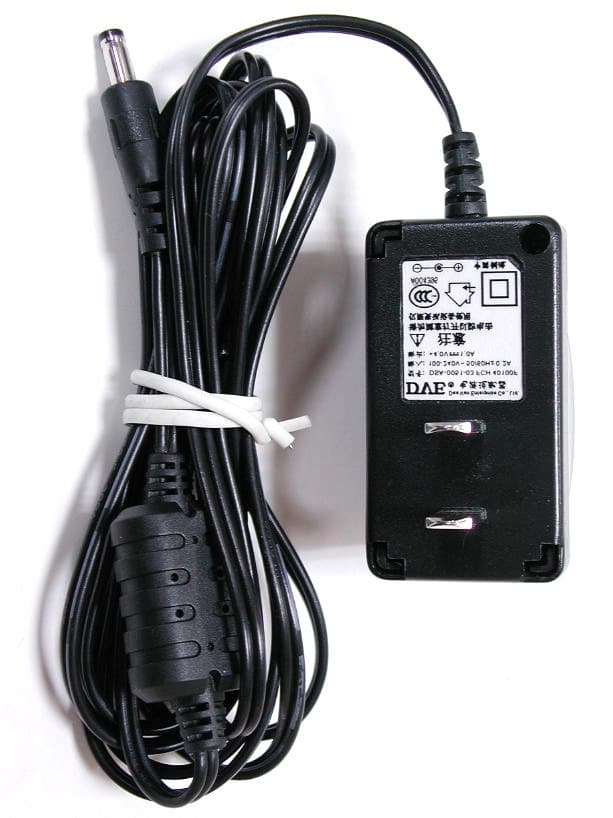
Click to zoom
Application Details
- Equipment Class
- DTS - Digital Transmission System
- Date of Grant
- Feb 08, 2004
- Application Purpose
- Original Equipment
- Date of Application
- Feb 08, 2004
- Equipment Note
- POCKET WIRELESS ACCESS POINT
- Frequency Range
- 2412.00000000 - 2462.00000000
- Company
- ASUSTeK Computer Inc
- Country
- Taiwan
Documents & Files
Document Text
Text extracted from the exhibit documents filed with the FCC. Open a document above to read the original.
Users Manual
Pocket Wireless Access Point WL-330g User Guide ii E1499 Revised Edition V2 December 2003 Copyright © 2003 ASUSTeK COMPUTER INC. All Rights Reserved. No part of this manual, including the products and software described in it, may be reproduced, transmitted, transcribed, stored in a retrieval system, or translated into any language in any form or by any means, except documentation kept by the purchaser for backup purposes, without the express written permission of ASUSTeK COMPUTER INC. (“ASUS”). Product warranty or service will not be extended if: (1) the product is repaired, modified or altered, unless such repair, modification of alteration is authorized in writing by ASUS; or (2) the serial number of the product is defaced or missing. ASUS PROVIDES THIS MANUAL “AS IS” WITHOUT WARRANTY OF ANY KIND, EITHER EXPRESS OR IMPLIED, INCLUDING BUT NOT LIMITED TO THE IMPLIED WARRANTIES OR CONDITIONS OF MERCHANTABILITY OR FITNESS FOR A PARTICULAR PURPOSE. IN NO EVENT SHALL ASUS, ITS DIRECTORS, OFFICERS, EMPLOYEES OR AGENTS BE LIABLE FOR ANY INDIRECT, SPECIAL, INCIDENTAL, OR CONSEQUENTIAL DAMAGES (INCLUDING DAMAGES FOR LOSS OF PROFITS, LOSS OF BUSINESS, LOSS OF USE OR DATA, INTERRUPTION OF BUSINESS AND THE LIKE), EVEN IF ASUS HAS BEEN ADVISED OF THE POSSIBILITY OF SUCH DAMAGES ARISING FROM ANY DEFECT OR ERROR IN THIS MANUAL OR PRODUCT. SPECIFICATIONS AND INFORMATION CONTAINED IN THIS MANUAL ARE FURNISHED FOR INFORMATIONAL USE ONLY, AND ARE SUBJECT TO CHANGE AT ANY TIME WITHOUT NOTICE, AND SHOULD NOT BE CONSTRUED AS A COMMITMENT BY ASUS. ASUS ASSUMES NO RESPONSIBILITY OR LIABILITY FOR ANY ERRORS OR INACCURACIES THAT MAY APPEAR IN THIS MANUAL, INCLUDING THE PRODUCTS AND SOFTWARE DESCRIBED IN IT. Products and corporate names appearing in this manual may or may not be registered trademarks or copyrights of their respective companies, and are used only for identification or explanation and to the owners’ benefit, without intent to infringe. v Notices Federal Communications Commission Statement This device complies with FCC Rules Part 15. Operation is subject to the following two conditions: •This device may not cause harmful interference, and •This device must accept any interference received, including interference that may cause undesired operation. This equipment has been tested and found to comply with the limits for a class B digital device, pursuant to Part 15 of the Federal Communications Commission (FCC) rules. These limits are designed to provide reasonable protection against harmful interference in a residential installation. This equipment generates, uses, and can radiate radio frequency energy and, if not installed and used in accordance with the instructions, may cause harmful interference to radio communications. However, there is no guarantee that interference will not occur in a particular installation. If this equipment does cause harmful interference to radio or television reception, which can be determined by turning the equipment off and on, the user is encouraged to try to correct the interference by one or more of the following measures: •Reorient or relocate the receiving antenna. •Increase the separation between the equipment and receiver. •Connect the equipment into an outlet on a circuit different from that to which the receiver is connected. •Consult the dealer or an experienced radio/TV technician for help. CAUTION!You are cautioned that changes or modifications not expressly approved by the party responsible for compliance could void your authority to operate the equipment. Reprinted from the Code of Federal Regulations #47, part 15.193, 1993. Washington DC: Office of the Federal Register, National Archives and Records Administration, U.S. Government Printing Office. vi Safety statements Regulatory Information/Disclaimers Installation and use of this Wireless LAN device must be in strict accordance with the instructions included in the user documentation provided with the product. Any changes or modifications (including the antennas) made to this device that are not expressly approved by the manufacturer may void the user’s authority to operate the equipment. The manufacturer is not responsible for any radio or television interference caused by unauthorized modification of this device, or the substitution of the connecting cables and equipment other than manufacturer specified. It is the responsibility of the user to correct any interference caused by such unauthorized modification, substitution or attachment. Manufacturer and its authorized resellers or distributors will assume no liability for any damage or violation of government regulations arising from failing to comply with these guidelines. CAUTION! To maintain compliance with FCC’s RF exposure guidelines, this equipment should be installed and operated with minimum distance [20cm] between the radiator and your body. Use on the supplied antenna. Unauthorized antenna, modification, or attachments could damage the transmitter and may violate FCC regulations. Safety Information In order to maintain compliance with the FCC RF exposure guidelines, this equipment should be installed and operated with minimum distance [20cm] between the radiator and your body. Use only with supplied antenna. Unauthorized antenna, modification, or attachments could damage the transmitter and may violate FCC regulations. CAUTION! Any changes or modifications not expressly approved in this manual could void your authorization to use this device. MPE Statement Your device contains a low power transmitter. When device is transmitted it sends out Radio Frequency (RF) signal. vii Safety statements Caution Statement of the FCC Radio Frequency Exposure This Wireless LAN radio device has been evaluated under FCC Bulletin OET 65C and found compliant to the requirements as set forth in CFR 47 Sections 2.1091, 2.1093, and 15.247(b)(4) addressing RF Exposure from radio frequency devices. The radiation output power of this Wireless LAN device is far below…
Text truncated - open the document above for the full version.
Cover Letter(s)
Request for Confidentiality Federal Communications Commission Authorization and Evaluation Division Sub.: Confidentiality Request regarding application for certification of FCC ID: MSQWL330G Pursuant to Sections 0.457 and 0.459 of the Commission’s Rules, we hereby request confidential treatment of information accompanying this application as outlined below: l Schematics l Part List l Block diagram l Operational description The above materials contain trade secrets and proprietary information not customarily released to the public. The public disclosure of these materials may be harmful to the applicant and provide unjustified benefits to its competitors. The applicant understands that pursuant to Section 0.457 of the Rules, disclosure of this application and all accompanying documentation will not be made before the date of the Grant for this application. Sincerely,
External Photos
External Photos of Pocket Wireless Access Point 1/7 FCC ID: MSQWL330G Training Research Co., Ltd., TEL: 886-2-26935155, Fax: 886-2-26934440 External Photos of Pocket Wireless Access Point 2/7 FCC ID: MSQWL330G Training Research Co., Ltd., TEL: 886-2-26935155, Fax: 886-2-26934440 External Photos of Adapter 3/7 FCC ID: MSQWL330G Training Research Co., Ltd., TEL: 886-2-26935155, Fax: 886-2-26934440
ID Label/Location Info
LABEL Position:
ID Label/Location Info
Wireless AP WL-330G 37mm 22 mm Made in Taiwan FCC ID: MSQWL330G Model No.: WL-330g DC Input: 4V/1A
Internal Photos
Internal Photos of Pocket Wireless Access Point 4/7 FCC ID: MSQWL330G Training Research Co., Ltd., TEL: 886-2-26935155, Fax: 886-2-26934440 Internal Photos of Pocket Wireless Access Point 5/7 FCC ID: MSQWL330G Training Research Co., Ltd., TEL: 886-2-26935155, Fax: 886-2-26934440 Internal Photos of Pocket Wireless Access Point 6/7 FCC ID: MSQWL330G Training Research Co., Ltd., TEL: 886-2-26935155, Fax: 886-2-26934440 Internal Photos of Pocket Wireless Access Point 7/7 FCC ID: MSQWL330G Training Research Co., Ltd., TEL: 886-2-26935155, Fax: 886-2-26934440
RF Exposure Info
Measurement of Maximum Permissible Exposure 1/2 FCC ID: MSQWL330G Training Research Co., Ltd., TEL: 886-2-26935155, Fax: 886-2-26934440 Measurement of Maximum Permissible Exposure 1. Foreword In adopt with the Human Exposure IEEE C95.1, and according to the FCC 1.1310. The Maximum Permissible Exposure (MPE) is obligated to measure in order to prove the safety of radiation harmfulness to the human body. The Gain of the antenna used is measured in an Anechoic chamber. The maximum total power to the antenna is to be recorded. By adopting the Friis Transmission Formula and the power gain of the antenna, we can find the distance right away from the product, where the limit of the MPE is. 2. Description of EUT FCC ID : MSQWL330G Product name : Pocket Wireless Access Point Model name : WL-330g Classification : Mobile Device (i) Under normal use condition, the antenna is at least 20cm away from the user; (ii) Warning statement for keeping 20cm separation distance and the prohibition of operating next to the person has been printed in the user’s manual Frequency Range : 2.412 GHz ~ 2.462GHz Supported Channel : 11 Channels Modulation Skill : DBPSK, DQPSK, CCK, OFDM Power Type : Powered by the adapter, Model: DSA-0051-03 FCH 40100F I/P: 100-240VAC, 50/60Hz, 0.2A; O/P: 4VDC, 1.0A 188cm length, non-shielded, incorporates a ferrite core Measurement of Maximum Permissible Exposure 2/2 FCC ID: MSQWL330G Training Research Co., Ltd., TEL: 886-2-26935155, Fax: 886-2-26934440 3. Limits for Maximum Permissible Exposure (MPE) Frequency Range (MHz) Electric Field Strength (V/m) Magnetic Filed Strength (H) (A/m) Power Density (S) (mW/cm2) Averaging Time |E| 2 , |H| 2 or S (minutes) (A) Limits for Occupational/Controlled Exposure 0.3-3.0 614 1.63 100 6 3.0-30 1842/f 4.89/f 900/f 2 6 30-300 61.4 0.163 1.0 6 300-1500 -- -- f/300 6 1500-100,000 -- -- 5 6 (B) Limits for General Population/Uncontrolled Exposure 0.3-1.34 614 1.63 100 30 1.34-30 824/f 2.19/f 180/f 2 30 30-300 27.5 0.073 0.2 30 300-1500 -- -- f/1500 30 1500-100,000 -- -- 1.0 30 [The EUT is tested in transmit and receive modes and in the first, middle and the last channel separately. The following shows only our observation have the greatest emissions.] According to OET BULLETIN 56 Fourth Edition/August 1999, Equation for Predicting RF Fields: Friis Transmission Formula: 2 22 /05090.0 )20(4 3335.1867.191 4 cmmW R PG S= × == ππ Estimated safe separation: cm PG R512.4 4 3335.1867.191 4 = × == ππ Remarks: "The safe estimated separation that the user must maintain from the antenna is at least 4.512 cm." Where: S = power density (in appropriate units, e.g. mW/cm2) P = power input to the antenna (in appropriate units, e.g., mW) G = power gain of the antenna in the direction of interest relative to an isotropic radiator R = distance to the center of radiation of the antenna (appropriate units, e.g., cm) The Numeric gain G of antenna with a gain specified in dB is determined by: G = Log -1 ( dB antenna gain / 10 ) G = Log -1 (1.25 / 10) = 1.3335 1. without covering 2. with covering 2.9 GHz 10 dB/ -80 dB 20 dB CH110 dB/REF 0 dB START2 GHzSTOP3 GHz100 MHz/ MAGdB FIL 1k 1k FIL 1k 1k CPL OFS S11 1 2 3 1: -15.96 dB 2.4 GHz 2: -18.15 dB 2.45 GHz 3: -24.51 dB 2.5 GHz 〈 0 dB Date: 27.AUG.03 06:49:40 2.9 GHz 10 dB/ -80 dB 20 dB CH110 dB/REF 0 dB START2 GHzSTOP3 GHz100 MHz/ MAGdB FIL 1k 1k FIL 1k 1k CPL OFS S11 1 2 3 1: -36.18 dB 2.4 GHz 2: -31.77 dB 2.45 GHz 3: -22.13 dB 2.5 GHz 〈 0 dB Date: 27.AUG.03 06:50:41 3. Smith Chart 00.20.512510 -5 -2 -1 -0.5 0.5 1 2 5 CH1 ↑ 1 U START2 GHzSTOP3 GHz FIL 1k 1k FIL 1k 1k CPL OFS S11 1 2 3 1: 47.39 Í j593.9 m Í 2.4 GHz 2: 51.68 Í j3.431 Í 2.45 GHz 3: 55.91 Í j9.069 Í 2.5 GHz Date: 27.AUG.03 08:38:17
Test Report
Test Report -------------------------------------------------------------------------------1/50 Report No.: A5415052, FCC Part 15 Training Research Co., Ltd., TEL: 886-2-26935155, Fax: 886-2-26934440 MEASUREMENT REPORT of Pocket Wireless Access Point Applicant:ASUSTek Computer Inc. EUT:Pocket Wireless Access Point Model No.:WL-330g FCC ID:MSQWL330G Report No.:A5415052 Tested by : Training Research Co., Ltd. TEL : 886-2-26935155 FAX : 886-2-26934440 No. 255, Nanyang Street, Shijr, Taipei Hsien 221, Taiwan, R.O.C. Test Report -------------------------------------------------------------------------------2/50 Report No.: A5415052, FCC Part 15 Training Research Co., Ltd., TEL: 886-2-26935155, Fax: 886-2-26934440 CERTIFICATION We here by verify that: The test data, data evaluation, test procedures and equipment configurations shown in this report were made mainly in accordance with the procedures given in ANSI C63.4 (1992) as a reference. All test were conducted by Training Research Co., Ltd., 255 Nanyang Street, Shijr, Taipei Hsien 221, Taiwan, R.O.C. Also, we attest to the accuracy of each. We further submit that the energy emitted by the sample EUT tested as described in the report is in compliance with the technical requirements set forth in the FCC Rules Part 15 Subpart B (Declaration of Conformity) and C Section 15.247. Applicant:ASUSTek Computer Inc. Applicant address:4F, No. 150, Li-Te Rd., Peitou, Taipei, Taiwan, R.O.C. Product Name:Pocket Wireless Access Point Model Name:WL-330g FCC ID:MSQWL330G Report No.:A5415052 Test Date:January 31, 2004 Prepared by:Approved by: Jack TsaiFrank Tsai Conditions of issue : (1) This test report shall not be reproduced except in full, without written approval of TRC. And the test result contained within this report only relate to the sample submitted for testing. (2) This report must not be used by the client to claim product endorsement by NVLAP or any agency of U.S. Government. NVLAP LAB CODE: 200174-0 Test Report -------------------------------------------------------------------------------3/50 Report No.: A5415052, FCC Part 15 Training Research Co., Ltd., TEL: 886-2-26935155, Fax: 886-2-26934440 Federal Communications Commission Declaration of Conformity (DoC) For the Following Equipment: Product name:Pocket Wireless Access Point Model name: WL-330g Trade name: ASUS; TERAYON Is herewith confirmed and found to comply with the requirements of CFR 47 part15 Subpart B - Unintentional Radiators regulation. The results of electromagnetic mission evaluation are shown in the report number : A5415052 This device complies with Part 15 of the FCC Rules. Operation is subject to the following two conditions: (1) This device may not cause harmful interference, and (2) This device must accept any interference received, including interference that may cause undesired operation ManufacturerUSA local representative Company name: ASUSTeK Computer Inc.To be determined Computer address: 4/F, 150, Li-Te Rd., Peitou, Taipei, Taiwan ZIP / Postal code 112 Contact person: Lawrence Yu Title: Manager Internet e-mail address: [email protected] Tel / Fax: 886-2-28943447 / 886-2-28950113 Test Report -------------------------------------------------------------------------------4/50 Report No.: A5415052, FCC Part 15 Training Research Co., Ltd., TEL: 886-2-26935155, Fax: 886-2-26934440 Tables of Contents I.GENERAL...................................................................................................................... 6 1.1Introduction.............................................................................................................. 6 1.2Description of EUT ................................................................................................... 6 1.3Test method ............................................................................................................. 6 1.4Description of Support Equipment ............................................................................. 7 1.5Configuration of System Under Test......................................................................... 10 1.6Verify the Frequency and Channel ............................................................................ 12 1.7Test Procedure........................................................................................................ 13 1.8Location of the Test Site .......................................................................................... 13 1.9General Test Condition ............................................................................................ 13 II.Section 15.101(a) : Equipment Authorization of Unintentional Radiators.................... 14 III.Section 15.203 : Antenna Requirement.......................................................................... 15 IV.Section 15.207 : Power Line Conducted Emissions for AC Powered Units................ 16 3.1Test Condition & Setup........................................................................................... 16 3.2List of Test Instruments ............................................................................................ 17 3.3Test Result of Conducted Emissions ......................................................................... 18 Standby mode .......................................................................................................... 18 IEEE 802.11b ........................................................................................................... 19 IEEE 802.11g ........................................................................................................... 20 V.Section 15.247(a) : Technical Description of the EUT................................................... 22 VI.Section 15.247(a)(2) : Bandwidth for Direct Sequence System................................... 23 6.1Test Condition & Setup ........................................................................................... 23 6.2Test Instruments Confi…
Text truncated - open the document above for the full version.
Test Setup Photos
Test Setup Photos ------------------------------------------------------------------------ 1/3 FCC ID: MSQWL330G Training Research Co., Ltd., TEL: 886-2-26935155, Fax: 886-2-26934440 Conducted Test Setup Placement: Front View of the Test Configuration Side View of the Test Configuration Test Setup Photos ------------------------------------------------------------------------ 2/3 FCC ID: MSQWL330G Training Research Co., Ltd., TEL: 886-2-26935155, Fax: 886-2-26934440 Radiated Test Setup Placement: Front View of the Test Configuration of Uuintentional Rear View of the Test Configuration of Unintentional Test Setup Photos ------------------------------------------------------------------------ 3/3 FCC ID: MSQWL330G Training Research Co., Ltd., TEL: 886-2-26935155, Fax: 886-2-26934440 Radiated Test Setup Placement: Front View of the Test Configuration of Intentional Rear View of the Test Configuration of Intentional
Contact Information
Applicant
Jackson Yen(Associate Vice President)
Test Firm
Training Research Co., LtdJack Tsai
Technical Specifications
| # | Rule Parts | Frequency Range | Power Output |
|---|---|---|---|
| 1 | 15C | 2.41 GHz - 2.46 GHz | 191.87 mW |
Other Applications from ASUSTeK Computer Inc
MSQ-GC701
Aug 21, 2026Wireless Gaming Controller
Equipment Class
DSS - Part 15 Spread Spectrum TransmitterMSQMPDONGLE3
Aug 18, 2026WIRELESS DONGLE
Equipment Class
DTS - Digital Transmission System
MSQ-GC701D
Aug 13, 2026USB Wireless Dongle
Equipment Class
DSS - Part 15 Spread Spectrum TransmitterMSQ-CM3206DM4A
May 27, 2026Chromebook/Notebook PC
Equipment Class
DCD - Part 15 Low Power Transmitter Below 1705 kHz
MSQ-GST868003
Apr 03, 2026MODULE-WIRELESS CHRG
Equipment Class
DCD - Part 15 Low Power Transmitter Below 1705 kHz