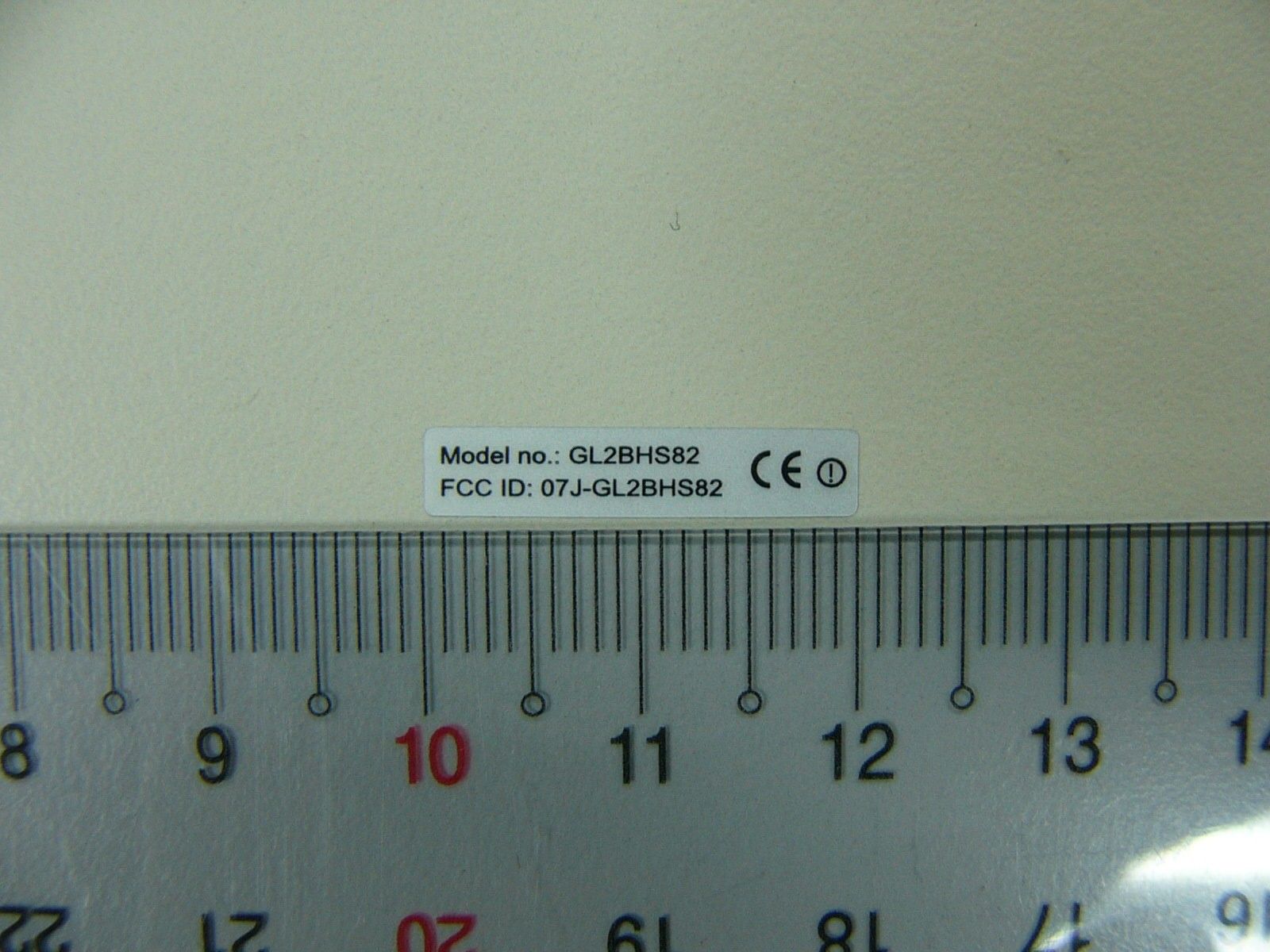
O7J-GL2BHS82Bluetooth Headset
Global Sun Technology Inc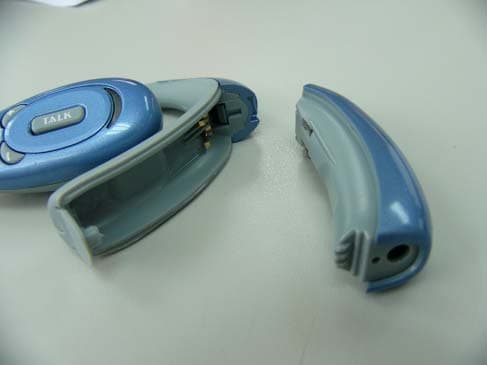
Click to zoom
Application Details
- Equipment Class
- DSS - Part 15 Spread Spectrum Transmitter
- Date of Grant
- Aug 24, 2003
- Application Purpose
- Original Equipment
- Date of Application
- Aug 24, 2003
- Equipment Note
- Bluetooth Headset
- Frequency Range
- 2402.00000000 - 2480.00000000
- Company
- Global Sun Technology Inc
- Country
- Taiwan
Documents & Files
Document Text
Text extracted from the exhibit documents filed with the FCC. Open a document above to read the original.
Users Manual
GST Bluetooth Headset - GL2BHS82 CONTENTS 1. Product General Information----------------------------------------------------------1 1.1 Production Description ------------------------------------------------------------1 2. Product General Specifications ------------------------------------------------------1 2.1 General specifications -------------------------------------------------------------1 2.2 Function Button/Indicators --------------------------------------------------------2 3. Regulation Compliance-----------------------------------------------------------------3 4. Environment Requirement-------------------------------------------------------------3 4.1 Drop and Vibration-------------------------------------------------------------------3 4.1.1 Anti-Static Voltage-----------------------------------------------------------3 4.1.2 Vibration Test-----------------------------------------------------------------3 4.1.3 Package Drop Test----------------------------------------------------------3 4.2 Usage Condition----------------------------------------------------------------------3 4.2.1 Temperature Range---------------------------------------------------------3 4.2.2 Temperature-------------------------------------------------------------------4 4.2.3 Humidity------------------------------------------------------------------------4 5. Getting Started-----------------------------------------------------------------------------4 5.1 Charging --------------------------------------------------------------------------------4 5.2 Compatible chargers-----------------------------------------------------------------4 6. Instructions ---------------------------------------------------------------------------------5 6.1 To turn the headset on---------------------------------------------------------------5 6.2 To turn the headset off---------------------------------------------------------------5 6.3 Pairing the headset-------------------------------------------------------------------5 6.3.1 Pairing (Dual Pairing) -------------------------------------------------------6 6.3.2 Resetting the headset to another device-------------------------------6 6.3.3 Switching the headset from a paired device to the other-----------7 6.4 Answering incoming calls-----------------------------------------------------------7 6.5 Speaker Volume Control-------------------------------------------------------------7 6.6 End a call--------------------------------------------------------------------------------7 7. Examples -----------------------------------------------------------------------------------8 7.1 Computer connect to headset-----------------------------------------------------8 1. Product General Information 1.1 Product Description GL2BHS80 is a wireless portable headset which enable to answer incoming calls wirelessly from a Bluetooth devices that support Headset profile, Audio Gateway role, such as GST voice/data access point, Bluetooth mobile phone in proximity. 2. Product General 2.1 General Specifications Product Name Bluetooth Headset GL2BHS80 Product Category End-user portable product Bluetooth specification Bluetooth 1.1 compliant Qualification /list date Q1 2003 Support Profile GAP, SPP, Headset (Headset role only) Power Class Class 2 Support packet types HV1/HV3 Support hopping mode USA/EU (79 channel) Interoperability All devices that support the Bluetooth Headset profile, Audio Gateway role. Example: GST Bluetooth voice/data Access Point, Bluetooth enable cell phone, smart phone. Sensitivity <[email protected]%BER Output Power -6 ~ +4dBm Frequency range 2400-2483.5MHz Size Total Weight Base color Light Gray Talk Time 3.5hrs Standby time 100hrs Packaging Giftbox Compatibility Sony EricssonT39, T68, T68i, R520, P800 Nokia 6310, 6310i, 8910 Motorola T270 Philips 820 Rechargeable battery 150mA Power Adapter DC 5V adapter 1 2.2 Function button/ indicators Symbol Functions Call handling buttonHandle calling function; answer a phone Power on/offcall forwarded from Bluetooth Audio Gateway device; Power on/off Volume Up button Adjust volume up, pairing, switch connecting device Volume Down button Adjust volume down, pairing, switch connecting device Function LED RED slow flashing during battery low RED fast flashing during waiting pairing GREEN flashing during standby LED off during power off mode Charging LED RED during charging. Light off when the battery is fully charged Speaker Microphone Rechargeable connector Battery Charging Charging LED Function LED Volume Down Vol u m e U p Call handling & Power ON/OFF 2 Battery Charging Microphone Speaker 3. REGULATION COMPLIANCE Compliant with FCC Part 15 Class B, (To be confirmed) ETS 300 328, ETS300 826 (To be confirmed) Bluetooth Test Specification v1.1 compliant. (To be confirmed) 4. ENVIRONMENT REQUIREMENT 4.1 Drop and Vibration 4.1.1 Anti-Static Voltage Static voltage tests by 4KV in body should not cause system fail. 4.1.2 Vibration Test The vibration test is under the Frequency and amplitude 10~25 1mm in vertical and horizontal direction by 30 minutes that should not cause any damage on product. 4.1.3 Package Drop Test Dropping the package from the height of 50cm for each of the six(6) faces onto the hard-wood floor will not cause any product damage. 4.2 Usage Condition 4.2.1 Temperature Range Operating -0 o C ~ +55 o C Storage -20 o C ~ +70 o C 3 4.2.2 Temperature Shock The one cycle of reliability test is keeping -20 o C for 2 hours, switching temperature up to +60 o C within one hour, and testing at +60 o C by 2 hours, and switching temperature to -20 o C within one hour. Three cycle should be tested and without any product fail. 4.2.3 Humidity Operating 0% to 70% Storage 0% to 95% Non-condensing 5. Getting Started Before you start using the headset with a Bluetooth enabled phone or other devices for the first time, you should: z Charge the battery using the enclosed GST 5V charging adapter z Pair the headset with a device (Audio Gateway role), suc…
Text truncated - open the document above for the full version.
Block Diagram
D BC A 3412 A B C D 1 234 電 路 圖圖形 GLOBAL SUN TECHNOLOGY,INC.陽 慶 電 子 股 份 有 限 公 司 繪 製 確 認 審 核 圖號料號 MIC MARK GL2BHS82 SPEAKER PCM CODEC IC PCM INTERFACE ANT TONY TONY +3.3V REGULATOR FUNCTION LED TONY BATTERY CHARGER ICBATTERY BATTERY PROTECT ICBATTERY PACKAGE BLOCK DIAGRAM LOW BATTERY DETECT GL2BMU02 (TALK/VOL UP/VOL DOWN) KEY GL2BMU02 (Module) BLOCK DIAGRAMS.
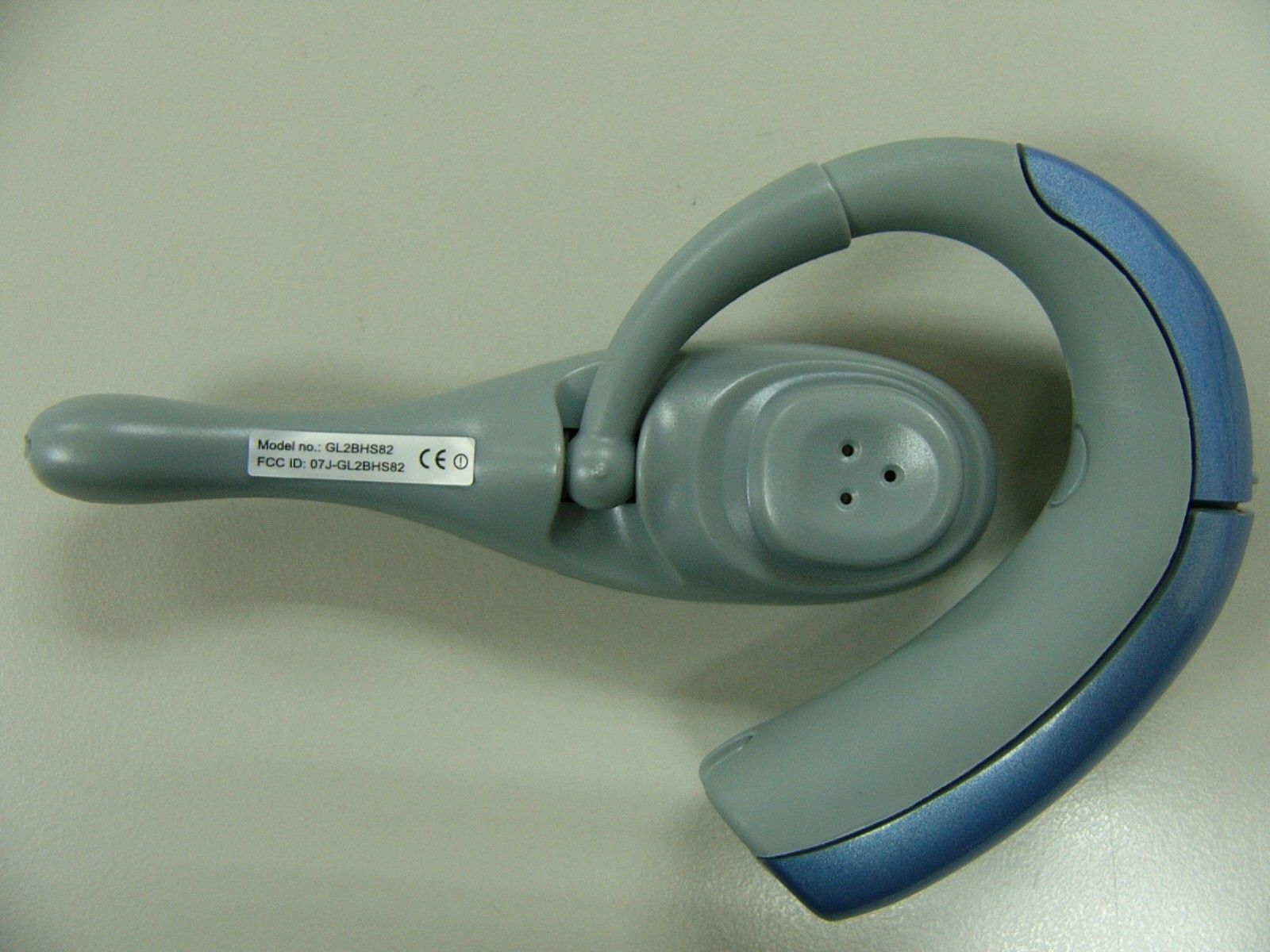
External Photos
External Photos
Internal Photos
Internal Photos
Operational Description
Bluetooth Headset Product Name GST class 2 Bluetooth Headset Product ID GL2BHS82 Hardware Version Rev.GL2BHS80-01 Software Version Rev.GL2BHS80-01 Product category End-user- product Bluetooth specification Bluetooth 1.1 compliant Qualification/list date Applying now QPN no Support Profile GAP, SDP, Headset profile Power class 2 Power control No Supported packet types HV1, HV3 Supported hopping modes USA/EU(79 channels) Product category End-user- product Bluetooth specification Bluetooth 1.1 compliant Qualification/list date applying Passkey change support No Interoperability All devices that support the Bluetooth HS profile, audio gateway role Security Pairing, Encryption ,and Authentication Output power 0 dBm Sensitivity <-76 [email protected]%BER Operation range Up to 10 meters Frequency range 2400-2483.5MHz DC Power 3.7V Lithium-ion battery 150mAh Talk time Up to 3 hours Standby time Up to 50 hours FEATURE z 3 function button TALK, VOLUME UP, VOLUME DOWN z 2 indicator Standby (green), Battery low (red), Pairing (green and red flash alternately ) , Connection and Incoming. GENERAL SPECIFICATION ITEMS SPECIFICATION Supply Voltage Lithium-ion battery 3.7V 150mAh Carrier Frequency 2400MHz to 2483.5MHz(USA,Spain,France) Modulation Method GFSK,1Mbps,0.5BT Gaussian Link mode SCO Maximum Data Rate Synchronous:64kbps Transmission Power 0dBm Hopping 1600hops/sec, 1MHz channel space Receiving Signal Range -76dBm to -20 dBm Receiver IF Frequency 1.5MHz center frequency Baseband Crystal OSC 16MHz Operation Temperature -20 to +70 degree Storage Temperature -40 to +85 degree Bluetooth Specification Ver1.1 General Description of Bluetooth Bluetooth is a short-range radio link intended to replace the cable(s) connecting portable and/or fixed electronic devices. Key features are robustness, low complexity, low power, and low cost. Bluetooth operates in the unlicensed ISM band at 2.4 GHz. A frequency hop transceiver is applied to combat interference and fading. A shaped, binary FM modulation is applied to minimize transceiver complexity. The symbol rate is 1 Ms/s. A slotted channel is applied with a nominal slot length of 625 s. For full duplex transmission, a Time-Division Duplex (TDD) scheme is used. On the channel, information is exchanged through packets. Each packet is transmitted on a different hop frequency. A packet nominally covers a single slot, but can be extended to cover up to five slots.The Bluetooth protocol uses a combination of circuit and packet switching.Slots can be reserved for synchronous packets. Bluetooth can support an asynchronous data channel, up to three simultaneous synchronous voice channels, or a channel which simultaneously supports asynchronous data and synchronous voice. Each voice channel supports a 64 kb/s synchronous (voice) channel in each direction. The asynchronous channel can support maximal 723.2 kb/s asymmetric (and still up to 57.6 kb/s in the return direction), or 433.9 kb/s symmetric. The Bluetooth system consists of a radio unit ,a link control unit, and a support unit for link management and host terminal interface functions, see Figure 1 Figure 1 The current document describes the specifications of the Bluetooth link controller, which carries out the baseband protocols and other low-level link routines. Link layer messages for link set-up and control are defined in the Link Manager Protocol. The Bluetooth system provides a point-to-point connection (only two Bluetooth units involved), or a point-to-multipoint connection. In the point-to-multipoint connection, the channel is shared among several Bluetooth units. Two or more units sharing the same channel form a piconet. One Bluetooth unit acts as the master of the piconet, whereas the other unit(s) acts as slave(s). Up to seven slaves can be active in the piconet. In addition, many more slaves can remain locked to the master in a so-called parked state. These parked slaves cannot be active on the channel, but remain synchronized to the master. Both for active and parked slaves, the channel access is controlled by the master. Multiple piconets with overlapping coverage areas form a scatternet. Each piconet can only have a single master. However, slaves can participate in different piconets on a time-division multiplex basis. In addition, a master in one piconet can be a slave in another piconet. The piconets shall not be frequencysynchronized. Each piconet has its own hopping channel. CHANNEL DEFINITION The channel is represented by a pseudo-random hopping sequence hopping through the 79 or 23 RF channels. The hopping sequence is unique for the piconet and is determined by the Bluetooth device address of the master; the phase in the hopping sequence is determined by the Bluetooth clock of the master. The channel is divided into time slots where each slot corresponds to an RF hop frequency. Consecutive hops correspond to different RF hop frequencies. The nominal hop rate is 1600 hops/s. All Bluetooth units participating in the piconet are time- and hop-synchronized to the channel. Here is a real example of the hopping sequence. Pkt Num M/S Freq (MHz) Master Clk AM Addr Pkt Type 0 M 2445 0x034a40a4 AM1 DM1 1 S 2406 0x034a40aa AM1 DM1 2 M 2465 0x034a40d0 AM1 DM1 3 S 2466 0x034a40d6 AM1 DM1 4 M 2404 0x034a4104 AM1 DM1 5 S 2458 0x034a410a AM1 DM1 6 S 2411 0x034a410e AM1 DM1 7 M 2461 0x034a412c AM1 DM1 8 M 2442 0x034a41d8 AM0 FHS 9 M 2463 0x0012eb20 AM1 DM1 10 M 2467 0x0012eb24 AM1 DM1 11 S 2434 0x0012eb76 AM1 DM1 12 S 2438 0x0012eb7a AM1 DM1 13 M 2457 0x0012eb7c AM1 DM1 14 S 2466 0x0012eb7e AM1 DM1 15 M 2418 0x0012eb84 AM1 DM1 16 S 2411 0x0012ebd6 AM1 DM1 17 S 2413 0x0012ebda AM1 DM1 18 M 2446 0x0012ebdc AM1 DM1 19 M 2448 0x0012ebe0 AM1 DM1 20 S 2477 0x0012ec32 AM1 DM1 TIME SLOTS The channel is divided into time slots, each 625 s in length. The time slots are numbered according to the Bluetooth clock of the piconet master. The slot numbering ranges from 0 to 227-1 and is cyclic with a cycle length of 227. In the time slot…
Text truncated - open the document above for the full version.
Schematics
D BC A 3412 A B C D 1 234 電 路 圖圖形 GLOBAL SUN TECHNOLOGY,INC.陽 慶 電 子 股 份 有 限 公 司 繪 製 確 認 審 核 圖號料號 1 A MARK TUNG TONY KUAN SBW-SC-016-01 01702100002 TONY KUAN D BC A 3412 A B C D 1 234 電 路 圖圖形 GLOBAL SUN TECHNOLOGY,INC.陽 慶 電 子 股 份 有 限 公 司 繪 製 確 認 審 核 圖號料號 Mark CY Cheng GL2BMU02-102
Test Report
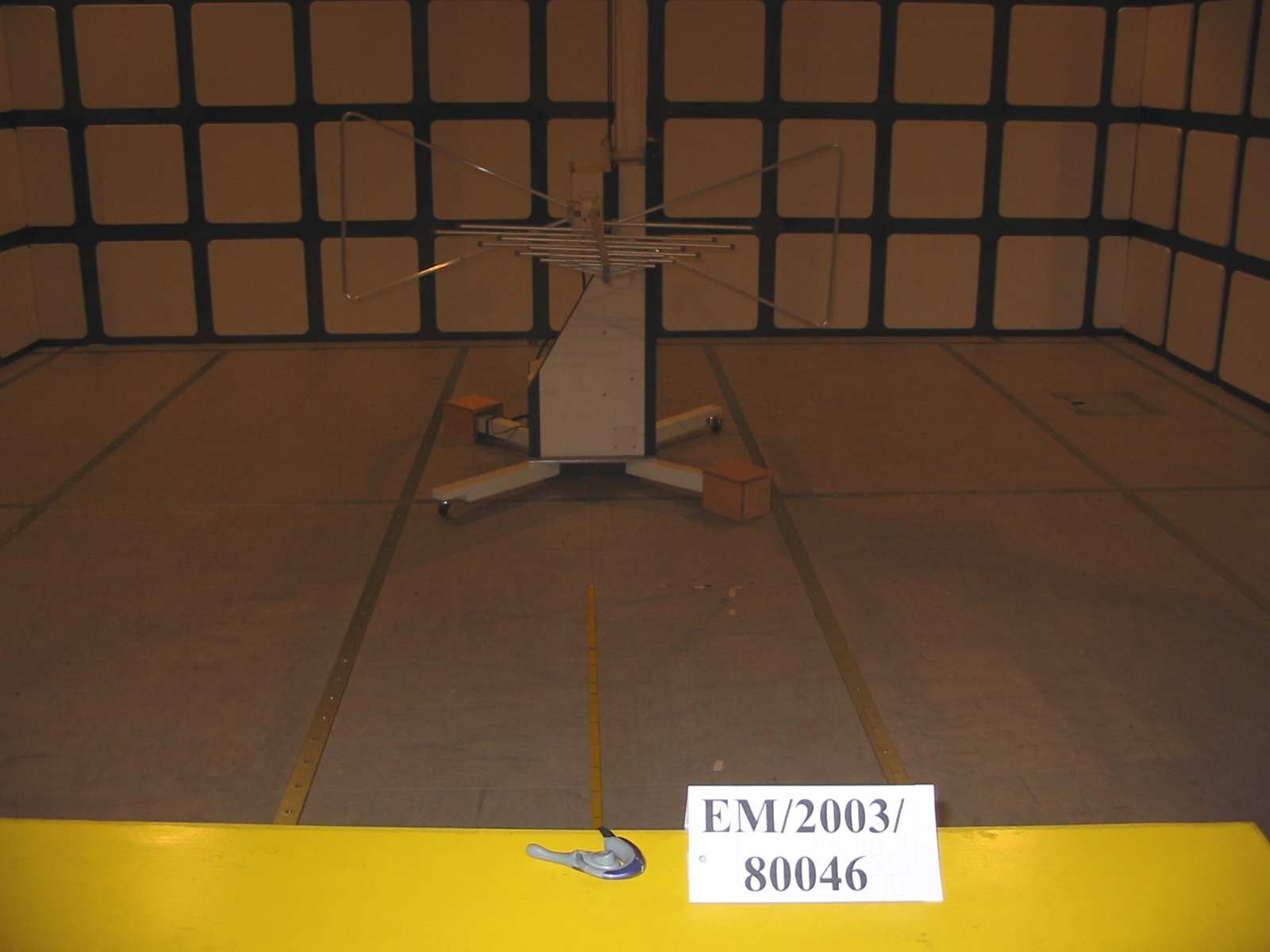
Report No. : ER/2003/80004 Page : 1 of 44 TEST REPORT Equipment Under Test : GST Class 2 Bluetooth Headset Model No. : GL2BHS82 Applicant : Global Sun Technology Inc. No 13. Tung Yuan Rd., Jung Li Industrial Park Jung Li City ,Taoyuan Hsien,Taiwan , R.O.C. Address of Applicant : Standards: FCC Part 15 subpart C In the configuration tested, the EUT complied with the standards specified above. Remarks: This report details the results of the testing carried out on one sample, the results contained in this test report do not relate to other samples of the same product. The manufacturer should ensure that all products in series production are in conformity with the product sample detailed in this report. This report may only be reproduced and distributed in full. If the product in this report is used in any configuration other than that detailed in the report, the manufacturer must ensure the new system complies with all relevant standards. Any mention of SGS Taiwan E&E Services or testing done by SGS Taiwan E&E Services in connection with distribution or use of the product described in this report must be approved by SGS Taiwan E&E Services in writing. Tested by : Alex Hsieh Date : Aug. 12, 2003 Approved by : Robert Chang Date : Aug 13, 2003 Report No. : ER/2003/80004 Page : 2 of 44 Contents 1. General Information 1.1 Testing Laboratory 3 1.2 Details of Applicant 3 1.3 Description of EUT(s) 3 1.4 Operation Procedure 4 1.5 Testing Method 4 2. Summary of Results 6 3. Instruments List 7 4. Measurements 8 4.1 Radiated emission Limits, general requirement 8 4.2 Channel Spacing 15 4.3 20db bandwidth / No. of channels 16 4.4 Average time of Occupancy 21 4.5 Peak output power 25 4.6 Band-edge emission 28 4.7 Spurious Emission under 25Ghz 30 APPENDIX Photographs of Test Setup 42 Photographs of EUT 43-44 Report No. : ER/2003/80004 Page : 3 of 44 1. General Information 1.1 Testing Laboratory SGS Taiwan Ltd. ( FCC Registration number: 573967 ) 1F, No. 134, Wukung Road, Wuku industrial zone Taipei county , Taiwan , R.O.C. Telephone : +886-2-2299-3279 Fax : +886-2-2298-2698 Internet : http://www.sgs.com.tw 1.2 Details of Applicant Applicant : Global Sun Technology Inc. Address of Applicant: No 13. Tung Yuan Rd.,Jung Li Industrial Park Jung Li City ,Taoyuan Hsien,Taiwan , R.O.C. Contact: Jane Lee Telephone: +886-2-85227155 ext.63110 1.3 Description of EUT(s) 1 Product name GST Class 2 Bluetooth Headset 2 Product ID GL2BHS82 3 Supply Voltage DC 3.7V 4 Antenna Gain 1.9 dBi 5 Carrier Frequency 2402MHz to 2480MHz 6 Modulation Method GFSK,1Mbps,0.5BT Gaussian 7 Hopping 1600hops/sec, 1MHz channel space 8 Output Interface USB 9 Operation Temperature -20 to +55 degree 10 Compliant Bluetooth Specification Ver1.1 Report No. : ER/2003/80004 Page : 4 of 44 1.4 Operation Procedure The Bluetooth is a FHSS system, and the output power and operating frequency are NOT End-user adjustable. Applicant offer a engineering software “BlueSuite” installed on PC to control the EUT. Setting of the software parameters are set as default. Operating frequency are set as testing required. The output power is set as Ext=255, Int=55 (at max. power). Inside the BlueSuite software, there is a BlueTest to control EUT hopping on or off. We select “Txdata1” (which modulated by pseudo-random sequence)and assign the transmit channel(as below). When the EUT is required to transmit in hopping on mode. We select “Txdata2” The lowest operating frequency within Bluetooth specification is 2402Mhz, and highest operating frequency is 2480Mhz. So the frequency above are used as the lowest and highest frequency in the testing, and the middle frequency is set as 2441Mhz. 1.5 Testing Method The testing standard follows CFR 47, Part 15.247 and ANSI C63.4 1992, and measurement method according to Public Notice DA00-705 (March 2000). The Testing procedure is as following: a. The EUT was plug in the USB port of PC and placed on the top of a rotating table 0.8 meters above the ground at a 3m chamber. The table was rotated 360 degrees to determine the position of the highest radiation. b. The EUT was set 3 meters away from the interference-receiving antenna. c. The antenna is a broadband antenna, and its height is varied from one meter to four meters above the ground to determine the maximum value of the field strength. Both horizontal and vertical polarizations of the antenna are set to make the measurement. d. For each suspected emission, the EUT was arranged to its worst case and then the antenna was tuned to heights from 1 meter to 4 meters and the turn table was turned from 0 degrees to 360 degrees to find the maximum reading. e. The test-receiver system was set to Peak Detect Function and Specified Bandwidth with Maximum Hold Mode. Report No. : ER/2003/80004 Page : 5 of 44 NOTE: 1. The resolution bandwidth and video bandwidth of test receiver/spectrum analyzer is 120kHz for Peak detection (PK) and Quasi-peak detection (QP) at frequency below 1GHz. 2. The resolution bandwidth and video bandwidth of test receiver/spectrum analyzer is 1 MHz for Peak detection at frequency above 1GHz. 3. The resolution bandwidth of test receiver/spectrum analyzer is 1 MHz and the video bandwidth is 300 Hz for Average detection (AV) at frequency above 1GHz. 4. During the Output power testing, the manufacturer attach a test fixture which is a short cable that replace the antenna. So we use conducted method to measure the power. Hence the EIRP is the output power plus the antenna gain in dBi. Due to cable loss, the real value will equal to measured value(show on the instrument) add cable loss. Report No. : ER/2003/80004 Page : 6 of 44 2.Summary of Results subclause Parameter to be measures Verdict Page 15.209 Radiated emission Limits, general requirement PASS 8 15.247(a)(1) Channel Spacing PASS 15 15.247(a)(1)(ii) 20db bandwidth / No. of channels PASS 16 15.247(a)(1)(ii) Average Time of Occupancy PASS 21 15.247(b)(1) Peak Output power PASS 25 15.247(c) Band-Edge Emission PASS 28 …
Text truncated - open the document above for the full version.
Contact Information
Applicant
Alex Wu(CTO)
Test Firm
SGS Taiwan Ltd.Wyse Chiu
Technical Specifications
| # | Rule Parts | Frequency Range | Power Output |
|---|---|---|---|
| 1 | 15C | 2.40 GHz - 2.48 GHz | 530.00 µW |
Other Applications from Global Sun Technology Inc

O7J-WLUD2554-17A
Apr 17, 2005802.11 a+g Wireless USB Dongle
Equipment Class
NII - Unlicensed National Information Infrastructure TX
O7J-WL012454-25M
Oct 24, 2004802.11g Wireless LAN Network Adapter
Equipment Class
DTS - Digital Transmission System
O7J-WLUD2454-13I
Sep 30, 2004802.11g Wireless USB Dongle
Equipment Class
DTS - Digital Transmission System
O7J-WLMP2454-1A3
Sep 25, 2004802.11g Wireless mini-PCI Module
Equipment Class
DTS - Digital Transmission System
O7J-WLRT2454NMA40
Jul 29, 2004AT&T Plug&Share 54Mbps Wireless Router
Equipment Class
DTS - Digital Transmission System