OL33GV26007Bluetooth Handset
ALE International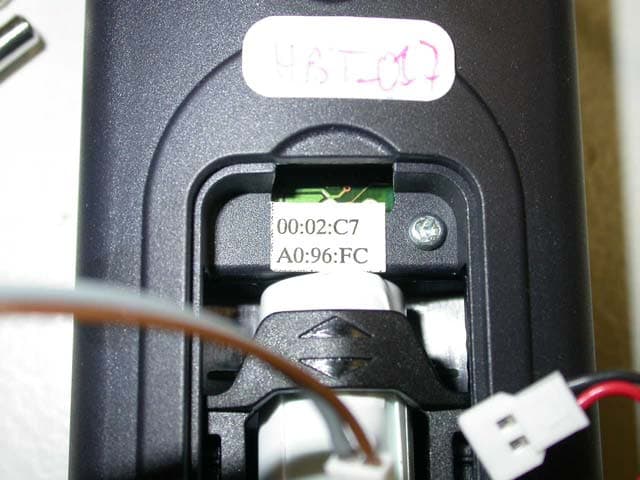
Click to zoom
Application Details
- Equipment Class
- DSS - Part 15 Spread Spectrum Transmitter
- Date of Grant
- Aug 02, 2004
- Application Purpose
- Original Equipment
- Date of Application
- Aug 02, 2004
- Equipment Note
- Bluetooth Handset
- Frequency Range
- 2402.00000000 - 2480.00000000
- Company
- ALE International
- Country
- France
Documents & Files
Document Text
Text extracted from the exhibit documents filed with the FCC. Open a document above to read the original.
Users Manual
US Alcatel IP Touch 4038 / 4068 www.alcatel.com transfer h old r edial end Telephone Receiver Socket for connecting headphones or a handsfree/speaker unit Audio keys END key to terminate a call. Handsfree/Speaker Key: to make or answer a call without lifting the receiver. • lit in handsfree mode or headset mode (short press). • flashing in speaker mode (long press). Intercom/Mute key: • During a call: press this key so that your party cannot hear you. • Terminal idle: press this key so that you can automa tically answer a call without lifting the receiver. To adjust the speaker or receiver volume up o r down Extension unit An extension unit can be fitted to your tele-phone. This provides additional keys which can be configured as feature keys, line keys, call keys etc.To affix labels: push the holding strip of the unit backwards to you and lift it. Install the la-bel under the keypad, in the housing designed for, and place the keypad back into position. Indicator light • flashing green: incoming call • flashing red: alarm Alphabetic keypad Display and display keys Contains several lines and pages providing information on calls and the features accessible via the 10 keys associated with the words on the screen. Forward icon: pressing the key next to this icon allows you to progr am or change the forward feature. Receiver connected. Appointment programmed. Silent mode enabled. Telephone locked. Display keys: pressing a display key activates the feature shown asso ciated with it on the screen. Navigation Welcome screens OK key: used to validate your choices and options while programming or config u- ring. Left-right navigator: used to move from one page to another. Up-down navigator: used to scroll through the content of a page. Back/Exit key: to return to previous menu (short press) or return to first screen (long press) ; during a conversation, provides access to welcome scr eens (Menu, In- fo, ...) and to return to the conversation icon screens. Menu page: contains all features and applications ac- cessible via the keys associated with the words on the screen.. Perso page: contains call line keys (allowing supervi- sion of calls) and programmable call keys. Info page: contains information on the telephone and the statu s of its features: name, telephone num- ber, number of messages, activation of forwar featur e, appointment reminder, etc. Call display Incoming call. Call in progress or outgoing call. Call on hold. If you get two calls at the same time, you can switch from one call to the other by pressing th e display key associated with each call. Left-right navigator: used to check calls. OK key: used to answer the call checked. Feature keys and programmable keys Guide key: used to obtain information on features of the 'men u' page and to program key of the 'perso' page. Messaging key to access various mail servicesIf the key flashes, a new voice message or a new text mess age has been received. 'Redial' key: To access the 'Redial' function . Hold: the call is placed on hold. Transfer: Transfer the call to another number. Adjust the tilt of the screen NOE-DC 3GV19001USAAed01.fm Page 2 Mercredi, 7. juil let 2004 8:17 08 American Other Customize your terminal The customization features of the telephone are accessed from the Menu page. Modifying your personal code Lock / unlock your telephone Adjusting the audio features Adjusting screen brightness IP Touch 4038 reach the ' menu ' page follow informations displayed on the screen reach the ' menu ' page depending the displayed informations, enter your password or confirm your telephone is locked/unlocked reach the ' menu ' page adjust ringing (melody, volume, mode,...) by following instructions displayed on the screen reach the ' menu ' page increase or decrease the contrast adjust the contrast by consecutive presses Settings My option Password Lock 2 6 5 3 ab c de f jk l m n o Settings My set / My option Ringing Settings My set Contrast - ||||| + OR Screen 4 Using your telephone Identifying the terminal you are on The number of your telephone is displayed on the 'Info' page. Making a call Answering a call Redial Making a callback request to a busy number Voice message service Reviewing your voice mailbox If the key flashes, a new voice message or a new te xt message has been received. Access the Info page using the navigator. lift the receiver handsfree programmable li ne key dial the number for your call To make an external call, dial the outside line access code (9) before dialing your party's number. lift the receiver handsfree press the key next to the 'incoming call' icon last number redial the number you are calling is busy hang up follow informations displayed on the screen press the key next to 'review voice or text message' OR OR OR 2 6 5 3 ab c de f jk l mn o OR OR Paulis calling Call back D ivert your calls to another number Forwarding your calls to another number Immediate forwarding to your voice mailbox When you return, cancel all forwarding Directory Using dial by name Programming your call keys Make calls via your programmed call keys press the key associated with the type of forward required (immediate, if busy, if no reply etc.) dial number to be called press the ok key if programming is not automatically recorded; press the key associated with 'forward to voice mailbox' press the ok key if programming is not automatically recorded if necessary, confirm cancellation of the forward press the key next to 'cancel or deactivate the forward' display indicates the party’s identity enter the first letters of the last name confirm if the name of the person you are calling is not displayed select the name from the displayed list make the call follow informations displayed on the screen press a call key or a programmable key (f1 or f2), either directly or via the key access the perso page using the navigator select the party you want to call from the programmed call keys call the selected party 2 6 5 3 ab c def jk…
Text truncated - open the document above for the full version.
External Photos
SRD-Testreport CETECOM ICT Services GmbH Saarbruecken, Germany Test report No.: 3-3702-02-10_03 Date: 2003-10-16 Page 41 of 45 4 Photographs Conducted test sample: SRD-Testreport CETECOM ICT Services GmbH Saarbruecken, Germany Test report No.: 3-3702-02-10_03 Date: 2003-10-16 Page 44 of 45 radiated Test sample:
ID Label/Location Info
All rights reserved. Passing on and copying of this document, use and communication of its contents not permitted without written authorization. 1AA 00014 0004 (9007) A4 Interleaf 5.3.1 Labelling specifications for NOE IP and AOM ED 09 Didier WANTZ07.09.20043GV 27003 AAAA DSZZA16 / 31 6 Labelling for Handset Bluetooth This chapter describes the labels of IP Touch 4068 Handset Bluetooth products and the label of their packaging. 6.1Product assembled level identification label for Handset Bluetooth DM4 WLP00400212345 00:02:c7:1D:60:18 BDADDR: BATTERY COVER INTO HANSET 66AA77 IP Touch 4068 Urban grey DM2 Handset Bluetooth 3GV26007ABAA010402 FCC ID: OL33GV26007ID: 1737D – IPTHSBT 6.1.1 Battery cover label Dimensions of the battery cover label : 38 x 20 mm Logo : Alcatel Product designation : IP Touch 4068 Handset Bluetooth (see table) Color specification : Urban Grey or Ice Blue (see table) FCC and IC ID: FCC ID: OL33GV26007 IC: 1737D–IPHSBT Logo : CSA _C_US CSA number : (6 characters), see table (example : 66AA77) Logo : CE Logo : FCC DM2 : Data Matrix 2 see “Product reference” Product reference : (18 characters) corresponding to “DM2” and from left to right : .12 characters, identification of product assembled level (see table), (example 3GV26007ABAA) .2 characters, number of ICS, under responsability of manufacturing (example 01)
Internal Photos
SRD-Testreport CETECOM ICT Services GmbH Saarbruecken, Germany Test report No.: 3-3702-02-10_03 Date: 2003-10-16 Page 42 of 45 SRD-Testreport CETECOM ICT Services GmbH Saarbruecken, Germany Test report No.: 3-3702-02-10_03 Date: 2003-10-16 Page 43 of 45
Test Report
O:\2_RSC\PROJEKTE\03closed\3-3702-2-03 Alcatel Bluetooth\3-3702-02-10_03 FCC Part 15 final.doc Recognized by the Federal Communications Commission FCC–Identification Number: 90462 TCB ID: DE 0001 Accredited by the German Accreditation Council DAR–Registration Number TTI–P–G 166/98 Independent ETSI compliance test house ETSI Accredited Bluetooth™ Test Facility (BQTF) Test report no.: 3-3702-02-10_03 FCC Part 15.247 / CANADA RSS-210 FCC ID: OL3 3GV26007 IP Touch Handset Bluetooth CETECOM – ICT Services GmbH Untertürkheimerstr. 6-10 D-66117 Saarbrücken, Germany Telephone: + 49 (0) 681 / 598-0 Fax: + 49 (0) 681 / 9075 BLUETOOTH is a trademark owned by Bluetooth SIG, Inc. and licensed to Cetecom SRD-Testreport CETECOM ICT Services GmbH Saarbruecken, Germany Test report No.: 3-3702-02-10_03 Date: 2003-10-16 Page 2 of 45 Table of contents 1. ADMINISTRATIVE DATA ...................................................................................................................................... 3 1.1. ADMINISTRATIVE DATA OF THE TEST FACILITY..................................................................................................... 3 1.1.1 Identification of the testing laboratory ......................................................................................................... 3 1.1.2 Organizational items..................................................................................................................................... 3 1.1.3 Applicant ́s details ........................................................................................................................................ 4 1.2 ADMINISTRATIVE DATA OF MANUFACTURER / MEMBER........................................................................................ 4 1.3 DESCRIPTION OF THE EQUIPMENT UNDER TEST (EUT) .......................................................................................... 5 1.3.1 EUT: Type, S/N etc. ...................................................................................................................................... 5 1.3.2 If RF component testing only, describtion of additional used HW/SW ......................................................... 5 1.3.3 Additional EUT information ......................................................................................................................... 5 1.3.4 EUT operating modes ................................................................................................................................... 6 1.3.5 Extreme conditions testing values................................................................................................................. 6 2. TESTSTANDARD & SUMMARY LIST OF ALL PERFORMED TEST CASES .............................................. 7 3. RF MEASUREMENT TESTING ............................................................................................................................. 8 3.1 DESCRIPTION OF TEST SET-UP................................................................................................................................8 3.1.1 Radiated measurements ................................................................................................................................ 8 3.1.2 Conducted measurements ............................................................................................................................. 8 3.2 REFERNECED DOCUMENTS.................................................................................................................................... 9 3.3 ADDITIONAL COMMENTS....................................................................................................................................... 9 3.4 ANTENNA GAIN..................................................................................................................................................... 9 3.5 CARRIER FREQUENCY SEPARATION §15.247(A1)................................................................................................. 10 3.6 NUMBER OF HOPPING CHANNELS §15.247(A1) .................................................................................................... 11 3.7 TIME OF OCCUPANCY (DWELL TIME) §15.247(A1 III) .......................................................................................... 12 3.8 POWER SPECTRAL DENSITY (HYBRID SYSTEM IN INQUIRY MODE/PAGE SCAN) §15.247(D) ................................. 13 3.9 SPECTRUM BANDWIDTH OF A FHSS SYSTEM / 20DB BANDWITH §15.247(A1) ................................................... 14 3.10 MAXIMUM OUTPUT POWER (CONDUCTED) § 15.247 (B) (1) ................................................................................. 16 3.11 MAX. PEAK OUTPUT POWER (RADIATED) § 15.247 (B) (1).................................................................................... 18 3.12 BAND-EDGE COMPLIANCE OF CONDUCTED EMISSIONS §15.247 (C) ..................................................................... 19 3.13 BAND-EDGE COMPLIANCE OF RADIATED EMISSIONS §15.205 .............................................................................. 22 3.14 SPURIOUS EMISSIONS - CONDUCTED (TRANSMITTER) § 15.247 (C) (1) ................................................................ 25 3.15 SPURIOUS EMISSIONS - RADIATED (TRANSMITTER) § 15.247 (C) (1).................................................................... 28 3.16 SPURIOUS EMISSIONS - RADIATED (RECEIVER) § 15.109 ..................................................................................... 33 3.17 SPURIOUS EMISSIONS - RADIATED <30 MHZ § 15.109 ........................................................................................ 35 3.17 SPURIOUS EMISSIONS - RADIATED <30 MHZ § 15.109 ........................................................................................ 35 3.18 CONDUCTED EMISSIONS <30 MHZ § 15.107/207 ................................................................................................ 36 4 PHOT…
Text truncated - open the document above for the full version.
Test Setup Photos
SRD-Testreport CETECOM ICT Services GmbH Saarbruecken, Germany Test report No.: 3-3702-02-10_03 Date: 2003-10-16 Page 45 of 45 EUT in test environment:
Test Setup Photos
US Alcatel IP Touch 4038 / 4068 www.alcatel.com transfer h old r edial end Telephone Receiver Socket for connecting headphones or a handsfree/speaker unit Audio keys END key to terminate a call. Handsfree/Speaker Key: to make or answer a call without lifting the receiver. • lit in handsfree mode or headset mode (short press). • flashing in speaker mode (long press). Intercom/Mute key: • During a call: press this key so that your party cannot hear you. • Terminal idle: press this key so that you can automa tically answer a call without lifting the receiver. To adjust the speaker or receiver volume up o r down Extension unit An extension unit can be fitted to your tele-phone. This provides additional keys which can be configured as feature keys, line keys, call keys etc.To affix labels: push the holding strip of the unit backwards to you and lift it. Install the la-bel under the keypad, in the housing designed for, and place the keypad back into position. Indicator light • flashing green: incoming call • flashing red: alarm Alphabetic keypad Display and display keys Contains several lines and pages providing information on calls and the features accessible via the 10 keys associated with the words on the screen. Forward icon: pressing the key next to this icon allows you to progr am or change the forward feature. Receiver connected. Appointment programmed. Silent mode enabled. Telephone locked. Display keys: pressing a display key activates the feature shown asso ciated with it on the screen. Navigation Welcome screens OK key: used to validate your choices and options while programming or config u- ring. Left-right navigator: used to move from one page to another. Up-down navigator: used to scroll through the content of a page. Back/Exit key: to return to previous menu (short press) or return to first screen (long press) ; during a conversation, provides access to welcome scr eens (Menu, In- fo, ...) and to return to the conversation icon screens. Menu page: contains all features and applications ac- cessible via the keys associated with the words on the screen.. Perso page: contains call line keys (allowing supervi- sion of calls) and programmable call keys. Info page: contains information on the telephone and the statu s of its features: name, telephone num- ber, number of messages, activation of forwar featur e, appointment reminder, etc. Call display Incoming call. Call in progress or outgoing call. Call on hold. If you get two calls at the same time, you can switch from one call to the other by pressing th e display key associated with each call. Left-right navigator: used to check calls. OK key: used to answer the call checked. Feature keys and programmable keys Guide key: used to obtain information on features of the 'men u' page and to program key of the 'perso' page. Messaging key to access various mail servicesIf the key flashes, a new voice message or a new text mess age has been received. 'Redial' key: To access the 'Redial' function . Hold: the call is placed on hold. Transfer: Transfer the call to another number. Adjust the tilt of the screen NOE-DC 3GV19001USAAed01.fm Page 2 Mercredi, 7. juil let 2004 8:17 08 American Other Customize your terminal The customization features of the telephone are accessed from the Menu page. Modifying your personal code Lock / unlock your telephone Adjusting the audio features Adjusting screen brightness IP Touch 4038 reach the ' menu ' page follow informations displayed on the screen reach the ' menu ' page depending the displayed informations, enter your password or confirm your telephone is locked/unlocked reach the ' menu ' page adjust ringing (melody, volume, mode,...) by following instructions displayed on the screen reach the ' menu ' page increase or decrease the contrast adjust the contrast by consecutive presses Settings My option Password Lock 2 6 5 3 ab c de f jk l m n o Settings My set / My option Ringing Settings My set Contrast - ||||| + OR Screen 4 Using your telephone Identifying the terminal you are on The number of your telephone is displayed on the 'Info' page. Making a call Answering a call Redial Making a callback request to a busy number Voice message service Reviewing your voice mailbox If the key flashes, a new voice message or a new te xt message has been received. Access the Info page using the navigator. lift the receiver handsfree programmable li ne key dial the number for your call To make an external call, dial the outside line access code (9) before dialing your party's number. lift the receiver handsfree press the key next to the 'incoming call' icon last number redial the number you are calling is busy hang up follow informations displayed on the screen press the key next to 'review voice or text message' OR OR OR 2 6 5 3 ab c de f jk l mn o OR OR Paulis calling Call back D ivert your calls to another number Forwarding your calls to another number Immediate forwarding to your voice mailbox When you return, cancel all forwarding Directory Using dial by name Programming your call keys Make calls via your programmed call keys press the key associated with the type of forward required (immediate, if busy, if no reply etc.) dial number to be called press the ok key if programming is not automatically recorded; press the key associated with 'forward to voice mailbox' press the ok key if programming is not automatically recorded if necessary, confirm cancellation of the forward press the key next to 'cancel or deactivate the forward' display indicates the party’s identity enter the first letters of the last name confirm if the name of the person you are calling is not displayed select the name from the displayed list make the call follow informations displayed on the screen press a call key or a programmable key (f1 or f2), either directly or via the key access the perso page using the navigator select the party you want to call from the programmed call keys call the selected party 2 6 5 3 ab c def jk…
Text truncated - open the document above for the full version.
Contact Information
Applicant
Patrick Hauptmann(Product Certification Manager, Voice Division)
Test Firm
Cetecom ICT Services GmbHRalf Hoehn
Technical Specifications
| # | Rule Parts | Frequency Range | Power Output |
|---|---|---|---|
| 1 | 15C | 2.40 GHz - 2.48 GHz | 480.00 µW |
Other Applications from ALE International
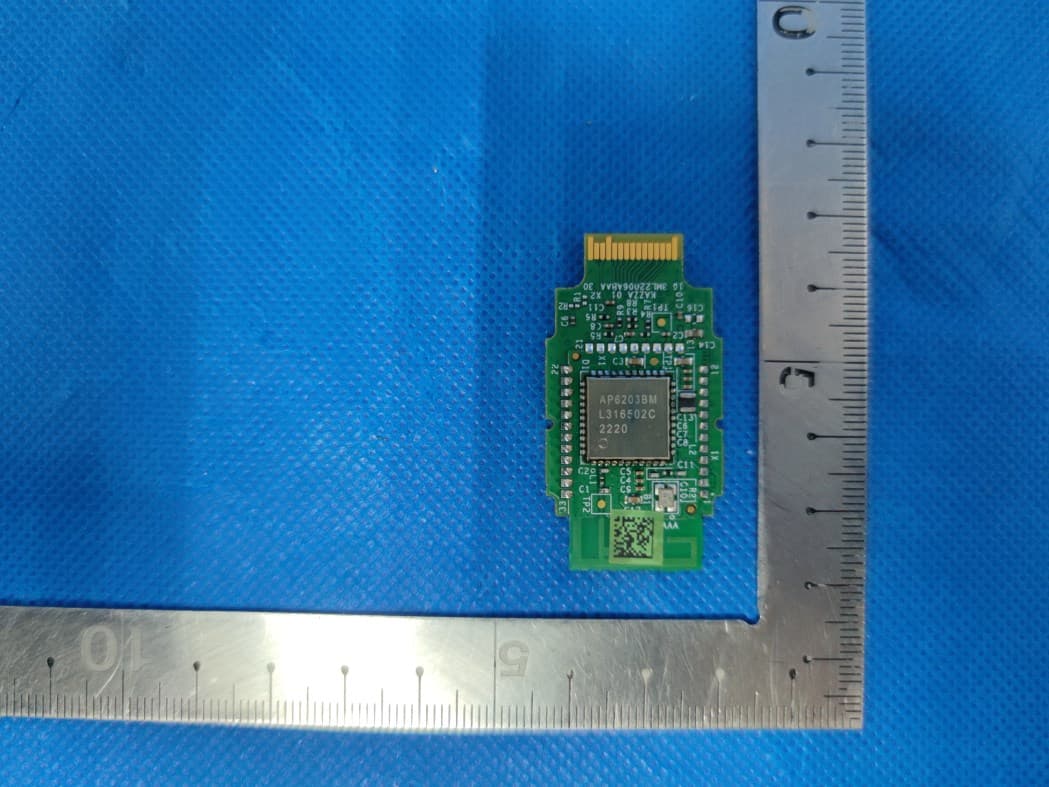
OL3BTWDB02
Jan 17, 2023BT & WLAN module
Equipment Class
DSS - Part 15 Spread Spectrum Transmitter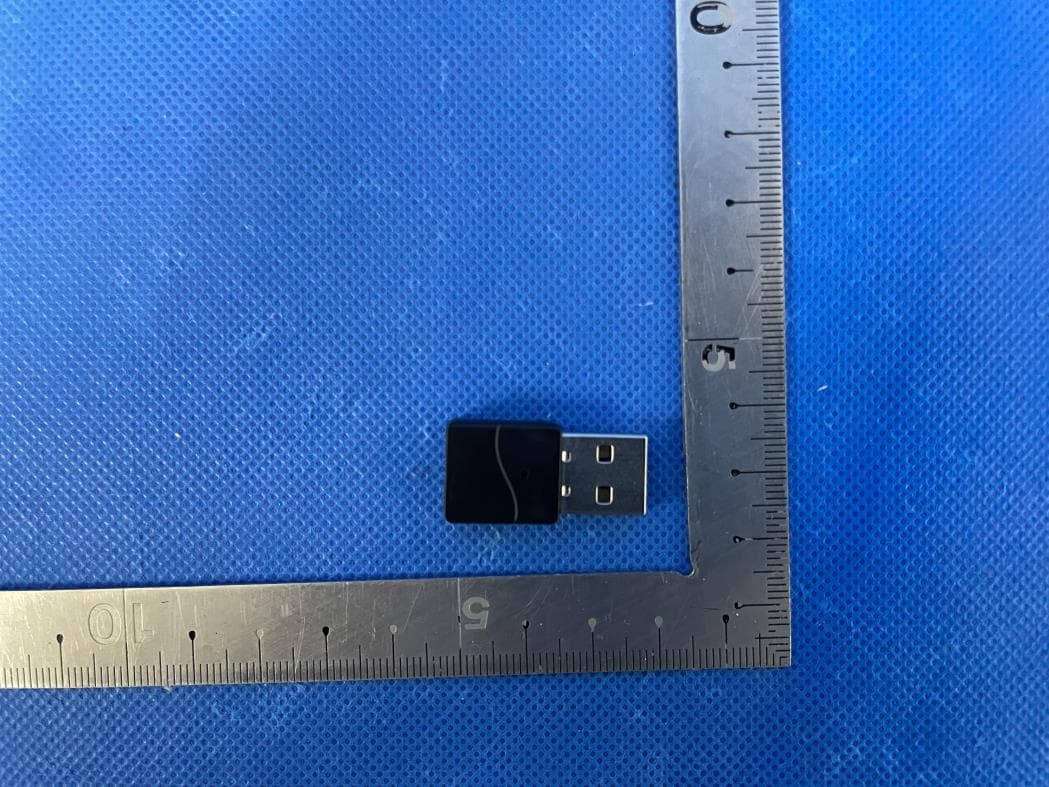
OL3AH80DONGLE
Nov 11, 2022AH80 Bluetooth Headset Dongle
Equipment Class
DSS - Part 15 Spread Spectrum Transmitter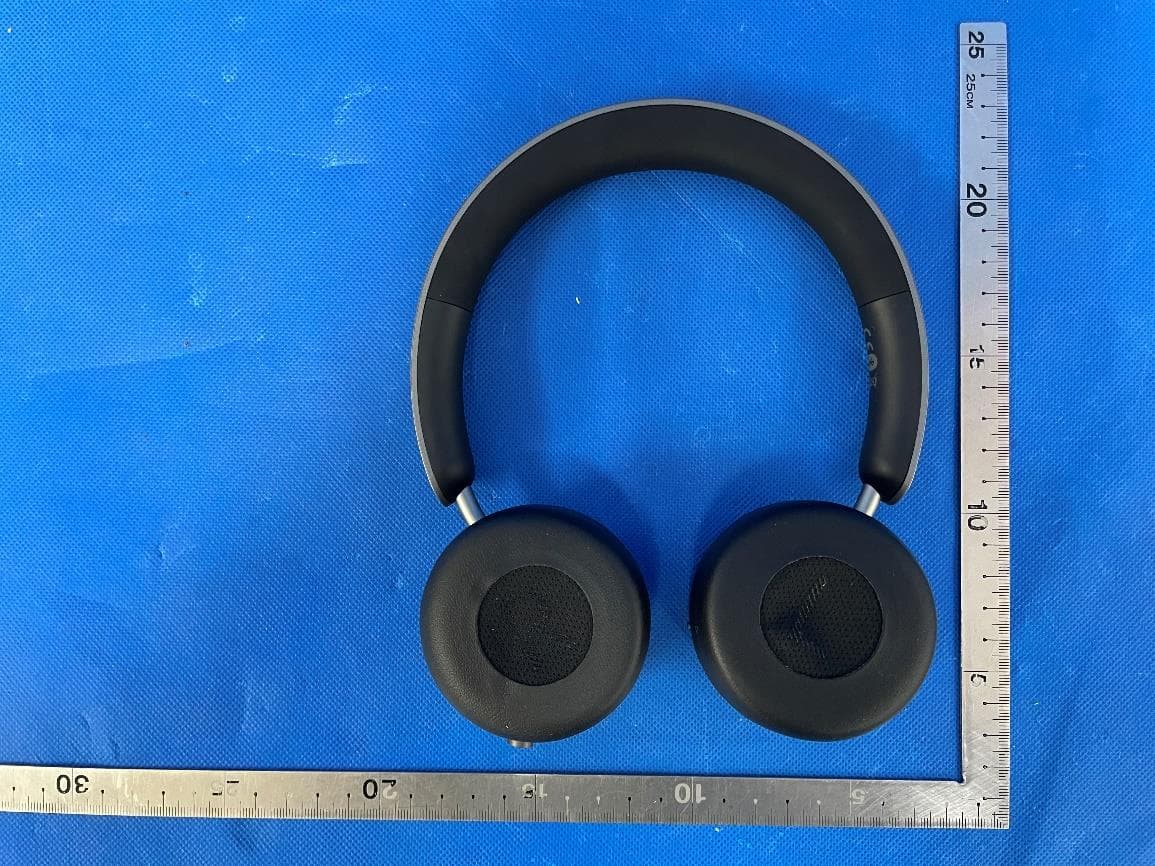
OL3AH80
Nov 10, 2022AH80 Bluetooth Headset
Equipment Class
DTS - Digital Transmission System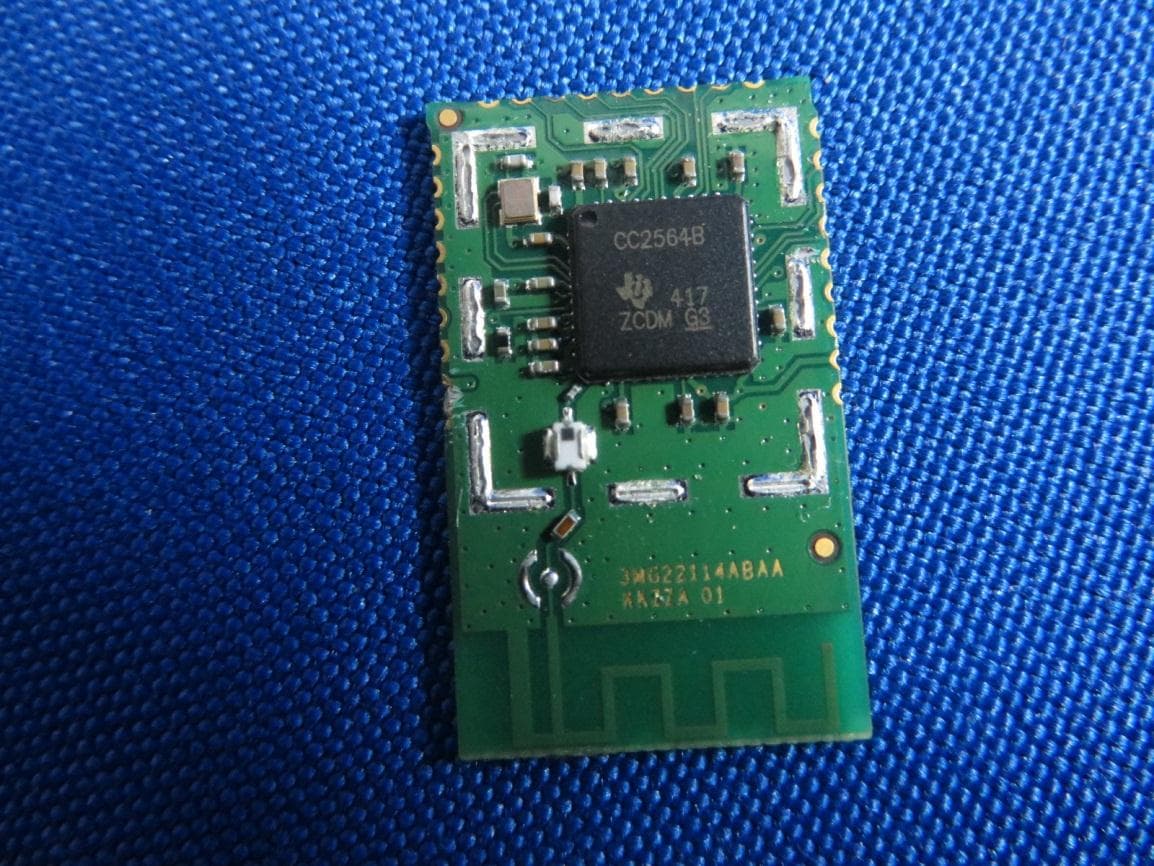
OL3BTMOD01
Mar 08, 2015Bluetooth Daughter Board
Equipment Class
DSS - Part 15 Spread Spectrum Transmitter
OL38068
Mar 05, 2014IP Phone
Equipment Class
DSS - Part 15 Spread Spectrum Transmitter