PDHGMRS-12002-WAY PORTABLE HANHELD RADIO
TTI Tech Co., Ltd.
Click to zoom
Application Details
- Equipment Class
- TNF - Licensed Non-Broadcast Transmitter Held to Face
- Date of Grant
- Feb 13, 2002
- Application Purpose
- Original Equipment
- Date of Application
- Dec 10, 2001
- Equipment Note
- 2-WAY PORTABLE HANHELD RADIO
- Frequency Range
- 462.56250000 - 462.72500000
- Company
- TTI Tech Co., Ltd.
- Country
- South Korea
Documents & Files
Document Text
Text extracted from the exhibit documents filed with the FCC. Open a document above to read the original.
Users Manual
1/13 GMRS-1200 USER MANUAL 2-WAY PORTABLE HANDHELD RADIO NOVEMBER 2, 2001 CONTENT 1. GE NER AL 1.1 General 1.2 Characteristic 1.3 Composition 2. SPECIFICATION 2.1 General Specification 2.2 Electrical Specification 3. OPERATION 3.1 ICON on LCD 3.2 Key Functions 3.3 Setting and Operation 2/13 4. CHANNEL DATA 1. GE NER AL 1.1 GENERAL This equipment, GMRS-1200 is called 2 way portable handheld radios. The frequency range is 462MHz, UHF operating Channel for international 2 way radio. Also it has a 38 CTCSS feature to get the clear communication without interference. 1.2 CHARACTERISTIC a) All active device in this radio is composed of semiconductor and high density IC. b) To design this radio in compact and weight approximately 110g with out battery. c) CPU of this equipment is H8/3802 from HITACHI d) It’s power can operate by use of alkaline 4 cell(1.5V AAA) battery. 1.3 COMPOSITION This radio is composed of following. a) Transceiver (W/Antenna) b) Belt clip 3/13 2. SPECIFICATION 2.1 GENERAL SPECIFICATIONS a) Frequency range : 462.5625 ~ 462.7250 MHz b) Communication Mode : Half duplex c) Channel Capacity : 15 channel d) Channel Spacing : 12.5 kHz e) Power : 6.0V(alkaline) f) Battery Life : Alkaline. 20hours (Tx5%, Rx5%, Stand-by90%) g) Operating Temperature : -20 ° C ~ +60 ° C h) Dimension : 174(H) x 58(W) x 39(D) i) Weight : 110g (without battery) 2.2 ELECTRICAL SPECIFICATION a) TRANSMITTER 1) Output power : Max . 1.8W 2) Frequency Stability : ± 5 ppm(-20 ° C ~ +60 ° C) 3) Modulation Method : FM 4) Oscillation Method : PLL SYNTHESIZER 5) Max. Frequency Deviation : < ± 2.5 kHz (with tone) 6) Cooling Method : air-cooling Method 7) Spurious Emission : < -60dB 8) FM Hum/Noise : > -40dB(1kHz 60% modulation, w/CCITT) 9) Distortion : < 5% (1kHz 60% modulation) 10) Tx Audio Response : 6dB / OCT ± 3dB Pre-Emphasis(300Hz ~ 3kHz) b) RECEIVER 4/13 1) Receiver Method : Double Super Heterodyne 2) Receiver Sensitivity : < 0.28uV(12dB SINAD) : > -118dBm 3) Squelch Sensitivity : -120dBm ~ -130dBm(AUDIO On/Off Point) 4) Bandwidth : > 8kHz (6dB ATT point) 5) Se lectivity : < - 60 dB (12.5kHz) 6) Local Frequency Stability : ± 2.5ppm(-30 ° C ~ +60 ° C) 7) Spurious Response : > 45 dB 8) Audio output : 200mW (Internal 8 Ω load THD 10%) 9) Distortion : < 5% (1kHz 60% Modulation) 10) RxAudio Response : 6dB/OCT +1/-10dB De-Emphasis(300Hz~2.5kHz) 11) S/N Radio : < 40 dB(1kHz 60% Modulation) 12) IF : 1’st IF --- 21.7MHz 2’nd IF --- 450kHz 13) Local Frequency : 1’st Local Frequency --- fc – 21.7MHz 2’nd Local Frequency --- 21.250MHz 3. OPERATION 3.1 ICONS on LCD 1) Monitor indicator : Appears when the CTCSS isn’t in use and squelch is open. 2) Key lock indicator : Indicates that the key lock function is in use. 3) Beep ON/OFF indicator : Appears while key tone is in use. 4) Roger On/Off indicator : Appears while Roger tone is in use. 5) Battery indicator : Indicates the battery status 6) Receive signal indicator : Appears when receiving signal or squelch noise is existing. 7) ID indicator : Appears when the ID function is in use. 8) Weather mode indicator : Icon will be on steady when in the weather band mode. The Icon will blink in every 2 seconds when in the FRS mode with the alert active. 9) Channel readout : Shows the current channel number. 10) CTCSS readout : Shows the operating CTCSS frequency or code. 11) SCAN indicator : Indicates that scan is enabled. 5/13 12) CTCSS indicator : Appears when the CTCSS function is in use. 13) Dual Watch indicator : Appears when the Dual Watch function is in use. 14) Out Of Range indicator : Appears when the Out Of Range function is in use. 15) VOX (Voice Activated Transmit) Indicator : Turning on the power while pressing PTT button activates VOX function. 3.2 Key Function MO DE SCA N EMG 1) PTT switch : Push and hold to transmit ; release to receive. 2) Monitor : Press and hold this key for over 2 seconds to enable the receive CTCSS feature. 3) Up/Down key : In the stand-by mode, Pressing this button will increment or decrement the listening volume. When in function edit mode, this button will be used to adjust the unit settings.. 4) Scan / Lock key : Push this key to momentarily to enable or disable the scan. Press and hold this key for over 2seconds to lock or unlock keypad. 5) Mode (Function) key : Push to select the following function setting mode. Βριεφ πρεσσ μοδε : 1∋στ πρεσσ Χηαννελ , 2 νδ πρεσσ ΧΤΧΣΣ, 3 ρδ πρεσσ ςΟΞ λεπελ, 4∋τη πρεσσ ∆υαλ Ωατχη Χηαννελ, 6/13 5 τη πρεσσ Ρογερ Ον/Οφφ, 6∋τη πρεσσ Βεεπ Ον/Οφφ, 7 τη πρεσσ Ουτ Οφ Ρανγε Ον/Οφφ, 8 τη πρεσσ Ι∆, 9 τη πρεσσ Αλερτ Ον/Οφφ, 10 τη πρεσσ Χαλλ 6) Speaker / Microphone 7) LCD (Liquid Crystal Display) 8) Transmit / Receive indicator : When receiving an incoming signal, the LED indicator will light green, and while the PTT button is pressed, the LED will light red. These LED’s are used for backlighting as well. 9)External speaker/mic jacks : Connect an optional speaker/mic or headset, if desired. The internal mic and speaker will not function when either is connected. 2) Function display Monitor Indicator: Icon appears when the monitor button is pressed and the channel monitor function is activated. Key Lock Indicator: Icon appears when the keypad is locked. This function disables keys such as channel up/down and mode. Signal Strength Indicator: Icon appears when a signal is being received. The Icon consists of five bars to indicate the received signal level. Beep Tone Indicator: Icon appears when beep tone confirmation tone is selected. Icon disappears when tone is off. Roger Beep Tone On/Off Indicator: Icon appears when the roger beep tone is selected. Icon disappears when tone is off. Battery Level Indicator: Icon indicates the battery charge level. Large Segment Display: Indicates the channel number in use. Caller ID Indicator: Icon appears when caller ID function is turned on. Icon disappears when the function is off. This work with small segment display. Coded Tone Controlled Squelch System(CTC) Indicator: Icon appea…
Text truncated - open the document above for the full version.
Users Manual
1/16 GMRS-1200 USER MANUAL 2-WAY PORTABLE HANDHELD RADIO NOVEMBER 2, 2001 2/16 FCC License required This Transceiver is intended for use in the operation of commercial activities. The Federal Communications commission (FCC) requires you to be licensed before you operate this transceiver. Unless you are already licensed to operate on one of the preset frequencies, you must apply for a frequency through the PCIA (Personal Communication Industry Association), a non-profit organization that assigns frequencies nationwide to help prevent conflicts between different businesses using transceivers in the same area. For more information about getting a license, contact the PCIA at 800-759- 0300, extension 3068 (in Virginia 703-739-0300, extension 3068) For other questions concerning the license application, contact the FCC at 717-337-1212, or wirte: FCC P.O.Box 1040 Gettysburg, PA 17325 For the latest FCC application form and instructions, call the FCC’s fax-on-demand service at 1-202-418-0177 from a fax machine and request one or more of the following documents: All forms and instructions ........................000600 Form 600 instructions only........................006001 Main Form 600 only.................................006002 Form 600 schedules only...........................006003 If you do not have a fax machine, you can call the Government Forms Distribution Center at 1-800-418-FORM and request that the form and instructions be mailed to you. FCC Part 95 Rules You must be familiar with Part 95 of FCC Rules before you operate your transceiver. The operation instructions in this manual conform to Part 95, but do not cover all items in Part 95. Overall, Part 95 states that: ! You must have a valid license before you use the transceiver. ! As licensee, you are responsible for proper operation of all transceivers operating under your license’s authority. ! You can let unlicensed persons operate transmitter, as long as you take precautions to prevent unauthorized transmissions. ! You must use this transceiver only for commercial use of your business, and only when other commercial channels (such as the telephone) are either not available or not practical. ! You must always yield the operating frequency to communications that 3/16 involve the safety of life or property. ! You must take reasonable precautions to prevent harmful interference to other services operating on the same frequency. ! You must not transmit program material of any kind used in connection with commercial broadcasting. ! You must not provide a service that is normally handles by telephone or telegraph unless such broadcasts involve the safety of life and property or in emergencies such as an earthquake, hurricane, flood or a similar disaster where normal communications channels are disrupted. ! During each transmissions or exchange of transmissions, you must identify your station with the call sign issued to you by the FCC, or once each 15 minutes during periods of continuous operation. ! You must keep a written record of any maintenance or modifications made to the transceiver, and you must make this record available for inspection upon demand by the FCC. Violating any of the provisions of Part 95 can result in fines and/or confiscation of equipment. Your transceiver might cause TV or Radio interference even when it is operating properly. To determine whether your transceiver is causing the interference, turn off your transceiver. If the interference goes away, your transceiver us causing it. Try to eliminate the interference by: ! Moving your transceiver away from the receiver ! Contacting your local RadioShack store for help If you cannot eliminate the interference, the FCC requires that you stop using your transceiver. Before you operate the transceiver, you must obtain your license. It is illegal to transmit without the appropriate license, which you can get by submitting a completed FCC Form 600 to the FCC (or through the PCIA). Furthermore, your are required to understand Part 95 of the FCC Rules and Regulations prior to operating your transceiver. It is the user’s responsibility to see that this unit is operating at all times in accordance with the FCC Rules and Regulations. 4/16 Safety Information Your radio contains a low power transmitter. When the PTT button is pushed it sends out radio frequency (RF) signals. I n August 1996, the FCC adopted RF exposure guidelines with safety levels for hand-held wireless devices. Cautions: • To maintain compliance with the FCC’s RF exposure guidelines, hold the entire radio, including the antenna, at least 2 inches (5 cm) from your face, with the antenna pointed up and away from your face. • If you wear the radio on your body, to maintain compliance with the FCC’s RF exposure guidelines, you must unclip it from your body before transmitting. Hold the entire radio, including the antenna, at least 2 inches (5 cm) from your body while transmitting. • Use only the supplied antenna. Unauthorized antennas, modifications or attachments could damage the transmitter and may violate FCC regulations. 5/16 CONTENT 1. GE NER AL 1.1 General 1.2 Characteristic 1.3 Composition 2. SPECIFICATION 2.1 General Specification 2.2 Electrical Specification 3. OPERATION 3.1 ICON on LCD 3.2 Key Functions 3.3 Setting and Operation 4. CHANNEL DATA 1. GE NER AL 1.1 GENERAL This equipment, GMRS-1200 is called 2 way portable handheld radios. The frequency range is 462MHz, UHF operating Channel for international 2 way radio. Also it has a 38 CTCSS feature to get the clear communication without interference. 6/16 1.2 CHARACTERISTIC a) All active device in this radio is composed of semiconductor and high density IC. b) To design this radio in compact and weight approximately 110g with out battery. c) CPU of this equipment is H8/3802 from HITACHI d) It’s power can operate by use of alkaline 4 cell(1.5V AAA) battery. 1.3 COMPOSITION This radio is composed of following. a) Transceiver (W/Antenna) b) Belt clip 2. …
Text truncated - open the document above for the full version.
Users Manual
1/16 GMRS-1200 USER MANUAL 2-WAY PORTABLE HANDHELD RADIO NOVEMBER 2, 2001 2/16 FCC License required This Transceiver is intended for use in the operation of commercial activities. The Federal Communications commission (FCC) requires you to be licensed before you operate this transceiver. Unless you are already licensed to operate on one of the preset fequencies, you must apply for a frequency through the PCIA (Personal Communication Industry Association), a non-profit organization that assigns frequencies nationwide to help prevent conflicts between different businesses using transceivers in the same area. For more information about getting a license, contact the PCIA at 800-759-0300, extension 3068 (in Virginia 703-739-0300, extension 3068) For other questions concerning the license application, contact the FCC at 717-337-1212, or wirte: FCC P.O.Box 1040 Gettysburg, PA 17325 For the latest FCC application form and instructions, call the FCC’s fax-on-demand service at 1-202-418-0177 from a fax machine and request one or more of the following documents: All forms and instructions ........................000600 Form 600 instructions only........................006001 Main Form 600 only.................................006002 Form 600 schedules only...........................006003 If you do not have a fax machine, you can call the Government Forms Distribution Center at 1-800-418-FORM and request that the form and instructions be mailed to you. FCC Part 95 Rules You must be familiar with Part 95 of FCC Rules before you operate your transceiver. The operation instructions in this manual conform to Part 95, but do not cover all items in Part 95. Overall, Part 95 states that: ! You must have a valid license before you use the transceiver. ! As licensee, you are responsible for proper operation of all transceivers operating under your license’s authority. ! You can let unlicensed persons operate transmitter, as long as you take precautions to prevent unauthorized transmissions. ! You must use this transceiver only for commercial use of your business, and only when other commercial channels (such as the telephone) are either not available or not practical. ! You must always yield the operating frequency to communications that involve the safety of life or property. ! You must take reasonable precautions to prevent harmful interference to other services operating on the same frequency. ! You must not transmit program material of any kind used in connection with commercial broadcasting. ! You must not provide a service that is normally handles by telephone or telegraph unless such broadcasts involve the safety of life and property or in emergencies such as an earthquake, hurricane, flood or 3/16 a similar disaster where normal communications channels are disrupted. ! During each transmissions or exchange of transmissions, you must identify your station with the call sign issued to you by the FCC, or once each 15 minutes during periods of continuous operation. ! You must keep a written record of any maintenance or modifications made to the transceiver, and you must make this record available for inspection upon demand by the FCC. Violating any of the provisions of Part 95 can result in fines and/or confiscation of equipment. Your transceiver might cause TV or Radio interference even when it is operating properly. To determine whether your transceiver is causing the interference, turn off your transceiver. If the interference goes away, your transceiver us causing it. Try to eliminate the interference by: ! Moving your transceiver away from the receiver ! Contacting your local RadioShack store for help If you cannot eliminate the interference, the FCC requires that you stop using your transceiver. Before you operate the transceiver, you must obtain your license. It is illegal to transmit without the appropriate license, which you can get by submitting a completed FCC Form 600 to the FCC (or through the PCIA). Furthermore, your are required to understand Part 95 of the FCC Rules and Regulations prior to operating your transceiver. It is the user’s responsibility to see that this unit is operating at all times in accordance with the FCC Rules and Regulations. Safety Information Your Handheld Radio generates RF electromagnetic energy during transmit mode. This radio is designed for and classified as “ Occupational Use Only”, meaning it must be used only during the course of employme nt by individuals aware of the hazards, and the ways to minimize such hazards. This radio is NOT intended for use by the “General Population” in an uncontrolled environme nt. This radio has been tested and complies with the FCC RF exposure limits for “Occupational Use Only.” In addition, your Handheld radio complies with the following Standards and Guidelines with regard to RF energy and electromagnetic energy levels and evaluation of such levels for exposure to humans: • FCC OET Bulletin 65 Edition 01-01 Supplement C, Evaluating Compliance with FCC Guidelines for Human Exposure to Radio Frequency Electromagnetic Fields. • American National Standards Institute (ANSI) (C95.1—1992), IEEE Standard for Safety Levels with Respect to Human Exposure to Radio Frequency Electromagnetic Fields, 3 kHz to 300 GHz. • American National Standards Institute (C95.3—1999), IEEE Recommended Practice for the Measurements of Potentially Hazardous Electromagnetic Fields — RF and Microwave. To ensure that your exposure to RF electromagnetic energy is within the FCC allowable limits for occupational use, always adhere to the following guidelines: DO NOT operate the radio without a proper antenna attached, as this may damage the radio and may also 4/16 cause you to exceed FCC RF exposure limits. A proper antenna is the antenna supplied with the radio by the manufacturer or an antenna specifically authorized by the manufacturer for use with this radio. For body worn operation, this handheld radio has been tested and meets the FCC RF exposure guideli…
Text truncated - open the document above for the full version.
Cover Letter(s)
tti.... TTI Tech Co., Ltd. Room 402, Eundo Bldg. 737-19, Banpo-1 dong, Seocho-ku, Seoul, Korea 137-041 (T) +82 2 518 2417/8 (F) +82 2 518 2419 December 7, 2001 Federal Communications Commission Authorization and Evaluation Division Equipment Authorization Branch 7435 Oakland Mills Road Columbia, MD 21046 U.S.A. Dear Sir : We, TTI Tech Co., Ltd., hereby request the confidentiality of what documents we turned in including Theory of Operation, Functional Block Diagram, Schematic Diagram, Part List and Tune-up Procedure for our FCC-Applied ID’s PDHGMRS-1200, PDHGMRS- 1535A and PDHFRS-3000PKH. Truly yours, H. J. Lee / Senior Manager TTI Tech Co., Ltd.
Cover Letter(s)
Compliance Certification Services, 561F Monterey Road, Morgan Hill Ca 95037 Tel: (408)463-0885, Fax: (408)463-0888 Federal Communications Commission 7435 Oakland Mills Road Columbia MD 21046 Attention:Application Examiner Reference:Applicant:TTI Tech Co., Ltd. FCC ID:PDHGMRS-1200 Confirmation no:EA556595 Subject:Correction on the Form 731 Dear Application Examine : Please correct the following information on the Form 731 : 1.Item 1: Company name has been changed from Trident Technology International to TTI Tech Co., Ltd. ( FRN:0005866025). A letter from the applicant has been uploaded to FCC Web Site. 2.Item 12: Equipment Specification Frequency Range : Should be 462.5500 – 462.7250MHz. Rate RF power output : Should be 1.096Watte Frequency Tolerance : 0.0005% is correct. Emission Designator : Should be 16K38F3E If you have any question, please feel free to contact us. Best Regards Steve Cheng / EMC Manager Compliance Certification Services [email protected] 1/17/2002
Cover Letter(s)
tti.... TTI Tech Co., Ltd. Room 402, Eundo Bldg. 737-19, Banpo-1 dong, Seocho-ku, Seoul, Korea 137-041 (T) +82 2 518 2417/8 (F) +82 2 518 2419 December 26, 2001 Federal Communications Commission Authorization and Evaluation Division Equipment Authorization Branch 7435 Oakland Mills Road Columbia, MD 21046 U.S.A. Dear Sir : We hereby confirm that our company name was changed from “Trident Technology International” to “TTI Tech Co., Ltd.” as of January 1 2001, and all the current FCC Applications turned in by us shall be under the name of “TTI Tech Co., Ltd.”. Truly yours, H. J. Lee / Senior Manager TTI Tech Co., Ltd.
ID Label/Location Info
PROPOSED FCC ID LABEL AND LOCATION FCC ID LABEL FCC ID: PDHGMRS-1200 MODEL NO: GMRS 1200 TRIDENT TECHNOLOGY INTERNATIONAL THIS DEVICE COMPLIES WITH PART 15 OF THE FCC RULES. OPERATION IS SUBJECT TO THE FOLLOWING TWO CONDITIONS: (1) THIS DEVICE MAY NOT CAUSE HARMFUL INTERFERENCE, AND (2) THIS DEVICE MUST ACCEPT ANY INTERFERENCE RECEIVED INCLUDING INTERFERENCE THAT MAY CAUSE UNDERSIRED OPERATION. MADE IN KOREA
ID Label/Location Info
Occupational RF Exposure Warning Statement: Applicant : Trident Technology International FCC ID: PDHGMRS-1200 Device must restrict to occupational use to satisfy FCC RF exposure compliance. See user manual for specific operating requirements.
RF Exposure Info
in accordance with the requirements of FCC Report and Order: ET Docket 93-62, and OET Bulletin 65 Supplement C for GMRS TRANSCEIVER MODEL: GMRS 1200 FCC ID: PDHGMRS-1200 January 15, 2002 REPORT NO: 01I1085-4 Prepared for TTI TECH CO., LTD. ROOM 402, EUNDO BLDG. 737-19, BANPO-1 DONG SEOCHO-KU, SEOUL, KOREA Prepared by COMPLIANCE CERTIFICATION SERVICES 561F MONTEREY ROAD, MORGAN HILL, CA 95037, USA TEL: (408) 463-0885 REPORT NO: 01I1085-4 DATE: JANUARY 15, 2002 FCC ID: PDHGMRS-1200 EUT: GMRS TRANSCEIVER COMPLIANCE CERTIFICATION SERVICES Page: 2 of 33 TEL:(408) 463-0885 561F MONTEREY ROAD, MORGAN HILL CA 95037 U.S.A. FAX:(408) 463-0888 This report shall not be reproduced except in full, without the written approval of CCS. This document may be altered or revised by Compliance Certification Services personnel only, and shall be noted in the revision section of the document. CERTIFICATE OF COMPLIANCE (SAR EVALUATION) Dates of Tests: December 17 & 20, 2001 Report No: 01I1085-4 APPLICANT: TTI TECH CO., LTD. ROOM 402, EUNDO BLDG. 737-19, BANPO-1 DONG SEOCHO-KU, SEOUL, KOREA 137-041 TRADE NAME: TTI TECH CO., LTD. MODEL: GMRS 1200 FCC ID: PDHGMRS-1200 DEVICE CATEGORY: PORTABLE DEVICES RF EXPOSURE ENVIRONMENT: OCCUPATIONAL/CONTROLLED EXPOSURE Test Sample is a: Production unit Operating Mode: Maximum continuous output Tx Frequency: 462.5500 ~ 462.7250 MHz Max. RF Output Power: 33.6dBm (Conducted) FCC Classification: General Mobile Radio Service (GMRS) Transceiver Application Type: Certification FCC Rule Part(s): § 95 Subpart A This wireless portable device has been shown to be capable of compliance for localized specific absorption rate (SAR) for uncontrolled environment/general population exposure limits specified in ANSI/IEEE Std. C95.1-1992 and had been tested in accordance with the measurement procedures specified in FCC OET 65 Supplement C (released on 6/29/2001 see Test Report). I attest to the accuracy of data. All measurements reported herein were performed by me or were made under my supervision and are correct to the best of my knowledge and belief. I assume full responsibility for the completeness of these measurements and vouch for the qualifications of all persons taking them. Steve Cheng EMC Engineering Manager NVLAP accreditation does not constitute any product endorsement by NVLAP or any agency of the United States Government. CCS certifies that no party to this application has been denied the FCC benefits pursuant to Section 5301 of the Anti-Drug Abuse Act of 1988, 21 U.S.C. 853(a) REPORT NO: 01I1085-4 DATE: JANUARY 15, 2002 FCC ID: PDHGMRS-1200 EUT: GMRS TRANSCEIVER COMPLIANCE CERTIFICATION SERVICES Page: 3 of 33 TEL:(408) 463-0885 561F MONTEREY ROAD, MORGAN HILL CA 95037 U.S.A. FAX:(408) 463-0888 This report shall not be reproduced except in full, without the written approval of CCS. This document may be altered or revised by Compliance Certification Services personnel only, and shall be noted in the revision section of the document. TABLE OF CONTENT 1. EUT DESCRIPTION..............................................................................................4 2. REQUIREMENTS FOR COMPLIANCE TESTING DEFINED BY THE FCC.........5 3. DOSIMETRIC ASSESSMENT SETUP..................................................................5 3.1. MEASUREMENT SYSTEM DIAGRAM.......................................................................................................6 3.2. SYSTEM COMPONENTS...........................................................................................................................7 3.3. EUT ARRANGEMENT..............................................................................................................................11 4. EUT TUNE-UP PROCEDURE.............................................................................12 5. EVALUATION PROCEDURE..............................................................................13 5.1. SIMULATED TISSUE LIQUID PARAMETER CONFIRMATION..............................................................13 5.2. SYSTEM ACCURACY VERIFICATION....................................................................................................13 5.3. SAR EVALUATION PROCEDURE...........................................................................................................16 5.4. EXPOSURE LIMIT....................................................................................................................................17 6. RESULTS............................................................................................................18 7. REFERENCES....................................................................................................28 8. APPENDIX..........................................................................................................29 8.1. EUT PHOTOS...........................................................................................................................................29 8.2 EQUIPMENTS LIST & CALIBRATION INFO...........................................................................................30 8.3 IEEE SCC-34/SC-2 P1528 RECOMMENDED TISSUE DIELECTRIC PARAMETERS............................31 8.4 EQUIPMENTS CALIBRATION CERTIFICATE.........................................................................................32 REPORT NO: 01I1085-4 DATE: JANUARY 15, 2002 FCC ID: PDHGMRS-1200 EUT: GMRS TRANSCEIVER COMPLIANCE CERTIFICATION SERVICES Page: 4 of 33 TEL:(408) 463-0885 561F MONTEREY ROAD, MORGAN HILL CA 95037 U.S.A. FAX:(408) 463-0888 This report shall not be reproduced except in full, without the written approval of CCS. This document may be altered or revised by Compliance Certification Services personnel only, and shall be noted in the revision section of the document. APPLICANT: TTI TECH CO., LTD. ROOM 402, EUNDO BLDG. 737-19, BANPO-1 DONG SEOCHO-KU, SEOUL, KOREA 137-041 TRADE NAME: TTI TECH CO., LTD. MODEL: GMRS 1200 FCC ID: PDHGMRS-1200 DEVICE CATEG…
Text truncated - open the document above for the full version.
RF Exposure Info
System Validation Plot (Output Power = 250mW) System Validation - SAR vs. Z-Axis Plot
RF Exposure Info
Worst Case SAR Test Plot Face held configuration (25mm separation), low channel frequency Worst Case SAR vs. Z-Axis Plot Face held configuration (25mm separation), low channel frequency SAR Test Plot Face held configuration (25mm separation), high channel frequency SAR vs. Z-Axis Plot Face held configuration (25mm separation), high channel frequency Worst Case SAR Test Plot Body-worn configuration (2mm Phantom Thickness Separation), low channel frequency Worst Case SAR vs. Z-Axis Plot Body-worn configuration (2mm Phantom Thickness Separation), low channel frequency SAR Test Plot Body-worn configuration (2mm phantom thickness Separation), high channel frequency SAR vs. Z-Axis Plot Body-worn configuration (2mm Phantom Thickness Separation), high channel frequency
RF Exposure Info
REPORT NO: 01I1085-4 DATE: JANUARY 15, 2002 FCC ID: PDHGMRS-1200 EUT: GMRS TRANSCEIVER COMPLIANCE CERTIFICATION SERVICES Page: 11 of 33 TEL:(408) 463-0885 561F MONTEREY ROAD, MORGAN HILL CA 95037 U.S.A. FAX:(408) 463-0888 This report shall not be reproduced except in full, without the written approval of CCS. This document may be altered or revised by Compliance Certification Services personnel only, and shall be noted in the revision section of the document. 3.3. EUT ARRANGEMENT The EUT is a GMRS Transceiver, and the separation distance to the user is: 1. When operate in front of a person’s face. A separation distance of 25 mm between the front of the EUT and flat phantom as defined in FCC supplement C was used to evaluate the SAR. 2. When in body worn configuration EUT was tested with supplied belt-clip accessory. For body Worn configuration, the back of belt- clip was directly contacted to the flat phantom. By considering the thickness of Flat phantom which is 2 mm. A separation distance of 2 mm was used to evaluate the Body Worn SAR. SETUP PHOTO: Face held configuration (25mm separation) Body-worn Configuration (2 mm Separation phantom thickness)
RF Exposure Info
REPORT NO: 01I1085-4 DATE: JANUARY 15, 2002 FCC ID: PDHGMRS-1200 EUT: GMRS TRANSCEIVER COMPLIANCE CERTIFICATION SERVICES Page: 19 of 33 TEL:(408) 463-0885 561F MONTEREY ROAD, MORGAN HILL CA 95037 U.S.A. FAX:(408) 463-0888 This report shall not be reproduced except in full, without the written approval of CCS. This document may be altered or revised by Compliance Certification Services personnel only, and shall be noted in the revision section of the document. Worst case SAR in each test configuration 1. Face held configuration (liquid depth: 15.1 cm) Conducted Power [dBm] Worst case SAR, averaged over 1g [mW/g] Set-up condition Mode Liquid Ch Freq [MHz] Liquid Temp [°C] Before After Antenna Sep. dist. Measured Corrected* Limit CW Head 450MHz 11 462.5500 21.7 33.6 32.3 Fixed 25 mm 0.799 1.078 8 * Due to the power loss over the testing duration, the final SAR value has been scale up to compensated for 0.799 x 10 ((33.6-32.3)/10) = 1.078 2. Body worn configuration (liquid depth: 15.2 cm) Conducted Power [dBm] Worst case SAR, averaged over 1g [mW/g] Set…
Text truncated - open the document above for the full version.
Contact Information
Applicant
J. N. LEE(Manager)
Technical Contact
COMPLIANCE CERTIFICATION SERVICESSTEVE CHENG
[email protected]408-463-0885
561F MONTEREY ROAD · MORGAN HILL, California · United States
Non-Technical Contact
COMPLIANCE CERTIFICATION SERVICESCHRISTINE VU
[email protected]408-463-0885
Test Firm
Compliance Certification Services IncSteve Cheng
Technical Specifications
| # | Rule Parts | Frequency Range | Power Output | Emission | Tolerance |
|---|---|---|---|---|---|
| 1 | 95A | 462.5625 MHz - 462.725 MHz | 1.096 W | 11K0F3E | 0.0005000000 % |
Other Applications from TTI Tech Co., Ltd.
PDHTX150M
Jan 18, 2007HANDHELD MARINE RADIO
Equipment Class
TNF - Licensed Non-Broadcast Transmitter Held to Face
PDHGMRS200
Jul 05, 2005FRS/GMRS COMBINATION
Equipment Class
FRF - Part 95 Family Radio Face Held Transmitter
PDHGMRS1202
Feb 06, 2005FRS/ GMRS Combination
Equipment Class
FRF - Part 95 Family Radio Face Held Transmitter
PDHGMRS602
Feb 06, 2005FRS/ GMRS Combination
Equipment Class
FRF - Part 95 Family Radio Face Held Transmitter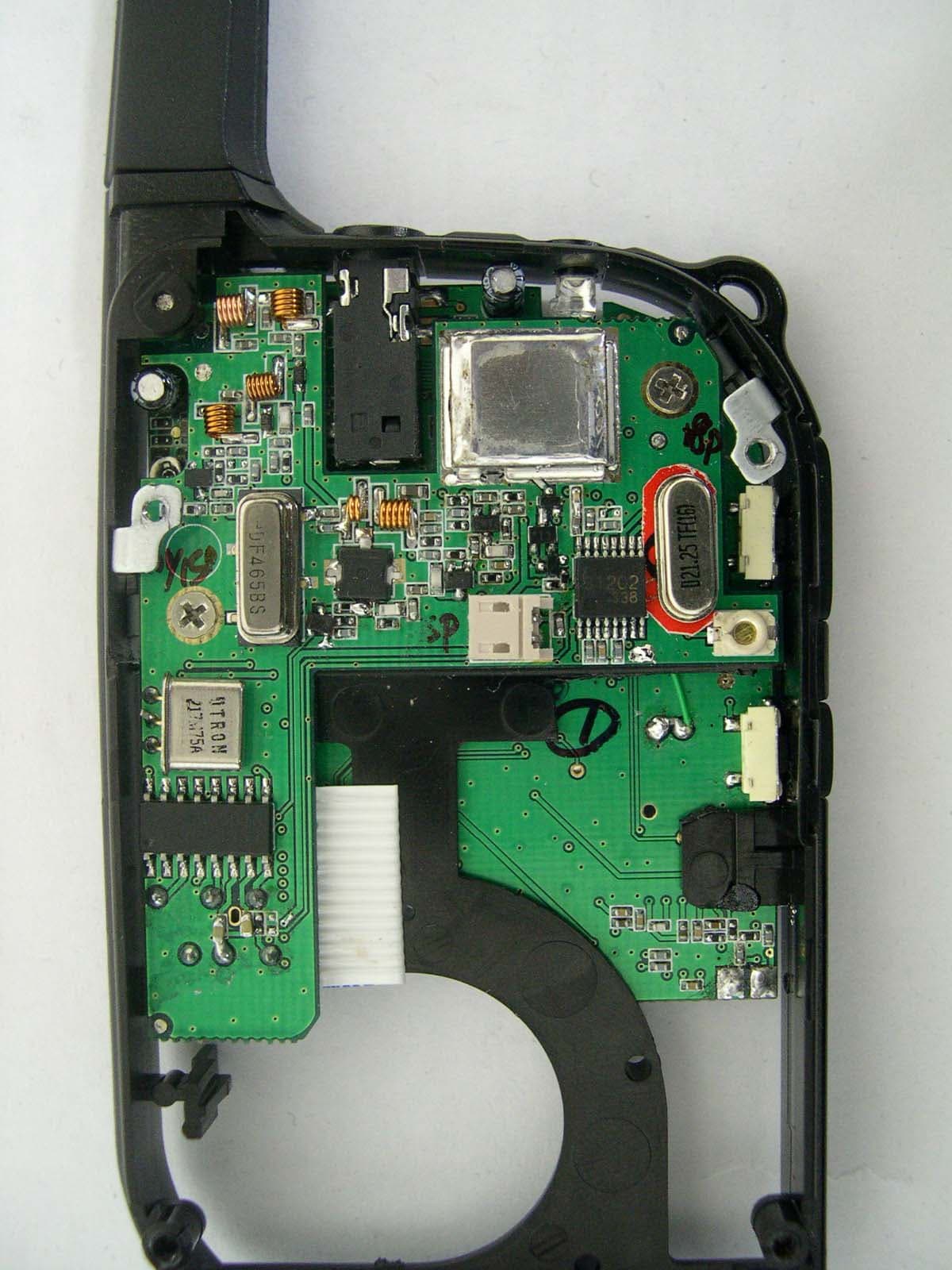
PDHGMRS500SLK
Apr 06, 2004GMRS/FRS Combination
Equipment Class
FRF - Part 95 Family Radio Face Held Transmitter