PPINPL-1
Microsoft Corporation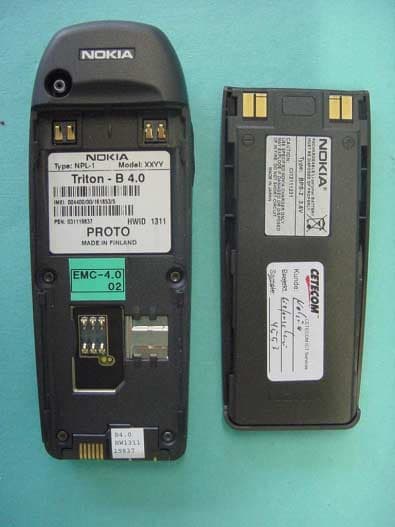
Click to zoom
Application Details
- Equipment Class
- PCE - PCS Licensed Transmitter held to ear
- Date of Grant
- Mar 21, 2002
- Application Purpose
- Original Equipment
- Date of Application
- Dec 09, 2001
- Frequency Range
- 1850.00000000 - 1910.00000000
- Company
- Microsoft Corporation
- Country
- United States
Documents & Files
Document Text
Text extracted from the exhibit documents filed with the FCC. Open a document above to read the original.
Users Manual
Nokia 6330 User Guide The wireless phone described in this guide is approved for use in GSM 900, 1800 and 1900 networks. LEGAL INFORMATION Part No. 9353761, Issue 0.3 Copyright 2001 Nokia Mobile Phones. All rights reserved. Nokia is a registered trademark of Nokia Corporation. Printed in Canada DATE HERE Nokia, Nokia Connecting People and the Original Accessories logos are trademarks of Nokia Corporation and/or its affiliates. US Patent No 5818437 and other pending patents. T9 text input software Copyright 1999-2001. Tegic Communications, Inc. All rights reserved. Includes RSA BSAFE cryptographic or security protocol software from RSA Security. The information contained in this user guide was written for Nokia phone 6330. The right to make changes and improvements to any of the products described in this guide without prior notice is reserved. EXPORT CONTROLS This product contains commodities, technology or software exported from the United States in accordance with the Export Administration regulations. Diversion contrary to U.S. law is prohibited. FCC/INDUSTRY CANADA NOTICE Your phone may cause TV or radio interference (for example, when using a telephone in close proximity to receiving equipment). The FCC or Industry Canada can require you to stop using your telephone if such interference cannot be eliminated. If you require assistance, contact your local service facility. This device complies with part 15 of the FCC rules. Operation is subject to the condition that this device does not cause harmful interference. [ i ] Contents Safety first . . . . . . . . . . . . . . . . . . . . . . . . . . . . . . . 1 Safety Guidelines. . . . . . . . . . . . . . . . . . . . . . . . . . . . . . 1 Quick tips . . . . . . . . . . . . . . . . . . . . . . . . . . . . . . . . . . . . 2 Quick guide to functions . . . . . . . . . . . . . . . . . . . . . 3 Welcome to Nokia . . . . . . . . . . . . . . . . . . . . . . . . . . 4 Get the most out of this guide. . . . . . . . . . . . . . . . . . . 4 Network services and Your wireless provider . . . . . . . 5 Before you contact Nokia . . . . . . . . . . . . . . . . . . . . . . . 5 About the antenna . . . . . . . . . . . . . . . . . . . . . . . . . . . . 6 Review the basics . . . . . . . . . . . . . . . . . . . . . . . . . . 7 An illustrated view of the 6330 . . . . . . . . . . . . . . . . . . 8 Install the SIM card and battery . . . . . . . . . . . . . . . . . 9 Charge the battery . . . . . . . . . . . . . . . . . . . . . . . . . . . 10 Important battery information. . . . . . . . . . . . . . . . . . 11 Switch on the phone. . . . . . . . . . . . . . . . . . . . . . . . . . 11 The start screen . . . . . . . . . . . . . . . . . . . . . . . . . . . . . .12 Use the selection and scroll keys . . . . . . . . . . . . . . . .14 Adjust call volume. . . . . . . . . . . . . . . . . . . . . . . . . . . .15 Make and answer calls . . . . . . . . . . . . . . . . . . . . . . . .15 help texts . . . . . . . . . . . . . . . . . . . . . . . . . . . . . . . . . . .16 navigate your phone’s menus. . . . . . . . . . . . . . . . . . .16 Menu shortcuts . . . . . . . . . . . . . . . . . . . . . . . . . . . . . .18 Access codes . . . . . . . . . . . . . . . . . . . . . . . . . . . . . . . .20 [ ii ] Communicate with other devices . . . . . . . . . . . . . .21 Data and fax communication . . . . . . . . . . . . . . . . . . 22 PC Suite . . . . . . . . . . . . . . . . . . . . . . . . . . . . . . . . . . . . 23 Your phone’s keypad . . . . . . . . . . . . . . . . . . . . . . . 25 Enter characters and numbers. . . . . . . . . . . . . . . . . . 25 Enter special characters . . . . . . . . . . . . . . . . . . . . . . . 26 Phone book . . . . . . . . . . . . . . . . . . . . . . . . . . . . . 27 Open the Phone book . . . . . . . . . . . . . . . . . . . . . . . . . 27 Phone book options . . . . . . . . . . . . . . . . . . . . . . . . . . 28 Customize your Phone book . . . . . . . . . . . . . . . . . . . 32 Caller groups . . . . . . . . . . . . . . . . . . . . . . . . . . . . . . . . 32 Your phone’s memory. . . . . . . . . . . . . . . . . . . . . . . . . 33 Select a memory . . . . . . . . . . . . . . . . . . . . . . . . . . . . . 34 Copy memory . . . . . . . . . . . . . . . . . . . . . . . . . . . . . . . 35 View service numbers. . . . . . . . . . . . . . . . . . . . . . . . . 35 Voice dialing . . . . . . . . . . . . . . . . . . . . . . . . . . . . . . . . 36 1) Messages . . . . . . . . . . . . . . . . . . . . . . . . . . . . . 39 writing messages . . . . . . . . . . . . . . . . . . . . . . . . . . . . 39 Predictive text input. . . . . . . . . . . . . . . . . . . . . . . . . . 43 Use Voice Mail . . . . . . . . . . . . . . . . . . . . . . . . . . . . . . 47 Save your voice mailbox number . . . . . . . . . . . . . . . 47 Automate your voice mailbox with codes . . . . . . . . 48 2) Call register . . . . . . . . . . . . . . . . . . . . . . . . . . . 49 Missed calls and received calls . . . . . . . . . . . . . . . . . 49 Dialed numbers . . . . . . . . . . . . . . . . . . . . . . . . . . . . . . 49 [ iii ] Erase recent call lists . . . . . . . . . . . . . . . . . . . . . . . . .50 Call counters and call timers . . . . . . . . . . . . . . . . . . .50 Call costs (network service) . . . . . . . . . . . . . . . . . . . .50 GPRS data counter . . . . . . . . . . . . . . . . . . . . . . . . . . . 51 GPRS connection timer . . . . . . . . . . . . . . . . . . . . . . . . 51 3) Profiles . . . . . . . . . . . . . . . . . . . . . . . . . . . . . . . 52 4) Settings . . . . . . . . . . . . . . . . . . . . . . . . . . . . . . 53 Alarm clock . . . . . . . . . . . . . . . . . . . . . . . . . . . . . . . . .53 Time and date settings . . . . . . . . . . . . . . . . . . . . . . . .53 Call settings . . . . . . . . . . . . . . . . . . . . . . . . . . . . . . . . .54 Phone settings . . . . . . . . . . . . . . . . . . . . . . . . . . . . . . .56 Tone settings . . . . . . . . . . . . . . . . . . . . . . . . . . . . . . . .58 Accessory se…
Text truncated - open the document above for the full version.
Cover Letter(s)
Application PPINPL-1 January 22 nd , 2002 Federal Communications Commission Equipment Authorization Division, Application Processing Branch, 7435 Oakland Mills Road, Columbia, MD 21048 Subject: Request for Deferring the Grant to March 13 th 2002 To whom it may concern: On behalf of our customer Nokia GmbH Germany we kindly ask you to change the date of deferral of the grant to the date 13 th of March 2002. Thank you for your understanding and anticipated cooperation. We are very much looking forward to working with you on this project. Yours sincerely, Karin Silberhorn Project Engineer CETECOM GmbH Im Teelbruch 122 45219 Essen, Germany
Cover Letter(s)
07 Jan 2002 Exhibit 2: Hardware change description FCC ID: PPI NPL-1 Applicant: Copyright © 2001 Nokia GmbH HW change Description: HWID 1011 to HWID 1311 Summary: 1. GENERAL - BASEBAND • New shielded Infrared Module • EMC improvements on external audio output • Changed resistor in external Hook Interrupt line • Decreased resistors in power supply of RF ASIC • New code for RF ASIC (only changed code, no ASIC changes) • New code for 1800 MHz SAW filter (only changed code, no filter changes) • Removing of 0 Ω resistors • Printed Wired Board changes • Changed baseband shielding • Improved External Microphone input band pass filter 2. PCS • RFCLK drive level and voltage divider changed. • Optimization of power control loop • Changed attenuator between Tx SAW filter and Tx buffer • Changed Tx modulator matching 3. BLUETOOTH • BT antenna changed
External Photos
CETECOM ICT Services GmbH Test report no.:1_0138-06-04/01Issue date: 2002-02-06Page 55 (63) Photographs of the equipment CETECOM ICT Services GmbH Test report no.:1_0138-06-04/01Issue date: 2002-02-06Page 56 (63) Photographs of the equipment CETECOM ICT Services GmbH Test report no.:1_0138-06-04/01Issue date: 2002-02-06Page 57 (63) Photographs of the equipment
ID Label/Location Info
Application PPINPL-1 Dipl.-Ing. Karin Silberhorn CETECOM GmbH, Essen, Germany EXHIBIT 1: FCC ID Label & Location Info For a detailed view of the label please refer to the next page. Front View Rear View (Label Placement) LABEL
Internal Photos
CETECOM ICT Services GmbH Test report no.:1_0138-06-04/01Issue date: 2002-02-06Page 58 (63) Photographs of the equipment CETECOM ICT Services GmbH Test report no.:1_0138-06-04/01Issue date: 2002-02-06Page 59 (63) Photographs of the equipment CETECOM ICT Services GmbH Test report no.:1_0138-06-04/01Issue date: 2002-02-06Page 60 (63) Photographs of the equipment CETECOM ICT Services GmbH Test report no.:1_0138-06-04/01Issue date: 2002-02-06Page 61 (63) Photographs of the equipment DCH-8D CETECOM ICT Services GmbH Test report no.:1_0138-06-04/01Issue date: 2002-02-06Page 62 (63) Photographs of the equipment DCH-8D CETECOM ICT Services GmbH Test report no.:1_0138-06-04/01Issue date: 2002-02-06Page 63 (63) Photographs of the equipment DCH-8D
Internal Photos
Bluetooth antenna Bluetooth module Bluetooth antenna Bluetooth module
RF Exposure Info
PC Site Oulu Exhibit 11: SAR Report DTX03972-EN Applicant: Nokia GmbH FCC ID: PPINPL-1 Copyright 2002 Nokia Corporation 1 (14) SAR Compliance Test Report Test report no.: Not numbered Date of report: 2002-02-18 Number of pages: 51 Contact person: Olli Kautio Responsible test engineer: Pertti Mäkikyrö Testing laboratory: Nokia Corporation Elektroniikkatie 10 P.O. Box 50 FIN-90571 OULU Finland Tel. +358-7180-08000 Fax. +358-7180-47222 Client: Nokia GmbH Wilhelm-Runge-Strasse 11 P.O. Box 2907 D 89081 Ulm Germany Tel.+49(0)731505-06 Fax. +49(0)731505-6866 Tested devices: PPINPL-1 CSL-17 Supplement reports: - Testing has been carried out in accordance with: IEEE P1528-200X Draft 6.4 Recommended Practice for Determining the Peak Spatial-Average Specific Absorption Rate (SAR) in the Human Body Due to Wireless Communications Devices: Experimental Techniques Documentation: The documentation of the testing performed on the tested devices is archived for 15 years at PC Site Oulu Test results: The tested device complies with the requirements in respect of all parameters subject to the test. The test results and statements relate only to the items tested. The test report shall not be reproduced except in full, without written approval of the laboratory. Date and signatures: 2002-02-18 For the contents: Pertti Mäkikyrö Engineering Manager, EMC Miia Nurkkala Test Engineer PC Site Oulu Exhibit 11: SAR Report DTX03972-EN Applicant: Nokia GmbH FCC ID: PPINPL-1 Copyright 2002 Nokia Corporation 2 (14) CONTENTS 1.SUMMARY FOR SAR TEST REPORT ..........................................................................................................................3 1.1 MAXIMUM RESULTS FOUND DURING SAR EVALUATION.................................................................................................................. 3 1.1.1Head Configuration.......................................................................................................................................................... 3 1.1.2Body Worn Configuration............................................................................................................................................... 3 1.1.3Measurement Uncertainty ............................................................................................................................................. 3 2.DESCRIPTION OF TESTED DEVICE .............................................................................................................................4 2.1 PICTURE OF PHONE........................................................................................................................................................................... 4 2.2 D ESCRIPTION OF THE ANTENNA........................................................................................................................................................ 4 2.3 B ATTERY OPTIONS............................................................................................................................................................................. 4 2.4 B ODY WORN ACCESSORIES.............................................................................................................................................................. 5 3.TEST CONDITIONS ........................................................................................................................................................5 3.1 AMBIENT CONDITIONS...................................................................................................................................................................... 5 3.2 RF CHARACTERISTICS OF THE TEST SITE............................................................................................................................................. 5 3.3 T EST SIGNAL, FREQUENCIES, AND OUTPUT POWER.......................................................................................................................... 5 4.DESCRIPTION OF THE TEST EQUIPMENT.................................................................................................................6 4.1 SYSTEM ACCURACY VERIFICATION.................................................................................................................................................... 6 4.2 T ISSUE SIMULANTS............................................................................................................................................................................ 7 4.2.1Head Tissue Simulant for 1900MHz............................................................................................................................ 7 4.2.2Muscle Tissue Simulant for 1900MHz ........................................................................................................................ 7 4.3 P HANTOMS........................................................................................................................................................................................ 8 5.DESCRIPTION OF THE TEST PROCEDURE ................................................................................................................9 5.1 TEST POSITIONS................................................................................................................................................................................. 9 5.1.1Against Phantom Head ................................................................................................................................................... 9 5.2 B ODY WORN CONFIGURATION....................................................................................................................................................... 10 5.3 S CAN PROCEDURES......................................................................................................................................................................... 11 5.4 SAR A VERAGING METHODS..............…
Text truncated - open the document above for the full version.
RF Exposure Info
[ 115 ] Manage phone security 14 CERTIFICATION INFORMATION (SAR) THIS MODEL PHONE MEETS THE GOVERNMENT'S REQUIREMENTS FOR EXPOSURE TO RADIO WAVES. Your wireless phone is a radio transmitter and receiver. It is designed and manufactured not to exceed the emission limits for exposure to radio frequency (RF) energy set by the Federal Communications Commission of the U.S. Government. These limits are part of comprehensive guidelines and establish permitted levels of RF energy for the general population. The guidelines are based on standards that were developed by independent scientific organizations through periodic and thorough evaluation of scientific studies. The standards include a substantial safety margin designed to assure the safety of all persons, regardless of age and health. The exposure standard for wireless mobile phones employs a unit of measurement known as the Specific Absorption Rate, or SAR. The SAR limit set by the FCC is 1.6W/kg.* Tests for SAR are conducted using standard operating positions accepted by the FCC with the phone transmitting at its highest certified power level in all tested frequency bands. Although the SAR is determined at the highest certified power level, the actual SAR level of the phone while operating can be well below the maximum value. This is because the phone is designed to operate at multiple power levels so as to use only the power required to reach the network. In general, the closer you are to a wireless base station antenna, the lower the power output. Before a phone model is available for sale to the public, it must be tested and certified to the FCC that it does not exceed the limit established by the government-adopted requirement for safe exposure. The tests are performed in positions and locations (for example, at the ear and worn on the body) as required by the FCC for each model. The highest SAR value for this model phone as reported to the FCC when tested for use at the ear is 0.72W/kg and when worn on the body, as described in this user guide, is 0.88W/kg. (Body-worn measurements differ among phone models, depending upon available accessories and FCC requirements). [ 116 ] Manage phone security While there may be differences between the SAR levels of various phones and at various positions, they all meet the government requirement. The FCC has granted an Equipment Authorization for this model phone with all reported SAR levels evaluated as in compliance with the FCC RF exposure guidelines. SAR information on this model phone is on file with the FCC and can be found under the Display Grant section of http://www.fcc.gov/oet/fccid after searching on FCC ID PPINPL-1. *In the United States and Canada, the SAR limit for mobile phones used by the public is 1.6 watts/kilogram (W/kg) averaged over one gram of tissue. The standard incorporates a substantial margin of safety to give additional protection for the public and to account for any variations in measurements. SAR values may vary depending on national reporting requirements and the network band. For SAR information in other regions please look under product information at www.nokia.com. For body worn operation, this phone has been tested and meets the FCC RF exposure guidelines when used with the Nokia accessories supplied or designated for this product. Use of other accessories may not ensure compliance with FCC RF exposure guidelines.
Test Report
CETECOM ICT Services GmbH Radio Satellite Communication Untertürkheimer Straße 6-10 . D-66117 SaarbrückenTelephone: +49 (0)681 598-0Telefax: -9075 RSC14issue test report consist of 41 PagesPage 1 (41) BLUETOOTH TM is a trademark owned by Bluetooth SIG, Inc. and licensed to CETECOM TTI-P-G-166/98-30 Accredited Bluetooth Test Facility (BQTF) Addendum to Test report no.: 1_0138-A/01-1-3 FCC Part 24 / 15.247 NPL-1 CETECOM – ICT Services GmbH Untertürkheimerstr. 6-10 66117 Saarbrücken, Germany Telephone: + 49 (0) 681 / 598-0 Fax: + 49 (0) 681 / 9075 CETECOM ICT Services GmbH Addendum to test report nr.:1_0138-A/01-1-3 Issue date:27.11.2001Page 2 (41) Table of Contents 1 General Information 1.1 Notes 1.2 Testing Laboratory 1.3 Details of Applicant 1.4 Application Details 1.5 Test Item 1.6 Test Standards 2 Technical Test 2.1 Summary of Test Results 2.2 Test Report 1 General Information 1.1 Notes The test results of this test report relate exclusively to the test item specified in 1.5. The CETECOM ICT Services GmbH does not assume responsibility for any conclusions and generalisations drawn from the test results with regard to other specimens or samples of the type of the equipment represented by the test item. The test report may only be reproduced or published in full. Reproduction or publication of extracts from the report requires the prior written approval of the CETECOM ICT Services GmbH. 1.2Test Laboratory CETECOM ICT Services GmbH Untertürkheimer Straße 6 - 10 66117 Saarbrücken Germany Telephone: + 49 681 598 - 0 Telefax : + 49 681 598 - 9075 E-mail: [email protected] Internet: www.cetecom.de Accredited testing laboratory DAR-registration number : TTI-P-G-166/98-30 Accredited Bluetooth TM Test Facility (BQTF) BLUETOOTH TM is a trademark owned by Bluetooth SIG, Inc. and licensed to CETECOM CETECOM ICT Services GmbH Addendum to test report nr.:1_0138-A/01-1-3 Issue date:27.11.2001Page 3 (41) 1.3Details of Applicant Name : Nokia Mobile Phones Street : Wilhelm-Runge-Str. 11 City : D-89081 Ulm Country : Germany Telephone : +49 (0) 731 505-08 Telefax : +49 (0) 731 505-68 06 Contact : Mr. Thomas Reitmayer Telephone : +49 (0) 731 505-67 28 1.4Application Details Date of receipt of application : 20.11.01 Date of receipt of test item : 20.11.01 Date of test : 20.-22.11.01 1.5Test Item Type of equipment : GSM Tri Band Mobile Phone with integrated BLUETOOTH module Type designation:NPL-1 Manufacturer:Applicant Street: City: Country: IMEI:004400.00.161068.0 Additional information : Frequency:GSM 1900 :1850 – 1910 MHz and Bluetooth 2402 – 2480 MHz Type of modulation:GSM 1900 : 300KF2D Bluetooth : 1M00FXD / 79M0FXD Number of channels :GSM 1900 : 300Bluetooth : 79 Antenna:Integral antenna and socket Power supply:3.6 VDC accu Li-Polymer Output power:GSM 1900 : 29.5 dBm Peak, Bluetooth : 1,88mW Type of equipment:Temperature range : -30°C - +60°C FCC – ID:PPINPL-1 Hardware:B3.0 Software:2.08 1.6Test Standards: FCC Part 24 / FCC Part 15.247 CETECOM ICT Services GmbH Addendum to test report nr.:1_0138-A/01-1-3 Issue date:27.11.2001Page 4 (41) 2 Technical Test 2.1Summary of Test Results This addendum was made to show compliance to radiated emissions in worst-case conditions during use with external charger (ACP-12), ear-phone (HDC-9P) and simultaneous transmit at 1900 and 2400 MHz. The tests were performed radiated from 30 to 25000 MHz and conducted from 450 kHz to 30 MHz No deviations from the technical specification(s) were ascertained in the course of the tests performed. Technical Responsibility for Area of Testing : 11.12.01RSC 8411 Berg M. DateSectionNameSignature Technical Responsibility for Area of Testing : 11.12.01RSC8414Ames H. DateSectionNameSignature CETECOM ICT Services GmbH Addendum to test report nr.:1_0138-A/01-1-3 Issue date:27.11.2001Page 5 (41) 2.2Test Report TEST REPORT Addendum to Test Report no. : 1_0138-A/01-1-3 CETECOM ICT Services GmbH Addendum to test report nr.:1_0138-A/01-1-3 Issue date:27.11.2001Page 6 (41) TEST REPORT REFERENCE LIST OF MEASUREMENTS PARAMETER TO BE MEASURED ParagraphPAGE EMISSIONS LIMITS § 24.2387 CONDUCTED EMISSIONS § 15.107/20722 TEST SITE28 PHOTOGRAPHS OF THE EQUIPMENT32 CETECOM ICT Services GmbH Addendum to test report nr.:1_0138-A/01-1-3 Issue date:27.11.2001Page 7 (41) REFERENCE NUMBER(S) OF TEST EQUIPMENT USED (for reference numbers see test equipment listing) 17 - 24 EMISSIONS LIMITS §24.238 Measurement Procedure: The following steps outline the procedure used to measure the radiated emissions from the mobile station. The site is constructed in accordance with ANSI C63.4 – 1992 requirements and is recognised by the FCC to be in compliance for a 3 and a10 meter site. The spectrum was scanned from 30 MHz to the 10th harmonic of the highest frequency generated within the equipment, which is the transmitted carrier that can be as high as 1910 MHz / 2482 MHz. This was rounded up to 25 GHz. The resolution bandwidth is set as outlined in Part 24.238. The spectrum was scanned with the mobile station transmitting at carrier frequency 1880.2 MHz of the USPCS band and 2402 MHz for the BLUETOOTH device. The BLUETOOTH device was transmitting continuously during test. The mobile was feed by a charger and connected to an earphone. The final open field emission test procedure is as follows: a) The test item was placed on a 0. 8 meter high non-conductive stand at a 3 meter test distance from the receive antenna. b) The antenna output was terminated in a 50 ohm load. c) A double ridged wave guide antenna was placed on an adjustable height antenna mast 3 meters from the test item for emission measurements. d) Detected emissions were maximised at each frequency by rotating the test item and adjusting the receive antenna height and polarisation. The maximum meter reading was recorded. The radiated emission measurements of the harmonics of the transmit frequency through the 10th harmonic were measured with peak detector and I MHz bandwidth. If the harmonic could not be …
Text truncated - open the document above for the full version.
Test Report
CETECOM ICT Services GmbH Radio Satellite Communication Untertürkheimer Straße 6-10 . D-66117 SaarbrückenTelefon: +49 (0)681 598-9100Telefax: -9075 RSC11issue test report consist of 63 PagesPage 1 (63) BLUETOOTH TM is a trademark owned by Bluetooth SIG, Inc. and licensed to CETECOM TTI-P-G-166/98-30 Accredited Bluetooth Test Facility (BQTF) Test report no.: 1_0138-06-04/01 FCC Part 24 NPL-1 CETECOM – ICT Services GmbH Untertürkheimerstr. 6-10 66117 Saarbrücken, Germany Telephone: + 49 (0) 681 / 598-0 Fax: + 49 (0) 681 / 9075 CETECOM ICT Services GmbH Test report no.:1_0138-06-04/01Issue date: 2002-02-06Page 2 (63) Table of Contents 1 General information 1.1 Notes 1.2 Testing laboratory 1.3 Details of applicant 1.4 Application details 1.5 Test item 1.6 Test standards 2 Technical test 2.1 Summary of test results 2.2 Test report 1 General information 1.1 Notes The test results of this test report relate exclusively to the test item specified in 1.5. The CETECOM ICT Services GmbH does not assume responsibility for any conclusions and generalisations drawn from the test results with regard to other specimens or samples of the type of the equipment represented by the test item. The test report may only be reproduced or published in full. Reproduction or publication of extracts from the report requires the prior written approval of the CETECOM ICT Services GmbH. 1.2Testing laboratory CETECOM ICT Services GmbH Untertürkheimer Straße 6 - 10 66117 Saarbrücken Germany Telefone: + 49 681 598 - 9100 Telefax : + 49 681 598 - 9075 E-mail: [email protected] Internet: www.cetecom.de Accredited testing laboratory DAR-registration number : TTI-P-G-166/98-30 Accredited Bluetooth TM Test Facility (BQTF) BLUETOOTH TM is a trademark owned by Bluetooth SIG, Inc. and licensed to CETECOM CETECOM ICT Services GmbH Test report no.:1_0138-06-04/01Issue date: 2002-02-06Page 3 (63) 1.3Details of applicant Name : Nokia Mobile Phones Street : Wilhelm-Runge-Str. 11 City : D-89081 Ulm Country : Germany Telephone : +49 (0) 731 505-08 Telefax : +49 (0) 731 505-68 06 Contact : Mr. Thomas Raitmayer Telephone : +49 (0) 731 505-67 28 1.4Application details Date of receipt of application : 21.01.2002 Date of receipt of test item : 28.01.2002 Date of test : 31.01.-01.02.2002 1.5Test item Type of equipment : Triple Band Mobile Phone Type designation : NPL-1 tested with HDE-1, DCH-8D and ACP-12E Manufacturer:Applicant Street: City: Country: Serial number:IMEI 00400/00/161853/5 Additional informations: : Frequency:1850 – 1910 MHz Type of modulation:300KF2D Number of channels :300 Antenna:Integral antenna and socket Power supply:3.6V Li-polymer Battery Output power:31.47 dBm Peak , ERP : 27.9 dBm (Burst); EIRP:30.0 dBm (Burst) Type of equipment:Temperature range : -30°C - +60°C FCC – ID: Hardware:HW131119837 Software:B4.0 1.6Test standards: FCC Part 24 CETECOM ICT Services GmbH Test report no.:1_0138-06-04/01Issue date: 2002-02-06Page 4 (63) 2 Technical test The radiated measurements were performed vertical andhorizontal over the whole frequency range. We start at 1 m high with vertical receiving antenna and rotate the dish continuously. During rotation we use the antenna lift system to vary the high from 1 to 4 m. So we find maximum radiation output. At this points we do manual remeasurements. After this we do the same measurements in horizontal position of the receiving antenna. This (horizontal and vertical) is made for all the three planes of the test sample. We use the maximum received results. The detector function and selection of bandwidth are according ANSI C63.2-1996 item 8.2.1 and ANSI C63.4-1992 Item 4.2. Antennas are conform with ANSI C63.2-1996 item 15. 150 kHz - 30 MHz: Quasi Peak measurement, 9kHz Bandwidth, passive loop antenna. 30 MHz - 200 MHz: Quasi Peak measurement, 120KHz Bandwidth, biconical antenna 200MHz - 1GHz: Quasi Peak measurement, 120KHz Bandwidth, log periodic antenna 1GHz: Average, RBW 1MHz, VBW 10 MHz, wave guide horn 2.1Summary of test results No deviations from the technical specification(s) were ascertained in the course of the tests performed. FINAL VERDICT: PASS Technical responsibility for area of testing : 2002-02-06RSC 8411 Berg M. DateSectionNameSignature Technical responsibility for area of testing : 2002-02-06RSC8412Hausknecht D. DateSectionNameSignature CETECOM ICT Services GmbH Test report no.:1_0138-06-04/01Issue date: 2002-02-06Page 5 (63) 2.2Testreport TEST REPORT Test report no. : 1_0138-06-04/01 CETECOM ICT Services GmbH Test report no.:1_0138-06-04/01Issue date: 2002-02-06Page 6 (63) TEST REPORT REFERENCE LIST OF MEASUREMENTS PARAMETER TO BE MEASURED ParagraphPAGE POWER OUTPUT SUBCLAUSE § 24.2327 FREQUENCY STABILITY SUBCLAUSE § 24.2359 AFC FREQ ERROR vs. VOLTAGE10 AFC FREQ ERROR vs. TEMPERATURE10 EMISSIONS LIMITS §24.23812 CONDUCTED SPURIOUS EMISSIONS31 OCCUPIED BANDWIDTH §2.98940 CONDUCTED EMISSIONS § 15.107/20747 TEST EQUIPMENT AND ANCILLARIES USED FOR TESTS49 Test site51 Photographs of the equipment54 CETECOM ICT Services GmbH Test report no.:1_0138-06-04/01Issue date: 2002-02-06Page 7 (63) REFERENCE NUMBER(S) OF TEST EQUIPMENT USED (for reference numbers see test equipment listing) 64 POWER OUTPUT SUBCLAUSE § 24.232 Summery: This paragraph contains both average , peak output powers and EIRP measurements for the mobile station. In all cases, the peak output power is wthin the required mask (this mask is specified in the JTC standarts, TIA PN3389 Vol. 1 Chap 7, and is no FCC requirement). Method of Measurements: The mobile was set up for the max. output power with pseudo random data modulation. The power was measured with R&S Spectrum Analyzer FSIQ 26 ( peak and average) This mea…
Text truncated - open the document above for the full version.
Contact Information
Applicant
Hasnain Syed(Director, EMC, SI, and RF Compliance)
Test Firm
CETECOM GmbHWolfgang Richter
Technical Specifications
| # | Rule Parts | Frequency Range | Power Output | Emission | Tolerance |
|---|---|---|---|---|---|
| 1 | 24E | 1.85 GHz - 1.91 GHz | 713.00 mW | 300KDXW | 0.1000000000 ppm |
Other Applications from Microsoft Corporation

PPIRM-884
Jul 24, 2012GSM/WCDMA cellular phone w/BT and WLAN
Equipment Class
PCE - PCS Licensed Transmitter held to ear
PPIRM-714
Mar 31, 2012GSM/WCDMA Cellular phone w/BT and WLAN
Equipment Class
DTS - Digital Transmission System
PPIRM-813
Nov 20, 2011GSM/WCDMA cellular phone w/BT and WLAN
Equipment Class
DSS - Part 15 Spread Spectrum Transmitter
PPIRM-800
Nov 15, 2011GSM cellular phone w/BT
Equipment Class
PCE - PCS Licensed Transmitter held to ear
PPIRM-781
Oct 10, 2011GSM/WCDMA cellular phone w/BT
Equipment Class
DSS - Part 15 Spread Spectrum Transmitter