PPIRM-76GSM 900/ 1800/ 1900 PCS Phone
Microsoft Corporation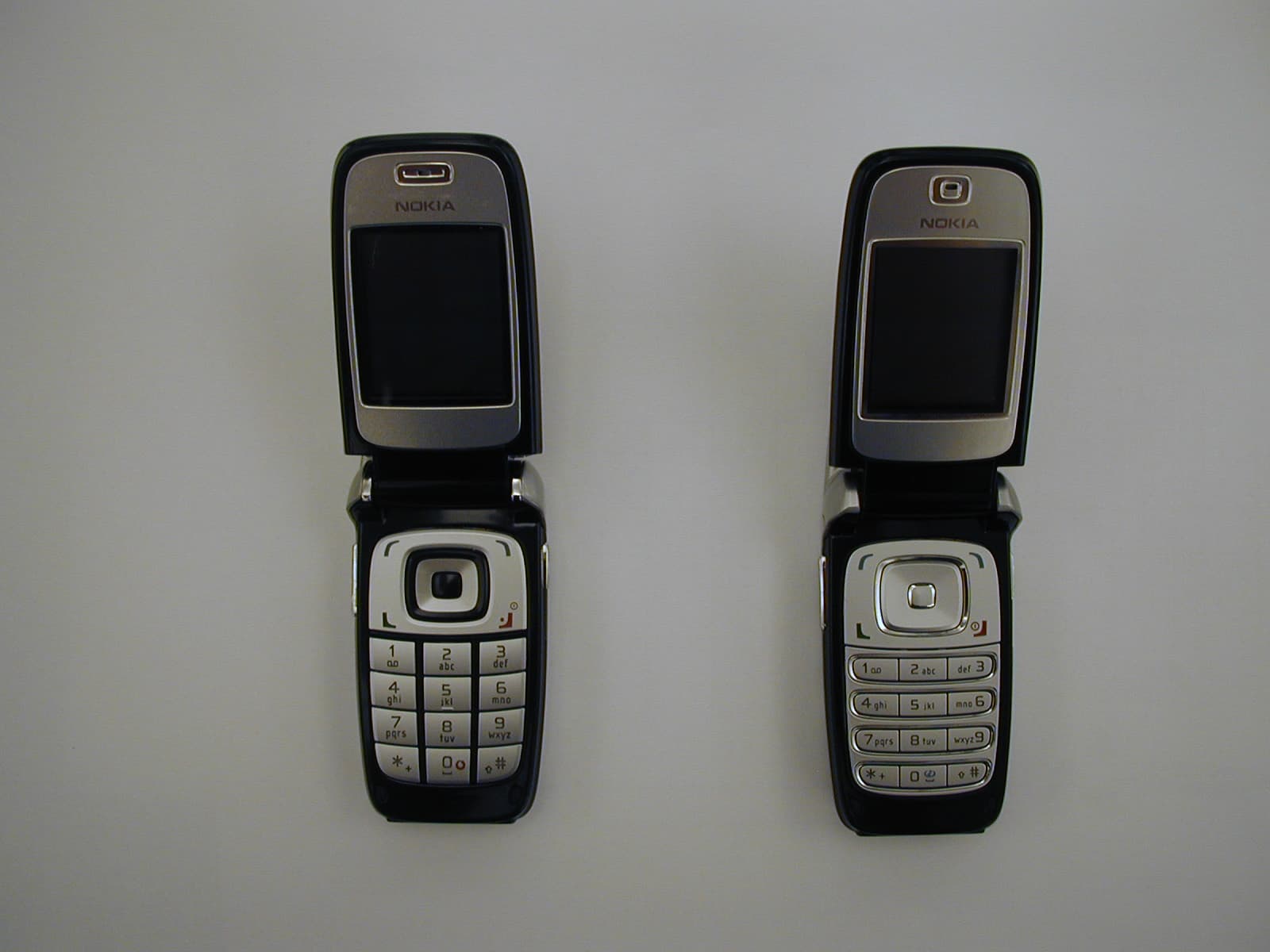
Click to zoom
Application Details
- Equipment Class
- PCE - PCS Licensed Transmitter held to ear
- Date of Grant
- May 09, 2005
- Application Purpose
- Original Equipment
- Date of Application
- May 09, 2005
- Equipment Note
- GSM 900/ 1800/ 1900 PCS Phone
- Frequency Range
- 1850.20000000 - 1909.80000000
- Company
- Microsoft Corporation
- Country
- United States
Documents & Files
Document Text
Text extracted from the exhibit documents filed with the FCC. Open a document above to read the original.
Users Manual
User guide Nokia 6101 RM-76 Issue 1 EU (FCC) DECLARATION OF CONFORMITY We, NOKIA CORPORATION declare under our sole responsibility that the product RM-76 is in conformity with the provisions of the following Council Directive: 1999/5/EC. A copy of the Declaration of Conformity can be found from http://www.nokia.com/phones/declaration_of_conformity/. The crossed-out wheeled bin means that within the European Union the product must be taken to separate collection at the product end-of life. This applies to your device but also to any enhancements marked with this symbol. Do not dispose of these products as unsorted municipal waste. Copyright © 2005 Nokia. All rights reserved. Reproduction, transfer, distribution or storage of part or all of the contents in this document in any form without the prior written permission of Nokia is prohibited. Nokia, Nokia Connecting People, Xpress-on and Pop-Port are trademarks or registered trademarks of Nokia Corporation. Other product and company names mentioned herein may be trademarks or tradenames of their respective owners. Nokia tune is a sound mark of Nokia Corporation. US Patent No 5818437 and other pending patents. T9 text input software Copyright (C) 1997-2005. Tegic Communications, Inc. All rights reserved. Includes RSA BSAFE cryptographic or security protocol software from RSA Security. Java is a trademark of Sun Microsystems, Inc. Nokia operates a policy of continuous development. Nokia reserves the right to make changes and improvements to any of the products described in this document without prior notice. Under no circumstances shall Nokia be responsible for any loss of data or income or any special, incidental, consequential or indirect damages howsoever caused. The contents of this document are provided "as is". Except as required by applicable law, no warranties of any kind, either express or implied, including, but not limited to, the implied warranties of merchantability and fitness for a particular purpose, are made in relation to the accuracy, reliability or contents of this document. Nokia reserves the right to revise this document or withdraw it at any time without prior notice. The availability of particular products may vary by region. Please check with the Nokia dealer nearest to you. This device may contain commodities, technology or software subject to export laws and regulations from the US and other countries. Diversion contrary to law is prohibited. XXXXXXX/Issue 1 UNDER NO CIRCUMSTANCES SHALL NOKIA BE RESPONSIBLE FOR ANY LOSS OF DATA OR INCOME OR ANY SPECIAL, INCIDENTAL, AND CONSEQUENTIAL OR INDIRECT DAMAGES HOWSOEVER CAUSED. THE CONTENTS OF THIS DOCUMENT ARE PROVIDED "AS IS." EXCEPT AS REQUIRED BY APPLICABLE LAW, NO WARRANTIES OF ANY KIND, EITHER EXPRESS OR IMPLIED, INCLUDING, BUT NOT LIMITED TO, THE IMPLIED WARRANTIES OF MERCHANTABILITY AND FITNESS FOR A PARTICULAR PURPOSE, ARE MADE IN RELATION TO THE ACCURACY AND RELIABILITY OR CONTENTS OF THIS DOCUMENT. NOKIA RESERVES THE RIGHT TOREVISE THIS DOCUMENT OR WITHDRAW IT AT ANY TIME WITHOUT PRIOR NOTICE. FCC/INDUSTRY CANADA NOTICE Your phone may cause TV or radio interference (for example, when using a telephone in close proximity to receiving equipment). The FCC or Industry Canada can require you to stop using your telephone if such interference cannot be eliminated. If you require assistance, contact your local service facility. This device complies with part 15 of the FCC rules. Operation is subject to the following two conditions: (1) This device may not cause harmful interference, and (2) this device must accept any interference received, including interference that may cause undesired operation. 4 Contents For your safety.......................... 7 General information .............. 10 Overview of functions........................ 10 Access codes......................................... 10 Security code .................................... 10 PIN codes ........................................... 10 PUK codes .......................................... 11 Barring password............................. 11 Configuration settings service ........ 11 Download content and applications 12 Nokia support on the Web ............... 12 1. Get started ......................... 13 Open the fold ....................................... 13 Install the SIM card and the battery ............................................ 13 Charge the battery.............................. 14 Switch the phone on and off........... 15 Plug and play service...................... 15 Normal operating position ............... 15 Wrist strap ............................................ 15 2. Your phone......................... 16 Keys and parts...................................... 16 Standby mode ...................................... 17 Mini display....................................... 17 Main display...................................... 17 Personal shortcut list ..................... 17 Shortcuts in the standby mode ... 18 Power saving..................................... 18 Indicators ........................................... 18 Keypad lock (keyguard) ..................... 19 3. Call functions..................... 20 Make a call ........................................... 20 Speed dialing .................................... 20 Answer or reject a call....................... 20 Call waiting ....................................... 21 Options during a call.......................... 21 4. Write text ........................... 22 Settings.................................................. 22 Predictive text input .......................... 22 Write compound words ................. 23 Traditional text input......................... 23 5. Navigate the menus ........... 24 6. Messages............................. 25 Text messages (SMS) ......................... 25 Write and send a SMS message .. 26 Read and reply to a SMS message.................................... 26 Templates...............................…
Text truncated - open the document above for the full version.
Cover Letter(s)
NOKIA MOBILE PHONES Lise-Meitner-Strasse 11 0-89081 Ulm, Germany +49(0)731-1754-0 +49(0)731-1754-6800 11-Apr-O5 Federal Communications Commission Authorization a Evaluation Division, 7435 Oakland Mills Road, Columbia, MD. 21046 Attention: Equipment Authorization Branch REOUEST FüR CüNFIDENTIALlTY Pursuant to Sections 0.457 (d)(1)(ii) and 0.459 of the Commission's Rules, the Applicant hereby requests confidential treatment of same of the information accompanying this Application of FCC ID: PPIRM-76 and as outlined below: -Exhibit 4: RF Block Diagram -Exhibit 5: Schematic Diagrams -Exhibit 10: List of Active Devices, Tune-Up Procedure and Part list Exhibit 12: Theory of Operation, Frequency determining part24, frequency range and Harmonics part 24 These materials contain trade secrets and proprietary information not customarily released to the public and the public disclosure of these matters might be harmful to the Applicant and provide unjustified benefits to its competitors. The Applicant understands that pursuant to Rule 0.457 (d)(1)(ii) disclosure of this Application and all accompanying documentation will not be made before the date of the Grant tor thisApplication. NOK Jens rü ing Product Program Manager, Ulm
Cover Letter(s)
American Telecommunications Certification Body Inc. 6731 Whittier Ave, McLean, VA 22101 May 4, 2005 RE: FCC ID: PPIRM-76_ATCB002403 Attention: Thomas Reitmayer I have a few comments on this Application. Please note that further comments may arise in response to answers provided to the questions below. 1. Please note that the 731 form indicates a part 15C intentional radiator in the application. However, no part 15C test report exists and nothing in the documentation indicates this is device contains an intentional radiator. Do you mean 15B computer peripheral instead of 15C intentional radiator for the part 15 device? Please correct the 731 as necessary. 2. Please note that the radiated spurious emissions table (page 5 0f 7) apparently lists the final value as “Level/dBm”. However, your formula lists the final value as “PdBm”. This means that the actual values are ambiguous as the formula used to calculate the results and the supposed actual results have no obvious correlation. Please be consistent in the naming of values and please correct as necessary. 3. Please note that the highest EIRP value in the test report is 32.2dBm in GSM mode for DUT #28750 (v5), yet the highest value measured in the SAR report is 31.3dBm 2-slot GPRS mode V5 (DUT 28759). Please note that when a difference in power levels occurs between the EMC and SAR reports, the SAR report needs to be the higher power. Please explain why the higher power GSM mode for this version was not tested. 4. Please note that the 2 slot GPRS V5 (dut 28750) has an EIRP of 30dBm in the SAR report and an ERIP of 31.3dBm. Please also note that when the power levels at the appropriate high channel is compared, the difference between the EIRP values is EMC=31.3dBm SAR=27.3dBm. This is a difference of 4dB which is to large a difference between the EMC and SAR report and which is not allowed. Please note that this occurs at other frequencies and with other models as well. Please explain this 4dB difference between the two power levels and please provide evidence that the SAR data is in fact testing the highest power levels. Please verify that the highest power was used for each channel and each version device in the SAR report. Dennis Ward mailto:[email protected] The items indicated above must be submitted before processing can continue on the above referenced application. Failure to provide the requested information may result in application termination. Correspondence should be considered part of the permanent submission and may be viewed from the Internet after a Grant of Equipment Authorization is issued. Please do not respond to this correspondence using the email reply button. In order for your response to be processed expeditiously, you must submit your documents through the AmericanTCB.com website. Also, please note that partial responses increase processing time and should not be submitted. Any questions about the content of this correspondence should be directed to the sender.
Cover Letter(s)
May 9, 2005 RE: FCC ID: PPIRM-76_ATCB002403 Attention: Dennis Ward Following answers regarding your questions of May 4, 2005: Answer 1. Part 15C removed out of form 731. Device does not include part15C intentional radiator. Find updated form 731 attached. Answer 2. Naming of values will be changed for future filings. Answer 3. Tuning target for peak power of GPRS mode is 1dB lower than peak power of GSM mode. Due to that, time-averaged power is 2 dB higher in 2-slot GPRS mode compared to 1-slot GSM. Above is valid for all versions. V2 was used for confirmation, that SAR result is higher in 2-slot GPRS mode than in 1-slot mode, as expected. The rest of the versions were measured in higher SAR mode i.e. in 2-slot GPRS mode. Answer 4: The device is clamshell phone and EIRP was measured in open and closed positions. EIRP values in Head SAR section are from open position and EIRP values in body SAR section are from closed position. Some power variation exists also between the channels of the same version. All SAR measurements were made on power level having highest time-averaged power. V2 was additionally measured on highest power level of 1-slot GSM mode. Answers FCC ID: PPIRM-76 Applicant: Nokia Copyright © 2005 Nokia GmbH
External Photos
1 (4) NOKIA Mobile Phones R&D Ulm 2.5.2005 External Photos of FCC ID : PPIRM-76 Front view, flap closed. Left: Design 1, right: Design 2 2 (4) NOKIA Mobile Phones R&D Ulm 2.5.2005 Front view, flap open. Left: Design 1, right: Design 2 3 (4) NOKIA Mobile Phones R&D Ulm 2.5.2005 Rear view. Left: Design 1, right: Design 2 4 (4) NOKIA Mobile Phones R&D Ulm 2.5.2005 Bottom view. Left: Design 1, right: Design 2
ID Label/Location Info
DOCUMENTTYPE 1 (1) NOKIA Mobile Phones R&D ÛLM 29.4.2005 POSITION OF AREAS FOR LABEL STICKERS Extra sticker can be used for Network Operator specific label. FCC ID: PPIRM-76
Internal Photos
1 (7) NOKIA Mobile Phones R&D Ulm 2.5.2005 Internal Photos of FCC ID: PPIRM-76 Rear view, back cover removed. Left: Design1, right: Design 2 2 (7) NOKIA Mobile Phones R&D Ulm 2.5.2005 Phone disassembled, front view (Design 2) 3 (7) NOKIA Mobile Phones R&D Ulm 2.5.2005 Phone disassembled, rear view (Design 2) 4 (7) NOKIA Mobile Phones R&D Ulm 2.5.2005 Keymats. Left: Design1, right: Design 2 5 (7) NOKIA Mobile Phones R&D Ulm 2.5.2005 Engine Module Board, Flap Module Board, Antenna (Shielding assembled) 6 (7) NOKIA Mobile Phones R&D Ulm 2.5.2005 Engine Module Board (Shieldings disassembled) 7 (7) NOKIA Mobile Phones R&D Ulm 2.5.2005 Flap Module (Shieldings disassembled) Mini Display side (outer) Main Display side (inner)
RF Exposure Info
Nokia ____________________________________________________________________________ SAR Report Cph_SAR_0516_4 Applicant: Nokia Corporation Type: RM-76 Copyright © 2005 TCC Copenhagen 2/20 CONTENTS 1. SUMMARY OF SAR TEST REPORT............................................................................................................................................. 3 1.1 TEST DETAILS.............................................................................................................................................................................3 1.2 MAXIMUM RESULTS....................................................................................................................................................................3 1.2.1 Head Configuration........................................................................................................................................................ 3 1.2.2 Body Worn Configuration............................................................................................................................................ 3 1.2.3 Maximum Drift................................................................................................................................................................ 4 1.2.4 Measurement Uncertainty........................................................................................................................................... 4 2. DESCRIPTION OF THE DEVICE UNDER TEST........................................................................................................................... 5 2.1 PICTURE OF THE DEVICE..............................................................................................................................................................5 2.2 DESCRIPTION OF THE ANTENNA..................................................................................................................................................6 3. TEST CONDITIONS..................................................................................................................................................................... 6 3.1 TEMPERATURE AND HUMIDITY....................................................................................................................................................6 3.2 TEST SIGNAL, FREQUENCIES AND OUTPUT POWER......................................................................................................................6 4. DESCRIPTION OF THE TEST EQUIPMENT...............................................................................................................................6 4.1 MEASUREMENT SYSTEM AND COMPONENTS................................................................................................................................6 4.1.1 Isotropic E-field Probe 1786 and 1807.................................................................................................................... 8 4.2 PHANTOMS................................................................................................................................................................................8 4.3 TISSUE SIMULANTS....................................................................................................................................................................8 4.3.1 Tissue Simulant Recipes............................................................................................................................................... 9 4.3.2 System Checking............................................................................................................................................................. 9 4.3.3 Tissue Simulants used in the Measurements....................................................................................................... 10 5. DESCRIPTION OF THE TEST PROCEDURE............................................................................................................................. 11 5.1 DEVICE HOLDER....................................................................................................................................................................... 11 5.2 TEST POSITIONS...................................................................................................................................................................... 11 5.2.1 Against Phantom Head.............................................................................................................................................. 11 5.2.2 Body Worn Configuration......................................................................................................................................... 12 5.3 SCAN PROCEDURES.................................................................................................................................................................. 12 5.4 SAR AVERAGING METHODS..................................................................................................................................................... 13 6. MEASUREMENT UNCERTAINTY.............................................................................................................................................. 14 7. RESULTS.................................................................................................................................................................................... 15 APPENDIX A: SYSTEM CHECKING SCANS........................................................................................................................................ 17 APPENDIX B: MEASUREMENT SCANS.............................................................................................................................................. 18 APPENDIX C: RELEVANT PAGES FROM PROBE CALIBRATION REPORT(S)................................................................................ 19 APPENDIX D:…
Text truncated - open the document above for the full version.
Test Report
1. Summary for FCC Part 22/24 Compliance Test Report Date of receipt March 29 th 2005 Testing completed March 31 st 2005 The customer's contact person Thomas Reitmayer Test Plan referred to \EMC\TESTPLAN\ Notes V4 - white Document name \\satcc01nmp\tcc_salo\Projects\RM- 76\results\emc\FCC\Cph_FCC_0514_06.doc 1.1. EUT and Accessory Information The EUT is a tri-band (GSM 900, 1800 and 1900) mobile phone with EGPRS, a camera and FM Radio. The EUT is tested with maximum rated TX power, modulated with pseudo random bit sequence (PRBS9). Product Type SN HW MV SW DUT Phone RM-76 004400/63/177317/1 3851 - 3.03 28923 Battery BL-4C 067038610717244311 - - - 28933 Headset HS-6 175 2.1 2.2 2.2 28767 Charger AC-3 0675370409049 M02601 0000224 1.1 0.3 - 28736 1.2. Summary of Test Results GSM 1900: Section in CFR 47 Section in RSS-133 Name of the test Result §2.1046(a) 6.2 Conducted RF output power NP §24.232(b) 6.2 Radiated RF output power NP §2.1049(h) 5.6 99 % occupied bandwidth NP §24.238(a) 6.3 Band edge compliance NP §24.238(a), §2.1051 6.3 Spurious emissions at antenna terminals NP §24.238(a), §2.1053 6.3 Spurious radiated emissions PASSED §2.1055(a) 7 Frequency stability, temperature variation NP §2.1055(d) 7 Frequency stability, voltage variation NP PASSED The EUT complies with the essential requirements in the standard. FAILED The EUT does not comply with the essential requirements in the standard. NP The test was not performed by the TCC Nokia Copenhagen Laboratory. FCC Part 22/24 Compliance Test Report / Template Version 1.0 Cph_FCC_0514_06.doc Copyright © TCC Nokia 2 (7) TCC Nokia Copenhagen Laboratory Frederikskaj 1790 COPENHAGEN V DENMARK Tel. +45 33 292929 Fax. +45 33 292934 CONTENTS 1. Summary for FCC Part 22/24 Compliance Test Report...........................................2 1.1. EUT and Accessory Information............................................................................................2 1.2. Summary of Test Results.......................................................................................................2 2. Spurious radiated emissions (FCC §22.917(a), §24.238(a), §2.1053, RSS-132 4.5, RSS-133 6.3)...................................................4 2.1. Test setup..............................................................................................................................4 2.2. Test method and limit.............................................................................................................4 2.3. GSM 1900 Test results..........................................................................................................5 3. Test Equipment...........................................................................................................6 3.1. Conducted measurements.....................................................................................................6 3.2. Radiated measurements........................................................................................................6 FCC Part 22/24 Compliance Test Report / Template Version 1.0 Cph_FCC_0514_06.doc Copyright © TCC Nokia 3 (7) TCC Nokia Copenhagen Laboratory Frederikskaj 1790 COPENHAGEN V DENMARK Tel. +45 33 292929 Fax. +45 33 292934 2. Spurious radiated emissions (FCC §22.917(a), §24.238(a), §2.1053, RSS-132 4.5, RSS-133 6.3) EUT with DUT number RM-76 dut#28923 Accessories with DUT numbers BL-4C dut#28933, AC-3 dut#28736, HS-6 dut#28767 Operation Voltage V / Hz 230 VAC / 50 Hz Result Passed Remarks None Temp °C / Humidity RH % / Air Pressure mbar 20.5°C / 41.0%RH / 1035 mbar Date of measurements March 31 st 2005 Measured by Jesper Nielsen 2.1. Test setup Tower / table controller Communication Tester Receiver EUT Filter bank 2.2. Test method and limit The measurement is made according to TIA-603-B-2002 as follows: The measurement is divided into the Preliminary Measurement and the Final Measurement. The suspected frequencies are searched for in Preliminary Measurement with absorbers on the floor and measuring antenna at fixed height using 2-axis EUT position system. The Final Measurement is performed in the Semi-Anechoic Chamber with conducting metal floor, if the Preliminary Measurement results are closer than 20 dB to the permissible value. The EUT is placed at nonconductive plate at the turntable centre. For each suspected frequency, the turntable is rotated 360 degrees and antenna is scanned from 1 to 4 m. This is repeated for both horizontal and vertical receive antenna polarizations. The emissions less than 20 dB below the permissible value are reported. FCC Part 22/24 Compliance Test Report / Template Version 1.0 Cph_FCC_0514_06.doc Copyright © TCC Nokia 4 (7) TCC Nokia Copenhagen Laboratory Frederikskaj 1790 COPENHAGEN V DENMARK Tel. +45 33 292929 Fax. +45 33 292934 The substitution method is used. Substitution values at each frequencies are measured beforehand and saved to the test software. The substitution corrections are obtained as described below: A SUBST = P SUBST_TX - P SUBST_RX - L SUBST_CABLES + G SUBST_TX_ANT Where A SUBST is the final substitution correction including receive antenna gain. P SUBST_TX is signal generator level, P SUBST_RX is receiver level, L SUBST_CABLES is cable losses including both TX and RX cables and G SUBST_TX_ANT is substitution antenna gain. The measurement results are obtained as described below: P [dBm] = P MEAS + A CORRECTIONS Where P MEAS is receiver reading in dBm and A CORRECTIONS is combined correction factor including cable loss, preamplifier gain and substitution correction (A CORRECTIONS = L CABLES - G PREAMP + A SUBST ). Limits for spurious radiated emissions measurements Operation band Frequency range / MHz Limit / dBm GSM 850 30 - 8500 -13 GSM 1900 30 - 18000 -13 2.3. GSM 1900 Test results GSM mode, channel 661 – fold open Frequency / MHz Level / dBm Level / μW A CORRECTION / dB Polarisation Result 3760.023046 -47.70 0.01698 16.90 HORIZONTAL Passed 5640.282565 -35.50 0.28184 19.90 HORIZ…
Text truncated - open the document above for the full version.
Test Report
1. Summary for FCC Part 22/24 Compliance Test Report Date of receipt March 29 th 2005 Testing completed April 5 th 2005 The customer's contact person Thomas Reitmayer Test Plan referred to \EMC\TESTPLAN\ Notes None Document name \\satcc01nmp\tcc_salo\Projects\RM- 76\results\emc\FCC\Cph_FCC_0514_08.doc 1.1. EUT and Accessory Information The EUT is a triple band (GSM900/1800/1900) mobile phone with GPRS and EGPRS. The EUT is tested with maximum rated TX power, modulated with pseudo random bit sequence (PRBS9). Product Type SN HW MV SW DUT Phone RM-76 004400/63/177403/9 3851 3.03 28643 Battery BL-4C 067038610717244111 - - - 28637 AC Charger AC-3E 0675370409049MO26 01 0000220 1.1 0.3 - 28636 Headset HS-6 9 2.1 2.1 2.1 28938 1.2. Summary of Test Results GSM 1900: Section in CFR 47 Section in RSS-133 Name of the test Result §2.1046(a) 6.2 Conducted RF output power NP §24.232(b) 6.2 Radiated RF output power NP §2.1049(h) 5.6 99 % occupied bandwidth Passed §24.238(a) 6.3 Band edge compliance Passed §24.238(a), §2.1051 6.3 Spurious emissions at antenna terminals NP §24.238(a), §2.1053 6.3 Spurious radiated emissions NP §2.1055(a) 7 Frequency stability, temperature variation Passed §2.1055(d) 7 Frequency stability, voltage variation Passed PASSED The EUT complies with the essential requirements in the standard. FAILED The EUT does not comply with the essential requirements in the standard. NP The test was not performed by the TCC Nokia Copenhagen Laboratory. FCC Part 22/24 Compliance Test Report / Template Version 1.0 Cph_FCC_0514_08.doc Copyright © TCC Nokia 2 (13) TCC Nokia Copenhagen Laboratory Frederikskaj 1790 COPENHAGEN V DENMARK Tel. +45 33 292929 Fax. +45 33 292934 CONTENTS 1. Summary for FCC Part 22/24 Compliance Test Report...........................................2 1.1. EUT and Accessory Information............................................................................................2 1.2. Summary of Test Results.......................................................................................................2 2. 99 % occupied bandwidth (FCC §2.1049(h), RSS-132 4.2, RSS-133 5.6)............................4 2.1. Test setup..............................................................................................................................4 2.2. Test method and limit.............................................................................................................4 2.3. GSM 1900 Test results..........................................................................................................5 3. Band edge compliance (FCC §22.917(a), 24.238(a), RSS-132 4.5, RSS-133 6.3)..................6 3.1. Test setup..............................................................................................................................6 3.2. Test method and limit.............................................................................................................6 3.3. GSM 1900 Test results..........................................................................................................7 4. Frequency stability, temperature variation (FCC §2.1055(a), §2.1055(a), RSS-132 4.3, 6.3, RSS-133 7)............................................................9 4.1. Test setup..............................................................................................................................9 4.2. Test method and limit.............................................................................................................9 4.3. GSM 1900 Test results........................................................................................................10 5. Frequency stability, voltage variation (FCC §2.1055(d), RSS-132 4.3, 6.3, RSS-133 7)... 11 5.1. Test setup............................................................................................................................11 5.2. Test method and limit...........................................................................................................11 5.3. GSM 1900 Test results........................................................................................................11 Test Equipment................................................................................................................12 5.4. Conducted measurements...................................................................................................12 5.5. Radiated measurements......................................................................................................12 FCC Part 22/24 Compliance Test Report / Template Version 1.0 Cph_FCC_0514_08.doc Copyright © TCC Nokia 3 (13) TCC Nokia Copenhagen Laboratory Frederikskaj 1790 COPENHAGEN V DENMARK Tel. +45 33 292929 Fax. +45 33 292934 2. 99 % occupied bandwidth (FCC §2.1049(h), RSS-132 4.2, RSS-133 5.6) EUT with DUT number RM-72 dut 28643 Accessories with DUT numbers HS-6 dut 28938, AC-3 dut 28636, BL-4C dut 28637 Operation Voltage V / Hz 230 VAC / 50 Hz Result - Remarks None Temp °C / Humidity RH % / Air Pressure kPa 23.6 / 35.0 1025.6 Date of measurements 04-04-2005 Measured by Jan Engelbrechtsen 2.1. Test setup Spectrum analyser Power divider Attenuator EUT Radio simulator 20dB a…
Text truncated - open the document above for the full version.
Contact Information
Applicant
Hasnain Syed(Director, EMC, SI, and RF Compliance)
Technical Contact
Technical Specifications
| # | Rule Parts | Frequency Range | Power Output | Emission | Tolerance |
|---|---|---|---|---|---|
| 2 | 24E | 1.85 GHz - 1.91 GHz | 1 W | 300KG7W | 0.04 ppm |
Other Applications from Microsoft Corporation

PPIRM-884
Jul 24, 2012GSM/WCDMA cellular phone w/BT and WLAN
Equipment Class
PCE - PCS Licensed Transmitter held to ear
PPIRM-714
Mar 31, 2012GSM/WCDMA Cellular phone w/BT and WLAN
Equipment Class
DTS - Digital Transmission System
PPIRM-813
Nov 20, 2011GSM/WCDMA cellular phone w/BT and WLAN
Equipment Class
DSS - Part 15 Spread Spectrum Transmitter
PPIRM-800
Nov 15, 2011GSM cellular phone w/BT
Equipment Class
PCE - PCS Licensed Transmitter held to ear
PPIRM-781
Oct 10, 2011GSM/WCDMA cellular phone w/BT
Equipment Class
DSS - Part 15 Spread Spectrum Transmitter