PRDKB09Bluetooth Keyboard
Acrox Technologies Co., Ltd.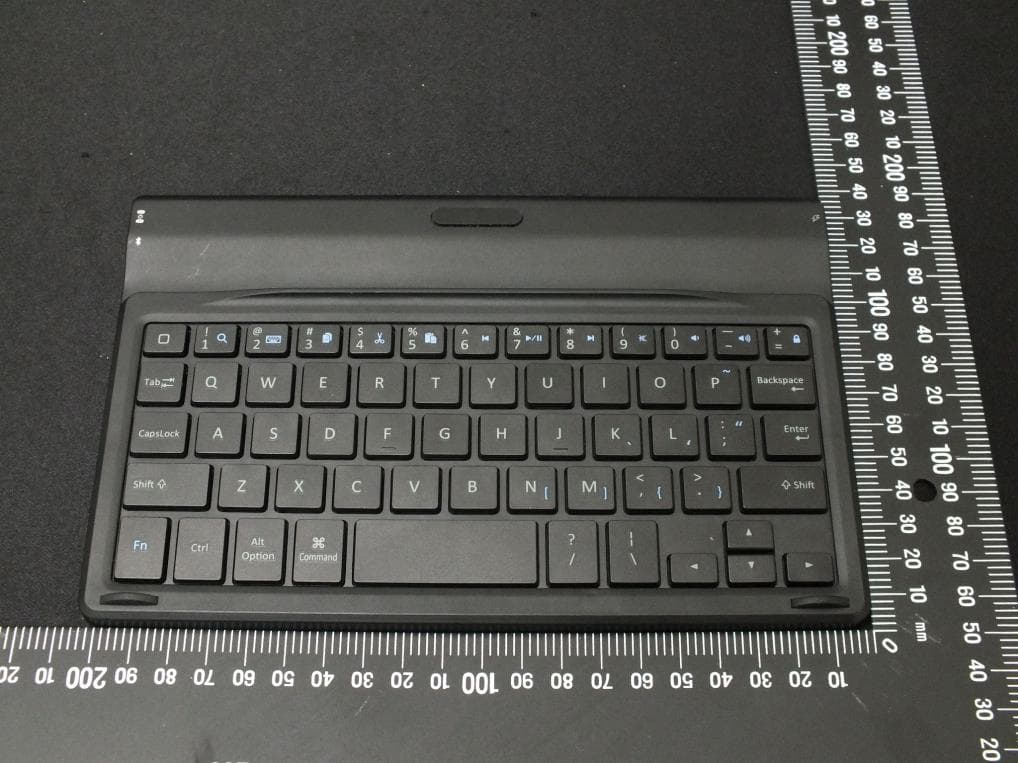
Click to zoom
Application Details
- Equipment Class
- DSS - Part 15 Spread Spectrum Transmitter
- Date of Grant
- Jun 06, 2013
- Application Purpose
- Original Equipment
- Date of Application
- Jun 06, 2013
- Equipment Note
- Bluetooth Keyboard
- Frequency Range
- 2402.00000000 - 2480.00000000
- Company
- Acrox Technologies Co., Ltd.
- Country
- Taiwan
Documents & Files
Document Text
Text extracted from the exhibit documents filed with the FCC. Open a document above to read the original.
Users Manual
K1W Bluetooth Keyboard USER'S GUIDE Ver.:1.00 CAUTION: To use this product properly, please read the user's guide before installation 1 Federal Communication Commission Interference Statement This equipment has been tested and found to comply with the limits for a Class B digital device, pursuant to Part 15 of the FCC Rules. These limits are designed to provide reasonable protection against harmful interference in a residential installation. This equipment generates, uses and can radiate radio frequency energy and, if not installed and used in accordance with the instructions, may cause harmful interference to radio communications. However, there is no guarantee that interference will not occur in a particular installation. If this equipment does cause harmful interference to radio or television reception, which can be determined by turning the equipment off and on, the user is encouraged to try to correct the interference by one of the following measures: - Reorient or relocate the receiving antenna. - Increase the separation between the equipment and receiver. - Connect the equipment into an outlet on a circuit different from that to which the receiver is connected. - Consult the dealer or an experienced radio/TV technician for help. FCC Caution: Any changes or modifications not expressly approved by the party responsible for compliance could void the user's authority to operate this equipment. This device complies with Part 15 of the FCC Rules. Operation is subject to the following two conditions: (1) This device may not cause harmful interference, and (2) this device must accept any interference received, including interference that may cause undesired operation. 2 IMPORTANT NOTE: FCC Radiation Exposure Statement: The product comply with the US/Canada portable RF exposure limit set forth for an uncontrolled environment and are safe for intended operation as described in this manual. The further RF exposure reduction can be achieved if the product can be kept as far as possible from the user body or set the device to lower output power if such function is available. 3 Bluetooth Keyboard Thank you for your purchasing the Bluetooth keyboard .Before you use this product, please read this manual thoroughly and use this product correctly. After you read this manual, please keep it in place and refer to it when necessary. Supplied with the product: The following items are included in the package. Please make sure all items are included as you open the package. If there is any item missing or damaged, please contact the reseller who sold you this product, or our support center. - Bluetooth Keyboard - User’s Guide - USB Charging cable System Requirements: You must have a Bluetooth enabled computer to use this device. The Bluetooth keyboard is designed to work with Bluetooth enabled devices. Bluetooth is generally enabled through either built-in Bluetooth hardware, a Bluetooth USB adapter, or other type of Bluetooth adapter. Windows XP with Bluetooth enabling software that includes support for keyboards is required. IPad iOS 6 , Mac OS X (10.2.8 or later) running Bluetooth software version 1.5 or later is required. 4 Functional Introduction Hot Keys (* compound key, Press with Fn key) 1 Home Screen Get back to the Home screen 2 *Search Search inside apps , albums, artists, or song 3 *Soft Keyboard Open the Soft Keyboard 4 *Copy Copies the selected item(s) to the Clipboard 5 *Cut Removes the current selection and places it on the clipboard. 6 *Paste Paste the copied or cut item(s) from Clipboard 7 *Previous Track Switches to the previous media track 8 *Play/Pause Switches between playing and pausing 9 *Next Track Switches to the next media track 10 *Mute Mutes (turns off) the computer's sound 5 11 *Volume - Decreases the computer's sound volume 12 *Volume + Increases the computer's sound volume 13 *Lock Force iPad to go into sleep/lock mode 14 Power Switch Power On / Off Switch 15 Pairing Button Pairing Button 16 Micro USB Charger Jack DC Input Connect 17 LED Indictor Pair / Battery low / Charger status Installing Hardware Step1: Activate by turning on the power switch located at the side of the keyboard. Step2: Press the Pairing button to start the pairing process, the red LED should start blinking. Step3: Start your device’s Bluetooth set up function to search for this Bluetooth keyboard.(Mini iPad is in searching situation. It can search Bluetooth keyboard. Search for Bluetooth keyboard and remind to enter password in the Bluetooth keyboard) Note: There will not have any prompt, just click enter after your enter password in the Mini iPad screen. It will be connected successfully. Step4: Connect successfully , The keyboard is in working situation. Charge The red LED keep flashing in your working , the keyboard is short of power. It is time to charge the keyboard. Step1: Use the USB charging cable plug into outlet, put one end of the plug into keyboard USB charging cable. Step2: Now red indictor, after charging finish, red indictor off. 6 LED Indicator : Definition Indicator Description “Pair” / “Battery low” /“Charging” Red To indicate Keyboard paring , charging and battery low status. Note: This device complies with part 15 of the FCC Rules. Operation is subject to the following two conditions: (1) This device may not cause harmful interference, and (2) this device must accept any interference received, including interference that may cause undesired operation. Now, enjoy and have fun! Trouble Shooting Guide • Ensure that the computer’s Bluetooth technology is working. If a Bluetooth USB adapter is being used, make sure it is plugged in properly. Try un-plugging and re-plugging the USB adapter. On some Systems, a restart may be required. • If the red LED starts blinking while the keyboard is in use, it is indicating a battery low status and it is time to change a new battery. • On the PC, refer to the Bluetooth software help guide to ensure that Bluetooth is working properly. The PC must be …
Text truncated - open the document above for the full version.
External Photos
SPORTON International Inc. Page No. : B1 of B8 TEL : 886-3-327-3456 Issued Date : Mar. 06, 2013 FAX : 886-3-327-0973 F FCC TEST REPORT Report No. : FR322602 Appendix B. Photographs of EUT SPORTON International Inc. Page No. : B2 of B8 TEL : 886-3-327-3456 Issued Date : Mar. 06, 2013 FAX : 886-3-327-0973 F FCC TEST REPORT Report No. : FR322602 SPORTON International Inc. Page No. : B3 of B8 TEL : 886-3-327-3456 Issued Date : Mar. 06, 2013 FAX : 886-3-327-0973 F FCC TEST REPORT Report No. : FR322602
ID Label/Location Info
FCC ID:PRDKB09
Internal Photos
SPORTON International Inc. Page No. : B4 of B8 TEL : 886-3-327-3456 Issued Date : Mar. 06, 2013 FAX : 886-3-327-0973 F FCC TEST REPORT Report No. : FR322602 SPORTON International Inc. Page No. : B5 of B8 TEL : 886-3-327-3456 Issued Date : Mar. 06, 2013 FAX : 886-3-327-0973 F FCC TEST REPORT Report No. : FR322602 SPORTON International Inc. Page No. : B6 of B8 TEL : 886-3-327-3456 Issued Date : Mar. 06, 2013 FAX : 886-3-327-0973 F FCC TEST REPORT Report No. : FR322602 SPORTON International Inc. Page No. : B7 of B8 TEL : 886-3-327-3456 Issued Date : Mar. 06, 2013 FAX : 886-3-327-0973 F FCC TEST REPORT Report No. : FR322602 SPORTON International Inc. Page No. : B8 of B8 TEL : 886-3-327-3456 Issued Date : Mar. 06, 2013 FAX : 886-3-327-0973 F FCC TEST REPORT Report No. : FR322602
RF Exposure Info
FCC EMF Test Report Report No. : FR322602 SPORTON INTERNATIONAL INC. Page No. : C1 of C1 TEL : 886-3-327-3456 Report Version : Rev. 01 FAX : 886-3-327-0973 1 EXPOSURE EVALUATION OF PORTABLE OR M OBILE DEVICES Human exposure to RF emissions from portable devices (47 CFR §2.1093), as defined by the FCC, must be evaluated with respect to the FCC-adopted limits for SAR. Evaluation of mobile devices, as defined by the FCC, may also be performed with respect to SAR limits, but in such cases it is usually simpler and more cost-effective to evaluate compliance with respect to field strength or power density limits. For certain devices that are designed to be used in both mobile and portable configurations similar to those described in 47 CFR § 2.1091(d)(4), such as certain desktop phones and wireless modem modules, compliance for mobile configurations is also satisfied when the same device is evaluated for SAR compliance in portable configurations. 1.1 SAR TEST EXCLUSION THRESHOLD FOR 100MHz to 6GHz and 50mm Frequency (MHz) 5 10 15 20 25 Separation distance (mm) 150 39 77 116 155 194 SAR Test Exclusion T hreshold (mW) 300 27 55 82 110 137 450 22 45 67 89 112 835 16 33 49 66 82 900 16 32 47 63 79 1500 12 24 37 49 61 1900 11 22 33 44 54 2450 10 19 29 38 48 3600 8 16 24 32 40 5200 7 13 20 26 33 5400 6 13 19 26 32 5800 6 12 19 25 31 1.2 EVALUATION RESULTS Frequency Range (MHz) Maximum Conducted Pow er (dBm) Maximum Conducted Pow er (mW) SAR test exclusion thershold (mW) 2402~2480 3.12 2.051 10
Test Report
FCC Test Report Report No. : FR322602 SPORTON INTERNATIONAL INC. Page No. : 2 of 41 TEL : 886-3-327-3456 Report Version : Rev. 01 FAX : 886-3-327-0973 Table of Contents 1 GENERAL DESCRIPTION .................................................................................................................... 5 1.1 Information .............................................................................................................................................. 5 1.2 Accessories ............................................................................................................................................ 7 1.3 Support Equipment ................................................................................................................................. 7 1.4 Testing Applied Standards ..................................................................................................................... 7 1.5 Testing Location Information .................................................................................................................. 8 1.6 Measurement Uncertainty ...................................................................................................................... 8 2 TEST CONFIGURATION OF EUT......................................................................................................... 9 2.1 The Worst Case Modulation Configuration ............................................................................................ 9 2.2 Test Channel Frequencies Configuration ............................................................................................... 9 2.3 The Worst Case Power Setting Parameter ............................................................................................ 9 2.4 The Worst Case Measurement Configuration ...................................................................................... 10 2.5 Test Setup Diagram ............................................................................................................................. 12 3 TRANSMITTER TEST RESULT .......................................................................................................... 14 3.1 AC Power-line Conducted Emissions .................................................................................................. 14 3.2 20dB Bandwidth and Carrier Frequency Separation............................................................................ 17 3.3 Number of Hopping Frequencies ......................................................................................................... 19 3.4 Time of Occupancy (Dwell Time) ......................................................................................................... 21 3.5 RF Output Power .................................................................................................................................. 23 3.6 Transmitter Radiated Bandedge Emissions ......................................................................................... 25 3.7 Transmitter Radiated Unwanted Emissions ......................................................................................... 28 4 TEST EQUIPMENT AND CALIBRATION DATA ................................................................................ 39 APPENDIX A. TEST PHOTOS ....................................................................................................................... A1 APPENDIX B. PHOTOGRAPHS OF EUT ...................................................................................................... B1 FCC Test Report Report No. : FR322602 SPORTON INTERNATIONAL INC. Page No. : 3 of 41 TEL : 886-3-327-3456 Report Version : Rev. 01 FAX : 886-3-327-0973 Summary of Test Result Conformance Test Specifications Report Clause Ref. Std. Clause Description Measured Limit Result 1.1.2 15.203 Antenna Requirement Antenna connector mechanism complied FCC 15.203 Complied 3.1 15.207 AC Power-line Conducted Emissions 0.178MHz: 49.54dBuV (5.01dB) - AV 54.41dBuV (10.14dB) - QP FCC 15.207 Complied 3.2 15.247(a) 20dB Bandwidth 1.155 MHz N/A Complied 3.2 15.247(a) Carrier Frequency Separation (ChS) 1.000MHz ChS ≥ 20 dB BW x 2/3. Complied 3.3 15.247(a) Number of Hopping Frequencies (N) Max: 79 Min: 75 N ≥ 15 Complied 3.4 15.247(a) Time of Occupancy (Dwell Time) 0.3200 sec 0.4 s within 0.4 x N Complied 3.5 15.247(b) RF Output Power (that Maximum Peak Conducted Output Power) Power [dBm] Basic: 3.12 Power [dBm] Basic: 21 EDR: 21 LE: 30 Complied 3.6 15.247(c) Transmitter Radiated Bandedge Emissions Non-Restricted Bands: 2537.90MHz: 60.19dB Restricted Bands [dBuV/m at 3m]: 2483.5MHz 44.40 (Margin 29.6dB) - PK 32.55 (Margin 21.45dB) - AV Non-Restricted Bands: > 20 dBc Restricted Bands: FCC 15.209 Complied 3.7 15.247(c) Transmitter Radiated Unwanted Emissions Restricted Bands [dBuV/m at 3m]: 143.49MHz 33.69 (Margin 9.81dB) - PK Non-Restricted Bands: > 20 dBc Restricted Bands: FCC 15.209 Complied FCC Test Report Report No. : FR322602 SPORTON INTERNATIONAL INC. Page No. : 4 of 41 TEL : 886-3-327-3456 Report Version : Rev. 01 FAX : 886-3-327-0973 Revision History Report No. Version Description Issued Date FR322602 Rev. 01 Initial issue of report Mar. 06, 2013 2500-2690 FCC Test Report Report No. : FR322602 SPORTON INTERNATIONAL INC. Page No. : 5 of 41 TEL : 886-3-327-3456 Report Version : Rev. 01 FAX : 886-3-327-0973 1 General Description 1.1 Information 1.1.1 RF General Information RF General Information Frequency Range (MHz) Bluetooth Version Ch. Frequency (MHz) Channel Number RF Output Power (dBm) 2400-2483.5 v3.0 Basic 2402-2480 0-78 [79] 3.12 Note 1: Bluetooth uses GFSK (1Mbps) modulation for FHSS modulation. Note 2: RF output power specifies that Maximum Peak Conducted Output Power. 1.1.2 Table for Multiple Listing The EUT has two models which are listed as table below: Model Differences K1W For marketing purpose only. K1Z 1.1.3 Antenna Information Antenna Category Equipment placed…
Text truncated - open the document above for the full version.
Test Setup Photos
Test Photos Report No. : FR322602 SPORTON INTERNATIONAL INC. Page No. : A1 of A4 TEL : 886-3-327-3456 Report Version : Rev. 01 FAX : 886-3-327-0973 Appendix A. TEST PHOTOS 1 Photographs of Conducted Emissions Test Configuration FRONT VIEW REAR VIEW Test Photos Report No. : FR322602 SPORTON INTERNATIONAL INC. Page No. : A2 of A4 TEL : 886-3-327-3456 Report Version : Rev. 01 FAX : 886-3-327-0973 SIDE VIEW Test Photos Report No. : FR322602 SPORTON INTERNATIONAL INC. Page No. : A3 of A4 TEL : 886-3-327-3456 Report Version : Rev. 01 FAX : 886-3-327-0973 2 Photographs of Radiated Emissions Test Configuration For radiated emission below 1GHz FRONT VIEW REAR VIEW Test Photos Report No. : FR322602 SPORTON INTERNATIONAL INC. Page No. : A4 of A4 TEL : 886-3-327-3456 Report Version : Rev. 01 FAX : 886-3-327-0973 For radiated emission above 1GHz FRONT VIEW REAR VIEW
Contact Information
Applicant
Gavin Hsieh(Product Manager)
Technical Contact
International Certification Corp.Gary Chang
[email protected]886-3-271-8628
No.3-1, Lane 6, Wen San 3rd St. Kwei Shan · Taiwan
Non-Technical Contact
International Certification Corp.Wendy Liao
Test Firm
International Certification Corp.Fu-Cheng Chuang
Technical Specifications
| # | Rule Parts | Frequency Range | Power Output |
|---|---|---|---|
| 1 | 15C | 2.40 GHz - 2.48 GHz | 2.00 mW |
Other Applications from Acrox Technologies Co., Ltd.
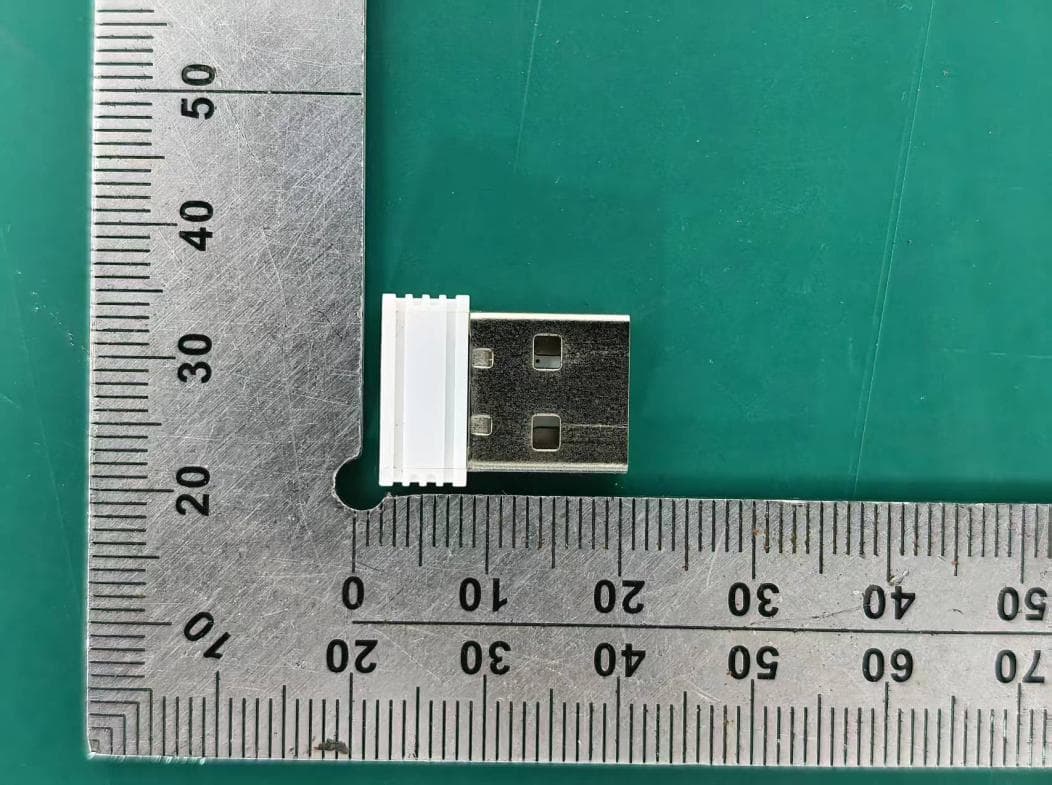
PRDRX12
May 27, 2026Wireless Receiver
Equipment Class
DXX - Part 15 Low Power Communication Device Transmitter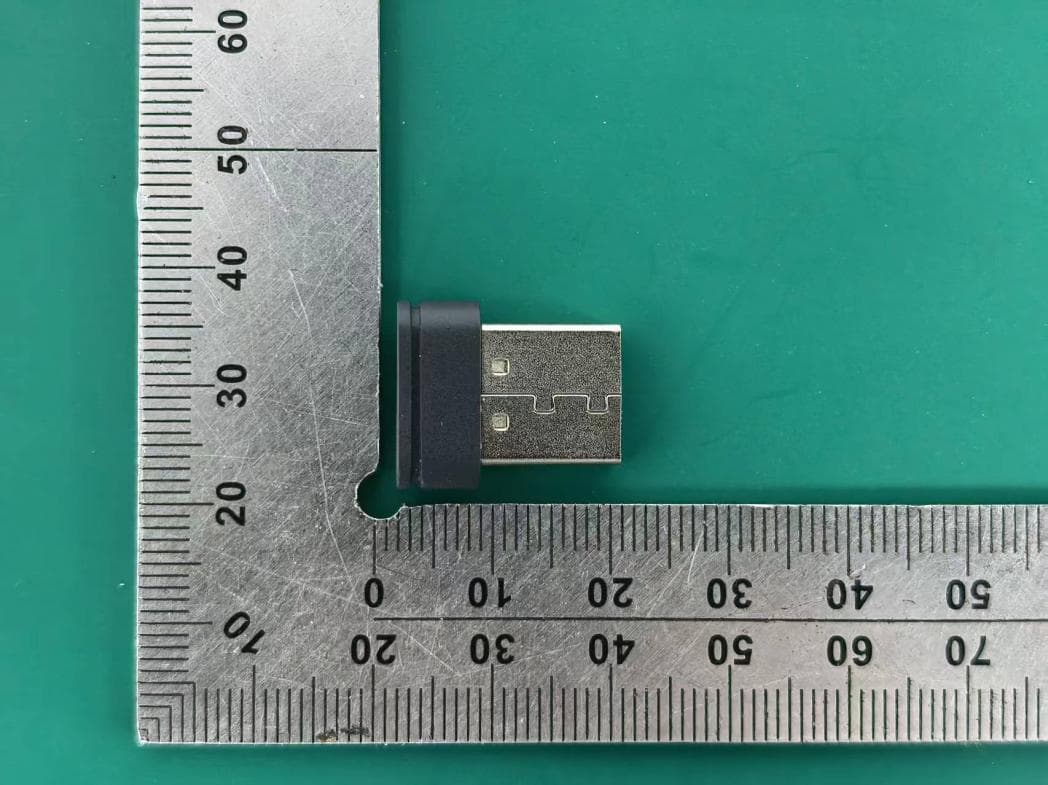
PRDRX11
Apr 07, 2026Wireless Receiver
Equipment Class
DXX - Part 15 Low Power Communication Device Transmitter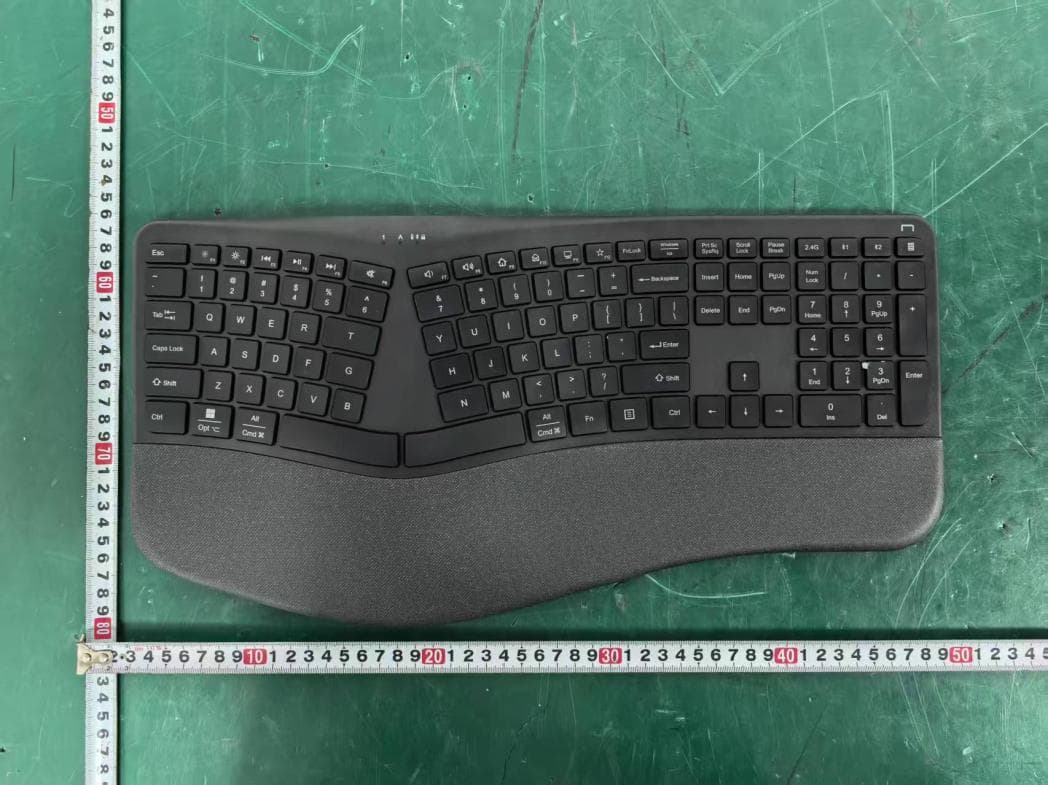
PRDKB72
Apr 03, 2026WIRELESS SPLIT KEY ERGONOMIC KEYBOARD
Equipment Class
DTS - Digital Transmission System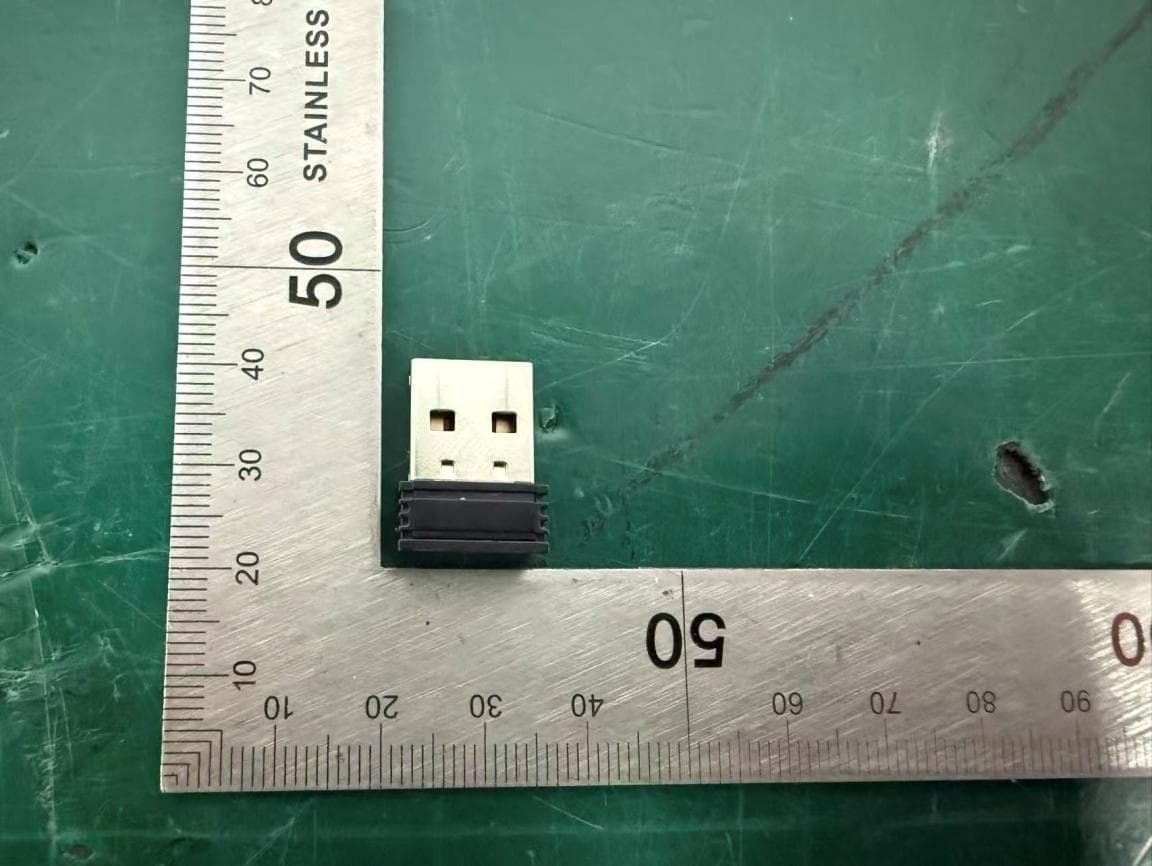
PRDRX1P
Apr 03, 2026Wireless Receiver
Equipment Class
DXX - Part 15 Low Power Communication Device Transmitter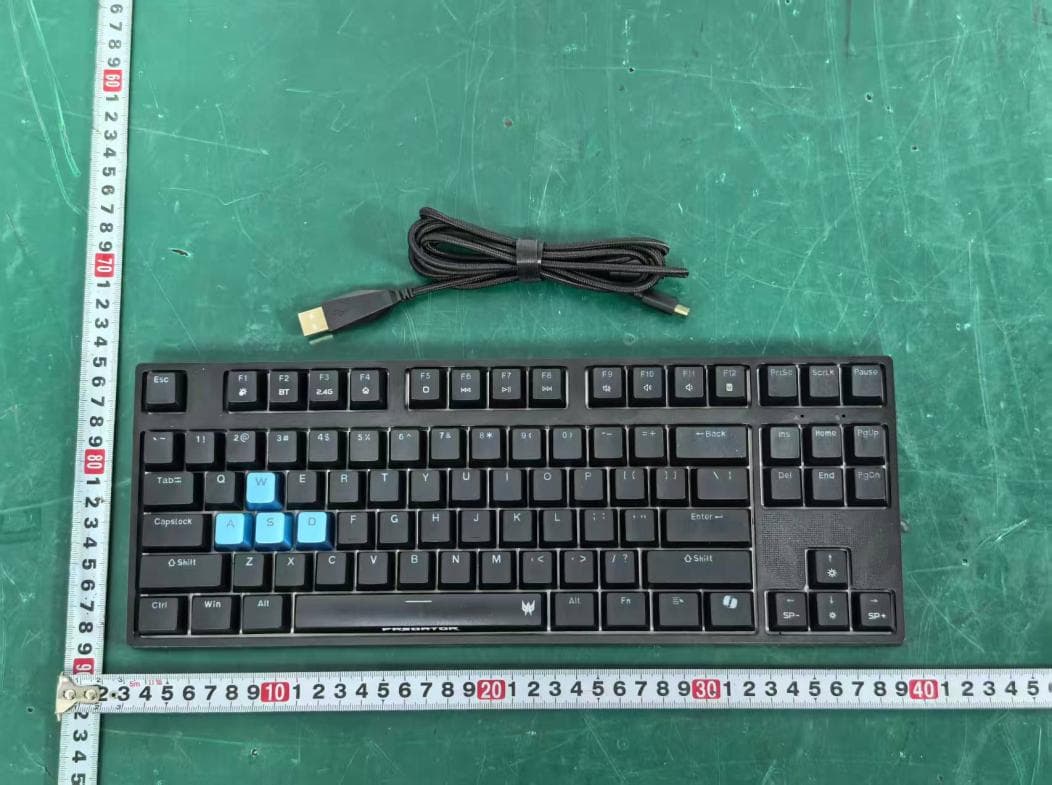
PRDKB73
Apr 03, 2026Gaming Keyboard
Equipment Class
DTS - Digital Transmission System