PRDKB21HP Pro 8 Bluetooth Keyboard Case
Acrox Technologies Co., Ltd.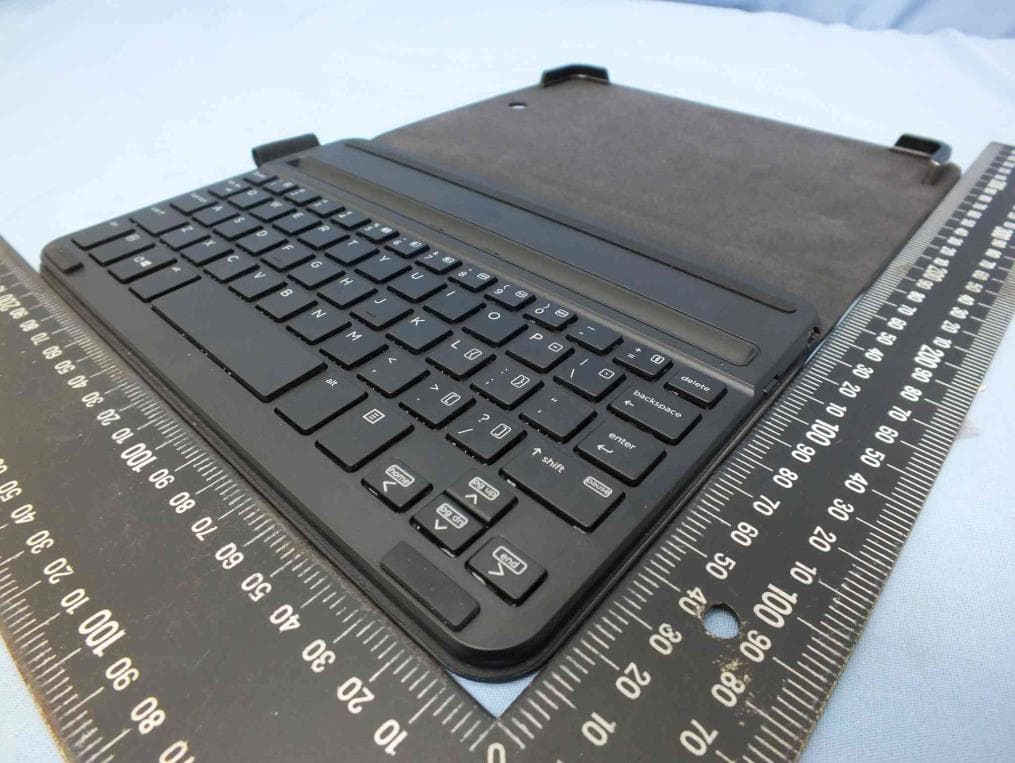
Click to zoom
Application Details
- Equipment Class
- DSS - Part 15 Spread Spectrum Transmitter
- Date of Grant
- Jan 26, 2015
- Application Purpose
- Original Equipment
- Date of Application
- Jan 22, 2015
- Equipment Note
- HP Pro 8 Bluetooth Keyboard Case
- Frequency Range
- 2402.00000000 - 2480.00000000
- Company
- Acrox Technologies Co., Ltd.
- Country
- Taiwan
Documents & Files
Document Text
Text extracted from the exhibit documents filed with the FCC. Open a document above to read the original.
Users Manual
To connect to a tablet using Bluetooth®: 1. Turn on the tablet and the keyboard. 2. Open your tablet’s Bluetooth settings to begin searching for the keyboard. For more information, see your tablet user guide. 3. Press the fn key and the Bluetooth key on the keyboard. See figure 6. 4. Select HP Bluetooth Keyboard to complete the pairing process. LightStatus Solid white (5 seconds)The keyboard is fully charged, and the user has plugged in the AC adapter or switched on the power button, or the keyboard has successfully paired to a tablet. Solid amber (5 seconds)The keyboard is not fully charged and the user has switched on the power button. Pulsing amber (10 seconds)The keyboard is not fully charged, and the user has plugged in the AC adapter. Blinking amber (60 seconds)The user has switched on the power button and then pressed the pairing keys. Blinking amber (15 second intervals) The battery power is less than 20%. : Bluetooth® بواسطة لوحي بكمبيوتر للتوصيل 1 ..بتشغيل الكمبيوتر اللوحي ولوحة المفاتيح قم 2 .على الكمبيوتر اللوحي للبدء بالبحث عن لوحة المفاتيح. Bluetooth إعدادات افتح .المعلومات، راجع دليل مستخدم الكمبيوتر اللوحي الخاص بك للمزيد من 3 .. 6 في لوحة المفاتيح. انظر الصورة Bluetooth ومفتاح fn على مفتاح اضغط 4 ..لإكمال عملية الإقران ( HP Bluetooth لوحة مفاتيح) HP Bluetooth Keyboard حدد الضوءالحالة (ثوان 5) أبيض ثابت لوحة المفاتيح مشحونة بالكامل، وقام المستخدم بتوصيل محول التيار المتناوب أو تشغيل زر الطاقة، .أو تم إقران لوحة المفاتيح بكمبيوتر لوحي بنجاح (ثوان 5) كهرماني ثابت لوحة المفاتيح غير مشحونة بالكامل وقام .المستخدم بتشغيل زر الطاقة (ثوان 10) كهرماني نابض لوحة المفاتيح غير مشحونة بالكامل، وقام المستخدم بتوصيل محول التيار المتناوب. (ثانية 60) كهرماني وامض قام المستخدم بتشغيل زر الطاقة ثم ضغط على مفتاحي الإقران. كهرماني وامض (بفواصل ثانية) 15زمنية مقدارها . % 20طاقة البطارية أقل من Menghubungkan ke tablet dengan Bluetooth®: 1. Menyalakan tablet dan keyboard. 2. Buka pengaturan Bluetooth pada tablet Anda untuk mulai memindai keyboard. Untuk informasi lebih lanjut, lihat panduan pengguna tablet Anda. 3. Tekan tombol fn dan tombol Bluetooth pada keyboard. Lihat gambar 6. 4. Pilih HP Bluetooth Keyboard untuk menyelesaikan proses pemasangan. Lampu indikatorStatus Putih gading (5 detik) Keyboard telah terisi penuh, dan pengguna telah memasang adaptor AC atau menyalakan tombol daya, atau keyboard berhasil terpasang ke tablet. Amber pekat (5 detik) Keyboard belum terisi penuh dan pengguna telah menyalakan tombol daya. Amber menyala berdenyut (10 detik) Keyboard belum terisi penuh dan pengguna telah memasang adaptor AC. Amber berkedip (60 seconds) Pengguna telah menyalakan tombol daya lalu menekan tombol pemasangan. Berkedip kuning (interval 15 detik) Daya baterai kurang dari 20%. За да свържете към таблет чрез Bluetooth®: 1. Включете таблета и клавиатурата. 2. Отворете настройките за Bluetooth на таблета, за да започнете търсенето за клавиатурата. За повече информация вижте ръководството за потребителя на таблета. 3. Натиснете клавиша fn и клавиша Bluetooth на клавиатурата. Вижте фигура 6. 4. Изберете HP Bluetooth Keyboard, за да завършите процеса на сдвояване. ИндикаторСъстояние Непрекъснато бяло (5 секунди) Клавиатурата е напълно заредена и потребителят е включил променливотоковия адаптер/бутона на захранването или клавиатурата е успешно сдвоена с таблета. Непрекъснато жълто (5 секунди) Клавиатурата не е напълно заредена и потребителят е включил бутона на захранването. Пулсиращо жълто (10 секунди) Клавиатурата не е напълно заредена и потребителят е включил в контакта променливотоковия адаптер. Мигащо жълто (60 секунди) Потребителят е включил бутона на захранването, след което е натиснал клавишите за сдвояване. Мигащо жълто (интервал от 15 секунди) Зарядът на батерията е по-малко от 20%. Připojení tabletu pomocí technologie Bluetooth®: 1. Zapněte tablet a klávesnici. 2. Otevřete nastavení rozhraní Bluetooth na tabletu a začněte hledat klávesnici. Další informace naleznete v uživatelské příručce tabletu. 3. Na klávesnici stiskněte klávesu fn a klávesu Bluetooth. Viz obrázek 6. 4. Výběrem možnosti HP Bluetooth Keyboard dokončete párování. KontrolkaStav Svítí bíle (5 sekund)Pokud je klávesnice plně nabitá a uživatel připojí adaptér střídavého proudu nebo zapnul napájení, nebo je klávesnice úspěšně spárována s tabletem. Svítí oranžově (5 sekund)Klávesnice není plně nabitá a uživatel zapnul napájení. Pulzuje oranžově (10 sekund)Klávesnice není plně nabitá a uživatel připojil adaptér střídavého proudu. Bliká oranžově (60 sekund)Uživatel zapnul napájení a poté stisknul klávesy párování. Bliká oranžově (v intervalu 15 sekund) Baterie je nabitá na méně než 20%. Sådan opretter du forbindelse til en tablet ved hjælp af Bluetooth®: 1. Tænd for tabletten og tastaturet. 2. Åbn tablettens Bluetooth-indstillinger for at søge efter tastaturet. Se tablettens brugervejledning for yderligere oplysninger. 3. Tryk på tasten fn og Bluetooth-tasten på tastaturet. Se figur 6. 4. Vælg HP Bluetooth Keyboard for at gennemføre parringsprocessen. LysdiodeStatus Lyser hvidt (5 sekunder)Tastaturet er fuldt opladet, og brugeren har tilsluttet vekselstrømsadapteren eller tændt tastaturet på tænd/sluk-knappen, eller tastaturet er blevet parret med tabletten. Lyser gult (5 sekunder)Tastaturet er ikke fuldt opladet, og brugeren har tændt tastaturet på tænd/sluk-knappen. Blinker gult (10 sekunder)Tastaturet er ikke fuldt opladet, og brugeren har tilsluttet vekselstrømsadapteren. Blinker gult (60 sekunder)Brugeren har tændt på tænd/sluk-knappen og derefter trykket på parringstasterne. Blinker gult (intervaller på 15 sekunder) Batterispændingen er lavere end 20 %. So schließen Sie ein Tablet über Bluetooth® an: 1. Schalten Sie Tablet und Tastatur ein. 2. Öffnen Sie die Bluetooth-Einstellungen des Tablets, um die Tastatursuche zu starten. Weitere Informationen finden Sie im Benutzerhandbuch Ihres Tablets. 3. Drücken Sie die fn-Taste und die Bluetooth-Taste auf der Tastatur. Siehe Abbildung 6. 4. Wählen Sie HP Bluetooth Keyboard …
Text truncated - open the document above for the full version.
External Photos
Project No.: EP4D2501 Page No. : 1 of 9 Photographs of EUT Project No.: EP4D2501 Page No. : 2 of 9 Project No.: EP4D2501 Page No. : 3 of 9
ID Label/Location Info
HP Pro 8 Bluetooth Keyboard Case 藍芽無線鍵盤 Model( 型號 / 型号 ):HSTNH-A501G SPS: 801338-001 Rating( 額定電壓電流/額定电压电流 ) 5VDC 500mA Made in China( 中國製造/中国制造 ) FCC ID: PRDKB21 K4U64AA IC6180A-K2W 73mm 2.00mm Corner Radius HP Godzilla Regulatory Label Last updated on 12.19.14 HP CONFIDENTIAL 27mm COMPLIANCE LABEL: Process = Printed on Sticker Material Col or = PMS Black Graphic Col or = PMS Cool Grey 11C Size = W:83mm x H:32mm Label Location
Internal Photos
Project No.: EP4D2501 Page No. : 4 of 9 Project No.: EP4D2501 Page No. : 5 of 9 Project No.: EP4D2501 Page No. : 6 of 9 Project No.: EP4D2501 Page No. : 7 of 9 Project No.: EP4D2501 Page No. : 8 of 9 Project No.: EP4D2501 Page No. : 9 of 9
RF Exposure Info
Report No.: FA4D2501 Page : 1 of 7 Report Version: Rev. 01 FCC RF Exposure Report FCC ID : PRDKB21 Equipment : HP Pro 8 Bluetooth Keyboard Case Model No. : K2W, HSTNH-A501G (Please refer to section 1 for more details.) Brand Name : ACROX, HP. (Please refer to section 1 for more details.) Applicant : ACROX Technologies Co., Ltd. Address : 4F., No.89, Minshan St., Neihu Dist., Taipei City 114 Standard : 47 CFR FCC Part 2.1093 Received Date : Dec. 25, 2014 Tested Date : Jan. 09 ~ Jan. 15, 2015 We, International Certification Corp., would like to declare that the tested sample has been evaluated and in compliance with the requirement of the above standards. The test results contained in this report refer exclusively to the product. It may be duplicated completely for legal use with the approval of the applicant. It shall not be reproduced except in full without the written approval of our laboratory. Approved & Reviewed by: Gary Chang / Manager Ty: XXX Report No.: FA4D2501 Page : 2 of 7 Report Version: Rev. 01 Table of Contents 1 PRODUCT DETAILS ............................................................................................................................. 4 2 EXPOSURE EVALUATION OF PORTABLE DEVICES ....................................................................... 5 2.1 LIMITS FOR GENERAL POPULATION/UNCONTROLLED EXPOSURE............................................. 5 2.2 EVALUATION RESULTS ....................................................................................................................... 6 3 TEST LABORATORY INFORMATION ................................................................................................. 7 Report No.: FA4D2501 Page : 3 of 7 Report Version: Rev. 01 Release Record Report No. Version Description Issued Date FA4D2501 Rev. 01 Initial issue Jan. 21, 2015 Report No.: FA4D2501 Page : 4 of 7 Report Version: Rev. 01 1 Product Details The following models are provided to this EUT. Brand Name Model Name Product Name Description ACROX K2W HP Pro 8 Bluetooth Keyboard Case Marketing purpose HP HSTNH-A501G All models are electrically identical, different model names are for marketing purpose. The above models, model K2W was selected as a representative one for the final test and only its data was recorded in this report. Report No.: FA4D2501 Page : 5 of 7 Report Version: Rev. 01 2 EXPOSURE EVALUATION OF PORTABLE DEVICES Human exposure to RF emissions from portable devices (47 CFR §2.1093), as defined by the FCC, must be evaluated with respect to the FCC-adopted limits for SAR. Evaluation of mobile devices, as defined by the FCC, may also be performed with respect to SAR limits, but in such cases it is usually simpler and more cost-effective to evaluate compliance with respect to field strength or power density limits. For certain devices that are designed to be used in both mobile and portable configurations similar to those described in 47 CFR §2.1091(d)(4), such as certain desktop phones and wireless modem modules, compliance for mobile configurations is also satisfied when the same device is evaluated for SAR compliance in portable configurations. 2.1 LIMITS FOR GENERAL POPULATION/UNCONTROLLED EXPOSURE Frequency (MHz) 5 10 15 20 25 Separation distance (mm) 150 39 77 116 155 194 SAR Test Exclusion Threshold (mW) 300 27 55 82 110 137 450 22 45 67 89 112 835 16 33 49 66 82 900 16 32 47 63 79 1500 12 24 37 49 61 1900 11 22 33 44 54 2450 10 19 29 38 48 3600 8 16 24 32 40 5200 7 13 20 26 33 5400 6 13 19 26 32 5800 6 12 19 25 31 The 1-g and 10-g SAR test exclusion thresholds for 100 MHz to 6 GHz at test separation distances ≤ 50 mm are determined by [(max. power of channel, including tune-up tolerance, mW)/(min. test separation distance, mm)] · [√f(GHz)] ≤ 3.0 for 1-g SAR and ≤ 7.5 for 10-g extremity SAR, where •f(GHz) is the RF channel transmit frequency in GHz • Power and distance are rounded to the nearest mW and mm before calculation • The result is rounded to one decimal place for comparison The test exclusions are applicable only when the minimum test separation distance is ≤ 50 mm and for transmission frequencies between 100 MHz and 6 GHz. When the minimum test separation distance is < 5 mm, a distance of 5 mm is applied to determine SAR test exclusion Report No.: FA4D2501 Page : 6 of 7 Report Version: Rev. 01 2.2 EVALUATION RESULTS Frequency (MHz) Maximum Conducted Average Power (dBm) Maximum Conducted Average Power (mW) Antenna Gain (dBi) 2402 ( BT ) -4.25 0.38 2.78 2441 ( BT ) -4.26 0.37 2.78 2480 ( BT ) -4.28 0.37 2.78 [(max. power of channel, including tune-up tolerance, mW)/(min. test separation distance, mm)] * [√f(GHz)] =0.38 / 5 * √2.402 = 0.118 < 3.0 SAR Test Exclusion Thresholds is < 10mW and 3.0 for separation distance 5mm. Therefore, SAR test is not required. Report No.: FA4D2501 Page : 7 of 7 Report Version: Rev. 01 3 Test laboratory information Established in 2012, ICC provides foremost EMC & RF Testing and advisory consultation services by our skilled engineers and technicians. Our services employ a wide variety of advanced edge test equipment and one of the widest certification extents in the business. International Certification Corp, it is our definitive objective is to institute long term, trust-based associations with our clients. The expectation we set up with our clients is based on outstanding service, practical expertise and devotion to a certified value structure. Our passion is to grant our clients with best EMC / RF services by oriented knowledgeable and accommodating staff. Our Test sites are located at Linkou District and Kwei Shan Hsiang. Location map can be found on our website http://www.icertifi.com.tw. Linkou Kwei Shan Kwei Shan Site II Tel: 886-2-2601-1640 Tel: 886-3-271-8666 Tel: 886-3-271-8640 No. 30-2, Ding Fwu Tsuen, Lin Kou District, New Taipei City, Taiwan, R.O.C. No. 3-1, Lane 6, Wen San 3rd St., Kwei Shan Hsiang, Tao Yuan Hsien 333, Taiwan, R.O.C. No. 14-1, Lane 19, Wen San 3rd St., Kwei Sha…
Text truncated - open the document above for the full version.
Test Report
Report No.: FR4D2501 Page : 1 of 37 Report Version: Rev. 01 FCC Test Report FCC ID : PRDKB21 Equipment : HP Pro 8 Bluetooth Keyboard Case Model No. : K2W, HSTNH-A501G (Please refer to section 1.1.1 for more details.) Brand Name : ACROX, HP. (Please refer to section 1.1.1 for more details.) Applicant : ACROX Technologies Co., Ltd. Address : 4F., No.89, Minshan St., Neihu Dist., Taipei City 114 Standard : 47 CFR FCC Part 15.247 Received Date : Dec. 25, 2014 Tested Date : Jan. 09 ~ Jan. 15, 2015 We, International Certification Corp., would like to declare that the tested sample has been evaluated and in compliance with the requirement of the above standards. The test results contained in this report refer exclusively to the product. It may be duplicated completely for legal use with the approval of the applicant. It shall not be reproduced except in full without the written approval of our laboratory. Approved & Reviewed by: Gary Chang / Manager Ty: XXX Report No.: FR4D2501 Page : 2 of 37 Report Version: Rev. 01 Table of Contents 1 GENERAL DESCRIPTION .................................................................................................................... 5 1.1 Information .............................................................................................................................................. 5 1.2 Local Support Equipment List ................................................................................................................ 7 1.3 Test Setup Chart .................................................................................................................................... 7 1.4 The Equipment List ................................................................................................................................ 8 1.5 Test Standards ....................................................................................................................................... 9 1.6 Measurement Uncertainty ...................................................................................................................... 9 2 TEST CONFIGURATION ..................................................................................................................... 10 2.1 Testing Condition ................................................................................................................................. 10 2.2 The Worst Test Modes and Channel Details ....................................................................................... 10 3 TRANSMITTER TEST RESULTS ........................................................................................................ 11 3.1 Conducted Emissions ........................................................................................................................... 11 3.2 Unwanted Emissions into Restricted Frequency Bands ...................................................................... 14 3.3 Unwanted Emissions into Non-Restricted Frequency Bands .............................................................. 24 3.4 Conducted Output Power ..................................................................................................................... 27 3.5 Number of Hopping Frequency ............................................................................................................ 29 3.6 20dB and Occupied Bandwidth ............................................................................................................ 31 3.7 Channel Separation .............................................................................................................................. 33 3.8 Number of Dwell Time .......................................................................................................................... 35 4 TEST LABORATORY INFORMATION ............................................................................................... 37 Report No.: FR4D2501 Page : 3 of 37 Report Version: Rev. 01 Release Record Report No. Version Description Issued Date FR4D2501 Rev. 01 Initial issue Jan. 21, 2015 Report No.: FR4D2501 Page : 4 of 37 Report Version: Rev. 01 Summary of Test Results FCC Rules Test Items Measured Result 15.207 Conducted Emissions [dBuV]: 0.150MHz 52.49 (Margin -13.51dB) - QP Pass 15.247(d) 15.209 Radiated Emissions [dBuV/m at 3m]: 2497.00MHz 51.60 (Margin -2.40dB) - AV Pass 15.247(d) Band Edge Meet the requirement of limit Pass 15.247(b)(1) Conducted Output Power Power [dBm]: -3.86 Pass 15.247(a)(1)(iii) Number of Hopping Channels Meet the requirement of limit Pass 15.247(a)(1) Hopping Channel Separation Meet the requirement of limit Pass 15.247(a)(1)(iii) Dwell Time Meet the requirement of limit Pass 15.203 Antenna Requirement Meet the requirement of limit Pass Report No.: FR4D2501 Page : 5 of 37 Report Version: Rev. 01 1 General Description 1.1 Information 1.1.1 Product Details The following models are provided to this EUT. Brand Name Model Name Product Name Description ACROX K2W HP Pro 8 Bluetooth Keyboard Case Marketing purpose HP HSTNH-A501G All models are electrically identical, different model names are for marketing purpose. The above models, model K2W was selected as a representative one for the final test and only its data was recorded in this report. 1.1.2 Specification of the Equipment under Test (EUT) RF General Information Frequency Range (MHz) Bluetooth Mode Ch. Frequency (MHz) Channel Number Data Rate 2400-2483.5 BR V3.0 2402-2480 0-78 [79] 1 Mbps Note 1: RF output power specifies that Maximum Peak Conducted Output Power. Note 2: The device supports GFSK modulation only. 1.1.3 Antenna Details Ant. No. Type Gain (dBi) Connector Remark 1 PCB 2.78 --- --- 1.1.4 Power Supply Type of Equipment under Test (EUT) Power Supply Type 3.7Vdc from battery 1.1.5 Accessories Accessories No. Equipment Description 1 USB cable 1.0m shielded cable w/o core (For charging only.) Report No.: FR4D2501 Page : 6 of 37 Report Version: Rev. …
Text truncated - open the document above for the full version.
Test Setup Photos
Report No.: FR4D2501 Page: : 1 of 4 Report Version: Rev. 01 Photographs of the Test Configuration Conducted Emission Test Report No.: FR4D2501 Page: : 2 of 4 Report Version: Rev. 01 Radiated Emission Below 1GHz Test Report No.: FR4D2501 Page: : 3 of 4 Report Version: Rev. 01 Radiated Emission Above 1GHz Test Report No.: FR4D2501 Page: : 4 of 4 Report Version: Rev. 01
Contact Information
Applicant
Gavin Hsieh(Product Manager)
Technical Contact
International Certification Corp.Gary Chang
[email protected]886-3-271-8628
No.3-1, Lane 6, Wen San 3rd St. Kwei Shan Hsiang, · Taiwan
Non-Technical Contact
International Certification Corp.Wendy Liao
[email protected]886-3-271-8628
Test Firm
International Certification Corp.Fu-Cheng Chuang
Technical Specifications
| # | Rule Parts | Frequency Range | Power Output |
|---|---|---|---|
| 1 | 15C | 2.40 GHz - 2.48 GHz | 400.00 µW |
Other Applications from Acrox Technologies Co., Ltd.
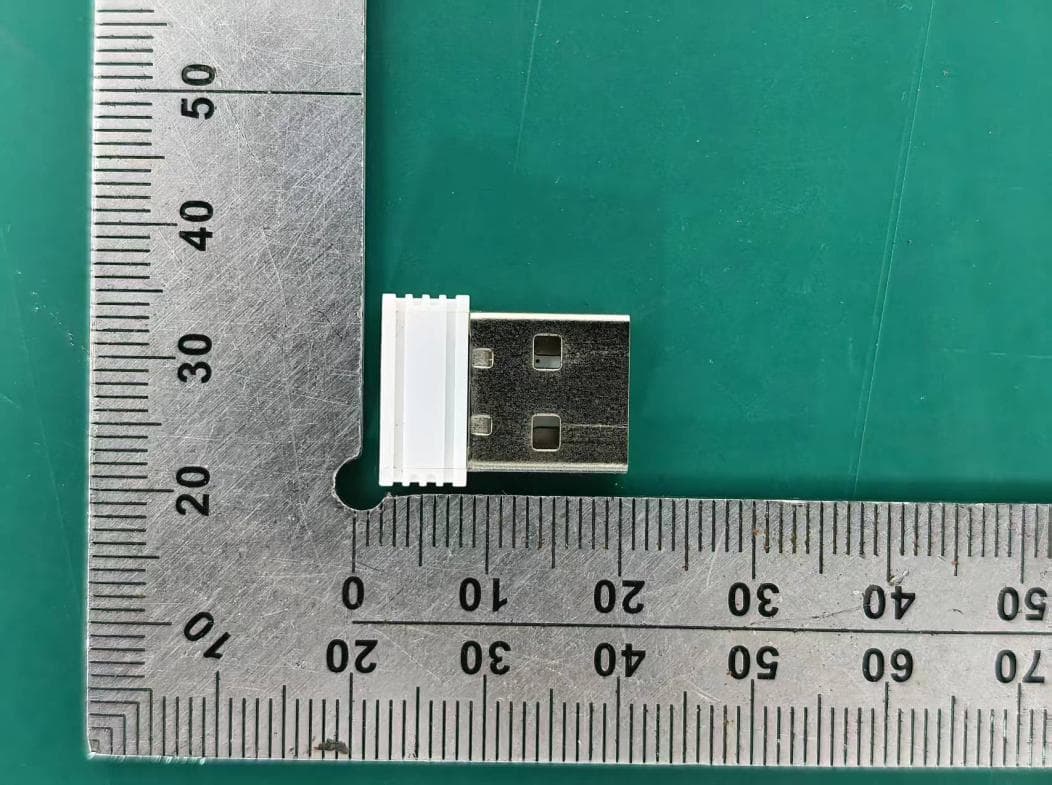
PRDRX12
May 27, 2026Wireless Receiver
Equipment Class
DXX - Part 15 Low Power Communication Device Transmitter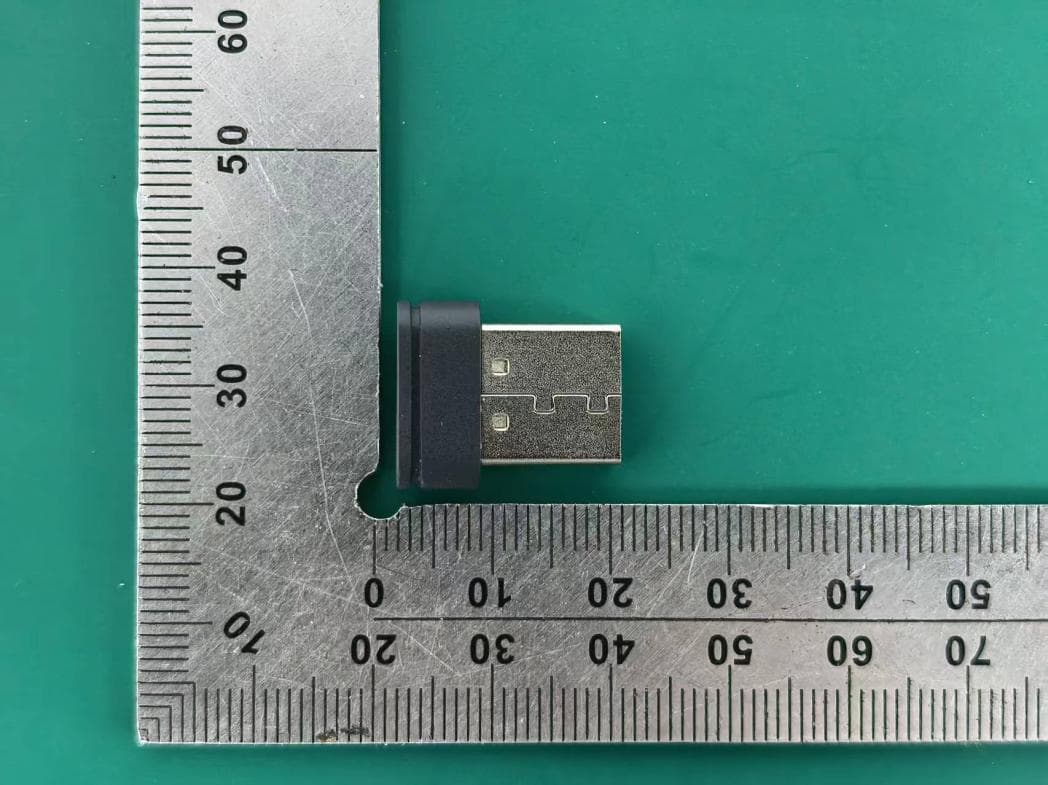
PRDRX11
Apr 07, 2026Wireless Receiver
Equipment Class
DXX - Part 15 Low Power Communication Device Transmitter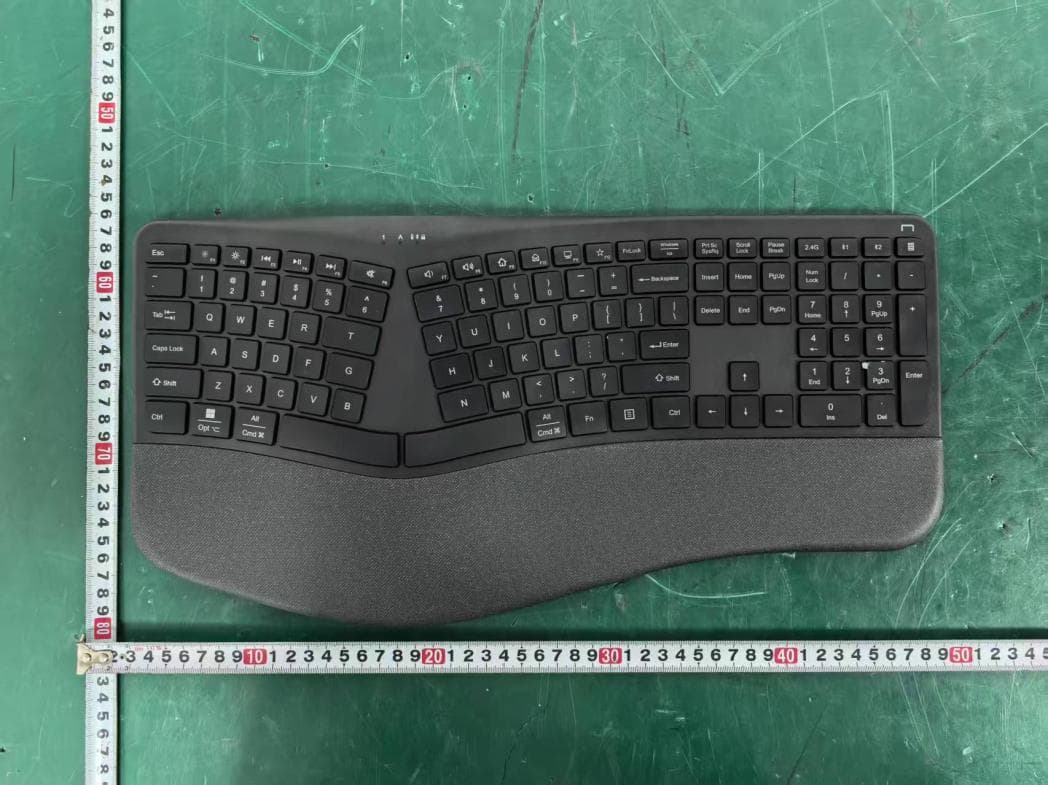
PRDKB72
Apr 03, 2026WIRELESS SPLIT KEY ERGONOMIC KEYBOARD
Equipment Class
DTS - Digital Transmission System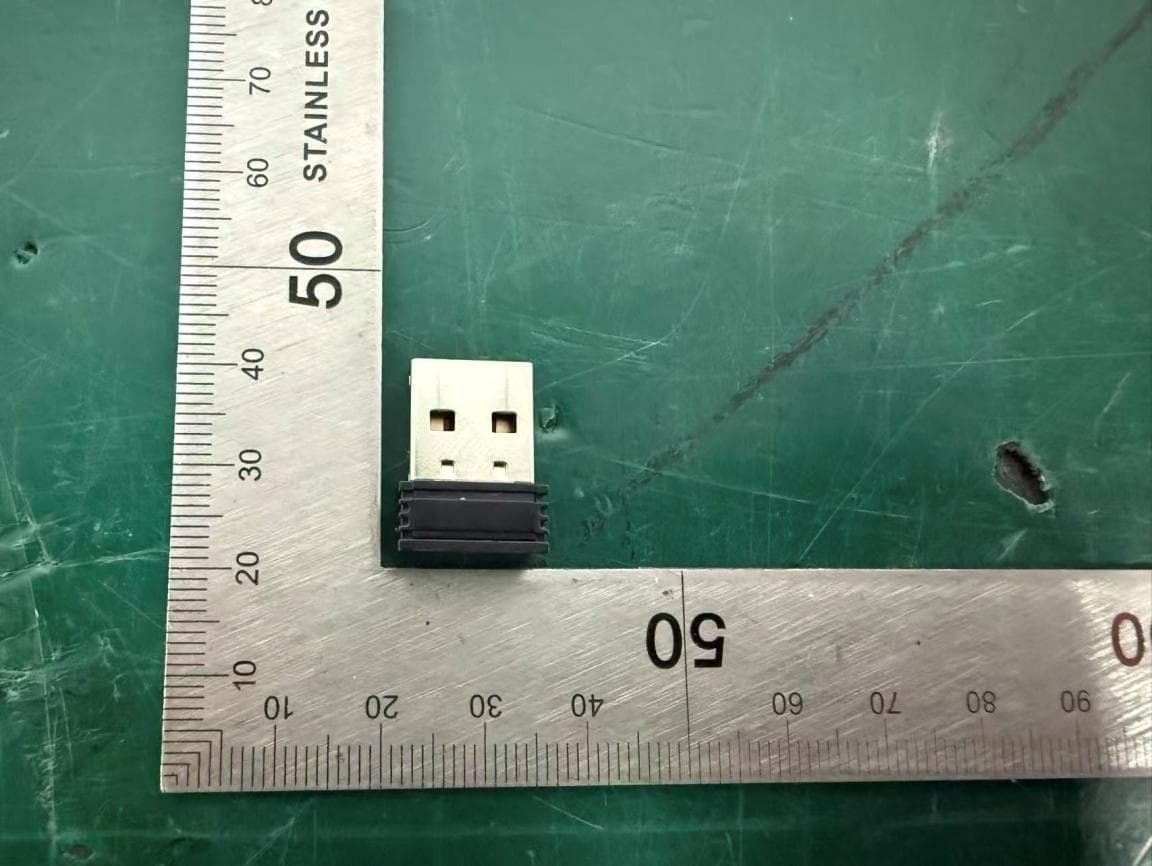
PRDRX1P
Apr 03, 2026Wireless Receiver
Equipment Class
DXX - Part 15 Low Power Communication Device Transmitter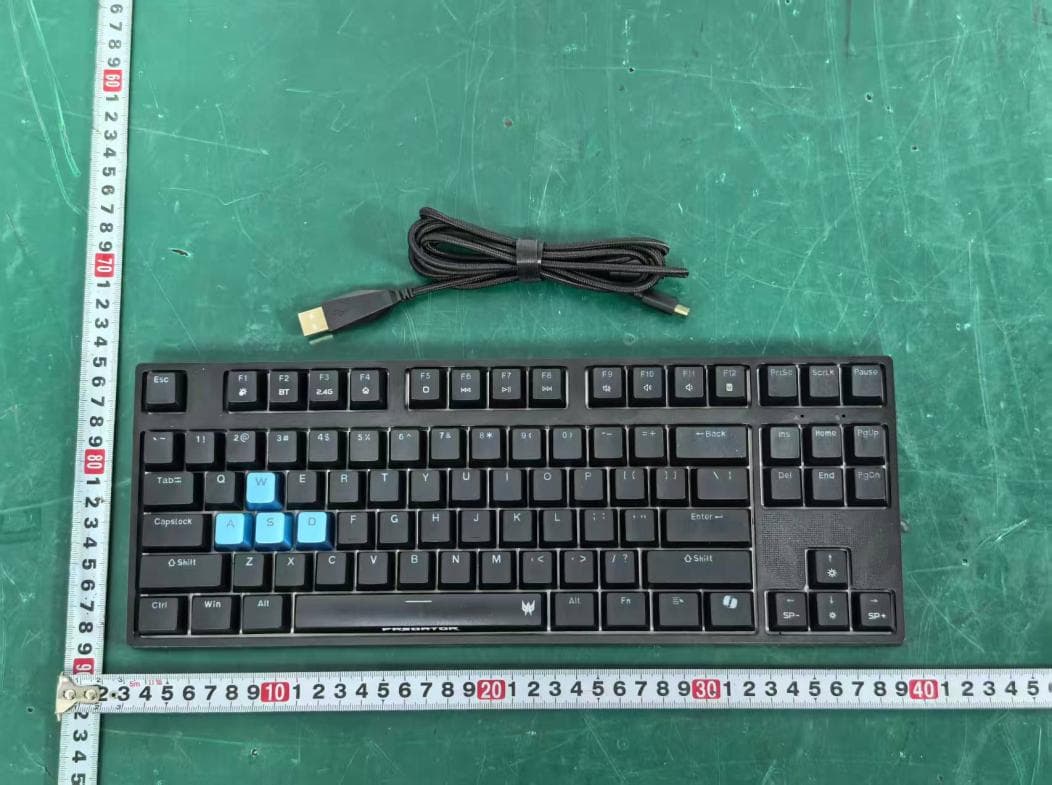
PRDKB73
Apr 03, 2026Gaming Keyboard
Equipment Class
DTS - Digital Transmission System