PRDMU052.4G Wireless Mouse
Acrox Technologies Co., Ltd.
Click to zoom
Application Details
- Equipment Class
- DXX - Part 15 Low Power Communication Device Transmitter
- Date of Grant
- Aug 02, 2011
- Application Purpose
- Original Equipment
- Date of Application
- Aug 02, 2011
- Equipment Note
- 2.4G Wireless Mouse
- Frequency Range
- 2403.00000000 - 2480.00000000
- Company
- Acrox Technologies Co., Ltd.
- Country
- Taiwan
Documents & Files
Document Text
Text extracted from the exhibit documents filed with the FCC. Open a document above to read the original.
Users Manual
2.4GHz Wireless BlueTrace Mouse w/Nano Receiver USER'S GUIDE Ver.:1.00 CAUTION: To use this product properly, please read the user's guide before installing. 1 Federal Communication Commission Interference Statement This equipment has been tested and found to comply with the limits for a Class B digital device, pursuant to Part 15 of the FCC Rules. These limits are designed to provide reasonable protection against harmful interference in a residential installation. This equipment generates, uses and can radiate radio frequency energy and, if not installed and used in accordance with the instructions, may cause harmful interference to radio communications. However, there is no guarantee that interference will not occur in a particular installation. If this equipment does cause harmful interference to radio or television reception, which can be determined by turning the equipment off and on, the user is encouraged to try to correct the interference by one of the following measures: - Reorient or relocate the receiving antenna. - Increase the separation between the equipment and receiver. - Connect the equipment into an outlet on a circuit different from that to which the receiver is connected. - Consult the dealer or an experienced radio/TV technician for help. FCC Caution: Any changes or modifications not expressly approved by the party responsible for compliance could void the user's authority to operate this equipment. This device complies with Part 15 of the FCC Rules. Operation is subject to the following two conditions: (1) This device may not cause harmful interference, and (2) this device must accept any interference received, including interference that may cause undesired operation. 2 Functional Introduction Installing the batteries Step 1: Take the battery cover off. Step 2: Insert the battery as shown inside the battery compartment. Step 3: Replace the cover. **Warning: *Please insert the battery with the correct position according to the instruction labeled on the mouse. AAA Battery Left button Right button Battery Cover Metallic Wheel Connect Button ON/OFF Switch Nano Receiver LED Indicator 3 Setup the Connection between the Receiver and the Mouse 1. Insert the battery into the mouse, then follow the steps below. 2. In the meantime, to open the mouse under the cover, take the nano receiver out. 3. Plug the Nano receiver into the USB port on your computer. 4. If the mouse does not work, please put it into pairing mode. 5. Pairing: Re-plug the receiver into the USB port on your computer, then press the connect button on the mouse. If the mouse does not work after 10 seconds, pair them again. (The receiver has auto pairing function). 6. The LED indicator on mouse flashes steadily when it is in pairing mode and stops blinking when it is successfully paired with the receiver. 7. When low battery, the battery indicator on the mouse will start to blink. 4 LED Indicator *Mouse Indicator LED Blinks for 3 times During Pairing LED is on for 3 sec. Power ON Low Battery Warning will blink 10 times when turn on.
External Photos
Page 1 CONSTRUCTION PHOTOS OF EUT
Internal Photos
Page 1 CONSTRUCTION PHOTOS OF EUT Page 2 Page 3
Operational Description
FCC ID: PRDMU05 Report No.: RF110708C07 Operational Description This device is a 2.4G Wireless Mouse. The transmitter of the EUT is powered by 1.5Vdc from batteries. The antenna is printed antenna. The other instruction, please have a look at the users manual.
Test Report
Report No.: RF110708C07 1 Report Format Version 4.0.0 FCC TEST REPORT REPORT NO.:RF110708C07 MODEL NO.:GM5 (refer to item 3.1 for more details) FCC ID:PRDMU05 RECEIVED:Jul. 08, 2011 TESTED:Jul. 16, 2011 ISSUED:Jul. 21, 2011 APPLICANT: Acrox Technologies Co., Ltd ADDRESS: 4F., No. 89, Minshan St., Neihu Dist., Taipei City 114, Taiwan, R.O.C. ISSUED BY: Bureau Veritas Consumer Products Services (H.K.) Ltd., Taoyuan Branch LAB ADDRESS: No. 47, 14th Ling, Chia Pau Tsuen, Lin Kou Hsiang, Taipei Hsien 244, Taiwan, R.O.C. TEST LOCATION: No. 19, Hwa Ya 2nd Rd, Wen Hwa Tsuen, Kwei Shan Hsiang, Taoyuan Hsien 333, Taiwan, R.O.C. This test report consists of 24 pages in total. It may be duplicated completely for legal use with the approval of the applicant. It should not be reproduced except in full, without the written approval of our laboratory. The client should not use it to claim product, certification, approval or endorsement by TAF or any government agency. The test results in the report only apply to the tested sample. The test results in this report are traceable to the national or international standards. Report No.: RF110708C07 2 Report Format Version 4.0.0 Table of Contents RELEASE CONTROL RECORD...............................................................................................3 1. CERTIFICATION .........................................................................................................4 2. SUMMARY OF TEST RESULTS .................................................................................5 2.1 MEASUREMENT UNCERTAINTY...............................................................................5 3. GENERAL INFORMATION..........................................................................................6 3.1 GENERAL DESCRIPTION OF EUT ............................................................................6 3.2 DESCRIPTION OF TEST MODES ..............................................................................7 3.2.1 CONFIGURATION OF SYSTEM UNDER TEST .........................................................7 3.2.2 TEST MODE APPLICABILITY AND TESTED CHANNEL DETAIL ..............................8 3.3 GENERAL DESCRIPTION OF APPLIED STANDARDS .............................................9 3.4 DESCRIPTION OF SUPPORT UNITS ........................................................................9 4. TEST TYPES AND RESULTS ...................................................................................10 4.1 RADIATED EMISSION MEASUREMENT .................................................................10 4.1.1 LIMITS OF RADIATED EMISSION MEASUREMENT...............................................10 4.1.2 TEST INSTRUMENTS............................................................................................... 11 4.1.3 TEST PROCEDURES ...............................................................................................12 4.1.4 DEVIATION FROM TEST STANDARD .....................................................................12 4.1.5 TEST SETUP.............................................................................................................13 4.1.6 EUT OPERATING CONDITIONS ..............................................................................13 4.1.7 TEST RESULTS ........................................................................................................14 4.2 BAND EDGES MEASUREMENT ..............................................................................19 4.2.1 LIMITS OF BAND EDGES MEASUREMENT............................................................19 4.2.2 TEST INSTRUMENTS...............................................................................................19 4.2.3 TEST PROCEDURE..................................................................................................19 4.2.4 DEVIATION FROM TEST STANDARD .....................................................................19 4.2.5 EUT OPERATING CONDITION ................................................................................19 4.2.6 TEST RESULTS ........................................................................................................20 5. PHOTOGRAPHS OF THE TEST CONFIGURATION................................................22 6. INFORMATION ON THE TESTING LABORATORIES ..............................................23 7. APPENDIX A – MODIFICATION RECORDERS FOR ENGINEERING CHANGES TO THE EUT BY THE LAB ........................................................................................24 Report No.: RF110708C07 3 Report Format Version 4.0.0 RELEASE CONTROL RECORD ISSUE NO. REASON FOR CHANGE DATE ISSUED Original release NA Jul. 21, 2011 Report No.: RF110708C07 4 Report Format Version 4.0.0 1. CERTIFICATION PRODUCT: 2.4G Wireless Mouse MODEL NO.: GM5 (refer to item 3.1 for more details) BRAND: ACROX APPLICANT: Acrox Technologies Co., Ltd TESTED: Jul. 16, 2011 TEST SAMPLE: ENGINEERING SAMPLE STANDARDS: FCC Part 15, Subpart C (Section 15.249) ANSI C63.4-2003 ANSI C63.10-2009 The above equipment (model: GM5) have been tested by Bureau Veritas Consumer Products Services (H.K.) Ltd., Taoyuan Branch, and found compliance with the requirement of the above standards. The test record, data evaluation & Equipment Under Test (EUT) configurations represented herein are true and accurate accounts of the measurements of the sample’s EMC characteristics under the conditions specified in this report. PREPARED BY : , DATE :Jul. 21, 2011 Joanna Wang / Senior Specialist APPROVED BY : , DATE :Jul. 21, 2011 Gary Chang / Assistant Manager Report No.: RF110708C07 5 Report Format Version 4.0.0 2. SUMMARY OF TEST RESULTS The EUT has been tested according to the following specifications: APPLIED STANDARD: FCC Part 15, Subpart C (Section 15.249) STANDARD PARAGRAPH TEST TYPE RESULTREMARK 15.207 Conducted Emission Test NA Power supply is 1.5Vdc from battery. 15.209 15.249 15.249 (d) Radiated Emission Test Band Edge Measurement Limit: 50dB…
Text truncated - open the document above for the full version.
Test Setup Photos
1 PHOTOGRAPHS OF THE TEST CONFIGURATION RADIATED EMISSION TEST
Contact Information
Applicant
Gavin Hsieh(Product Manager)
Technical Contact
Bureau Veritas CPS (H.K.) Ltd. Taoyuan BranchGary Chang
[email protected]886-3-3183232
No. 19, Hwa Ya 2nd Rd., Kwei Shan Hsiang · Taoyuan Hsien · Taiwan
Non-Technical Contact
Bureau Veritas CPS (H.K.) Ltd. Taoyuan BranchNatacha Chen
[email protected]886-3-3183232
Test Firm
Bureau Veritas CPS (H.K.) Ltd. Taoyuan BranchRichard Chen
Technical Specifications
| # | Rule Parts | Frequency Range | Power Output |
|---|---|---|---|
| 1 | 15C | 2.40 GHz - 2.48 GHz | - |
Other Applications from Acrox Technologies Co., Ltd.
PRDRX12
May 27, 2026Wireless Receiver
Equipment Class
DXX - Part 15 Low Power Communication Device Transmitter
PRDRX11
Apr 07, 2026Wireless Receiver
Equipment Class
DXX - Part 15 Low Power Communication Device Transmitter
PRDKB72
Apr 03, 2026WIRELESS SPLIT KEY ERGONOMIC KEYBOARD
Equipment Class
DTS - Digital Transmission System
PRDRX1P
Apr 03, 2026Wireless Receiver
Equipment Class
DXX - Part 15 Low Power Communication Device Transmitter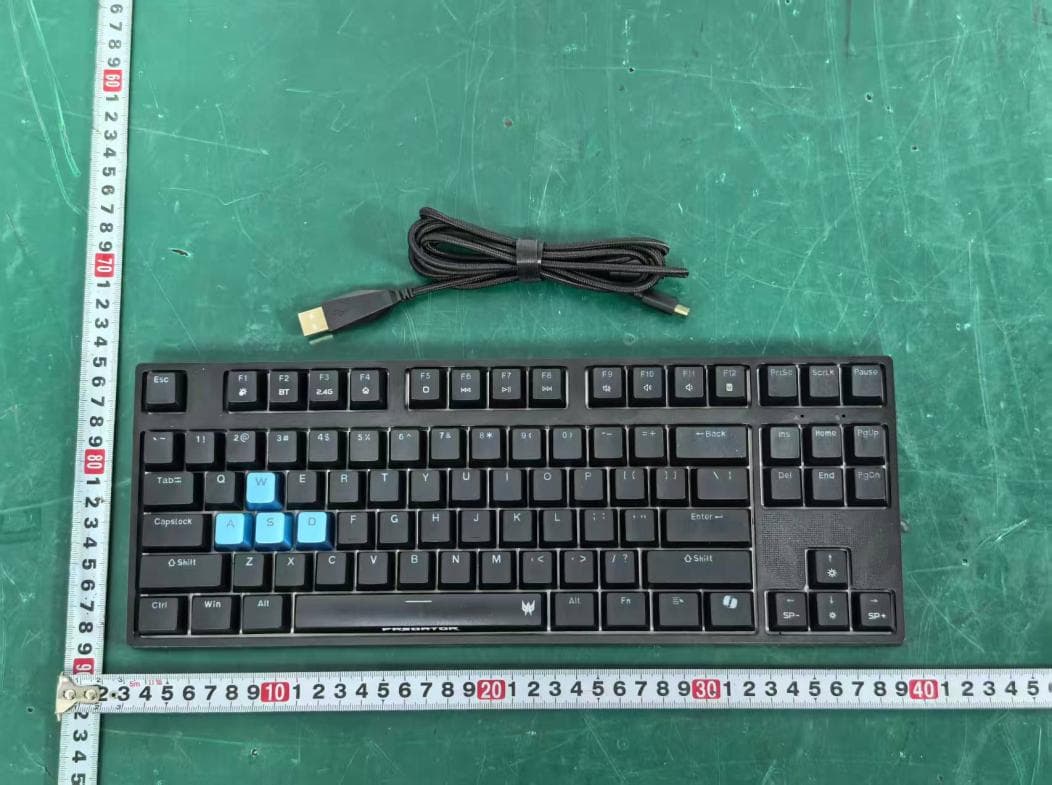
PRDKB73
Apr 03, 2026Gaming Keyboard
Equipment Class
DTS - Digital Transmission System