PZWBHT-100FBar Code Hand Held Terminal
Denso Wave Incorporated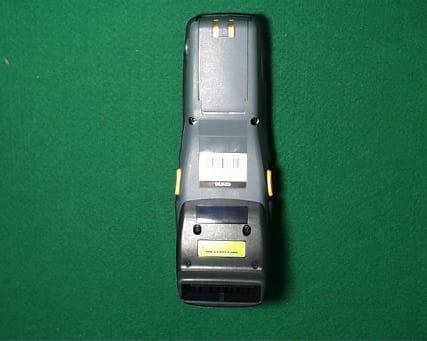
Click to zoom
Application Details
- Equipment Class
- DSS - Part 15 Spread Spectrum Transmitter
- Date of Grant
- Jan 29, 2002
- Application Purpose
- Original Equipment
- Date of Application
- Jan 29, 2002
- Equipment Note
- Bar Code Hand Held Terminal
- Frequency Range
- 2402.00000000 - 2480.00000000
- Company
- Denso Wave Incorporated
- Country
- Japan
Documents & Files
Document Text
Text extracted from the exhibit documents filed with the FCC. Open a document above to read the original.
Users Manual
This guide has been prepared expressly for the hands-on user. Always keep it nearby for speedy reference. Operator's Guide Related Publications BHT-100QF/100BF User’s Manual (Contained in the Manual Pack CD) Instructions for using the handy terminal (BHT-100QF/100BF) and optical communication unit (CU-7000). BHT-BASIC Programmer’s Manual (BHT-100 series) (Contained in the BHT-BASIC Compiler CD and Manual Pack CD) Description for developing application programs of the handy terminal in BHT-BASIC. Transfer Utility Guide (that comes with Transfer Utility) Description about software that transmits data and programs between the handy terminal and computer. Ir-Transfer Utility C Guide (that comes with Ir-Transfer Utility C) Description about software that transmits data and programs between the handy terminal and computer via the optical communication unit (CU). Ir-Transfer Utility E Guide (that comes with Ir-Transfer Utility E) Description about software that transmits data and programs between the handy terminal and computer via the computer’s integrated IR port or any of the specified external IR transceivers. Alerts you to those conditions which could cause serious bodily injury or death if the instructions are not followed correctly. WARNING CAUTION Alerts you to those conditions which could cause minor bodily injury or substantial property dam- age if the instructions are not followed correctly. Meaning of Symbols A triangle () with a picture inside alerts you to a warning of dan- ger. Here you see the warning for electrical shock. A diagonal line through a circle ( ) alerts you to something you should not do; it may or may not have a picture inside. Here you see a screwdriver inside the circle, meaning that you should not dis- assemble. A black circle ( ) with a picture inside alerts you to something you MUST do. This example shows that you MUST unplug the power cord. WARNING Handling the battery cartridge •Never disassemble or heat the re- chargeable battery cartridge, nor put it into fire or water; doing so could cause battery-rupture or leakage of battery fluid, resulting in a fire or bodily injury. Never put me into fire! SAFETY PRECAUTIONS Be sure to observe all these safety precautions. Strict observance of these warning and caution indications are a MUST for preventing accidents which could result in bodily injury and substantial prop- erty damage. Make sure you fully understand all definitions of these terms and related symbols given below, before you proceed on to the text itself. WARNING Do not short- circuit me! Charge only with the dedicated device. Undedicated •Do not carry or store the battery car- tridge together with metallic ball- point pens, necklaces, coins, hair- pins, etc. Doing so could short-circuit the ter- minal pins, causing the batteries to rupture or the battery fluid to leak, resulting in a fire or bodily injury. •Avoid dropping the battery cartridge or letting it undergo any shock or impact. Doing so could cause the batteries to break, generate heat, rup- ture or burn. •Only use the dedicated charger (CU- 7001, C-700 or C-750) for charging the rechargeable battery cartridge. Using a different type of charger could cause battery-rupture or leak- age of battery fluid and result in a fire, bodily injury, or serious damage to property. •Never charge the rechargeable battery cartridge where any in- flammable gases may be emitted; doing so could cause fire. Handling the BHT •The BHT-100BF uses a laser light for indicating the scanning range. The intensity of the laser light might be too low to inflict bodily injury. However, do not look into the laser beam. The BHT-100BF complies with Laser Safety Standard, Class II of 21 CFR Chapter 1, Subchapter J. The BHT-100BF does not mount beam attenuator and laser radiation emission indicator required by this standard. Instead, the software-controlled Magic keys (see Section 2.2 "Components and Functions") function as them because the laser light is not enabled without the Magic keys pressed. WARNING •Do not look into the light source through the reading window or point the light source towards the eyes. The light emitted through the reading window is harmful to the eyes. •Do not poke at the eyes with the stylus that comes with the BHT. CAUTION Refrigeration Hot- house This humidity is killing me! Refrigeration Refrigeration I'm freezing! I'm burning up! Handling the BHT •Never put the BHT in places where there are excessively high tempera- tures, such as inside closed-up auto- mobiles, or in places exposed to di- rect sunlight. Doing so could affect the housing or parts, resulting in a fire. •Avoid using the BHT in extremely humid or dusty areas, or where there are drastic temperature changes. Moisture or dust will get into the BHT, resulting in malfunction, fire or electrical shock. Handling the rechargeable battery cartridge •Never charge a wet or damp rechargeable battery cartridge. Doing so could cause the batteries to break, generate heat, rup- ture or burn. Do not drop me! Keep me away from water! •If foreign material or water gets into the BHT, immediately turn off the power, pull out the battery cartridge, and contact your nearest dealer. Failure to do so could cause smoke or fire. •If you drop the BHT so as to damage its housing, immediately turn off the power, pull out the battery cartridge, and contact your nearest dealer. Failure to do so could cause smoke or fire. •Never disassemble or modify the BHT; doing so could result in an accident such as break or fire. •If smoke, abnormal odors or noises come from the BHT, imme- diately turn off the power, pull out the battery cartridge, and contact your nearest dealer. Failure to do so could cause smoke or fire. Never disassemble CAUTION •Do not use batteries or power sources other than the specified ones; doing so could generate heat or cause malfunction. •In environments where static electricity can build into signifi- cant charges (e.g., if you wipe off the plasti…
Text truncated - open the document above for the full version.
Users Manual
This guide has been prepared expressly for the hands-on user. Always keep it nearby for speedy reference. Operator's Guide Related Publications BHT-100QF/100BF User’s Manual (Contained in the Manual Pack CD) Instructions for using the handy terminal (BHT-100QF/100BF) and optical communication unit (CU-7000). BHT-BASIC Programmer’s Manual (BHT-100 series) (Contained in the BHT-BASIC Compiler CD and Manual Pack CD) Description for developing application programs of the handy terminal in BHT-BASIC. Transfer Utility Guide (that comes with Transfer Utility) Description about software that transmits data and programs between the handy terminal and computer. Ir-Transfer Utility C Guide (that comes with Ir-Transfer Utility C) Description about software that transmits data and programs between the handy terminal and computer via the optical communication unit (CU). Ir-Transfer Utility E Guide (that comes with Ir-Transfer Utility E) Description about software that transmits data and programs between the handy terminal and computer via the computer’s integrated IR port or any of the specified external IR transceivers. Alerts you to those conditions which could cause serious bodily injury or death if the instructions are not followed correctly. WARNING CAUTION Alerts you to those conditions which could cause minor bodily injury or substantial property dam- age if the instructions are not followed correctly. Meaning of Symbols A triangle () with a picture inside alerts you to a warning of dan- ger. Here you see the warning for electrical shock. A diagonal line through a circle ( ) alerts you to something you should not do; it may or may not have a picture inside. Here you see a screwdriver inside the circle, meaning that you should not dis- assemble. A black circle ( ) with a picture inside alerts you to something you MUST do. This example shows that you MUST unplug the power cord. WARNING Handling the battery cartridge •Never disassemble or heat the re- chargeable battery cartridge, nor put it into fire or water; doing so could cause battery-rupture or leakage of battery fluid, resulting in a fire or bodily injury. Never put me into fire! SAFETY PRECAUTIONS Be sure to observe all these safety precautions. Strict observance of these warning and caution indications are a MUST for preventing accidents which could result in bodily injury and substantial prop- erty damage. Make sure you fully understand all definitions of these terms and related symbols given below, before you proceed on to the text itself. Handling the BHT •Do not look into the light source through the reading window or point the light source towards the eyes. The light emitted through the reading window is harmful to the eyes. •Do not poke at the eyes with the stylus that comes with the BHT. WARNING Do not short- circuit me! Charge only with the dedicated device. Undedicated •Do not carry or store the battery car- tridge together with metallic ball- point pens, necklaces, coins, hair- pins, etc. Doing so could short-circuit the ter- minal pins, causing the batteries to rupture or the battery fluid to leak, resulting in a fire or bodily injury. •Avoid dropping the battery cartridge or letting it undergo any shock or impact. Doing so could cause the batteries to break, generate heat, rup- ture or burn. •Only use the dedicated charger (CU- 7001, C-700 or C-750) for charging the rechargeable battery cartridge. Using a different type of charger could cause battery-rupture or leak- age of battery fluid and result in a fire, bodily injury, or serious damage to property. •Never charge the rechargeable battery cartridge where any in- flammable gases may be emitted; doing so could cause fire. CAUTION Refrigeration Hot- house This humidity is killing me! Refrigeration Refrigeration I'm freezing! I'm burning up! Handling the BHT •Never put the BHT in places where there are excessively high tempera- tures, such as inside closed-up auto- mobiles, or in places exposed to di- rect sunlight. Doing so could affect the housing or parts, resulting in a fire. •Avoid using the BHT in extremely humid or dusty areas, or where there are drastic temperature changes. Moisture or dust will get into the BHT, resulting in malfunction, fire or electrical shock. Handling the rechargeable battery cartridge •Never charge a wet or damp rechargeable battery cartridge. Doing so could cause the batteries to break, generate heat, rup- ture or burn. CAUTION Do not drop me! Keep me away from water! •If foreign material or water gets into the BHT, immediately turn off the power, pull out the battery cartridge, and contact your nearest dealer. Failure to do so could cause smoke or fire. •If you drop the BHT so as to damage its housing, immediately turn off the power, pull out the battery cartridge, and contact your nearest dealer. Failure to do so could cause smoke or fire. •Never disassemble or modify the BHT; doing so could result in an accident such as break or fire. •If smoke, abnormal odors or noises come from the BHT, imme- diately turn off the power, pull out the battery cartridge, and contact your nearest dealer. Failure to do so could cause smoke or fire. Never disassemble •Do not use batteries or power sources other than the specified ones; doing so could generate heat or cause malfunction. •In environments where static electricity can build into signifi- cant charges (e.g., if you wipe off the plastic plate with a dry cloth), do not operate the BHT. Doing so will result in malfunc- tion or machine failure. •Touch the LCD only with the stylus that comes with the BHT. Using the tip of a pen or any pointed object will result in a dam- aged or broken LCD. Components and Functions Release button Press this button to remove the battery cartridge. Touch screen LCD (liquid crystal display) Shows the characters and graphic patterns. You may directly touch the screen with the stylus for data entry. Indicator LED Illuminates in green when the BHT has successfully read a 2D code…
Text truncated - open the document above for the full version.
Cover Letter(s)
A- PEX INTERNATIONAL CO., LTD. •HEAD OFFICE •4383-326 Asama-cho, Ise-shi, Mie-ken 516-0021 Japan TEL:0596-24-6717/FAX:0596-24-8020 Date: 30 January, 2002 RE: Denso Wave Incorporated FCC ID: PZWBHT-100F Dear Mr. Timothy R. Johnson, Regarding the above referenced application, please find our initial rely to your comments dated Januaryr 29, 2002: 1) Please refer to Circuit Diagrams for BHT-100BF and BHT-100Q, which we upload from your homepage. If any problems on t he documents, pl ease let us know. 2) to 8) We will address all these comments and provide our replies by February 8, 2002. For your information, the equipment whose antenna parts were only different from the equipment of this application were already granted by FCC (FCC ID: IMKRL26330M and HYQBHT-7500S). Thus, the equipment (BHT-100BF and BHT-100QF) also meets the requirements of FCC (because the difference from the granted equipment is only antenna part). We will address all the remaining comments as soon as possible and send you response. Yukari Ito (Ms.) A-Pex Int ernational Co., Ltd.
Cover Letter(s)
A- PEX INTERNATIONAL CO., LTD. •HEAD OFFICE •4383-326 Asama-cho, Ise-shi, Mie-ken 516-0021 Japan TEL:0596-24-6717/FAX:0596-24-8020 Date: 5 February, 2002 RE: Denso Wave Incorporated FCC ID: PZWBHT-100F Dear Mr. Timothy R. Johnson, Regarding the above referenced application, please fi nd our repl y to the remaining comments dat ed January 29, 2002: 2) Ferrites will not be incorporated into the final units. Please refer to the uploaded file “Applicable Standards for BHT-100BF/-100QF. 3) to 7) Wireless LAN module (FCC ID: IMKRL26330M) produced by Proxim Inc. is used for the equipment and technical specifications for the module and equipment are identical. We uploaded the file named “Frequency Hopping Theory of Operation,” which answers the comments 3) to 7). 8) Please find the submitted final versions of User Manuals for BHT-100BF and BHT-100QF, which include the appropriate statement. We hope that above will answer all remaining comments. If any further comments, please inform us as soon as possible. Best regards, Yukari Ito (Ms.) A-Pex Int ernational Co., Ltd.
Cover Letter(s)
A- PEX INTERNATIONAL CO., LTD. •HEAD OFFICE •4383-326 Asama-cho, Ise-shi, Mie-ken 516-0021 Japan TEL:0596-24-6717/FAX:0596-24-8020 Date: 22 February, 2002 RE: Denso Wave Incorporated FCC ID: PZWBHT-100F Dear Mr. Timothy R. Johnson, Regarding the above referenced application, please find our reply to the remaining comments to your inquiry dated February 19, 2002: 1) We set sweep time of spectrum analyzer at 500 msec and measured transmitting period of time. Please refer to the uploaded data. We confirmed that the EUT hops channels every 190 msec and on a channel, it transmits maximum six 18 msec period of times. Thus, the equipment meets the requirement of FCC 15.247 (ii) by the following formula: Maximum Dwell Time/30 sec = 18 msec * 6 * 2 = 216 msec < 400 msec 2) For spurious transmission testing, the unit was in 100% continuous carrier and was locked onto a shingle channel during the testing. We hope the above reply is satisfactory. If any problems, please let us know. Best regards, Yukari Ito (Ms.) A-Pex Int ernational Co., Ltd.
External Photos
Model: BHT-100BF External Photos Front Rear Model: BHT-100BF Right Left Model: BHT-100BF Top Bottom
External Photos
Model: BHT-100QF External Photos Front Rear Model: BHT-100QF Right Left Model: BHT-100QF Top Bottom
ID Label/Location Info
Labeling of BHT-100BF/BHT-100QF Bottom view of BHT-100BF Bottom view of BHT-100QF Rated Nameplate of BHT-100BF Rated Nameplate of BHT-100QF FCC Caution Label UPUP UP UP Rated Nameplate FCC Caution Label Rated Nameplate FCC Caution Label
Internal Photos
Model: BHT-100BF Internal Photos Antenna Circuit Board (Front) and Location Antenna Circuit Board (Rear) Model: BHT-100BF RF module Location
Internal Photos
Model: BHT-100QF Internal Photos Antenna Circuit Board (Front) and Location Antenna Circuit Board (Rear) Model: BHT-100QF RF module Location
Internal Photos
RF module Internal Photos: RF module Circuit Board with shield (Front) Circuit Board without shield (Front) RF module Circuit Board (Rear)
Operational Description
SPBT-0470 REVISION LEVEL A - 10 - 3.10 Radio Interface Item Specifications Certification ETSI ETS 300.328 in European Union FCC Part 15 Subpart C in United States Radio Type Spread Spectrum, Frequency Hopping Frequency Range 2400MHz 2483.5MHz Data Rate 1.6Mbps(main) 800kbps(back off) (The data rate is automatically controlled) Modulation Type 4FSK(main) BFSK(back off) (The modulation is automatically controlled) Hopping Channels 15 General Communication distance(reference value) * 200m in open space 75m in office environments Output Power 20dBm EIRP Channel Spacing 1MHz Transmitter Spurious Emissions -50dBm MAX. * Communication distance is reference value in the place that get an unobstructed view. Communication distance depends on operating environment. Notes for Radio Communication (1) Make sure that the intended environment is free of the interference factors and actually capable of supporting link operation. (2) Do not cover the antenna section by hand.(figure 3.) Doing so may result in communication failure. (3) Environmental factors that can also interfere with link operation include metallic objects in the vicinity of the path. Figure 3. Built-in antenna section Built-in antenna a
RF Exposure Info
RF Exposure Statement No. : 22DE0036-YW Applicant: DENSO WAVE INCORPORATED Type of Equipment: BARCODE HANDY TERMINAL Model No.: BHT-100BF and BHT-100QF FCC ID: PZWBHT-100F A-PEX International Co., Ltd. YOKOWA LAB. 108 Yokowa-cho, Ise-shi, Mie-ken 516-1106 JAPAN Telephone:int +81 596 39 1485 Facsimile: int +81 596 39 0232 Page 1 FCC RF Exposure Statement: DENSO WAVE INCORPORATED : BHT-100BF and BHT-100QF complies with FCC radiation exposure requirement specified in the FCC Rules 15.247(b)(4). Notice in Installation Manual This device is approved for hand held use only and, to comply with applicable FCC radio frequency exposure regulations, must be used with a distance of at least 20cm(7.9inches) between the antenna and the body of any person at a all times during use. This transmitter and its antenna should not be placed next to other antennas or similar radiating structures. RF Exposure Calculations The following information provides the minimum separation distance for the highest gain antenna provided with the BHT-100BF and BHT-100QF as calculated from FCC OET 65 Appendix B, Table (B) Limits for General Population / Uncontrolled Exposure. This calculation is based on the highest EIRP possible from the system, considering maximum power and antenna gain, and considering a 1.0m W/cm^2 uncontrolled exposure limit. The Fires formula used was: S = (P * G) / (4* * r^2) or r = (P * G) / (4 * * S) Where S = 1.0 mW/cm^2 for 2400 MHz P = 114.8 mW (Maximum Conducted Power : BHT-100BF) 117.5mW (Maximum Conducted Power : BHT-100QF) G = 1.0(Isotoropic antenna gain : Converted absolute value) r = Minimum safe distance from antenna (cm) For: BHT-100BF r = 3.0 cm For: BHT-100QF r = 3.1 cm
Test Report
Test report FCC ID : PZWBHT-100F Our reference : 22DE0036-YW-2 Page: 2 of 18 Issued date: January 10, 2002 A-pex International Co., Ltd. YOKOWA LAB. 108 Yokowa-cho, Ise-shi, Mie-ken 516-1106 JAPAN Telephone:int +81 596 39 1485 Facsimile: int +81 596 39 0232 Table of Contents Page 1 GENERAL INFORMATION3 1.1 Tested Methodology4 1.2 Test Facility4 2 PRODUCT DESCRIPTION5 2.1Test system Details5 3 SYSTEM TEST CONFIGURATION7 3.1 Justification7 3.2.Configuration of Tested System7 4 MEASUREMENT UNCERTAINTY8 5 TEST INSTRUMENTS9 6 SUMMARY OF TEST10 6.1 §15.207 Conducted Emissions10 6.2 §15.247(a)(1) Frequency Hopping Systems10 6.3 §15.247(a)(1)(ii) Channel Utilization11 6.4 §15.247(b) Maximum Peak Out Put Power(Radiated)12 6.5 §15.247(b) Maximum Peak Out Put Power(Conducted)12 6.6 §15.247(c) Out of Band Emissions(Radiated)13 6.7 §15.247(c) Out of Band Emissions(Conducted)13 Photographs of test setup 14-17 APPENDIX18 Test dataA1toA63 Test report FCC ID : PZWBHT-100F Our reference : 22DE0036-YW-2 Page: 3 of 18 Issued date: January 10, 2002 A-pex International Co., Ltd. YOKOWA LAB. 108 Yokowa-cho, Ise-shi, Mie-ken 516-1106 JAPAN Telephone:int +81 596 39 1485 Facsimile: int +81 596 39 0232 1 GENERAL INFORMATION APPLICANT: DENSO WAVE INCORPORATED ADDRESS:1-1, Showa-cho, Kariya-shi, Aichi-ken, 448-8661 Japan TEL: 81-566-61-4084 FAX: 81-566-61-4741 REGULATION(S): FCC Part15 Subpart C, Section 15.247 MODEL NUMBER: BHT-100BF / BHT-100QF SERIAL NUMBER: 5496310181100005 : BHT-100BF 5496900011100028 : BHT-100QF KIND OF EQUIPMENT: BARCODE HANDY TERMINAL TESTED DATE: November 26-29, 2001 RECEIPT DATE OF SAMPLE : November 26, 2001 REPORT FILE NUMBER: 22DE0036-YW-2 TEST SITE: A-PEX Yokowa No.3 Open Test Sites Test report FCC ID : PZWBHT-100F Our reference : 22DE0036-YW-2 Page: 4 of 18 Issued date: January 10, 2002 A-pex International Co., Ltd. YOKOWA LAB. 108 Yokowa-cho, Ise-shi, Mie-ken 516-1106 JAPAN Telephone:int +81 596 39 1485 Facsimile: int +81 596 39 0232 1.1 Tested Methodology The measurement was performed according to the procedures in ANSI C63.4(1992). 1.2 Test Facility The open area site measurement facilities used to collect the radiated data are located at 108, Yokowa-cho, Ise-shi, Mie-ken, 516-1106 Japan. These sites have been fully described in reports submitted to the FCC office. No.1 and No.3 test site has filed to the FCC on September 12, 2000 as number: 90412 and is accepted by Industry Canada on May 01, 2001 as number IC2973-3. Test report FCC ID : PZWBHT-100F Our reference : 22DE0036-YW-2 Page: 5 of 18 Issued date: January 10, 2002 A-pex International Co., Ltd. YOKOWA LAB. 108 Yokowa-cho, Ise-shi, Mie-ken 516-1106 JAPAN Telephone:int +81 596 39 1485 Facsimile: int +81 596 39 0232 2 PRODUCT DESCRIPTION Denso Wave Incorporation, Model BHT-100BF/BHT-100QF (referred to as the EUT in this report) is a Wireless Module built in Barcode Handy Terminal. Barcode Handy Terminal, model: BHT-100BF and model: BHT-100QF are the family models. The difference of these two models is: BHT-100QF is a two-dimensional code model. BHT-100BF is a type dedicated for barcode. There is no other difference between them. The specification is as following : Wireless Module Model No.: PROXIM RangeLAN2 633002CE-US Frequency characteristies: 2402MHz through 2480MHz No. of channels / channel spacing : 79 channels / 1MHz channel spacing Modulation: Low power Frequency Hopping Spread Spectrum(FHSS) Antenna type: Integral, M/N:YOKOWO YCE-5208 Antenna Gain: 0dBi *FccPart15.203 Antenna requirement Wireless Module and its antenna comply with this requirement since they are built in host device BHT-100BF/BHT-100QF when they are put up for sale and they are used with a particular antenna connector(MMCX). 2.1 Test System Details Description of EUT and support equipment No.ItemModel numberSerial numberManufacturerRemark (FCC ID) 5496310181100005Denso WaveABarcode Handy TerminalBHT-100BF or BHT-100QF 5496900011100028Denso Wave PZWBHT-100F (EUT) BAccess Point7520752005-02600011ProximIMK-AP II 1121 CAC Adaptor for Access Point SA-121A2F-11002414Proxim- DOptical Communication Unit CU-70014963201160000007Denso WaveDOC EAC Adaptor for Optical Communication Unit -496460-0381Denso WaveDOC FPersonal ComputerMMMS2BKCDELLE2KSTNGRMT GCRT Monitor66-953616546-6BN(A)IBM- HPrinterC3990AJPHL021975Hewlett PackardDOC IModemMC1400Fxe-Micro Core- JKeyboardSK-D100MK9412-040116DELLGYUM93SK KMouse9074102197737MicrosoftC3KKMp3 LAC Adaptor for ModemMC1400Fxe-Micro Core- Test report FCC ID : PZWBHT-100F Our reference : 22DE0036-YW-2 Page: 6 of 18 Issued date: January 10, 2002 A-pex International Co., Ltd. YOKOWA LAB. 108 Yokowa-cho, Ise-shi, Mie-ken 516-1106 JAPAN Telephone:int +81 596 39 1485 Facsimile: int +81 596 39 0232 List of cables used No.NameLength (m)ShieldBackshell materialRemark 1EIA-232 Cable1.5YMetal- 2DC Power Cable1.9NPolyvinyl chloride- 3AC Power Cable2.6NPolyvinyl chloride- 4RGB Cable1.6YPolyvinyl chloride- 5Printer Cable1.9YPolyvinyl chloride- 6DC Power Cable1.8NPolyvinyl chloride- 7AC Power Cable2.2NPolyvinyl chloride- 8Keyboard Cable1.6NPolyvinyl chloride- 9AC Power Cable2.0NPolyvinyl chloride- 10Mouse Cable1.9NPolyvinyl chloride- 1110BASE-T Cable5.0NPlastic- 12DC Power Cable1.9NPolyvinyl chloride- 13AC Power Cable1.8NPolyvinyl chloride- 14Modular Cable2.0NPlastic- 15RS232C Cable1.5YPolyvinyl chloride- Test report FCC ID : PZWBHT-100F Our reference : 22DE0036-YW-2 Page: 7 of 18 Issued date: January 10, 2002 A-pex International Co., Ltd. YOKOWA LAB. 108 Yokowa-cho, Ise-shi, Mie-ken 516-1106 JAPAN Telephone:int +81 596 39 1485 Facsimile: int +81 596 39 0232 3 SYSTEM TEST CONFIGURATION 3.1 Justification The system was configured in typical fashion (as a customer would normally use it) for testing. Test mode : Transmitting mode Performed the test about channels 1(low:2402MHz), 40(mid:2441MHz) and 79(high:2480MHz) among 79 channels of all Carrier frequencies. 3.2 Configuration of Tested System Figure 4.1 Configuration of Tested System A:EUT Figur…
Text truncated - open the document above for the full version.
Test Report
Denso Wave Incorporated / FCC ID: PZWBHT-100F / Page. A9 20dB Band Width / BHT-100BF / 22DE0036-YW-2 1. 2. 3. Denso Wave Incorporated / FCC ID: PZWBHT-100F / Page. A10 20dB Band Width / BHT-100QF / 22DE0036-YW-2 1. 2. 3.
Test Setup Photos
Model: BHT-100BF Test Setup Photos <Conduction> Model: BHT-100BF <Radiation> Model: BHT-100BF
Test Setup Photos
Model: BHT-100QF Test Setup Photos <Conduction> Model: BHT-100QF <Radiation> Model: BHT-100QF
Contact Information
Applicant
Takehiko Koshino(Proj. Mgr, AUTO-ID Business Unit Eng. Plan.Div.)
Technical Contact
A-Pex International Co., Ltd.Naoki Sakamoto
[email protected]+81-596-39-1485
108 Yokowa-cho · Ise-Shi, Mie-ken · Japan
Non-Technical Contact
A-Pex International Co., Ltd.Yukari Ito
[email protected]+81-596-24-8116
Test Firm
UL Japan, Inc.Kazunori Nishimura
Technical Specifications
| # | Rule Parts | Frequency Range | Power Output |
|---|---|---|---|
| 1 | 15C | 2.40 GHz - 2.48 GHz | 117.50 mW |
Other Applications from Denso Wave Incorporated
PZWSE1BUBC
Jan 17, 2024RF Tag Handy Scanner
Equipment Class
DSS - Part 15 Spread Spectrum Transmitter
PZWBHTM80QW
Feb 04, 20212D Code Handy Terminal
Equipment Class
DSS - Part 15 Spread Spectrum Transmitter
PZWBHTM80QWG
Jan 27, 20212D Code Handy Terminal
Equipment Class
NII - Unlicensed National Information Infrastructure TX
PZWUR50MERU
Jan 13, 2021Fixed Type RFID Scanner
Equipment Class
DSS - Part 15 Spread Spectrum Transmitter
PZWBHT1200QU
Sep 21, 20152D Code Handy Terminal
Equipment Class
DSS - Part 15 Spread Spectrum Transmitter