Q78-ZTEGS309GSM Dual_band digital mobile phone
ZTE Corporation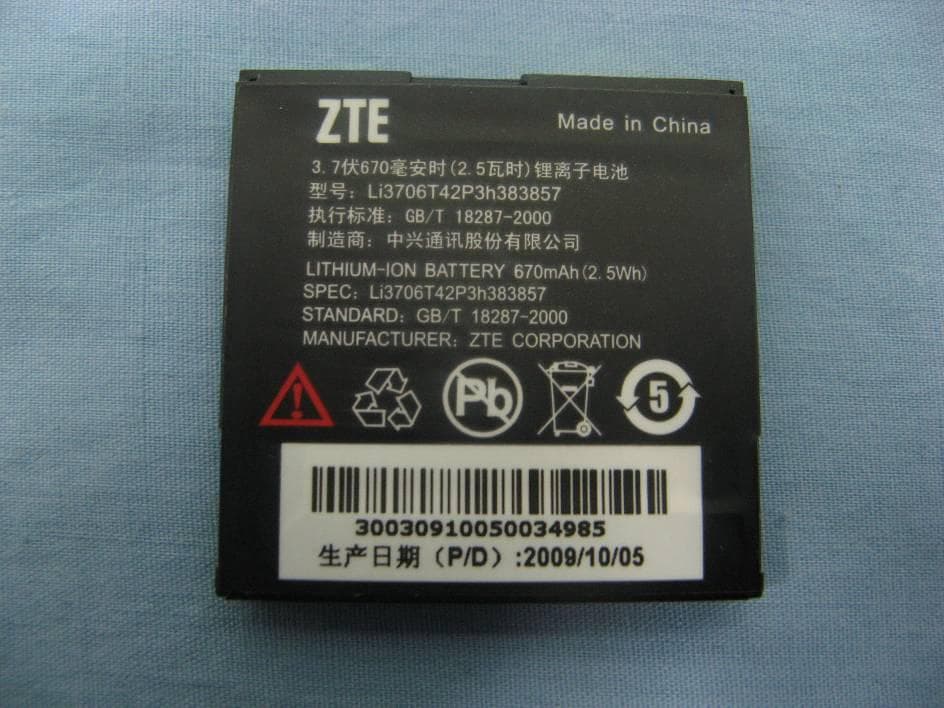
Click to zoom
Application Details
- Equipment Class
- PCE - PCS Licensed Transmitter held to ear
- Date of Grant
- Dec 14, 2009
- Application Purpose
- Original Equipment
- Date of Application
- Dec 13, 2009
- Equipment Note
- GSM Dual_band digital mobile phone
- Frequency Range
- 1850.20000000 - 1909.80000000
- Company
- ZTE Corporation
- Country
- China
Documents & Files
Document Text
Text extracted from the exhibit documents filed with the FCC. Open a document above to read the original.
Users Manual
1 Legal Information Copyright © 2009 ZTE CORPORATION All Rights Reserved Your mobile phone is made by ZTE CORPORATION. No part of this manual may be reproduced or transmitted in any form or by any means without prior written consent of ZTE CORPORATION. Trademarks ZTE and the ZTE logos are trademarks of ZTE CORPORATION. Notice The information in this manual is subject to change without notice. Every effort has been made in the preparation of this manual to ensure accuracy of the contents, but all statements, information, and recommendations in this manual do not constitute a warranty of any kind, expressed or implied. Please read the safety precautions carefully to ensure the correct and safe use of your mobile phone. For detailed information, refer to the section “Safety Precautions”. ZTE CORPORATION Address: ZTE Plaza, Keji Road South, Hi-tech Industrial Park, Nanshan District, Shenzhen, P. R. China Postal Code: 518057 Website: http://www.zte.com.cn Release: V1.0.0 2 Security To protect your mobile phone from illegal use, take the security measures as follows: ¾ Set PIN codes of the SIM card. ¾ Set handset lock code. ¾ Set call restrictions. Safety Precautions This section includes some important information on safe and efficient operation. Please read this information before using the phone. Operational Precautions Please use your phone properly. When making or receiving a call, please hold your phone as holding a wireline telephone. Make sure that the phone is at least one inch (about two point five centimeters) from your body when transmitting. Do not touch the antenna when the phone is in use. Touching the antenna area affects call quality and may cause the phone to operate at a higher power level than needed. Some people may be susceptible to epileptic seizures or blackouts when exposed to flashing lights, such as when watching television or playing video games. If you have experienced seizures or blackouts, or if you have a family history of such occurrences, please consult your doctor before playing video games on your phone or enabling a flashing-light feature on your phone. (The flashing-light feature is not available on all products.) 3 Keep the phone out of the reach of small children. The phone may cause injury if used as a toy. Precautions While Driving Please pay attention to the traffic safety. Check the laws and regulations on the use of your phone in the area where you drive. Always obey them. Use hands-free function of the phone, if available. Pull off the road and park before making or answering a call if conditions require. Precautions for Medical Devices and Facilities When using your phone near pacemakers, please always keep the phone more than eight inches (about twenty centimeters) from the pacemaker when the phone is switched on. Do not carry the phone in the breast pocket. Use the ear opposite the pacemaker to minimize the potential for interference. Switch off the phone immediately if necessary. Some phones may interfere with some hearing aids. In the event of such interference, you may consult your hearing aids manufacturer to discuss alternatives. If you use any other personal medical device, please consult the manufacturer of your device to determine if it is adequately shielded from RF energy. In those facilities with special demand, such as hospital or health care facilities, please pay attention to the restriction on the use of mobile phone. Switch off your phone if required. 4 Mobile Phone Please use original accessories or accessories approved by the phone manufacturer. Using any unauthorized accessories may affect your mobile phone’s performance, damage your phone or even cause danger to your body and violate related local regulations about telecom terminals. Turn off your phone before you clean it. Use a damp or anti-static cloth to clean the phone. Do not use a dry cloth or electrostatically charged cloth. Do not use chemical or abrasive cleaners as these could damage the phone. As your mobile phone can produce electromagnetic field, do not place it near magnetic items such as computer disks. Using the phone near electrical appliances such as TV, telephone, radio and personal computer can cause interference. Do not expose your mobile phone to direct sunlight or store it in hot areas. High temperatures can shorten the life of electronic devices. Keep your phone dry. Any liquid may damage your phone. Do not drop, knock or harshly treat the phone. Rough handling can break internal circuit boards. Do not connect the phone with any incompatible enhancement. Do not attempt to disassemble the mobile phone or battery. Do not store the phone with flammable or explosive articles. Do not charge the mobile phone without battery. 5 Precautions for Potentially Explosive Atmospheres Switch off your phone prior to entering any area with potentially explosive atmospheres, such as fueling areas, fuel or chemical transfer or storage facilities. Do not remove, install, or charge batteries in such areas. Spark in a potentially explosive atmosphere can cause an explosion or fire resulting in bodily injury or even death. To avoid possible interference with blasting operations, switch off your phone when you are near electrical blasting caps, in a blasting area, or in areas posted “Turn off electronic devices.” Obey all signs and instructions. Precautions for Electronic Devices Some electronic devices are susceptible to electromagnetic interference sent by mobile phone if inadequately shielded, such as electronic system of vehicles. Please consult the manufacturer of the device before using the phone if necessary. Safety and General Use in Vehicles Safety airbag, brake, speed control system and oil eject system shouldn’t be affected by wireless transmission. If you do meet problems above, please contact your automobile provider. Do not place your phone in the area over an airbag or in the airbag deployment area. Airba…
Text truncated - open the document above for the full version.
Cover Letter(s)
内部公开▲ 本文所有信息为中兴通讯股份有限公司内部信息,未经允许,不得外传 第1页,共1页 ZTE CORPORATION ZTE Plaza, Keji Road South, Hi-Tech Industrial Park, Nanshan District, Shenzhen, Guangdong, 518057, P.R.China Date: Dec 1, 2009 To: Federal Communications Commission, Authorization & Evaluation Division, 7435 Oakland Mills Road, Columbia, MD 21046 And American Telecommunications Certification Body, Inc. 6731 Whittier Avenue Suite C110 McLean, VA 22101 To Whom It May Concern: TMC(Telecommunication Metrology Center of MII) is authorized to act on our behalf, until otherwise notified, for applications to American Telecommunications Certification Body, Inc. (ATCB). We certify that we are not subject to denial of federal benefits, that includes FCC benefits, pursuant to Section 5301 of the Anti-Drug Abuse Act of 1988, U.S.C. 862. Further, no party, as defined in 47 CFR 1.2002 (b) to the application is subject to denial of federal benefits, that includes FCC benefits. Thank you. Sincerely yours, Royce Wang ZTE CORPORATION Tel: 0755-26770345 Fax: 0755-26770347 E-Mail: [email protected]
Cover Letter(s)
内部公开▲ 本文所有信息为中兴通讯股份有限公司内部信息,未经允许,不得外传 第1页,共1页 ZTE CORPORATION ZTE Plaza, Keji Road South, Hi-Tech Industrial Park, Nanshan District, Shenzhen, Guangdong, 518057, P.R.China Date: Dec 1, 2009 Federal Communications Commission Office of Engineering and Technology Equipment Authorization Division 7345 Oakland Mills Road Columbia, Maryland 21046 Subject: Permanent Confidentiality request for FCC ID: Q78-ZTEGS309 To Whom It May Concern, Pursuant to sections 0.457 and 0.459 of CFR 47, the applicant requests permanent confidential treatment of the following information accompanying this application: - Block Diagram - Schematics - Operational Description - BOM list/Tune-Up-Procedure The above materials contain trade secrets and proprietary information not customarily released to the public. The public disclosure of these matters might be harmful to the applicant and provide unjustified benefits to its competitors. Sincerely yours, Royce Wang ZTE CORPORATION Tel: 0755-26770345 Fax: 0755-26770347 E-Mail: [email protected]
External Photos
Q78-ZTEGS309 external photo Battery Battery Charger Label of Charger
ID Label/Location Info
Q78-ZTEGS309, FCC label placement label
Internal Photos
Q78-ZTEGS309_ internal photos Mobile phone Disassembly Mobile phone Disassembly Mobile phone Disassembly Mobile phone Disassembly Mobile phone Disassembly Mobile phone Disassembly Mobile phone Disassembly Mobile phone Disassembly
RF Exposure Info
Report No.: RZA2009-1629FCC TESTING No. L2264 OET 65 TEST REPORT Product Name GSM Dual_band digital mobile phone Model ZTE-G S309 FCC ID Q78-ZTEGS309 Client ZTE CORPORATION TA Technology (Shanghai) Co., Ltd. GENERAL SUMMARY Product Name GSM Dual_band digital mobile phone Model ZTE-G S309 FCC ID Q78-ZTEGS309 Report No. RZA2009-1629FCC Client ZTE CORPORATION Manufacturer ZTE CORPORATION Reference Standard(s) ANSI/IEEE Std C95.1-1999: IEEE Standard for Safety Levels with Respect to Human Exposure to Radio Frequency Electromagnetic Fields, 3 kHz to 300 GHz. IEEE 1528–2003: Recommended Practice for Determining the Peak Spatial-Average Specific Absorption Rate (SAR) in the Human Head Due to Wireless Communications Devices: Experimental Techniques. OET Bulletin 65 supplement C, published June 2001 including DA 02-1438, published June 2002: Additional Information for Evaluating Compliance of Mobile and Portable Devices with FCC Limits. Transition Period for the Phantom Requirements of Supplement C to OET Bulletin 65. IEC 62209-1:2006 Human exposure to radio frequency fields from hand-held and body-mounted wireless communication devices – Human models, instrumentation, and procedures –Part 1: Procedure to determine the Specific Absorption Rate (SAR) for hand-held devices used in close proximity to the ear. (frequency range of 300 MHz to 3 GHz). IEC 62209-2:2008(106/162/CDV): Human exposure to radio frequency fields from handheld and body-mounted wireless communication devices – Human models, instrumentation, and procedures –Part 2: Procedure to determine the Specific Absorption Rate (SAR) for wireless communication devices used in close proximity to the human body. ( frequency rang of 30MHz to 6GHz ) Conclusion This portable wireless equipment has been measured in all cases requested by the relevant standards. Test results in Chapter 7 of this test report are below limits specified in the relevant standards. General Judgment: Pass (Stamp) Date of issue: December 11 th , 2009 Comment The test result only responds to the measured sample. Approved by Yang Weizhong Revised by Ling Minbao Performed by Li Jinchang TA Technology (Shanghai) Co., Ltd. Test Report Report No.: RZA2009-1629FCC Page 3of 127 TABLE OF CONTENT 1. General Information ..................................................................................................................... 5 1.1. Notes of the test report.........................................................................................................5 1.2. Testing laboratory .................................................................................................................5 1.3. Applicant Information ............................................................................................................6 1.4. Manufacturer Information ......................................................................................................6 1.5. Information of EUT................................................................................................................7 1.6. Test Date ..............................................................................................................................8 2. Operational Conditions during Test ..............................................................................................9 2.1. General description of test procedures .................................................................................9 2.2. GSM Test Configuration ........................................................................................................9 3. SAR Measurements System Configuration ................................................................................ 10 3.1. SAR Measurement Set-up ..................................................................................................10 3.2. DASY5 E-field Probe System ............................................................................................. 11 3.2.1. EX3DV4 Probe Specification ....................................................................................... 11 3.2.2. E-field Probe Calibration ..............................................................................................12 3.3. Other Test Equipment .........................................................................................................12 3.3.1. Device Holder for Transmitters ....................................................................................12 3.3.2. Phantom......................................................................................................................13 3.4. Scanning procedure............................................................................................................13 3.5. Data Storage and Evaluation ..............................................................................................15 3.5.1. Data Storage................................................................................................................15 3.5.2. Data Evaluation by SEMCAD ......................................................................................15 3.6. System check......................................................................................................................18 3.7. Equivalent Tissues ..............................................................................................................19 4. Laboratory Environment............................................................................................................. 20 5. Characteristics of the Test .......................................................................................................... 20 5.1. Applicable Limit Regulations ...............................................................................................20 5.2. Applicable Measurement Standards...................................................................................20 6. Conducted Output Power Measure…
Text truncated - open the document above for the full version.
Test Report
No.2009TAR187 Page1 of 48 ©Copyright. All rights reserved by TMC Beijing. TEST REPORT No. 2009TAR187 for ZTE CORPORATION GSM Dual_band digital mobile phone Model Name: ZTE-G S309 FCC ID : Q78-ZTEGS309 with Hardware Version: g8bB Software Version: P108A33FM(U)B01-EnEs-01 Issued Date: Dec 14th, 2009 Note: The test results in this test report relate only to the devices specified in this report. This report shall not be reproduced except in full without the written approval of TMC Beijing. Test Laboratory: DAR accreditation (DIN EN ISO/IEC 17025): No. DAT-P-114/01-01 FCC 2.948 Listed: No.733176 IC O.A.T.S listed: No.6629A-1 TMC Beijing, Telecommunication Metrology Center of Ministry of Industry and Information Technology No. 52, Huayuan Bei Road, Haidian District, Beijing, P. R. China 100083. Tel:+86(0)10-62303288-2105, Fax:+86(0)10-62304793 Email:[email protected]. www.emcite.com No.2009TAR187 Page2 of 48 ©Copyright. All rights reserved by TMC Beijing. CONTENTS 1. TEST LABORATORY .............................................................................................................. 3 1.1. TESTING LOCATION .......................................................................................................... 3 1.2. TESTING ENVIRONMENT .................................................................................................. 3 1.3. PROJECT DATA .................................................................................................................. 3 1.4. SIGNATURE ........................................................................................................................ 3 2. CLIENT INFORMATION .......................................................................................................... 4 2.1. APPLICANT INFORMATION............................................................................................... 4 2.2. MANUFACTURER INFORMATION ..................................................................................... 4 3. EQUIPMENT UNDER TEST (EUT) AND ANCILLARY EQUIPMENT (AE) ............................ 5 3.1. ABOUT EUT ........................................................................................................................ 5 3.2. INTERNAL IDENTIFICATION OF EUT USED DURING THE TEST ................................... 5 3.3. INTERNAL IDENTIFICATION OF AE USED DURING THE TEST ...................................... 5 3.4. GENERAL DESCRIPTION .................................................................................................. 6 4. REFERENCE DOCUMENTS .................................................................................................. 6 4.1. REFERENCE DOCUMENTS FOR TESTING ...................................................................... 6 5. LABORATORY ENVIRONMENT ............................................................................................ 7 6. SUMMARY OF TEST RESULTS ............................................................................................. 8 7. TEST EQUIPMENTS UTILIZED .............................................................................................. 8 ANNEX A: MEASUREMENT RESULTS ........................................................................................ 9 A.1 OUTPUT POWER ............................................................................................................... 9 A.2 EMISSION LIMT ............................................................................................................... 12 A.3 CONDUCTED EMISSION ................................................................................................. 24 A.4 FREQUENCY STABILITY ................................................................................................. 26 A.5 OCCUPIED BANDWIDTH ................................................................................................ 28 A.6 EMISSION BANDWIDTH .................................................................................................. 32 A.7 BAND EDGE COMPLIANCE ............................................................................................ 36 A.8 CONDUCTED SPURIOUS EMISSION ............................................................................. 38 No.2009TAR187 Page3 of 48 ©Copyright. All rights reserved by TMC Beijing. 1. Test Laboratory 1.1. Testing Location Company Name: TMC Beijing, Telecommunication Metrology Center of MIIT Address: No 52, Huayuan beilu, Haidian District, Beijing,P.R.China Postal Code: 100083 Telephone: 00861062303288 Fax: 00861062304793 1.2. Testing Environment Normal Temperature: 15-35°C Relative Humidity: 20-75% 1.3. Project data Testing Start Date: Nov 25 th , 2009 Testing End Date: Dec 10 th , 2009 1.4. Signature Zi Xiaogang (Prepared this test report) Sun Xiangqian (Reviewed this test report) Lu Bingsong Deputy Director of the laboratory (Approved this test report) No.2009TAR187 Page4 of 48 ©Copyright. All rights reserved by TMC Beijing. 2. Client Information 2.1. Applicant Information Company Name: ZTE CORPORATION Address /Post: ZTE Plaza, Keji Road South, Hi-Tech Industrial Park, Nanshan District, Shenzhen, Guangdong, 518057, P.R.China City: Shenzhen Postal Code: 518057 Country: China Telephone: 0086 21 68895196 Fax: 0086 21 61460600 2.2. Manufacturer Information Company Name: ZTE CORPORATION Address /Post: ZTE Plaza, Keji Road South, Hi-Tech Industrial Park, Nanshan District, Shenzhen, Guangdong, 518057, P.R.China City: Shenzhen Postal Code: 518057 Country: China Telephone: 0086 21 68895196 Fax: 0086 21 61460600 No.2009TAR187 Page5 of 48 ©Copyright. All rights reserved by TMC Beijing. 3. Equipment Under Test (EUT) and Ancillary Equipment (AE) 3.1. About EUT Description GSM Dual_band digital mobile phone Model Name ZTE-G S309 FCC ID Q78-ZTEGS309 Frequency GSM 850MHz; PCS 1900MHz Antenna Internal Power supply Battery or Charger (AC Adaptor) Output power 28.74 dBm maximum ERP measured for GSM850 Extreme vol. Limit…
Text truncated - open the document above for the full version.
Test Setup Photos
Q78-ZTEGS309 FCC test setup photo 1. Radiated Spurious Emission 2. Conducted Emission(Charging)
Contact Information
Applicant
Cary Kong(Product Certification Manager)
Technical Contact
Telecommunications Metrology Center of MIITSteven Song
[email protected]+86-62303288
100083 No 52, Huayuanbei Road, Haidian District · Beijing · Taiwan
Test Firm
TMC-Telecommunication Metrology Center of M.I.I.TChongwen Song
Technical Specifications
| # | Rule Parts | Frequency Range | Power Output | Emission | Tolerance |
|---|---|---|---|---|---|
| 2 | 24E | 1.85 GHz - 1.91 GHz | 518.00 mW | 300KGXW | 0.1 ppm |
Other Applications from ZTE Corporation

Q78-E1320
Oct 06, 2022Home Gateway
Equipment Class
NII - Unlicensed National Information Infrastructure TX
Q78-E3330
Sep 21, 2022Home Gateway
Equipment Class
JBP - Part 15 Class B Computing Device Peripheral
Q78-ZXV10B866V2
May 23, 2021RichMedia Box
Equipment Class
DTS - Digital Transmission System
Q78-ZXHNH298Q
Apr 22, 2021Home Gateway
Equipment Class
NII - Unlicensed National Information Infrastructure TX
Q78-ZXHNH196Q
Apr 19, 2021Home Gateway
Equipment Class
NII - Unlicensed National Information Infrastructure TX