Q9LGG301BLUETOOTH HEADSET
G.G. Telecom (2002) Incorporated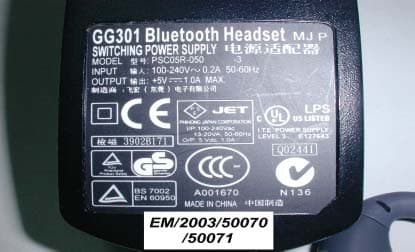
Click to zoom
Application Details
- Equipment Class
- DSS - Part 15 Spread Spectrum Transmitter
- Date of Grant
- Jun 29, 2003
- Application Purpose
- Original Equipment
- Date of Application
- Jun 29, 2003
- Equipment Note
- BLUETOOTH HEADSET
- Frequency Range
- 2402.00000000 - 2480.00000000
- Country
- Taiwan
Documents & Files
Document Text
Text extracted from the exhibit documents filed with the FCC. Open a document above to read the original.
Users Manual
4
Block Diagram
CHARGER BATTERY PROTECT LDO Key Bottom BC02-Headset BATTERY Low BATTERY DETECTOR EEPROM EXTERNAL RF Component ANT SPEAKER MIC (note1) (note2) (note3) N OTE1 Constant Current/constant Voltage Charge. N OTE2 over current/short/over char ge/over discharge protect. N OTE3 BD_ADDRESS, Crystal trim, Ring tone, number of Bottom, LED flashing pattern, power management. N OTE4 16 MHz ,+-10 ppm C RYATA L note4 BLOCK DIAGRAM
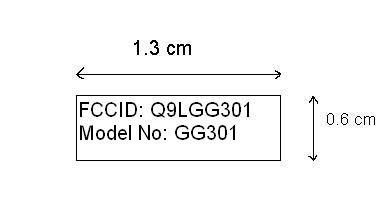
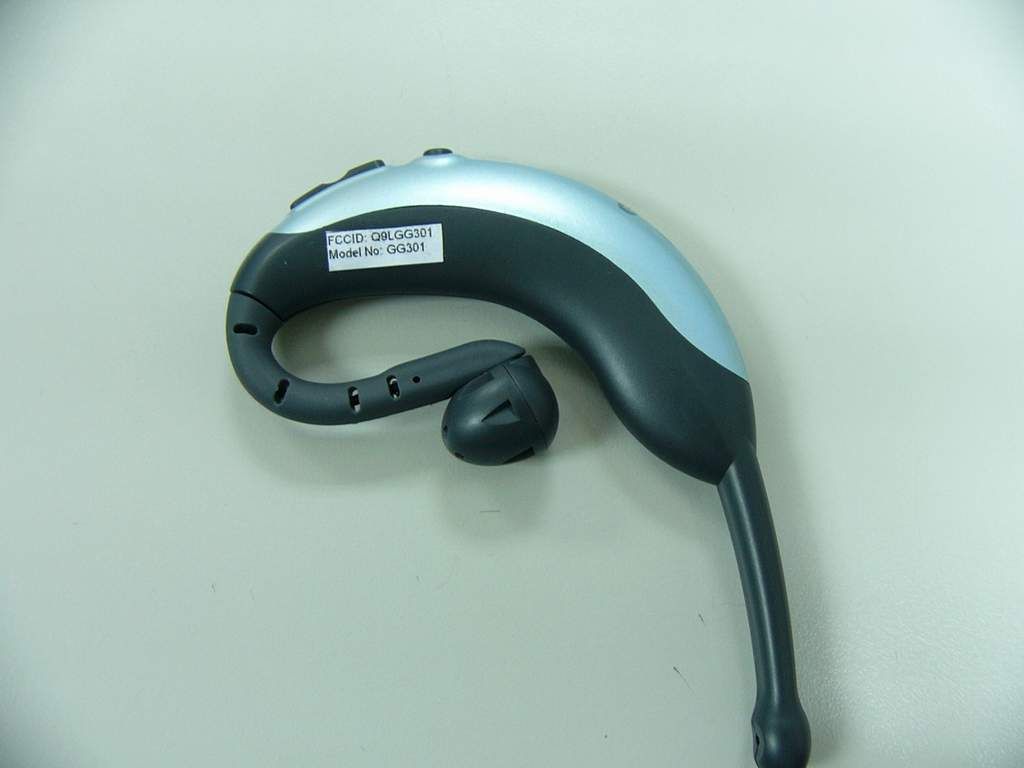
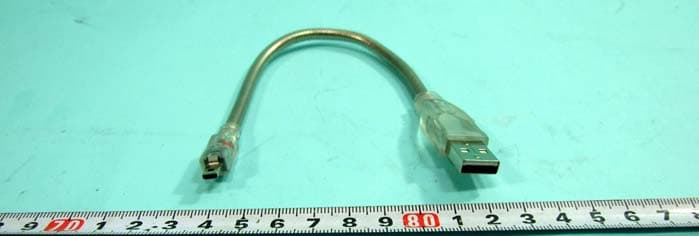
External Photos
External Photos
Internal Photos
Internal Photos
Operational Description
Operation description Bluetooth 1. Purpose: The purpose of this document is to describe key component operations on Bluetooth. 2. Key components: CSR BlueCore-02 Audio/Flash BC215159B, Bluetooth Single Chip, TI bq24010 Battery Charger, RT9167-18CB High Speed LDO Regulators,RT9541-SCE Battery over charge/over discharge Protector, FDC6305N MOSFET,AT24C16-10UI EEPROM. 3. Operation Principle: CSR BlueCore-02Audio/Flash BC215159B, Bluetooth Single Chip BlueCore2-Audio is a single chip radio and base band IC for Bluetooth 2.4GHz systems. The integrated mono audio CODEC allows for more compact designs and low power consumption for battery powered application. It is implemented in 0.18μm CMOS technology. When used with internal flash containing the CSR Bluetooth software stack, it provides a fully compliant Bluetooth system for voice communications. Operation at 1.8 V supply. Operation clock is provided by 16MHz oscillator. Key Features Radio -Operation with common TX/RX terminals simplifies external matching circuitry and eliminates external antenna switch -Extensive built-in self-test minimizes production test time -No external trimming is required in production -Full RF reference designs are available Transmitter -Up to +4dBm RF transmit power with level control from the on-chip 6-bit DAC over a dynamic range greater than 30dB -Supports Class 2 and Class 3 radios without the need for an external power amplifier or TX/RX switch Receiver -Integrated channel filters -Digital demodulator for improved sensitivity and co-channel rejection -Digitized RSSI available in real time over the HCI interface -Fast AGC for enhanced dynamic range Synthesizer -Fully integrated synthesizer, no external VCO varactor diode or resonator -Compatible with crystals between 8 and 32MHz (in multiples of 250 kHz) or an external clock Auxiliary Features -Crystal oscillator with built-in digital trimming -Power management includes digital shut down and wake up commands and an integrated low power oscillator for ultra-low Park/Sniff/Hold mode power consumption -Devices can be used with an external Master oscillator and provides a clock request signal. To control external clock source. -Uncommitted 8-bit ADC and 8-bit DAC are available to application programs Baseband and software -Internal 4M bit flash for complete system solution and application flexibility -32kbyte on-chip RAM allows full speed Bluetooth data transfer, mixed voice and data, plus full 7 slaves Pico net operation -Dedicated logic for forward error correction, header error control, access code correlation, demodulation, cyclic redundancy check, encryption bit-stream generation, whitening and transmit pulse shaping -Transponders for A-law, μ-law and linear voice rom host and A-law, μ-law and CVSD voice over air Physical Interfaces -Synchronous serial interface up to 4MBaud -UART interface with programmable Baud rate up to 1.5MBaud -Full speed USB interface supports OHCI and UHCI host interfaces. Compliant with USB v2.0 -Synchronous bi-directional serial programmable audio interface -Optional I2C Compatible interface Bluetooth Stack Running on an Internal Micro-controller CSR’s Bluetooth Protocol Stack runs on-chip in a variety of configurations: -Standard HCI (UART or USB) -Fully embedded to RFCOMM -Customer specific builds with embedded application code Audio CODEC -15-bit resolution with 8 kHz sampling frequency -Designed for use in voice applications such as headsets and hands-free kits -Integrated input/output amplifiers capable of driving a microphone and speaker with minimum external components TI bq24010 single chip LI-ION charge management The bq24010 is highly integrated Li-Ion and Li-pol linear charge management devices targeted at space limited portable application. The IC offer integrated powerFET and current sensor for up to 1A charge application, reverse blocking protection, high accuracy current and voltage regulation(+-5% accuracy), charge status, and charge termination, in a small package. The bq24010 charge the battery in three phases: conditioning, constant current, constant voltage. Charge is terminated based on minimum current. An internal charge timer provides a backup safety feature for charge termination. The bq24010 automatically re-starts the charge if the battery voltage falls bellow an internal threshold. The bq24010 automatically enters sleep mode when Vcc supply is removed. The bq24010 include temperature sensing input for detecting hot or cold battery pack; power good (PG) output indicating the presence of input power.
Schematics
55 44 33 22 11 DD CC BB AA TALK VOLUME_DOWNVOLUME_UP Serial EE PROM * There is a JR1 4wire connector between J3 and JR3. Battery+ SPK PIO0 PIO1 STAT1 GND GNDGND PIO3PIO4PIO5 STAT1 BT Headset ( BC2-Pioneer ) 4 MTC C 11 Tuesday, May 20, 2003 TitleSize Document Number Rev Date: Sheet of SPI_CSBSPI_CLK UART_RTS UART_CTS UART_RX UART_TX PIO3 PIO5 PIO6 PIO7 GNDGNDGND GNDGNDGNDGND GND GND GNDGND SPI_MOSI SPI_CSBSPI_MOSISPI_MISOSPI_CLK UART_CTSUART_TXUART_RTSUART_RX PIO8PIO7PIO6 BAT_MON PIO11PIO4 GND PIO9PIO10PIO8 PIO0 SPI_MISO PIO1 PIO2 STAT1 PIO11 BAT_MON 1.8V VC 1.8V VBAT 1.8V VC VC 1.8V 1.8V 1.8V 1.8VVC VC 1.8V 1.8V 1.8V 1.8V 1.8V 1.8V 1.8V VBAT GND VBAT R2247K Q23904 2 1 3 R82.2K C815P J2SPI BUS12345 + C1510uf/6.3v 12 C1415P R5 2.2 TP5T POINT S 1 C12 NF C70.1u TP6T POINT S 1 T1TDK HHM1517 123 456 Unbalanced GND Balanced BalancedGNDNC U6 bq24010 1234 610987 5 INVCCSTAT1STAT2 ISET OUT BAT TS PG VSS C23 0.1u R13100K L315nH R32 220k/1% C24 0.1u R92.2k C20 0.01u + C251u/6.3V 12 R10100 R33150k/1% R72.2k R192.2k + C27 10u/25V 12 C16 0.01u C610P U3 AT24C16-10UI 87 2413 65 VCCWP A1 GND A0 NC SCLSDA C2 0.01u SW1 1 2 C262.2p Y1 16MHz 1 23 4 L9 15n C30NF IMN10 C320.1u MIC1 C31NF C1 0.01u C330.1u Q13904 C340.1u SW2 1 2 Q33904 R31K SW3 1 2 U4 RT9541SCE 1 23 4 5 6 COUT CTVSS DOUT VDD V- R18330 R2 220 U5 FDC6305N 123 456 G1S2G2 D2 S1 D1 R14100K C5 3.3P C290.1u R15100K J7 CHARGE POWER PLUG 31245 R6100k C35C C21 2.2u J1UART BUS12345 R4 220 R1210K L615nH J412 TP2T POINT S 1 C92.2P C42.2P R20 10K + C1910uf/6.3v 12 R34220 TP1 L4 3.9nH R2110K TP3T POINT S 1 C115.6P L815nH C13 0.047u L2 3.9nH C280.1u C10 0.047u D51SS355 G R LED1BL-HD1X134B 43 12 U2 RT9167-18CB 31 4 2 5 SHDN IN BP GND OUT F1MDR741F 13 42 INGND GND OUT C220.1u C3 0.01u J6 Battery - 12 TP4 R1647K E1ANTENNA 1 R1747K U1 BC215159A 1 2 3 4 5 6 7 8 9 10 11 12 13 14 15 16 17 18 19 20 21 222324252627282930313233343536373839404142 63 62 61 60 59 58 57 56 55 54 53 52 51 50 49 48 47 46 45 44 43 848382818079787776757473727170696867666564 [A1]VSS_PIO [A2]VSS_PIO [A3]VDD_PIO [A4]Unconnected Terminal [A5]Unconnected Terminal [A6]VDD_MEN [A7]VDD_MEN [A8]Unconnected Terminal [A9]VDD_MEN [A10]VSS_MEN [B1]PIO0/RXEN [B2]PIO1/TXEN [B3]PIO2/CLK_REQ [B4]PIO3/USB_WAKE_UP [B5]VSS_MEN [B6]Unconnected Terminal [B7]VSS_MEN [B8]FLASH_EN [B9]SPI_MISO [B10]VSS_MEN [C1]VDD_RADIO [C2]VDD_RADIO [C3]PIO9 [C4]PIO10 [C5]PIO8 [C6]TEST_EN [C7]RESET [C8]SPI_MOSI [C9]SPI_CSB [C10]SPI_CLK [D1]RF_IN [D2]VSS_RADIO [D3]AUX_DAC [D8]RESET_B [D9]VSS_PADS [D10]VDD_PADS [E1]TX_B [E2]VSS_RADIO [E3]PIO11 [E8]PIO4/USB_ON/UART_TX [E9]VSS_CORE [E10]VDD_CORE [H9]UART_RX [H8]UART_CTS [H7]UART_RTS [H6]VDD_MEN [H5]AIO1 [H4]AIO0 [H3]MIC_P [H2]LOOP_FILTER [H1]VDD_VCO [G10]PCM_SYNC [G9]PCM_IN [G8]PCM_OUT [G3]MIC_N [G2]VSS_VCO [G1]VSS_VCO [F10]PIO6/CLK_REQ/UART_CTS [F9]PIO7/UART_RX [F8]PIO5/USB_DETACH/UART_RTS [F3]VSS [F2]VSS_RADIO [F1]TX_A [K10]VSS_USB[K9]VDD_USB[K8]USB_DN[K7]VDD_MEN[K6]VREG_IN[K5]Unconnected Terminal[K4]VDD_ANA[K3]XTAL_IN[K2]VSS_ANA[K1]SPKR_N[J10]UART_TX[J9]VSS_USB[J8]USB_DP[J7]VSS_MEN[J6]VDD_MEN[J5]AIO2[J4]VSS_ANA[J3]XTAL_OUT[J2]VSS_ANA[J1]SPKR_P[H10]PCM_CLK
Test Report
Report No. : ER/2003/50008 Page : 1 of 47 TEST REPORT Product Name : Bluetooth Headset Product ID : GG301x Applicant : G.G. Telecom(2002) Inc. Address of Applicant : 5F, No. 186,Sec. 2,Chung-Hsing Road Hsin Tien city, Taipei, Taiwan, R.O.C. Standards: FCC Part 15 subpart C In the configuration tested, the EUT complied with the standards specified above. The test data, test procedures, and equipment configurations shown in this report were made in accordance with the procedures given in ANSI C63.4(1992). Remarks: This report details the results of the testing carried out on one sample, the results contained in this test report do not relate to other samples of the same product. The manufacturer should ensure that all products in series production are in conformity with the product sample detailed in this report. This report may only be reproduced and distributed in full. If the product in this report is used in any configuration other than that detailed in the report, the manufacturer must ensure the new system complies with all relevant standards. Any mention of SGS Taiwan E&E Services or testing done by SGS Taiwan E&E Services in connection with distribution or use of the product described in this report must be approved by SGS Taiwan E&E Services in writing. Tested by : Alex Hsieh Date : Jun. 5, 2003 Approved by : Robert Chang Date : Jun. 6, 2003 Report No. : ER/2003/50008 Page : 2 of 47 Contents 1. General Information 1.1 Testing Laboratory 3 1.2 Details of Applicant 3 1.3 Description of EUT(s) 3 1.4 Operation Procedure 4 2. Summary of Results 5 3. Instruments List 6 4. Measurements 7 4.1 Conducted Limits 7 4.2 Radiated emission Limits, general requirement 10 4.3 Channel Spacing 17 4.4 20db bandwidth / No. of channels 19 4.5 Average time of Occupacy 24 4.6 Peak outpot power 27 4.7 Band-edge emission 30 4.8 Spurious Emission under 25Ghz 32 APPENDIX Photographs of Test Setup 44 Photographs of EUT 45-47 Report No. : ER/2003/50008 Page : 3 of 47 1. General Information 1.1 Testing Laboratory SGS Taiwan Ltd. ( FCC Registration number: 573967 ) 1F, No. 134, Wukung Road, Wuku industrial zone Taipei county , Taiwan , R.O.C. Telephone : +886-2-2299-3279 Fax : +886-2-2298-2698 Internet : http://www.sgs.com.tw 1.2 Details of Applicant Name : G.G. Telecom(2002) Inc. Address : 5F, No. 186,Sec. 2,Chung-Hsing Road, Hsin Tien city, Taipei, Taiwan, R.O.C. Contact : Mr. Jimmy Chu Telephone : +886-2-29111648 ext 608 1.3 Description of EUT(s) 1 Product name Bluetooth Headset 2 Product ID GG301x 3 Supply Voltage DC 3.3V 4 Carrier Frequency 2402MHz to 2480MHz 5 Modulation Method GFSK,1Mbps,0.5BT Gaussian 6 Hopping 1600hops/sec, 1MHz channel space 7 Operation Temperature 0 to +60 degree 8 Compliant Bluetooth Specification Ver1.1 Report No. : ER/2003/50008 Page : 4 of 47 1.4 Operation Procedure Since Bluetooth is a FHSS system, it is difficult to measure the parameters under hopping mode. The output power and operating frequency are NOT End-user adjustable. Applicant offer a engineering software “BlueTest” install in PC to control the EUT. And the applicant provide an additional UART interface to control this Headset. Operating frequency are set as testing required. The output power is set as Ext=255, Int=50. The lowest operating frequency within Bluetooth specification is 2402Mhz, and highest operating frequency is 2480Mhz. So the frequency above are used as the lowest and highest frequency in the testing, and the middle frequency is set as 2441Mhz. The pseudorandom hopping sequence is produced by the Bluesuite software which is provided by the manufacturer of the chipset. 1.5 Testing Method The testing standard follows CFR 47, Part 15.247 , and measurement method according to Public Notice DA00-705 (March 2000). Report No. : ER/2003/50008 Page : 5 of 47 2.Summary of Results subclause Parameter to be measures Verdict Page 15.207 Conducted Limits PASS 7 15.209 Radiated emission Limits, general requirement PASS 10 15.247(a)(1) Channel Spacing PASS 17 15.247(a)(1)(ii) 20db bandwidth / No. of channels PASS 19 15.247(a)(1)(ii) Average Time of Occupacy PASS 24 15.247(b)(1) Peak Output power PASS 27 15.247(c) Band-Edge Emission PASS 30 15.247(c) Spurious Emission under 25Ghz PASS 32 Report No. : ER/2003/50008 Page : 6 of 47 3. Instruments List Instrument Model Serial number Calibration date Desktop PC HP Pavillion 723DN/A N/A Spectrum Analyzer R&S FSP 40 100034 Mar. 27, 2003 Antenna Schwarzbeck BBHA9170A 184/185 July 01, 2002 Antenna Schwarzbeck BBHA9120A 309/320 July 01, 2002 Antenna Schwarzbeck VULB9163 152 July 01, 2002 Signal generator R&S SMR 40 100210 Feb. 11, 2003 EMC Analyzer HP 8594EM 3624A00203 Dec. 13, 2002 EMI Test Receiver R&S ESCS 30 828985/004 Oct. 11, 2002 Transient Limiter HP 11947A 3107A02062 Jul. 24, 2002 L.I.S.N Rolf-Heine NNB-2/16Z 99012 Oct. 08, 2002 Report No. : ER/2003/50008 Page : 7 of 47 4. Measurements 4.1 Conducted Limits SUBCLAUSE 15.207 Line Product Name: Test Date: May,26,2003 Bluetooth headset Model No.: Tester : Gallon GG301 Test Mode: Temperature: ° Operation Mode Test Result: PASS Humidity: % Main Terminals:L FREQ MHz QP1 dBuV AVG1 dBuV Factor QP2 dBuV AVG2 dBuV QP Limit AV Limit QP Offset AV Offset 1." -" denotes the emission level was - 10 dB beneth the Average limit,so nothing need to re-check anymore. 2. QP1/ AVG1 value means the QP/AV reading without the factor. 3. QP2/AVG2 value means the QP/AV final reading with the factor. Report No. : ER/2003/50008 Page : 8 of 47 Neural Product Name: Test Date: May,26,2003 Bluetooth headset Model No.: Tester : Gallon GG301 Test Mode: Temperature: ° Operation Mode Test Result: PASS Humidity: % Main Terminals:N FREQ MHz QP1 dBuV AVG1 dBuV Factor QP2 dBuV AVG2 dBuV QP Limit AV Limit QP Offset AV Offset 1." -" denotes the emission level was - 10 dB beneth the Average limit,so nothing need to re-check anymore. 2. QP1/ AVG1 value means the QP/AV reading without the factor. 3. QP2/AVG2 value means the QP/AV final reading with the factor. Report …
Text truncated - open the document above for the full version.
Test Setup Photos
Test setup photos
Contact Information
Applicant
Allan Wu(CTO)
Test Firm
SGS Taiwan Ltd.Wyse Chiu
Technical Specifications
| # | Rule Parts | Frequency Range | Power Output |
|---|---|---|---|
| 1 | 15C | 2.40 GHz - 2.48 GHz | 1.83 mW |
Other Applications from G.G. Telecom (2002) Incorporated
Q9L-0011
Aug 08, 2007Bluetooth Headset
Equipment Class
DSS - Part 15 Spread Spectrum Transmitter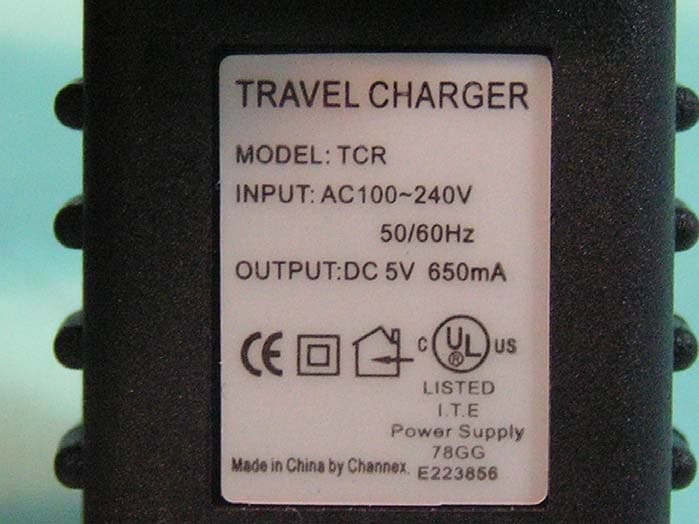
Q9L-0009
Jul 19, 2006Bluetooth Headset
Equipment Class
DSS - Part 15 Spread Spectrum Transmitter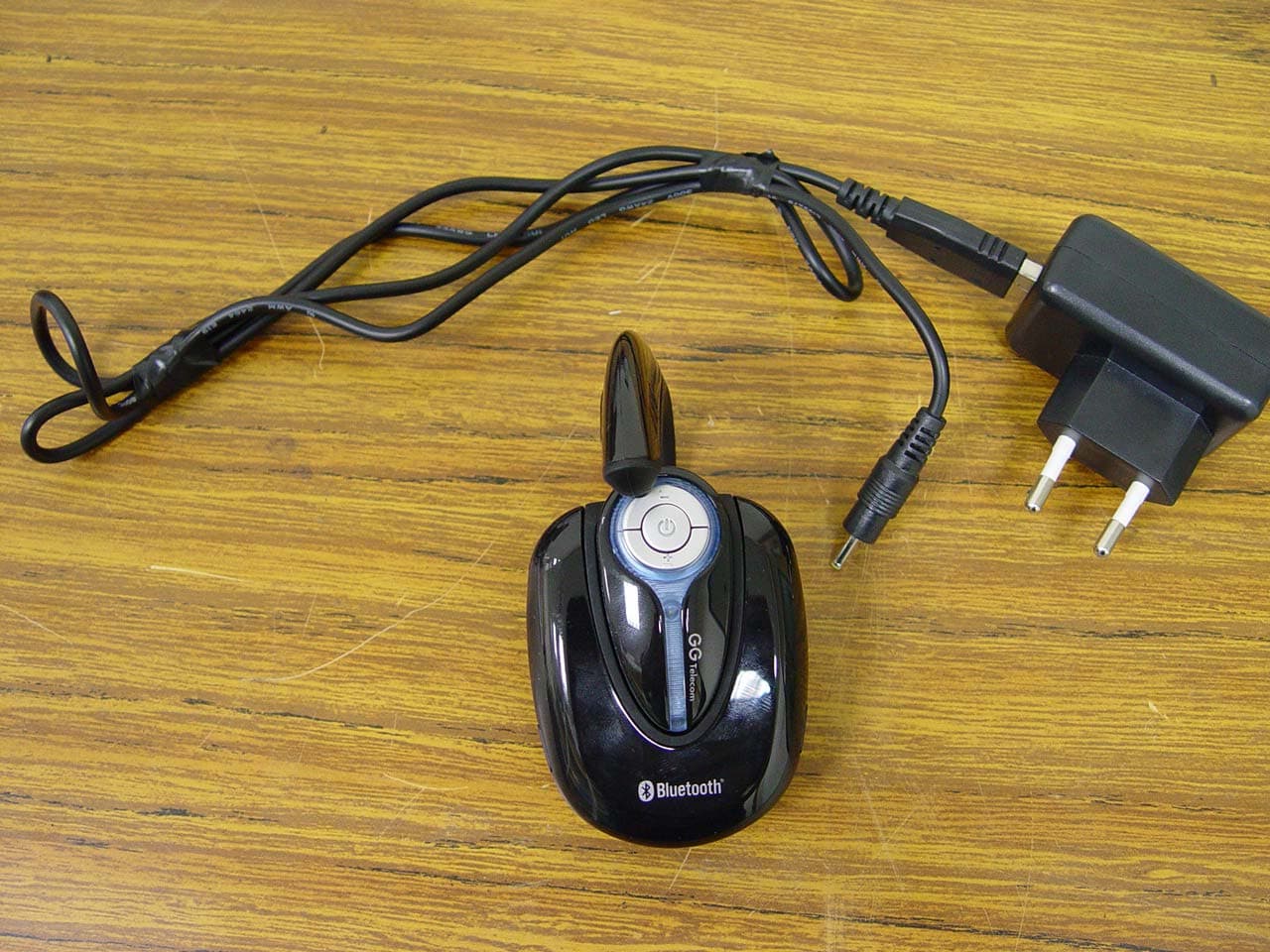
Q9LGG03
Oct 26, 2004Bluetooth Headset
Equipment Class
DSS - Part 15 Spread Spectrum Transmitter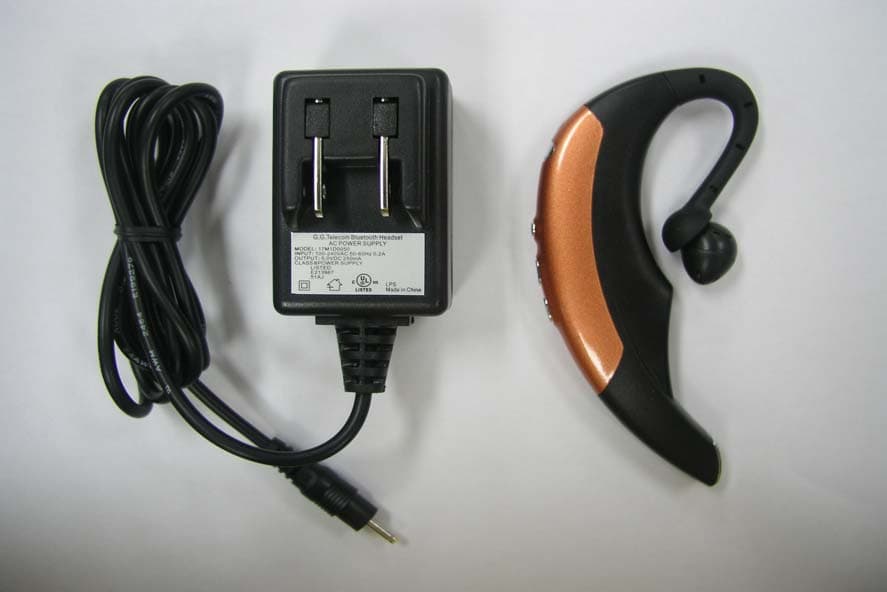
Q9LGG01
Jun 03, 2004Bluetooth Headset
Equipment Class
DSS - Part 15 Spread Spectrum Transmitter