QITBT07Bluetooth Dongle, Identification: V27
ConnecteDevice Limited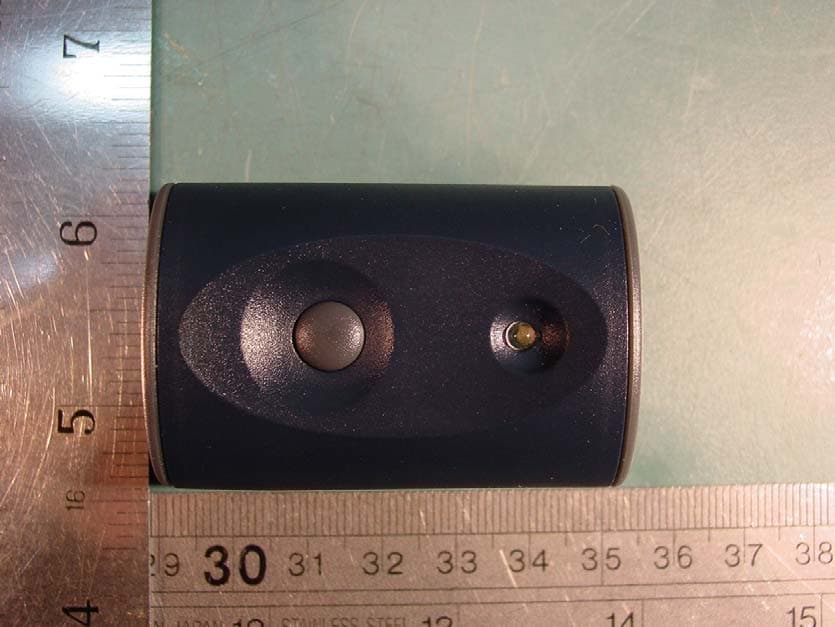
Click to zoom
Application Details
- Equipment Class
- DTS - Digital Transmission System
- Date of Grant
- Jan 27, 2003
- Application Purpose
- Original Equipment
- Date of Application
- Jan 27, 2003
- Equipment Note
- Bluetooth Dongle, Identification: V27
- Frequency Range
- 2402.00000000 - 2480.00000000
- Company
- ConnecteDevice Limited
- Country
- Hong Kong
Documents & Files
Document Text
Text extracted from the exhibit documents filed with the FCC. Open a document above to read the original.
Users Manual
Dongle User’s Guide INNOVI Technologies Version: 1.0 Innovi Technologies Ltd Suite 501-3, 5/F, Chinachem Leighton Plaza, 29 Leighton Road, Causeway Bay, Hong Kong Tel: (+852) 2882 2296, Fax: (+852) 2882 2316 Email: [email protected] , Web: www.innovi.com Dongle User’Guide Aug02/BtrekRefV1/GpoV1 Table of Contents 1. Introduction.....................................................................................4 2. Bluetooth Dongle..........................................................................5 3. Charging the Dongle...................................................................6 3.1. Preliminary remark :...................................................................................6 3.2. How to connect the charger :........................................................................6 4. Dongle status and LED indication.......................................7 4.1. The dongle can have four modes :.................................................................7 4.1.1. Switch off ..................................................................................................7 4.1.2. Standby mode ............................................................................................7 4.1.3. Pairing mode..............................................................................................7 4.1.4. Profiles mode.............................................................................................7 5. Pairing.................................................................................................9 5.1. Pairing the Dongle to BlueTrek......................................................................9 5.2. Pairing the Dongle to a BlueTooth Headset.....................................................9 5.3. Checking if the Pairing is correct with Bluetrek................................................9 6. Connecting your dongle..........................................................10 7. Incoming Call................................................................................11 7.1. Nokia and Ericsson phones .........................................................................11 7.2. Others than Nokia or Ericsson.....................................................................11 7.2.1. Automatic answer.....................................................................................11 7.2.2. Manual answer .........................................................................................11 8. Volume Control............................................................................12 9. Ending a Call.................................................................................12 10. Making a Call................................................................................13 10.1. Mobile with voice recognition :....................................................................13 10.2. Mobile without voice recognition :...............................................................13 11. Transferring a Call to the Mobile Phone........................14 12. Transferring a Call to the headset....................................14 13. Appendix : dongle profiles for phones...........................15 Page 2 of 16 Innovi Technologies Ltd Suite 501-3, 5/F, Chinachem Leighton Plaza, 29 Leighton Road, Causeway Bay, Hong Kong Tel: (+852) 2882 2296, Fax: (+852) 2882 2316 Email: [email protected] , Web: www.innovi.com Dongle User’Guide Aug02/BtrekRefV1/GpoV1 FCC Statement This device complies with Part 15 of the FCC Rules. Operation is subject to the following two conditions : (1) This device may not cause harmful interference, and (2) This device must accept any interference received, including interference that may cause undesired operation. Caution : Changes or modifications to this Bluetooth headset not expressly approved by the manufacturer could void the user's authority to operate the equipment. Page 3 of 16 Innovi Technologies Ltd Suite 501-3, 5/F, Chinachem Leighton Plaza, 29 Leighton Road, Causeway Bay, Hong Kong Tel: (+852) 2882 2296, Fax: (+852) 2882 2316 Email: [email protected] , Web: www.innovi.com Dongle User’Guide Aug02/BtrekRefV1/GpoV1 1. Introduction Complete Bluetooth offer from Innovi consists in two parts : - Bluetooth Headset or Bluetrek, - Bluetooth Dongle. The purpose of these devices is to provide a Bluetooth wireless solution for a non mobile phone which has the functionnality of hands free with wires. Bluetrek and the Dongle can be used together or independtly as following : - Use BlueTrek and the Dongle to transform your non Bluetooth mobile Phone in a compatible BlueTooth mobile phone with a wireless headset (following the Bluetooth spec V1.1) - Use BlueTrek with your BlueTooth Mobile Phone (please refer as the Bluetrek User’s guide), - Use the Dongle with your non Bluetooth mobile Phone to connect to another BlueTooth Headset manufacturer. This guide provides informations about setting up and using the Dongle with a Bluetooth headset like Bluetrek. Page 4 of 16 Innovi Technologies Ltd Suite 501-3, 5/F, Chinachem Leighton Plaza, 29 Leighton Road, Causeway Bay, Hong Kong Tel: (+852) 2882 2296, Fax: (+852) 2882 2316 Email: [email protected] , Web: www.innovi.com Dongle User’Guide Aug02/BtrekRefV1/GpoV1 2. Bluetooth Dongle Belt clip - Switch on - Switch off - Pairing mode - Profiles mode Bluetooth logo Dual color LED - Charging hole - Connecting hole Page 5 of 16 Innovi Technologies Ltd Suite 501-3, 5/F, Chinachem Leighton Plaza, 29 Leighton Road, Causeway Bay, Hong Kong Tel: (+852) 2882 2296, Fax: (+852) 2882 2316 Email: [email protected] , Web: www.innovi.com Dongle User’Guide Aug02/BtrekRefV1/GpoV1 3. Charging the Dongle 3.1. Preliminary remark : It is mandatory to use the charger provided with your product. The use of any other brand will suspend automatically the warranty. Before using your Dongle connect it to the charger for an initial charge preferably for all night. During the charge you shou…
Text truncated - open the document above for the full version.
Block Diagram
TÜV Rheinland Appendix 4 Product Safety GmbH Am Grauen Stein D - 51105 Köln Prüfbericht - Nr.: Test Report No. 14002633 001 Seite 4 von 16 Page 4 of 16
External Photos
TÜV Rheinland Product Safety GmbH Am Grauen Stein D - 51105 Köln Appendix 3.1 Prüfbericht - Nr.: Test Report No. 14002633 001 Seite 1 von 3 Page 1 of 3 Front side of external view: TÜV Rheinland Product Safety GmbH Am Grauen Stein D - 51105 Köln Appendix 3.1 Prüfbericht - Nr.: Test Report No. 14002633 001 Seite 2 von 3 Page 2 of 3 Rear side of external view: TÜV Rheinland Product Safety GmbH Am Grauen Stein D - 51105 Köln Appendix 3.1 Prüfbericht - Nr.: Test Report No. 14002633 001 Seite 3 von 3 Page 3 of 3 Side view of external view:
ID Label/Location Info
TÜV Rheinland Appendix 4 Product Safety GmbH Am Grauen Stein D - 51105 Köln Prüfbericht - Nr.: Test Report No. 14002633 001 Seite 1 von 16 Page 1 of 16 1.1 FCCID Label Artwork
Internal Photos
TÜV Rheinland Product Safety GmbH Am Grauen Stein D - 51105 Köln Appendix 3 Prüfbericht - Nr.: Test Report No. 14002633 001 Seite 1 von 3 Page 1 of 3 Front side of internal view: TÜV Rheinland Product Safety GmbH Am Grauen Stein D - 51105 Köln Appendix 3 Prüfbericht - Nr.: Test Report No. 14002633 001 Seite 2 von 3 Page 2 of 3 Front side of internal view (Zoom): The yellow circle indicates the location of the antenna. TÜV Rheinland Product Safety GmbH Am Grauen Stein D - 51105 Köln Appendix 3 Prüfbericht - Nr.: Test Report No. 14002633 001 Seite 3 von 3 Page 3 of 3 Back side of internal view:
Operational Description
TÜV Rheinland Appendix 4 Product Safety GmbH Am Grauen Stein D - 51105 Köln Prüfbericht - Nr.: Test Report No. 14002633 001 Seite 2 von 16 Page 2 of 16 2.1 Description of Circuit Function 2.1.1 General Description Bluetooth operates in the unlicensed ISM band at 2.4 GHz. A frequency hop transceiver is applied to combat interference and fading. A shaped, binary FM modulation is applied to minimize transceiver complexity. The symbol rate is 1 Ms/s. A slotted channel is applied with a nominal slot length of 625 μs. For full duplex transmission, a Time-Division Duplex (TDD) scheme is used. On the channel, information is exchanged through packets. Each packet is transmitted on a different hop frequency. A packet nominally covers a single slot, but can be extended to cover up to five slots. The Bluetooth protocol uses a combination of circuit and packet switching. Slots can be reserved for synchronous packets. Bluetooth can support an asynchronous data channel, up to three simultaneous synchronous voice channels, or a channel which simultaneously supports asynchronous data and synchronous voice. Each voice channel supports a 64 kb/s synchronous (voice) channel in each direction. The asynchronous channel can support maximal 723.2 kb/s asymmetric (and still up to 57.6 kb/s in the return direction), or 433.9 kb/s symmetric. The Bluetooth system consists of a radio unit, a link control unit, and a support unit for link management and host terminal interface functions. 2.1.2 Specific Information about the RF module The implemented hardware is a true single chip radio and baseband IC for Bluetooth, 2.4GHz radios, implemented in CMOS technology. Together with an external Flash ROM containing the Bluetooth software stack, it provides a fully compliant Bluetooth system for data and voice communications. A low receiver IF is utilised to allow on-chip channel filtering. A novel synthesiser technique removes the requirement for external varactor diodes and resonator capacitors. The use of digital techniques allows a higher performance to be achieved in the demodulator and modulator as well as providing improved immunity to interference and easier Interoperability with other Bluetooth systems. The on-chip 16 bit microcontroller is powerful enough to support full rate Bluetooth data communications (723.2/57.6Kbps). The device works from a regulated supply in the range 2.7V to 3.6V.
Test Report
TÜV Rheinland Product Safety GmbH Am Grauen Stein D - 51105 Köln Prüfbericht - Nr.: Test Report No. 14002633 001 Seite 1 von 19 Page 1 of 19 Auftraggeber: Client: Innovi Technologies Ltd. Suite 501-3, 5/F. Chinachem Leighton Plaza 29 Leighton Road Causeway Bay Hong Kong Gegenstand der Prüfung: Test item: Bluetooth Dongle Bezeichnung: Identification: V27 Serien-Nr.: Serial No. Engineering sample Wareneingangs-Nr.: Receipt No.: 021113015 Eingangsdatum: Date of receipt: 13.11.2002 Prüfort: Testing location: Refer to section 4.1 Prüfgrundlage: Test specification: FCC Part 15, Subpart C ANSI C63.4-1992 Prüfergebnis: Test Result Der vorstehend beschriebene Prüfgegenstand wurde geprüft und entspricht oben genannter Prüfgrundlage. The a. m. test item passed. geprüft / tested by: Fred Wai kontrolliert / reviewed by Stephan Wald 22.01.2003 Datum Unterschrift Date Signature 22.01.2003 Datum Unterschrift Date Signature Sonstiges / Other Aspects: Abkürzungen: OK, Pass = entspricht Prüfgrundlage Fail = entspricht nicht Prüfgrundlage N/A = nicht anwendbar Abbreviations: OK, Pass = passed Fail = failed N/A = not applicable Dieser Prüfbericht bezieht sich nur auf den o.g. Prüfgegenstand und darf ohne Genehmigung der Prüfstelle nicht auszugsweise vervielfältigt werden. Dieser Bericht berechtigt nicht zur Verwendung eines Prüfzeichens. This test report relates to the a. m. test item. Without permission of the test center this test report is not permitted to be duplicated in extracts. This test report does not entitle to carry any test mark on this or similar products. Authorized format 16.12.1996, R.M. TÜV Rheinland Product Safety GmbH Am Grauen Stein D - 51105 Köln Prüfbericht - Nr.: Test Report No. 14002633 001 Seite 2 von 19 Page 2 of 19 1 Test Summary 7.1.1 ANTENNA CONNECTOR SUBCLAUSE 15.203 7.1.2 ANTENNA TYPE SUBCLAUSE 15.204 7.1.3 DISTURBANCE VOLTAGE ON AC MAINS SUBCLAUSE 15.207 RESULT: N/A 7.1.4 C ARRIER FREQUENCY SEPERATION SUBCLAUSE 15.247(A)(1) Limit Subclause 15.247(a)(1) 7.1.5 DWELL TIME SUBCLAUSE 15.247(A)(1)(III) RESULT: Pass Limit Subclause 15.247(a)(1)(iii) 7.1.6 20 DB BANDWIDTH SUBCLAUSE 15.247(A)(1) RESULT: Pass Limit Subclause 15.247(a)(1)(ii) 7.1.7 H OPPING SEQUENCE SUBCLAUSE 15.247(A)(1) 7.1.8 RECEIVER INPUT BANDWIDTH SUBCLAUSE 15.247(A)(1) 7.1.9 PEAK OUTPUT POWER SUBCLAUSE 15.247(B)(1) RESULT: Pass Limit Subclause 15.247(b)(1) 7.1.10 B AND EDGE COMPLIANCE SUBCLAUSE 15.247(C) RESULT: Pass Limit Subclause 15.247(c) 7.1.11 SPURIOUS CONDUCTED SUBCLAUSE 15.247(C) RESULT: Pass Limit Subclause 15.247(c) 7.1.12 SPURIOUS RADIATED SUBCLAUSE 15.247(C) RESULT: Pass Limit Subclause 15.247(c) TÜV Rheinland Product Safety GmbH Am Grauen Stein D - 51105 Köln Prüfbericht - Nr.: Test Report No. 14002633 001 Seite 3 von 19 Page 3 of 19 2 Contents 1 TEST SUMMARY..................................................................................................................2 2 CONTENTS...........................................................................................................................3 3 GENERAL REMARKS...........................................................................................................4 3.1 COMPLEMENTARY MATERIALS..........................................................................................4 4 TEST SITES..........................................................................................................................4 4.1 TEST FACILITIES.................................................................................................................4 4.2 LIST OF TEST AND MEASUREMENT INSTRUMENTS............................................................5 5 GENERAL PRODUCT INFORMATION...................................................................................6 5.1 PRODUCT FUNCTION AND INTENDED USE..........................................................................6 5.2 RATINGS AND SYSTEM DETAILS.........................................................................................6 5.3 INDEPENDENT OPERATION MODES....................................................................................6 5.4 SUBMITTED DOCUMENTS....................................................................................................7 6 TEST SET-UP AND OPERATION MODE................................................................................7 6.1 P RINCIPLE OF CONFIGURATION SELECTION.....................................................................7 6.2 T EST OPERATION AND TEST SOFTWARE............................................................................7 6.3 SPECIAL ACCESSORIES AND AUXILIARY EQUIPMENT.......................................................7 7 TEST RESULTS.....................................................................................................................8 7.1.1 Antenna connector Subclause 15.203 ........................................................................................................ 8 7.1.2 Antenna type Subclause 15.204.................................................................................................................. 8 7.1.3 Disturbance voltage on AC mains Subclause 15.207................................................................................. 9 7.1.4 Carrier frequency seperation Subclause 15.247(a)(1).............................................................................10 7.1.5 Dwell time Subclause 15.247(a)(1)(iii) .................................................................................................... 11 7.1.6 20dB bandwidth Subclause 15.247(a)(1) ................................................................................................. 12 7.1.7 Hopping sequence Subclause 15.247(a)(1).............................................................................................. 13 7.1.8 Receiver input bandwidth Subclause 15.247(a)(1) .................................................................................. 14 7.1.9 Peak …
Text truncated - open the document above for the full version.
Test Setup Photos
TÜV Rheinland Product Safety GmbH Am Grauen Stein D - 51105 Köln Appendix 2 Prüfbericht - Nr.: Test Report No. 14002633 001 Seite 1 von 1 Page 1 of 1 1.1 Test set-up
Contact Information
Applicant
Henri-Nicolas Olivier(CEO)
Technical Contact
T�V Rheinland Hong Kong Ltd.Stephan Wald
[email protected]+852 2779 3181
Room 405, Tech Centre · Hong Kong · Hong Kong
Non-Technical Contact
Innovi Technologies Ltd.Guillaume Ponticelli
[email protected]+852 2882 2296
Test Firm
Hong Kong Productivity CouncilIr Angel Wong Yuen-yee
Technical Specifications
| # | Rule Parts | Frequency Range | Power Output |
|---|---|---|---|
| 1 | 15C | 2.40 GHz - 2.48 GHz | 200.00 µW |
Other Applications from ConnecteDevice Limited
QITCD002
Mar 25, 2014Bluetooth Low Energy Smart Watch
Equipment Class
DTS - Digital Transmission System
QITCD003
Feb 26, 2014Bluetooth Low Energy Smart Watch
Equipment Class
DTS - Digital Transmission System
QITC45M
May 13, 2013Bluetooth Headset
Equipment Class
DSS - Part 15 Spread Spectrum Transmitter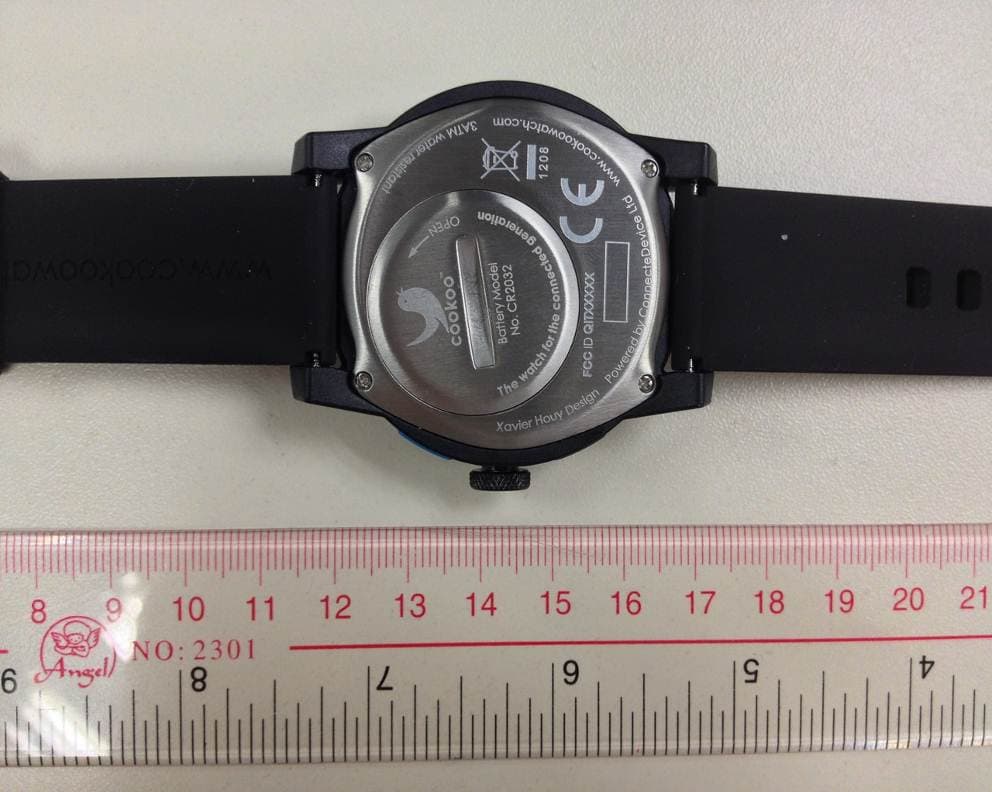
QITCOKO
Jan 08, 2013Bluetooth Low Energy Smart Watch
Equipment Class
DTS - Digital Transmission System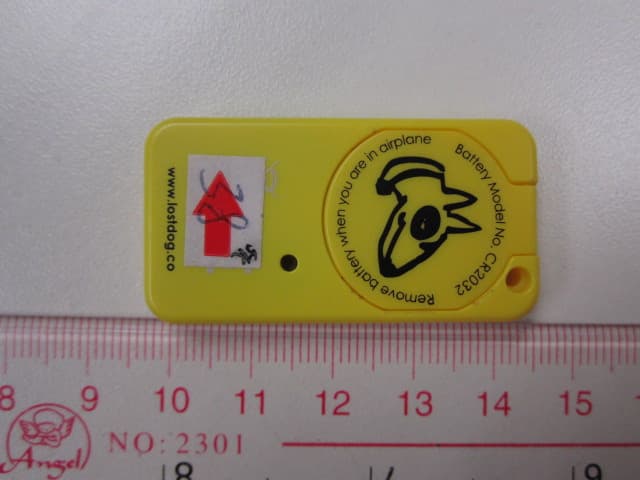
QIT2541
Oct 29, 2012BT Low Energy Device - LostDog smart keyfob
Equipment Class
DSS - Part 15 Spread Spectrum Transmitter