QOQWRAP229XMultiradio Access Server
Silicon Laboratories Finland Oy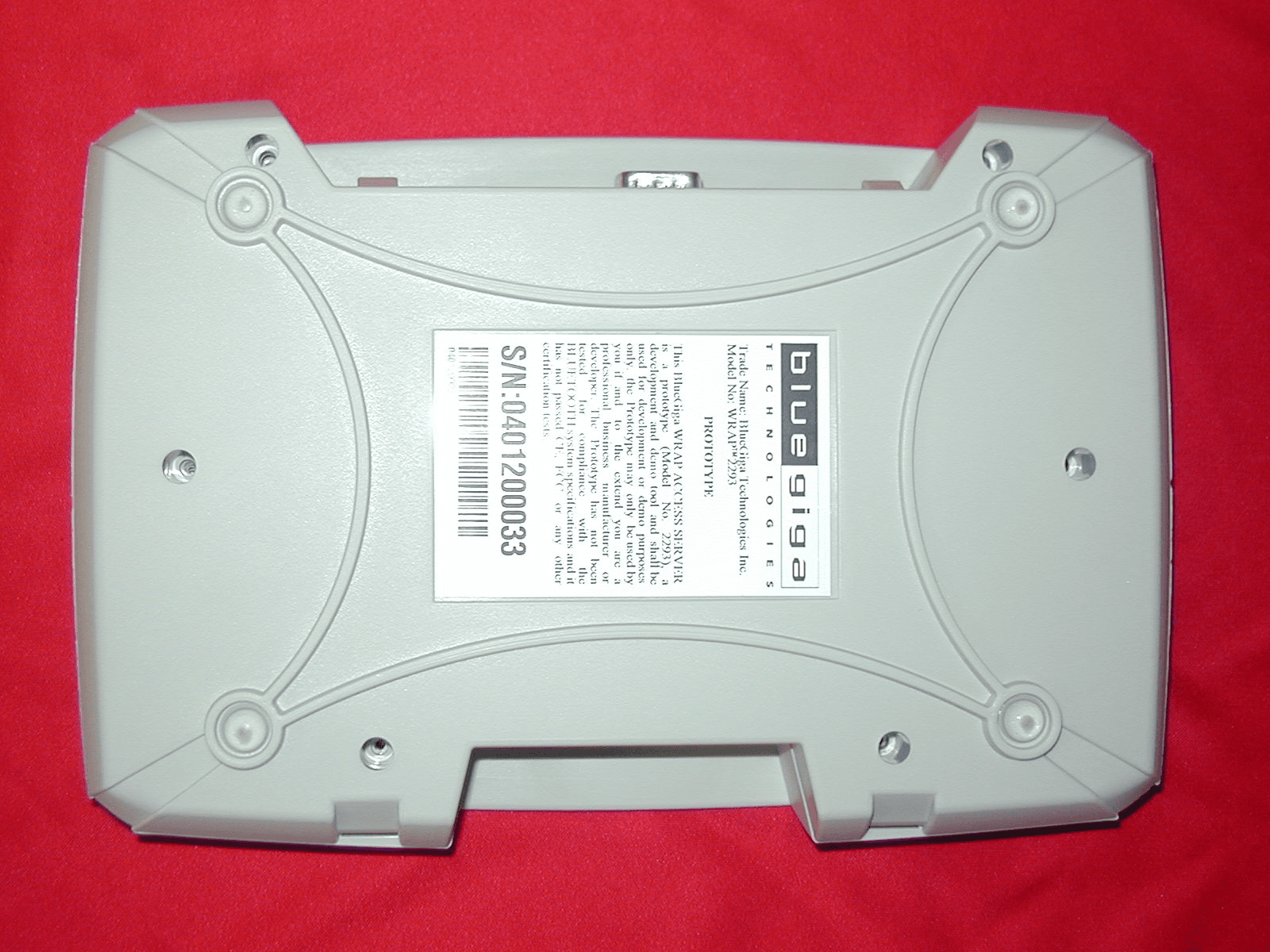
Click to zoom
Application Details
- Equipment Class
- DSS - Part 15 Spread Spectrum Transmitter
- Date of Grant
- Nov 07, 2004
- Application Purpose
- Original Equipment
- Date of Application
- Nov 07, 2004
- Equipment Note
- Multiradio Access Server
- Frequency Range
- 2402.00000000 - 2480.00000000
- Country
- Finland
Documents & Files
Document Text
Text extracted from the exhibit documents filed with the FCC. Open a document above to read the original.
Users Manual
WRAP MULTIRADIO ACCESS SERVER User’s and Developer’s Guide Version 2.0.3 Monday, November 08, 2004 Bluegiga Proprietary, Copyright © Bluegiga Technologies 2001-2004 All rights reserved. Bluegiga Technologies assumes no responsibility for any errors which may appear in this manual. Furthermore, Bluegiga Technologies reserves the right to alter the hardware, software, and/or specifications detailed herein at any time without notice, and does not make any commitment to update the information contained herein. Bluegiga Technologies’ products are not authorized for use as critical components in life support devices or systems. The WRAP is a registered trademark of Bluegiga Technologies. The Bluetooth trademark is owned by the Bluetooth SIG Inc., USA, and is licensed to Bluegiga Technologies. ARM and ARM9 are trademarks of ARM Ltd. Linux is a trademark of Linus Torvalds. All other trademarks listed herein belong to their respective owners. 2004-11-08 USER'S AND DEVELOPER'S GUIDE WRAP MULTIRADIO ACCESS SERVER CONTENTS 1 Introduction....................................................................................................... 6 1.1 Licenses and Warranty......................................................................................6 1.2 Certification Information....................................................................................6 1.3 Bluegiga Technologies Contact Information..........................................................9 2 Controlling the Access Server........................................................................... 10 2.1 Physical Interfaces.......................................................................................... 10 2.2 Shell Prompt Access........................................................................................ 11 2.2.1 Management Console............................................................................... 11 2.2.2 Accessing Remotely.................................................................................. 12 2.3 Transferring Files to/from the Access Server....................................................... 12 3 Configuration.................................................................................................... 14 3.1 Using the Setup Application.............................................................................. 14 3.1.1 Network Configuration.............................................................................. 14 3.1.2 Bluetooth Settings.................................................................................... 15 3.1.2.1 General Bluetooth Settings................................................................. 15 3.1.2.2 LAN Access Profile Settings................................................................. 16 3.1.2.3 Serial Port Profile Settings.................................................................. 16 3.1.2.4 OBEX Settings.................................................................................. 18 3.1.2.5 Personal Area Network Profile Settings................................................. 19 3.1.3 Ramdisk Settings..................................................................................... 19 3.1.4 System Logger Settings............................................................................ 20 3.1.5 Web Server Settings................................................................................. 20 3.1.6 Install Point Settings................................................................................ 20 3.1.7 SMS Gateway Settings.............................................................................. 20 3.2 /etc/rc.d/rc.local............................................................................................. 20 3.3 Resetting Configuration................................................................................... 21 3.4 Advanced Configuration................................................................................... 21 4 Using the System.............................................................................................. 22 4.1 Bluetooth...................................................................................................... 22 4.1.1 Bluetooth Server Socket Interface Password Protection................................. 22 4.1.2 LAN Access Profile.................................................................................... 22 4.1.3 Serial Port Profile..................................................................................... 22 4.1.4 Object Push and File Transfer Profile........................................................... 23 4.1.5 PAN Profile.............................................................................................. 24 4.1.6 Bluetooth Range Changing........................................................................ 24 4.1.7 BTCLI - Bluetooth Server Command Line Interface Utility............................... 24 4.1.8 Serialbluetooth........................................................................................ 24 4.2 Compact Flash GPRS Card................................................................................ 25 4.2.1 SIM Card’s PIN code................................................................................. 25 4.2.2 GPRS Troubleshooting.............................................................................. 25 4.2.3 Console Message "serial_cs: ParseTuple: Bad CIS tuple"................................ 25 4.3 Compact Flash WLAN...................................................................................... 26 4.3.1 Hostap Driver.......................................................................................... 26 4.3.2 Hermes Driver......................................................................................... 26 4.3.3 General Configuration............................................................................... 27 4.4 Servers...........…
Text truncated - open the document above for the full version.
Cover Letter(s)
15.247 (a) (1) Statement CETECOM S.A. – ITA team Page 1 of 1 Bluetooth devices 15.247 (a) (1) Statement Bluetooth devices Date: 27/01/2003 15.247 (a) (1) Statement CETECOM S.A. – ITA team Page 2 of 2 Bluetooth devices 1. Pseudorandom hop selection The generation of the hopping sequence in connection mode depends essentially on two input values: 1. LAP/UAP of the master of the connection 2. Internal master clock The LAP (lower address part) are the 24 LSB’s of the 48 BD_ADDRESS. The BD_ADDRESS is an unambiguous number of every Bluetooth unit. The UAP (upper address part) are the 24 MSB’s of the 48 BD_ADDRESS. The internal clock of a Bluetooth unit is derived from a free running clock which is never adjusted and is never turned off. For synchronisation with other units only offset are used. It has no relation to the time of the day. Its resolution is at least half the RX/TX slot length of 312.5 μs. The clock has a cycle of about one day (23h 30’). In most case it is implemented as 28 bit counter. For the deriving of the hopping sequence the entire LAP (24 bits), 4 LSB’s (4 bits) (Input 1) and the 27 MSB’s of the clock (Input 2) are used. With this input values different mathematical procedures (permutations, additions, XOR-operations) are performed to generate the sequence. This will be done at the beginning of every new transmission. The output constitutes a pseudorandom sequence covering 79 hop channels. The exact procedures for the generation of the pseudorandom hopping sequence can be found in “Bluetooth specification Version 1.1 – Part B – Baseband Specification – Chapter 11: Hop selection”. The following is a sample of a pseudorandom hopping sequence of 20 sec. 32000 hops): 34 72 31 69 28 66 25 63 22 60 19 57 16 54 13 51 10 48 07 45 04 42 01 39 77 36 74 33 71 30 68 27 65 24 62 21 59 18 12 20 09 17 61 20 58 17 00 08 76 05 49 08 46 05 67 75 64 72 37 75 34 72 55 63 52 60 25 63 22 60 43 51 40 48 13 51 10 48 31 39 28 36 01 39 77 36 19 27 16 24 68 27 65 24 70 29 55 14 64 23 49 08 58 17 43 02 52 11 37 75 34 72 43 02 28 66 37 75 20 09 17 06 14 03 11 00 22 60 07 45 16 54 01 39 76 65 73 62 70 59 67 56 78 37 63 22 72 31 57 16 66 25 51 10 60 19 45 04 42 01 51 10 36 74 45 04 28 17 25 14 22 11 19 08 30 68 15 53 24 62 09 47 18 56 03 41 12 50 76 35 73 32 03 41 67 26 76 35 59 48 56 45 53 42 50 39 61 20 46 05 55 14 40 78 49 08 34 72 43 02 28 66 25 63 34 72 19 57 28 66 52 62 49 59 46 56 43 53 40 50 37 47 34 44 31 41 28 38 25 35 22 32 19 29 12 50 09 47 61 48 58 45 77 08 09 19 47 06 58 17 67 26 64 23 37 24 34 21 53 63 64 74 23 61 34 72 31 69 14 52 49 59 32 42 19 57 02 40 37 47 20 30 72 31 04 42 11 21 22 32 62 49 59 46 01 39 77 36 58 45 41 28 52 39 35 22 59 69 56 66 29 67 26 64 47 57 44 54 17 55 14 52 35 45 32 42 05 43 02 40 23 33 20 30 72 31 69 28 11 21 08 18 60 19 57 16 78 09 75 06 48 07 45 04 66 76 63 73 36 74 33 71 38 76 21 59 32 70 15 53 26 64 09 47 20 58 03 41 00 38 11 49 73 32 05 43 69 56 66 53 63 50 60 47 69 28 52 11 63 22 46 05 78 37 75 34 44 33 41 30 72 01 77 06 38 76 43 02 60 68 65 73 26 64 31 69 56 64 45 53 22 60 11 49 30 68 27 65 75 64 72 61 24 32 29 37 69 28 74 33 12 20 17 25 57 16 62 21 63 22 60 19 57 16 54 13 37 26 42 31 31 20 36 25 39 77 36 74 33 71 30 68 13 02 18 07 07 75 12 01 15 53 12 50 09 47 06 44 14 52 11 49 59 48 56 45 08 16 13 21 53 12 58 17 75 04 01 09 41 00 46 05 71 00 60 68 37 75 26 64 45 04 42 01 11 00 08 76 39 47 44 52 05 43 10 48 27 35 32 40 72 31 77 36 78 37 75 34 72 31 69 28 52 41 57 46 46 35 51 40 54 13 51 10 48 07 45 04 28 17 33 22 22 11 27 16 30 68 27 65 24 62 21 59 35 73 32 70 29 67 26 64 27 37 32 42 21 31 26 36 15 25 20 30 09 19 14 24 13 51 02 40 56 43 45 32 01 39 69 28 44 31 33 20 60 19 65 24 24 11 29 16 60 70 57 67 24 62 21 59 18 56 15 53 42 52 39 49 73 60 78 65 18 56 23 61 73 32 70 29 18 28 15 25 49 36 54 41 73 32 78 37 51 38 48 35 45 32 42 29 14 52 11 49 38 48 35 45 02 40 78 37 26 36 23 33 69 28 66 25 14 24 11 21 59 46 56 43 53 40 50 37 59 18 48 07 53 12 42 01 35 22 32 19 29 16 26 13 35 73 24 62 29 67 18 56 09 47 06 44 33 43 30 40 76 35 73 32 21 31 18 28 64 23 61 20 09 19 06 16 52 11 49 08 76 07 73 04 42 29 39 26 36 23 33 20 77 06 66 74 43 02 32 70 57 65 62 70 23 61 28 66 39 77 36 74 05 73 02 70 41 49 30 38 07 45 75 34 29 37 15.247 (a) (1) Statement CETECOM S.A. – ITA team Page 3 of 3 Bluetooth devices 18 26 74 33 63 22 09 17 14 22 54 13 59 18 70 29 67 26 36 25 33 22 72 01 61 69 38 76 27 65 60 68 49 57 26 64 15 53 40 48 45 53 06 44 11 49 22 60 19 57 67 56 64 53 24 32 13 21 69 28 58 17 50 39 47 36 72 31 69 28 52 11 41 00 74 03 63 71 40 78 29 67 62 70 51 59 18 07 23 12 12 01 17 06 06 74 11 00 00 68 05 73 02 70 70 59 75 64 64 53 75 34 72 31 69 28 66 25 51 10 56 15 73 02 78 07 33 22 30 19 55 14 52 11 35 73 24 62 57 65 46 54 23 61 12 50 45 53 34 42 01 69 06 74 74 63 00 68 32 42 19 27 71 30 68 27 10 18 07 15 59 18 56 15 77 06 74 03 47 06 44 03 65 73 62 70 35 73 32 70 53 61 50 58 23 61 20 58 59 18 56 15 53 12 50 09 47 06 44 03 41 00 38 76 35 73 32 70 29 67 26 64 23 61 20 58 17 55 14 52 11 49 08 46 05 43 02 40 78 37 75 34 72 31 69 28 66 25 63 22 60 19 57 16 54 13 51 10 48 07 45 04 42 01 39 77 36 74 33 71 30 68 27 65 24 62 21 59 18 56 15 53 12 50 09 47 06 44 03 41 00 38 76 35 47 34 30 17 41 28 24 11 33 71 30 68 27 65 24 62 23 10 06 72 17 04 00 66 09 47 06 44 03 41 00 38 78 65 61 48 72 59 55 42 64 23 61 20 58 17 55 14 54 41 37 24 48 35 31 18 56 66 67 77 26 64 37 75 46 05 43 02 16 03 13 00 46 56 29 39 16 54 78 37 34 44 17 27 04 42 66 25 08 18 19 29 57 16 68 27 20 58 17 55 38 48 35 45 08 46 05 43 26 36 23 33 75 34 72 31 14 24 11 21 59 46 56 43 53 40 50 37 45 04 56 15 39 77 50 09 35 22 32 19 29 16 26 13 21 59 32 70 15 53 26 64 15 53 12 50 33 43 30 40 03 41 00 38 21 31 18 28 70 29 67 26 09 19 06 16 58 17 55 14 76 07 73 04 42 29 39 26 36 23 33 20 20 28 25 33 65 24 70 29 16 24 05 13 61 20 50 09 69 28 66 25 35 24 32 21 63 71 68 76 29 67 34 72 51 59 56 64 17 55 22 60 47 55 36 44 13 51 02 40 21 59 18 56 66 55 63 52 15 23 20 28 60 19 65 24 03 11 08 16 48 07 53 12 78 07 67 75 44 03 33…
Text truncated - open the document above for the full version.
Cover Letter(s)
15.247 (g) Statement CETECOM S.A. – ITA team Page 1 of 1 Bluetooth devices 15.247 (g) Statement – Bluetooth devices Date: 27/01/2003 According to Bluetooth specifications the channel hopping sequence which has a very long period length (23h 30’) does not show repetitive patterns over a short time interval, but distributes the hop frequencies equally over the 79 hopping channels during a short time interval. The generation of the hopping sequence in connection mode depends essentially on two input values: 1. LAP/UAP of the master of the connection 2. Internal master clock The LAP (lower address part) are the 24 LSB’s of the 48 BD_ADDRESS. The BD_ADDRESS is an unambiguous number of every Bluetooth unit. The UAP (upper address part) are the 24 MSB’s of the 48 BD_ADDRESS. The internal clock of a Bluetooth unit is derived from a free running clock which is never adjusted and is never turned off. For synchronisation with other units only offset are used. It has no relation to the time of the day. Its resolution is at least half the RX/TX slot length of 312.5 μs. The clock has a cycle of about one day (23h 30’). In most case it is implemented as 28 bit counter. For the deriving of the hopping sequence the entire LAP (24 bits), 4 LSB’s (4 bits) (Input 1) and the 27 MSB’s of the clock (Input 2) are used. With this input values different mathematical procedures (permutations, additions, XOR-operations) are performed to generate the sequence. This will be done at the beginning of every new transmission. The output constitutes a pseudorandom sequence covering 79 hop channels. For short transmissions the Bluetooth systems have the following behaviour: When the first connection between two devices is established, a hopping sequence is generated. If for transmitting the wanted data the complete hopping sequence is not used, the connection is ended. When a second connection is established. A new hopping sequence is generated. Due to the fact that the Bluetooth clock has a different value, because the period between the two transmission is longer (it cannot be shorter) than the minimum resolution of the clock (312,5 μs). The hopping sequence will always differ from the first one.
Cover Letter(s)
15.247 (h) Statement CETECOM S.A. – ITA team Page 1 of 1 Bluetooth devices 15.247 (h) Statement – Bluetooth devices Date: 27/01/2003 Bluetooth units which want to communicate with other units must be organised in an structure called piconet. This piconet consist of max. 8 Bluetooth units. One unit it the master of the other seven are the slaves. The master co- ordinates frequency occupation in this piconet for all units, the master determines the hopping sequence and the slave follows this sequence. Both devices shift between RX and TX time slot according to the clock of the master. As the master hop sequence is derived from its BD address which is unique for each Bluetooth device, additional masters intending to establish new piconets will allways use different hop sequence.
Cover Letter(s)
attn: Reviewing Engineer Federal Communications Commission 7435 Oakland Mills Road Columbia, MD 21046 RE: LETTER OF AGENT AUTHORIZATION July 22, 2004 To Whom It May Concern: We, the undersigned, hereby authorize MET Laboratories, Inc. to act on our behalf in all matters relating to application for equipment authorization (FCC ID: QOQWRAP229X), including the signing of all documents relating to these matters. We also hereby certify that no party to the application authorized hereunder is subject to the denial of benefits, including FCC benefits, pursuant to Section 5301 of the Anti-Drug Abuse Act of 1988,21 U.S.C.853(a). This agreement expires one year from the current date. Sincerely, P.A. Mr. Mikael Björkas HW Project Manager Bluegiga Technologies Inc. Sinikalliontie 11, 02631 Espoo, Finland Phone: +358 40 848 3339 E-mail: [email protected]
Cover Letter(s)
Power_of_Attorney_AVATAR.jpg (1215 x 1747 x 24)
Cover Letter(s)
Attn: Reviewing Engineer Industry Canada July, 2004 RE: CONFIDENTIALITY REQUEST To Whom It May Concern; Pursuant to Paragraph §0.459 of the Commission’s Rules (47 C.F.R.), BlueGiga Technologies Inc. requests confidentiality for the following products: FCC ID Number Product Title/Model QOQWRAP229X Bluetooth Access Server / WRAP Multiradio Access Server QOQWRAP2022-1-B2B Bluetooth board-to-board module/WRAP THOR 2022-1-B2B For the product stated above, we request that the following information be held confidential: 1) Circuit diagrams 2) Block Diagrams 3) Bill of materials 4) Operational Description No other items submitted as part of the equipment authorization filing process are deemed confidential. The above exhibits contain BlueGiga Technologies Inc. trade secrets and proprietary information that could be of benefit to our competitors regarding the design of our Bluetooth devices. This material is not customarily available to the general public and we request that it be withheld from public inspection. If you have any questions, please feel free to contact me at the address shown below. Sincerely, P.A. Mr. Mikael Björkas HW Project Manager Bluegiga Technologies Inc. Sinikalliontie 11, 02631 Espoo, Finland Phone: +358 40 848 3339 E-mail: [email protected]
Cover Letter(s)
Federal Communication Commision Equipment Authorization Division, Application Processing Branch 7435 Oakland Mills Road Columbia, MD 21048 August, 2004 TO WHOM IT MAY CONCERN BlueGiga Technologies Inc. declares that the WRAP Multiradio Access Server product with FCC ID no. QOQWRAP229X has the Bluetooth board-to-board module WRAP THOR 2022-1-b2b with FCC ID no. QOQWRAP2022-1-b2b installed in the WRAP Multiradio Access Server. Therefore, all the test reports and technical documentation belonging to the WRAP THOR 2022-1-b2b product with FCC ID no. QOQWRAP2022-1-b2b can be used for the FCC certification of the Bluetooth Access Server with type designation WRAP Multiradio Access Server and FCC ID no. QOQWRAP229X. If you have any questions, please feel free to contact me at the address shown below. Sincerely, P.A. Mr. Mikael Björkas HW Project Manager Bluegiga Technologies Inc. Sinikalliontie 11, 02631 Espoo, Finland Phone: +358 40 848 3339 E-mail: [email protected]
Cover Letter(s)
Chris Harvey From: Mª Gema Briseño Pascual [[email protected]] Sent: Friday, August 06, 2004 8:09 AM To: Chris Harvey Cc: Marianne Bosley; Alvin Ilarina; Ricardo Orejas Rodríguez Subject: RE: Additional Information needed for BlueGiga FCC ID: QOQWRAP229X MT#15962 Page 1 of 2 8/6/2004 Hello Chris, Answers to your questions ... 1.- Internal photographs of both sides of the Bluetooth Module: you have them already. They are in the docs submitted for the FCC certification of the BT module. They are kept in the photos folder. Please have a look to the CD I sent to you. 2.- Yes, we confirmed that the Radiated EIRP measurement of 19.43dBm was performed with an Access Server containing 4 Bluetooth transmitters operating with the hopping turned off and all transmitters transmitting at the same frequency. 5.- yes, you are correct. The Bluetooth module inside the Bluetooth Access Server is the one being approved in application for FCC ID: QOQWRAP2022-1-B2B. Therefore, attached is the cover letter requested and the amended confidentiality letter. 7.- Yes, we confirmed that this devices operation will not violate the non-coordination requirements of 15.247(h). Items 3, 4 and 6 still open. Waiting for response from the FCC. Regards, Gema. -----Mensaje original----- De: Chris Harvey [mailto:[email protected]] Enviado el: viernes, 06 de agosto de 2004 3:07 Para: Mª Gema Briseño Pascual CC: Marianne Bosley; Alvin Ilarina Asunto: RE: Additional Information needed for BlueGiga FCC ID: QOQWRAP229X MT#15962 (resent with correction of MT#) Gema, I have been reviewing the above referenced application for the Access Server and have the following items/issues that need to be addressed in order to continue this review: 1) The internal photographs show only the assembled unit with 4 Bluetooth modules installed. Please provide photographs of both sides of the main board of the Access Server and both sides of a Bluetooth Module. 2) Please confirm that the Radiated EIRP measurement of 19.43dBm was performed with an Access Server containing 4 Bluetooth transmitters operating with the hopping turned off and all transmitters transmitting at the same frequency (not typical but is worst case). 3) The product description seems to imply that this device is configurable with multiple transmitters, including WLAN and GPRS modems. This Grant will be conditioned such that only the 4 Bluetooth Transmitters are co- located, and that other transmitters are not to be co-located with this device, including any GPRS or WLAN devices. I am posing the RF Exposure co-location question to [email protected] as follows: I have a customer who wishes to get approval on an access server, deemed to be a mobile device that has 20 cm or greater separation. This device comes with 4 Bluetooth modules installed and also contains a Compact Flash slot for users installation of available compact flash GPRS or WLAN cards. This device will not be provided with the WLAN or GPRS cards, but the slot is intended to be used for this purpose. I am trying to determine the best way to address the RF Exposure issues for the co- located user environment. Since this is a mobile device, could the MPE limit be calculated for the worst case co-located situation and then the User is informed to only install cards that have a power below a certain maximum power? 4) The MPE exhibit submitted only addresses the Bluetooth modules installed and not the recommended co- located transmitters (WLAN or GPRS). Depending on the FCC [email protected] response I may need to request modification of the MPE exhibit. 5) The test report submitted for this application only contains the Radiated Emissions testing. I have assumed that the Bluetooth Module installed in this device is the one being approved in application for FCC ID: QOQWRAP2022-1-B2B. I need a cover letter that indicates to use the RF test report and the specific technical documentation, such as the schematics, from that specific FCC ID number. Please be sure to amend the Confidentiality letter if these additional documents need to be held confidential. 6) This device is classified as mobile, operating at a 20 cm or greater separation from persons. The Users must be informed of the requirement to operate this device with a minimum of 20cm separation. Additionally, I am getting clarification as the RF Exposure requirements for this device when it is configured with a WLAN or GPRS card as recommended in the manual. There may be additional requirements upon receipt of a response from the FCC. 7) Please confirm that since this device will incorporate up to 4 Bluetooth transmitters that this devices operation will not violate the non-coordination requirements of 15.247(h). Please contact me if you have any questions. Additionally I will be traveling all next week and would request that you copy Marianne on all communications, just in case I am not able to address the response in a timely manner. Best regards, Chris Harvey Page 2 of 2 8/6/2004
Cover Letter(s)
Chris Harvey From: Mª Gema Briseño Pascual [[email protected]] Sent: Thursday, September 02, 2004 5:05 AM To: Chris Harvey Cc: Marianne Bosley; Alvin Ilarina Subject: RE: Additional Information needed for BlueGiga FCC ID: QOQWRAP229X MT#15962 Page 1 of 2 9/5/2004 Hello Chris, Please find attached photographs of both sides of the main board of the Access Server. Regards, Gema. -----Mensaje original----- De: Chris Harvey [mailto:[email protected]] Enviado el: viernes, 06 de agosto de 2004 3:07 Para: Mª Gema Briseño Pascual CC: Marianne Bosley; Alvin Ilarina Asunto: RE: Additional Information needed for BlueGiga FCC ID: QOQWRAP229X MT#15962 (resent with correction of MT#) Gema, I have been reviewing the above referenced application for the Access Server and have the following items/issues that need to be addressed in order to continue this review: 1) The internal photographs show only the assembled unit with 4 Bluetooth modules installed. Please provide photographs of both sides of the main board of the Access Server and both sides of a Bluetooth Module. 2) Please confirm that the Radiated EIRP measurement of 19.43dBm was performed with an Access Server containing 4 Bluetooth transmitters operating with the hopping turned off and all transmitters transmitting at the same frequency (not typical but is worst case). 3) The product description seems to imply that this device is configurable with multiple transmitters, including WLAN and GPRS modems. This Grant will be conditioned such that only the 4 Bluetooth Transmitters are co- located, and that other transmitters are not to be co-located with this device, including any GPRS or WLAN devices. I am posing the RF Exposure co-location question to [email protected] as follows: I have a customer who wishes to get approval on an access server, deemed to be a mobile device that has 20 cm or greater separation. This device comes with 4 Bluetooth modules installed and also contains a Compact Flash slot for users installation of available compact flash GPRS or WLAN cards. This device will not be provided with the WLAN or GPRS cards, but the slot is intended to be used for this purpose. I am trying to determine the best way to address the RF Exposure issues for the co- located user environment. Since this is a mobile device, could the MPE limit be calculated for the worst case co-located situation and then the User is informed to only install cards that have a power below a certain maximum power? 4) The MPE exhibit submitted only addresses the Bluetooth modules installed and not the recommended co- located transmitters (WLAN or GPRS). Depending on the FCC [email protected] response I may need to request modification of the MPE exhibit. 5) The test report submitted for this application only contains the Radiated Emissions testing. I have assumed that the Bluetooth Module installed in this device is the one being approved in application for FCC ID: QOQWRAP2022-1-B2B. I need a cover letter that indicates to use the RF test report and the specific technical documentation, such as the schematics, from that specific FCC ID number. Please be sure to amend the Confidentiality letter if these additional documents need to be held confidential. 6) This device is classified as mobile, operating at a 20 cm or greater separation from persons. The Users must be informed of the requirement to operate this device with a minimum of 20cm separation. Additionally, I am getting clarification as the RF Exposure requirements for this device when it is configured with a WLAN or GPRS card as recommended in the manual. There may be additional requirements upon receipt of a response from the FCC. 7) Please confirm that since this device will incorporate up to 4 Bluetooth transmitters that this devices operation will not violate the non-coordination requirements of 15.247(h). Please contact me if you have any questions. Additionally I will be traveling all next week and would request that you copy Marianne on all communications, just in case I am not able to address the response in a timely manner. Best regards, Chris Harvey Page 2 of 2 9/5/2004
ID Label/Location Info
Trade Name: Bluegiga Technologies Inc. Model No: WRAP TM Multiradio Access Server Version: 2291 IC: 5123A-229X FCC ID: QOQWRAP229X Contains 1 Transmitter Module with FCC ID: QOQWRAP2022-1-B2B This device complies with Part 15 of the FCC Rules. Operation is subject to the following two conditions . (1 ) t his de vi ce my no t ca use har mf ul interference, and (2) this device must accept any interference received, including interference that may cause undesired operation. 0682 S/N: 0123456789 |||||||||||||||||||||||||||||||||||||||| 0123456789
ID Label/Location Info
Trade Name: Bluegiga Technologies Inc. Model No: WRAP TM Multiradio Access Server Version: 2292 IC: 5123A-229X FCC ID: QOQWRAP229X Contains 2 Transmitter Modules with FCC ID: QOQWRAP2022-1-B2B This device complies with Part 15 of the FCC Rules. Operation is subject to the following two conditions . (1 ) t his de vi ce my no t ca use har mf ul interference, and (2) this device must accept any interference received, including interference that may cause undesired operation. 0682 S/N: 0123456789 |||||||||||||||||||||||||||||||||||||||| 0123456789
ID Label/Location Info
Trade Name: Bluegiga Technologies Inc. Model No: WRAP TM Multiradio Access Server Version: 2293 IC: 5123A-229X FCC ID: QOQWRAP229X Contains 3 Transmitter Modules with FCC ID: QOQWRAP2022-1-B2B This device complies with Part 15 of the FCC Rules. Operation is subject to the following two conditions . (1 ) t his de vi ce my no t ca use har mf ul interference, and (2) this device must accept any interference received, including interference that may cause undesired operation. 0682 S/N: 0123456789 |||||||||||||||||||||||||||||||||||||||| 0123456789
ID Label/Location Info
AS_label_2291.JPG (1600 x 1200 x 24)
Internal Photos
B2Btopview.JPG (640 x 480 x 24)
Internal Photos
B2Btopview.JPG (640 x 480 x 24)
RF Exposure Info
attn: Reviewing Engineer Federal Communications Commission 7435 Oakland Mills Road Columbia, MD 21046 July 22, 2004 RE: RF exposure information FCC ID: QOQWRAP229X FCC ID Number Product Title/Model QOQWRAP229X Bluetooth Access Server/ WRAP Multiradio Access Server TO WHOM IT MAY CONCERN The product WRAP Multiradio Access Server is designed to be used as an access point. This transmitter must be installed to provide a separation distance of at least 20 cm from everybody. The table below is excerpted from Table 1B of 47 CFR 1.1310 titled Limits for Maximum Permissible Exposure (MPE), Limits for General Population/Uncontrolled Exposure: Frequency Range (MHz) Power Density (mW/cm 2 ) 300 – 1500 f/1500 1500 – 100.000 1.0 The equipment WRAP Multiradio Access Server transmits in the 2400 - 2483.5 MHz frequency range, so the applicable MPE limit is 1 mW/cm 2 . The equipment can be provided with up to 4 Bluetooth modules WRAP THOR 2022-1-B2B (FCC ID…
Text truncated - open the document above for the full version.
Contact Information
Applicant
Enrico Taddeo(Senior Applications and Certifications Engineer)
Test Firm
Centro de Tecnologia de las Comunicaciones, S.A.Alejandro Llamas
Technical Specifications
| # | Rule Parts | Frequency Range | Power Output |
|---|---|---|---|
| 1 | 15C | 2.40 GHz - 2.48 GHz | 33.30 mW |
Other Applications from Silicon Laboratories Finland Oy
QOQ-GM270S
Dec 15, 2025Bluetooth Low Energy (LE), and 802.15.4 Wireless Radio Module
Equipment Class
DTS - Digital Transmission System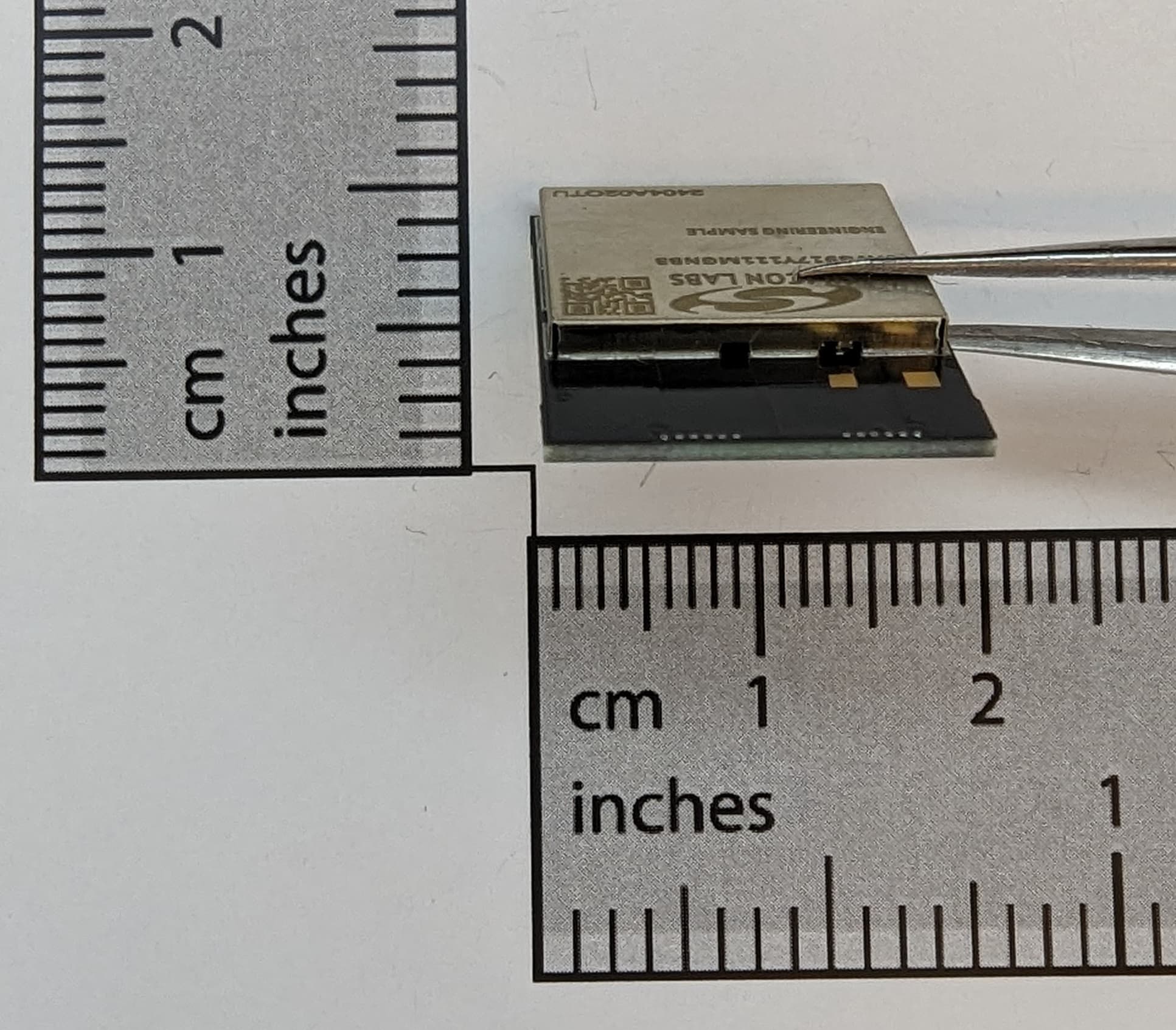
QOQ-917AC
Sep 23, 2024Bluetooth Low Energy (LE), and Wi-Fi 802.11b/g/n/ax wireless radio module
Equipment Class
DTS - Digital Transmission System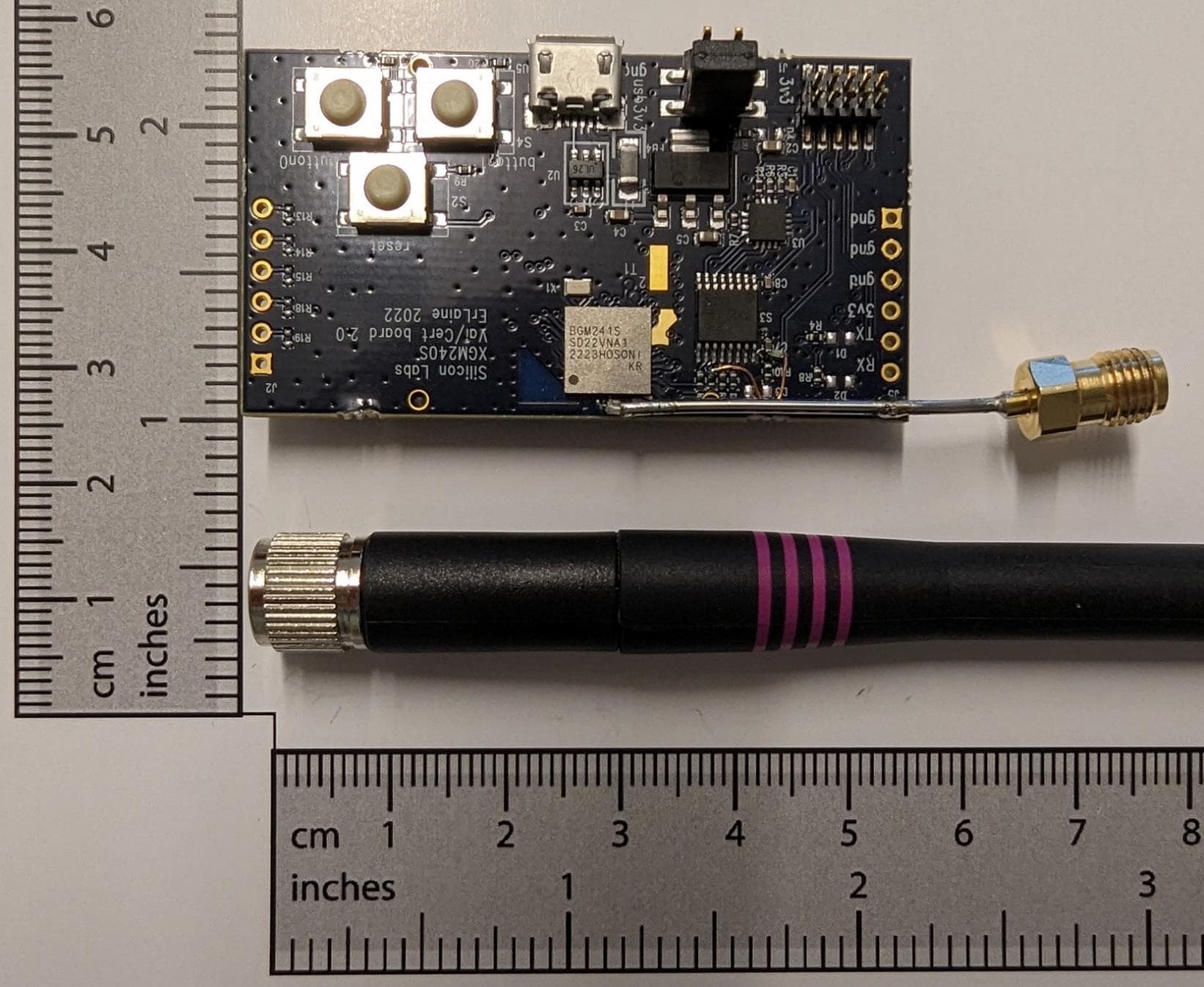
QOQ-GM241S
Sep 05, 2023Bluetooth Low Energy wireless radio module with Channel Sounding
Equipment Class
DTS - Digital Transmission System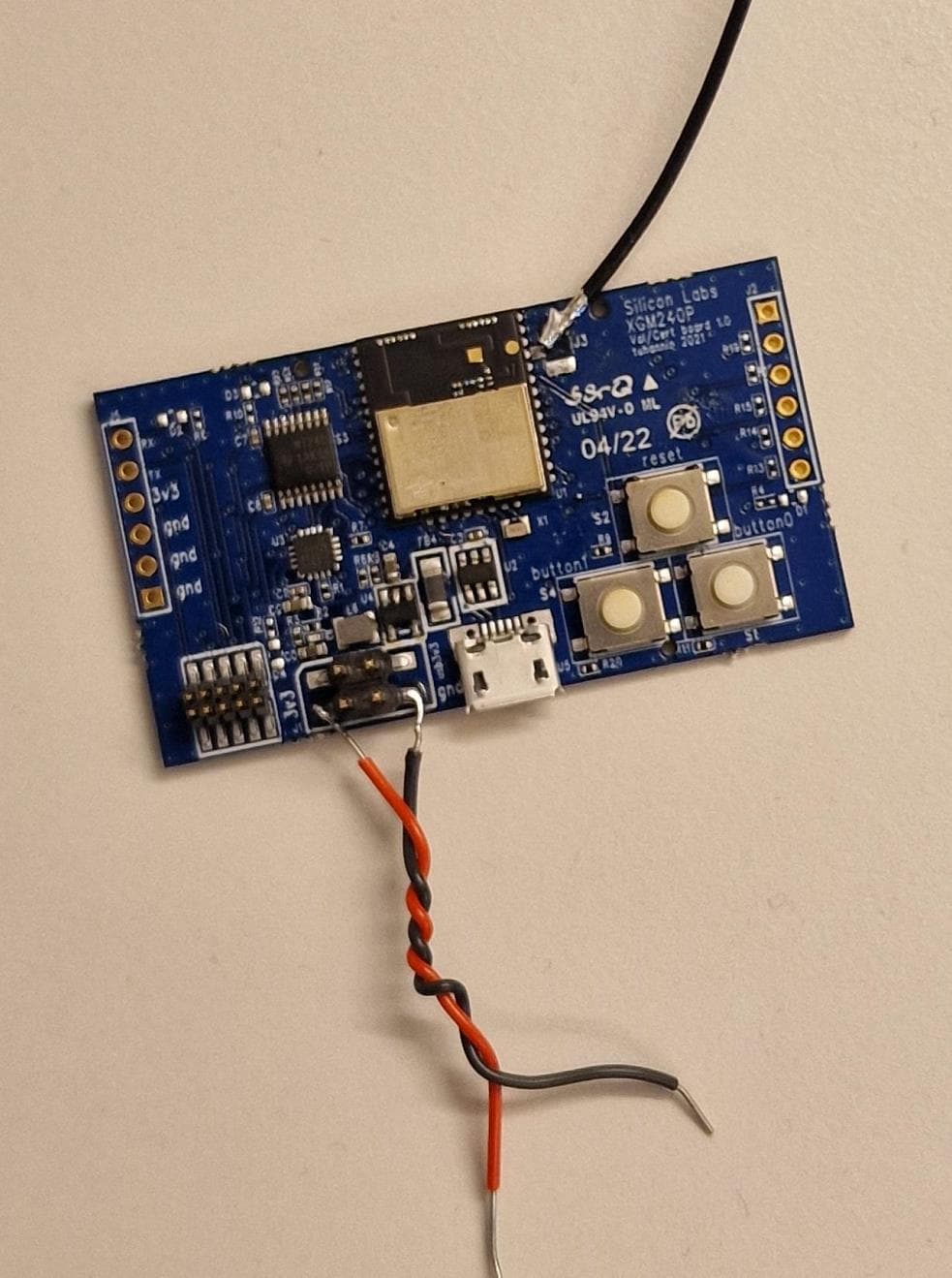
QOQ-GM240P
Aug 25, 2022Bluetooth Low Energy and 802.15.4 wireless radio module
Equipment Class
DTS - Digital Transmission System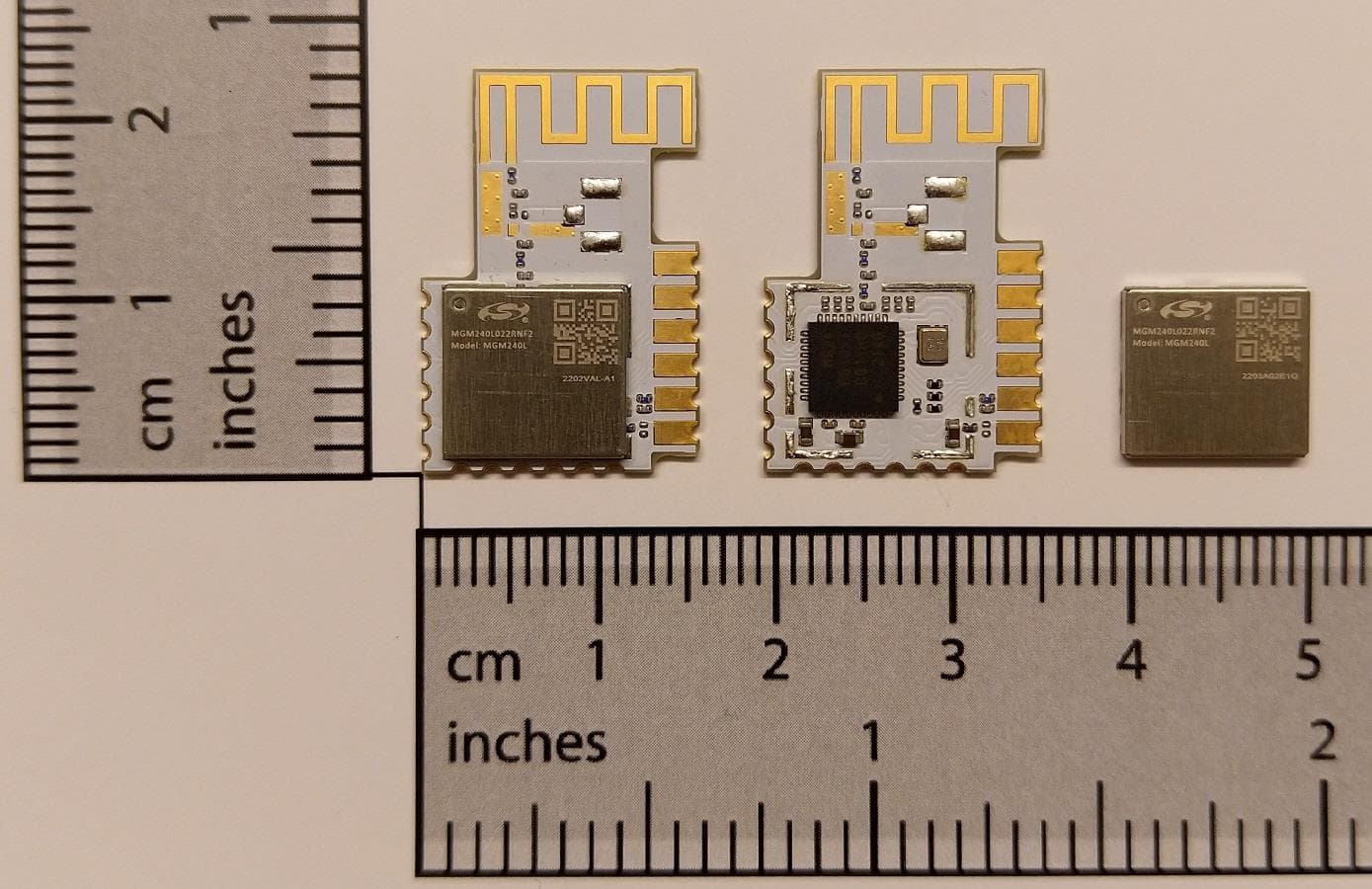
QOQ-MGM240L
Aug 20, 2022Radio Module with BLE and 802.15.4
Equipment Class
DTS - Digital Transmission System