QYDBT410H01Bluetooth Mobile Headset
KINGENE Technology Corporation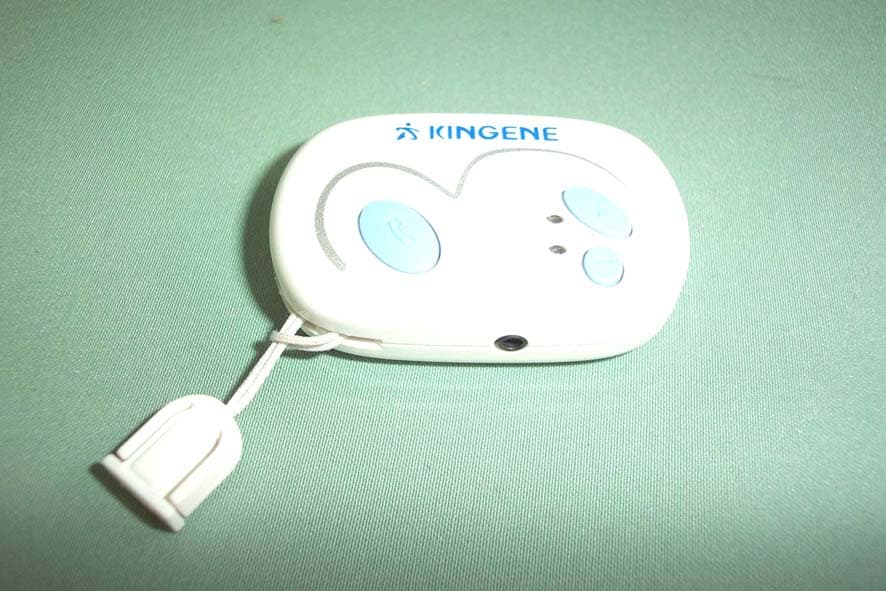
Click to zoom
Application Details
- Equipment Class
- DSS - Part 15 Spread Spectrum Transmitter
- Date of Grant
- Mar 25, 2004
- Application Purpose
- Original Equipment
- Date of Application
- Mar 25, 2004
- Equipment Note
- Bluetooth Mobile Headset
- Frequency Range
- 2402.00000000 - 2480.00000000
- Country
- Taiwan
Documents & Files
Document Text
Text extracted from the exhibit documents filed with the FCC. Open a document above to read the original.
Users Manual
m 1 Bluetooth Mobile Headset BT410H User Manual m 2 Copyright disclosure The product itself, together with accessories, user manual and packing, remains the proprietary property of the company. It is forbidden to duplicate, imitate, transcribe or translate via any means without prior authorization from the company. The operating description, product specifications and related information disclosed in this user manual are intended as references, and the company cannot be held liable to damages arisen from erroneous use or those other than the intended purposes; the manual may from time to time be modified without separate notice. Note: The Bluetooth trademarked is the property of Bluetooth SIG, Inc. Index 1. Introduction About the Bluetooth Mobile Headset Thank you for purchasing the product. The BT401H, featuring a Bluetooth Mobile Headset that can be worn around the neck, offers the cutting edge Bluetooth wireless communications technique that links the product to talk to your Bluetooth handset allowing you to receive incoming calls with the product within a ten-meter radius of your handset in a complete hands-free convenience. More than the greatly enhanced mobility and convenience, its unique #4 battery design makes it infinitely more accessed when you are on the road or traveling that frees you from having to constantly recharge the unit. Please take a few minutes to peruse the user manual and be cautioned of operating details, and refer to the manual whenever you need references in pairing the product with your Bluetooth handset ensuring a complete compatibility between the product and your Bluetooth handset. We thank you once again for purchasing our product. Origin of Bluetooth Bluetooth, a short-distance wireless communications technology characterized by short-distance communication of low power consumption and interference resistant, helps you to streamline various peripheral electronic products and interconnects, under the same wireless frequency band, for intercommunication among your handset, PC, PDA, Bluetooth Mobile Headset, printer, keyboard, mouse and so on, forming a minute, personalized wireless communication network. Now won’t you join us to enjoy the sensation of brought by Bluetooth. Product overview 8Product kit The standard product kit consists of, m 3 1). One BT401H unit. 2). One AAA battery. 3). One earphone. 4). One user manual. 8Appearance introduction 1). connect /disconnect button 2). volume up button 3). volume down button 4). earphone jack 5). the earphone 6). the RF LED 7). the status LED 8). the battery door 9). the hanging jack About he battery The Bluetooth Mobile Headset, incorporate an AAA battery design, allows you to instantly power the unit with the battery included in the starter kit, and can be replaced with standard AAA alkaline batteries whenever the power runs low, or to recharge the lithium battery. The actual talk time of the Bluetooth Mobile Headset may vary according to the battery type and state of operations. About the earphone The Bluetooth Mobile Headset’s earphone comes with a microphone and earphone, which you can freely adjust to a comfortable wearing position, and have the front hanging wire looped though the Bluetooth earphone hang hole at the front of earphone knob before inserting the earphone jack into the Bluetooth earphone port to complete the assembly. m 4 2. Product initiation Installing and replacing the battery When using the unit for the first time or in subsequent battery replacement, please refer to the following steps to replace the battery: 1). Push outward the battery cover on the backside of the unit. 2). Remove the battery when it is time to replace a new battery. 3). Replace with a new battery by following the positive and negative polarities as marked in the battery chamber. 4). Reload the battery cover and ascertain that the battery cover is securely fastened. Switching the power On/Off When the headset is power on mode and the “Connect” button is pressed down for three seconds, the LED indicator will goes off as the headset enters power off status. m 5 When the headset is power off mode and the “Connect” button is pressed down for three seconds, the LED indicator will begin to flicker as the headset is reverted to its previous mode. Paring with Bluetooth mobile phone Prior to operating the Bluetooth Mobile Headset, you have to pair it with your Bluetooth mobile phone for establish a Bluetooth identification, a process that is described as pairing; please following the hereunder steps to complete the pairing process 1). Ensure that both your Bluetooth mobile phone and Bluetooth Mobile Headset are power on. 2). Depending on your Bluetooth mobile phone support Bluetooth Mobile Headset profile or hands-free profile and turn the Bluetooth Mobile Headset setting to a corresponding pair mode. The Bluetooth Mobile Headset set as headset profile for initial setting, where under the paired status, you would then press ‘Volume Up’ to access the ‘Hands-free profile’ mode. [Note 1] 3). Find the Bluetooth voice accessories from your Bluetooth mobile phone, please select the BT315H and key in a four-digit pair number‘1234’ to complete the pairing process. [Note 2] 4) Under the pairing mode, the blue and red LED indicators will flicker alternately, and as you have completed the pairing process, the red LED will stop flicker to indicate hat the pair has succeeded as the unit enters a standby mode. [Notes 3 and 4] Note 1: The hands-free profile supports the redial function, whereas the headset profile does not. Note 2: As the functions may vary from one brand to another, please refer to your Bluetooth mobil phone manual for additional description, bear in mind that the headset is to be kept within a 10-meter radius from your Bluetooth mobile phone during the pairing process. Note 3: please refer to the LED indicator status signal to determine the headset’s operating mode; if the signals should be jammed, plea…
Text truncated - open the document above for the full version.
External Photos
Compliance Certification Services Inc. Report No: B30910204 Date of Issue: December 23, 2003 Page 1 EXTERNAL PHOTOGRPHS OF EUT Compliance Certification Services Inc. Report No: B30910204 Date of Issue: December 23, 2003 Page 2 Compliance Certification Services Inc. Report No: B30910204 Date of Issue: December 23, 2003 Page 3
ID Label/Location Info
Bluetooth Mobile Headset Model no:BT410H Input Voltage:1.5V, 20mA S/N:****** FCC ID:QYDBT410H01 0984 KINGENE Technology Corporation
Internal Photos
Compliance Certification Services Inc. Report No: B30910204 Date of Issue: December 23, 2003 Page 4 INTERNAL PHOTOGRPHS OF EUT Compliance Certification Services Inc. Report No: B30910204 Date of Issue: December 23, 2003 Page 5
Parts List/Tune Up Info
UART_RX U3 MO210 343332 182019211214232281079 17163130292827262524 1311 45 6 1 15 23 GNDRFGND PCM_OUT PCM_IN PCM_SYNC PCM_CLK UART_TX UART_RX D- D+ SPI_CSB SPI_MOSISPI_MISO SPI_CLK GND+3.3VPIO0PIO1PIO2PIO3PIO4PIO5PIO6PIO7 UART_RTSUART_CTS AIO0AIO1 RESET PIO9+1.8VPIO10PIO11 SPI_CLK TEST PADS C347uF PCM_IN PIO4 EARPHONEUART_RTS PIO3 TALK PIO2 UART_CTS R8 10K SPI_MISO R151M SPI_MOSI C24.7uF PIO2 PCM_CLK C101uF VOUT=3.3V VCC UART_CTS U1 LTC3400 1 64 2 35 SW VINSHDN GND FB VOUT R31K SW2 SMD TACT 6*3.6 PIO3 R1233K VBATT_DIVIDED R1822K PCM_SYNC Springs for AAA Battery PIO4 SPI_CSB J1LJE0260-3RT 123 C8 470pF C110.1uF UART_TX C14.7uF D2 0603 Red PIO5 C130.01uF R7 1K MIC R522K PIO0 R2022K VCC R143.3 U2 CABPB0730A 12 FeedGND C60.1uF - TP2 00555-900 VAG VCC EARPHONE SPI_MISO VOL- R101M L14.7uH VCC R1922K PIO0 SPI_MOSI R16330 C120.1uF R11 22K UART_RTS PCM_OUT R13100 VBATT SPI_CLK VFB=1.23V UART_RX MIC SPI_CSB C947uF VCC VCC R1560KR2330K D1 0603 Blue VBATT R9 1K SW3 SMD TACT 6*3.6 C447uF CODEC_PDN C70.1uF VOL+ VCC SW1 SMD TACT 6*3.6 C140.1uF U4 MC145483 6 15 201 1610 1918172345 11141213 798 VddVss VAG VAGRef HBPDI TI+ TI- TG RO- PI PO- PO+ MCLKFSTBCLKTDTFSRBCLKRDR UART_TX C5 470pF 40*40mil PAD R410K + TP1 00553-000 R633K R17330 PIO5 KINGENE Technology Corporation Bluetooth Mobile Headse t Model number:BT410H
Test Report
Compliance Certification Services Inc. Report No: B30910204-RP FCC ID: QYDBT410H01 Date of Issue: November 28, 2003 Note: This report shall not be reproduced except in full, without the written approval of Compliance Certification Services Inc. This document may be altered or revised by Compliance Certification Services Inc. personnel only, and shall be noted in the revision section of the document Page 1 of 45 FCC 47 CFR PART 15 SUBPART C TEST REPORT For KINGENE Technology Corporation Bluetooth Mobile Headset Model: BT410H Trade Name: KINGENE Prepared for KINGENE Technology Corporation 7F, No144, Sec. 3, Minchuan E. Road, Taipei Taiwan, R.O.C. Prepared by Compliance Certification Services Inc. No. 81-1, Lane 210, Bade Rd. 2, Luchu Hsiang, Taoyuan Hsien, (338) Taiwan, R.O.C. TEL: 886-3-324-0332 FAX: 886-3-324-5235 Compliance Certification Services Inc. Report No: B30910204-RP FCC ID: QYDBT410H01 Date of Issue: November 28, 2003 Page 2 TABLE OF CONTENTS 1. TEST RESULT CERTIFICATION .......................................................................................... 3 2. EUT DESCRIPTION ................................................................................................................ 4 3. TEST METHODOLOGY......................................................................................................... 5 3.1. EUT CONFIGURATION ...................................................................................................... 5 3.2. EUT EXERCISE.................................................................................................................... 5 3.3. GENERAL TEST PROCEDURES ....................................................................................... 5 3.4. FCC PART 15.205 RESTRICTED BANDS OF OPERATIONS ......................................... 6 3.5. DESCRIPTION OF TEST MODES ...................................................................................... 6 4. INSTRUMENT CALIBRATION ............................................................................................. 7 5. FACILITIES AND ACCREDITATIONS ................................................................................ 8 5.1. FACILITIES .......................................................................................................................... 8 5.2. EQUIPMENT ........................................................................................................................ 8 5.3. LABORATORY ACCREDITATIONS AND LISTING....................................................... 8 5.4. TABLE OF ACCREDITATIONS AND LISTINGS............................................................. 9 6. SETUP OF EQUIPMENT UNDER TEST ............................................................................. 10 6.1. SUPPORT EQUIPMENT .................................................................................................... 10 7. FCC PART 15.247 REQUIREMENTS .................................................................................. 11 7.1. PEAK POWER .................................................................................................................... 11 7.2. BAND EDGES MEASUREMENT ..................................................................................... 12 7.3. FREQUENCY SEPARATION............................................................................................ 17 7.4. NUMBER OF HOPPING FREQUENCY ........................................................................... 19 7.5. TIME OF OCCUPANCY (DWELL TIME)........................................................................ 21 7.6. RADIO FREQUENCY EXPOSURE .................................................................................. 29 7.7. SPURIOUS EMISSIONS .................................................................................................... 30 7.8. POWERLINE CONDUCTED EMISSIONS .......................................................................... 43 Compliance Certification Services Inc. Report No: B30910204-RP FCC ID: QYDBT410H01 Date of Issue: November 28, 2003 Page 4 2. EUT DESCRIPTION Product Bluetooth Mobile Headset Trade Name KINGENE Model Number BT410H Model Discrepancy N/A Power Supply AAA Size Output: DC +1.5V Frequency Range 2402 – 2480MHz Transmit Power 1.89 dBm Modulation Technique GFSK Number of Channels 79 Channels Antenna Designation Ceramic Patch Antenna (Max: -1 dBi) Note: This submittal(s) (test report) is intended for FCC ID: QYDBT410H01 filing to comply with Section 15.207, 15.209 and 15.247 of the FCC Part 15, Subpart C Rules. Compliance Certification Services Inc. Report No: B30910204-RP FCC ID: QYDBT410H01 Date of Issue: November 28, 2003 Page 5 3. TEST METHODOLOGY The tests documented in this report were performed in accordance with ANSI C63.4. Radiated testing was performed at an antenna to EUT distance 3 meters. 3.1. EUT CONFIGURATION The EUT configuration for testing is installed on RF field strength measurement to meet the Commissions requirement and operating in a manner that intends to maximize its emission characteristics in a continuous normal application. 3.2. EUT EXERCISE The EUT was operated in the engineering mode to fix the Tx frequency that was for the purpose of the measurements. According to its specifications, the EUT must comply with the requirements of the Section 15.207, 15.209 and 15.247 under the FCC Rules Part 15 Subpart C. The composite system (Digital device) is compliance with the Subpart B is authorized under the DoC procedure. 3.3. GENERAL TEST PROCEDURES Conducted Emissions The EUT is placed on the turntable, which is 0.8 m above ground plane. According to the requirements in Section 13.1.4.1 of ANSI C63.4.Conducted emissions from the EUT measured in the frequency range between 0.15 MHz and 30MHz using CISPR Quasi-peak and average detector modes. Radiated Emissions The EUT is placed on a turn table, which is 0.8 m above ground plane. The turntable shall rotate 360 degrees to…
Text truncated - open the document above for the full version.
Test Setup Photos
Compliance Certification Services Inc. Report No: B30910204-RP FCC ID: QYDBT410H01 Date of Issue: November 28, 2003 Page 45 APPENDIX 1 PHOTOGRPHS OF TEST SETUP Radiated Emission Set up Photos
Contact Information
Applicant
Ric Chen(Sales Manager)
Test Firm
Compliance Certification Services Inc.Tony Houng
Technical Specifications
| # | Rule Parts | Frequency Range | Power Output |
|---|---|---|---|
| 1 | 15C | 2.40 GHz - 2.48 GHz | 1.50 mW |
Other Applications from KINGENE Technology Corporation
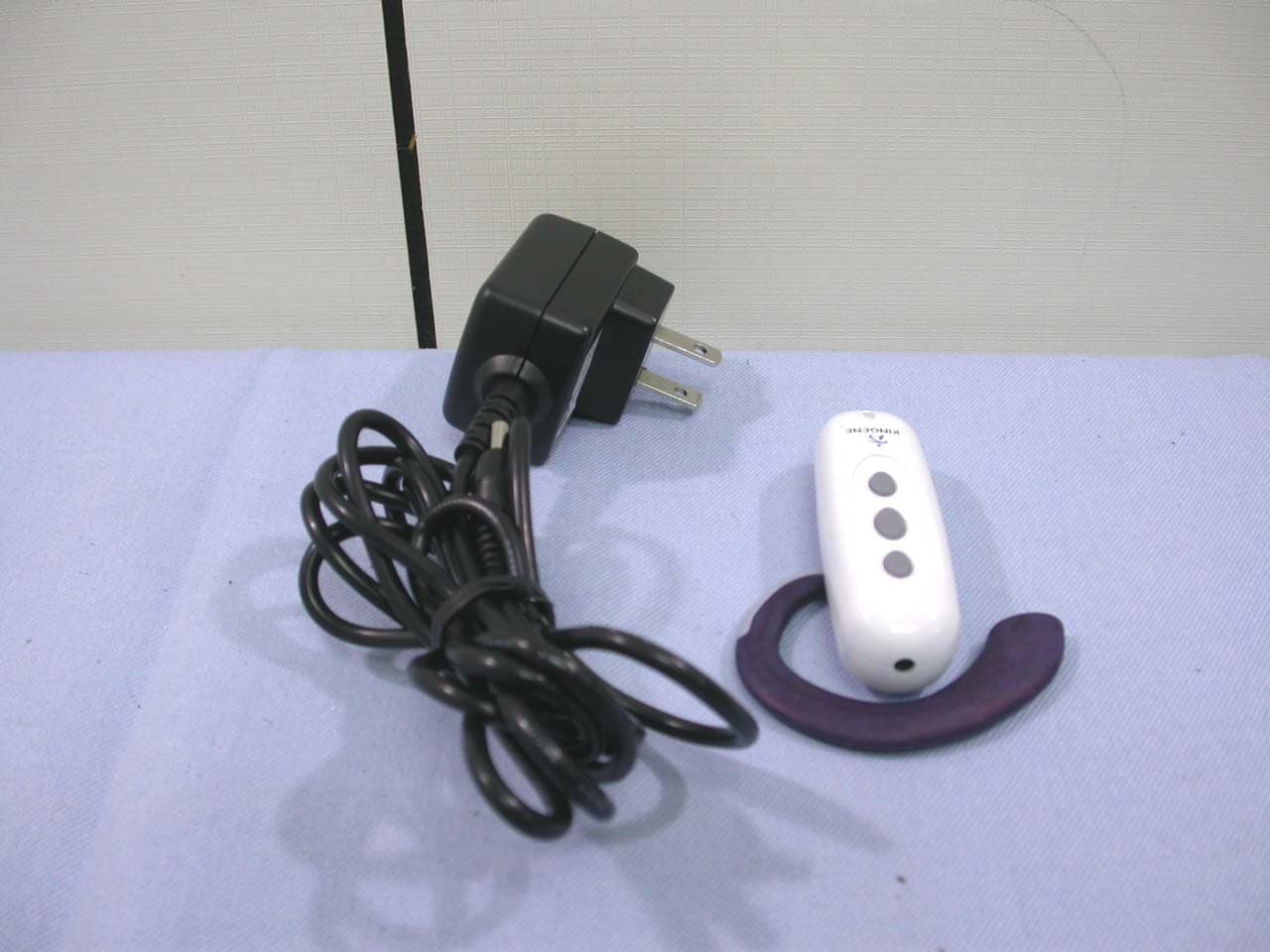
QYDBT315H01
Mar 25, 2004Bluetooth Mobile Headset
Equipment Class
DSS - Part 15 Spread Spectrum Transmitter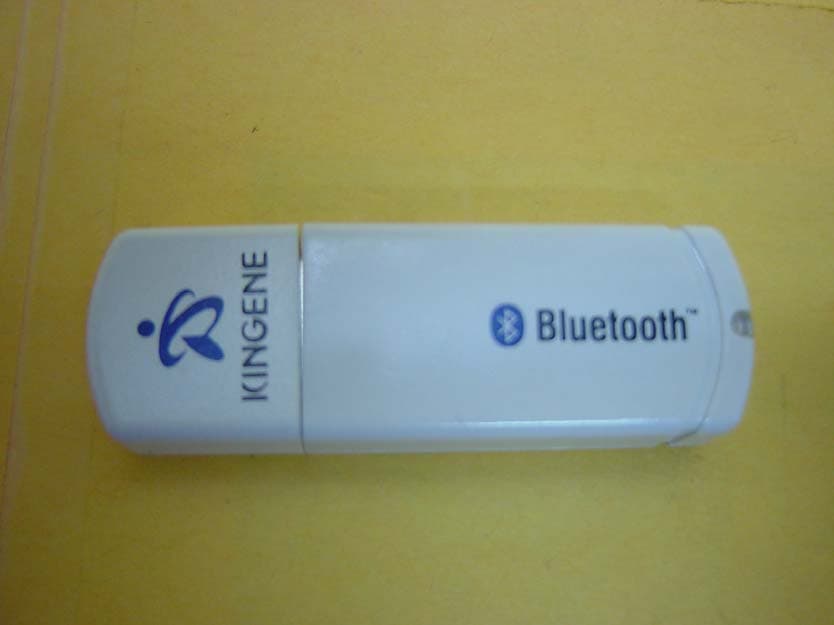
QYDBT410D01
Apr 29, 2003Bluetooth USB Bongle
Equipment Class
DSS - Part 15 Spread Spectrum Transmitter