RAD062GSM 850/1900MHz Mobile phone with BT
TCT Mobile Limited
Click to zoom
Application Details
- Equipment Class
- PCE - PCS Licensed Transmitter held to ear
- Date of Grant
- May 13, 2007
- Application Purpose
- Original Equipment
- Date of Application
- May 13, 2007
- Equipment Note
- GSM 850/1900MHz Mobile phone with BT
- Frequency Range
- 1850.20000000 - 1909.80000000
- Company
- TCT Mobile Limited
- Country
- China
Documents & Files
Document Text
Text extracted from the exhibit documents filed with the FCC. Open a document above to read the original.
Users Manual
English - T5001779AAAA 01 IS A TRADEMARK, OWNED BY HACHETTE FILIPACCHI PRESSE S.A., PARIS, FRANCE. MANUFACTURED AND DISTRIBUTED BY T&A MOBILE PHONES LIMITED UNDER LICENSE FROM HACHETTE FILIPACCHI PRESSE S.A., PARIS, FRANCE ELLE N°3_UM_USA_10-05-07 10/05/07 12:31 Page 1 Table of contents ........................Safety and use ......................................................................5General information..........................................................101. Your mobile ..................................................................12 1.1 Keys ......................................................................................................13 1.2 Main screen icons ..............................................................................15 2. Getting started ............................................................17 2.1 Set-up....................................................................................................17 2.2 Power on your phone ......................................................................19 2.3 Power off your phone ......................................................................20 3. Calls ..............................................................................21 3.1 Making a call........................................................................................21 3.2 Calling your voicemail ......................................................................21 3.3 Receiving a call ..................................................................................22 3.4 During the call ....................................................................................23 3.5 Conference calls ................................................................................24 3.6 Line switching ....................................................................................25 4. Menu..............................................................................265. Call log ..........................................................................28 5.1 Call memory ......................................................................................28 5.2 My numbers ........................................................................................28 5.3 Billing ....................................................................................................29 5.4 Call settings ........................................................................................29 6. Directory ......................................................................32 6.1 Consulting your directory ..............................................................32 6.2 Creating a file......................................................................................34 6.3 Available options................................................................................34 2 Introduction ................................T&A Mobile phones would like to thank you for purchasing this mobile.Power music player/video player• With playlist, lyrics display and equalizer• Full screen video playback• Watch the show on 2.0” TFT screenUnlimited video recording• Shoot video clips as long as you want (1) USB mass storageSimply a USB key.WebcamThe best companion for PC instant messaging.Bluetooth• Bluetooth 2.0• A2DP profile (Bluetooth stereo) 1 (1) Depending on battery and free memory. ELLE N°3_UM_USA_10-05-07 10/05/07 12:31 Page 1 12. Media album ................................................................57 12.1 My audios ............................................................................................5712.2 My images ............................................................................................5812.3 My videos ............................................................................................5812.4 My creations........................................................................................5812.5 Unknown files ....................................................................................5812.6 Memory card ......................................................................................5912.7 Managing audios, images, videos and creations ..........................6012.8 Formats and compatibility ..............................................................6112.9 Memory status....................................................................................61 13. Photo & Video ..............................................................62 13.1 Access ..................................................................................................6213.2 Photo ....................................................................................................6213.3 Video ....................................................................................................64 14. Music player ..................................................................67 14.1 Music player ........................................................................................6714.2 Settings ................................................................................................6814.3 Playing with lyrics ..............................................................................68 15. Games & Applications ................................................69 15.1 Launch an application........................................................................6915.2 Java settings ........................................................................................6915.3 Java downloading................................................................................69 16. Making the most of your mobile................................71 16.1 PC suite................................................................................................71 17. Latin input mode/Character table ............................7218. Telephone warranty ...................................................…
Text truncated - open the document above for the full version.
Users Manual
7.1.3 Unsent All failed to be sent messages.7.1.4 Sent All sent messages.7.1.5 Drafts All drafts messages.7.1.6 WAP alerts Store WAP push messages.7.1.7 Empty folder Delete all messages in “ Inbox/Unsent/Sent/Drafts ”. 7.1.8 Templates A list of predefined messages is available. Select one, edit it if required, andthen send it.You can also create your own predefined text messages. 38 You can save your messages that you send often to Drafts or Templates . An SMS message of more than 160 characters (the number ofcharacters depends on the languages you writing in) will becharged as several SMS. An MMS message containing photosand/or sounds may also be billed as more than one message. 7.1.2 Inbox All received messages (read and unread) are stored in the same Inbox.When viewing your messages, you will find the following status icons,depending on the type of message: unread SMS in phone, unread SMS in SIM card, read SMS in phone, read SMS in SIM card, unread MMS in phone, read MMS in phone, message reception in progress and message sending in progress. Receiving and reading SMS/MMSWhen your receive a new message, the following message is displayed: “ X new message! ”, a beep sounds, the icon shows up, a line with the number of messages appears on the screen. Select this line and press to read it directly from the main screen.Once you have read the message, the following options are given: Reply , Forward the message to another person, Edit , Delete , Delete all and extract number or URL ( Use number/Use URL ). 37 ELLE N°3_UM_USA_10-05-07 10/05/07 12:32 Page 37 40 (1) Depending on your network operator. 7.6.2 Multimedia message Edit • Set edit mode, image size and signature. Sending • Set the values for validity period, Read report, etc. Retrieve • Set the values for Home network, Roamingnetwork, etc. Filter • Set criteria for filtering. Profiles • Follow the same procedure as for setting your WAPconnection. Memory status • Memory used on the phone. 7.6.3 Broadcast SMS (1) Receive mode • Enable to receive broadcast SMS. Read message • Store the received messages. Language • Language selection. Channel setting • Add/Edit channels. (1) Depending on your network operator. 7.2 Voice message Record voice and send as MMS.7.3 Photo message Take a photo and send as MMS.7.4 Video message Take a video and send as MMS.7.5 Voicemail All vocal messages received.7.6 Settings 7.6.1 Text message Profile settings • Profiles can be retrieved directly from SIM card.Alternatively, you can create your own profile. General setting • Delivery report, request for acknowledgement ofdelivery report On/Off. Reply path (1) show reply path. Memory status • Memory used on the phone. Preferred • Select default message storage, SIM or phone. storagePref. Bearer • Bearer preference. 39 (1) Depending on your network operator. ELLE N°3_UM_USA_10-05-07 10/05/07 12:32 Page 39 8.1.2 Mode You may set your phone ringtone to Normal, Discreet (ring with beep),Vibrate (all sounds are replaced by vibrations except for alarms), Vibrateand ring,Vibrate then ring, Beep and vibrate, Silence (no sounds except foralarms, the icon will be displayed). Ringtones sound with increasing volume. 8.2 Color This function enables you to customise the graphic style and the coloursof your telephone.8.3 Slider settings 8.3.1 Slider open answer You can decide whether you want to automatically answer the call whenyou slide open the phone.The default setting is “ On ”. 8.3.2 Slider close options You can decide whether you want to continue or stop the runningapplication when you slide close the phone. The default setting is “ Stop application ”. 42 8 My settings ...................... From the main screen, select the icon menu and select the function of your choice in order to customise your telephone.8.1 Ringtones 8.1.1 Available functions To modify the sound settings, select an option using the key: Select a melody from the list using the key then confirm by pressing (see page 67). Mode (normal, discreet, vibrate...).Adjust the volume using the key.Select the type of key beep.Select a melody for a new incoming message.Select a melody for an alarm or appointment.Power on beep.Power off beep.Slider beep. 41 ELLE N°3_UM_USA_10-05-07 10/05/07 12:32 Page 41 8.7 Display 8.7.1 Main screen The main screen is displayed when you switch on your telephone.You can access the main functions from the main screen either with thenavigation key or by pressing and by selecting the icons displayed on the screen (1) . By selecting “ Main screen ” you can customise it by replacing the default image or animation displayed on your telephone. When you receive an event (incoming call, SMS/MMS,notifications, etc.) the icon, type and number of events will bedisplayed on your main screen allowing you to consult themdirectly. 8.7.2 Screen saver If you activate this option, the screen saver will be displayed a little whileafter the main screen. You can choose a picture, an animation, or a videoas your screen saver. 44 (1) Depending on the operator. 8.4 Theme The “ Theme ” menu allows you to customise your telephone to suit your own taste.You can modify several customizable items at the same time.When using the telephone for the first time, a default “ Theme ” is activated.Even if you choose a Theme, you can still modify the elements in it one byone.You can reactivate any Theme at any time.When changing a Theme, an installation screen appears until the eightelements are installed. The installation of the Theme can be stopped and cancelled if youreceive an incoming call or if you press the right softkey; theprevious choice of Theme is kept. 8.5 Antenna off mode Antenna off mode, under which you will have no voice call, Bluetooth ormessaging functions, can be used to increase music playback time.8.6 Equalizer You can choose and adapt the different music style preset. 43 ELLE N°3_UM_USA_10-05-07 10/05/07 12:32 Page 43 8.9.2 Keypad By customising your keys, you can call someone or access a func…
Text truncated - open the document above for the full version.
External Photos
Telecommunication Metrology Center of Ministry of Information Industry No. 2007TAR007 Page 48 of 55 ANNEX B PHOTOGRAPHS OF EUT External Photo Mobile Phone Mobile Phone Telecommunication Metrology Center of Ministry of Information Industry No. 2007TAR007 Page 49 of 55 Mobile Phone Mobile Phone Telecommunication Metrology Center of Ministry of Information Industry No. 2007TAR007 Page 51 of 55 Internal Photo Mobile phone Disassembly Mobile phone Disassembly Telecommunication Metrology Center of Ministry of Information Industry No. 2007TAR007 Page 52 of 55 Mobile phone Disassembly Mobile phone Disassembly Telecommunication Metrology Center of Ministry of Information Industry No. 2007TAR007 Page 53 of 55 Mobile phone Disassembly Mobile phone Disassembly Telecommunication Metrology Center of Ministry of Information Industry No. 2007TAR007 Page 54 of 55 Mobile phone Disassembly Mobile phone Disassembly
Internal Photos
Telecommunication Metrology Center of Ministry of Information Industry No. 2007TAR007 Page 48 of 55 ANNEX B PHOTOGRAPHS OF EUT External Photo Mobile Phone Mobile Phone Telecommunication Metrology Center of Ministry of Information Industry No. 2007TAR007 Page 49 of 55 Mobile Phone Mobile Phone Telecommunication Metrology Center of Ministry of Information Industry No. 2007TAR007 Page 51 of 55 Internal Photo Mobile phone Disassembly Mobile phone Disassembly Telecommunication Metrology Center of Ministry of Information Industry No. 2007TAR007 Page 52 of 55 Mobile phone Disassembly Mobile phone Disassembly Telecommunication Metrology Center of Ministry of Information Industry No. 2007TAR007 Page 53 of 55 Mobile phone Disassembly Mobile phone Disassembly Telecommunication Metrology Center of Ministry of Information Industry No. 2007TAR007 Page 54 of 55 Mobile phone Disassembly Mobile phone Disassembly
RF Exposure Info
No. 2007SAR00016 Page 4 of 141 ©Copyright. All rights reserved by TMC Beijing. 1 Test Laboratory 1.1 Testing Location Company Name: TMC Beijing, Telecommunication Metrology Center of MII Address: No 52, Huayuan beilu, Haidian District, Beijing,P.R.China Postal Code: 100083 Telephone: +86-10-62303288 Fax: +86-10-62304793 1.2 Testing Environment Temperature: Min. = 15 °C, Max. = 30 °C Relative humidity: Min. = 30%, Max. = 70% Ground system resistance: < 0.5 Ω Ambient noise is checked and found very low and in compliance with requirement of standards. Reflection of surrounding objects is minimized and in compliance with requirement of standards . 1.3 Project data Project Leader: Qi Dianyuan Test Engineer: Sun Qian Testing Start Date: April 12, 2007 Testing End Date: April 18, 2007 2 Client Information 2.1 Applicant Information Company Name: T&A Mobile Phones Address /Post: 4F, South Building, No.2966, JinKe Road, Zhangjiang High-Tech Park Shanghai 201203, P.R.China City: Shanghai Postal Code: 201203 Country: P. R. China Telephone: 0086-21-61460883 Fax: 0086-21-61460602 2.2 Manufacturer Information Company Name: T&A Mobile Phones Address /Post: 4F, South Building, No.2966, JinKe Road, Zhangjiang High-Tech Park Shanghai 201203, P.R.China City: Shanghai Postal Code: 201203 Country: P. R. China Telephone: 0086-21-61460883 Fax: 0086-21-61460602 No. 2007SAR00016 Page 5 of 141 ©Copyright. All rights reserved by TMC Beijing. 3 Equipment Under Test (EUT) and Ancillary Equipment (AE) 3.1 About EUT Description: Elle N3 BLUETOOTH JEWEL Model: EL03A Frequency Band: 850 MHz/ 1900 MHz Picture 1: Constituents of the sample (Lithium Battery is in the Handset) 3.2 Internal Identification of EUT used during the test EUT ID* SN or IMEI HW Version SW Version EUT1 011199000101805 PIO v271 *EUT ID: is used to identify the test sample in the lab internally. 3.3 Internal Identification of AE used during the test AE ID* Description Model SN Manufacturer AE1 Lithium Battery T5000554AAAA B249650571A BYD AE2 AC/DC Adapter T5000436AGAA / Tenpao *AE ID: is used to identify the test sample in the lab internally. No. 2007SAR00016 Page 6 of 141 ©Copyright. All rights reserved by TMC Beijing. 4 OPERATIONAL CONDITIONS DURING TEST 4.1 Schematic Test Configuration During SAR test, EUT is in Traffic Mode (Channel Allocated) at Normal Voltage Condition. A communication link is set up with a System Simulator (SS) by air link, and a call is established. The Absolute Radio Frequency Channel Number (ARFCN) is allocated to 128, 190 and 251 respectively in the case of GSM 850 MHz, or to 512, 661 and 810 respectively in the case of PCS 1900 MHz. The EUT is commanded to operate at maximum transmitting power. The EUT shall use its internal transmitter. The antenna(s), battery and accessories shall be those specified by the manufacturer. The EUT battery must be fully charged and checked periodically during the test to ascertain uniform power output. If a wireless link is used, the antenna connected to the output of the base station simulator shall be placed at least 50 cm away from the handset. The signal transmitted by the simulator to the antenna feeding point shall be lower than the output power level of the handset by at least 30 dB. 4.2 SAR Measurement Set-up These measurements were performed with the automated near-field scanning system DASY4 Professional from Schmid & Partner Engineering AG (SPEAG). The system is based on a high precision robot (working range greater than 0.9m) which positions the probes with a positional repeatability of better than ± 0.02mm. Special E- and H-field probes have been developed for measurements close to material discontinuity, the sensors of which are directly loaded with a Schottky diode and connected via highly resistive lines (length =300mm) to the data acquisition unit. A cell controller system contains the power supply, robot controller, teaches pendant (Joystick), and remote control, is used to drive the robot motors. The PC consists of the Micron Pentium III 800 MHz computer with Windows 2000 system and SAR Measurement Software DASY4, A/D interface card, monitor, mouse, and keyboard. The Stäubli Robot is connected to the cell controller to allow software manipulation of the robot. A data acquisition electronic (DAE) circuit performs the signal amplification, signal multiplexing, AD-conversion, offset measurements, mechanical surface detection, collision detection, etc. is connected to the Electro-optical coupler (EOC). The EOC performs the conversion from the optical into digital electric signal of the DAE and transfers data to the PC plug-in card. Picture 2: SAR Lab Test Measurement Set-up No. 2007SAR00016 Page 7 of 141 ©Copyright. All rights reserved by TMC Beijing. Picture4:ET3DV6 E-fieldprobe The DAE consists of a highly sensitive electrometer-grade preamplifier with auto-zeroing, a channel and gain-switching multiplexer, a fast 16 bit AD-converter and a command decoder and control logic unit. Transmission to the PC-card is accomplished through an optical downlink for data and status information and an optical uplink for commands and clock lines. The mechanical probe mounting device includes two different sensor systems for frontal and sidewise probe contacts. They are also used for mechanical surface detection and probe collision detection. The robot uses its own controller with a built in VME-bus computer. 4.3 Dasy4 E-field Probe System The SAR measurements were conducted with the dosimetric probe ET3DV6 (manufactured by SPEAG), designed in the classical triangular configuration and optimized for dosimetric evaluation. The probe has been calibrated according to the standard procedure with an accuracy of better than ± 10%. The spherical isotropy was evaluated and found to be better than ± 0.25dB. ET3DV6 Probe Specification Construction Symmetrical design with triangular core Built-in optical fiber for surface detection System(ET3DV6 only) Built-in shielding against static charges PEEK encl…
Text truncated - open the document above for the full version.
RF Exposure Info
No. 2007SAR00016 Page 35 of 141 ©Copyright. All rights reserved by TMC Beijing. 850 Left Tilt Middle-with Slide down Date/Time: 2007-4-12 8:30:34 Electronics: DAE3 Sn536 Medium: 850 Head Medium parameters used (interpolated): f = 836.6 MHz; σ = 0.936 mho/m; ε r = 41.4; ρ = 1000 kg/m 3 Ambient Temperature:23.3 o C Liqiud Temperature: 22.5 o C Communication System: GSM 850 Frequency: 836.6 MHz Duty Cycle: 1:8.3 Probe: ET3DV6 - SN1736 ConvF(6.51, 6.51, 6.51) Tilt Middle/Area Scan (51x81x1): Measurement grid: dx=10mm, dy=10mm Maximum value of SAR (interpolated) = 0.128 mW/g Tilt Middle/Zoom Scan (7x7x7)/Cube 0: Measurement grid: dx=5mm, dy=5mm, dz=5mm Reference Value = 7.70 V/m; Power Drift = -0.050 dB Peak SAR (extrapolated) = 0.180 W/kg SAR(1 g) = 0.123 mW/g; SAR(10 g) = 0.085 mW/g Maximum value of SAR (measured) = 0.135 mW/g 0 dB = 0.135mW/g Fig.9 850 MHz CH190 No. 2007SAR00016 Page 36 of 141 ©Copyright. All rights reserved by TMC Beijing. Fig. 10 Z-Scan at power reference point (850 MHz CH190) No. 2007SAR00016 Page 37 of 141 ©Copyright. All rights reserved by TMC Beijing. 850 Left Tilt Low-with Slide down Date/Time: 2007-4-12 8:17:55 Electronics: DAE3 Sn536 Medium: 850 Head Medium parameters used: f = 824.2 MHz; σ = 0.922 mho/m; ε r = 41.5; ρ = 1000 kg/m 3 Ambient Temperature:23.3 o C Liqiud Temperature: 22.5 o C Communication System: GSM 850 Frequency: 824.2 MHz Duty Cycle: 1:8.3 Probe: ET3DV6 - SN1736 ConvF(6.51, 6.51, 6.51) Tilt Low/Area Scan (51x81x1): Measurement grid: dx=10mm, dy=10mm Maximum value of SAR (interpolated) = 0.110 mW/g Tilt Low/Zoom Scan (7x7x7)/Cube 0: Measurement grid: dx=5mm, dy=5mm, dz=5mm Reference Value = 7.45 V/m; Power Drift = -0.200 dB Peak SAR (extrapolated) = 0.146 W/kg SAR(1 g) = 0.107 mW/g; SAR(10 g) = 0.076 mW/g Maximum value of SAR (measured) = 0.117 mW/g 0 dB = 0.117mW/g Fig. 11 850 MHz CH128 No. 2007SAR00016 Page 38 of 141 ©Copyright. All rights reserved by TMC Beijing. Fig. 12 Z-Scan at power reference point (850 MHz CH128) No. 2007SAR00016 Page 39 of 141 ©Copyright. All rights reserved by TMC Beijing. 850 Right Cheek High-with Slide down Date/Time: 2007-4-12 9:51:05 Electronics: DAE3 Sn536 Medium: 850 Head Medium parameters used (interpolated): f = 848.8 MHz; σ = 0.949 mho/m; ε r = 41.3; ρ = 1000 kg/m 3 Ambient Temperature:23.3 o C Liqiud Temperature: 22.5 o C Communication System: GSM 850 Frequency: 848.8 MHz Duty Cycle: 1:8.3 Probe: ET3DV6 - SN1736 ConvF(6.51, 6.51, 6.51) Cheek High/Area Scan (51x81x1): Measurement grid: dx=10mm, dy=10mm Maximum value of SAR (interpolated) = 0.470 mW/g Cheek High/Zoom Scan (7x7x7)/Cube 0: Measurement grid: dx=5mm, dy=5mm, dz=5mm Reference Value = 12.2 V/m; Power Drift = 0.088 dB Peak SAR (extrapolated) = 0.532 W/kg SAR(1 g) = 0.437 mW/g; SAR(10 g) = 0.324 mW/g Maximum value of SAR (measured) = 0.460 mW/g 0 dB = 0.460mW/g Fig. 13 850 MHz CH251 No. 2007SAR00016 Page 40 of 141 ©Copyright. All rights reserved by TMC Beijing. Fig. 14 Z-Scan at power reference point (850 MHz CH251) No. 2007SAR00016 Page 41 of 141 ©Copyright. All rights reserved by TMC Beijing. 850 Right Cheek Middle-with Slide down Date/Time: 2007-4-12 10:03:34 Electronics: DAE3 Sn536 Medium: 850 Head Medium parameters used (interpolated): f = 836.6 MHz; σ = 0.936 mho/m; ε r = 41.4; ρ = 1000 kg/m 3 Ambient Temperature:23.3 o C Liqiud Temperature: 22.5 o C Communication System: GSM 850 Frequency: 836.6 MHz Duty Cycle: 1:8.3 Probe: ET3DV6 - SN1736 ConvF(6.51, 6.51, 6.51) Cheek Middle/Area Scan (51x81x1): Measurement grid: dx=10mm, dy=10mm Maximum value of SAR (interpolated) = 0.388 mW/g Cheek Middle/Zoom Scan (7x7x7)/Cube 0: Measurement grid: dx=5mm, dy=5mm, dz=5mm Reference Value = 11.5 V/m; Power Drift = -0.030 dB Peak SAR (extrapolated) = 0.441 W/kg SAR(1 g) = 0.365 mW/g; SAR(10 g) = 0.273 mW/g Maximum value of SAR (measured) = 0.383 mW/g 0 dB = 0.383mW/g Fig. 15 850 MHz CH190 No. 2007SAR00016 Page 42 of 141 ©Copyright. All rights reserved by TMC Beijing. Fig. 16 Z-Scan at power reference point (850 MHz CH190) No. 2007SAR00016 Page 43 of 141 ©Copyright. All rights reserved by TMC Beijing. 850 Right Cheek Low-with Slide down Date/Time: 2007-4-12 9:37:35 Electronics: DAE3 Sn536 Medium: 850 Head Medium parameters used: f = 824.2 MHz; σ = 0.922 mho/m; ε r = 41.5; ρ = 1000 kg/m 3 Ambient Temperature:23.3 o C Liqiud Temperature: 22.5 o C Communication System: GSM 850 Frequency: 824.2 MHz Duty Cycle: 1:8.3 Probe: ET3DV6 - SN1736 ConvF(6.51, 6.51, 6.51) Cheek Low/Area Scan (51x81x1): Measurement grid: dx=10mm, dy=10mm Maximum value of SAR (interpolated) = 0.323 mW/g Cheek Low/Zoom Scan (7x7x7)/Cube 0: Measurement grid: dx=5mm, dy=5mm, dz=5mm Reference Value = 10.5 V/m; Power Drift = -0.032 dB Peak SAR (extrapolated) = 0.364 W/kg SAR(1 g) = 0.299 mW/g; SAR(10 g) = 0.225 mW/g Maximum value of SAR (measured) = 0.317 mW/g 0 dB = 0.317mW/g Fig. 17 850 MHz CH128 No. 2007SAR00016 Page 44 of 141 ©Copyright. All rights reserved by TMC Beijing. Fig. 18 Z-Scan at power reference point (850 MHz CH128) No. 2007SAR00016 Page 45 of 141 ©Copyright. All rights reserved by TMC Beijing. 850 Right Tilt High-with Slide down Date/Time: 2007-4-12 10:16:51 Electronics: DAE3 Sn536 Medium: 850 Head Medium parameters used (interpolated): f = 848.8 MHz; σ = 0.949 mho/m; ε r = 41.3; ρ = 1000 kg/m 3 Ambient Temperature:23.3 o C Liqiud Temperature: 22.5 o C Communication System: GSM 850 Frequency: 848.8 MHz Duty Cycle: 1:8.3 Probe: ET3DV6 - SN1736 ConvF(6.51, 6.51, 6.51) Tilt High/Area Scan (51x81x1): Measurement grid: dx=10mm, dy=10mm Maximum value of SAR (interpolated) = 0.322 mW/g Tilt High/Zoom Scan (7x7x7)/Cube 0: Measurement grid: dx=5mm, dy=5mm, dz=5mm Reference Value = 14.4 V/m; Power Drift = -0.046 dB Peak SAR (extrapolated) = 0.362 W/kg SAR(1 g) = 0.295 mW/g; SAR(10 g) = 0.217 mW/g Maximum value of SAR (measured) = 0.310 mW/g 0 dB = 0.310mW/g Fig.19 850 MHz CH251 No. 2007SAR00016 Page 46 of 141 ©Copyright. All rights reserved by TMC Beijing. Fig. 20 Z-Scan at power reference point…
Text truncated - open the document above for the full version.
RF Exposure Info
No. 2007SAR00016 Page 90 of 141 ©Copyright. All rights reserved by TMC Beijing. Fig. 64 Z-Scan at power reference point (850 MHz CH128) No. 2007SAR00016 Page 91 of 141 ©Copyright. All rights reserved by TMC Beijing. 850 Body GPRS Toward Phantom High-with Slide up Date/Time: 2007-4-12 15:04:10 Electronics: DAE3 Sn536 Medium: 850 Body Medium parameters used (interpolated): f = 848.8 MHz; σ = 0.99 mho/m; ε r = 55.9; ρ = 1000 kg/m 3 Ambient Temperature:23.3 o C Liqiud Temperature: 22.5 o C Communication System: GSM 850 GPRS Frequency: 848.8 MHz Duty Cycle: 1:4 Probe: ET3DV6 - SN1736 ConvF(6.45, 6.45, 6.45) Toward Phantom High/Area Scan (51x101x1): Measurement grid: dx=10mm, dy=10mm Maximum value of SAR (interpolated) = 0.594 mW/g Toward Phantom High/Zoom Scan (7x7x7)/Cube 0: Measurement grid: dx=5mm, dy=5mm, dz=5mm Reference Value = 24.1 V/m; Power Drift = -0.124 dB Peak SAR (extrapolated) = 0.703 W/kg SAR(1 g) = 0.548 mW/g; SAR(10 g) = 0.402 mW/g Maximum value of SAR (measured) = 0.578 mW/g 0 dB = 0.578mW/g Fig. 65 850 MHz CH251 No. 2007SAR00016 Page 92 of 141 ©Copyright. All rights reserved by TMC Beijing. Fig. 66 Z-Scan at power reference point (850 MHz CH251) No. 2007SAR00016 Page 93 of 141 ©Copyright. All rights reserved by TMC Beijing. 850 Body GPRS Toward Phantom Middle-with Slide up Date/Time: 2007-4-12 15:16:55 Electronics: DAE3 Sn536 Medium: 850 Body Medium parameters used (interpolated): f = 836.6 MHz; σ = 0.977 mho/m; ε r = 56; ρ = 1000 kg/m 3 Ambient Temperature:23.3 o C Liqiud Temperature: 22.5 o C Communication System: GSM 850 GPRS Frequency: 836.6 MHz Duty Cycle: 1:4 Probe: ET3DV6 - SN1736 ConvF(6.45, 6.45, 6.45) Toward Phantom Middle/Area Scan (51x101x1): Measurement grid: dx=10mm, dy=10mm Maximum value of SAR (interpolated) = 0.563 mW/g Toward Phantom Middle/Zoom Scan (7x7x7)/Cube 0: Measurement grid: dx=5mm, dy=5mm, dz=5mm Reference Value = 23.6 V/m; Power Drift = -0.115 dB Peak SAR (extrapolated) = 0.667 W/kg SAR(1 g) = 0.530 mW/g; SAR(10 g) = 0.389 mW/g Maximum value of SAR (measured) = 0.562 mW/g 0 dB = 0.562mW/g Fig. 67 850 MHz CH190 No. 2007SAR00016 Page 94 of 141 ©Copyright. All rights reserved by TMC Beijing. Fig. 68 Z-Scan at power reference point (850 MHz CH190) No. 2007SAR00016 Page 95 of 141 ©Copyright. All rights reserved by TMC Beijing. 850 Body GPRS Toward Phantom Low-with Slide up Date/Time: 2007-4-12 15:30:04 Electronics: DAE3 Sn536 Medium: 850 Body Medium parameters used (interpolated): f = 824.2 MHz; σ = 0.964 mho/m; ε r = 56.1; ρ = 1000 kg/m 3 Ambient Temperature:23.3 o C Liqiud Temperature: 22.5 o C Communication System: GSM 850 GPRS Frequency: 824.2 MHz Duty Cycle: 1:4 Probe: ET3DV6 - SN1736 ConvF(6.45, 6.45, 6.45) Toward Phantom Low/Area Scan (51x101x1): Measurement grid: dx=10mm, dy=10mm Maximum value of SAR (interpolated) = 0.582 mW/g Toward Phantom Low/Zoom Scan (7x7x7)/Cube 0: Measurement grid: dx=5mm, dy=5mm, dz=5mm Reference Value = 24.8 V/m; Power Drift = -0.179 dB Peak SAR (extrapolated) = 0.709 W/kg SAR(1 g) = 0.555 mW/g; SAR(10 g) = 0.408 mW/g Maximum value of SAR (measured) = 0.583 mW/g 0 dB = 0.583mW/g Fig. 69 850 MHz CH128 No. 2007SAR00016 Page 96 of 141 ©Copyright. All rights reserved by TMC Beijing. Fig. 70 Z-Scan at power reference point (850 MHz CH128) No. 2007SAR00016 Page 97 of 141 ©Copyright. All rights reserved by TMC Beijing. 850 Body GPRS Toward Ground High-with Slide up Date/Time: 2007-4-12 13:35:07 Electronics: DAE3 Sn536 Medium: 850 Body Medium parameters used (interpolated): f = 848.8 MHz; σ = 0.99 mho/m; ε r = 55.9; ρ = 1000 kg/m 3 Ambient Temperature:23.3 o C Liqiud Temperature: 22.5 o C Communication System: GSM 850 GPRS Frequency: 848.8 MHz Duty Cycle: 1:4 Probe: ET3DV6 - SN1736 ConvF(6.45, 6.45, 6.45) Toward Ground High/Area Scan (61x101x1): Measurement grid: dx=10mm, dy=10mm Maximum value of SAR (interpolated) = 0.843 mW/g Toward Ground High/Zoom Scan (7x7x7)/Cube 0: Measurement grid: dx=5mm, dy=5mm, dz=5mm Reference Value = 25.0 V/m; Power Drift = 0.182 dB Peak SAR (extrapolated) = 1.06 W/kg SAR(1 g) = 0.815 mW/g; SAR(10 g) = 0.589 mW/g Maximum value of SAR (measured) = 0.854 mW/g 0 dB = 0.854mW/g Fig. 71 850 MHz CH251 No. 2007SAR00016 P…
Text truncated - open the document above for the full version.
Contact Information
Applicant
Zhizhou Gong
Test Firm
TMC-Telecommunication Metrology Center of M.I.I.TChongwen Song
Technical Specifications
| # | Rule Parts | Frequency Range | Power Output | Emission | Tolerance |
|---|---|---|---|---|---|
| 2 | 24E | 1.85 GHz - 1.91 GHz | 620.00 mW | 254KGXW | 22 Hz |
Other Applications from TCT Mobile Limited
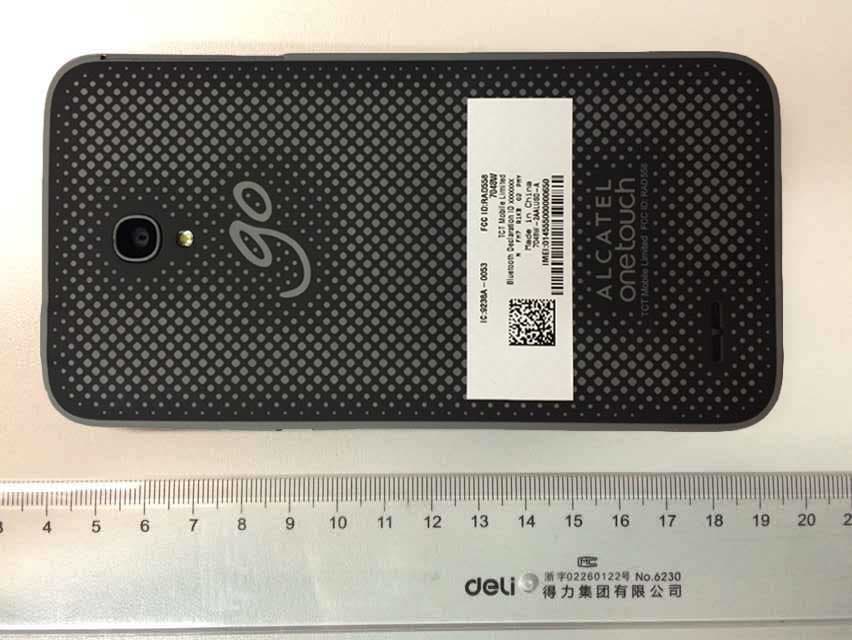
RAD558
Nov 15, 2015HSUPA/HSDPA/UMTS tribands / GSM quadbands/LTE 6-band mobile phone
Equipment Class
JBP - Part 15 Class B Computing Device Peripheral
RAD556
Sep 08, 2015CDMA 1X BC0/BC1/BC10 mobile phone
Equipment Class
PCE - PCS Licensed Transmitter held to ear
RAD552
Jun 20, 2015GSM Quadband / UMTS Triband mobile phone
Equipment Class
PCE - PCS Licensed Transmitter held to ear
RAD550
Jun 06, 2015HSDPA/HSUPA/HSPA+/UMTS quad band /GSM quad band/LTE 4 band mobile phone
Equipment Class
DSS - Part 15 Spread Spectrum Transmitter
RAD549
May 13, 2015WCDMA tri band / GSM quad band Moblie phone with BT, Wi-Fi functionality.
Equipment Class
DSS - Part 15 Spread Spectrum Transmitter