RAD149HSDPA/HSUPA/UMTS dual band/GSM four band mobile phone
TCT Mobile Limited
Click to zoom
Application Details
- Equipment Class
- DTS - Digital Transmission System
- Date of Grant
- Oct 27, 2010
- Application Purpose
- Original Equipment
- Date of Application
- Oct 27, 2010
- Equipment Note
- HSDPA/HSUPA/UMTS dual band/GSM four band mobile phone
- Frequency Range
- 2412.00000000 - 2462.00000000
- Company
- TCT Mobile Limited
- Country
- China
Documents & Files
Document Text
Text extracted from the exhibit documents filed with the FCC. Open a document above to read the original.
Users Manual
1234567 891011121314 Your cellphone 1 .............. Keys and connectors1.1 Notification panel Touch and drag down the Status bar or press Menu key and touch Notifications to open the notification panel. Touch and drag up to close it. From Notification panel, you can open items and other reminders indicated by notification icons or view wireless service information. Touch to clear all event–based notifications (other ongoing notifications will remain). Search bar1.3.3 The cellphone provides a Search function which can be used to locate information within applications, the cellphone or the web. Lock/Unlock your screen1.3.4 To protect your cellphone and privacy, you can lock the cellphone screen by creating a variety of patterns. Personalize your home screen1.3.5 Add Touch and hold an empty area or press Menu key and touch Add on the Home screen, you can add shortcuts, widgets or folders to the Home screen. English - CJB3171ALAAA Touchscreen End key Call key Search key Left/Right navigation keys Back key Home key Menu key Headset connector Volume up Volume down Micro-USB connector Answer/Send a call• Enter Call Log• Return to ongoing call screen if the user navigates to other • applications during call. On Home screen, press to quick access to • Settings menu or Notification panel; to launch quick search; to customize your Home screen by adding applications or changing wallpaper. On other screens, press to view options list.• Short press: Return to the Home screen or back to the central Home screen if it is extended. Long press: Enter the recently used applications list. Go back to the previous menu or screen. Short press: End a call Lock the screen Long press: When cellphone is off, power on the cellphone. When cellphone is on, enter Phone options: Silent mode, Airplane mode, Power off. Press to adjust the Volume (in call/media playing mode) Open Search bar for searching within an application, the cellphone or web. / Press to go left/right ALT+ / Press to go up/down Reposition Touch and hold the item to be repositioned to activate the Move mode, drag the item to desired position, then release. Hold the icon on the left or right edge of the screen to drag the item to another Home screen page. Remove Touch and hold the item to be removed to activate the Move mode, drag the item to the top of the Application tab, which will then turn red, and release. Wallpaper customization Touch and hold an empty area or press Menu key and touch Wallpaper on the Home screen to customize wallpaper. Application tab1.3.6 Touch or drag up the from Home screen to enter applications list. To close it, touch or drag down. Consult recently-used applications To consult recently-used applications, you can press and hold the Home key from Home screen. Touch an icon in the window to open the related application. Volume adjustment1.3.7 You can set ringer, media and cellphone ringtone volume to your preference by Volume up/down key, or Settings menu. Getting started1.2 Set-up1.2.1 Removing or installing the back cover Inserting or removing the SIM card You must insert your SIM card to make phone calls. Please power off your cellphone and remove battery before inserting or removing the SIM card. Place the SIM card with the chip facing downwards and slide it into its housing. Make sure that it is correctly inserted. To remove the card, press and slide it out. Installing or removing the battery Insert and click the battery into place, then close the cellphone cover.• Unclip the cover, then remove the battery.• Text input 2 ........................ Your cellphone is equipped with two kinds of keyboard: Hardware Keyboard and Onscreen Keyboard. Using Hardware Keyboard2.1 Slide up the cellphone to open the Hardware Keyboard. Delete key Enter key Shift key ALT key Space key Press once: Input a capitalized character Shift+Space: to select input method Press twice: Lock the keyboard in capital letter input mode. Press once: Input a top-half character. Press twice: Lock the keyboard in top-half key input mode. Enter a space ALT+Space: to enter symbol table Confirm an option Enter the next line Delete a word or character Installing and removing the memory card (MicroSD card) Insert the MicroSD card with golden contact facing downwards into the slot until it is locked. Gently push the memory card until it is unlocked. To remove the microSD card while the cellphone is on, you must unmount the storage card from the cellphone first, to prevent corrupting or damaging the storage card. Charging the battery Power on your cellphone1.2.2 Hold down the End key until the cellphone powers on. Set up your cellphone for the first time The first time you power on the cellphone, you are required to touch the Android logo to begin and then sign into your Google account to synchronize email, contacts, calendar and other Google applications. In power on screen without SIM card inserted, you can also connect to a Wi-Fi network to sign into your Google account and to use some features. Power off your cellphone1.2.3 Hold down the End key from the Home screen until the cellphone options appear, select Power off. Using Onscreen Keyboard2.2 Onscreen keyboard will display automatically when a program requires entering text or numbers. Touch to lock in capital letter input mode. Touch to switch to symbol and numeric keyboard. Touch to enter text or numbers, touch and hold to select input method. Onscreen keyboard settings Press Menu key from Home screen, select Settings\Language & Keyboard settings\Android keyboard, a series of settings are available for your selection. Adjust the onscreen keyboard orientation Turn the cellphone sideways or upright to adjust the onscreen keyboard orientation. You can also adjust it by settings (Press Menu key on Home screen\Settings\Sound & display). Text editing2.3 You can edit the text you have entered. Touch and hold text you have entered• An option list pops up• Select the operation you need (• Select all, Select text, C…
Text truncated - open the document above for the full version.
Cover Letter(s)
5F, E building, No. 232, Liang Jing Road, ZhangJiang High- Tech Park, Pudong Area Shanghai, P.R. China. 201203 TEL: +86(0)21 61460666 FAX: +86(0)21 61460602 2010/10/13 Federal Communications Commission Office of Engineering and Technology Equipment Authorization Division 7345 Oakland Mills Road Columbia, Maryland 21046 Subject: Permanent Confidentiality request for FCC ID: RAD149 To Whom It May Concern, Pursuant to sections 0.457 and 0.459 of CFR 47, the applicant requests permanent confidential treatment of the following information accompanying this application: - Block Diagram - Schematics - Operational Description - BOM list/Tune-Up-Procedure The above materials contain trade secrets and proprietary information not customarily released to the public. The public disclosure of these matters might be harmful to the applicant and provide unjustified benefits to its competitors. Yours Sincerely, Zhizhou Gong Approval Team Leader TCT Mobile Limited
Cover Letter(s)
No.2966, JinKe Road, Zhangjiang High-Tech Park Shanghai P.R.China 201203 TEL: +86(0)21 61460666 FAX: +86(0)21 61460602 Date 2010-09-23 To: Federal Communications Commission, Authorization & Evaluation Division, 7345 Oakland Mills Road Columbia, MD 21046 And American Telecommunications Certification Body, Inc. 6731 Whittier Avenue Suite C110 McLean, VA 22101 To Whom It May Concern: TMC (Telecommunication Metrology Center of MIIT) is authorized to act on our behalf, until otherwise notified, for applications to American Telecommunications Certification Body, Inc. (ATCB). We certify that we are not subject to denial of federal benefits, which includes FCC benefits, pursuant to Section 5301 of the Anti-Drug Abuse Act of 1988, U.S.C. 862. Further, no party, as defined in 47 CFR1.2002 (b) to the application is subject to denial of federal benefits, that includes FCC benefits. Thank you. Regards, Gong Zhizhou Approval Team Leader TCT Mobile Limited
External Photos
OT-981A External Photos: C0
ID Label/Location Info
OT-981A Label Location:
Internal Photos
OT-981A Internal Photos:
RF Exposure Info
No.2010SAR00114 Page 1 of 230 ©Copyright. All rights reserved by TMC Beijing. SAR TEST REPORT No. 2010SAR00114 For TCT Mobile Limited HSDPA/HSUPA/UMTS dual band / GSM four bands mobile phone Opal AWS OT-981A With Hardware Version: PIO Software Version: V263 IC Certification number: 9238A-0001 FCCID: RAD149 Issued Date: 2010-10-12 No. DGA-PL-114/01-02 Note: The test results in this test report relate only to the devices specified in this report. This report shall not be reproduced except in full without the written approval of TMC Beijing. Test Laboratory: TMC Beijing, Telecommunication Metrology Center of MIIT No. 52, Huayuan Bei Road, Haidian District, Beijing, P. R. China 100191. Tel:+86(0)10-62304633-2079, Fax:+86(0)10-62304793 Email:[email protected]. www.emcite.com No.2010SAR00114 Page 2 of 230 TABLE OF CONTENT 1 TEST LABORATORY .................................................................................................................3 1.1 TESTING LOCATION........................................................................................................................................ 3 1.2 TESTING ENVIRONMENT................................................................................................................................. 3 1.3 PROJECT DATA............................................................................................................................................... 3 1.4 SIGNATURE..................................................................................................................................................... 3 2 CLIENT INFORMATION .............................................................................................................4 2.1 APPLICANT INFORMATION.............................................................................................................................. 4 2.2 MANUFACTURER INFORMATION..................................................................................................................... 4 3 EQUIPMENT UNDER TEST (EUT) AND ANCILLARY EQUIPMENT (AE) ................................5 3.1 ABOUT EUT ................................................................................................................................................... 5 3.2 INTERNAL IDENTIFICATION OF EUT USED DURING THE TEST.......................................................................... 5 3.3 INTERNAL IDENTIFICATION OF AE USED DURING THE TEST............................................................................. 5 4 CHARACTERISTICS OF THE TEST ..........................................................................................5 4.1 APPLICABLE LIMIT REGULATIONS.................................................................................................................. 5 4.2 APPLICABLE MEASUREMENT STANDARDS...................................................................................................... 5 5 OPERATIONAL CONDITIONS DURING TEST ..........................................................................6 5.1 SCHEMATIC TEST CONFIGURATION................................................................................................................. 6 5.2 SAR MEASUREMENT SET-UP.......................................................................................................................... 6 5.3 DASY4 E-FIELD PROBE SYSTEM..................................................................................................................... 7 5.4 E-FIELD PROBE CALIBRATION........................................................................................................................ 8 5.5 OTHER TEST EQUIPMENT...............................................................................................................................9 5.6 EQUIVALENT TISSUES................................................................................................................................... 10 5.7 SYSTEM SPECIFICATIONS.............................................................................................................................. 11 6 CONDUCTED OUTPUT POWER MEASUREMENT.................................................................11 6.1 SUMMARY.................................................................................................................................................... 11 6.2 CONDUCTED POWER.................................................................................................................................... 11 7 TEST RESULTS........................................................................................................................13 7.1 DIELECTRIC PERFORMANCE......................................................................................................................... 13 7.2 SYSTEM VALIDATION.................................................................................................................................... 14 7.3 SUMMARY OF MEASUREMENT RESULTS....................................................................................................... 15 7.4 SUMMARY OF MEASUREMENT RESULTS (BLUETOOTH AND WIFI FUNCTION) ............................................... 22 7.5 CONCLUSION................................................................................................................................................ 24 8 MEASUREMENT UNCERTAINTY ............................................................................................24 9 MAIN TEST INSTRUMENTS ....................................................................................................26 ANNEX A MEASUREMENT PROCESS ...................................................................................27 ANNEX B TEST LAYOUT .........................................................................................................28 ANNEX C GRAPH RESULTS ....................................................…
Text truncated - open the document above for the full version.
RF Exposure Info
No.2010SAR00114 Page 121 of 230 850 Body Towards Phantom Low with GPRS- - Slide up Date/Time: 2010-10-8 16:30:26 Electronics: DAE4 Sn771 Medium: Body 850 MHz Medium parameters used: f = 825 MHz; σ = 0.94 mho/m; εr = 55.8; ρ = 1000 kg/m 3 Ambient Temperature:23.0 o C Liquid Temperature: 22.5 o C Communication System: GSM 850 GPRS Frequency: 824.2 MHz Duty Cycle: 1:2 Probe: ES3DV3 - SN3149 ConvF(6.22, 6.22, 6.22) Toward Phantom Low/Area Scan (61x111x1): Measurement grid: dx=10mm, dy=10mm Maximum value of SAR (interpolated) = 0.674 mW/g Toward Phantom Low/Zoom Scan (7x7x7)/Cube 0: Measurement grid: dx=5mm, dy=5mm, dz=5mm Reference Value = 25.9 V/m; Power Drift = -0.101 dB Peak SAR (extrapolated) = 0.794 W/kg SAR(1 g) = 0.632 mW/g; SAR(10 g) = 0.475 mW/g Maximum value of SAR (measured) = 0.663 mW/g Fig. 81 850 MHz CH128 No.2010SAR00114 Page 122 of 230 850 Body Towards Ground High with GPRS- - Slide up Date/Time: 2010-10-8 16:45:53 Electronics: DAE4 Sn771 Medium: Body 850 MHz Medium parameters used (interpolated): f = 848.8 MHz; σ = 0.95 mho/m; εr = 54.5; ρ = 1000 kg/m 3 Ambient Temperature:23.0 o C Liquid Temperature: 22.5 o C Communication System: GSM 850 GPRS Frequency: 848.8 MHz Duty Cycle: 1:2 Probe: ES3DV3 - SN3149 ConvF(6.22, 6.22, 6.22) Toward Ground High/Area Scan (61x111x1): Measurement grid: dx=10mm, dy=10mm Maximum value of SAR (interpolated) = 0.761 mW/g Toward Ground High/Zoom Scan (7x7x7)/Cube 0: Measurement grid: dx=5mm, dy=5mm, dz=5mm Reference Value = 28.4 V/m; Power Drift = -0.131 dB Peak SAR (extrapolated) = 0.901 W/kg SAR(1 g) = 0.710 mW/g; SAR(10 g) = 0.517 mW/g Maximum value of SAR (measured) = 0.745 mW/g Fig. 82 850 MHz CH251 No.2010SAR00114 Page 123 of 230 850 Body Towards Ground Middle with GPRS- - Slide up Date/Time: 2010-10-8 17:01:25 Electronics: DAE4 Sn771 Medium: Body 850 MHz Medium parameters used (interpolated): f = 836.6 MHz; σ = 0.96 mho/m; εr = 54.8; ρ = 1000 kg/m 3 Ambient Temperature:23.0 o C Liquid Temperature: 22.5 o C Communication System: GSM 850 GPRS Frequency: 836.6 MHz Duty Cycle: 1:2 Probe: ES3DV3 - SN3149 ConvF(6.22, 6.22, 6.22) Toward Ground Middle/Area Scan (61x111x1): Measurement grid: dx=10mm, dy=10mm Maximum value of SAR (interpolated) = 0.729 mW/g Toward Ground Middle/Zoom Scan (7x7x7)/Cube 0: Measurement grid: dx=5mm, dy=5mm, dz=5mm Reference Value = 27.5 V/m; Power Drift = -0.196 dB Peak SAR (extrapolated) = 0.844 W/kg SAR(1 g) = 0.679 mW/g; SAR(10 g) = 0.503 mW/g Maximum value of SAR (measured) = 0.708 mW/g Fig. 83 850 MHz CH190 No.2010SAR00114 Page 124 of 230 850 Body Towards Ground Low with GPRS- Slide up Date/Time: 2010-10-8 17:16:49 Electronics: DAE4 Sn771 Medium: Body 850 MHz Medium parameters used: f = 825 MHz; σ = 0.94 mho/m; εr = 55.8; ρ = 1000 kg/m 3 Ambient Temperature:23.0 o C Liquid Temperature: 22.5 o C Communication System: GSM 850 GPRS Frequency: 824.2 MHz Duty Cycle: 1:2 Probe: ES3DV3 - SN3149 ConvF(6.22, 6.22, 6.22) Toward Ground Low/Area Scan (61x111x1): Measurement grid: dx=10mm, dy=10mm Maximum value of SAR (interpolated) = 0.685 mW/g Toward Ground Low/Zoom Scan (7x7x7)/Cube 0: Measurement grid: dx=5mm, dy=5mm, dz=5mm Reference Value = 26.8 V/m; Power Drift = -0.199 dB Peak SAR (extrapolated) = 0.813 W/kg SAR(1 g) = 0.646 mW/g; SAR(10 g) = 0.479 mW/g Maximum value of SAR (measured) = 0.648 mW/g Fig. 84 850 MHz CH128 No.2010SAR00114 Page 125 of 230 850 Body Towards Ground High with EGPRS- Slide down Date/Time: 2010-10-8 17:33:05 Electronics: DAE4 Sn771 Medium: Body 850 MHz Medium parameters used: f = 848.8 MHz; σ = 0.95 mho/m; εr = 54.5; ρ = 1000 kg/m 3 Ambient Temperature:23.0 o C Liquid Temperature: 22.5 o C Communication System: GSM 850 GPRS Frequency: 824.2 MHz Duty Cycle: 1:2 Probe: ES3DV3 - SN3149 ConvF(6.22, 6.22, 6.22) Toward Ground High/Area Scan (61x91x1): Measurement grid: dx=10mm, dy=10mm Maximum value of SAR (interpolated) = 1.17 mW/g Toward Ground High/Zoom Scan (7x7x7)/Cube 0: Measurement grid: dx=5mm, dy=5mm, dz=5mm Reference Value = 35.3 V/m; Power Drift = -0.190 dB Peak SAR (extrapolated) = 1.50 W/kg SAR(1 g) = 1.12 mW/g; SAR(10 g) = 0.803 mW/g Maximum value of SAR (measured) = 1.17 mW/g Fig. 85 850 MHz CH251 No.2010SAR00114 Page 126 of 230 850 Body Towards Ground High with Headset_CCB3160A10C0- Slide down Date/Time: 2010-10-8 17:50:11 Electronics: DAE4 Sn771 Medium: Body 850 MHz Medium parameters used: f = 848.8 MHz; σ = 0.95 mho/m; εr = 54.5; ρ = 1000 kg/m 3 Ambient Temperature:23.0 o C Liquid Temperature: 22.5 o C Communication System: GSM 850 GPRS Frequency: 824.2 MHz Duty Cycle: 1:8.3 Probe: ES3DV3 - SN3149 ConvF(6.22, 6.22, 6.22) Toward Ground High/Area Scan (61x91x1): Measurement grid: dx=10mm, dy=10mm Maximum value of SAR (interpolated) = 0.836 mW/g Toward Ground High/Zoom Scan (7x7x7)/Cube 0: Measurement grid: dx=5mm, dy=5mm, dz=5mm Reference Value = 29.0 V/m; Power Drift = 0.046 dB Peak SAR (extrapolated) = 1.03 W/kg SAR(1 g) = 0.799 mW/g; SAR(10 g) = 0.582 mW/g Maximum value of SAR (measured) = 0.848 mW/g Fig. 86 850 MHz CH251 No.2010SAR00114 Page 127 of 230 850 Body Towards Ground High with Headset_CCB3160A10C2- Slide down Date/Time: 2010-10-8 18:06:52 Electronics: DAE4 Sn771 Medium: Body 850 MHz Medium parameters used: f = 848.8 MHz; σ = 0.95 mho/m; εr = 54.5; ρ = 1000 kg/m 3 Ambient Temperature:23.0 o C Liquid Temperature: 22.5 o C Communication System: GSM 850 GPRS Frequency: 824.2 MHz Duty Cycle: 1:8.3 Probe: ES3DV3 - SN3149 ConvF(6.22, 6.22, 6.22) Toward Ground High/Area Scan (61x91x1): Measurement grid: dx=10mm, dy=10mm Maximum value of SAR (interpolated) = 0.778 mW/g Toward Ground High/Zoom Scan (7x7x7)/Cube 0: Measurement grid: dx=5mm, dy=5mm, dz=5mm Reference Value = 27.5 V/m; Power Drift = -0.117 dB Peak SAR (extrapolated) = 0.928 W/kg SAR(1 g) = 0.715 mW/g; SAR(10 g) = 0.517 mW/g Maximum value of SAR (measured) = 0.757 mW/g Fig. 87 850 MHz CH251 No.2010SAR00114 Page 128 of 230 1900 Body Towards Phantom High with GPRS- Slide down Date/Time: 2010-10-10 14:39:52 Electronics: DAE4 S…
Text truncated - open the document above for the full version.
RF Exposure Info
No.2010SAR00114 Page 201 of 230 No.2010SAR00114 Page 202 of 230 No.2010SAR00114 Page 203 of 230 No.2010SAR00114 Page 204 of 230 No.2010SAR00114 Page 205 of 230 No.2010SAR00114 Page 206 of 230 No.2010SAR00114 Page 207 of 230 No.2010SAR00114 Page 208 of 230 1800 MHz Dipole Calibration Certificate No.2010SAR00114 Page 209 of 230 No.2010SAR00114 Page 210 of 230 No.2010SAR00114 Page 211 of 230 No.2010SAR00114 Page 212 of 230 No.2010SAR00114 Page 213 of 230 No.2010SAR00114 Page 214 of 230 No.2010SAR00114 Page 215 of 230 No.2010SAR00114 Page 216 of 230 No.2010SAR00114 Page 217 of 230 1900 MHz Dipole Calibration Certificate No.2010SAR00114 Page 218 of 230 No.2010SAR00114 Page 219 of 230 No.2010SAR00114 Page 220 of 230 No.2010SAR00114 Page 221 of 230 No.2010SAR00114 Page 222 of 230 No.2010SAR00114 Page 223 of 230 No.2010SAR00114 Page 224 of 230 No.2010SAR00114 Page 225 of 230 No.2010SAR00114 Page 226 of 230 2450 MHz Dipole Calibration Certificate No.2010SAR00114 Page 227 of 230 No.2010SAR00114 Page 228 of 230 No.2010SAR00114 Page 229 of 230 No.2010SAR00114 Page 230 of 230
RF Exposure Info
Appendix A: SPEAG’s new calibration certifications Appendix B: SPEAG’s Evaluation report
Test Report
No.2010WLN0246 Page1 of 52 ©Copyright. All rights reserved by TMC Beijing. FCC PART 15C TEST REPORT No. 2010WLN0246 for TCT Mobile Limited HSDPA/HSUPA/UMTS dual band / GSM four bands mobile phone Type: Opal AWS Marketing Name: OT-981A With FCC ID: RAD149 IC ID: 9238A-0001 Hardware Version: PIO Software Version: V263 Issued Date: 2010-10-11 No. DGA-PL-114/01-02 DAR accreditation (DIN EN ISO/IEC 17025): No. DGA-PL-114/01-02 FCC 2.948 Listed: No.733176 IC O.A.T.S listed: No.6629A-1 Note:The test results in this test report relate only to the devices specified in this report. This report shall not be reproduced except in full without the written approval of TMC Beijing. Test Laboratory: TMC Beijing, Telecommunication Metrology Center of Ministry of Industry and Information Technology No. 52, Huayuan Bei Road, Haidian District, Beijing, P. R. China, 100191 Tel:+86(0)10-62304633, Fax:+86(0)10-62304793 Email:[email protected]. www.emcite.com No.2010WLN0246 Page2 of 52 ©Copyright. All rights reserved by TMC Beijing. CONTENTS 1. TEST LABORATORY ........................................................................................................ 5 1.1. TESTING LOCATION .............................................................................................................. 5 1.2. TESTING ENVIRONMENT ....................................................................................................... 5 1.3. PROJECT DATA ..................................................................................................................... 5 1.4. SIGNATURE .......................................................................................................................... 5 2. CLIENT INFORMATION .................................................................................................... 6 2.1. APPLICANT INFORMATION ..................................................................................................... 6 2.2. MANUFACTURER INFORMATION ............................................................................................. 6 3. EQUIPMENT UNDER TEST (EUT) AND ANCILLARY EQUIPMENT (AE) ..................... 7 3.1. ABOUT EUT ......................................................................................................................... 7 3.2. INTERNAL IDENTIFICATION OF EUT USED DURING THE TEST ................................................... 7 3.3. INTERNAL IDENTIFICATION OF AE USED DURING THE TEST ...................................................... 7 3.4. GENERAL DESCRIPTION ....................................................................................................... 7 4. REFERENCE DOCUMENTS ............................................................................................ 8 4.1. DOCUMENTS SUPPLIED BY APPLICANT ................................................................................... 8 4.2. REFERENCE DOCUMENTS FOR TESTING ................................................................................ 8 5. LABORATORY ENVIRONMENT ...................................................................................... 9 6. SUMMARY OF TEST RESULTS ..................................................................................... 10 6.1. SUMMARY OF TEST RESULTS .............................................................................................. 10 6.2. STATEMENTS...................................................................................................................... 10 7. TEST EQUIPMENTS UTILIZED...................................................................................... 11 ANNEX A: MEASUREMENT RESULTS ....................................................................................... 12 A.1. MEASUREMENT METHOD ....................................................................................................... 12 A.2. MAXIMUM PEAK OUTPUT POWER ........................................................................................... 13 A.2.1. MAXIMUM PEAK OUTPUT POWER ........................................................................................ 13 A.3. PEAK POWER SPECTRAL DENSITY ......................................................................................... 14 FIG. 1 POWER SPECTRAL DENSITY (802.11B, CH 1) ................................................................. 14 FIG. 2 POWER SPECTRAL DENSITY (802.11B, CH 6) ................................................................. 15 FIG. 3 POWER SPECTRAL DENSITY (802.11B, CH 11) ............................................................... 15 FIG. 4 POWER SPECTRAL DENSITY (802.11G, CH 1) ................................................................. 16 FIG. 5 POWER SPECTRAL DENSITY (802.11G, CH 6) ................................................................. 16 FIG. 6 POWER SPECTRAL DENSITY (802.11G, CH 11) ............................................................... 17 A.4. OCCUPIED 6DB BANDWIDTH .................................................................................................. 18 FIG. 7 OCCUPIED 6DB BANDWIDTH (802.11B, CH 1) ................................................................. 18 FIG. 8 OCCUPIED 6DB BANDWIDTH (802.11B, CH 6) ................................................................. 19 FIG. 9 OCCUPIED 6DB BANDWIDTH (802.11B, CH 11) ............................................................... 19 FIG. 10 OCCUPIED 6DB BANDWIDTH (802.11G, CH 1) ................................................................. 20 No.2010WLN0246 Page3 of 52 ©Copyright. All rights reserved by TMC Beijing. FIG. 11 OCCUPIED 6DB BANDWIDTH (802.11G, CH 6) ................................................................. 20 FIG. 12 OCCUPIED 6DB BANDWIDTH (802.11G, CH 11) ............................................................... 21 A.5. BAND EDGES COMPLIANCE .................................................................................................... 22 FIG. 13 BAND EDGES (8…
Text truncated - open the document above for the full version.
Test Setup Photos
FCC ID: RAD149 Test Set up photos: Part22/24 RSE: Part15B CE: Part15B(USB mode) RE-1: Part15B(Charging mode) RE: Part15C RE:
Contact Information
Applicant
Zhizhou Gong
Test Firm
TMC-Telecommunication Metrology Center of M.I.I.TChongwen Song
Technical Specifications
| # | Rule Parts | Frequency Range | Power Output |
|---|---|---|---|
| 1 | 15C | 2.41 GHz - 2.46 GHz | 273.00 mW |
Other Applications from TCT Mobile Limited
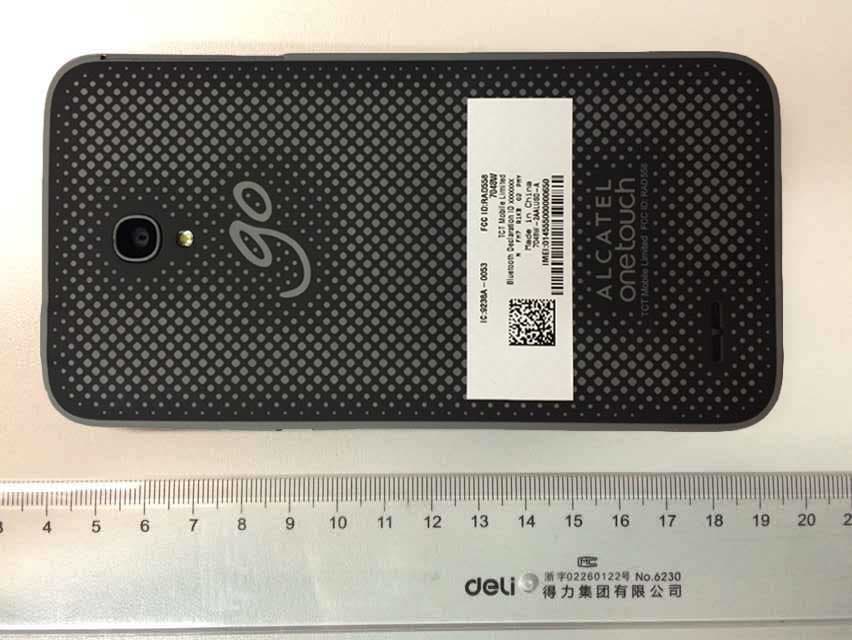
RAD558
Nov 15, 2015HSUPA/HSDPA/UMTS tribands / GSM quadbands/LTE 6-band mobile phone
Equipment Class
JBP - Part 15 Class B Computing Device Peripheral
RAD556
Sep 08, 2015CDMA 1X BC0/BC1/BC10 mobile phone
Equipment Class
PCE - PCS Licensed Transmitter held to ear
RAD552
Jun 20, 2015GSM Quadband / UMTS Triband mobile phone
Equipment Class
PCE - PCS Licensed Transmitter held to ear
RAD550
Jun 06, 2015HSDPA/HSUPA/HSPA+/UMTS quad band /GSM quad band/LTE 4 band mobile phone
Equipment Class
DSS - Part 15 Spread Spectrum Transmitter
RAD549
May 13, 2015WCDMA tri band / GSM quad band Moblie phone with BT, Wi-Fi functionality.
Equipment Class
DSS - Part 15 Spread Spectrum Transmitter