RAD280GSM Quad Band and UMTS Dual Band Mobile Phone
TCT Mobile Limited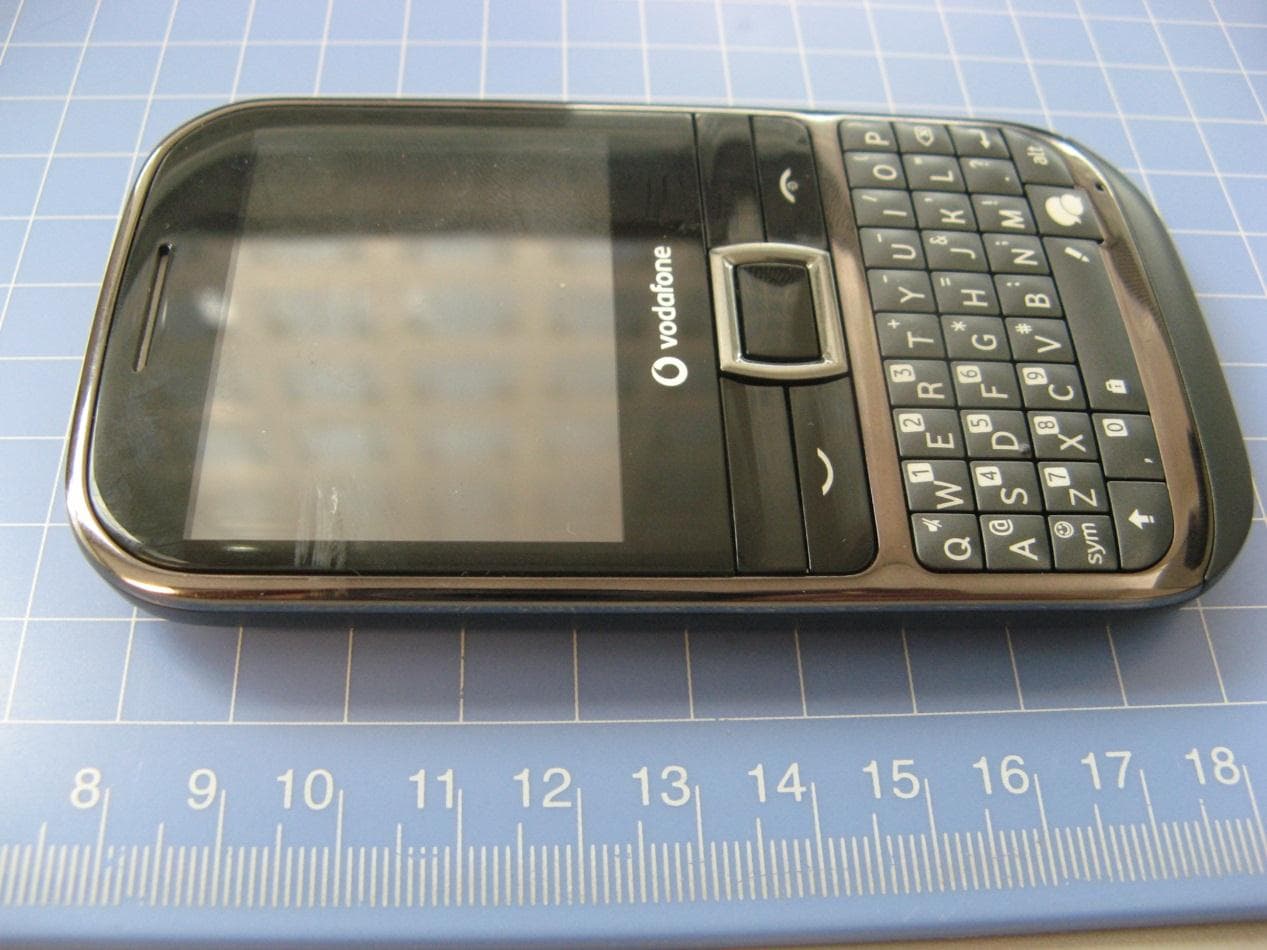
Click to zoom
Application Details
- Equipment Class
- PCE - PCS Licensed Transmitter held to ear
- Date of Grant
- Aug 16, 2012
- Application Purpose
- Original Equipment
- Date of Application
- Aug 16, 2012
- Equipment Note
- GSM Quad Band and UMTS Dual Band Mobile Phone
- Frequency Range
- 1850.20000000 - 1909.80000000
- Company
- TCT Mobile Limited
- Country
- China
Documents & Files
Document Text
Text extracted from the exhibit documents filed with the FCC. Open a document above to read the original.
Users Manual
2 Quick start guide Vodafone Chat English - CJB32F1VDAAA © Vodafone Group 2012. Vodafone and the Vodafone logos are trade marks of Vodafone Group. Any product or company names mentioned herein may be the trade marks of their respective owners. IP4347_VF655_VF655W_QG_Eng_USA_Black_02_120808.indd 2-3IP4347_VF655_VF655W_QG_Eng_USA_Black_02_120808.indd 2-32012-8-8 11:02:342012-8-8 11:02:34 12 Your mobile1 Keys and connectors1.1 Space keyIM key Notification light Status bar Home screen Widget bar Send key Sym key Shift key Voicemail key Silence key Left softkey Alt key Microphone Enter key Delete key End key Right softkey Navigation key/ OK key Earpiece For more information about how to use the phone, please go to www.vodafone.com/vodafonechat to download complete user manual. Also on our website you can find helpful FAQs, realize software upgrade, etc. Flick to go left/right/up/down• Press to confirm an option (press the middle of • the key) Answer/Send a call• Enter Call log• Press: End a call• Return to the Home screen Press and hold: Power on/off• Press and hold: Access your voicemail• Press once: Input a capital letter• Press twice: Lock the keyboard in capital letter • input mode Press once: Input a top-half key character• Press twice: Lock the keyboard in top-half key • input mode Alt + B: Access Bluetooth Alt + J: Access Apps Alt + M: Access Music Alt + P: Access Device sound profiles Headset connector micro-USB connector Volume key Camera Flash Loudspeaker IP4347_VF655_VF655W_QG_Eng_USA_Black_02_120808.indd Sec1:1-Sec1:2IP4347_VF655_VF655W_QG_Eng_USA_Black_02_120808.indd Sec1:1-Sec1:22012-8-8 11:02:372012-8-8 11:02:37 34 Press: Enter a space (in Edit mode)• Press OK key, then Space key to unlock the keypad (on the Lock screen) Press and hold: Access text input language list (in • Edit mode) Lock the keypad (on the Home screen) Hold down • Space key, then press Alt key to select input method Enter symbol table• Hold down • Alt key, then press Sym key to enter emoticon table Confirm an option• Enter the next line• Press and hold: Switch between General and Silent • profile Volume up/down• Scroll up/down• Press to delete a word or character• Press to access applications: Google Talk, MSN, • Facebook, Facebook Chat, Twitter Home screen1.2 The Home screen is divided into several parts, as shown below: Status bar Widget bar Select to enter main menu screen Status bar 1.2.1 (1) From the status bar, you can view both phone status and notifications. Battery charge level. Bluetooth activated and visible. Bluetooth activated but invisible. Bluetooth connecting. Java application activated. Headset connected. Keypad locked. Mute is on during a call. Silent profile is activated. Alarm or appointment programmed. Level of network reception. Missed calls. Call in progress. Stopwatch activated. Email unread. Radio is on. WAP message. (2) Roaming. SD card inserted. SIM card unavailable. GPRS in use. 2G network available. 3G network available. (1) The icons and illustrations in this guide are provided for informational purposes only. (2) Depending on your network operator. IP4347_VF655_VF655W_QG_Eng_USA_Black_02_120808.indd Sec1:3-Sec1:4IP4347_VF655_VF655W_QG_Eng_USA_Black_02_120808.indd Sec1:3-Sec1:42012-8-8 11:02:382012-8-8 11:02:38 56 Wi-Fi disconnected. Wi-Fi connected. Line switching (1) : indicates the selected line. Vibrate and ring mode: your phone vibrates and rings. Music active. GPRS connected. Edge in use. Edge connected. Music player active. Vibrate mode. SMS unread. MMS unread. Sending MMS. Flight mode. Widget bar1.2.2 Widgets are convenient shortcuts for quick access from the Home screen. Lock/Unlock screen1.2.3 To protect your phone and privacy, you can lock the screen by pressing and holding the Space key. To unlock the screen, press , then the Space key. Main menu 1.2.4 To access the main menu screen, select "Menu" from the Home screen. (1) Depending on your network operator. Getting started2 Set-up2.1 Removing or installing the back cover Inserting or removing the SIM card You must insert your SIM card to make phone calls. Please power off your phone and remove battery before inserting or removing the SIM card. Place the SIM card with the chip facing downwards and slide it into its housing. Make sure that it is correctly inserted. To remove the card, press it and slide it out. Installing or removing the battery Insert and click the battery into place, then close the telephone • cover. Unclip the cover, then remove the battery.• IP4347_VF655_VF655W_QG_Eng_USA_Black_02_120808.indd Sec1:5-Sec1:6IP4347_VF655_VF655W_QG_Eng_USA_Black_02_120808.indd Sec1:5-Sec1:62012-8-8 11:02:382012-8-8 11:02:38 78 Installing and removing the memory card (microSD card) Insert the microSD card with its golden contact facing downwards into the slot until it is locked in place. To remove it, gently push the card in until it unlocks. Charging the battery Connect the battery charger to your phone and outlet respectively. To reduce power consumption and energy waste, when battery is fully charged, disconnect your charger from the plug; switch off Bluetooth or background-running applications when not in use; reduce the backlight time, etc. Power on your phone2.2 Hold down the key until the phone powers on, type in your PIN code if necessary. The main screen is displayed. Set up your phone for the first time The first time you power on the phone, you are required to adjust initial basic settings and login to your Facebook account to synchronize Facebook information. Power off your phone2.3 Hold down the key from the Home screen. Calls3 Placing a call3.1 Enter the desired number from the keypad directly or select a contact from Contacts or Call log, then press the key to place the call. The number you entered can be saved to Contacts by selecting "Save". If you make a mistake, you can delete the incorrect digits by pressing the Delete key. To hang up, press the key. Answering or rejecting a call3.2 When you receive …
Text truncated - open the document above for the full version.
Attestation Statements
Antenna Details for 655 BT antenna: PIFA Gain: -5.03 dBi RF antenna: IFA BAND GSM900 DCS1800 Gain -4.13 dBi -3.58 dBi BAND GSM850 PCS1900 Gain -7.5 dBi -2.84 dBi BAND UMTS8 UMTS1 Gain -4.13 dBi -3.88 dBi
Cover Letter(s)
5F, C building, No. 232, Liang Jing Road ZhangJiang High-Tech Park, Pudong Area Shanghai, P.R. China. 201203 TEL: +86(0)21 61460666 FAX: +86(0)21 61460602 2012-07-31 Federal Communications Commission Office of Engineering and Technology Equipment Authorization Division 7345 Oakland Mills Road Columbia, Maryland 21046 Subject: Permanent Confidentiality request for FCC ID: RAD280 To Whom It May Concern, Pursuant to sections 0.457 and 0.459 of CFR 47, the applicant requests permanent confidential treatment of the following information accompanying this application: - Block Diagram - Schematics - Operational Description - BOM list/Tune-Up-Procedure The above materials contain trade secrets and proprietary information not customarily released to the public. The public disclosure of these matters might be harmful to the applicant and provide unjustified benefits to its competitors. Yours Sincerely, Zhizhou Gong Approval Team Leader TCT Mobile Limited
ID Label/Location Info
Label
RF Exposure Info
No.2012SAR00080 Page 1 of 117 ©Copyright. All rights reserved by TMC Beijing. SAR TEST REPORT No. 2012SAR00080 For TCT Mobile Limited GSM Quad Band and UMTS Dual Band Mobile Phone Mode Name: Blue3G Marketing Name: Vodafone Chat 655 With Hardware Version: PIO01 Software Version: J30 FCCID: RAD280 Issued Date: 2012-08-01 No. DGA-PL-114/01-02 Note: The test results in this test report relate only to the devices specified in this report. This report shall not be reproduced except in full without the written approval of TMC Beijing. Test Laboratory: TMC Beijing, Telecommunication Metrology Center of MIIT No. 52, Huayuan Bei Road, Haidian District, Beijing, P. R. China 100191. Tel:+86(0)10-62304633-2079, Fax:+86(0)10-62304633 Email:[email protected]. www.emcite.com No. 2012SAR00080 Page 2 of 117 Revision Version Report Number Revision Date Memo 2012SAR00080 00 2012-08-01 Initial creation of test report No. 2012SAR00080 Page 3 of 117 TABLE OF CONTENT 1 TEST LABORATORY .................................................................................................................... 5 1.1 TESTING LO C AT I O N ........................................................................................................................................ 5 1.2 TESTING ENVIRONMENT ................................................................................................................................. 5 1.3 PROJECT DATA ............................................................................................................................................... 5 1.4 SIGNATURE ..................................................................................................................................................... 5 2 STATEMENT OF COMPLIANCE .................................................................................................. 6 3 CLIENT INFORMATION ................................................................................................................ 7 3.1 APPLICANT INFORMATION .............................................................................................................................. 7 3.2 MANUFACTURER INFORMATION ..................................................................................................................... 7 4 EQUIPMENT UNDER TEST (EUT) AND ANCILLARY EQUIPMENT (AE) ................................. 8 4.1 ABOUT EUT ................................................................................................................................................... 8 4.2 INTERNAL IDENTIFICATION OF EUT USED DURING THE TEST .......................................................................... 8 4.3 INTERNAL IDENTIFICATION OF AE USED DURING THE TEST ............................................................................ 8 5 TEST METHODOLOGY ................................................................................................................ 9 5.1 APPLICABLE LIMIT REGULATIONS .................................................................................................................. 9 5.2 APPLICABLE MEASUREMENT STANDARDS ...................................................................................................... 9 6 SPECIFIC ABSORPTION RATE (SAR) ...................................................................................... 10 6.1 INTRODUCTION ............................................................................................................................................. 10 6.2 SAR DEFINITION .......................................................................................................................................... 10 7 SAR MEASUREMENT SETUP ................................................................................................... 11 7.1 MEASUREMENT SET-UP ................................................................................................................................ 11 7.2 DASY4 OR DASY5 E-FIELD PROBE SYSTEM ................................................................................................ 12 7.3 E-FIELD PROBE CALIBRATION ...................................................................................................................... 12 7.4 OTHER TEST EQUIPMENT ............................................................................................................................. 13 7.4.1 DATA ACQUISITION ELECTRONICS(DAE) ................................................................................................. 13 7.4.2 ROBOT ....................................................................................................................................................... 14 7.4.3 MEASUREMENT SERVER ............................................................................................................................ 14 7.4.4 DEVICE HOLDER FOR PHANTOM................................................................................................................ 15 7.4.5 PHANTOM .................................................................................................................................................. 15 8. POSITION OF THE WIRELESS DEVICE IN RELATION TO THE PHANTOM ........................ 17 8.1 GENERAL CONSIDERATIONS .......................................................................................................................... 17 8.2 BODY-WORN DEVICE .................................................................................................................................... 18 8.3 DESKTOP DEVICE .......................................................................................................................................... 18 8.4 DUT SETUP PHOTOS .................................................................................................................................... 20 9 TISSUE SIMULATING LIQUIDS ............................................…
Text truncated - open the document above for the full version.
RF Exposure Info
No. 2012SAR00080 Page 40 of 117 850 Left Tilt High Date: 2012-7- 18 Electronics: DAE4 Sn771 Medium: Head 835 MHz Medium parameters used (interpolated): f = 848.8 MHz; σ = 0.903 mho/m; εr = 41.188; ρ = 1000 kg/m 3 Ambient Temperature: 22.4 o C Liquid Temperature: 22.0 o C Communication System: GSM 850 Frequency: 848.8 MHz Duty Cycle: 1:8.3 Probe: ES3DV3 - SN3149 ConvF(6.26, 6.26, 6.26) Tilt High/Area Scan (61x101x1): Measurement grid: dx=10mm, dy=10mm Maximum value of SAR (interpolated) = 0.259 mW/g Tilt High/Zoom Scan (7x7x7)/Cube 0: Measurement grid: dx=5mm, dy=5mm, dz=5mm Reference Value = 9.522 V/m; Power Drift = 0.01 dB Peak SAR (extrapolated) = 0.302 mW/g SAR(1 g) = 0.244 mW/g; SAR(10 g) = 0.186 mW/g Maximum value of SAR (measured) = 0.256 mW/g Fig.4 850 MHz CH251 No. 2012SAR00080 Page 41 of 117 850 Left Tilt Middle Date: 2012-7- 18 Electronics: DAE4 Sn771 Medium: Head 835 MHz Medium parameters used (interpolated): f = 836.6 MHz; σ = 0.891 mho/m; εr = 41.345; ρ = 1000 kg/m 3 Ambient Temperature: 22.4 o C Liquid Temperature: 22.0 o C Communication System: GSM; Frequency: 836.6 MHz;Duty Cycle: 1:8.30042 Probe: ES3DV3 - SN3149 ConvF(6.26, 6.26, 6.26) Tilt Middle/Area Scan (61x101x1): Measurement grid: dx=10mm, dy=10mm Maximum value of SAR (interpolated) = 0.202 mW/g Tilt Middle/Zoom Scan (7x7x7)/Cube 0: Measurement grid: dx=5mm, dy=5mm, dz=5mm Reference Value = 8.629 V/m; Power Drift = -0.15 dB Peak SAR (extrapolated) = 0.235 mW/g SAR(1 g) = 0.191 mW/g; SAR(10 g) = 0.146 mW/g Maximum value of SAR (measured) = 0.199 mW/g Fig.5 850 MHz CH190 No. 2012SAR00080 Page 42 of 117 850 Left Tilt Low Date: 2012-7- 18 Electronics: DAE4 Sn771 Medium: Head 835 MHz Medium parameters used: f = 825 MHz; σ = 0.88 mho/m; εr = 41.485; ρ = 1000 kg/m 3 Ambient Temperature: 22.4 o C Liquid Temperature: 22.0 o C Communication System: GSM 850 Frequency: 824.2 MHz Duty Cycle: 1:8.3 Probe: ES3DV3 - SN3149 ConvF(6.26, 6.26, 6.26) Tilt Low/Area Scan (61x101x1): Measurement grid: dx=10mm, dy=10mm Maximum value of SAR (interpolated) = 0.152 mW/g Tilt Low/Zoom Scan (7x7x7)/Cube 0: Measurement grid: dx=5mm, dy=5mm, dz=5mm Reference Value = 7.451 V/m; Power Drift = -0.02 dB Peak SAR (extrapolated) = 0.177 mW/g SAR(1 g) = 0.143 mW/g; SAR(10 g) = 0.109 mW/g Maximum value of SAR (measured) = 0.151 mW/g Fig. 6 850 MHz CH128 No. 2012SAR00080 Page 43 of 117 850 Right Cheek High Date: 2012-7- 18 Electronics: DAE4 Sn771 Medium: Head 835 MHz Medium parameters used (interpolated): f = 848.8 MHz; σ = 0.903 mho/m; εr = 41.188; ρ = 1000 kg/m 3 Ambient Temperature: 22.4 o C Liquid Temperature: 22.0 o C Communication System: GSM; Frequency: 848.8 MHz;Duty Cycle: 1:8.30042 Probe: ES3DV3 - SN3149 ConvF(6.26, 6.26, 6.26) Cheek High/Area Scan (61x101x1): Measurement grid: dx=10mm, dy=10mm Maximum value of SAR (interpolated) = 0.502 mW/g Cheek High/Zoom Scan (7x7x7)/Cube 0: Measurement grid: dx=5mm, dy=5mm, dz=5mm Reference Value = 6.514 V/m; Power Drift = -0.09 dB Peak SAR (extrapolated) = 0.609 mW/g SAR(1 g) = 0.482 mW/g; SAR(10 g) = 0.360 mW/g Maximum value of SAR (measured) = 0.502 mW/g Fig. 7 850 MHz CH251 No. 2012SAR00080 Page 44 of 117 850 Right Cheek Middle Date: 2012-7- 18 Electronics: DAE4 Sn771 Medium: Head 835 MHz Medium parameters used (interpolated): f = 836.6 MHz; σ = 0.891 mho/m; εr = 41.345; ρ = 1000 kg/m 3 Ambient Temperature: 22.4 o C Liquid Temperature: 22.0 o C Communication System: GSM; Frequency: 836.6 MHz;Duty Cycle: 1:8.30042 Probe: ES3DV3 - SN3149 ConvF(6.26, 6.26, 6.26) Cheek Middle/Area Scan (61x101x1): Measurement grid: dx=10mm, dy=10mm Maximum value of SAR (interpolated) = 0.370 mW/g Cheek Middle/Zoom Scan (7x7x7)/Cube 0: Measurement grid: dx=5mm, dy=5mm, dz=5mm Reference Value = 5.628 V/m; Power Drift = 0.07 dB Peak SAR (extrapolated) = 0.446 mW/g SAR(1 g) = 0.354 mW/g; SAR(10 g) = 0.266 mW/g Maximum value of SAR (measured) = 0.367 mW/g Fig. 8 850 MHz CH190 No. 2012SAR00080 Page 45 of 117 850 Right Cheek Low Date: 2012-7- 18 Electronics: DAE4 Sn771 Medium: Head 835 MHz Medium parameters used: f = 825 MHz; σ = 0.88 mho/m; εr = 41.485; ρ = 1000 kg/m 3 Ambient Temperature: 22.4 o C Liquid Temperature: 22.0 o C Communication System: GSM; Frequency: 824.2 MHz;Duty Cycle: 1:8.30042 Probe: ES3DV3 - SN3149 ConvF(6.26, 6.26, 6.26) Cheek Low/Area Scan (61x101x1): Measurement grid: dx=10mm, dy=10mm Maximum value of SAR (interpolated) = 0.262 mW/g Cheek Low/Zoom Scan (7x7x7)/Cube 0: Measurement grid: dx=5mm, dy=5mm, dz=5mm Reference Value = 4.854 V/m; Power Drift = 0.02 dB Peak SAR (extrapolated) = 0.311 mW/g SAR(1 g) = 0.252 mW/g; SAR(10 g) = 0.191 mW/g Maximum value of SAR (measured) = 0.262 mW/g Fig. 9 850 MHz CH128 No. 2012SAR00080 Page 46 of 117 850 Right Tilt High Date: 2012-7- 18 Electronics: DAE4 Sn771 Medium: Head 835 MHz Medium parameters used (interpolated): f = 848.8 MHz; σ = 0.903 mho/m; εr = 41.188; ρ = 1000 kg/m 3 Ambient Temperature: 22.4 o C Liquid Temperature: 22.0 o C Communication System: GSM 850 Frequency: 848.8 MHz Duty Cycle: 1:8.3 Probe: ES3DV3 - SN3149 ConvF(6.26, 6.26, 6.26) Tilt High/Area Scan (61x101x1): Measurement grid: dx=10mm, dy=10mm Maximum value of SAR (interpolated) = 0.254 mW/g Tilt High/Zoom Scan (7x7x7)/Cube 0: Measurement grid: dx=5mm, dy=5mm, dz=5mm Reference Value = 9.211 V/m; Power Drift = -0.10 dB Peak SAR (extrapolated) = 0.292 mW/g SAR(1 g) = 0.239 mW/g; SAR(10 g) = 0.184 mW/g Maximum value of SAR (measured) = 0.247 mW/g Fig.10 850 MHz CH251 No. 2012SAR00080 Page 47 of 117 850 Right Tilt Middle Date: 2012-7- 18 Electronics: DAE4 Sn771 Medium: Head 835 MHz Medium parameters used (interpolated): f = 836.6 MHz; σ = 0.891 mho/m; εr = 41.345; ρ = 1000 kg/m 3 Ambient Temperature: 22.4 o C Liquid Temperature: 22.0 o C Communication System: GSM 850 Frequency: 836.6 MHz Duty Cycle: 1:8.3 Probe: ES3DV3 - SN3149 ConvF(6.26, 6.26, 6.26) Tilt Middle/Area Scan (61x101x1): Measurement grid: dx=10mm, dy=10mm Maximum value of SAR (interpolated) = 0.221 mW/g Tilt Middle/Zoom Scan (7x7x7)/Cube …
Text truncated - open the document above for the full version.
RF Exposure Info
No. 2012SAR00080 Page 79 of 117 1900 Body Toward Ground Middle Date: 2012-7- 19 Electronics: DAE4 Sn771 Medium: Body 1900 MHz Medium parameters used: f = 1880 MHz; σ = 1.48 mho/m; εr = 52.263; ρ = 1000 kg/m 3 Ambient Temperature: 22.3 o C Liquid Temperature: 21.8 o C Communication System: GSM 1900MHz GPRS Frequency: 1880 MHz Duty Cycle: 1:2 Probe: ES3DV3 - SN3149 ConvF(4.64, 4.64, 4.64) Toward Ground Middle/Area Scan (61x101x1): Measurement grid: dx=10mm, dy=10mm Maximum value of SAR (interpolated) = 0.381 mW/g Toward Ground Middle/Zoom Scan (7x7x7)/Cube 0: Measurement grid: dx=8mm, dy=8mm, dz=5mm Reference Value = 6.716 V/m; Power Drift = -0.02 dB Peak SAR (extrapolated) = 0.516 mW/g SAR(1 g) = 0.346 mW/g; SAR(10 g) = 0.217 mW/g Maximum value of SAR (measured) = 0.375 mW/g Fig. 40 1900 MHz CH661 No. 2012SAR00080 Page 80 of 117 1900 Body Toward Ground Low Date: 2012-7- 19 Electronics: DAE4 Sn771 Medium: Body 1900 MHz Medium parameters used (interpolated): f = 1850.2 MHz; σ = 1.447 mho/m; εr = 52.398; ρ = 1000 kg/m 3 Ambient Temperature: 22.3 o C Liquid Temperature: 21.8 o C Communication System: GSM 1900MHz GPRS Frequency: 1850.2 MHz Duty Cycle: 1:2 Probe: ES3DV3 - SN3149 ConvF(4.64, 4.64, 4.64) Toward Ground Low/Area Scan (61x101x1): Measurement grid: dx=10mm, dy=10mm Maximum value of SAR (interpolated) = 0.276 mW/g Toward Ground Low/Zoom Scan (7x7x7)/Cube 0: Measurement grid: dx=8mm, dy=8mm, dz=5mm Reference Value = 5.658 V/m; Power Drift = 0.02 dB Peak SAR (extrapolated) = 0.374 mW/g SAR(1 g) = 0.250 mW/g; SAR(10 g) = 0.155 mW/g Maximum value of SAR (measured) = 0.271 mW/g Fig. 41 1900 MHz CH512 No. 2012SAR00080 Page 81 of 117 1900 Body Toward Ground High with EGPRS Date: 2012-7- 19 Electronics: DAE4 Sn771 Medium: Body 1900 MHz Medium parameters used: f = 1910 MHz; σ = 1.51 mho/m; εr = 52.141; ρ = 1000 kg/m 3 Ambient Temperature: 22.3 o C Liquid Temperature: 21.8 o C Communication System: GSM 1900MHz EGPRS Frequency: 1909.8 MHz Duty Cycle: 1:2 Probe: ES3DV3 - SN3149 ConvF(4.64, 4.64, 4.64) Toward Ground High/Area Scan (61x101x1): Measurement grid: dx=10mm, dy=10mm Maximum value of SAR (interpolated) = 0.520 mW/g Toward Ground High/Zoom Scan (7x7x7)/Cube 0: Measurement grid: dx=8mm, dy=8mm, dz=5mm Reference Value = 7.113 V/m; Power Drift = -0.03 dB Peak SAR (extrapolated) = 0.701 mW/g SAR(1 g) = 0.470 mW/g; SAR(10 g) = 0.297 mW/g Maximum value of SAR (measured) = 0.504 mW/g Fig. 42 1900 MHz CH810 No. 2012SAR00080 Page 82 of 117 1900 Body Toward Ground High with Headset CCB3000A12C1 Date: 2012-7- 19 Electronics: DAE4 Sn771 Medium: Body 1900 MHz Medium parameters used: f = 1910 MHz; σ = 1.51 mho/m; εr = 52.141; ρ = 1000 kg/m 3 Ambient Temperature: 22.3 o C Liquid Temperature: 21.8 o C Communication System: GSM 1900MHz Frequency: 1909.8 MHz Duty Cycle: 1:8.3 Probe: ES3DV3 - SN3149 ConvF(4.64, 4.64, 4.64) Toward Ground High/Area Scan (61x101x1): Measurement grid: dx=10mm, dy=10mm Maximum value of SAR (interpolated) = 0.452 mW/g Toward Ground High/Zoom Scan (7x7x7)/Cube 0: Measurement grid: dx=8mm, dy=8mm, dz=5mm Reference Value = 5.631 V/m; Power Drift = 0.15 dB Peak SAR (extrapolated) = 0.627 mW/g SAR(1 g) = 0.415 mW/g; SAR(10 g) = 0.261 mW/g Maximum value of SAR (measured) = 0.436 mW/g Fig. 43 1900 MHz CH810 No. 2012SAR00080 Page 83 of 117 1900 Body Toward Ground High with Headset CCB3000A12C2 Date: 2012-7- 19 Electronics: DAE4 Sn771 Medium: Body 1900 MHz Medium parameters used: f = 1910 MHz; σ = 1.51 mho/m; εr = 52.141; ρ = 1000 kg/m 3 Ambient Temperature: 22.3 o C Liquid Temperature: 21.8 o C Communication System: GSM 1900MHz Frequency: 1909.8 MHz Duty Cycle: 1:8.3 Probe: ES3DV3 - SN3149 ConvF(4.64, 4.64, 4.64) Toward Ground High/Area Scan (61x101x1): Measurement grid: dx=10mm, dy=10mm Maximum value of SAR (interpolated) = 0.421 mW/g Toward Ground High/Zoom Scan (7x7x7)/Cube 0: Measurement grid: dx=8mm, dy=8mm, dz=5mm Reference Value = 6.303 V/m; Power Drift = -0.03 dB Peak SAR (extrapolated) = 0.573 mW/g SAR(1 g) = 0.380 mW/g; SAR(10 g) = 0.241 mW/g Maximum value of SAR (measured) = 0.407 mW/g Fig. 44 1900 MHz CH810 No. 2012SAR00080 Page 84 of 117 ANNEX B SYSTEM VALIDATION RESULTS 835MHz Date: 2012-7- 18 Electronics: DAE4 Sn771 Medium: Head 835 MHz Medium parameters used: f = 835 MHz; σ = 0.89 mho/m; ε r = 41.37; ρ = 1000 kg/m 3 Ambient Temperature: 2 2.4 o C Liquid Temperature: 22.0 o C Communication System: CW Frequency: 835 MHz Duty Cycle: 1:1 Probe: ES3DV3 - SN3149 ConvF(6.26, 6.26, 6.26) System Validation /Area Scan (81x161x1): Measurement grid: dx=10mm, dy=10mm Maximum value of SAR (interpolated) = 2.52 mW/g System Validation /Zoom Scan (7x7x7)/Cube 0: Measurement grid: dx=5mm, dy=5mm, dz=5mm Reference Value = 52.872 V/m; Power Drift = 0.05 dB Peak SAR (extrapolated) = 3.494 W/kg SAR(1 g) = 2.34 mW/g; SAR(10 g) = 1.49 mW/g Maximum value of SAR (measured) = 2.53 mW/g 0 dB = 2.52 mW/g = 8.03 dB mW/g Fig.45 validation 835MHz 250mW No. 2012SAR00080 Page 85 of 117 835MHz Date: 2012-7- 18 Electronics: DAE4 Sn771 Medium: Body 850 MHz Medium parameters used: f = 835 MHz; σ = 1.00 mho/m; ε r = 53.82; ρ = 1000 kg/m 3 Ambient Temperature: 2 2.4 o C Liquid Temperature: 22.0 o C Communication System: CW Frequency: 835 MHz Duty Cycle: 1:1 Probe: ES3DV3 - SN3149 ConvF(6.14, 6.14, 6.14) System Validation /Area Scan (81x171x1): Measurement grid: dx=10mm, dy=10mm Maximum value of SAR (interpolated) = 2.59 mW/g System Validation /Zoom Scan (7x7x7)/Cube 0: Measurement grid: dx=5mm, dy=5mm, dz=5mm Reference Value = 47.880 V/m; Power Drift = -0.038 dB Peak SAR (extrapolated) = 3.583 W/kg SAR(1 g) = 2.38 mW/g; SAR(10 g) = 1.53 mW/g Maximum value of SAR (measured) = 2.59 mW/g 0 dB = 2.59 mW/g = 8.27 dB mW/g Fig.46 validation 835MHz 250mW No. 2012SAR00080 Page 86 of 117 1900MHz Date: 2012-7- 19 Electronics: DAE4 Sn771 Medium: Head 1900 MHz Medium parameters used: f = 1900 MHz; σ = 1.394 mho/m; ε r = 41.82; ρ = 1000 kg/m 3 Ambient Temperature: 2 2.3 o C Liquid Temperature: 21.8 o C Communication System: …
Text truncated - open the document above for the full version.
Test Report
No2012TAR418 Page1 of 83 TEST REPORT No. 2012TAR418 for TCT Mobile Limited GSM Quad Band and UMTS Dual Band Mobile Phone Model Name: Blue3G Marketing Name: Vodafone Chat 655 FCC ID: RAD280 with Hardware Version: PIO01 Software Version: J30 Issued Date: Aug 10, 2012 Note: The test results in this test report relate only to the devices specified in this report. This report shall not be reproduced except in full without the written approval of TMC Beijing. Test Laboratory: DAR accreditation (DIN EN ISO/IEC 17025): No. DGA-PL-114/01-02 FCC 2.948 Listed: No.733176 IC O.A.T.S listed: No.6629B TMC Beijing, Telecommunication Metrology Center of Ministry of Industry and Information Technology 3/F Shou Xiang Technology Building, No.51 Xueyuan Road, Hai Dian District, Beijing, P. R. China,100191. Tel:+86(0)10-62304633-2604, Fax:+86(0)10-62304793, Email:[email protected], web: www.emcite.com No2012TAR418 Page2 of 83 CONTENTS 1. TEST LABORATORY ......................................................................................................................... 3 1.1. TESTING LOCATION .................................................................................................................... 3 1.2. TESTING ENVIRONMENT ........................................................................................................... 3 1.3. PROJECT DATA .............................................................................................................................. 3 1.4. SIGNATURE ..................................................................................................................................... 3 2. CLIENT INFORMATION ................................................................................................................... 4 2.1. APPLICANT INFORMATION ....................................................................................................... 4 2.2. MANUFACTURER INFORMATION ............................................................................................ 4 3. EQUIPMENT UNDER TEST (EUT) AND ANCILLARY EQUIPMENT (AE) ............................. 5 3.1. ABOUT EUT ..................................................................................................................................... 5 3.2. INTERNAL IDENTIFICATION OF EUT USED DURING THE TEST .................................... 5 3.3. INTERNAL IDENTIFICATION OF AE USED DURING THE TEST ....................................... 5 3.4. GENERAL DESCRIPTION ............................................................................................................ 6 4. REFERENCE DOCUMENTS ............................................................................................................. 7 4.1. REFERENCE DOCUMENTS FOR TESTING ............................................................................. 7 5. LABORATORY ENVIRONMENT ..................................................................................................... 8 6. SUMMARY OF TEST RESULTS ....................................................................................................... 9 7. TEST EQUIPMENTS UTILIZED .................................................................................................... 10 ANNEX A: MEASUREMENT RESULTS ................................................................................................. 11 A.1 OUTPUT POWER ............................................................................................................................ 11 A.2 EMISSION LIMT ............................................................................................................................ 18 A.3 CONDUCTED EMISSION ............................................................................................................. 24 A.4 FREQUENCY STABILITY ............................................................................................................ 31 A.5 OCCUPIED BANDWIDTH .............................................................................................................. 33 A.6 EMISSION BANDWIDTH ................................................................................................................ 45 A.7 BAND EDGE COMPLIANCE .......................................................................................................... 57 A.8 CONDUCTED SPURIOUS EMISSION ............................................................................................ 63 No2012TAR418 Page3 of 83 1. Test Laboratory 1.1. Testing Location Company Name: TMC Beijing, Telecommunication Metrology Center of MIIT Address: 3/F Shou Xiang Technology Building, No.51 Xueyuan Road, Hai Dian District, Beijing, P. R. China Postal Code: 100191 Telephone: 00861062304633 Fax: 00861062304793 1.2. Testing Environment Normal T…
Text truncated - open the document above for the full version.
Contact Information
Applicant
Zhizhou Gong
Technical Contact
Test Firm
TMC-Telecommunication Metrology Center of M.I.I.TChongwen Song
Technical Specifications
| # | Rule Parts | Frequency Range | Power Output | Emission | Tolerance |
|---|---|---|---|---|---|
| 2 | 24E | 1.85 GHz - 1.91 GHz | 1.2023 W | 300KGXW | 0.1 ppm |
Other Applications from TCT Mobile Limited
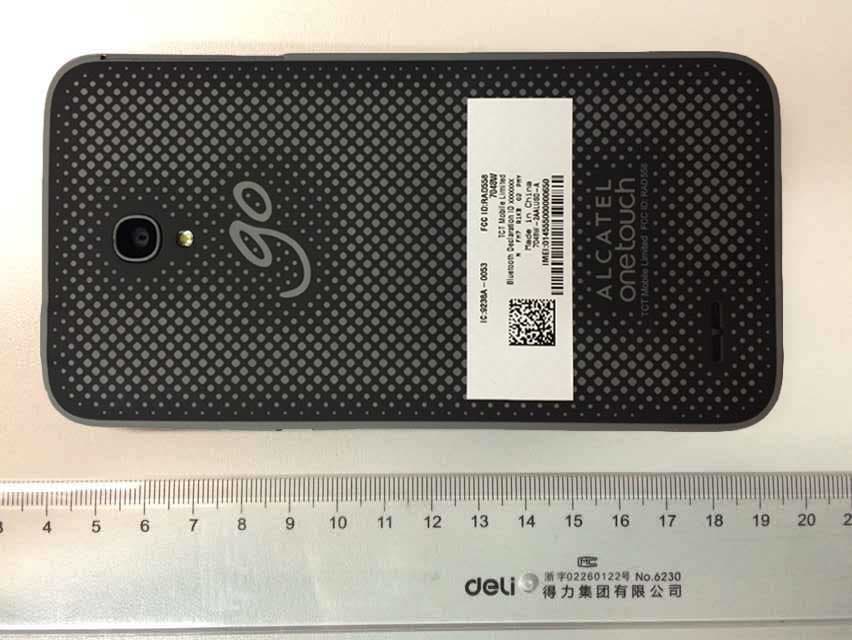
RAD558
Nov 15, 2015HSUPA/HSDPA/UMTS tribands / GSM quadbands/LTE 6-band mobile phone
Equipment Class
JBP - Part 15 Class B Computing Device Peripheral
RAD556
Sep 08, 2015CDMA 1X BC0/BC1/BC10 mobile phone
Equipment Class
PCE - PCS Licensed Transmitter held to ear
RAD552
Jun 20, 2015GSM Quadband / UMTS Triband mobile phone
Equipment Class
PCE - PCS Licensed Transmitter held to ear
RAD550
Jun 06, 2015HSDPA/HSUPA/HSPA+/UMTS quad band /GSM quad band/LTE 4 band mobile phone
Equipment Class
DSS - Part 15 Spread Spectrum Transmitter
RAD549
May 13, 2015WCDMA tri band / GSM quad band Moblie phone with BT, Wi-Fi functionality.
Equipment Class
DSS - Part 15 Spread Spectrum Transmitter