RAD444HSUPA/HSDPA/UMTS dual-band/GSM quad-band mobile phone
TCT Mobile Limited
Click to zoom
Application Details
- Equipment Class
- DTS - Digital Transmission System
- Date of Grant
- Jun 28, 2014
- Application Purpose
- Original Equipment
- Date of Application
- Jun 26, 2014
- Equipment Note
- HSUPA/HSDPA/UMTS dual-band/GSM quad-band mobile phone
- Frequency Range
- 2402.00000000 - 2480.00000000
- Company
- TCT Mobile Limited
- Country
- China
Documents & Files
Document Text
Text extracted from the exhibit documents filed with the FCC. Open a document above to read the original.
Users Manual
12 English - CJB27J1ALAAA Quick Start Guide For more information about how to use the phone, please go to www.alcatelonetouch.com to download the complete user manual. Also on our website you can find helpful FAQs, perform software upgrades, etc. www.sar-tick.com This product meets applicable national SAR limits of 1.6 W/kg. The specific maximum SAR values can be found in the RADIOWAVES section of this user guide. When carrying the product or using it while worn on your body, either use an approved accessory such as a holster or otherwise maintain a distance of 10 mm from the body to ensure compliance with RF exposure requirements. Note that the product may be transmitting even if you are not making a phone call. PROTECT YOUR HEARING To prevent possible hearing damage, do not listen at high volume levels for long periods. Exercise caution when holding your device near your ear while the loudspeaker is in use. 1 Your mobile .................. 1.1 Keys and connectors Headset connector Power key micro-USB connector Front Camera Back key Home key Menu key Touch screen 34 Volume up Volume down Camera Microphone Menu key • Option menu. Touch to access Manage Home- screen, Add widgets, Manage applications, Wallpaper and Settings. • Recent apps. Touch and hold to open a list of thumbnail images of apps you've worked with recently. Touch it to open an app. Swipe it left or right to remove a thumbnail from the list. Home key • While on any application or screen, touch to return to the Home screen. Back key • Touch to go back to the previous screen, or to close a dialog box, options menu, the notification panel, etc. Power key • Press: Lock the screen/Light up the screen. • Press and hold: Power on or generate a pop up menu selecting from Power off/Restart/Airplane mode or icons of Ringer mode. • Press to mute the ringtone when there’s an incoming call. • Press and hold for more than 7 seconds to restart the phone when the system stops responding. • Press and hold Power key and Volume down key to capture a screenshot. • Press and hold Power key and Volume up key under power off mode to restore factory set. Volume keys • Under call mode, adjust the earpiece or headset volume. • In Music/Video/Streaming mode, adjust the media volume. • In general mode, adjust the ring tone volume. • Mute the ringtone of an incoming call. • In Camera mode, using it as the capture key allows you to take a photo. 56 1.2 Getting started 1.2.1 Set-up Removing or installing the back cover Inserting or removing the SIM card You must insert your SIM card to make phone calls. Please power off your phone before inserting or removing the SIM card. Place the SIM card with the chip facing downwards and slide it into its housing. Make sure that it is correctly inserted. To remove the card, press and slide it out. Your phone only supports mini-SIM card. Do not attempt to insert other SIM types like micro and nano cards, otherwise you may damage your phone. Installing or removing the battery Please power off your phone before removing the battery. • Insert and click the battery into place, then close the cover. • Unclip the cover, then remove the battery. Installing the microSD card To install, please open microSD card lock first, and then place the external microSD card into the slot with the gold contact facing down. To remove the external microSD card, please open microSD card lock and take it out from the slot. Charging the battery Connect the battery charger to your phone and outlet respectively. If the battery is very low, there will be no indication that power is being received until the charge is sufficient enough to show the charging status bar. To reduce power consumption and energy waste, once the battery is fully charged, disconnect your charger from the plug; switch off Wi-Fi, GPS, Bluetooth or applications running in the background when not in use; reduce the backlight time, etc. 78 1.2.2 Power on your phone Hold down the Power key until the phone powers on. It will take a few seconds before the screen lights up. Set up your phone for the first time The first time you power on the phone, you should set the following options: language, input method, date & time, Google account, etc. If you power on your phone with no SIM card inserted, you can connect to a Wi-Fi network to sign into your Google account and to use some features. 1.2.3 Power off your phone Hold down the Power key until the Phone options appear, select Power off. 1.3 Home screen You can bring all the items (applications, shortcuts, folders and widgets) you use most frequently to your Home screen for quick access. Touch the Home key to switch to Home screen. Status bar • Status/Notification indicators • Touch and drag down to open the notification panel. Application tab • Touch to open main menu. Search bar (1) • Touch n to enter text search screen. • Touch o to enter voice search screen. Favorite applications tray • Touch to enter the application. • Touch and hold to move or change applications. Add a location to display local weather. Home screen is provided in an extended format to allow more space for adding applications, shortcuts etc. Slide the Home screen horizontally left and right to get a complete view of the Home screen. The row of small squares at the lower part of the screen indicates which screen you are viewing. 1.3.1 Using the touchscreen Touch To access an application, touch it with your finger. Touch and Hold Touch and hold the home screen to get the widgets. Drag Place your finger on any item to drag it to another location. Slide/Swipe Slide the screen to scroll up and down the applications, images, web pages... at your convenience. Flick Similar to swiping, but flicking makes it move quicker. Pinch/Spread Place your fingers of one hand on the screen surface and draw them apart or together to scale an element on the screen. Rotate Automatically change the screen orientation from portrait to landscape by turning the phone sideways to have …
Text truncated - open the document above for the full version.
Users Manual
12 English - CJB27J6ALAAA Quick Start Guide For more information about how to use the phone, please go to www.alcatelonetouch.com to download the complete user manual. Also on our website you can find helpful FAQs, realize software upgrade, etc. www.sar-tick.com This product meets applicable national SAR limits of 1.6 W/kg. The specific maximum SAR values can be found in the RADIOWAVES section of this user guide. When carrying the product or using it while worn on your body, either use an approved accessory such as a holster or otherwise maintain a distance of 10 mm from the body to ensure compliance with RF exposure requirements. Note that the product may be transmitting even if you are not making a phone call. PROTECT YOUR HEARING To prevent possible hearing damage, do not listen at high volume levels for long periods. Exercise caution when holding your device near your ear while the loudspeaker is in use. 1 Your mobile .................. 1.1 Keys and connectors Headset connector Power key micro-USB connector Front Camera Back key Home key Menu key Touch screen 34 Volume up Volume down Camera Microphone Menu key • Option menu. Touch to access Manage Home- screen, Add widgets, Manage applications, Wallpaper and Settings. • Recent apps. Touch and hold to open a list of thumbnail images of apps you've worked with recently. Touch it to open an app. Swipe it left or right to remove a thumbnail from the list. Home key • While on any application or screen, touch to return to the Home screen. Back key • Touch to go back to the previous screen, or to close a dialog box, options menu, the notification panel, etc. Power key • Press: Lock the screen/Light up the screen. • Press and hold: Power on or generate a pop up menu selecting from Power off/Restart/Aeroplane mode or icons of Ringer mode. • Press to mute the ringtone when there’s an incoming call. • Press and hold for more than 7 seconds to restart the phone when the system halted. • Press and hold Power key and Volume down key to capture a screenshot. • Press and hold Power key and Volume up key under power off mode to restore factory set. Volume keys • Under call mode, adjust the earpiece or headset volume. • In Music/Video/Streaming mode, adjust the media volume. • In general mode, adjust the ring tone volume. • Mute the ringtone of an incoming call. • In Camera mode, using it as the capture key allows you to take a photo. 56 1.2 Getting started 1.2.1 Set-up Removing or installing the back cover Inserting or removing the SIM card You must insert your SIM card to make phone calls. Please power off your phone before inserting or removing the SIM card. Place the SIM card with the chip facing downwards and slide it into its housing. Make sure that it is correctly inserted. To remove the card, press and slide it out. Your phone only supports mini-SIM card. Do not attempt to insert other SIM types like micro and nano cards, otherwise you may damage your phone. Installing or removing the battery Please power off your phone before removing the battery. • Insert and click the battery into place, then close the cover. • Unclip the cover, then remove the battery. Installing the microSD card To install, please open microSD card lock first, and then place the external microSD card into the slot with the gold contact facing down. To remove the external microSD card, please open microSD card lock and take it out from the slot. Charging the battery Connect the battery charger to your phone and outlet respectively. If the battery is very low, there will be no indication that power is being received until the charge is sufficient to show the charging status bar. To reduce power consumption and energy waste, once the battery is fully charged, disconnect your charger from the plug; switch off Wi-Fi, GPS, Bluetooth or background-running applications when not in use; reduce the backlight time, etc. 78 1.2.2 Power on your phone Hold down the Power key until the phone powers on. It will take a few seconds before the screen lights up. Set up your phone for the first time The first time you power on the phone, you should set the following options: language, input method, date & time, Google account, etc. If you power on your phone with no SIM card inserted, you can connect to a Wi-Fi network to sign into your Google account and to use some features. 1.2.3 Power off your phone Hold down the Power key until the Phone options appear, select Power off. 1.3 Home screen You can bring all the items (applications, shortcuts, folders and widgets) you love or use most frequently to your Home screen for quick access. Touch the Home key to switch to Home screen. Status bar • Status/Notification indicators • Touch and drag down to open the notification panel. Application tab • Touch to open main menu. Search bar (1) • Touch n to enter text search screen. • Touch o to enter voice search screen. Favorite applications tray • Touch to enter the application. • Touch and hold to move or change applications. Add a location to display local weather. Home screen is provided in an extended format to allow more space for adding applications, shortcuts etc. Slide the Home screen horizontally left and right to get a complete view of the Home screen. The row of small squares at the lower part of the screen indicates which screen you are viewing. 1.3.1 Using the touchscreen Touch To access an application, touch it with your finger. Touch and Hold Touch and hold the home screen to get the widgets. Drag Place your finger on any item to drag it to another location. Slide/Swipe Slide the screen to scroll up and down the applications, images, web pages... at your convenience. Flick Similar to swiping, but flicking makes it move quicker. Pinch/Spread Place your fingers of one hand on the screen surface and draw them apart or together to scale an element on the screen. Rotate Automatically change the screen orientation from portrait to landscape by turning the phone sideways to have a better view. 1…
Text truncated - open the document above for the full version.
Cover Letter(s)
5F, C building, No. 232, Liang Jing Road ZhangJiang High-Tech Park, Pudong Area Shanghai, P.R. China. 201203 TEL: +86(0)21 61460666 FAX: +86(0)21 61460602 Date 2014-06-10 To: Federal Communications Commission, Authorization & Evaluation Division, 7345 Oakland Mills Road Columbia, MD 21046 And American Telecommunications Certification Body, Inc. 6731 Whittier Avenue Suite C110 McLean, VA 22101 To Whom It May Concern: TMC (Telecommunication Metrology Center of MIIT) is authorized to act on our behalf, until otherwise notified, for applications to American Telecommunications Certification Body, Inc. (ATCB). We certify that we are not subject to denial of federal benefits, which includes FCC benefits, pursuant to Section 5301 of the Anti-Drug Abuse Act of 1988, U.S.C. 862. Further, no party, as defined in 47 CFR1.2002 (b) to the application is subject to denial of federal benefits, that includes FCC benefits. Thank you. Regards, Gong Zhizhou Approval Team Leader TCT Mobile Limited
Cover Letter(s)
5F, C building, No. 232, Liang Jing Road ZhangJiang High-Tech Park, Pudong Area Shanghai, P.R. China. 201203 TEL: +86(0)21 61460666 FAX: +86(0)21 61460602 06/10/2014 Federal Communications Commission Office of Engineering and Technology Equipment Authorization Division 7345 Oakland Mills Road Columbia, Maryland 21046 Subject: Permanent Confidentiality request for FCC ID: RAD444 To Whom It May Concern, Pursuant to sections 0.457 and 0.459 of CFR 47, the applicant requests permanent confidential treatment of the following information accompanying this application: - Block Diagram - Schematics - Operational Description - BOM list/Tune-Up-Procedure The above materials contain trade secrets and proprietary information not customarily released to the public. The public disclosure of these matters might be harmful to the applicant and provide unjustified benefits to its competitors. Yours Sincerely, Zhizhou Gong Approval Team Leader TCT Mobile Limited
External Photos
EUT photograph Mobile Phone Mobile Phone Mobile Phone Mobile Phone Mobile Phone Mobile Phone Mobile Phone Mobile Phone Battery AE1 Battery AE1 Battery AE2 Battery AE2 Battery AE3 Battery AE3 Battery AE4 Battery AE4 Battery AE5 Battery AE5 Battery AE6 Battery AE6 Charger AE7 Label of Charger AE7 Charger AE8 Label of Charger AE8 Charger AE9 Label of Charger AE9 Headset AE10 Headset AE11 Headset AE12 Headset AE13 Headset AE14 Headset AE15 Headset AE16 Headset AE17 Headset AE18 Data Cable AE19 Data Cable AE20 Data Cable AE21 Data Cable AE22
Internal Photos
EUT Interior photograph Mobile Phone Mobile Phone Disassembly Mobile Phone Disassembly Mobile Phone Disassembly
RF Exposure Info
No.I14Z46744-SEM01 Page 1 of 117 ©Copyright. All rights reserved by TMC Beijing. SAR TEST REPORT No. I14Z46744-SEM01 For TCT Mobile Limited HSUPA/HSDPA/UMTS dual-band/GSM quad-band mobile phone Model Name: 4018A ,4118A With Hardware Version: PIO Software Version: v8I1F FCC ID: RAD444 Issued Date: 2014-06-24 Note: The test results in this test report relate only to the devices specified in this report. This report shall not be reproduced except in full without the written approval of TMC Beijing. Test Laboratory: TMC Beijing, Telecommunication Metrology Center of MIIT No. 52, Huayuan Bei Road, Haidian District, Beijing, P. R. China 100191. Tel:+86(0)10-62304633-2079, Fax:+86(0)10-62304633 Email:[email protected]. www.emcite.com No. I14Z46744-SEM01 Page 2 of 117 Revision Version Report Number Revision Date Memo I14Z46744-SEM01 0 2014-06-13 Initial creation of test report I14Z46744-SEM01 1 2014-06-24 Update the Power Tolerance and conducted power for WCDMA1900 No. I14Z46744-SEM01 Page 3 of 117 TABLE OF CONTENT 1 TEST LABORATORY .................................................................................................................... 5 1.1 TESTING LO C AT I O N ........................................................................................................................................ 5 1.2 TESTING ENVIRONMENT ................................................................................................................................. 5 1.3 PROJECT DATA ............................................................................................................................................... 5 1.4 SIGNATURE ..................................................................................................................................................... 5 2 STATEMENT OF COMPLIANCE .................................................................................................. 6 3 CLIENT INFORMATION ................................................................................................................ 7 3.1 APPLICANT INFORMATION .............................................................................................................................. 7 3.2 MANUFACTURER INFORMATION ..................................................................................................................... 7 4 EQUIPMENT UNDER TEST (EUT) AND ANCILLARY EQUIPMENT (AE) ................................. 8 4.1 ABOUT EUT ................................................................................................................................................... 8 4.2 INTERNAL IDENTIFICATION OF EUT USED DURING THE TEST .......................................................................... 8 4.3 INTERNAL IDENTIFICATION OF AE USED DURING THE TEST ............................................................................ 9 5 TEST METHODOLOGY .............................................................................................................. 10 5.1 APPLICABLE LIMIT REGULATIONS ................................................................................................................ 10 5.2 APPLICABLE MEASUREMENT STANDARDS .................................................................................................... 10 6 SPECIFIC ABSORPTION RATE (SAR) ...................................................................................... 11 6.1 INTRODUCTION ............................................................................................................................................. 11 6.2 SAR DEFINITION .......................................................................................................................................... 11 7 TISSUE SIMULATING LIQUIDS ................................................................................................. 12 7.1 TARGETS FOR TISSUE SIMULATING LIQUID .................................................................................................... 12 7.2 DIELECTRIC PERFORMANCE ......................................................................................................................... 12 8 SYSTEM VERIFICATION ............................................................................................................ 16 8.1 SYSTEM SETUP ............................................................................................................................................. 16 8.2 SYSTEM VERIFICATION ................................................................................................................................. 17 9 MEASUREMENT PROCEDURES .............................................................................................. 18 9.1 TESTS TO BE PERFORMED ............................................................................................................................. 18 9.2 GENERAL MEASUREMENT PROCEDURE ........................................................................................................ 19 9.3 WCDMA MEASUREMENT PROCEDURES FOR SAR ...................................................................................... 20 9.4 BLUETOOTH & WI-FI MEASUREMENT PROCEDURES FOR SAR .................................................................... 21 9.5 POWER DRIFT ............................................................................................................................................... 21 10 AREA SCAN BASED 1-G SAR ................................................................................................. 22 10.1 REQUIREMENT OF KDB .............................................................................................................................. 22 10.2 FAST SAR ALGORITHMS ............................................................................................................................ 22 11 CONDUCTED OUTPUT POWER .................................................…
Text truncated - open the document above for the full version.
RF Exposure Info
No. I14Z46744-SEM01 Page 41 of 117 Combined standard uncertainty ∑ = = 21 1 22' i iic ucu 9.25 9.12 257 Expanded uncertainty (confidence interval of 95 %) ce uu2= 18.5 18.2 16.2 Measurement Uncertainty for Normal SAR Tests (3~6GHz) No. Error Description Type Uncertainty value Probably Distribution D iv. (Ci) 1g (Ci) 10g Std. Unc. (1g) Std. Unc. (10g) Degree of freedo m Measurement system 1 Probe calibration B 6.5 N 1 1 1 6.5 6.5 ∞ 2 Isotropy B 4.7 R 3 0.7 0.7 1.9 1.9 ∞ 3 Boundary effect B 2.0 R 3 1 1 1.2 1.2 ∞ 4 Linearity B 4.7 R 3 1 1 2.7 2.7 ∞ 5 Detection limit B 1.0 R 3 1 1 0.6 0.6 ∞ 6 Readout electronics B 0.3 R 3 1 1 0.3 0.3 ∞ 7 Response time B 0.8 R 3 1 1 0.5 0.5 ∞ 8 Integration time B 2.6 R 3 1 1 1.5 1.5 ∞ 9 RF ambient conditions-noise B 0 R 3 1 1 0 0 ∞ 10 RF ambient conditions-reflection B 0 R 3 1 1 0 0 ∞ 11 Probe positioned mech. restrictions B 0.8 R 3 1 1 0.5 0.5 ∞ 12 Probe positioning with respect to phantom shell B 6.7 R 3 1 1 3.9 3.9 ∞ 13 Post-processing B 4.0 R 3 1 1 2.3 2.3 ∞ Test sample related 14 Test sample positioning A 3.3 N 1 1 1 3.3 3.3 71 15 Device holder uncertainty A 3.4 N 1 1 1 3.4 3.4 5 16 Drift of output power B 5.0 R 3 1 1 2.9 2.9 ∞ Phantom and set-up 17 Phantom uncertainty B 4.0 R 3 1 1 2.3 2.3 ∞ 18 Liquid conductivity (target) B 5.0 R 3 0.64 0.43 1.8 1.2 ∞ 19 Liquid conductivity (meas.) A 2.06 N 1 0.64 0.43 1.32 0.89 43 No. I14Z46744-SEM01 Page 42 of 117 20 Liquid permittivity (target) B 5.0 R 3 0.6 0.49 1.7 1.4 ∞ 21 Liquid permittivity (meas.) A 1.6 N 1 0.6 0.49 1.0 0.8 521 Combined standard uncertainty ∑ = = 21 1 22' i iic ucu 10.8 10.7 257 Expanded uncertainty (confidence interval of 95 %) ce uu2= 21.6 21.4 16.3 Measurement Uncertainty for Fast SAR Tests (300MHz~3GHz) No. Error Description Type Uncertainty value Probably Distribution D iv. (Ci) 1g (Ci) 10g Std. Unc. (1g) Std. Unc. (10g) Degree of freedo m Measurement system 1 Probe calibration B 5.5 N 1 1 1 5.5 5.5 ∞ 2 Isotropy B 4.7 R 3 0.7 0.7 1.9 1.9 ∞ 3 Boundary effect B 1.0 R 3 1 1 0.6 0.6 ∞ 4 Linearity B 4.7 R 3 1 1 2.7 2.7 ∞ 5 Detection limit B 1.0 R 3 1 1 0.6 0.6 ∞ 6 Readout electronics B 0.3 R 3 1 1 0.3 0.3 ∞ 7 Response time B 0.8 R 3 1 1 0.5 0.5 ∞ 8 Integration time B 2.6 R 3 1 1 1.5 1.5 ∞ 9 RF ambient conditions-noise B 0 R 3 1 1 0 0 ∞ 10 RF ambient conditions-reflection B 0 R 3 1 1 0 0 ∞ 11 Probe positioned mech. Restrictions B 0.4 R 3 1 1 0.2 0.2 ∞ 12 Probe positioning with respect to phantom shell B 2.9 R 3 1 1 1.7 1.7 ∞ 13 Post-processing B 1.0 R 3 1 1 0.6 0.6 ∞ 14 Fast SAR z-Approximation B 7.0 R 3 1 1 4.0 4.0 ∞ Test sample related 15 Test sample positioning A 3.3 N 1 1 1 3.3 3.3 71 16 Device holder uncertainty A 3.4 N 1 1 1 3.4 3.4 5 17 Drift of output power B 5.0 R 3 1 1 2.9 2.9 ∞ Phantom and set-up No. I14Z46744-SEM01 Page 43 of 117 18 Phantom uncertainty B 4.0 R 3 1 1 2.3 2.3 ∞ 19 Liquid conductivity (target) B 5.0 R 3 0.64 0.43 1.8 1.2 ∞ 20 Liquid conductivity (meas.) A 2.06 N 1 0.64 0.43 1.32 0.89 43 21 Liquid permittivity (target) B 5.0 R 3 0.6 0.49 1.7 1.4 ∞ 22 Liquid permittivity (meas.) A 1.6 N 1 0.6 0.49 1.0 0.8 521 Combined standard uncertainty ∑ = = 22 1 22' i iic ucu 10.1 9.95 257 Expanded uncertainty (confidence interval of 95 %) ce uu2= 20.2 19.9 16.4 Measurement Uncertainty for Fast SAR Tests (3~6GHz) No. Error Description Type Uncertainty value Probably Distribution D iv. (Ci) 1g (Ci) 10g Std. Unc. (1g) Std. Unc. (10g) Degree of freedo m Measurement system 1 Probe calibration B 6.5 N 1 1 1 6.5 6.5 ∞ 2 Isotropy B 4.7 R 3 0.7 0.7 1.9 1.9 ∞ 3 Boundary effect B 2.0 R 3 1 1 1.2 1.2 ∞ 4 Linearity B 4.7 R 3 1 1 2.7 2.7 ∞ 5 Detection limit B 1.0 R 3 1 1 0.6 0.6 ∞ 6 Readout electronics B 0.3 R 3 1 1 0.3 0.3 ∞ 7 Response time B 0.8 R 3 1 1 0.5 0.5 ∞ 8 Integration time B 2.6 R 3 1 1 1.5 1.5 ∞ 9 RF ambient conditions-noise B 0 R 3 1 1 0 0 ∞ 10 RF ambient conditions-reflection B 0 R 3 1 1 0 0 ∞ 11 Probe positioned mech. Restrictions B 0.8 R 3 1 1 0.5 0.5 ∞ 12 Probe positioning with respect to phantom shell B 6.7 R 3 1 1 3.9 3.9 ∞ 13 Post-processing B 1.0 R 3 1 1 0.6 0.6 ∞ 14 Fast SAR z-Approximation B 14.0 R 3 1 1 8.1 8.1 ∞ Test sample related 15 Test sample A 3.3 N 1 1 1 3.3 3.3 71 No. I14Z46744-SEM01 Page 44 of 117 positioning 16 Device holder uncertainty A 3.4 N 1 1 1 3.4 3.4 5 17 Drift of output power B 5.0 R 3 1 1 2.9 2.9 ∞ Phantom and set-up 18 Phantom uncertainty B 4.0 R 3 1 1 2.3 2.3 ∞ 19 Liquid conductivity (target) B 5.0 R 3 0.64 0.43 1.8 1.2 ∞ 20 Liquid conductivity (meas.) A 2.06 N 1 0.64 0.43 1.32 0.89 43 21 Liquid permittivity (target) B 5.0 R 3 0.6 0.49 1.7 1.4 ∞ 22 Liquid permittivity (meas.) A 1.6 N 1 0.6 0.49 1.0 0.8 521 Combined standard uncertainty ∑ = = 22 1 22' i iic ucu 13.3 13.2 257 Expanded uncertainty (confidence interval of 95 %) ce uu2= 26.6 26.4 17 MAIN TEST INSTRUMENTS Table 17.1: List of Main Instruments No. Name Type Serial Number Calibration Date Valid Period 01 Network analyzer E5071C MY46110673 February 15, 2014 One year 02 Power meter NRVD 102083 September 11, 2013 One year 03 Power sensor NRV-Z5 100542 04 Signal Generator E4438C MY49070393 November 08, 2013 One Year 05 Amplifier 60S1G4 0331848 No Calibration Requested 06 BTS E5515C MY50263375 January 30, 2014 One year 07 E-field Probe SPEAG EX3DV4 3846 September 03, 2013 One year 08 DAE SPEAG DAE4 771 November 12, 2013 One year 09 Dipole Validation Kit SPEAG D835V2 443 August 29, 2013 One year 10 Dipole Validation Kit SPEAG D1900V2 5d101 July 09, 2013 One year 11 Dipole Validation Kit SPEAG D2450V2 853 July 08, 2013 One year ***END OF REPORT BODY*** No. I14Z46744-SEM01 Page 45 of 117 ANNEX A Graph Results 850 Left Cheek Low Date: 2014- 5- 25 Electronics: DAE4 Sn771 Medium: Head 850 MHz Medium parameters used: f = 825 MHz; σ = 0.871 S/m; εr = 42.848; ρ = 1000 kg/m 3 Ambient Temperature: 22.1 o C Liquid Temperature: 21.6 o C Communication System: GSM 850 Frequency: 824.2 MHz Duty Cycle: 1:8.3 Probe: EX3DV4 - SN3846 ConvF(8.92, 8.92, 8.92) Cheek Low/Area Scan (61x101x1): Interpolated grid: dx=1.000 m…
Text truncated - open the document above for the full version.
RF Exposure Info
No. I14Z46744-SEM01 Page 81 of 117 ANNEX E Equivalent Media Recipes The liquid used for the frequency range of 800-3000 MHz consisted of water, sugar, salt, preventol, glycol monobutyl and Cellulose. The liquid has been previously proven to be suited for worst-case. The Table E.1 shows the detail solution. It’s satisfying the latest tissue dielectric parameters requirements proposed by the IEEE 1528 and IEC 62209. Table E.1: Composition of the Tissue Equivalent Matter Frequency (MHz) 835 Head 835 Body 1900 Head 1900 Body 2450 Head 2450 Body 5800 Head 5800 Body Ingredients (% by weight) Water 41.45 52.5 55.242 69.91 58.79 72.60 65.53 65.53 Sugar 56.0 45.0 \ \ \ \ \ \ Salt 1.45 1.4 0.306 0.13 0.06 0.18 \ \ Preventol 0.1 0.1 \ \ \ \ \ \ Cellulose 1.0 1.0 \ \ \ \ \ \ Glycol Monobutyl \ \ 44.452 29.96 41.15 27.22 \ \ Diethylenglycol monohexylether \ \ \ \ \ \ 17.24 17.24 Triton X-100 \ \ \ \ \ \ 17.24 17.24 Dielectric Parameters Target Value ε=41.5 σ=0.90 ε=55.2 σ=0.97 ε=40.0 σ=1.40 ε=53.3 σ=1.52 ε=39.2 σ=1.80 ε=52.7 σ=1.95 ε=35.3 σ=5.27 ε=48.2 σ=6.00 No. I14Z46744-SEM01 Page 82 of 117 ANNEX F System Validation The SAR system must be validated against its performance specifications before it is deployed. When SAR probes, system components or software are changed, upgraded or recalibrated, these must be validated with the SAR system(s) that operates with such components. Table F.1: System Validation Probe SN. Liquid name Validation date Frequency point Status (OK or Not) 3846 Head 750MHz Mar. 06, 2013 750 MHz OK 3846 Head 850MHz Mar. 06, 2013 850 MHz OK 3846 Head 900MHz Mar. 01, 2013 900 MHz OK 3846 Head 1750MHz Mar. 03, 2013 1750 MHz OK 3846 Head 1810MHz Mar. 03, 2013 1810 MHz OK 3846 Head 1900MHz Mar. 07, 2013 1900 MHz OK 3846 Head 1950MHz Mar. 04, 2013 1950 MHz OK 3846 Head 2000MHz Mar. 04, 2013 2000 MHz OK 3846 Head 2100MHz Mar. 05, 2013 2100 MHz OK 3846 Head 2300MHz Mar. 05, 2013 2300 MHz OK 3846 Head 2450MHz Mar. 02, 2013 2450 MHz OK 3846 Head 2550MHz Mar. 08, 2013 2550 MHz OK 3846 Head 2600MHz Mar. 08, 2013 2600 MHz OK 3846 Head 3500MHz Mar. 09, 2013 3500 MHz OK 3846 Head 3700MHz Mar. 09, 2013 3700 MHz OK 3846 Head 5200MHz Mar. 10, 2013 5200 MHz OK 3846 Head 5500MHz Mar. 10, 2013 5500 MHz OK 3846 Head 5800MHz Mar. 10, 2013 5800 MHz OK 3846 Body 750MHz Mar. 06, 2013 750 MHz OK 3846 Body 850MHz Mar. 06, 2013 850 MHz OK 3846 Body 900MHz Mar. 01, 2013 900 MHz OK 3846 Body 1750MHz Mar. 03, 2013 1750 MHz OK 3846 Body 1810MHz Mar. 03, 2013 1810 MHz OK 3846 Body 1900MHz Mar. 07, 2013 1900 MHz OK 3846 Body 1950MHz Mar. 04, 2013 1950 MHz OK 3846 Body 2000MHz Mar. 04, 2013 2000 MHz OK 3846 Body 2100MHz Mar. 05, 2013 2100 MHz OK 3846 Body 2300MHz Mar. 05, 2013 2300 MHz OK 3846 Body 2450MHz Mar. 02, 2013 2450 MHz OK 3846 Body 2550MHz Mar. 08, 2013 2550 MHz OK 3846 Body 2600MHz Mar. 08, 2013 2600 MHz OK 3846 Body 3500MHz Mar. 09, 2013 3500 MHz OK 3846 Body 3700MHz Mar. 09, 2013 3700 MHz OK 3846 Body 5200MHz Mar. 10, 2013 5200 MHz OK 3846 Body 5500MHz Mar. 10, 2013 5500 MHz OK 3846 Body 5800MHz Mar. 10, 2013 5800 MHz OK No. I14Z46744-SEM01 Page 83 of 117 ANNEX G Probe Calibration Certificate Probe 3846 Calibration Certificate No. I14Z46744-SEM01 Page 84 of 117 No. I14Z46744-SEM01 Page 85 of 117 No. I14Z46744-SEM01 Page 86 of 117 No. I14Z46744-SEM01 Page 87 of 117 No. I14Z46744-SEM01 Page 88 of 117 No. I14Z46744-SEM01 Page 89 of 117 No. I14Z46744-SEM0…
Text truncated - open the document above for the full version.
Contact Information
Applicant
Zhizhou Gong
Technical Contact
Telecommunication Metrology Center of MIITXue Zhen
[email protected]86-10-62304633
No. 52, Huayuan Bei Road, Haidian District, · Beijing · China
Test Firm
TMC-Telecommunication Metrology Center of M.I.I.TChongwen Song
Technical Specifications
| # | Rule Parts | Frequency Range | Power Output |
|---|---|---|---|
| 2 | 15C | 2.40 GHz - 2.48 GHz | 300.00 µW |
Other Applications from TCT Mobile Limited
RAD558
Nov 15, 2015HSUPA/HSDPA/UMTS tribands / GSM quadbands/LTE 6-band mobile phone
Equipment Class
JBP - Part 15 Class B Computing Device Peripheral
RAD556
Sep 08, 2015CDMA 1X BC0/BC1/BC10 mobile phone
Equipment Class
PCE - PCS Licensed Transmitter held to ear
RAD552
Jun 20, 2015GSM Quadband / UMTS Triband mobile phone
Equipment Class
PCE - PCS Licensed Transmitter held to ear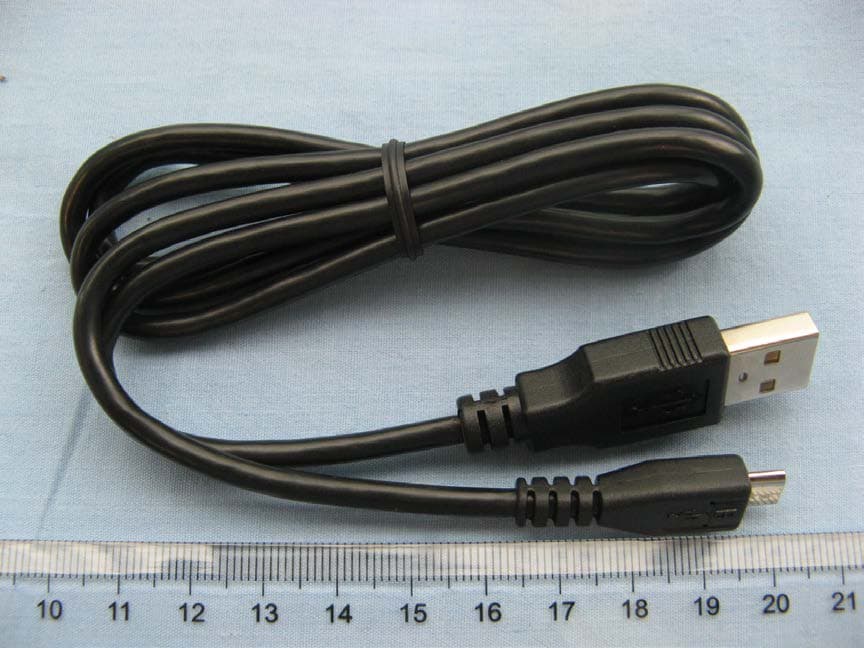
RAD550
Jun 06, 2015HSDPA/HSUPA/HSPA+/UMTS quad band /GSM quad band/LTE 4 band mobile phone
Equipment Class
DSS - Part 15 Spread Spectrum Transmitter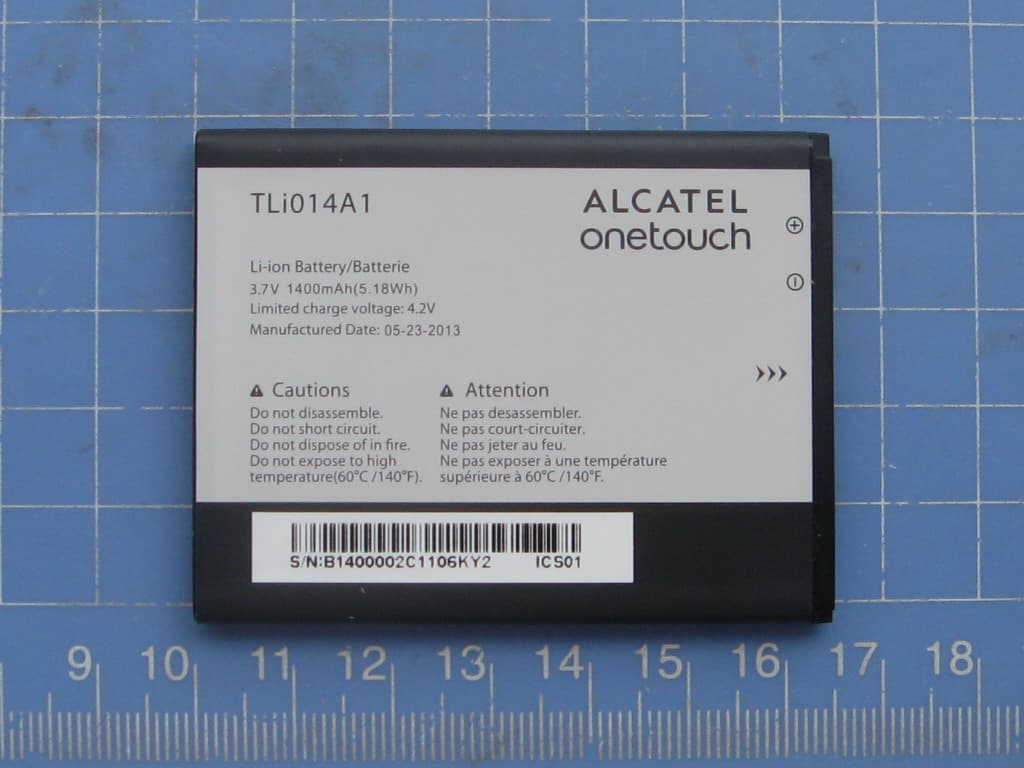
RAD549
May 13, 2015WCDMA tri band / GSM quad band Moblie phone with BT, Wi-Fi functionality.
Equipment Class
DSS - Part 15 Spread Spectrum Transmitter