RAD446GSM quad band mobile phone
TCT Mobile Limited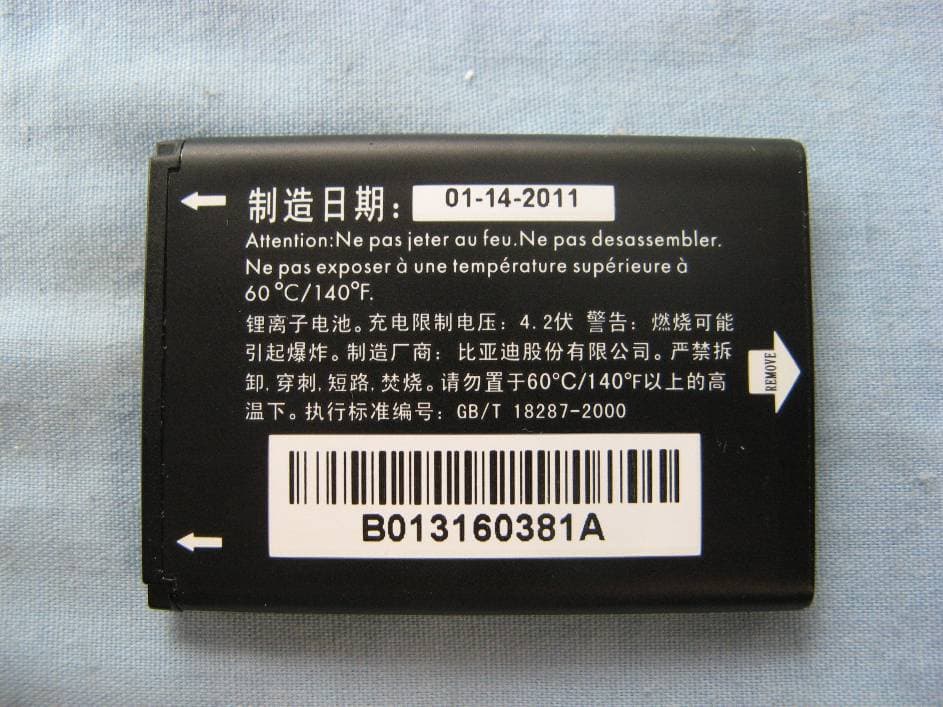
Click to zoom
Application Details
- Equipment Class
- PCE - PCS Licensed Transmitter held to ear
- Date of Grant
- Jan 20, 2014
- Application Purpose
- Original Equipment
- Date of Application
- Jan 20, 2014
- Equipment Note
- GSM quad band mobile phone
- Frequency Range
- 1850.20000000 - 1909.80000000
- Company
- TCT Mobile Limited
- Country
- China
Documents & Files
Document Text
Text extracted from the exhibit documents filed with the FCC. Open a document above to read the original.
Users Manual
www.sar-tick.com This product meets applicable national SAR limits of 1.6W/kg. The specific maximum SAR values can be found in the RADIOWAVES section of this user guide. When carrying the product or using it while worn on your body, either use an approved accessory such as a holster or otherwise maintain a distance of 10 mm from the body to ensure compliance with RF exposure requirements. Note that the product may be transmitting even if you are not making a phone call. 1 9 2 10 3 11 4 12 5 13 6 14 7 15 8 16 1 Your mobile .............. 1.1 Keys Navigation key Confirm an option (press the middle of the key) Answer Send a call In idle screen: Access call log (Redial) (press) Switch on/Switch off the telephone (press and hold) End call Return to idle screen Left softkey Right softkey Access your voicemail (press and hold) In Edit mode: - Press: access the symbols table - Press and hold: enter zero In Edit mode: - Press: change input methods In idle screen: - Press: # - Press and hold: activate/deactivate vibrate mode In Edit mode: - Press: (space) From Idle screen - Press: dial ‘5’ - Press and hold: switch the LED Flashlight on/off 2 Getting started ......... 2.1 Set-up Removing and installing the back cover Removing and installing the battery Inserting and removing the SIM card Place the SIM card with the chip facing downwards and slide it into its housing. Make sure that it is correctly inserted. To remove the card, press it and slide it out. 4 Contacts ............. 4.1 Consulting your contacts To access the Contacts from the main screen, press the key and select the icon from the menu. 4.2 Adding a contact You can add a new contact to phone or SIM card by selecting “Add contact”. 5 Messages ............ 5.1 Create message From the main menu select “Messages” to create text. You can type a message and you can also modify a predefined message in Templates. While writing a message, select “Options” to access all of the messaging options. You can save your messages that you send often to Drafts. Specific letters (accent) will increase the size of the SMS, this may cause multiple SMS to be sent to your recipient. Quick Start Guide For more information about how to use the phone, please go to www.alcatelonetouch.com to download complete user manual (English version only). Also on our website you can find helpful FAQs (English version only). (1) The icons and illustrations in this guide are provided for information purposes only. 3 Calls .......................... 3.1 Making a call Dial the desired number then press the key to place the call. If you make a mistake, you can delete the incorrect digits by pressing the right softkey. To hang up the call, press the key. Making an emergency call If your phone is covered by the network, dial emergency number and press the key to make an emergency call. This works even without a SIM card and without typing the PIN code. 3.2 Calling your voicemail (1) To access your voicemail, hold down the key. 3.3 Receiving a call When you receive an incoming call, press the key to talk and then hang up using the key. 3.4 Available functions during the call During a call, you can use your directory, your calendar, text messages, etc. without hanging up or dropping the call. (1) Contact your network operator to check service availability. Charging the battery Connect the battery charger to your phone and outlet respectively. Charging may take about 20 minutes to start if the battery is • fully discharged. Be careful not to force the plug into the socket.• Make sure the battery is correctly inserted before connecting • the charger. The outlet must be near to the phone and easily accessible • (avoid electric extension cables). When using your telephone for the first time, charge the • battery fully (approximately 3 hours). You are advised to fully charge the battery ( ). To reduce power consumption and energy waste, when • battery is fully charged, disconnect your charger from the plug; reduce the backlight time, etc. The charge is complete when the animation stops. 2.2 Power on your phone Hold down the key until the phone powers on. 2.3 Power off your phone Hold down the key from the main screen. 6 Call log ................ 6.1 Access You can access the function using the following options: Select • from main menu Press the send key from Home screen• For dual SIM model, the complete contacts of both SIM1 • and SIM2 are available in this menu (1) . 6.2 Available options When you press “Options”, you can have access to View, Send SMS, Save to Contacts, Edit before call, Add to blacklist, Add to whitelist, Delete etc. 7 Camera ............... Your mobile phone is fitted with a camera for taking photos that you can use in different ways: Store them in your “• My files\Images”. Customize your main screen.• Make sure that microSD card is well inserted before taking photos. 8 Settings .............. From the main menu, select the menu icon and select the function of your choice in order to customize your telephone: Profiles, Phone settings, Call settings, Network, Connectivity, Security, Regulatory & Safety, Restore default. 9 Tools ..................... 9.1 Alarm Your mobile phone has a built-in alarm clock with a snooze feature. 9.2 Calculator Enter a number, select the type of operation to be performed, and enter the second number, then press “=” to display the result. 9.3 Calendar Once you enter this menu from the main menu, there is a monthly-view calendar for you to query date. 9.4 Notes You can create a note in text format by accessing “Tools\ Notes” from the main menu. 9.5 Bluetooth Access this feature by pressing to enter the main menu, then selecting “Tools\Bluetooth”. 9.6 Converter Weight converter and Length converter. 9.7 Voice Alarm With this menu, you may create the voice file and set it as the alarm. 9.8 Fake call This program enables you to call yourself by simulating a caller number/name, ringtone at a scheduled time. It helps you to politely escape from s…
Text truncated - open the document above for the full version.
Cover Letter(s)
5F, C building, No. 232, Liang Jing Road ZhangJiang High-Tech Park, Pudong Area Shanghai, P.R. China. 201203 TEL: +86(0)21 61460666 FAX: +86(0)21 61460602 Date 2013-12-19 To: Federal Communications Commission, Authorization & Evaluation Division, 7345 Oakland Mills Road Columbia, MD 21046 And American Telecommunications Certification Body, Inc. 6731 Whittier Avenue Suite C110 McLean, VA 22101 To Whom It May Concern: TMC (Telecommunication Metrology Center of MIIT) is authorized to act on our behalf, until otherwise notified, for applications to American Telecommunications Certification Body, Inc. (ATCB). We certify that we are not subject to denial of federal benefits, which includes FCC benefits, pursuant to Section 5301 of the Anti-Drug Abuse Act of 1988, U.S.C. 862. Further, no party, as defined in 47 CFR1.2002 (b) to the application is subject to denial of federal benefits, that includes FCC benefits. Thank you. Regards, Gong Zhizhou Approval Team Leader TCT Mobile Limited
Cover Letter(s)
5F, C building, No. 232, Liang Jing Road ZhangJiang High-Tech Park, Pudong Area Shanghai, P.R. China. 201203 TEL: +86(0)21 61460666 FAX: +86(0)21 61460602 2014-1-7 Federal Communications Commission Office of Engineering and Technology Equipment Authorization Division 7345 Oakland Mills Road Columbia, Maryland 21046 Subject: Permanent Confidentiality request for FCC ID: RAD446 To Whom It May Concern, Pursuant to sections 0.457 and 0.459 of CFR 47, the applicant requests permanent confidential treatment of the following information accompanying this application: - Block Diagram - Schematics - Operational Description - BOM list/Tune-Up-Procedure The above materials contain trade secrets and proprietary information not customarily released to the public. The public disclosure of these matters might be harmful to the applicant and provide unjustified benefits to its competitors. Yours Sincerely, Zhizhou Gong Approval Team Leader TCT Mobile Limited
External Photos
EUT photograph Mobile Phone Mobile Phone Mobile Phone Battery AE1 Battery AE1 Battery AE2 Battery AE2 Battery AE3 Battery AE3 Battery AE6 Battery AE6 Label of Charger AE4 Charger AE4 Charger AE21 Label of Charger AE21 Headset AE10 Headset AE11 Data Cable AE14 Data Cable AE15
Internal Photos
EUT Interior photograph Mobile Phone Disassembly Mobile Phone Disassembly Mobile Phone Disassembly Mobile Phone Disassembly
RF Exposure Info
No.2013SAR00175 Page 1 of 92 ©Copyright. All rights reserved by TMC Beijing. SAR TEST REPORT No. 2013SAR00175 For TCT Mobile Limited GSM quad band mobile phone Mode Name: Tiger L2 2SIM Marketing Name: 1045D With Hardware Version: Proto Software Version: SWH11 FCC ID: RAD44 6 Issued Date: 2014-01-13 Note: The test results in this test report relate only to the devices specified in this report. This report shall not be reproduced except in full without the written approval of TMC Beijing. Test Laboratory: TMC Beijing, Telecommunication Metrology Center of MIIT No. 52, Huayuan Bei Road, Haidian District, Beijing, P. R. China 100191. Tel:+86(0)10-62304633-2079, Fax:+86(0)10-62304633 Email:[email protected]. www.emcite.com No. 2013SAR00175 Page 2 of 92 Revision Version Report Number Revision Date Memo 2013SAR00175 00 2014-01-13 Initial creation of test report No. 2013SAR00175 Page 3 of 92 TABLE OF CONTENT 1 TEST LABORATORY .................................................................................................................... 5 1.1 TESTING LO C AT I O N ........................................................................................................................................ 5 1.2 TESTING ENVIRONMENT ................................................................................................................................. 5 1.3 PROJECT DATA ............................................................................................................................................... 5 1.4 SIGNATURE ..................................................................................................................................................... 5 2 STATEMENT OF COMPLIANCE .................................................................................................. 6 3 CLIENT INFORMATION ................................................................................................................ 7 3.1 APPLICANT INFORMATION .............................................................................................................................. 7 3.2 MANUFACTURER INFORMATION ..................................................................................................................... 7 4 EQUIPMENT UNDER TEST (EUT) AND ANCILLARY EQUIPMENT (AE) ................................. 8 4.1 ABOUT EUT ................................................................................................................................................... 8 4.2 INTERNAL IDENTIFICATION OF EUT USED DURING THE TEST .......................................................................... 8 4.3 INTERNAL IDENTIFICATION OF AE USED DURING THE TEST ............................................................................ 8 5 TEST METHODOLOGY ................................................................................................................ 9 5.1 APPLICABLE LIMIT REGULATIONS .................................................................................................................. 9 5.2 APPLICABLE MEASUREMENT STANDARDS ...................................................................................................... 9 6 SPECIFIC ABSORPTION RATE (SAR) ...................................................................................... 10 6.1 INTRODUCTION ............................................................................................................................................. 10 6.2 SAR DEFINITION .......................................................................................................................................... 10 7 TISSUE SIMULATING LIQUIDS ................................................................................................. 11 7.1 TARGETS FOR TISSUE SIMULATING LIQUID .................................................................................................... 11 7.2 DIELECTRIC PERFORMANCE ......................................................................................................................... 11 8 SYSTEM VERIFICATION ............................................................................................................ 14 8.1 SYSTEM SETUP ............................................................................................................................................. 14 8.2 SYSTEM VERIFICATION ................................................................................................................................. 15 9 MEASUREMENT PROCEDURES .............................................................................................. 16 9.1 TESTS TO BE PERFORMED ............................................................................................................................. 16 9.2 GENERAL MEASUREMENT PROCEDURE ........................................................................................................ 17 9.3 POWER DRIFT ............................................................................................................................................... 18 10 AREA SCAN BASED 1-G SAR ................................................................................................. 19 10.1 REQUIREMENT OF KDB .............................................................................................................................. 19 10.2 FAST SAR ALGORITHMS ............................................................................................................................ 19 11 CONDUCTED OUTPUT POWER .............................................................................................. 20 11.1 MANUFACTURING TOLERANCE ................................................................................................................... 20 11.2 GSM MEASUREMENT RESULT .................................................................................................................... 21 No. 2013SAR00175 …
Text truncated - open the document above for the full version.
RF Exposure Info
No. 2013SAR00175 Page 72 of 92 No. 2013SAR00175 Page 73 of 92 No. 2013SAR00175 Page 74 of 92 No. 2013SAR00175 Page 75 of 92 No. 2013SAR00175 Page 76 of 92 No. 2013SAR00175 Page 77 of 92 No. 2013SAR00175 Page 78 of 92 No. 2013SAR00175 Page 79 of 92 1900 MHz Dipole Calibration Certificate No. 2013SAR00175 Page 80 of 92 No. 2013SAR00175 Page 81 of 92
RF Exposure Info
No. 2013SAR00175 Page 82 of 92 No. 2013SAR00175 Page 83 of 92 No. 2013SAR00175 Page 84 of 92 No. 2013SAR00175 Page 85 of 92 No. 2013SAR00175 Page 86 of 92 No. 2013SAR00175 Page 87 of 92 ANNEX I SPOT CHECK TEST As the test lab for 1045D from TCT Mobile Limited, we, TMC Beijing, declare on our sole responsibility that, according to “Declaration of changes” provided by applicant, only the Spot check test should be performed. The test results are as below. The difference between higher value of spot check data and lower value of original data for body 850 is within the measurement uncertainty. So it is acceptable to quote the test results of original sample. I.1 Internal Identification of EUT used during the spot check test EUT ID* IMEI HW Version SW Version EUT1 863538020100157 proto vF06 *EUT ID: is used to identify the test sample in the lab internally. I.2 Conducted power of selected case Table I.1: The conducted power results for GSM850/1900 GSM 850MHz Conducted Power (dBm) Channel 251(848.8MHz) Channel 190(836.6MHz) Channel 128(824.2MHz) 32.35 / / GSM 1900MHz Conducted Power (dBm) Channel 810(1909.8MHz) Channel 661(1880MHz) Channel 512(1850.2MHz) 29.50 / / Table I.2 : The conducted power results for GPRS GSM 850 GPRS (GMSK) Measured Power (dBm) 251 190 128 2 Txslots 29.83 / / PCS1900 GPRS (GMSK) Measured Power (dBm) 810 661 512 4 Txslots 24.37 / / No. 2013SAR00175 Page 88 of 92 I.3 Measurement results The tests were carried out at the same day of the original test. SAR Values (GSM 850 MHz Band - Head) Frequency Side Test Position Battery Type SAR(1g) (W/kg) MHz Ch. Original data Spot check data 848.8 251 Left Touch CAB22D0000C1 1.13 1.08 SAR Values (GSM 850 MHz Band - Body) Frequency Mode/Band Test Position Spacing (mm) Battery Type SAR(1g) (W/kg) MHz Ch. Original data Spot check data 848.8 251 GPRS Rear 10 CAB22D0000C1 1.02 1.09 SAR Values (PCS 1900 MHz Band - Head) Frequency Side Test Position Battery Type SAR(1g) (W/kg) MHz Ch. Original data Spot check data 1909.8 810 Left Touch CAB22D0000C1 0.878 0.635 SAR Values (PCS 1900 MHz Band - Body) Frequency Mode/Band Test Position Spacing (mm) Battery Type SAR(1g) (W/kg) MHz Ch. Original data Spot check data 1909.8 810 GPRS Rear 10 CAB22D0000C1 0.574 0.507 I.4 Reported SAR Comparison Exposure Configuration Technology Band Reported SAR 1g (W/Kg): original Reported SAR 1g (W/Kg): spot check Head (Separation Distance 0mm) GSM 850 1.37 1.34 PCS 1900 1.08 0.76 Body-worn (Separation Distance 10mm) GSM 850 1.28 1.27 PCS 1900 0.87 0.74 No. 2013SAR00175 Page 89 of 92 I.5 Graphic results 850 Left Cheek High Date: 2013- 12-18 Electronics: DAE4 Sn771 Medium: Head 850 MHz Medium parameters used (interpolated): f = 848.8 MHz; σ = 0.907 mho/m; εr = 41.548; ρ = 1000 kg/m 3 Ambient Temperature: 22.3 o C Liquid Temperature: 21.8 o C Communication System: GSM 850 Frequency: 848.8 MHz Duty Cycle: 1:8.3 Probe: EX3DV4 - SN3846 ConvF(8.92, 8.92, 8.92) Cheek High/Area Scan (51x91x1): Interpolated grid: dx=1.000 mm, dy=1.000 mm Maximum value of SAR (interpolated) = 1.18 W/kg Cheek High/Zoom Scan (7x7x7)/Cube 0: Measurement grid: dx=5mm, dy=5mm, dz=5mm Reference Value = 13.506 V/m; Power Drift = -0.35 dB Peak SAR (extrapolated) = 1.41 W/kg SAR(1 g) = 1.08 W/kg; SAR(10 g) = 0.766 W/kg Maximum value of SAR (measured) = 1.13 W/kg Fig.I.1 850MHz CH251 No. 2013SAR00175 Page 90 of 92 850 Body Rear High with GPRS Date: 2013- 12-18 Electronics: DAE4 Sn771 Medium: Body 850 MHz Medium parameters used (interpolated): f = 848.8 MHz; σ = 0.997 mho/m; εr = 54.289; ρ = 1000 kg/m 3 Ambient Temperature: 22.3 o C Liquid Temperature: 21.8 o C Communication System: GSM 850 GPRS Frequency: 848.8 MHz Duty Cycle: 1:4 Probe: EX3DV4 - SN3846 ConvF(8.73, 8.73, 8.73) Rear High/Area Scan (51x91x1): Interpolated grid: dx=1.000 mm, dy=1.000 mm Maximum value of SAR (interpolated) = 1.12 W/kg Rear High/Zoom Scan (7x7x7)/Cube 0: Measurement grid: dx=5mm, dy=5mm, dz=5mm Reference Value = 35.679 V/m; Power Drift = -0.12 dB Peak SAR (extrapolated) = 1.38 W/kg SAR(1 g) = 1.09 W/kg; SAR(10 g) = 0.776 W/kg Maximum value of SAR (measured) = 1.12 W/kg Fig.I.2 850 MHz CH251 No. 2013SAR00175 Page 91 of 92 1900 Left Cheek High Date: 2013- 12-19 Electronics: DAE4 Sn771 Medium: Head 1900 MHz Medium parameters used: f = 1910 MHz; σ = 1.412 S/m; εr = 39.224; ρ = 1000 kg/m 3 Ambient Temperature: 22.3 o C Liquid Temperature: 21.8 o C Communication System: GSM 1900MHz Frequency: 1909.8 MHz Duty Cycle: 1:8.3 Probe: EX3DV4 - SN3846 ConvF(7.57, 7.57, 7.57) Cheek High/Area Scan (51x91x1): Interpolated grid: dx=1.000 mm, dy=1.000 mm Maximum value of SAR (interpolated) = 1.18 W/kg Cheek High/Zoom Scan (7x7x7)/Cube 0: Measurement grid: dx=5mm, dy=5mm, dz=5mm Reference Value = 13.506 V/m; Power Drift = -0.35 dB Peak SAR (extrapolated) = 1.41 W/kg SAR(1 g) = 1.08 W/kg; SAR(10 g) = 0.766 W/kg Maximum value of SAR (measured) = 1.13 W/kg Fig.I.3 1900 MHz CH810 No. 2013SAR00175 Page 92 of 92 1900 Body Rear High with GPRS Date: 2013- 12-19 Electronics: DAE4 Sn771 Medium: Body 1900 MHz Medium parameters used: f = 1910 MHz; σ = 1.485 mho/m; εr = 50.647; ρ = 1000 kg/m 3 Ambient Temperature: 22.3 o C Liquid Temperature: 21.8 o C Communication System: GSM 1900MHz GPRS Frequency: 1909.8 MHz Duty Cycle: 1:2 Probe: EX3DV4 - SN3846 ConvF(7.03, 7.03, 7.03) Rear High/Area Scan (51x91x1): Interpolated grid: dx=1.000 mm, dy=1.000 mm Maximum value of SAR (interpolated) = 0.529 W/kg Rear High/Zoom Scan (7x7x7)/Cube 0: Measurement grid: dx=5mm, dy=5mm, dz=5mm Reference Value = 10.741 V/m; Power Drift = 0.04 dB Peak SAR (extrapolated) = 0.844 W/kg SAR(1 g) = 0.507 W/kg; SAR(10 g) = 0.288 W/kg Maximum value of SAR (measured) = 0.559 W/kg Fig.I.4 1900 MHz CH810
Test Report
No. 2013TAR875 Page1 of 72 TEST REPORT No. 2013TAR875 for TCT Mobile Limited GSM quad band mobile phone Model Name: Tiger L2 2SIM Marketing Name: 1045D FCC ID : RAD446 with Hardware Version: Proto Software Version: SWH11 Issued Date: 2014-01-07 Note: The test results in this test report relate only to the devices specified in this report. This report shall not be reproduced except in full without the written approval of TMC Beijing. Test Laboratory: DAR accreditation (DIN EN ISO/IEC 17025): No. D-PL-12123-01-01 FCC 2.948 Listed: No.733176 IC O.A.T.S listed: No.6629B-1 TMC Beijing, Telecommunication Metrology Center of Ministry of Industry and Information Technology 3/F Shou Xiang Technology Building, No.51 Xueyuan Road, Hai Dian District, Beijing, P. R. China,100191. Tel:+86(0)10-62304633, Fax:+86(0)10-62304633-2504, Email:[email protected], web: www.emcite.com No. 2013TAR875 Page2 of 72 CONTENTS 1. TEST LABORATORY ......................................................................................................................... 3 1.1. TESTING LOCATION .................................................................................................................... 3 1.2. TESTING ENVIRONMENT ........................................................................................................... 3 1.3. PROJECT DATA .............................................................................................................................. 3 1.4. SIGNATURE ..................................................................................................................................... 3 2. CLIENT INFORMATION ................................................................................................................... 4 2.1. APPLICANT INFORMATION ....................................................................................................... 4 2.2. MANUFACTURER INFORMATION ............................................................................................ 4 3. EQUIPMENT UNDER TEST (EUT) AND ANCILLARY EQUIPMENT (AE) ............................. 5 3.1. ABOUT EUT ..................................................................................................................................... 5 3.2. INTERNAL IDENTIFICATION OF EUT USED DURING THE TEST .................................... 5 3.3. INTERNAL IDENTIFICATION OF AE USED DURING THE TEST ....................................... 5 3.4. NORMAL ACCESSORY SETTING ............................................................................................... 6 3.5. GENERAL DESCRIPTION ............................................................................................................ 6 4. REFERENCE DOCUMENTS ............................................................................................................. 7 4.1. REFERENCE DOCUMENTS FOR TESTING ............................................................................. 7 5. LABORATORY ENVIRONMENT ..................................................................................................... 8 6. SUMMARY OF TEST RESULTS ....................................................................................................... 9 7. TEST EQUIPMENTS UTILIZED .................................................................................................... 10 ANNEX A: MEASUREMENT RESULTS ................................................................................................. 11 A.1 OUTPUT POWER ............................................................................................................................ 11 A.2 EMISSION LIMIT ........................................................................................................................... 17 A.3 CONDUCTED EMISSION ............................................................................................................. 23 A.4 FREQUENCY STABILITY ............................................................................................................... 30 A.5 OCCUPIED BANDWIDTH .............................................................................................................. 32 A.6 EMISSION BANDWIDTH ................................................................................................................ 40 A.7 BAND EDGE COMPLIANCE .......................................................................................................... 48 A.8 CONDUCTED SPURIOUS EMISSION............................................................................................ 52 No. 2013TAR875 Page3 of 72 1. Test Laboratory 1.1. Testing Location Company Name: TMC Beijing, Telecommunication Metrology Center of MIIT Address: 3/F Shou Xiang Technology Building, No.51 Xueyuan Road, Hai Dian District, Beijing, P. R. China Postal Code: 100191 Telephone: 00861062304633 Fax: 00861062304633 1.2. Testing Environment Normal Temperature: 15-35°C Relative Humidity: 20-75% 1.3. Project data Testing Start Date: 2013-12-30 Testing End Date: 2014-01-06 1.4. Signature Zi Xiaogang (Prepared this test report) Sun Xiangqian (Reviewed this test report) Lu Bingsong Deputy Director of the laboratory (Approved this test report) No. 2013TAR875 Page4 of 72 2. Client Information 2.1. Applicant Information Company Name: TCT Mobile Limited Address /Post: 5F, C building, No. 232, Liang Jing Road ZhangJiang High-Tech Park, Pudong Area Shanghai, P.R. China. City: Shanghai Postal Code: 201203 Country: China Contact Person: Gong Zhizhou Contact Email [email protected] Telephone: 0086-21-61460890 Fax: 0086-21-61460602 2.2. Manufacturer Information Company Name: TCT Mobile Limited Address /Post: 5F, C building, No. 232, Liang Jing Road ZhangJiang High-Tech Park, Pudong Area Shanghai, P.R. China. 201203 City: Shanghai Postal Code: 201203 Country: China Telephone: 0086-21-61460890 Fax: 0086-21-61460602 No. 2013TAR875 Page5 of 72 3. Equipment Under Test (EUT) and Ancillary Equip…
Text truncated - open the document above for the full version.
Test Report
No. 2013HAC00033 Page 1 of 77 ©Copyright. All rights reserved by TMC Beijing. HAC RF TEST REPORT No. 2013HAC00033 For TCT Mobile Limited GSM quad band mobile phone Mode Name: Tiger L2 2SIM Marketing Name: 1045D With Hardware Version: Proto Software Version: SWH11 FCC ID: RAD44 6 Results Summary: M Category = M3 Issued Date: 2014-01-13 Note: The test results in this test report relate only to the devices specified in this report. This report shall not be reproduced except in full without the written approval of TMC Beijing. Test Laboratory: TMC Beijing, Telecommunication Metrology Center of MIIT No. 52, Huayuan Bei Road, Haidian District, Beijing, P. R. China 100191. Te l:+86(0)10-62304633-2079, Fax:+86(0)10-62304793 Email:[email protected]. www.emcite.com Revision Version Report Number Revision Date Memo 2013HAC00033 00 2014-01-13 Initial creation of test report No.2013HAC00033 Page 3 of 77 TABLE OF CONTENT 1 TEST LABORATORY ................................................................................................................... 4 1.1 TESTING LO C AT I O N ........................................................................................................................................ 4 1.2 TESTING ENVIRONMENT ................................................................................................................................. 4 1.3 PROJECT DATA ............................................................................................................................................... 4 1.4 SIGNATURE ..................................................................................................................................................... 4 2 CLIENT INFORMATION ............................................................................................................... 5 2.1 APPLICANT INFORMATION .............................................................................................................................. 5 2.2 MANUFACTURER INFORMATION ..................................................................................................................... 5 3 EQUIPMENT UNDER TEST (EUT) AND ANCILLARY EQUIPMENT (AE) ................................ 6 3.1 ABOUT EUT ................................................................................................................................................... 6 3.2 INTERNAL IDENTIFICATION OF EUT USED DURING THE TEST .......................................................................... 6 3.3 INTERNAL IDENTIFICATION OF AE USED DURING THE TEST ............................................................................ 6 3.4 AIR INTERFACES / BANDS INDICATING OPERATING MODES ............................................................................ 6 4 CONDUCTED OUTPUT POWER MEASUREMENT ................................................................... 7 4.1 SUMMARY ...................................................................................................................................................... 7 4.2 CONDUCTED POWER ...................................................................................................................................... 7 5. REFERENCE DOCUMENTS ....................................................................................................... 7 5.1REFERENCE DOCUMENTS FOR TESTING ........................................................................................................... 7 6 OPERATIONAL CONDITIONS DURING TEST ......................................................…
Text truncated - open the document above for the full version.
Contact Information
Applicant
Zhizhou Gong
Technical Contact
TMC Beijing, Telecomm Metrology Center of MIITXue Zhen
[email protected]86-62304633
No. 52, Huayuan Bei Road, Haidian District · Beijing · China
Test Firm
TMC-Telecommunication Metrology Center of M.I.I.TChongwen Song
Technical Specifications
| # | Rule Parts | Frequency Range | Power Output | Emission | Tolerance |
|---|---|---|---|---|---|
| 2 | 24E | 1.85 GHz - 1.91 GHz | 1.5812 W | 300KGXW | 0.1 ppm |
Other Applications from TCT Mobile Limited
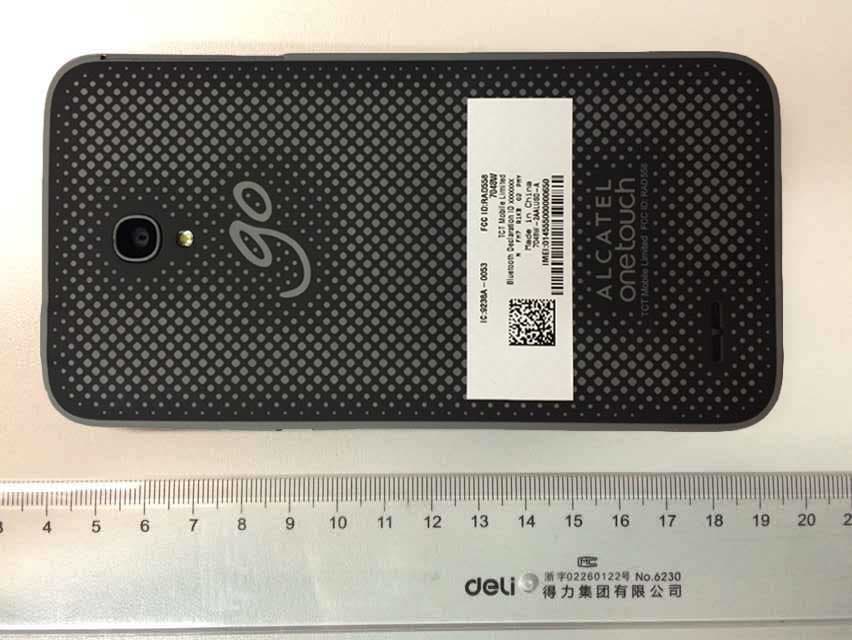
RAD558
Nov 15, 2015HSUPA/HSDPA/UMTS tribands / GSM quadbands/LTE 6-band mobile phone
Equipment Class
JBP - Part 15 Class B Computing Device Peripheral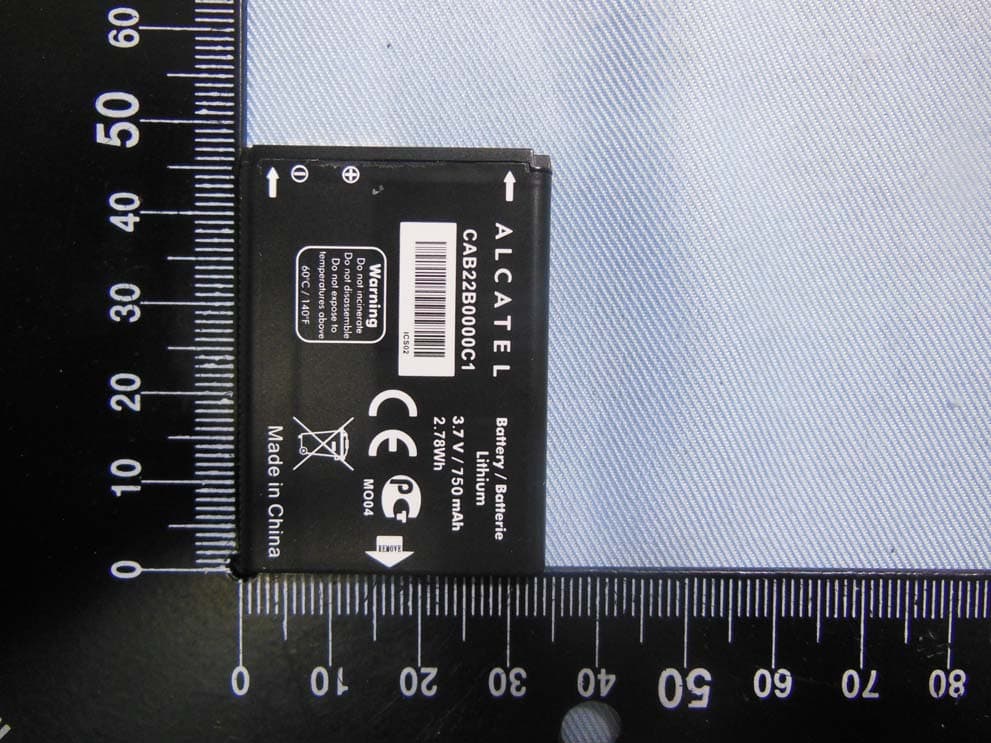
RAD556
Sep 08, 2015CDMA 1X BC0/BC1/BC10 mobile phone
Equipment Class
PCE - PCS Licensed Transmitter held to ear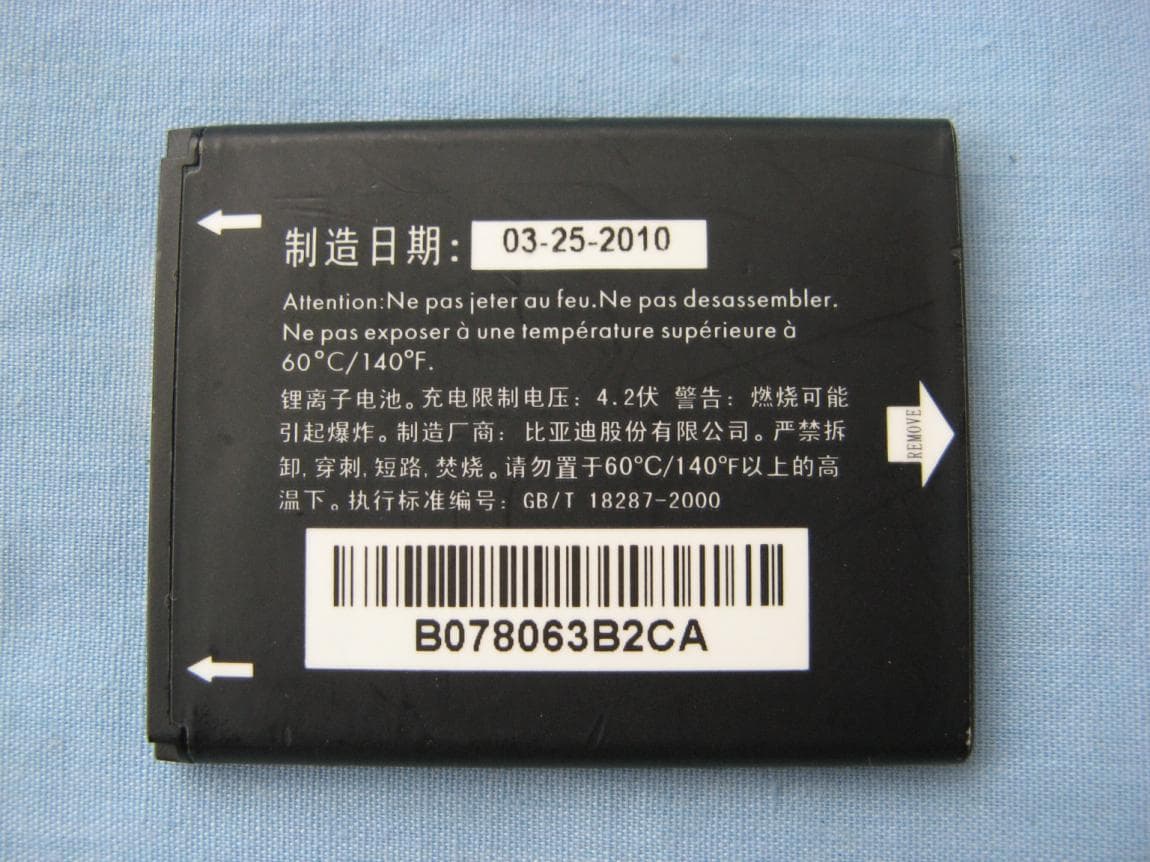
RAD552
Jun 20, 2015GSM Quadband / UMTS Triband mobile phone
Equipment Class
PCE - PCS Licensed Transmitter held to ear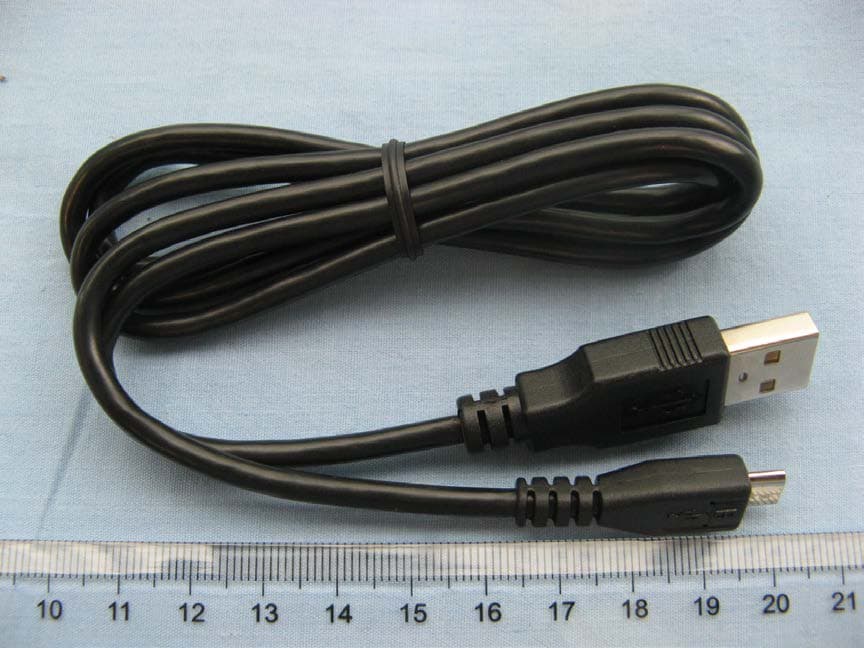
RAD550
Jun 06, 2015HSDPA/HSUPA/HSPA+/UMTS quad band /GSM quad band/LTE 4 band mobile phone
Equipment Class
DSS - Part 15 Spread Spectrum Transmitter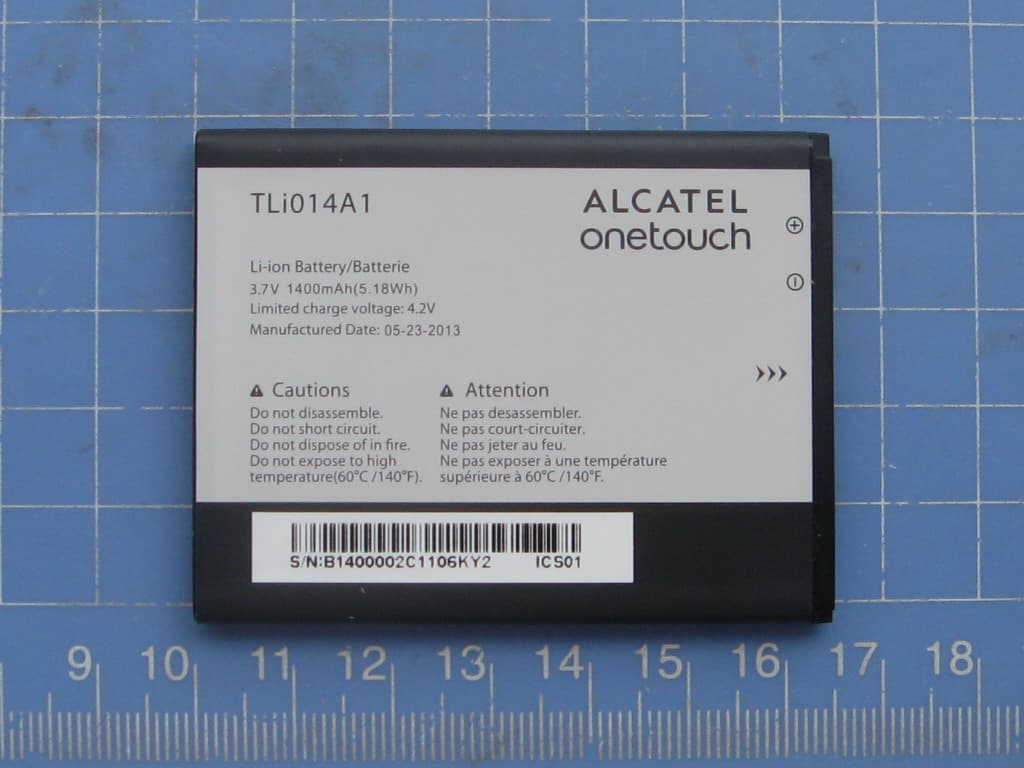
RAD549
May 13, 2015WCDMA tri band / GSM quad band Moblie phone with BT, Wi-Fi functionality.
Equipment Class
DSS - Part 15 Spread Spectrum Transmitter