RAD490HSUPA/HSDPA/UMTS Tri-band/GSM Quad band mobile phone
TCT Mobile Limited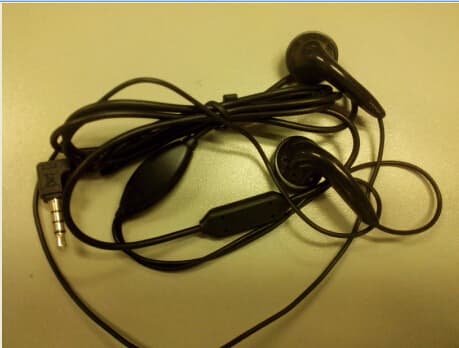
Click to zoom
Application Details
- Equipment Class
- PCE - PCS Licensed Transmitter held to ear
- Date of Grant
- Jun 09, 2014
- Application Purpose
- Original Equipment
- Date of Application
- Jun 06, 2014
- Equipment Note
- HSUPA/HSDPA/UMTS Tri-band/GSM Quad band mobile phone
- Frequency Range
- 1852.40000000 - 1907.60000000
- Company
- TCT Mobile Limited
- Country
- China
Documents & Files
Document Text
Text extracted from the exhibit documents filed with the FCC. Open a document above to read the original.
Users Manual
12 Quick Start Guide Thank you for buying TCL 5138E. We hope you will enjoy your high- quality mobile communication experience. English - CJB27K9LCAAA 1 Your mobile .................. 1.1 Keys and connectors Headset connector Back key Front camera Power key Home key Menu key micro-USB connector Touch screen www.sar-tick.com This product meets applicable national SAR limits of 1.6 W/kg. The specific maximum SAR values can be found in the RADIOWAVES section of this user guide. When carrying the product or using it while worn on your body, either use an approved accessory such as a holster or otherwise maintain a distance of 10 mm from the body to ensure compliance with RF exposure requirements. Note that the product may be transmitting even if you are not making a phone call. PROTECT YOUR HEARING To prevent possible hearing damage, do not listen at high volume levels for long periods. Exercise caution when holding your device near your ear while the loudspeaker is in use. 34 Volume up Volume down Camera SpeakerFlashlight Menu key • Touch to access Settings options. • Touch and hold: Touch and hold it to open a list of thumbnail images of applications you've worked with recently. Home key • While on any application or screen, touch to return to the Home screen. Back key • Touch to go back to the previous screen, or to close a dialog box, options menu, the notification panel, etc. These keys are visible when the screen lights up. Power key • Press: Lock the screen/Light up the screen • Press and hold: Power on or pop up the menu to get more options, such as Power off, Restart, Airplane mode. • Press and hold Power key and Volume down key to capture a screenshot. • Press to mute the ringtone when there’s an incoming call. Volume keys • Under call mode, adjust the earpiece or headset volume. • In Music/Video/Streaming mode, adjust the media volume. • Mute the ringtone of an incoming call. • Press to light up the screen when it dims during a call. 56 1.2 Getting started 1.2.1 Set-up Removing or installing the back cover Inserting or removing the SIM card You must insert your SIM card to make phone calls. Please power off your phone before inserting or removing the SIM card. To install, please open SIM card lock first, and then place the SIM card into the slot with its chip facing downwards. Make sure that it is correctly inserted. To remove the card, please open SIM card lock and take it out from the slot. Before inserting/removing the SIM card, you should ensure the phone is off, to protect it from corruption or damage. Your phone only supports micro-SIM card. Do not attempt to insert other SIM type like mini and nano card, otherwise may cause phone damage. Installing or removing the microSD card To install, please open microSD card lock first, and then place the microSD card into the slot with the gold contact facing downwards. To remove the external microSD card, please open microSD card lock and take it out from the slot. Before inserting/removing the microSD card, you should ensure the phone is off, to protect it from corruption or damage. In addition, regularly removing or inserting the SD card may cause the phone to restart. Installing or removing the battery • Insert and click the battery into place, then close the phone cover. • Unclip the cover, then remove the battery. Charging the battery Connect the battery charger to your phone and outlet respectively. 78 The charging status bar will not float if your battery is extendly consumed. To reduce power consumption and energy waste, when battery is fully charged, disconnect your charger from the plug; switch off Wi-Fi, GPS, Bluetooth or background-running applications when not in use; reduce the backlight time, etc. 1.2.2 Power on your phone Hold down the Power key until the phone powers on. It will take some seconds before the screen lights up. Set up your phone for the first time The first time you power on the phone, you should set following options: language, date & time, Google account, etc. 1.2.3 Power off your phone Hold down the Power key from the Home screen until the Phone options appear, select Power off. 1.3 Home screen You can bring all the items (applications, shortcuts, folders and widgets) you love or use most frequently to your Home screen for quick access. Slide the Home screen horizontally left and right to get a complete view of the home screen. Touch the Home key to switch to Home screen. Status bar • Status/Notification indicators Favorite tray applications • Touch to enter the application. • Touch and hold to move or change applications. Application tab • Touch to open main menu. 1.3.1 Using the touchscreen Touch To access an application, touch it with your finger. Touch and Hold Touch and hold the home screen to access the available options for setting the wallpaper. Drag Place your finger on any item to drag it to another location. Slide/Swipe Slide the screen to scroll up and down the applications, images, web pages... at your convenience. Flick Similar to swiping, but flicking makes it move quicker. Pinch/Spread Place your fingers of one hand on the screen surface and draw them apart or together to scale an element on the screen. Rotate Automatically change the screen orientation from portrait to landscape by turning the phone sideways to have a better view. 1.3.2 Status bar From status bar, you can view both phone status (to the right side) and notification information (to the left side). 910 Status icons GPRS connectedNo signal (gray) GPRS in useRoaming EDGE connected No SIM card inserted EDGE in useSignal strength (blue) 3G connectedVibrate mode 3G in useRinger is silenced HSPA (3G+) connected Phone microphone is mute HSPA (3G+) in useBattery is very low Connected to a Wi-Fi network Battery is low Bluetooth is on Battery is partially drained Connected to a Bluetooth device Battery is full Airplane modeBattery is charging Alarm is setHeadset connected Notification icons New text or multimedia message Missed c…
Text truncated - open the document above for the full version.
Cover Letter(s)
5F, C building, No. 232, Liang Jing Road ZhangJiang High-Tech Park, Pudong Area Shanghai, P.R. China. 201203 TEL: +86(0)21 61460666 FAX: +86(0)21 61460602 Date 2014-4-7 To: Federal Communications Commission, Authorization & Evaluation Division, 7345 Oakland Mills Road Columbia, MD 21046 And American Telecommunications Certification Body, Inc. 6731 Whittier Avenue Suite C110 McLean, VA 22101 To Whom It May Concern: TMC (Telecommunication Metrology Center of MIIT) is authorized to act on our behalf, until otherwise notified, for applications to American Telecommunications Certification Body, Inc. (ATCB). We certify that we are not subject to denial of federal benefits, which includes FCC benefits, pursuant to Section 5301 of the Anti-Drug Abuse Act of 1988, U.S.C. 862. Further, no party, as defined in 47 CFR1.2002 (b) to the application is subject to denial of federal benefits, that includes FCC benefits. Thank you. Regards, Gong Zhizhou Approval Team Leader TCT Mobile Limited
Cover Letter(s)
5F, C building, No. 232, Liang Jing Road ZhangJiang High-Tech Park, Pudong Area Shanghai, P.R. China. 201203 TEL: +86(0)21 61460666 FAX: +86(0)21 61460602 2014-4-7 Federal Communications Commission Office of Engineering and Technology Equipment Authorization Division 7345 Oakland Mills Road Columbia, Maryland 21046 Subject: Permanent Confidentiality request for FCC ID: RAD490 To Whom It May Concern, Pursuant to sections 0.457 and 0.459 of CFR 47, the applicant requests permanent confidential treatment of the following information accompanying this application: - Block Diagram - Schematics - Operational Description - BOM list/Tune-Up-Procedure The above materials contain trade secrets and proprietary information not customarily released to the public. The public disclosure of these matters might be harmful to the applicant and provide unjustified benefits to its competitors. Yours Sincerely, Zhizhou Gong Approval Team Leader TCT Mobile Limited
External Photos
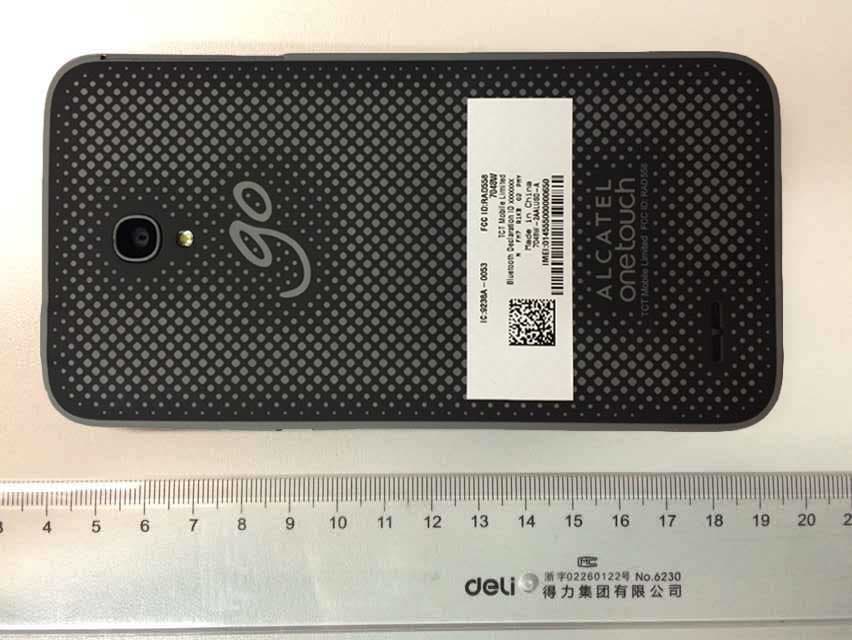
EUT photograph Mobile Phone Mobile Phone Mobile Phone Mobile Phone Mobile Phone Mobile Phone Mobile Phone Battery AE1 Battery AE1 Battery AE2 Battery AE2 Label of Charger AE3 Charger AE3 Label of Charger AE4 Charger AE4 Label of Charger AE5 Charger AE5 Headset AE6 Headset AE7 Headset AE8 Headset AE9 Headset AE10 Data Cable AE11 Data Cable AE12
Internal Photos
EUT Interior photograph Mobile Phone Disassembly Mobile Phone Disassembly Mobile Phone Disassembly Mobile Phone Disassembly Mobile Phone Disassembly Mobile Phone Disassembly Mobile Phone Disassembly
RF Exposure Info
No.I14Z45730-SEM01 Page 1 of 132 ©Copyright. All rights reserved by TMC Beijing. SAR TEST REPORT No. I14Z45730-SEM01 For TCT Mobile Limited HSUPA/HSDPA/UMTS Tri-band/GSM Quad band mobile phone Model Name: 51 38 E With Hardware Version: Proto Software Version: 6B13 FCC ID: RAD49 0 Issued Date: 2014-05-04 Note: The test results in this test report relate only to the devices specified in this report. This report shall not be reproduced except in full without the written approval of TMC Beijing. Test Laboratory: TMC Beijing, Telecommunication Metrology Center of MIIT No. 52, Huayuan Bei Road, Haidian District, Beijing, P. R. China 100191. Tel:+86(0)10-62304633-2079, Fax:+86(0)10-62304633 Email:[email protected]. www.emcite.com No. I14Z45730-SEM01 Page 2 of 132 Revision Version Report Number Revision Date Memo I14Z45730-SEM01 0 2014-05-04 Initial creation of test report No. I14Z45730-SEM01 Page 3 of 132 TABLE OF CONTENT 1 TEST LABORATORY .................................................................................................................... 5 1.1 TESTING LO C AT I O N ........................................................................................................................................ 5 1.2 TESTING ENVIRONMENT ................................................................................................................................. 5 1.3 PROJECT DATA ............................................................................................................................................... 5 1.4 SIGNATURE ..................................................................................................................................................... 5 2 STATEMENT OF COMPLIANCE .................................................................................................. 6 3 CLIENT INFORMATION ................................................................................................................ 8 3.1 APPLICANT INFORMATION .............................................................................................................................. 8 3.2 MANUFACTURER INFORMATION ..................................................................................................................... 8 4 EQUIPMENT UNDER TEST (EUT) AND ANCILLARY EQUIPMENT (AE) ................................. 9 4.1 ABOUT EUT ................................................................................................................................................... 9 4.2 INTERNAL IDENTIFICATION OF EUT USED DURING THE TEST .......................................................................... 9 4.3 INTERNAL IDENTIFICATION OF AE USED DURING THE TEST .......................................................................... 10 5 TEST METHODOLOGY .............................................................................................................. 10 5.1 APPLICABLE LIMIT REGULATIONS ................................................................................................................ 10 5.2 APPLICABLE MEASUREMENT STANDARDS .................................................................................................... 10 6 SPECIFIC ABSORPTION RATE (SAR) ...................................................................................... 11 6.1 INTRODUCTION ............................................................................................................................................. 11 6.2 SAR DEFINITION .......................................................................................................................................... 11 7 TISSUE SIMULATING LIQUIDS ................................................................................................. 12 7.1 TARGETS FOR TISSUE SIMULATING LIQUID .................................................................................................... 12 7.2 DIELECTRIC PERFORMANCE ......................................................................................................................... 12 8 SYSTEM VERIFICATION ............................................................................................................ 16 8.1 SYSTEM SETUP ............................................................................................................................................. 16 8.2 SYSTEM VERIFICATION ................................................................................................................................. 17 9 MEASUREMENT PROCEDURES .............................................................................................. 18 9.1 TESTS TO BE PERFORMED ............................................................................................................................. 18 9.2 GENERAL MEASUREMENT PROCEDURE ........................................................................................................ 19 9.3 WCDMA MEASUREMENT PROCEDURES FOR SAR ...................................................................................... 20 9.4 BLUETOOTH & WI-FI MEASUREMENT PROCEDURES FOR SAR .................................................................... 21 9.5 POWER DRIFT ............................................................................................................................................... 21 10 AREA SCAN BASED 1-G SAR ................................................................................................. 22 10.1 REQUIREMENT OF KDB .............................................................................................................................. 22 10.2 FAST SAR ALGORITHMS ............................................................................................................................ 22 11 CONDUCTED OUTPUT POWER .............................................................................................. 23 No. I14Z45730-SEM01 Page 4 of 132 11.1 MANUFAC…
Text truncated - open the document above for the full version.
RF Exposure Info
No. I14Z45730-SEM01 Page 45 of 132 ANNEX A Graph Results 850 Left Cheek High Date: 2014- 4- 4 Electronics: DAE4 Sn771 Medium: Head 850 MHz Medium parameters used (interpolated): f = 848.8 MHz; σ = 0.933 S/m; εr = 41.832; ρ = 1000 kg/m 3 Ambient Temperature: 22.1 o C Liquid Temperature: 21.6 o C Communication System: GSM 850 Frequency: 848.8 MHz Duty Cycle: 1:8.3 Probe: EX3DV4 - SN3846 ConvF(8.92, 8.92, 8.92) Cheek High/Area Scan (61x111x1): Interpolated grid: dx=1.000 mm, dy=1.000 mm Maximum value of SAR (interpolated) = 0.612 W/kg Cheek High/Zoom Scan (7x7x7)/Cube 0: Measurement grid: dx=5mm, dy=5mm, dz=5mm Reference Value = 9.179 V/m; Power Drift = 0.00 dB Peak SAR (extrapolated) = 0.750 W/kg SAR(1 g) = 0.591 W/kg; SAR(10 g) = 0.443 W/kg Maximum value of SAR (measured) = 0.611 W/kg Fig.1 850MHz CH251 No. I14Z45730-SEM01 Page 46 of 132 Fig. 1-1 Z-Scan at power reference point (850 MHz CH251) No. I14Z45730-SEM01 Page 47 of 132 850 Body Rear Low Date: 2014- 4- 4 Electronics: DAE4 Sn771 Medium: Body 850 MHz Medium parameters used: f = 825 MHz; σ = 0.976 S/m; εr = 56.701; ρ = 1000 kg/m 3 Ambient Temperature: 22.1 o C Liquid Temperature: 21.6 o C Communication System: GSM 850 EGPRS Frequency: 824.2 MHz Duty Cycle: 1:4 Probe: EX3DV4 - SN3846 ConvF(8.73, 8.73, 8.73) Rear Low/Area Scan (61x111x1): Interpolated grid: dx=1.000 mm, dy=1.000 mm Maximum value of SAR (interpolated) = 0.974 W/kg Rear Low/Zoom Scan (7x7x7)/Cube 0: Measurement grid: dx=5mm, dy=5mm, dz=5mm Reference Value = 32.057 V/m; Power Drift = -0.08 dB Peak SAR (extrapolated) = 1.11 W/kg SAR(1 g) = 0.911 W/kg; SAR(10 g) = 0.705 W/kg Maximum value of SAR (measured) = 0.957 W/kg Fig.2 850 MHz CH128 No. I14Z45730-SEM01 Page 48 of 132 Fig. 2-1 Z-Scan at power reference point (850 MHz CH128) No. I14Z45730-SEM01 Page 49 of 132 GSM1900 Left Cheek High Date: 2014- 4- 5 Electronics: DAE4 Sn771 Medium: Head 1900 MHz Medium parameters used: f = 1910 MHz; σ = 1.424 S/m; εr = 40.437; ρ = 1000 kg/m 3 Ambient Temperature: 22.1 o C Liquid Temperature: 21.6 o C Communication System: GSM 1900MHz Frequency: 1909.8 MHz Duty Cycle: 1:8.3 Probe: EX3DV4 - SN3846 ConvF(7.57, 7.57, 7.57) Cheek High/Area Scan (61x111x1): Interpolated grid: dx=1.000 mm, dy=1.000 mm Maximum value of SAR (interpolated) = 0.386 W/kg Cheek High/Zoom Scan (7x7x7)/Cube 0: Measurement grid: dx=5mm, dy=5mm, dz=5mm Reference Value = 6.997 V/m; Power Drift = 0.16 dB Peak SAR (extrapolated) = 0.425 W/kg SAR(1 g) = 0.323 W/kg; SAR(10 g) = 0.191 W/kg Maximum value of SAR (measured) = 0.378 W/kg Fig.3 1900 MHz CH810 No. I14Z45730-SEM01 Page 50 of 132 Fig. 3-1 Z-Scan at power reference point (1900 MHz CH810) No. I14Z45730-SEM01 Page 51 of 132 GSM1900 Body Rear High Date: 2014- 4- 5 Electronics: DAE4 Sn771 Medium: Body 1900 MHz Medium parameters used: f = 1910 MHz; σ = 1.508 S/m; εr = 51.817; ρ = 1000 kg/m 3 Ambient Temperature: 22.1 o C Liquid Temperature: 21.6 o C Communication System: GSM 1900MHz GPRS Frequency: 1909.8 MHz Duty Cycle: 1:4 Probe: EX3DV4 - SN3846 ConvF(7.03, 7.03, 7.03) Rear High/Area Scan (61x121x1): Interpolated grid: dx=1.000 mm, dy=1.000 mm Maximum value of SAR (interpolated) = 1.04 W/kg Rear High/Zoom Scan (7x7x7)/Cube 0: Measurement grid: dx=5mm, dy=5mm, dz=5mm Reference Value = 14.905 V/m; Power Drift = -0.01 dB Peak SAR (extrapolated) = 1.50 W/kg SAR(1 g) = 0.895 W/kg; SAR(10 g) = 0.499 W/kg Maximum value of SAR (measured) = 1.07 W/kg Fig.4 1900 MHz CH810 No. I14Z45730-SEM01 Page 52 of 132 Fig.4-1 Z-Scan at power reference point (1900 MHz CH810) No. I14Z45730-SEM01 Page 53 of 132 WCDMA 850 Left Cheek High Date: 2014- 4- 4 Electronics: DAE4 Sn771 Medium: Head 850 MHz Medium parameters used (interpolated): f = 846.6 MHz; σ = 0.93 S/m; εr = 41.86; ρ = 1000 kg/m 3 Ambient Temperature: 22.1 o C Liquid Temperature: 21.6 o C Communication System: WCDMA; Frequency: 846.6 MHz; Duty Cycle: 1:1 Probe: EX3DV4 - SN3846 ConvF(8.92, 8.92, 8.92) Cheek High/Area Scan (61x111x1): Interpolated grid: dx=1.000 mm, dy=1.000 mm Maximum value of SAR (interpolated) = 0.547 W/kg Cheek High/Zoom Scan (7x7x7)/Cube 0: Measurement grid: dx=5mm, dy=5mm, dz=5mm Reference Value = 9.765 V/m; Power Drift = 0.11 dB Peak SAR (extrapolated) = 0.659 W/kg SAR(1 g) = 0.532 W/kg; SAR(10 g) = 0.405 W/kg Maximum value of SAR (measured) = 0.553 W/kg Fig.5 WCDMA 850 CH4233 No. I14Z45730-SEM01 Page 54 of 132 Fig. 5-1 Z-Scan at power reference point (WCDMA 850 CH4233) No. I14Z45730-SEM01 Page 55 of 132 WCDMA 850 Body Rear Middle Date: 2014- 4- 4 Electronics: DAE4 Sn771 Medium: Body 850 MHz Medium parameters used (interpolated): f = 836.4 MHz; σ = 0.987 S/m; εr = 56.571; ρ = 1000 kg/m 3 Ambient Temperature: 22.1 o C Liquid Temperature: 21.6 o C Communication System: WCDMA; Frequency: 836.4 MHz; Duty Cycle: 1:1 Probe: EX3DV4 - SN3846 ConvF(8.73, 8.73, 8.73) Rear Middle/Area Scan (61x111x1): Interpolated grid: dx=1.000 mm, dy=1.000 mm Maximum value of SAR (interpolated) = 0.818 W/kg Rear Middle/Zoom Scan (7x7x7)/Cube 0: Measurement grid: dx=5mm, dy=5mm, dz=5mm Reference Value = 26.677 V/m; Power Drift = 0.02 dB Peak SAR (extrapolated) = 0.976 W/kg SAR(1 g) = 0.800 W/kg; SAR(10 g) = 0.615 W/kg Maximum value of SAR (measured) = 0.860 W/kg Fig.6 WCDMA 850 CH4182 No. I14Z45730-SEM01 Page 56 of 132 Fig. 6-1 Z-Scan at power reference point (WCDMA850 CH4182) No. I14Z45730-SEM01 Page 57 of 132 WCDMA 1900 Left Cheek High Date: 2014- 4- 5 Electronics: DAE4 Sn771 Medium: Head 1900 MHz Medium parameters used (interpolated): f = 1907.6 MHz; σ = 1.421 S/m; εr = 40.439; ρ = 1000 kg/m 3 Ambient Temperature: 22.1 o C Liquid Temperature: 21.6 o C Communication System: WCDMA 1900 Frequency: 1907.6 MHz Duty Cycle: 1:1 Probe: EX3DV4 - SN3846 ConvF(7.57, 7.57, 7.57) Cheek High/Area Scan (61x111x1): Interpolated grid: dx=1.000 mm, dy=1.000 mm Maximum value of SAR (interpolated) = 0.901 W/kg Cheek High/Zoom Scan (7x7x7)/Cube 0: Measurement grid: dx=5mm, dy=5mm, dz=5mm Reference Value = 10.743 V/m; Power Drift = -0.02 dB Peak SAR (extrapol…
Text truncated - open the document above for the full version.
RF Exposure Info
No. I14Z45730-SEM01 Page 89 of 132 No. I14Z45730-SEM01 Page 90 of 132 No. I14Z45730-SEM01 Page 91 of 132 No. I14Z45730-SEM01 Page 92 of 132 No. I14Z45730-SEM01 Page 93 of 132 No. I14Z45730-SEM01 Page 94 of 132 No. I14Z45730-SEM01 Page 95 of 132 No. I14Z45730-SEM01 Page 96 of 132 No. I14Z45730-SEM01 Page 97 of 132 No. I14Z45730-SEM01 Page 98 of 132 ANNEX H Dipole Calibration Certificate 835 MHz Dipole Calibration Certificate No. I14Z45730-SEM01 Page 99 of 132
RF Exposure Info
No. I14Z45730-SEM01 Page 100 of 132 No. I14Z45730-SEM01 Page 101 of 132 No. I14Z45730-SEM01 Page 102 of 132 No. I14Z45730-SEM01 Page 103 of 132 No. I14Z45730-SEM01 Page 104 of 132 No. I14Z45730-SEM01 Page 105 of 132 No. I14Z45730-SEM01 Page 106 of 132 1900 MHz Dipole Calibration Certificate No. I14Z45730-SEM01 Page 107 of 132 No. I14Z45730-SEM01 Page 108 of 132 No. I14Z45730-SEM01 Page 109 of 132 No. I14Z45730-SEM01 Page 110 of 132
RF Exposure Info
No. I14Z45730-SEM01 Page 111 of 132 No. I14Z45730-SEM01 Page 112 of 132 No. I14Z45730-SEM01 Page 113 of 132 No. I14Z45730-SEM01 Page 114 of 132 2450 MHz Dipole Calibration Certificate No. I14Z45730-SEM01 Page 115 of 132 No. I14Z45730-SEM01 Page 116 of 132 No. I14Z45730-SEM01 Page 117 of 132 No. I14Z45730-SEM01 Page 118 of 132 No. I14Z45730-SEM01 Page 119 of 132 No. I14Z45730-SEM01 Page 120 of 132 No. I14Z45730-SEM01 Page 121 of 132 No. I14Z45730-SEM01 Page 122 of 132 ANNEX I SPOT CHECK TEST As the test lab for 5138E from TCT Mobile Limited, we, TMC Beijing, declare on our sole responsibility that, according to “Declaration of changes” provided by applicant, only the Spot check test should be performed. The test results are as below. I.1 Internal Identification of EUT used during the spot check test EUT ID* IMEI HW Version SW Version EUT1 864622020000135 Proto 6B13 *EUT ID: is used to identify the test sample in the lab internally. I.2 Conducted power of selected case Table I.1: The conducted power results for GSM850/1900 GSM 850MHz Conducted Power (dBm) Channel 251(848.8MHz) Channel 190(836.6MHz) Channel 128(824.2MHz) 32.71 \ \ GSM 1900MHz Conducted Power (dBm) Channel 810(1909.8MHz) Channel 661(1880MHz) Channel 512(1850.2MHz) 29.35 \ \ Table I.2: The conducted power results for GPRS GSM 850 GPRS (GMSK) Measured Power (dBm) 251 190 128 2 Txslots \ \ 30.28 PCS1900 GPRS (GMSK) Measured Power (dBm) 810 661 512 2 Txslots 27.13 \ \ Table I.3: The conducted power results for WCDMA Item band FDD V result ARFCN 4233 (846.6MHz) 4182 (836.4MHz) 4132 (826.4MHz) WCDMA \ 22.96 23.09 \ Item band FDD II result ARFCN 9538 (1907.6MHz) 9400 (1880MHz) 9262 (1852.4MHz) WCDMA \ 22.84 22.70 \ No. I14Z45730-SEM01 Page 123 of 132 I.3 Measurement results SAR Values (GSM 850 MHz Band - Head) Frequency Side Test Position Battery Type SAR(1g) (W/kg) MHz Ch. Original data Spot check data 848.8 251 Left Touch TLi018D1 0.591 0.479 SAR Values (GSM 850 MHz Band - Body) Frequency Mode/Band Test Position Spacing (mm) Battery Type SAR(1g) (W/kg) MHz Ch. Original data Spot check data 824.2 128 GPRS Rear 10 TLi018D1 0.911 0.822 SAR Values (PCS 1900 MHz Band - Head) Frequency Side Test Position Battery Type SAR(1g) (W/kg) MHz Ch. Original data Spot check data 1909.8 810 Left Touch TLi018D1 0.323 0.287 SAR Values (PCS 1900 MHz Band - Body) Frequency Mode/Band Test Position Spacing (mm) Battery Type SAR(1g) (W/kg) MHz Ch. Original data Spot check data 1909.8 810 GPRS Rear 10 TLi018D1 0.895 0.662 SAR Values (WCDMA 850 MHz Band - Head) Frequency Side Test Position Battery Type SAR(1g) (W/kg) MHz Ch. Original data Spot check data 846.6 4233 Left Touch TLi018D1 0.532 0.511 SAR Values (WCDMA 850 MHz Band - Body) Frequency Test Position Spacing (mm) Battery Type SAR(1g) (W/kg) MHz Ch. Original data Spot check data 836.4 4182 Rear 10 TLi018D1 0.800 0.779 SAR Values (WCDMA 1900 MHz Band - Head) Frequency Side Test Position Battery Type SAR(1g) (W/kg) MHz Ch. Original data Spot check data 1907.6 9538 Left Touch TLi018D1 0.812 0.650 SAR Values (WCDMA 1900 MHz Band - Body) Frequency Test Position Spacing (mm) Battery Type SAR(1g) (W/kg) MHz Ch. Original data Spot check data 1880 9400 Rear 10 TLi018D1 1.13 0.998 No. I14Z45730-SEM01 Page 124 of 132 I.4 Reported SAR Comparison Exposure Configuration Technology Band Reported SAR 1g (W/Kg): original Reported SAR 1g (W/Kg): spot check Head (Separation Distance 0mm) GSM 850 0.65 0.55 PCS 1900 0.39 0.36 UMTS FDD 2 0.85 0.67 UMTS FDD 5 0.55 0.52 Body-worn (Separation Distance 10mm) GSM 850 0.97 0.86 PCS 1900 1.08 0.81 UMTS FDD 2 1.19 1.07 UMTS FDD 5 0.81 0.76 No. I14Z45730-SEM01 Page 125 of 132 I.5 Graphic results 850 Left Cheek High Date: 2014- 4- 21 Electronics: DAE4 Sn771 Medium: Head 850 MHz Medium parameters used (interpolated): f = 848.8 MHz; σ = 0.912 S/m; εr = 40.802; ρ = 1000 kg/m 3 Ambient Temperature: 22.1 o C Liquid Temperature: 21.6 o C Communication System: GSM 850 Frequency: 848.8 MHz Duty Cycle: 1:8.3 Probe: EX3DV4 - SN3846 ConvF(8.92, 8.92, 8.92) Cheek High/Area Scan (61x111x1): Interpolated grid: dx=1.000 mm, dy=1.000 mm Maximum value of SAR (interpolated) = 0.500 W/kg Cheek High/Zoom Scan (7x7x7)/Cube 0: Measurement grid: dx=5mm, dy=5mm, dz=5mm Reference Value = 9.773 V/m; Power Drift = -0.01 dB Peak SAR (extrapolated) = 0.570 W/kg SAR(1 g) = 0.479 W/kg; SAR(10 g) = 0.374 W/kg Maximum value of SAR (measured) = 0.497 W/kg Fig.I.1 850MHz CH251 No. I14Z45730-SEM01 Page 126 of 132 850 Body Rear Low Date: 2014- 4- 21 Electronics: DAE4 Sn771 Medium: Body 850 MHz Medium parameters used: f = 825 MHz; σ = 0.973 S/m; εr = 55.841; ρ = 1000 kg/m 3 Ambient Temperature: 22.1 o C Liquid Temperature: 21.6 o C Communication System: GSM 850 EGPRS Frequency: 824.2 MHz Duty Cycle: 1:4 Probe: EX3DV4 - SN3846 ConvF(8.73, 8.73, 8.73) Rear Low/Area Scan (61x111x1): Interpolated grid: dx=1.000 mm, dy=1.000 mm Maximum value of SAR (interpolated) = 0.883 W/kg Rear Low/Zoom Scan (7x7x7)/Cube 0: Measurement grid: dx=5mm, dy=5mm, dz=5mm Reference Value = 30.331 V/m; Power Drift = -0.03 dB Peak SAR (extrapolated) = 0.994 W/kg SAR(1 g) = 0.822 W/kg; SAR(10 g) = 0.635 W/kg Maximum value of SAR (measured) = 0.862 W/kg Fig.I.2 850 MHz CH128 No. I14Z45730-SEM01 Page 127 of 132 GSM1900 Left Cheek High Date: 2014- 4- 22 Electronics: DAE4 Sn771 Medium: Head 1900 MHz Medium parameters used: f = 1910 MHz; σ = 1.417 S/m; εr = 39.227; ρ = 1000 kg/m 3 Ambient Temperature: 22.1 o C Liquid Temperature: 21.6 o C Communication System: GSM 1900MHz Frequency: 1909.8 MHz Duty Cycle: 1:8.3 Probe: EX3DV4 - SN3846 ConvF(7.57, 7.57, 7.57) Cheek High/Area Scan (61x111x1): Interpolated grid: dx=1.000 mm, dy=1.000 mm Maximum value of SAR (interpolated) = 0.286 W/kg Cheek High/Zoom Scan (7x7x7)/Cube 0: Measurement grid: dx=5mm, dy=5mm, dz=5mm Reference Value = 8.118 V/m; Power Drift = -0.16 dB Peak SAR (extrapolated) = 0.410 W/kg SAR(1 g) = 0.287 W/kg; SAR(10 g) = 0.175 W/kg Maximum value of SAR (measured) = 0.313 W/kg Fig.I.3 1900 MHz …
Text truncated - open the document above for the full version.
Test Report
No. I14Z45730-GTE01 Page1 of 83 TEST REPORT No. I14Z45730-GTE01 for TCT Mobile Limited HSUPA/HSDPA/UMTS Tri-band/GSM Quad band mobile phone Model Name: 5138E FCC ID: RAD490 with Hardware Version: Proto Software Version: 6B13 Issued Date: 2014-05-28 Note: The test results in this test report relate only to the devices specified in this report. This report shall not be reproduced except in full without the written approval of TMC Beijing. Test Laboratory: DAR accreditation (DIN EN ISO/IEC 17025): No. D-PL-12123-01-01 FCC 2.948 Listed: No.733176 IC O.A.T.S listed: No.6629B TMC Beijing, Telecommunication Metrology Center of Ministry of Industry and Information Technology 3/F Shou Xiang Technology Building, No.51 Xueyuan Road, Hai Dian District, Beijing, P. R. China,100191. Tel:+86(0)10-62304633-2604, Fax:+86(0)10-62304793, Email:[email protected], web: www.emcite.com No. I14Z45730-GTE01 Page2 of 83 CONTENTS 1. TEST LABORATORY ......................................................................................................................... 3 1.1. TESTING LOCATION .................................................................................................................... 3 1.2. TESTING ENVIRONMENT ........................................................................................................... 3 1.3. PROJECT DATA .............................................................................................................................. 3 1.4. SIGNATURE ..................................................................................................................................... 3 2. CLIENT INFORMATION ................................................................................................................... 4 2.1. APPLICANT INFORMATION ....................................................................................................... 4 2.2. MANUFACTURER INFORMATION ............................................................................................ 4 3. EQUIPMENT UNDER TEST (EUT) AND ANCILLARY EQUIPMENT (AE) ............................. 5 3.1. ABOUT EUT ..................................................................................................................................... 5 3.2. INTERNAL IDENTIFICATION OF EUT USED DURING THE TEST .................................... 5 3.3. INTERNAL IDENTIFICATION OF AE USED DURING THE TEST ....................................... 5 3.4. NORMAL ACCESSORY SETTING ............................................................................................... 6 3.5. GENERAL DESCR…
Text truncated - open the document above for the full version.
Contact Information
Applicant
Zhizhou Gong
Technical Contact
Test Firm
TMC-Telecommunication Metrology Center of M.I.I.TChongwen Song
Technical Specifications
| # | Rule Parts | Frequency Range | Power Output | Emission | Tolerance |
|---|---|---|---|---|---|
| 4 | 24E | 1.85 GHz - 1.91 GHz | 364.00 mW | 4M50F9W | 0.1 ppm |
Other Applications from TCT Mobile Limited
RAD558
Nov 15, 2015HSUPA/HSDPA/UMTS tribands / GSM quadbands/LTE 6-band mobile phone
Equipment Class
JBP - Part 15 Class B Computing Device Peripheral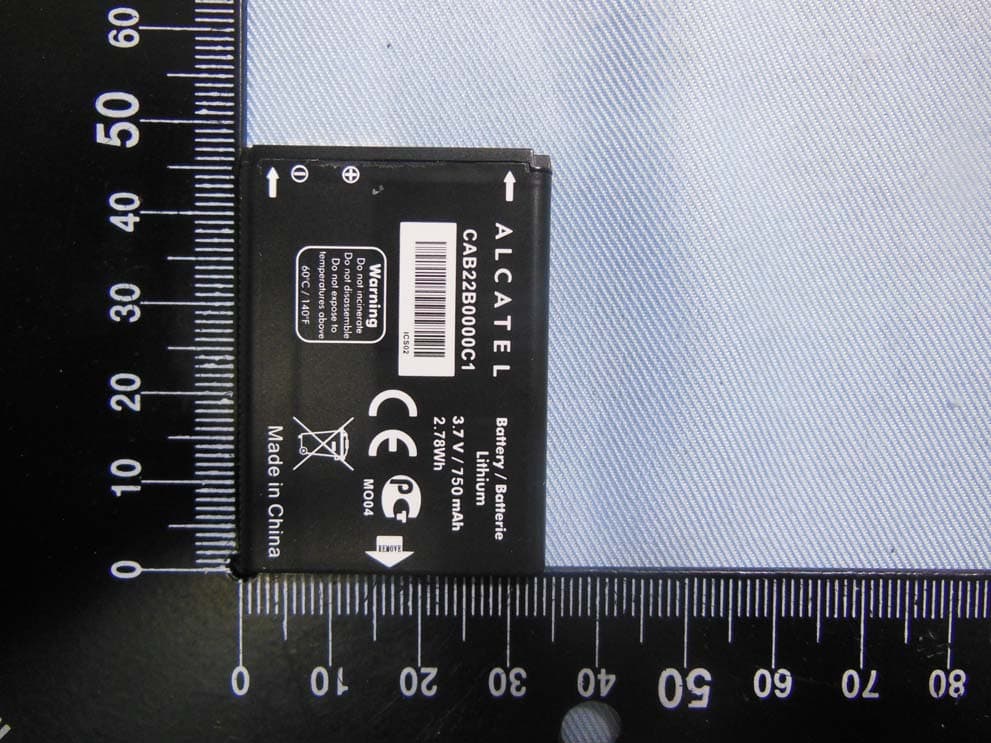
RAD556
Sep 08, 2015CDMA 1X BC0/BC1/BC10 mobile phone
Equipment Class
PCE - PCS Licensed Transmitter held to ear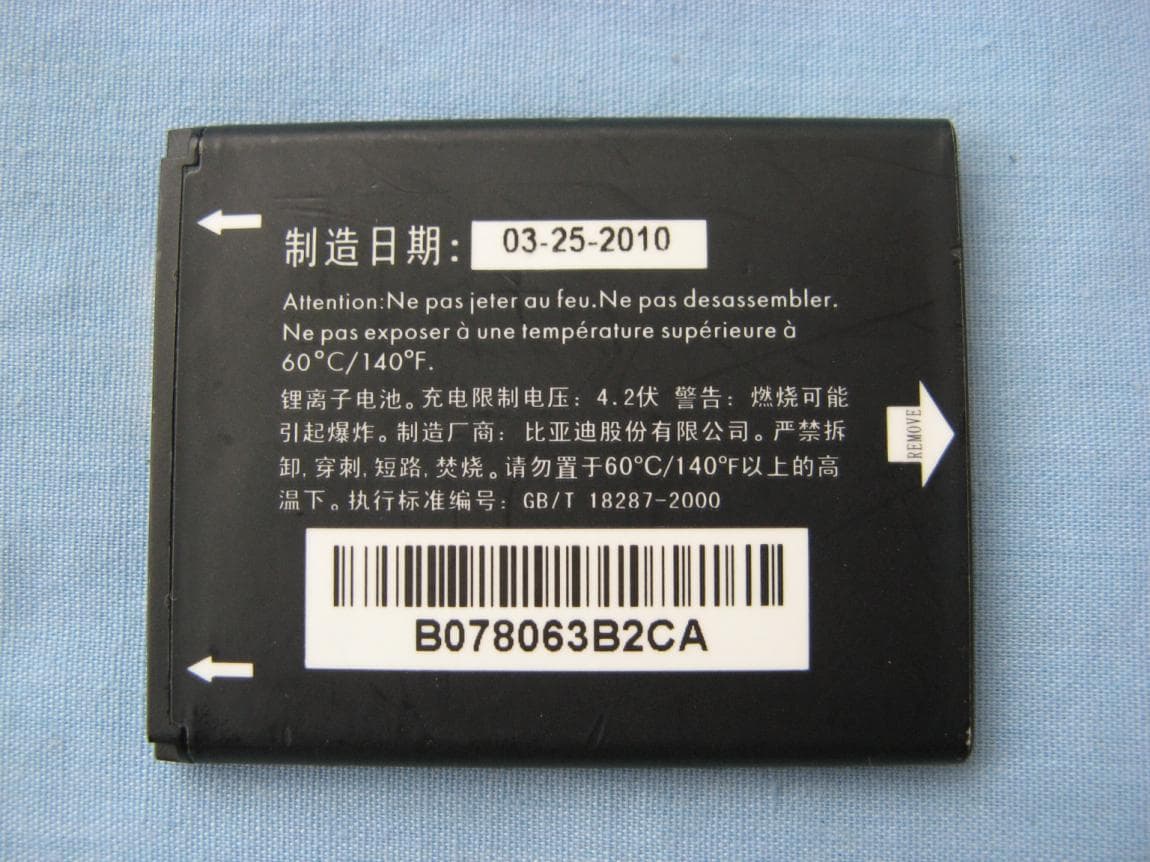
RAD552
Jun 20, 2015GSM Quadband / UMTS Triband mobile phone
Equipment Class
PCE - PCS Licensed Transmitter held to ear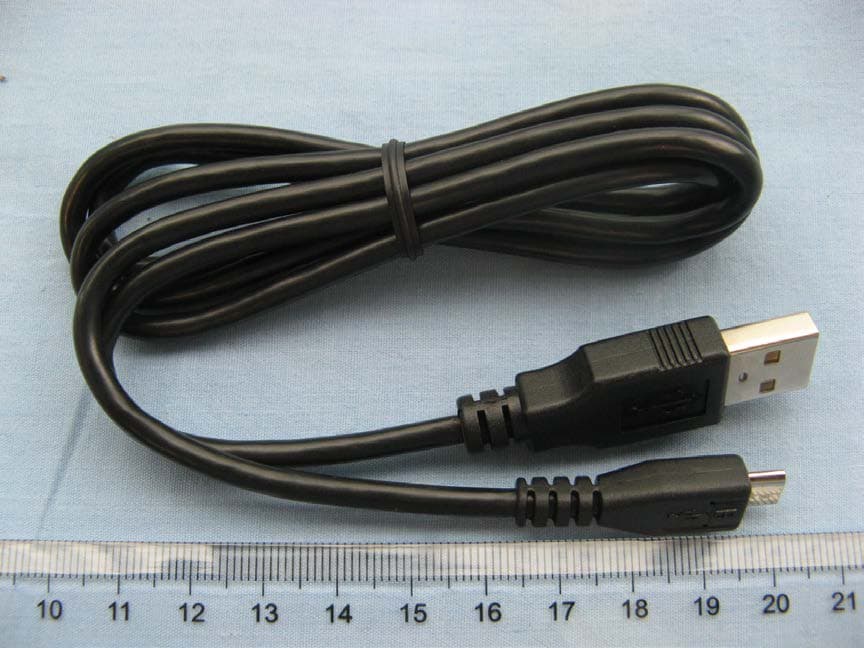
RAD550
Jun 06, 2015HSDPA/HSUPA/HSPA+/UMTS quad band /GSM quad band/LTE 4 band mobile phone
Equipment Class
DSS - Part 15 Spread Spectrum Transmitter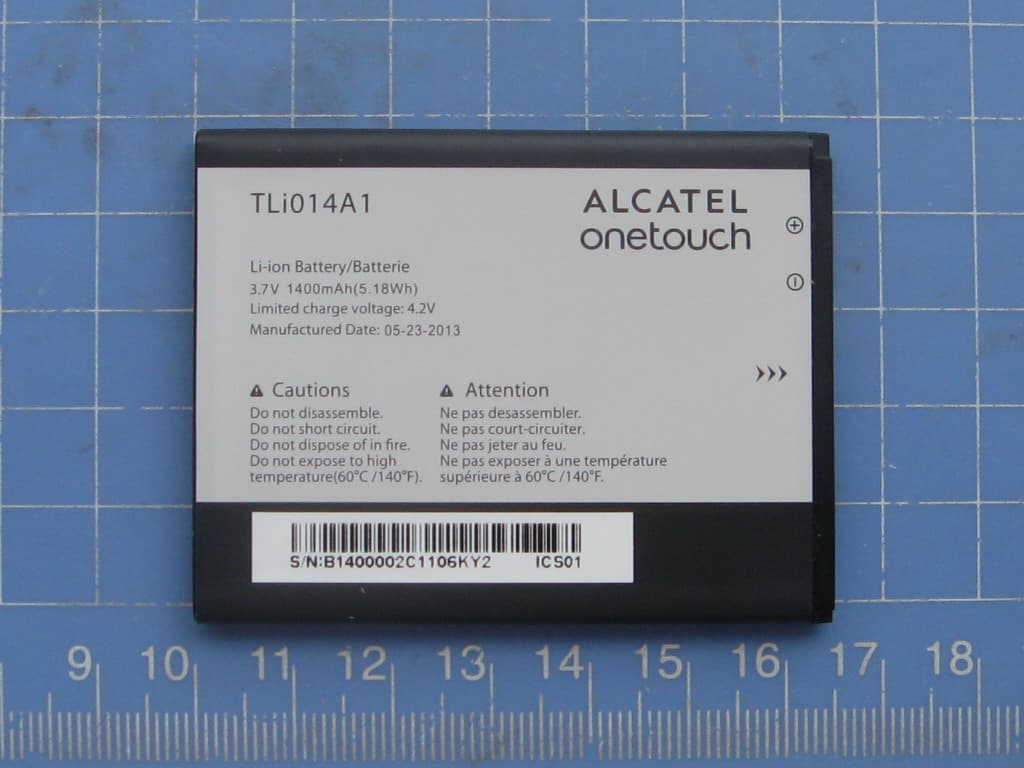
RAD549
May 13, 2015WCDMA tri band / GSM quad band Moblie phone with BT, Wi-Fi functionality.
Equipment Class
DSS - Part 15 Spread Spectrum Transmitter