RAR20007001Backhaul Radio Module
Ericsson Wi-Fi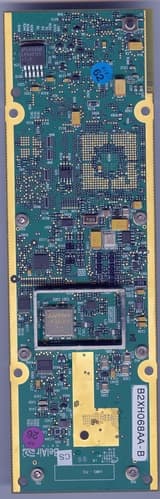
Click to zoom
Application Details
- Equipment Class
- TNB - Licensed Non-Broadcast Station Transmitter
- Date of Grant
- Apr 15, 2007
- Application Purpose
- Original Equipment
- Date of Application
- Apr 10, 2007
- Equipment Note
- Backhaul Radio Module
- Frequency Range
- 2626.75000000 - 2687.25000000
- Company
- Ericsson Wi-Fi
- Country
- United States
Documents & Files
Document Text
Text extracted from the exhibit documents filed with the FCC. Open a document above to read the original.
Users Manual
Page 1 of 21 WCS band Radio Module WRM Product Manual 2.6 GHz WCS band Backhaul Radio Module FCC ID RAR20007001 Document Date: March 2007 Document Number: PM-B2XH068AA-A Document Version Number: 3 Document Status: Release © Copyright 2007 by BelAir Networks. All rights reserved.. WRM Product Manual – 2.6 GHz WCS Band Radio Module Page 2 of 21 Contents About this Document.................................................................................................. 3 Introduction................................................................................................................. 3 Picture of the B2XH068AA-A 2.6 GHz WCS band Backhaul Radio.................... 4 General Conditions of Use ......................................................................................... 5 Overview of B2XH068AA-A module installation into BelAir Networks products ...................................................................................................................................... 6 B2XH068AA-A module installation into BA100 product....................................... 7 BA100 Unit FCC Labeling......................................................................................... 9 B2XH068AA-A module installation into BA200 product..................................... 11 BA200 Unit FCC Labeling....................................................................................... 14 Antenna Usage and Module Transmit Power........................................................ 15 Regulatory Statements ............................................................................................. 17 Appendix A – Information on approved module antennas .................................. 19 WRM Product Manual – 2.6 GHz WCS Band Radio Module Page 3 of 21 About this Document This document is a product manual for the B2XH068AA-A 2.6 GHz WCS band Backhaul Radio Module 1, FCC ID RAR 20007001. The manual outlines the radio modules limitations on use in BelAir Networks products marketed or offered for sale. An overview of BelAir Networks products is included with information on the module installation in these products. Specifications on approved antennas to be used with the module are provided This manual provides an outline on the module installation , limitations of use, location of FCC label information , regulatory statements and RF exposure minimum safety requirements. Introduction The B2XH068AA-A (hereafter referred to as “the module”) is a 2.6 GHz WCS band radio module compatible with the IEEE 802.16-2004 standard for WIMAX operation. The module contains a complete 802.16 radio and Medium Access Control protocol engine. The module is not intended for stand-alone operation. It will only be marketed as a complete product, in conjunction with a package, DC power supply and antenna (hereafter referred to as “the product” or the “final product”). Since the module has a BelAir networks proprietary digital interface, it cannot be directly connected to any standard telecommunications or computer devices. It can only be used with final products designed and authorized specifically for that purpose. The WiMAX Radio Module (WRM, RAR20007001) is a BelAir Networks radio module designed to operate in the 2.6 GHz frequency bands (BRS / EBS bands) using the IEEE 802.16-2004 (Wireless MAN-OFDM physical layer) (WiMAX) industry standard. The module will operate under FCC part 27 covering a portion of the frequencies in the UBS band segment under part 27.5, specifically BRS channels E1 to G3 post transition frequency assignments. The WRM provides WiMAX backhaul support for the BelAir200 and BelAir100 wireless mesh nodes with the capacity to deliver up to 40 Mbps of dedicated data throughput. The WRM supports point-to-point topologies (fixed applications) and is ideal for creating dedicated connections to other BelAir wireless mesh nodes in a network . An ideal deployment for the WRM is to configure it with BelAir200 nodes and/or BelAir100 nodes WRM Product Manual – 2.6 GHz WCS Band Radio Module Page 4 of 21 to provide last mile access for cellular backhaul applications. The WRM operates in the licensed 2.6 GHz frequency bands, and the added capacity that WiMAX (IEEE 802.16d) delivers to the network is ideal for critical applications such as voice traffic. Picture of the B2XH068AA-A 2.6 GHz WCS band Backhaul Radio Module is shown below for reference, notice that the connector interfaces only allow integration of the module into BelAir Networks products . Top and bottom views; WRM Product Manual – 2.6 GHz WCS Band Radio Module Page 5 of 21 General Conditions of Use This manual is intended to supplement training provided by BelAir Networks or authorized parties. The module B2XH068AA-A is only intended for use in BelAir Networks products and is not for sale to the general public as a stand-alone module. Please read this entire document, including the Regulatory Statements section before attempting to install or operate the module. Warning: Any use of B2XH068AA-A in any manner which is not expressly specified within this manual or specifically approved by BelAir Networks or its authorized agents will void the user’s right to operate this module, and is expressly forbidden by BelAir Networks. This includes any modification of the module, installation of the module in a configuration or used with an antenna which is not expressly listed in this document or approved by BelAir Networks. Installation into a Product The module shall only be installed by a technician trained by BelAir Networks or its authorized agents. It should only be installed into an approved product following all manufacturing and service procedures for that product. Refer to the following sections outlining specific installation in BelAir Networks products. Module Service The module is not intended as a field-serviceable unit. It contains no field-replaceable or field- serviceable parts, or any external adjustable mechanisms. The mo…
Text truncated - open the document above for the full version.
Cover Letter(s)
1 December 7, 2006 Nemko Canada Inc 303 River Road Ottawa, Ontario, Canada K1V 1H2 Attn: Director of Certification RE: PRODUCT CODE FCC: ID RAR20007001 Authority to Act as Agent On our behalf, I appoint , Nemko Canada Inc to act as our agent in the preparation of this application for equipment certification. I certify that submitted documents properly describe the device or system for which equipment certification is sought. I also certify that each unit manufactured, imported or marketed, as defined in the Federal Communications Commission’s regulations will have affixed to it a label identical to that submitted for approval with this application. For instances where our authorized agent signs the application for certification on our behalf, I acknowledge that all responsibility for complying with the terms and conditions for certification, as specified by Nemko Canada Inc, still resides with BelAir Networks, 603 March Road Kanata, Ottawa Ontario. Dated this 7 Day of December 2006 Agency agreement expiration date: December 7 2007 Marcel Chenier Vice President of Engineering BelAir Networks Inc. Telephone (613) 254-7070 ext 139 2
Cover Letter(s)
1 February 26, 2007 Attn :Reviewing Engineer Equipment Authorization Division Federal Communications Commission 7435 Oakland Mills Road Columbia, MD 21046 RE:CONFIDENTIALITY REQUEST FOR FCC ID RAR20007001 To Whom It May Concern This letter is an official request for confidentiality under FCC rule 47 CFR §0.459 . We requests that the following items with this applications be withheld from public review: • Schematics • Product Block Diagram and Theory of Operation • Parts List The above materials contain trade secrets and are proprietary to BelAir Networks Inc. Public disclosure of information in these materials may be used in the market place to the disadvantage of BelAir Networks.
Cover Letter(s)
1 December 7, 2006 Attn: Reviewing Engineer Federal Communications Commission 7435 Oakland Mills Road Columbia, MD 21046 RE: APPROVAL FOR MODULE FCC ID: RAR20007001 Radio module tested under part 27 MISCELLANEOUS WIRELESS COMMUNICATIONS SERVICES To Whom It May Concern, The module FCC ID: RAR20007001 a radio module tested under part 27 WCS band, is submitted for Approval as a module by BelAir Networks Inc. The module can only be installed in BelAir Networks wireless products. This letter affirms that BelAir Networks shall retain complete control over the final installation of the device and ensure compliance of the end-product to FCC regulations. The module shall only be installed into a final product by technicians trained by BelAir Networks. The module shall not be distributed, marketed or sold to the general public. It will only be available installed in a complete BelAir Networks product. The complete BelAir product shall only be sold by BelAir Networks directly or through a BelAir Networks-specified sales channel to authorized resellers, and will be installed by professional installers with training by BelAir Networks or authorized representatives. The module is installed only in BelAir Networks products using antennas outlined in the filing, meeting fixed land station applications in compliance with part 27.50(a)(1). The antennas will always be fixed-mounted on permanent structures. 2 As illustrated by the accompanying documentation, the module FCC ID: RAR20007001 is a module with its own RF shielding, contains the complete radio within the module, provides its own power supply regulation, was tested in a stand-alone configuration, will be labeled with FCC ID and meets RF exposure regulations. The module has the following characteristics: 1. The module has its own RF shielding. It has been tested for radiated emissions with the module on its own, with no external shielding beyond that incorporated into the module to ensure compliance to all radiated emissions requirements at the module level. 2. The input to the module is an Ethernet interface. All modulation and 802.16 protocol elements reside within the module. There are no modulation or data inputs to the module which could alter the performance or behavior of the modulator or radio which could cause it to exceed FCC limits. 3. The module has its own power supply filtering and regulation for all modulation and radio circuitry in order to avoid any issues with varying power supply inputs. The module is powered by several DC voltage rails. In order to test power line conducted requirements for the module, it was tested with the power supply and package as intended for the complete product which will be manufactured by BelAir Networks. BelAir Networks maintains complete control of the AC-to-DC power supply and packaging of the complete product and therefore ensures that compliance will be maintained. 4. The module was tested in a stand-alone configuration for all conducted and radiated emissions, except for conducted power line emissions. Since the module is not AC powered, it was tested with the power supply and package in the configuration with which it will be installed in the product. This configuration is also tested to ensure the complete product will meet all Class B radiated and conducted emissions requirements. 5. The module will be labeled with its own FCC ID number. Since this label will not be visible when the module is installed in the complete product, the manual indicates that the final product shall include a permanent label which uses the wording “Contains FCC ID: RAR20007001”. See the labeling information provided with this submission. 6. The module operates under Part 27 wireless communications services . Since all modulation and 802.16 protocol elements reside within the module, users will not have access to controls which may cause the module to operate outside its normal mode of operation. All timing and control for RF and modulator sections are inaccessible from outside the module. 3 7. The module has been evaluated (see MPE provided with this submission) and complies with RF exposure requirements. The manual states that a distance as per the table below shall be maintained between any person and the antenna. As BelAir Networks or its authorized agents will retain control of the final installation through the requirement for professional installation, BelAir Networks shall ensure that this distance is maintained in all installations. Minimum Safety Distance cm (inches) Node 16 dBi antenna or 10 dBi antenna Radios BelAir100 BelAir100S BelAir100C 26 (10.5 inches) 2 x RAR20007001 or 1 RAR20000003 and 1 RAR20007001 BelAir20036 (14.5 inches) 4 x RAR20007001 or 1 RAR20000003 and 3x RAR20007001
Cover Letter(s)
KDB Inquiry to FCC (Tracking Number 161595)
ID Label/Location Info
BelAir Networks 2.6 GHz WCS Radio Module 1 Label Location-RAR20007001 December 7, 2006 1 Module Labeling The following label shall be permanently affixed to the radio module as follows: FCC ID: RAR20007001 Label size approximately 30 mm x 7 mm. Label material is white polyester with a permanent acrylic adhesive. This is a CSA/UL approved material. Print technique is thermal ink using 400 DPI resolution. BelAir Networks 2.6 GHz WCS Radio Module 1 Label Location-RAR20007001 December 7, 2006 2 The label location shall be as shown in the diagram below: FCC ID IC ID Radio Module Bottom View Regulatory Label Radio Module Top View ||||||||||||||||||||||||||||B2CC050AA- Product Code Card serial # FCC ID IC ID |||||||||||||||||||||||||||| B2XH068AA- Card MACaddress RF shield BelAir Networks 2.6 GHz WCS Radio Module 1 Label Location-RAR20007001 December 7, 2006 3 Product Labeling The following permanent label, or one containing equivalent information, must be affixed in a conspicuous location on the exterior of any product containing this module. In addition the label contents shall appear prominently in the final product user manual. This device contains the following: FCC ID: RAR20007001
Parts List/Tune Up Info
1 December 7, 2006 Attn: Reviewing Engineer Federal Communications Commission 7435 Oakland Mills Road Columbia, MD 21046 RE: MODULE FCC ID: RAR2007001 Radio module Frequency and Power control To Whom It May Concern, The subject module is aligned and calibrated as follows; Transmit Power The module is aligned and calibrated in the factory for maximum allowable transmit power. The module transmit power is controlled and kept constant over all operating conditions using a software controlled power control loop using a detector as outlined in the submitted Block Diagram and Theory of Operation document. Frequency Control The module uses a software controlled Phase Locked Loop to set the transmit frequency. All the frequency determining elements are locked to temperature compensated crystal oscillators, no tuning is required of the transmitter. The operation and accuracy of the transmitter frequency is tested in the factory. The transmit frequency is set by the user interface according to the channel scheme of the module in the BRS / EBS bands.
RF Exposure Info
RAR20007001 MPE Engineering Analysis December 8, 2006 Engineering Analysis MPE for WCS 2.6 GHz Transceiver FCC ID: RAR20007001 BelAir Networks This analysis was performed as part of the FCC certification requirements for spread spectrum devices, according to the requirements of: FCC part 27, and FCC OET Bulletin 65 “Evaluating Compliance with FCC Guidelines for Human Exposure to Radio frequency Electromagnetic Fields”. • Module RAR20007001 will be mounted in BelAir Networks host units and will be professionally installed (Fixed) to provide a minimum separation distance from all persons as detailed in co-location compliance tables below. • Module RAR20007001 may be co-located with other modules in BelAir Networks products as shown in the co-location compliance tables below. Worst- case configurations are shown below. • This device will only be operated according to the exposure conditions described in this application. • End users and installers will be provided with antenna installation and transmitter operating conditions for satisfying RF exposure compliance. The measured worst-case transmit power yielding the worst-case EIRP were used for the MPE calculations. Calculations were performed based on FCC OET Bulletin 65. The calculations are performed based on the following formula provided in OET 65: S = EIRP / (4πR 2 ). Co-location compliance for multiple frequency exposure criteria to the power density exposure limit is detailed in the table below. This calculation is a worst-case analysis since it assumes all devices are continuously transmitting. The device utilizes the 802.16 protocol which operates in time-division duplex (TDD) mode, so the transmit duty cycle can never be 100% in normal operation. It is also assumed that all directional antennas are aligned to point in the same direction so that power from all radios add. RAR20007001 MPE Engineering Analysis December 8, 2006 The following table 1 summarizes the minimum distance covering all configurations of RAR20007001 radios in BelAir Networks products using worst case scenarios. Table 1 Minimum Safety Distance cm (inches) Node 16 dBi antenna or 10 dBi antenna Radios BelAir100 BelAir100S BelAir100C 26 (10.5 inches) 2 x RAR20007001 or 1 RAR20000003 and 1 RAR20007001 BelAir20036 (14.5 inches) 4 x RAR20007001 or 1 RAR20000003 and 3x RAR20007001 The following tables outlines the safety distance calculations for the various combinations of antennas and radios, co-located, worst case conditions. Case I: 2.6 GHz WCS band, 16 dBi or less ( 10 dBi ), 1 x RAR20007001 Compliance for one WCS Radio Safety Distance:20 cm ( 7.9 inches ) Worst-case Total EIRP Max Power Density Maximum Number of Radios Worst-case Total EIRP Max Power Density Maximum Number of Radios Total Density for co-located radios Limit: General Population / Uncontrolled Exposure Result [dBm][mW/cm^2][dBm][mW/cm^2][mW/cm^2][mW/cm^2] 360.792100.00000.7921Complies Case II: 2.6 GHz WCS band, 16 dBi or less ( 10 dBi ), 2 x RAR20007001 Co-location Compliance for two WCS Radios Safety Distance:26 cm ( 10.2 inches ) Worst-case Total EIRP Max Power Density Maximum Number of Radios Worst-case Total EIRP Max Power Density Maximum Number of Radios Total Density for co-located radios Limit: General Population / Uncontrolled Exposure Result [dBm][mW/cm^2][dBm][mW/cm^2][mW/cm^2][mW/cm^2] 360.46920.9371Complies RAR20007001 RAR20007001 RAR20007001 MPE Engineering Analysis December 8, 2006 Case III: 2.6 GHz WCS band, 16 dBi or less (10 dBi ), 1 x RAR20007001 and 1 x RAR20000003 Co-location Compliance for Integrated 802.11b/g & WCS Radios Safety Distance:25 cm ( 9.8 inches ) Worst-case Total EIRP Max Power Density Maximum Number of Radios Worst-case Total EIRP Max Power Density Maximum Number of Radios Total Density for co-located radios Limit: General Population / Uncontrolled Exposure Result [dBm][mW/cm^2][dBm][mW/cm^2][mW/cm^2][mW/cm^2] 360.507135.50.45210.9591Complies Case IV: 2.6 GHz WCS band, 16 dBi (10 dBi), four RAR20007001 Co-location Compliance for four WCS Radios Safety Distance:36 cm ( 14.2 inches ) Worst-case Total EIRP Max Power Density Maximum Number of Radios Worst-case Total EIRP Max Power Density Maximum Number of Radios Total Density for co-located radios Limit: General Population / Uncontrolled Exposure Result [dBm][mW/cm^2][dBm][mW/cm^2][mW/cm^2][mW/cm^2] 360.24440.9781Complies Case V: 2.6 GHz WCS band, 16 dBi (Includes 10 dBi), three RAR20007001and 1 X RAR20000003 Co-location Compliance for four WCS Radios Safety Distance:36 cm ( 14.2 inches ) Worst-case Total EIRP Max Power Density Maximum Number of Radios Worst-case Total EIRP Max Power Density Maximum Number of Radios Total Density for co-located radios Limit: General Population / Uncontrolled Exposure Result [dBm][mW/cm^2][dBm][mW/cm^2][mW/cm^2][mW/cm^2] 360.244335.50.21810.9511Complies RAR20007001RAR20000003 RAR20007001 RAR20007001RAR20000003 The equipment therefore fulfills the requirements on power density for general population/uncontrolled exposure and therefore complies with the requirements of FCC Part 27.52 and FCC Bulletin 65.
Test Report
6W78095, Response to FCC queries BelAir Networks No. FCC review list Response 1 General description of device and applicable rule parts/sections Applicable rule for this module is part 27, Frequency of operation is as per part 27.5 subpart i 2 iii. Please refer to “RAR20007001_Block diagram and theory of operation” for the general description of the device. Please refer to Nemko Report “ 6W78095” Page 9 for applicable rules parts/sections. 2 Summary of what constitutes the unique, evolved, or different technology The module is designed for fixed point to point operation using TDD mode operating under 802.16-2004 WirelessMAN-OFDM phy interface Please refer to “RAR20007001_Block diagram and theory of operation” 3 Operational description This module TDD mode link only used for fixed point to point type applications. Please refer to “RAR20007001_Block diagram and theory of operation” 4 Operating and installation manual(s) Please refer to “ WRM_PM-B2XH068AA-A_Manual” 5 Test procedures and results, including justification for selected subset of operational modes The module was set up for certification in the same mode as it will be used, namely TDD mode, 64QAM rate ¾. Spectral component don’t change for other OFDM modes available , namely OFDM BPSK, QAM, 16QAM. Power measurements were performed using 97% downlink frame (tx) instead of the normal 50/50. Please refer to Nemko report 6W78095 for test procedures and results. 6 Info about how device operates as fixed, mobile, or portable station within the network protocol, e.g., channel bandwidths, modulations, power control / adjustments Module is used in a fixed point to point mode . For details on protocol and modulations please refer to Table 1 of RAR20007001_Block diagram and Theory of Operation. 7 Availability of and specific test equipment required, or justification how factory-test- mode (FTM) re! presents and covers end-use conditions In production the module will be tested in the mode that it will be used as per Table 1 of RAR20007001_Block diagram and Theory of Operation. Power measurements are corrected for the 50 % duty cycle of the transmit system. 8 Info about applicable and/or loosely-related public standards, if any, e.g., 802.16 and Conformance standards, and how, why, what parts of these are applicable or not The module conforms to the IEEE 802.16-2004 standard, using the TDD mode and 64 QAM modulation. Please refer to RAR20007001_Block diagram and Theory of Operation. For FCC part 27 sections the module was tested against, please refer to Nemko Report 6W78095, page 9 for information. 9 Evaluate smart-antenna modes per FCC procedures, where applicable, or for TCB permit- but-ask submit additional Not Applicable. details herein about adaptive antennas 10. Address how FDD and/or TDD modes are allowed under FCC allocated frequency range, i.e., in terms of available blocks and block sizes, and paired (uplink/downlink) or single bands The module will be used in TDD mode only , using the BRS frequencies for the following channels as per FCC part 27.5. Channels E1 to G3. Please refer to “RAR20007001_Block diagram and theory of operation” 11 Details about selected sub- channelizations, permutations, profiles tested and why Sub-channelization is not used part of 802.16-2004 WirelessMAN-OFDM phy interface standard. Please refer to “RAR20007001_Block diagram and theory of operation” . 12 WiMAX devices are capable of operating in highly dynamic conditions with various combinations of operating configurations to optimize throughput and performance. Because many of these highly optimized dynamic configurations normally do not provide stable conditions for compliance testing, standard test mode configurations for product conformance evaluation should be specified. Based on the design requirements of each wireless technology and provided the output power is not higher, tests may not be required for all combinations operating configurations. 12(a) Like the FCC 3G procedures, for example info about using output power as a pre-screening tool among a larger subset of the available device configurations, would be useful and is requested for inclusion in filing. This module transmits a nominal 20 dBm of power or less. Once the power is set it remains fixed and is not dynamically changed during operation. The module was tested at maximum power. Please refer to “RAR20007001_Block diagram and theory of operation” and “ WRM_PM-B2XH068AA-A_Manual” page 7 12(b) The output conditions of the device should be closely monitored during testing with applicable equipment, communications test set, analyzers or power meters, to ensure the required operating conditions are satisfied during the compliance measurements. Please refer to Nemko Report 6W78095 outlining equipment used for testing. 12(c) The device setup and operating parameters, and test equipment setup parameters, should be fully documented in the test report to enable the tests to be repeated easily and with sufficient accuracy. Please refer to Nemko Report 6W78095 13 Please be sure to identify, justify, and describe: 13(a) a) specific RF Profiles, certification profiles, test cases, test scripts that are appropriate for and were used to test this device, among those in the applicable conformance documents and standards Module is used in a fixed point to point mode ,TDD, 64 QAM , and this is how the module was tested for certification. Maximum output power was used for all measurements. For details on protocol and modulations please refer to Table 1 of RAR20007001_Block diagram and Theory of Operation. 13(b) relevant subclause cross-references to standards TDD mode, clause 8.1.3.2 of 802.16- 2004 . 13(c) specific modulations, subchannelizations, permutations used for each test Modulation is TDD 64 QAM , no subchannelization is used. 13(d) d) specific test eqpt setup info and installed options/add-ons Please refer to Nemko Report 6W78095
Test Report
Test Report: 6W78095, issue 2 Applicant: BelAir Networks Inc., 603 March Road, Ottawa, ON K2K 2M5 Apparatus: 2.6 GHz WRM Radio Module FCC ID: RAR20007001 In Accordance With: FCC Part 27 Miscellaneous Wireless Communications Services Tested By: Nemko Canada Inc. 303 River Road Ottawa, Ontario K1V 1H2 Authorized By: Jason Nixon, Telecom Specialist Date: April 3, 2007 Total Number of Pages: 29 Nemko Canada Inc. REPORT SUMMARY Report Number:6W78095, issue 2 FCC ID: RAR20007001 Specification: FCC Part 27 Page 2 of 29 Report Summary These tests were conducted on a sample of the equipment for the purpose of demonstrating compliance with FCC Part 27. Conducted measurements were performed in accordance with ANSI TIA-603-B-2002. Radiated tests were conducted is accordance with ANSI C63.4-2003. Radiated emissions are made on an open area test site. A description of the test facility is on file with the FCC. The assessment summary is as follows: Apparatus Assessed: 2.6 GHz WRM Radio Module Specification: FCC Part 27 Miscellaneous Wireless Communications Services Compliance Status: Complies Exclusions: None Non-compliances: None Report Release History: Original Release Author: Xu Jin, Wireless Specialist Note that the results contained in this report relate only to the items tested and were obtained in the period between the date of initial receipt of samples and the date of issue of the report. This test report has been completed in accordance with the requirements of ISO/IEC 17025. Nemko Canada Inc. authorizes the applicant to reproduce this report provided it is reproduced in its entirety and for use by the company’s employees only. Any use which a third party makes of this report, or any reliance on or decisions to be made based on it, are the responsibility of such third parties. Nemko Canada Inc. accepts no responsibility for damages, if any, suffered by any third party as a result of decisions made or actions based on this report. Nemko Canada Inc. REPORT SUMMARY Report Number:6W78095, issue 2 FCC ID: RAR20007001 Specification: FCC Part 27 Page 3 of 29 TABLE OF CONTENTS Report Summary......................................................................................................................................... 2 Section 1: Equipment Under Test.............................................................................................................. 4 1.1 Product Identification .................................................................................................................................4 1.2 Samples Submitted for Assessment............................................................................................................4 1.3 Technical Specifications of the EUT ..........................................................................................................5 Section 2: Test Conditions.......................................................................................................................... 6 2.1 Specifications .............................................................................................................................................6 2.2 Deviations From Laboratory Test Procedures ............................................................................................6 2.3 Test Environment .......................................................................................................................................6 2.4 Test Equipment...........................................................................................................................................6 Section 3: Observations .............................................................................................................................. 7 3.1 Modifications Performed During Assessment ............................................................................................7 3.2 Record Of Technical Judgements ...............................................................................................................7 3.3 EUT Parameters …
Text truncated - open the document above for the full version.
Contact Information
Applicant
Roland Andrew Smith(R&D Wi-Fi Products)
Technical Contact
Non-Technical Contact
BelAir Networks Inc.Stephen Rayment
[email protected](613) 254-7070
Test Firm
Nemko Canada Inc. (Ottawa)Charles Neal
Technical Specifications
| # | Rule Parts | Frequency Range | Power Output | Emission | Tolerance |
|---|---|---|---|---|---|
| 1 | 27 | 2.63 GHz - 2.69 GHz | 100.00 mW | 5M40D7W | 10.0000000000 ppm |
Other Applications from Ericsson Wi-Fi
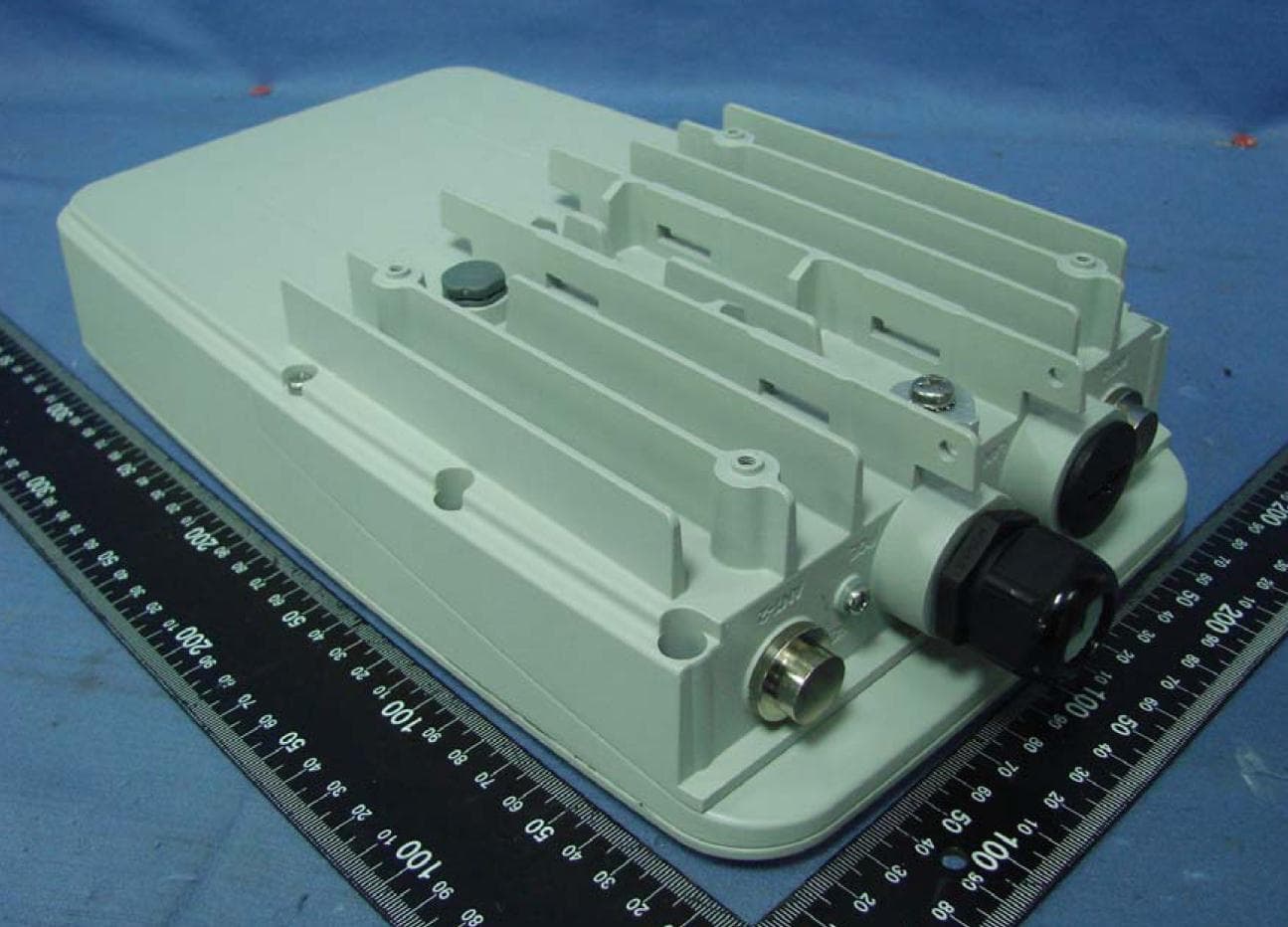
RAR80005000
Jul 07, 2014802.11n dual-band WIFI router
Equipment Class
NII - Unlicensed National Information Infrastructure TX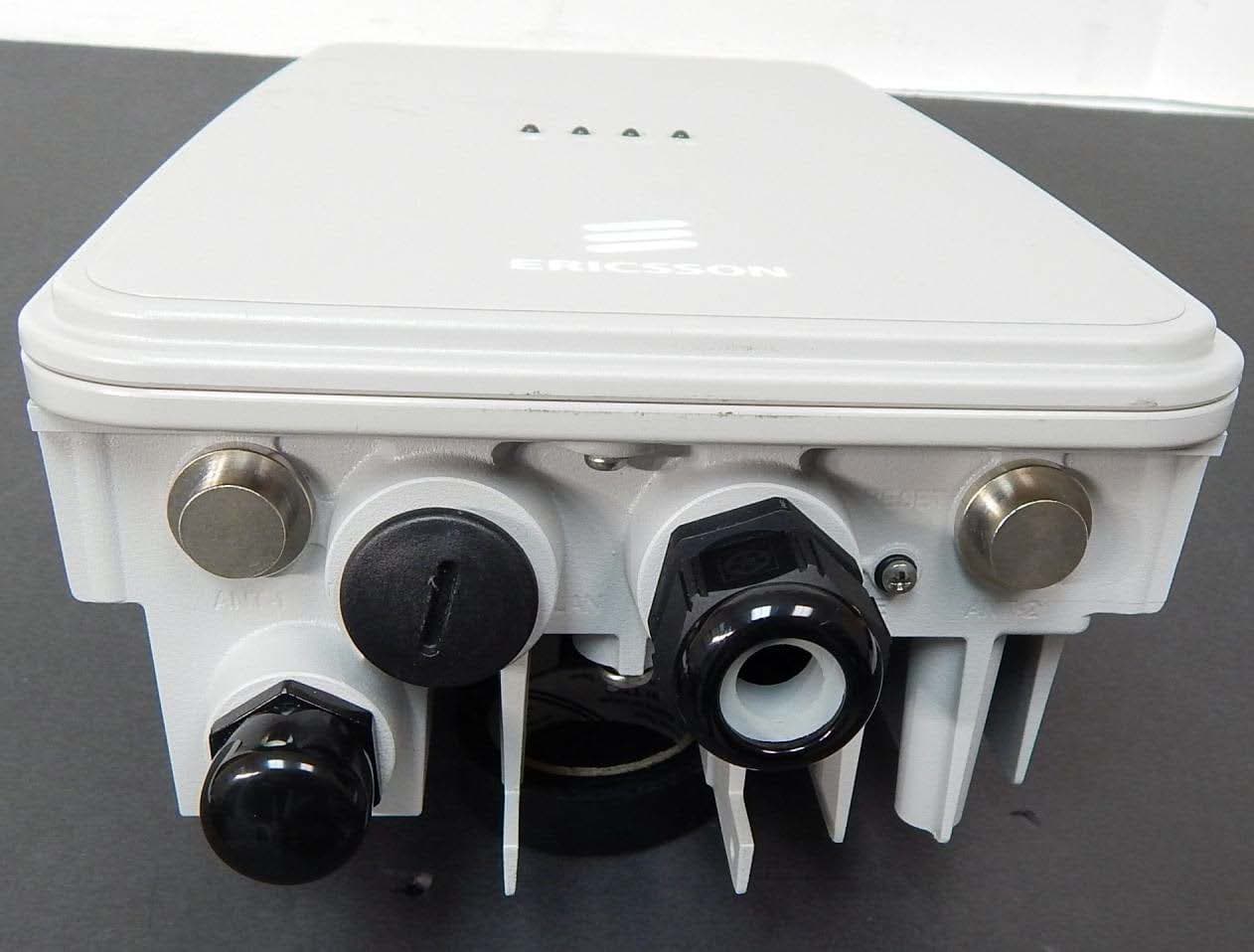
RAR80085008
Jul 02, 2014802.11n dual-band WIFI router
Equipment Class
NII - Unlicensed National Information Infrastructure TX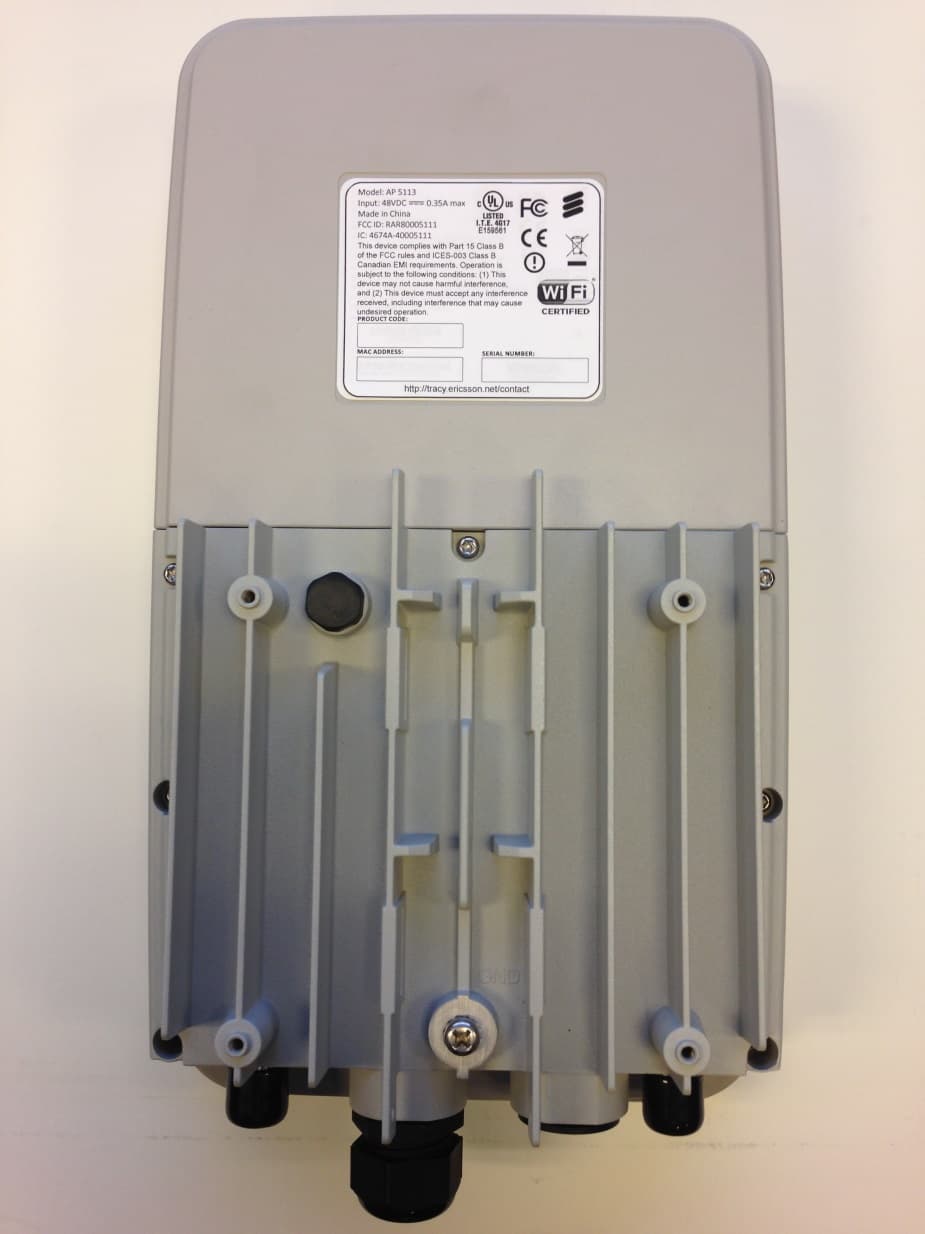
RAR80005111
Jul 02, 2014802.11n dual-band WIFI router
Equipment Class
DTS - Digital Transmission System
RAR40065006
Nov 30, 2013802.11AC Wireless Router
Equipment Class
NII - Unlicensed National Information Infrastructure TX
RAR40085008
Oct 28, 2013802.11n dual-band WIFI router
Equipment Class
DTS - Digital Transmission System