RETK0020Wireless Keyboard
Panyu Elite Century Electronics Co., Ltd.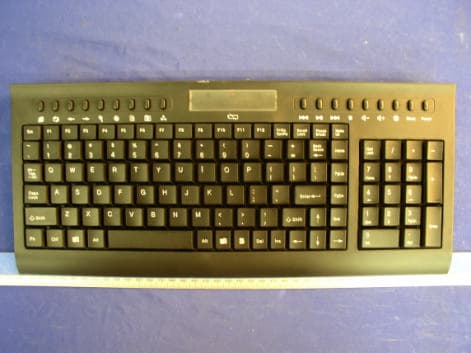
Click to zoom
Application Details
- Equipment Class
- DXX - Part 15 Low Power Communication Device Transmitter
- Date of Grant
- Aug 05, 2004
- Application Purpose
- Original Equipment
- Date of Application
- Aug 05, 2004
- Equipment Note
- Wireless Keyboard
- Frequency Range
- 26.96000000 - 27.28000000
- Country
- China
Documents & Files
Document Text
Text extracted from the exhibit documents filed with the FCC. Open a document above to read the original.
Users Manual
User Guide Wireless Keyboard Please read this manual carefully before using the keyboard. System available Compatible with IBMPC and Windows TM keys, Microsoft®Windows®95/98/2000/NT/XP. INSTALLATION Shut down and turn off the computer. Pull out the primary keyboard. Plug the round PS2 or USB connector into the computer’s round PS2 or USB port. (Refer to picture 1-1) Battery Installing: 1) Overturn the keyboard and take down the cover of the keyboard battery compartment.(Refer to picture 1-2) 2) Insert two “AA” 1.5V batteries correctly into the keyboard battery compartment. (Refer to picture 1-3) Channel Setting 1) Turn on the computer. 2) Gently press the key “connect” on the top of receiver after the windows operation system is fully running. (Refer to 1-4) 3) Press the key “connect” on the right of keyboard and then test the connection by pressing freely one key of the keyboard . If it works properly, the lights on the receiver with flash indicating a strong signal. (Refer to 1-5) This device complies with Part 15 of the FCC Rules. Operation is subject to the following two conditions: (1) this device may not cause harmful interference. (2) This device must accept any interference received, including interference that may cause undesired operation. Warmly Reminding : 1)Please repeat step 2) & 3)if you found the keyboard is clashed by other products. 2)Please repeat step 2) & 3) to reset the communication channel whenever you change the batteries. Keyboard Trouble shooting : 1. Computer can’t get the keyboard registered on the receiver. l Check the connection and ensure that the keyboard port of the receiver is correctly plugged into the computer. l Ensure that the PS/2 port setting is correct.(Refer to the pc instruction) 2. Keyboard can not work after installing completely. l Check the keyboard and ensure the batteries correctly plugged into the battery compartment. l Check and ensure the keyboard projector and the receiver rein the same channel. 3. If it becomes slow or even quit working. l Check and change a new battery if the old one is in the low power situation. l It will be form a barrier prohibiting smooth operation that the receiver is around high-radiancy area, check and make it far from that. l Check and ensure that you already correctly remove the existing keyboard software in your computer. Caution: Any changes or modifications not expressly approved by the party responsible for compliance could void the user's authority to operate the equipment. Note: Note: This equipment has been tested and found to comply with the limits for a Class B digital device, pursuant to part 15 of the FCC Rules. These limits are designed to provide reasonable protection against harmful interference in a residential installation. This equipment generates, uses and can radiate radio frequency energy and, if not installed and used in accordance with the instructions, may cause harmful interference to radio communications. However, there is no guarantee that interference will not occur in a particular installation. If this equipment does cause harmful interference to radio or television reception, which can be determined by turning the equipment off and on, the user is encouraged to try to correct the interference by one or more of the following measures: --Reorient or relocate the receiving antenna. --Increase the separation between the equipment and receiver. --Connect the equipment into an outlet on a circuit different from that to which the receiver is connected. --Consult the dealer or an experienced radio/TV technician for help.
External Photos
APPENDIX C - EUT PHOTOGRAPHS EUT –Top View EUT - Bottom View
ID Label/Location Info
APPENDIX A - FCC PRODUCT LABELING AND WARNING STATEMENT FCC ID Label Specifications: Text is black in color and is left justified. Labels are printed in indelible ink on permanent adhesive backing and shall be affixed at a conspicuous location on the EUT. Proposed Label Location on EUT Bottom View of EUT, FCC ID Label Proposed Location FCC ID: RETK0020 This device complies with Part 15 of the FCC Rules. Operation is subject to the following two conditions: (1) this device may not cause harmful interference, and (2) this device must accept any interference received, including interference that may cause undesired operation. 2.1875" 1.0" FCC ID: RETK0020 interference that may cause undesired operation. 2.1875"
Internal Photos
EUT - Cover Off view EUT - Component View EUT - Solder View
Operational Description
Working Theory of Keyboard Keyboard: The trigger signal is given to the MCU for data processing, and then transmitted to the Receiver via power- amplifier. Without trigger signal given, nothing will be found even when MCU scanning. Under this condition, MCU will be in sleeping mode immediately (while the current =100μA). Although in sleeping mode, MCU is still scanning and will wake up when trigger signal is given to the keyboard. Additionally, there is a low-power detection function; an alarm signal is given by MCU when power is under 1.9V.
Parts List/Tune Up Info
Panyu Elite Century Electronic Co., Ltd. NO.:K0020 product name: wireless keyboard NO. component name model quartity technical date remark 1 lacker capacitance 104PF/50V 4 -20%-+80% C12,C15,C13, C16 2 lacker capacitance 47PF/50V 2 ±5% C1,C2 3 lacker capacitance 33PF/50V 1 ±5% C6 4 lacker capacitance 18PF/50V 1 ±5% C7 5 lacker capacitance 7PF/50V 1 ±5% C8 6 lacker capacitance 27PF/50V 1 ±5% C9 7 crystal frequency genrator 27.075MHz 1 8 diode IN4148 1 D2 9 resistance 4.7M 1 1/10W±5% R1 10 resistance 1.2M 1 1/10W±5% R3 11 resistance 680K 1 1/10W±5% R4 12 resistance 1K 1 1/10W±5% R5 13 resistance 10K 1 1/10W±5% R7 14 resistance 220K 1 1/10W±5% R8 15 resistance 100K 1 1/10W±5% R9 16 Line ?0.5 3 P=5mm JP3,JP9,JP10 17 Line ?0.5 5 P=7.5mm JP4,JP11, JP12,L1,L2 18 Line ?0.5 5 P=10mm JP5,JP6,JP7, JP8,JP13 19 electrolyte capacitance 470uF/6.3V 1 20% C14 20 electrolyte capacitance 100uF/10V 2 20% C10,C11
Parts List/Tune Up Info
K0020 Wireless Keyboard Specification 1. Plastic Material: ABS 2. 105-107 standard keys; 18 hot multimedia keys 3. Mechanical dimension: L: 390mm W:171mm H:35mm 4. Operating Distance:3.0-0.5mm 5. Key stoke life time: 5,000,000 cycles 6. RF Transmission mode: 1 channel FSK RF Frequency : 27.075MHz Transmission security code: 256 different security code 7. Batteries: 2 x 1.5V AA size 8. System requirement: Windows TM Keys, Microsoft windows95/98/2000/NT/XP Interface available :PS/2 9. Working Voltage : DC 3V 10. Working Current : 10mA 11. Working temperature: -10º~40º 12. Operating humidity: 40%~90%
Test Report
Note: This test report is specially limited to the above client company and product model only. It may not be duplicated without prior written consent of Bay Area Compliance Laboratory Corporation. This report must not be used by the client to claim product certification, approval, or endorsement by NVLAP, NIST or any agency of the U.S. Government. FCC PART 15.227 EMI MEASUREMENT AND TEST REPORT For PANYU ELITE CENTURY ELECTRONIC CO., LTD. Yaodong Industrial Area, Dongchong Town, PanYu, Guangzhou City, Guangdong, P.R. China FCC ID: RETK0020 2004 –07-22 This Report Concerns: Original Report Equipment Type: Transmitter, Wireless Keyboard Test Engineer: Jerry Wang/ Report No.: R0407091 (T) Test Date: 2004-07-15 Reviewed By: Ling Zhang / Prepared By: Bay Area Compliance Laboratory Corporation 230 Commercial Street Sunnyvale, CA 94085 Tel: (408) 732-9162 Fax: (408) 732-9164 PANYU ELITE CENTURY ELECTRONIC CO., LTD. FCC ID: RETK0020 Report # R0407091(T) Page 2 of 11 FCC ID Per 15.227 Report TABLE OF CONTENTS GENERAL INFORMATION......................................................................................................................................................3 PRODUCT DESCRIPTION FOR EQUIPMENT UNDER TEST (EUT)...............................................................................................3 OBJECTIVE.......................................................................................................................................................................................3 RELATED SUBMITTAL(S)/GRANT(S)............................................................................................................................................3 TEST METHODOLOGY....................................................................................................................................................................3 TEST FACILITY................................................................................................................................................................................3 SYSTEM TEST CONFIGURATION........................................................................................................................................4 JUSTIFICATION................................................................................................................................................................................4 SCHEMATICS AND BLOCK DIAGRAM...........................................................................................................................................4 EQUIPMENT MODIFICATIONS........................................................................................................................................................4 TEST SETUP CONFIGURATION.......................................................................................................................................................4 SUMMARY OF TEST RESULTS..............................................................................................................................................5 §15.203 - ANTENNA REQUIREMENT...................................................................................................................................6 STANDARD APPLICABLE................................................................................................................................................................6 §15.205, §15.209, §15.227 - RADIATED EMISSIONS TEST.............................................................................................7 MEASUREMENT UNCERTAINTY....................................................................................................................................................7 EUT SETUP......................................................................................................................................................................................7 SPECTRUM ANALYZER SETUP......................................................................................................................................................7 TEST EQUIPMENT LIST AND DETAILS..........................................................................................................................................7 TEST PROCEDURE...........................................................................................................................................................................8 CORRECTED AMPLITUDE & MARGIN CALCULATION.............................................................................................................10 SUMMARY OF TEST RESULTS......................................................................................................................................................10 RADIATED EMISSIONS TEST RESULT DATA.............................................................................................................................10 §15.227(B) - OUT OF BAND EMISSION...............................................................................................................................11 PANYU ELITE CENTURY ELECTRONIC CO., LTD. FCC ID: RETK0020 Report # R0407091(T) Page 3 of 11 FCC ID Per 15.227 Report GENERAL INFORMATION Product Description for Equipment Under Test (EUT) The PANYU ELITE CENTURY ELECTRONIC CO., LTD’s product, model number: K0020 or the "EUT" as referred to in this report is a Transmitter, Wireless Keyboard. The EUT is measured approximately 385mm L x 170mm W x 35mm H. * The test data gathered are from production sample, serial number: K47549494, provided by the manufacturer. Objective This type approval report is prepared on behalf of PANYU ELITE CENTURY ELECTRONIC CO., LTD in accordance with Part 2, Subpart J, and Part 15, Subparts A, B and C of the Federal Communication Commissions rules. The objective is to determine compliance with FCC rules, sec 15.203, 15.205, 15.209 and sec 15.227. Related…
Text truncated - open the document above for the full version.
Test Setup Photos
APPENDIX B - TEST SETUP PHOTOGRAPHS Radiated Emission - Front View Radiated Emission - Rear View
Contact Information
Applicant
Mimi Chen(Marketing Executive)
Test Firm
Bay Area Compliance Laboratory Corp.John Chan
Technical Specifications
| # | Rule Parts | Frequency Range | Power Output |
|---|---|---|---|
| 1 | 15C | 26.96 MHz - 27.28 MHz | - |
Other Applications from Panyu Elite Century Electronics Co., Ltd.
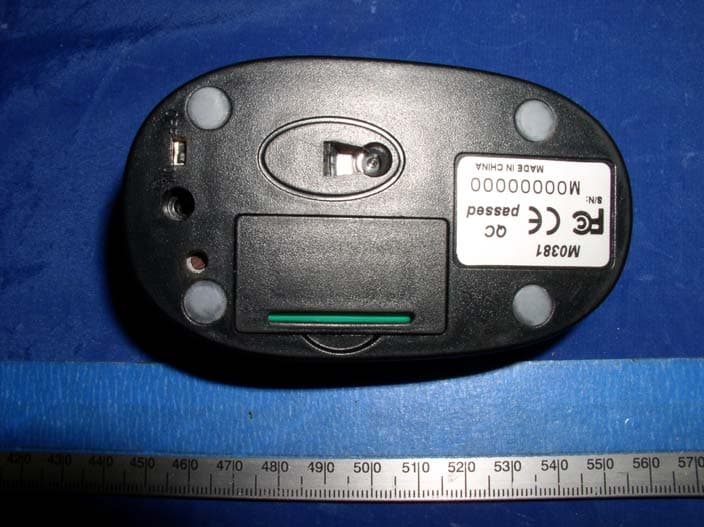
RETM0381
Nov 01, 2004Wireless Mouse
Equipment Class
DXX - Part 15 Low Power Communication Device Transmitter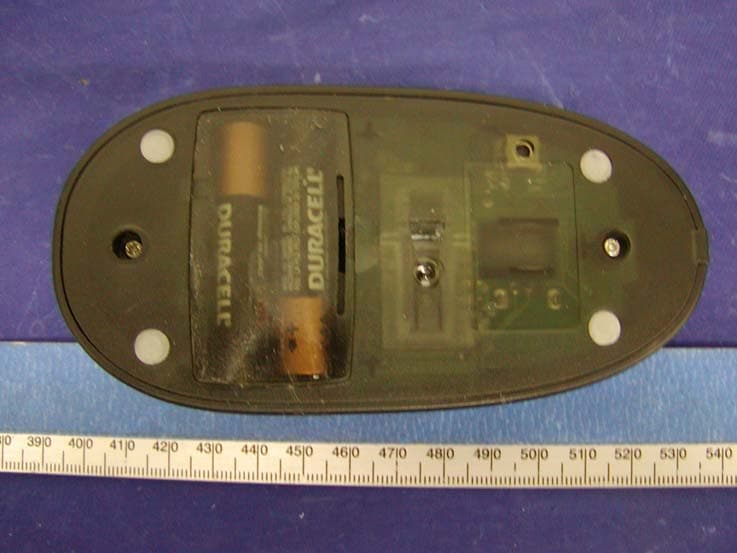
RETH84C0180
Aug 16, 2004Wireless Mouse
Equipment Class
DXX - Part 15 Low Power Communication Device Transmitter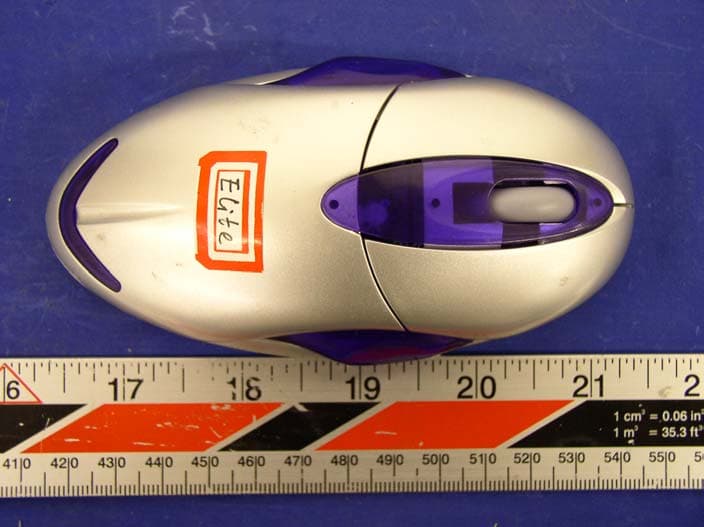
RETGH80832
Feb 04, 2004Optical Wirless Mouse
Equipment Class
DXX - Part 15 Low Power Communication Device Transmitter
RETKM80520M
Sep 28, 2003Wireless Mouse
Equipment Class
DXX - Part 15 Low Power Communication Device Transmitter
RETKM80520K
Sep 28, 2003Wireless Keyboard
Equipment Class
DXX - Part 15 Low Power Communication Device Transmitter