RMXSKL21SDSSKL21-SDS
Intel Corporation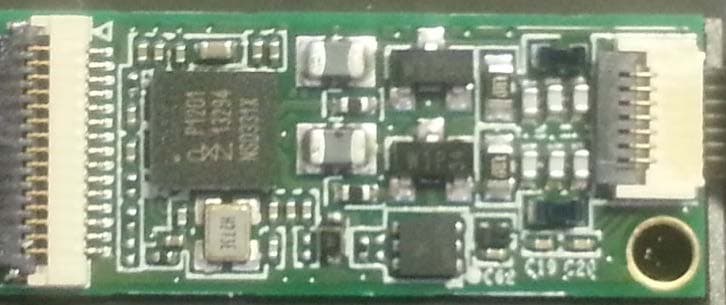
Click to zoom
Application Details
- Equipment Class
- DXX - Part 15 Low Power Communication Device Transmitter
- Date of Grant
- Aug 27, 2015
- Application Purpose
- Original Equipment
- Date of Application
- Aug 27, 2015
- Equipment Note
- SKL21-SDS
- Frequency Range
- 13.56000000 - 13.56000000
- Company
- Intel Corporation
- Country
- United States
Documents & Files
Document Text
Text extracted from the exhibit documents filed with the FCC. Open a document above to read the original.
Users Manual
Intel® 2 in 1 System – Model SKL21-SDS PVT2 Intel, and the Intel logo are trademarks of Intel Corporation in the U.S. and/or other countries. Copyright © 2015, Intel Corporation. All rights reserved. IPN: H82194-001 IMPORTANT SAFETY & REGULATORY INFORMATION DO NOT DISCARD This information should be kept with the device for future reference. ENGI NEERING SAMPLE/DEVELOPMENT DEVICE NOT FOR SALE OR LEASE This device is pr ovided for test, evaluation, and demonstration purposes only as permitted in your region. This device is designed to meet or exceed international Safety, EMC, RF and Enviro nmental standards. Changes or modifications not expressly approved by Intel Corp oration could void regulatory certifications as well as the developer's authority to operate th e equipment. SAFETY WARNINGS and CAUTIONS 1. Use only the power adapter pr ovided with the device. Other power adapters may overheat or damage the device. 2. The battery pack is not user-serviceable; the battery[ies] in this device cannot be easily replaced by users themselves’. Do not attempt to remove the battery pack as damage to the device or battery pack may occur. 3. If the device is damaged crushed or severely dr opped, to ensure safe and pr oper operation, return it to Intel for servicing. 4. If the device is exposed to excessive temperatures the battery may fail. Do not expose the device to environments over 100 degrees C. 5. Do NOT dr op the device in water, as the device is not waterproof. Operation and device failure may occur. 6. Caution should be exercised during long exposure to excessive sound levels from earphones and headphones as this can cause hearing loss. 7. This device may contain an Intel® RealSense™ 3D Camera module that contains an integrated laser projector. The camera complies with International Standard EN/IEC 60825-1:2007 edition 2 for a Class 1 laser product. The camera also complies with US FDA performance standards for laser products except for deviations pursuant to Laser notice No. 50, dated June 24, 2007." Do not modify, attempt to open or service the camera module within this device in any way. Modification or service of the camera module might cause the emissions to exceed the Class 1 level. Do not activate this device if the camera is damaged in any manner. Use of controls or adjustments or performance of procedures other than those specified herein may result in hazardous radiation exposure. Federal Communications Commission Regul atory Statement This equipment has been tested and found to comply with the limits for a Class B digi tal devi ce, pursuant to Part 15 of the FCC Rules. These limits are designed to provide reasonable pr otection against harmful in terference in a residential installation. This equipment generates uses and can radiate radio frequency energy and, if not installed and used in accordance with the instructions, may cause harmful in terference to radio communications. However, there is no guarantee that interference will not occur in a particular installation. If this equipment does cause h armful interference to radio or television reception, which can be determined by turning the equipment off and on, the user is encouraged to try to corr ect the in terference by one or more of the following measur es: • Reorient or relocate the receiving antenna. • Increase the separation between the equipment and receiv er. • Connect the equip ment into an out let on a circuit different from that to which the receiver is connected. • Consult the dealer or an experienced radi o/TV technician for help. Caution: To assure cont inued FCC compliance, operation is subject to the following two conditions: Intel® 2 in 1 System – Model SKL21-SDS PVT2 Intel, and the Intel logo are trademarks of Intel Corporation in the U.S. and/or other countries. Copyright © 2015, Intel Corporation. All rights reserved. IPN: H82194-001 1) This device may not cause harmful in terference. 2) This device must accept any interference receiv ed, in cluding in terference that may cause undesired operation. This devi ce complies with the applicable FCC rules. FCC ID: RMXSKL21SDS Any changes or modifications made to this device may invalidate FCC authorization and void the user's authority to operate the device. FCC RF Exposure Statement This equipment complies with FCC RF exposure limits set forth for an uncontrolled environment. This devi ce and its antenna must not be co-located or operating in conjunction with any other antenna or transmit ter. The most conservative SAR measured was 1.49W/kg which is below the FCC limit of 1.6W/kg. Usage of the device should be in accordance with the User Guide and the content of the FCC application. CE This devi ce can be operated in EU without restrictions indoors. I ntel Corporation hereby declares that this Ultrabook is in compliance with the essent ial requirements and other relevant provisions and Directives 1999/5/EC – Radio and Telecommunications Terminal Equipment, 2004/108/EC – EMC, 2011/65/EU - RoHS, 2012/19/EU – WEEE, 2006/95/EC – Low Voltage and 2009/125/EC – Ecodesign. Intel DoC site: http://www.intel.com/cprs-doc Wireless (RF) Interface This development device includes a wireless (Radio Frequency, RF) transmitter. Operation of the transmitter may be restricted or prohibited by regional or national regulations; a license for development/experimental use may be required. This development device may contain a Wireless Wide Area Network (WWAN) data card. Operation of WWAN requires the installation of a SIM card which must be obtained for your location from a licensed network service provider (cellular carrier). Carrier approvals to use the WWAN module cellular functionality have not been obtained for this development device. Authorization to operate this development device on a live network requires the explicit approval from a carrier. It is the customer’s/co-developer’s responsibility to obtain written permission from the carrier(s), before inserting a SIM card and …
Text truncated - open the document above for the full version.
Cover Letter(s)
August 1, 2015 Federal Communications Commission Authorization and Evaluation Division 7435 Oakland Mills Road Columbia, Maryland 21046 Subject: Original Application FCC ID: RMXSKL21SDS Dear Application Examiner: Intel Corporation is submitting this application for certification of their Model SKL21-SDS, under FCC ID: RMXSKL21SDS. The device is a laptop / tablet convertible computer containing a NFC radio. Previously certified WWAN (FCC ID: RYQ-NF2), and WLAN / Bluetooth (FCC ID: PD97265NG) modular radios are installed. System authorization is sought under FCC 15B, FCC 15.225, FCC 15.247, FCC 15.407, FCC 22H, FCC 24E and FCC 27. The WWAN radio is 3G / 4G module operating in the CLR 850, PCS 1900, and AWS 1700 bands; and LTE 2, 4, 5, 7, 13, and 17 bands. The WLAN / Bluetooth module contains an 802.11abgnac 2x2 MIMO radio. The 2.4 and 5 GHz band use 20 & 40 MHz channel bandwidths for Chain A or B, and A+B combinations. The 5 GHz bands also support 802.11 ac for 20, 40, and 80 MHz channel bandwidths for Chain A or B, and A+B combinations. It also contains a Bluetooth 4.0 radio. The WLAN radio can operate in the DFS frequency bands as a client device only. It has no radar detection and no ad-hoc capability. Intel Corporation declares that the product cannot transmit between 5600 – 5650 MHz. A DFS test for a client device was performed. Note that certification is sought under the new rules for U-NII devices adopted under Docket No. 13-49, except for the 5.8 GHz band which was tested under the old rules. This is only permitted for the 5.8 GHz band until December 2, 2015. For the WLAN/Bluetooth and WWAN radios the laptop computer can be used closer than 20 cm to the user’s torso so a SAR evaluation was performed. The main antenna for the WWAN radio is co-located with a proximity sensor. Once the sensor is triggered, the output power is lowered for all WWAN bands. An evaluation of the proximity sensor is contained in the SAR report. The antennas are integral to the laptop computer. They are not user accessible so they meet the requirements of FCC 15.203. The receiver portion of the WWAN radio has been verified to FCC 15B requirements. The tablet computer is seeking certification as a Class B computing device. Intel Corporation 5200 NE Elam Young Pky Hillsboro, OR 97124 The following is a summary of the reports submitted with this application: Type Purpose Reports EMC: 15B System testing of the tablet computer as a Class B computing device. NWEMC Report – INTE5584 EMC: 15.225 System testing of the NFC radio in the laptop. NWEMC Report – INTE5613 EMC: 15.247 15.407 Stand-alone module testing of the WLAN / Bluetooth module. Used to demonstrate compliance for antenna port direct connect measurements, and spurious radiated emissions. AT4 Reports – 41273RRF.001 41273RRF.002 41273RRF.003 DFS: 15.407 Stand-alone module testing of the WLAN / Bluetooth module. Used to demonstrate compliance for DFS as a client device. AT4 Report – 41273RRF.004 EMC: 22H 24E 27 Stand-alone module testing of the WWAN module. Used to demonstrate compliance for antenna port direct connect measurements, radiated power and spurious radiated emissions. Sporton Lab Reports – FG352141A, FG352141B, FG352141-01A, FG352141-01B EMC: 22H 24E 27 System level testing of the WWAN module in the laptop computer for radiated power. NWEMC Report – INTE5614 EMC 15.207 System level testing used to demonstrate compliance of AC power line conducted emissions. NWEMC Report – INTE5613 SAR: 2.1093 System level SAR evaluation of the WLAN module in the laptop. NWEMC Report – INTE5597 SAR: 2.1093 System level SAR evaluation of the WWAN module in the laptop. Also includes testing of the proximity sensor. NWEMC Report – INTE5622 Best regards, Michael M Lowe Product Regulatory Intel Corporation
Cover Letter(s)
Intel Corporation 5200 NE Elam Young Pky Hillsboro, OR 97124 Aug 2, 2015 Federal Communications Commission Authorization and Evaluation Division 7435 Oakland Mills Road Columbia, Maryland 21046 Subject: Long-Term Confidentiality Re quest FCC ID: RMXSKL21SDS To whom it may concern, We hereby respectfully request that under the provision of 47 CFR 0.459 and 0.457(d) the documents attached with this application for certification be provided with long-term confidential status. Schematics Block Diagrams Operation Description Tune Up Procedures Any exhibit / information for which we have requested confidentiality, but which may not be accorded such treatment by the FCC, should be returned to us. The documents attached contain trade secrets that are treated as confidential by us. Substantial competitive harm to us could result should they be made available to the public. If you have any questions please feel free to contact Mike Lowe +1 (503) 696-5298. Sincerely, Michael M Lowe Product Regulatory Engineer Intel Corporation
External Photos
NFC Radio Module (single sided module) (with and without label) (bottom of module)
External Photos
Laptop Orientation Mode Tablet Orientation Mode Back Bottom Back Edge To p Edge Right Edge Left Edge
ID Label/Location Info
SKL21 SDS 2 in 1 Labeling Tablet Labeling Back Side Top Edge Base Labeling Bottom
Internal Photos
Inside System w/Battery Pack WWAN Main co-located with SAR Sensor Antenna WWAN Aux Antenna WiFi/BT & WWAN Modules Inside System w/o Battery Pack and w/o Main Board SAR Sensor Nodes WiFi/BT Aux Antenna Behind Volume Rocker NFC Radio and Antenna Pad Inside LCD Enclosure 2 nd NFC Antenna Location Upper Right Corner Behind LCD
Test Report
This report must not be used to claim product certification, approval, or endorsement by NVLAP, NIST, or any agency of the federal government of the United States of America. This Report may only be duplicated in its entirety Intel Corporation Skylake FCC 15.207:2015 FCC 15.225:2015 Report # INTE5613 NVLAP Lab Code: 200630-0 CERTIFICATE OF TEST 2014-12-10 Product compliance is the responsibility of the client; therefore, the tests and equipment modes of operation represented in this report were agreed upon by the client, prior to testing. The results of this test pertain only to the sample(s) tested. The specific description is noted in each of the individual sections of the test report supporting this certificate of test. This report reflects only those tests from the referenced standards shown in the certificate of test. It does not include inspection or verification of labels, identification, marking or user information. Last Date of Test: July 13, 2015 Intel Corporation Model: Skylake Radio Equipment Testing Standards Specification Method FCC 15.207:2015 ANSI C63.10:2009 FCC 15.225:2015 ANSI C63.10:2009 Results Method Clause Test Description Applied Results Comments 6.2 Powerline Conducted Emissions Yes Pass 6.4 Field Strength of Fundamental Yes Pass 6.4 Field Strength of Spurious Emissions < 30 MHz Yes Pass 6.5 Field Strength of Spurious Emissions > 30 MHz Yes Pass 6.8 Frequency Stability Yes Pass Deviations From Test Standards None Approved By: Kyle Holgate, Operations Manager Report No. INTE56132/34 REVISION HISTORY REV 2014.10.14 Revision Number Description Date Page Number 00 None Report No. INTE56133/34 ACCREDITATIONS AND AUTHORIZATIONS REV 2015.2.19 United States FCC - Designated by the FCC as a Telecommunications Certification Body (TCB). Certification chambers, Open Area Test Sites, and conducted measurement facilities are listed with the FCC. A2LA - Accredited by A2LA to ISO / IEC 17065 as a product certifier. This allows Northwest EMC to certify transmitters to FCC and IC specifications. NVLAP - Each laboratory is accredited by NVLAP to ISO 17025 Canada IC - Recognized by Industry Canada as a Certification Body (CB). Certification chambers and Open Area Test Sites are filed with IC. European Union European Commission – Validated by the European Commission as a Conformity Assessment Body (CAB) under the EMC directive and as a Notified Body under the R&TTE Directive. Australia/New Zealand ACMA - Recognized by ACMA as a CAB for the acceptance of test data. Korea MSIP / RRA - Recognized by KCC’s RRA as a CAB for the acceptance of test data. Japan VCCI - Associate Member of the VCCI. Conducted and radiated measurement facilities are registered. Taiwan BSMI – Recognized by BSMI as a CAB for the acceptance of test data. NCC - Recognized by NCC as a CAB for the acceptance of test data. Singapore IDA – Recognized by IDA as a CAB for the acceptance of test data. Israel MOC – Recognized by MOC as a CAB for the acceptance of test data. Hong Kong OFCA – Recognized by OFCA as a CAB for the acceptance of test data. Vietnam MIC – Recognized by MIC as a CAB for the acceptance of test data. SCOPE For details on the Scopes of our Accreditations, please visit: http://www.nwemc.com/accreditations/ http://gsi.nist.gov/global/docs/cabs/designations.html Report No. INTE56134/34 MEASUREMENT UNCERTAINTY TMU.2015.07.10 Measurement Uncertainty When a measurement is made, the result will be different from the true or theoretically correct value. The difference is the result of tolerances in the measurement system that cannot be completely eliminated. To the extent that technology allows us, it has been our aim to minimize this error. Measurement uncertainty is a statistical expression of measurement error qualified by a probability distribution. A measurement uncertainty estimation has been performed for each test per our internal quality document WP 342. The estimation is used to compare the measured result with its "true" or theoretically correct value. The expanded measurement uncertainty (K=2) for each test is on each data sheet. Our measurement data meets or exceeds the measurement uncertainty requirements of the applicable specification; therefore, the test data can be compared directly to the specification limit to determine compliance. The calculations for estimating measurement uncertainty are based upon ETSI TR 100 028 (or CISPR 16-4-2 as applicable), and are available upon request. The following table represents the Measurement Uncertainty (MU) budgets for each of the tests that may be contained in this report. Test + MU - MU Frequency Accuracy (Hz) 0.0007% -0.0007% Amplitude Accuracy (dB) 1.2 dB -1.2 dB Conducted Power (dB) 0.3 dB -0.3 dB Radiated Power via Substitution (dB) 0.7 dB -0.7 dB Temperature (degrees C) 0.7°C -0.7°C Humidity (% RH) 2.5% RH -2.5% RH Voltage (AC) 1.0% -1.0% Voltage (DC) 0.7% -0.7% Field Strength (dB) 5.2 dB -5.2 dB AC Powerline Conducted Emissions (dB) 2.4 dB -2.4 dB Report No. INTE56135/34 FACILITIES REV 2015.2.19 California Labs OC01-13 41 Tesla Irvine, CA 92618 (949) 861-8918 Minnesota Labs MN01-08, MN10 9349 W Broadway Ave. Brooklyn Park, MN 55445 (612)-638-5136 New York Labs NY01-04 4939 Jordan Rd. Elbridge, NY 13060 (315) 554-8214 Oregon Labs EV01-12 22975 NW Evergreen Pkwy Hillsboro, OR 97124 (503) 844-4066 Texas Labs TX01-09 3801 E Plano Pkwy Plano, TX 75074 (469) 304-5255 Washington Labs NC01-05 19201 120 th Ave NE Bothell, WA 9801 (425)984-6600 NVLAP NVLAP Lab Code: 200676-0 NVLAP Lab Code: 200881-0 NVLAP Lab Code: 200761-0 NVLAP Lab Code: 200630-0 NVLAP Lab Code:201049-0 NVLAP Lab Code: 200629-0 Industry Canada 2834B-1, 2834B-3 2834E-1 N/A 2834D-1, 2834D-2 2834G-1 2834F-1 BSMI SL2-IN-E-1154R SL2-IN-E-1152R N/A SL2-IN-E-1017 SL2-IN-E-1158R SL2-IN-E-1153R VCCI A-0029 A-0109 N/A A-0108 A-0201 A-0110 Recognized Phase I CAB for ACMA, BSMI, IDA, KCC/RRA, MIC, MOC, NCC, OFCA US0158 US0175 N/A US0017 US0191 US0157 Report No. INTE56136/34 PRODUCT DESCRIPTION 2014…
Text truncated - open the document above for the full version.
Test Setup Photos
POWERLINE CONDUCTED EMISSIONS WTD.2015.05.26 PSA-ESCI 2015.03.03, EmiR5 2015.05.29 photo 047.JPG 049.JPG FIELD STRENGTH OF FUNDAMENTAL PSA-ESCI 2015.03.03 photo 050.JPG 051.JPG FIELD STRENGTH OF FUNDAMENTAL PSA-ESCI 2015.03.03 photo Field Strength of Fundamental (1).JPG Field Strength of Fundamental (2).JPG FIELD STRENGTH OF SPURIOUS EMISSIONS < 30 MHz PSA-ESCI 2015.03.03 photo Field Strength of Fundamental (3).JPG Field Strength of Fundamental (4).JPG FIELD STRENGTH OF SPURIOUS EMISSIONS < 30 MHz PSA-ESCI 2015.03.03 photo SRE Greater Than 30 MHz 001.JPG SRE Greater Than 30 MHz 002.JPG FIELD STRENGTH OF SPURIOUS EMISSIONS > 30 MHz PSA-ESCI 2015.03.03 photo SRE Greater Than 30 MHz 003.JPG SRE Greater Than 30 MHz 005.JPG FIELD STRENGTH OF SPURIOUS EMISSIONS > 30 MHz PSA-ESCI 2015.03.03 photo SRE Greater Than 30 MHz 006.JPG FIELD STRENGTH OF SPURIOUS EMISSIONS > 30 MHz PSA-ESCI 2015.03.03 XMit 2015.01.14 Freq Stab EV09 (1).JPG Freq Stab EV09 (2).JPG FREQUENCY STABILITY XMit 2015.01.14 Freq Stab EV09 (3).JPG Freq Stab EV09 (4).JPG FREQUENCY STABILITY XMit 2015.01.14 Freq Stab EV09 (5).JPG Freq Stab EV09 (6).JPG FREQUENCY STABILITY XMit 2015.01.14 Freq Stab EV09 (7).JPG FREQUENCY STABILITY
Contact Information
Applicant
Mike Lowe(Product Regulatory Engineer)
Test Firm
Element Materials TechnologyRenee Walker
Technical Specifications
| # | Rule Parts | Frequency Range | Power Output |
|---|---|---|---|
| 1 | 15C | 13.56 MHz - 13.56 MHz | - |
Other Applications from Intel Corporation
RMXWSBUB-SDS
Oct 01, 2014WSBUB-SDS
Equipment Class
DXX - Part 15 Low Power Communication Device Transmitter
RMXHSBUB-SDS
Mar 25, 2013Notebook
Equipment Class
DXX - Part 15 Low Power Communication Device Transmitter