RMXWSBUB-SDSWSBUB-SDS
Intel Corporation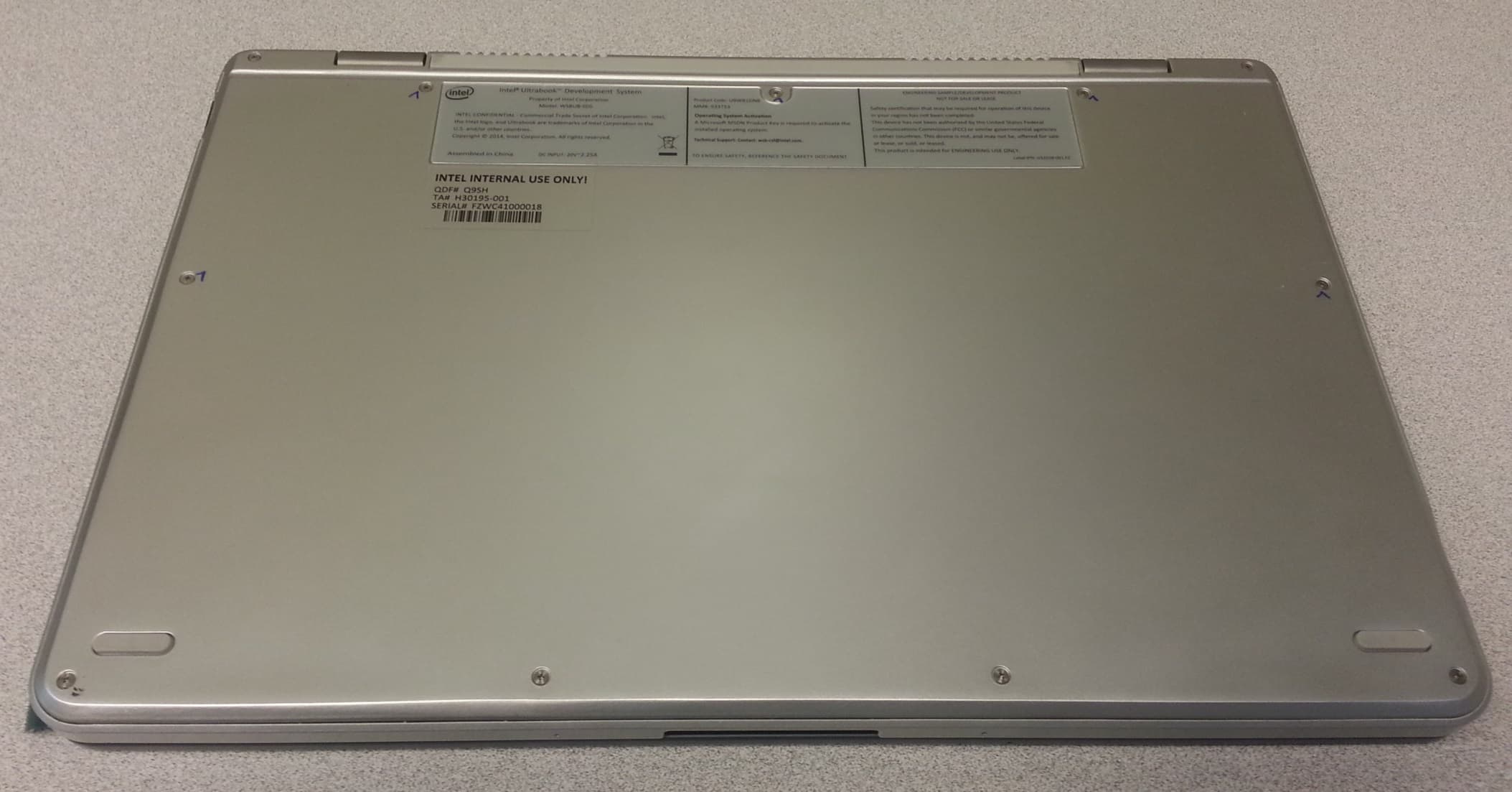
Click to zoom
Application Details
- Equipment Class
- DXX - Part 15 Low Power Communication Device Transmitter
- Date of Grant
- Oct 01, 2014
- Application Purpose
- Original Equipment
- Date of Application
- Oct 01, 2014
- Equipment Note
- WSBUB-SDS
- Frequency Range
- 13.56000000 - 13.56000000
- Company
- Intel Corporation
- Country
- United States
Documents & Files
Document Text
Text extracted from the exhibit documents filed with the FCC. Open a document above to read the original.
Users Manual
I n n tel ® 5th G Solut i U - S - Regul a G enerati o i on Deve U SE R Mod e Docum e Revisi o Regulatory Inf o DRAF T With Re g S afety Pr e a tory Not o n Core ™ lopment R MA N e l: WSBUB-SDS e nt Number: H32 0 o n 0.93 • May 20 1 o rmation • Septe m T - Intel Confi d g ulatory u e cautions ices 9/21 / ™ Proces s System ( N UA L 0 72 1 4 m be r 2014 d ential u pdates 9/19/20 1 / 2014 (e c s or-Base ( SDS) L 1 4 c ology) d IU NIAPIPAIAIcAprSaoFISUhMTTT*C ntel® 5 th Generation U SER MANUAL (Re v N otice: NFORMATION IN T H A NY INTELLECTUA L P RODUCTS, INTEL A NTEL® PRODUCTS P ATENT, COPYRIG H A PPLICATIONS. ntel may make chan g A ll products, dates, a n ntel processors, chip c ha r acterized errata a A ny code names feat u p arties are not autho r r isk of the user. S oftware and worklo a a re measured using s o ther information and F or more information ntel, Intel Inside, the S tates and other cou n U ltrabook™ products h ttp://www.intel.com/ u M aterial in this docu m T his Ultrabook syste m T his Ultrabook syste m T his document contai * Other names and br a C opyright © 2014 Int e Core™ Processo r -B a v 0.93) H IS DOCUMENT IS P L PROPERTY RIGH T A SSUMES NO LIABI L INCLUDING LIABILI H T OR OTHER INTE L g es to specifications a n d figures specified a s ets, and desktop bo a a re available on requ e u red are used intern a r ized by Intel to use c o a ds used in performa n s pecific computer sys t performance tests t o go to http://www.inte l Intel logo, Intel vPro, n tries. are offered in multipl u ltrabook. m ent is intended as p r m is an engineering s a m is specifically desig n ns information on pr o a nds may be claimed e l Corporation a sed SDS P ROVIDED IN CON N T S IS GRANTED BY T L ITY WHATSOEVE R TY OR WARRANTI E L LECTUAL PROPE R a nd product descripti o re preliminary based a rds may contain de s e st. a lly within Intel to ide n o de names in adverti s n ce tests may have b e t ems, components, s o o assist you in fully ev l .com/performance. Centrino, Centrino I n e models. Some mo d oduct positioning an d a mple and may not b e n ed and tested for Mi o ducts in the design p as the property of ot h DRAF N ECTION WITH INTE T HIS DOCUMENT. E R , AND INTEL DISCL A E S RELATING TO FI T R TY RIGHT. INTEL P R o ns at any time, with o on current expectati o s ign defects or errors n tify products that are s ing, promotion or m a e en optimized for pe r o ftware, operations a aluating your contem n side, Intel Core, Intel d els may not be avail a d not approved end u s e sold or leased; it re m crosoft* Windows* 8. p hase of developmen t h ers. T – CONFIDENTIAL L® PRODUCTS. NO E XCEPT AS PROVID E A IMS ANY EXPRES S T NESS FOR A PART R ODUCTS ARE NO T o ut notice. o ns, and are subject t o known as errata, whi in development and a rketing of any produ c r formance only on Int e nd functions. Any ch a plated purchases, in c Atom, Pentium, Ultr a a ble in your market. C s er messaging. m ains the property o f 1, configured for Co n t . LICENSE, EXPRES S E D IN INTEL’S TER M S OR IMPLIED WAR R ICULAR PURPOSE, T INTENDED FOR U S o change without not i ch may cause the pr o not yet publicly anno u c t or services and an y e l microprocessors. P a nge to any of those f c luding the performa n a book, and RealSens C onsult your Ultraboo f Intel. n nected Standby ope r S OR IMPLIED, BY E M S AND CONDITIO N RANTY, RELATING T MERCHANTABILIT Y S E IN MEDICAL, LIF t ice. o duct to deviate from u nced for release. C u y such use of Intel's i P erformance tests, s u f actors may cause th e n ce of that product w h s e are trademarks of I o k™ manufacturer. F o r ation. E STOPPEL OR OTH E N S OF SALE FOR S U T O SALE AND/OR U Y , OR INFRINGEME N E SAVING, OR LIFE published specificati o u stomers, licensees a nternal code names i u ch as SYSmark and e results to vary. You h en combined with ot h I ntel Corporation in t h o r more information a n May 2014 2 E RWISE, TO U CH SE OF N T OF ANY SUSTAINING o ns. Current a nd other third s at the sole MobileMark, should consult h er products. h e United n d details, visit IU r ntel® 5 th Generation U SER MANUAL (Re v r evision Revision 0.92 0.91 0.9 0.85 0.8 0.7 Core™ Processo r -b a v 0.93) history a sed SDS Description Added: Fingerprint sensor in f Updated: Wireless WAN: instr u Updated: Wireless WAN SIM c Updated: Introduction Left side features Using the keyboard Using the HDMI to V G Using the debug por t Standby and system Technical specificati o Configuration and tr o Update for Beta (DV T Updated: Safety precautions ( W Active Pen configura t Touchscreen configuInitial release, Beta ( D DRAF f ormation u ctions for enabling W c ard instructions G A adapte r t shut down o ns o ubleshooting T 2) factory build with W WAN and Wi-Fi sta t t ion information ration information D VT2) factory build. T – CONFIDENTIAL W WAN Intel® RealSense 3 D t ements) § D camera. D a Ju n M a M a M a A p A p a te n e 20, 2014 a y 13, 2014 a y 7, 2014 a y 2, 2014 p ril 23, 2014 p ril 15, 2014 May 2014 3 IU c12 ntel® 5 th Generation U SER MANUAL (Re v c ontent s 1 introductio n safety precagetting to kn system left sideright sidfront parear pa n 2 using your s getting start e system orie n laptop m tablet m display tent mo d using t h using the to u customi using the to u using the ac t customiexampl e using the ke y functio n other k e using the ca user-fa c world f a Core™ Processo r -b a v 0.93) s n utions ow the system features view e vie w nel view n el vie w s ystem e d n tations m ode m ode mode d e e protective sleev e u ch screen zing the touch scr e u chpad t ive pen zing the pen beha v e s of applications s y board key commands e yboard functions meras c ing webcam a cing camera (tabl e a sed SDS e e en functions v io r s upporting an activ e e t mode) DRAF 6788991 1 1 1 1 2 1 2 1 3 1 3 1 4 1 5 1 5 1 6 1 7 1 7 2 0 2 1 2 2 e pen 2 4 2 5 2 5 2 5 2 6 2 6 2 7 T – CONFIDENTIAL 1 1 2 2 3 3 4 5 5 6 7 7 0 1 2 4 5 5 5 6 6 7 uuwuuscu 3 t e 4 c 5 rSEEAu sing the sys…
Text truncated - open the document above for the full version.
Attestation Statements
Intel Corporation 2111 NE 25 th Ave. Hillsboro, OR 97124 September 9, 2014 Federal Communications Commission Authorization and Evaluation Division 7435 Oakland Mills Road Columbia, Maryland 21046 RE: FCC-ID: RMXWSBUB-SDS To Whom it May Concern: We attest to the following: • Per FCC KDB 443999 D01 v01r02 and RSS 210 Annex 9, this device will not transmit in the 5600 - 5650 MHz band. • Per FCC KDB 848637 D01 V01, the device is a client device with no radar detection capability. The client software and associated drivers will not initiate any transmission on DFS frequencies without initiation by a master. This includes restriction on transmissions for beacons and support for ad-hoc peer-to-peer modes. • Per FCC KDB 594280 D01 v02r01, the device complies with the requirements for software configuration control. The device meets the definition of FCC 15.202 client device and does not have the ability to be configured by end users or professional installers to operate outside the authorized bands • Per FCC 15.407(c), the device will automatically discontinue transmission in case of either absence of information to transmit or operational failure. Sincerely, Michael M Lowe Product Regulatory Engineer Intel Corporation
Cover Letter(s)
September 9, 2014 Federal Communications Commission Authorization and Evaluation Division 7435 Oakland Mills Road Columbia, Maryland 21046 Subject: Original Application FCC ID: RMXWSBUB-SDS Dear Application Examiner: Intel Corporation is submitting this application for certification of their Model WSBUB-SDS, under FCC ID: RMXWSBUB-SDS. The device is a laptop / tablet convertible computer containing a NFC radio. Previously certified WWAN (FCC ID: RYQ-NF2) and WLAN / Bluetooth (FCC ID: PD97265NG) modular radios are installed. System authorization is sought under FCC 15.225, 15.247, FCC 15.407, FCC 22H, FCC 24E and FCC 27 The WWAN radio is 3G / 4G device operating in the CLR 850, PCS 1900, and AWS 1700 bands; and LTE 2, 4, 5, 7, 13, and 17 bands. The WLAN / Bluetooth module contains an 802.11abgnac 2x2 MIMO radio. The 2.4 and 5 GHz band use 20 & 40 MHz channel bandwidths for Chain A or B, and A+B combinations. The 5 GHz bands also support 802.11 ac for 20, 40, and 80 MHz channel bandwidths for Chain A or B, and A+B combinations. It also contains a Bluetooth 4.0 radio. The WLAN radio can operate in the DFS frequency bands as a client device only. It has no radar detection and no ad-hoc capability. Intel Corporation declares that the product cannot transmit between 5600 – 5650 MHz. A DFS test for a client device was performed. The laptop computer can be used closer than 20 cm to the user’s torso so a SAR evaluation was performed. The main antenna for the WWAN radio is co-located with a proximity sensor. Once the sensor is triggered, the output power is lowered for all WWAN bands. An evaluation of the proximity sensor is contained in the SAR report. The antennas are integral to the laptop computer. They are not user accessible so they meet the requirements of FCC 15.203. The receiver portion of the WWAN radio has been verified to FCC 15B requirements. The laptop computer has been DoC authorized as a Class B computing device. Intel Corporation 2111 NE 25 th Ave. Hillsboro, OR 97124 The following is a summary of the reports submitted with this application: Type Purpose Reports EMC: 15.225 System testing of the NFC radio in the laptop. NWEMC Report – INTE5437.1 EMC: 15.247 15.407 Stand-alone module testing of the WLAN / Bluetooth module. Used to demonstrate compliance for antenna port direct connect measurements, and spurious radiated emissions. AT4 Reports – 41273RRF.001 41273RRF.002 41273RRF.003 DFS: 15.407 Stand-alone module testing of the WLAN / Bluetooth module. Used to demonstrate compliance for DFS as a client device. AT4 Report – 41273RRF.004 EMC: 22H 24E 27 Stand alone module testing of the WWAN module. Used to demonstrate compliance for antenna port direct connect measurements, radiated power and spurious radiated emissions. Sporton Lab Reports – FG352141A, FG352141B, FG352141-01A, FG352141-01B EMC: 22H 24E 27 System level testing of the WWAN module in the laptop computer for radiated power. NWEMC Report – INTE5452 EMC 15.207 System level testing used to demonstrate compliance of AC power line conducted emissions. NWEMC Report – INTE5492 SAR: 2.1093 System level SAR evaluation of the WWAN module in the laptop. Also includes testing of the proximity sensor. NWEMC Report – INTE5478 SAR: 2.1093 System level SAR evaluation of the WLAN module in the laptop. NWEMC Report – INTE5434 Best regards, Michael M Lowe Product Regulatory Intel Corporation
Cover Letter(s)
WTD 13.4.9 FCC Compliance Opinion INTE5426 Information about the Applicant Grantee (Company Name) Intel Corporation FCC Contact Person Michael Lowe Address 2111 NE 25th Ave City, State, Zip Hillsboro, OR 97124 Job Number INTE5426 Model Laptop/Tablet Convertible FCC ID RMXWSBUB-SDS Agent Approval Type Original Equipment Class DXX Part 15, Low Power Communications Transmitter DSS Part 15, Spread Spectrum Transmitter DTS Digital Transmission System, NII Unlicensed National Information Infrastructure Tx PCB Part 22,24,27 Transmitter Rule Part 15.225, 15.247, 15.407, 22h, 24e, 27 Overview This application is for the original approval of a laptop/tablet convertible converter manufactured by Intel Corporation. The device contains an NFC radio, a WWAN radio, and a WLAN/Bluetooth radio. The WWAN radio is a 3G/4G device operating in the CLR 850, PCS 1900, and AWS 1700 bands; and LTE 2, 4, 5, 7, 13 and 17 bands. The WLAN/Bluetooth radio is an 802.11 a/b/g/n/ac 2x2 MIMO radio. The WLAN radio operates in the DFS frequency bands as a client device only and is not able to initiate transmission. Confidentiality requested for allowed files. Request is properly addressed and referenced. Recommendation All items have been resolved and completed to my satisfaction; therefore I recommend this application for approval. Signature Dave Tolman, TCB Committee 9/23/2014
Cover Letter(s)
Intel Corporation 2111 NE 25 th Ave. Hillsboro, OR 97124 August 18, 2014 Federal Communications Commission Authorization and Evaluation Division 7435 Oakland Mills Road Columbia, Maryland 21046 Subject: Long-Term Confidentiality Request FCC ID: RMXWSBUB-SDS To whom it may concern, We hereby respectfully request that under the provision of 47 CFR 0.459 and 0.457(d) the documents attached with this application for certification be provided with long-term confidential status. Schematics Block Diagrams Operation Descriptions Any exhibit / information for which we have requested confidentiality, but which may not be accorded such treatment by the FCC, should be returned to us. The documents attached contain trade secrets that are treated as confidential by us. Substantial competitive harm to us could result should they be made available to the public. If you have any questions please feel free to contact Mike Lowe +1 (503) 712-5298. Sincerely, Michael M Lowe Product Regulatory Engineer Intel Corporation
Cover Letter(s)
Intel Corporation 2111 NE 25 th Ave. Hillsboro, OR 97124 October 24, 2014 Federal Communications Commission Authorization and Evaluation Division 7435 Oakland Mills Road Columbia, Maryland 21046 Subject: Long-Term Confidentiality Request for Antenna Information. FCC ID: RMXWSBUB-SDS To whom it may concern, We hereby respectfully request that under the provision of 47 CFR 0.459 and 0.457(d) that the antenna documents submitted earlier with our application for certification be provided with long-term confidential status. Antenna Info 01.pdf (NFC) Antenna Info 02.pdf (WiFi/BT) Antenna Info 03.pdf (WWAN) I originally approved that the antenna information be placed in the public domain, but then after the grant was issued it was brought to my attention that the documents contain Intellectual Property secrets between Intel and our suppliers. Substantial competitive harm to us and/or our suppliers could result should the antenna information remain available in the public domain. I am aware that the antenna exhibits for which I am requesting post-grant confidentiality have been publically available since the date of the grant (October 2, 2014). If you have any questions please feel free to contact Mike Lowe +1 (503) 712-5298. Sincerely, Michael M Lowe Product Regulatory Engineer Intel Corporation
External Photos
Laptop Orientation Mode Tablet Orientation Mode Back Bottom Back Edge Front Edge Right Edge Left Edge
External Photos
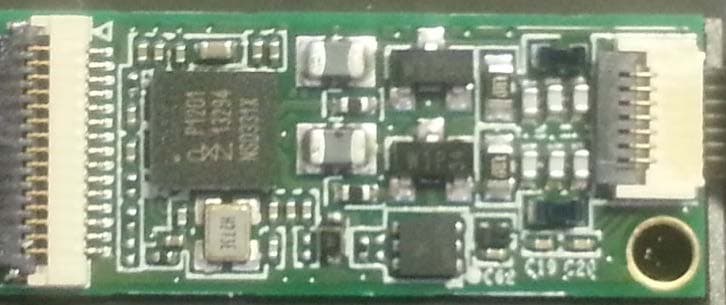
WSB NFC Radio Module (single sided module) (with and without label) (bottom of module)
External Photos
Intel 7265NGW WiFi/BT Module Pictures (front with and without label) Intel 7265NGW WiFi/BT Module Pictures (back)
External Photos
WWAN FIH 7160 External Pictures (front and back)
ID Label/Location Info
Bottom of Device Draft
Internal Photos
Open Box Accessories
Internal Photos
Inside System w/Battery Pack Inside System w/o Battery Pack NFC Radio and Antenna Pad WWAN Radio WiFi/BT Radio Inside LCD Enclosure Antenna Locations Back side of LCD WiFi Aux WiFi/BT Main WWAN Aux WWAN Main Inside back C o v e r. Back side of LCD Inside back C o v e r. Inside LCD Enclosure SAR Sensor Location
Internal Photos
Intel 7265NGW WiFi/BT Module Pictures (front and back)
Internal Photos
WWAN FIH 7160 Internal Pictures
Parts List/Tune Up Info
Tune Up Procedure Statement WiFi/BT 7265NGW For Model 7265NGW WiFi/Bluetooth card all final output power levels and operational parameters are programmed into the non-volatile memory (NVM) during the assembly process. All output levels are verified prior to shipping to assure compliance and no further tuning is necessary. The information programmed into the NVM is not accessible and cannot be changed by the end user/installer in any way.
Parts List/Tune Up Info
Tune Up Procedure Tune-up procedure During manufacturing each device is individually calibrated. Measurement is performed in a fully calibrated setup using an Agilent 8960 base station simulator (system tester). Measurement procedure is outlined below: Measurement Procedure: 1. Set the device to operational voltage and on a predefined channel in a special test mode. 2. The actual output power is measured at several power levels. 3. The gain factors of each individual device are adjusted until the target value is met. The appropriate gain control settings for each output power level are stored in each device individually (for each power level). 4. The maximum gains of each individual device are adjusted and measured until the target value is met. The production target power with tolerance compiles with the maximum power in test report. Then these appropriate gain settings are stored in each device individually. The user has no possibility to change these settings later on, and during manufacturing each device will be individual calibrated in this range. The measurement is done in a fully calibrated setup, which is based on the base station simulator. Furthermore, the highest power level is verified afterwards in a call measurement on each channel. Please find below target values of the maximum level of the production unit: Nominal Target Burst Average power for Production Unit Mode GSM 850 (Nominal) GSM 1900 (Nominal) GPRS/EDGE (GMSK, 1 Tx slot) 32.5±1 29.5±1 GPRS/EDGE (GMSK, 2 Tx slots) 32.5±1 29.5±1 GPRS/EDGE (GMSK, 3 Tx slots) 32±1 29±1 GPRS/EDGE (GMSK, 4 Tx slots) 31.5±1 27.5±1 EDGE (8PSK, 1 Tx slot) 27±1 26±1 EDGE (8PSK, 2 Tx slots) 27±1 26±1 EDGE (8PSK, 3 Tx slots) 26±1 25±1 EDGE (8PSK, 4 Tx slots) 25±1 24±1 Power unit: dBm Nominal Target Power for Production Unit Mode WCDMA Band V (Nominal) WCDMA Band II (Nominal) WCDMA Band IV (Nominal) RMC 12.2K 23.5±1 23.5±1 23.5±1 HSDPA Subtest-1 23.5±1 23.5±1 23.5±1 DC-HSDPA Subtest-1 23.5±1 23.5±1 23.5±1 HSUPA Subtest-5 23±1 23±1 23±1 Power unit: dBm HSPA and HSPA+ Target MPR level Since the tolerance of each subtest may differ across all subtests, the MPR deviations are expected for some HSPA and HSPA+ subtests which may differ from the specification of 3GPP, according to the chipset implementation in this model. The MPR settings are permanently implemented configured into firmware and cannot be disabled by the end user or UMTS carrier network. The target MPR level shown below: HSDPA Subtest Band V Band II Band IV 1 0 0 0 2 0 0 0 3 0.5 0.5 0.5 4 0.5 0.5 0.5 DC-HSDPA Subtest Band V Band II Band IV 1 0 0 0 2 0 0 0 3 0.5 0.5 0.5 4 0.5 0.5 0.5 HSUPA Subtest Band V Band II Band IV 1 0 0 0 2 2 2 2 3 1 1 1 4 2 2 2 5 0 0 0 Unit: dB Nominal Target Power for Production Unit LTE Band 2 Modulation BW (MHz) RB size Target MPR Nominal Power QPSK 20 ≤ 18 22.5±1 0 QPSK 20 > 18 22.5±1 0 16QAM 20 ≤ 18 21.5±1 1 16QAM 20 > 18 21.5±1 1 QPSK 15 ≤ 16 22.5±1 0 QPSK 15 > 16 22.5±1 0 16QAM 15 ≤ 16 21.5±1 1 16QAM 15 > 16 21.5±1 1 QPSK 10 ≤ 12 22.5±1 0 QPSK 10 > 12 22.5±1 0 16QAM 10 ≤ 12 21.5±1 1 16QAM 10 > 12 21.5±1 1 QPSK 5 ≤ 8 22.5±1 0 QPSK 5 > 8 22.5±1 0 16QAM 5 ≤ 8 21.5±1 1 16QAM 5 > 8 21.5±1 1 QPSK 3 ≤ 4 22.5±1 0 QPSK 3 > 4 22.5±1 0 16QAM 3 ≤ 4 21.5±1 1 16QAM 3 > 4 21.5±1 1 QPSK 1.4 ≤ 5 22.5±1 0 QPSK 1.4 > 5 22.5±1 0 16QAM 1.4 ≤ 5 21.5±1 1 16QAM 1.4 > 5 21.5±1 1 Power unit: dBm Nominal Target Power for Production Unit LTE Band 4 Modulation BW (MHz) RB size Target MPR Nominal Power QPSK 20 ≤ 18 22.5±1 0 QPSK 20 > 18 22.5±1 0 16QAM 20 ≤ 18 21.5±1 1 16QAM 20 > 18 21.5±1 1 QPSK 15 ≤ 16 22.5±1 0 QPSK 15 > 16 22.5±1 0 16QAM 15 ≤ 16 21.5±1 1 16QAM 15 > 16 21.5±1 1 QPSK 10 ≤ 12 22.5±1 0 QPSK 10 > 12 22.5±1 0 16QAM 10 ≤ 12 21.5±1 1 16QAM 10 > 12 21.5±1 1 QPSK 5 ≤ 8 22.5±1 0 QPSK 5 > 8 22.5±1 0 16QAM 5 ≤ 8 21.5±1 1 16QAM 5 > 8 21.5±1 1 QPSK 3 ≤ 4 22.5±1 0 QPSK 3 > 4 22.5±1 0 16QAM 3 ≤ 4 21.5±1 1 16QAM 3 > 4 21.5±1 1 QPSK 1.4 ≤ 5 22.5±1 0 QPSK 1.4 > 5 22.5±1 0 16QAM 1.4 ≤ 5 21.5±1 1 16QAM 1.4 > 5 21.5±1 1 Power unit: dBm Nominal Target Power for Production Unit LTE Band 5 Modulation BW (MHz) RB size Target MPR Nominal Power QPSK 10 ≤ 12 22.5±1 0 QPSK 10 > 12 22.5±1 0 16QAM 10 ≤ 12 22±1 0.5 16QAM 10 > 12 22±1 0.5 QPSK 5 ≤ 8 22.5±1 0 QPSK 5 > 8 22.5±1 0 16QAM 5 ≤ 8 22±1 0.5 16QAM 5 > 8 22±1 0.5 QPSK 3 ≤ 4 22.5±1 0 QPSK 3 > 4 22.5±1 0 16QAM 3 ≤ 4 22±1 0.5 16QAM 3 > 4 22±1 0.5 QPSK 1.4 ≤ 5 22.5±1 0 QPSK 1.4 > 5 22.5±1 0 16QAM 1.4 ≤ 5 22±1 0.5 16QAM 1.4 > 5 22±1 0.5 Power unit: dBm Nominal Target Power for Production Unit LTE Band 7 Modulation BW (MHz) RB size Target MPR Nominal Power QPSK 20 ≤ 18 22.5±1 0 QPSK 20 > 18 22.5±1 0 16QAM 20 ≤ 18 21.5±1 1 16QAM 20 > 18 21.5±1 1 QPSK 15 ≤ 16 22.5±1 0 QPSK 15 > 16 22.5±1 0 16QAM 15 ≤ 16 21.5±1 1 16QAM 15 > 16 21.5±1 1 QPSK 10 ≤ 12 22.5±1 0 QPSK 10 > 12 22.5±1 0 16QAM 10 ≤ 12 21.5±1 1 16QAM 10 > 12 21.5±1 1 QPSK 5 ≤ 8 22.5±1 0 QPSK 5 > 8 22.5±1 0 16QAM 5 ≤ 8 21.5±1 1 16QAM 5 > 8 21.5±1 1 Power unit: dBm Nominal Target Power for Production Unit LTE Band 13 Modulation BW (MHz) RB size Target MPR Nominal Power QPSK 10 ≤ 12 22.5±1 0 QPSK 10 > 12 22.5±1 0 16QAM 10 ≤ 12 22±1 0.5 16QAM 10 > 12 22±1 0.5 QPSK 5 ≤ 8 22.5±1 0 QPSK 5 > 8 22.5±1 0 16QAM 5 ≤ 8 22±1 0.5 16QAM 5 > 8 22±1 0.5 Power unit: dBm Nominal Target Power for Production Unit LTE Band 17 Modulation BW (MHz) RB size Target MPR Nominal Power QPSK 10 ≤ 12 22.5±1 0 QPSK 10 > 12 22.5±1 0 16QAM 10 ≤ 12 22±1 0.5 16QAM 10 > 12 22±1 0.5 QPSK 5 ≤ 8 22.5±1 0 QPSK 5 > 8 22.5±1 0 16QAM 5 ≤ 8 22±1 0.5 16QAM 5 > 8 22±1 0.5 Power unit: dBm LTE Target MPR level The device implements maximum power reduction per 3GPP 36.101 requirements where the MPR target is as below table. The MPR settings are permanently implemented configured into firmware and cannot be disabled by the end user or LTE carrier network. The following table lists the target MPR level: For Band 2: Modulation Channel bandwidth / Transmission bandwidth configuration [RB] MPR Target (dB) 3GPP MPR (dB) 1.4 MHz 3 MHz 5 MHz 10 MHz 15 MHz…
Text truncated - open the document above for the full version.
RF Exposure Info
Intel Corporation WSBUB-SDS SAR Evaluation Report #: INTE5434 WLAN Radio Evaluated to the following SAR Specification: FCC 2.1093:2014 Report Prepared By Northwest EMC Inc. NORTHWEST EMC – (888) 364-2378 – www.nwemc.com California – Minnesota – Oregon – New York – Washington WTD 12.5.23 CERTIFICATE OF TEST Last Date of Test: April 11, 2014 Intel Corporation Model: WSBUB-SDS WLAN Radio Applicable Standard Test Description Specification Test Method Pass/Fail SAR Evaluation FCC 2.1093:2014 FCC 15.247:2014 IEEE Std 1528:2003 Pass FCC KDB 447498 D01 v05r02 FCC KDB 248227 D01 v01r02 FCC KDB 616217 D04 v01r01 FCC KDB 865664 D01 v01r03 and D02 v01r01 Highest SAR Values: Frequency Bands (GHz) Body (W/kg) Limit (W/kg) Exposure Environment 1g 1g 2.4 1.28 1.6 General Population 5.0 1.49 1.6 Deviations From Test Standards None Approved By: Don Facteau, IS Manager NVLAP Lab Code: 200630-0 This report must not be used to claim product certification, approval, or endorsement by NVLAP, NIST, or any agency of the federal government of the United States of America. Product compliance is the responsibility of the client, therefore the tests and equipment modes of operation represented in this report were agreed upon by the client, prior to testing. This Report may only be duplicated in its entirety. The results of this test pertain only to the sample(s) tested. The specific description is noted in each of the individual sections of the test report supporting this certificate of test. Report No. INTE54342/499 REV 2012.08.02 REVISION HISTORY Revision Number Description Date Page Number 00 None Barometric Pressure The recorded barometric pressure has been normalized to sea level. Report No. INTE54343/499 REV 2012.05.24 ACCREDITATIONS AND AUTHORIZATIONS United States FCC - Designated by the FCC as a Telecommunications Certification Body (TCB). Certification chambers, Open Area Test Sites, and conducted measurement facilities are listed with the FCC. A2LA - Accredited by A2LA to ISO / IEC Guide 65 as a product certifier. This allows Northwest EMC to certify transmitters to FCC and IC specifications. NVLAP - Each laboratory is accredited by NVLAP to ISO 17025 Canada IC - Recognized by Industry Canada as a Certification Body (CB). Certification chambers and Open Area Test Sites are filed with IC. European Union European Commission – Validated by the European Commission as a Conformity Assessment Body (CAB) under the EMC directive and as a Notified Body under the R&TTE Directive. Australia/New Zealand ACMA - Recognized by ACMA as a CAB for the acceptance of test data. Korea KCC / RRA - Recognized by KCC’s RRA as a CAB for the acceptance of test data. Japan VCCI - Associate Member of the VCCI. Conducted and radiated measurement facilities are registered. Taiwan BSMI – Recognized by BSMI as a CAB for the acceptance of test data. NCC - Recognized by NCC as a CAB for the acceptance of test data. Singapore IDA – Recognized by IDA as a CAB for the acceptance of test data. Hong Kong OFTA – Recognized by OFTA as a CAB for the acceptance of test data. Vietnam MIC – Recognized by MIC as a CAB for the acceptance of test data. Russia GOST – Accredited by Certinform VNIINMASH, CERTINFO, SAMTES, and Federal CHEC to perform EMC and Hygienic testing for Information Technology products to GOST standards. SCOPE For details on the Scopes of our Accreditations, please visit: http://www.nwemc.com/accreditations/ Report No. INTE54344/499 REV 2013.01.07 FACILITIES Oregon Labs EV01-12 22975 NW Evergreen Pkwy Hillsboro, OR 97124 (503) 844-4066 California Labs OC01-13 41 Tesla Irvine, CA 92618 (949) 861-8918 New York Labs WA01-04 4939 Jordan Rd. Elbridge, NY 13060 (315) 685-0796 Minnesota Labs MN01-08 9349 W Broadway Ave. Brooklyn Park, MN 55445 (763) 425-2281 Washington Labs NC01-05,SU02,SU07 19201 120 th Ave. NE Bothell, WA 98011 (425) 984-6600 VCCI A- 0108 A- 0029 A- 0109 A- 0110 Industry Canada 2834D-1, 2834D-2 2834B-1, 2834B-2, 2834B-3 2834E-1 2834C-1 Report No. INTE54345/499 WTD 12.5.23 PRODUCT DESCRIPTION Client and Equipment Under Test (EUT) Information Company Name: Intel Corporation Address: 5200 NE Elam Young Pkwy City, State, Zip: Hillsboro, OR 97124 Test Requested By: Mike Lowe/Bill Jones Model: WSBUB-SDS First Date of Test: March 29, 2014 Last Date of Test: April 11, 2014 Receipt Date of Samples: March 29, 2014 Equipment Design Stage: Production Equipment Condition: No Damage Information Provided by the Party Requesting the Test Functional Description of the EUT (Equipment Under Test): The EUT is the Model WSBUB-SDS laptop / tablet convertible computer containing a NFC radio. Previously certified WWAN (FCC ID: RYQ-NF2) and WLAN / Bluetooth (FCC ID: PD97265NG) modular radios are installed. The WLAN radio is the subject of this SAR evaluation. The WLAN radio is an 802.11abgnac 2x2 MIMO. The 2.4 and 5 GHz band use 20 & 40 MHz channel bandwidths for Chain A or B, and A+B combinations. The 5 GHz bands also support 802.11 ac for 20, 40, and 80 MHz channel bandwidths for Chain A or B, and A+B combinations. The WLAN antennas are monopole antennas that are integral to the computer. The main antenna has a peak gain of 1.5 dBi in the 2.4 GHz band and 4.2 dBi in the 5 GHz band. The auxiliary antenna has a peak gain of 1.3 dBi in the 2.4 GHz band and 1.8 dBi in the 5 GHz band. 18.76 345.33 83.96 226.85 107.88 28.61 83.96 107.88 1.96 All Dimensions (mm) WLAN antennas WWAN antennas WWAN WLAN LTE LTE Main w/ Proximity Sensor Main Aux Aux Report No. INTE54346/499 WTD 12.5.23 PRODUCT DESCRIPTION After a review of the usage scenarios displayed above, the following positions were tested for the WLAN radio: right edge, left edge, and back side adjacent to the antennas. Each of these positions was tested with the keyboard folded under the display (“tablet mode”) or extended away from the display (“tent mode”). The diagonal screen size is greater than 20cm (7.9) inches therefore KDB 941225 is not applicable; instead, KDB 616217 is applicable. There …
Text truncated - open the document above for the full version.
RF Exposure Info
WSTD.2013.09.09 SAR TEST DATA EUT: WSBUB-SDS Work Order: INTE5434 Customer: Intel Corporation Job Site: EV08 Attendees: Mike Lowe, Bill Jones Customer Project: None TEST SPECIFICATIONS Specification: Method: FCC 2.1093:2014 FCC 15.247:2014 IEEE Std 1528:2003 FCC KDB 447498 D01 v05r02 FCC KDB 248227 D01 v01r02 FCC KDB 616217 D04 v01r01 FCC 865664 D01 v01r03 and D02 v01r01 COMMENTS None DEVIATIONS FROM TEST STANDARD None RESULTS Test Configuration Frequency Band Transmit Frequency (MHz) Transmit Channel Data Rate (Mbps) Channel Bandwidth (MHz) Antenna Port Mode EUT Position Power Drift During Test (dB) Measured 1g SAR Level (mW/g) Measured 10g SAR Level (mW/g) Test # Body 5.2 5240 48 6 Mbit 20 A Tablet Right Side -0.14 0.53 0.18 101 Body 5.2 5240 48 6 Mbit 20 A Tablet Back N/A 0.14 0.14 102 Body 5.2 5240 48 6 Mbit 20 A Tent Right Side 0.03 0.69 0.22 103a Body 5.2 5180 36 6 Mbit 20 A Tent Back -0.07 0.86 0.26 104a Body 5.2 5240 48 6 Mbit 20 A Tent Back -0.07 1.10 0.36 104b Body 5.2 5230 44/48 MCS0 40 A Tablet Right Side -0.15 0.56 0.19 117 Body 5.2 5230 44/48 MCS0 40 A Tablet Back N/A 0.12 0.12 118 Body 5.2 5230 44/48 MCS0 40 A Tent Right Side -0.13 0.53 0.17 119 Body 5.2 5190 36/40 MCS0 40 A Tent Back -9.34 0.58 0.27 120a Body 5.2 5230 44/48 MCS0 40 A Tent Back 0.04 1.00 0.34 120d Body 5.2 5210 42 MCS0 80 A Tablet Right Side -0.59 0.40 0.14 133 Body 5.2 5210 42 MCS0 80 A Tablet Back N/A 0.10 0.10 134 Body 5.2 5210 42 MCS0 80 A Tent Right Side -0.37 0.27 0.10 135 Body 5.2 5210 42 MCS0 80 A Tent Back -0.05 0.72 0.32 136 Body 5.2 5220 44 6 Mbit 20 B Tablet Left Side 0.25 1.03 0.24 149a Body 5.2 5220 44 6 Mbit 20 B Tablet Back -0.42 0.14 0.13 150a Body 5.2 5220 44 6 Mbit 20 B Tent Left Side -0.19 1.02 0.28 151 Body 5.2 5180 36 6 Mbit 20 B Tent Left Side 0.15 0.43 0.10 151a Body 5.2 5240 48 6 Mbit 20 B Tent Left Side -0.12 0.85 0.25 151c Body 5.2 5180 36 6 Mbit 20 B Tent Back -0.02 0.59 0.29 152a Body 5.2 5220 44 6 Mbit 20 B Tent Back -0.70 0.81 0.27 152c Body 5.2 5240 48 6 Mbit 20 B Tent Back -0.12 1.31 0.47 152d Body 5.2 5230 44/48 MCS0 40 B Tablet Left Side -0.28 0.89 0.21 165 Body 5.2 5190 36/40 MCS0 40 B Tablet Left Side -0.30 0.30 0.06 165a Body 5.2 5230 44/48 MCS0 40 B Tent Left Side 0.09 0.72 0.21 167 Body 5.2 5230 44/48 MCS0 40 B Tent Back -0.08 1.13 0.46 168 Body 5.2 5190 36/34 MCS0 40 B Tent Back 0.23 0.17 0.14 168a Body 5.2 5210 42 MCS0 80 B Tablet Left Side -0.12 0.33 0.08 181 Body 5.2 5210 4…
Text truncated - open the document above for the full version.
Contact Information
Applicant
Mike Lowe(Product Regulatory Engineer)
Test Firm
Northwest EMC, Inc.Greg Kiemel
Technical Specifications
| # | Rule Parts | Frequency Range | Power Output |
|---|---|---|---|
| 1 | 15C | 13.56 MHz - 13.56 MHz | - |
Other Applications from Intel Corporation
RMXSKL21SDS
Aug 27, 2015SKL21-SDS
Equipment Class
DXX - Part 15 Low Power Communication Device Transmitter
RMXHSBUB-SDS
Mar 25, 2013Notebook
Equipment Class
DXX - Part 15 Low Power Communication Device Transmitter