RPR4030101Audio Conference Equipment
SEECODE Co., Ltd.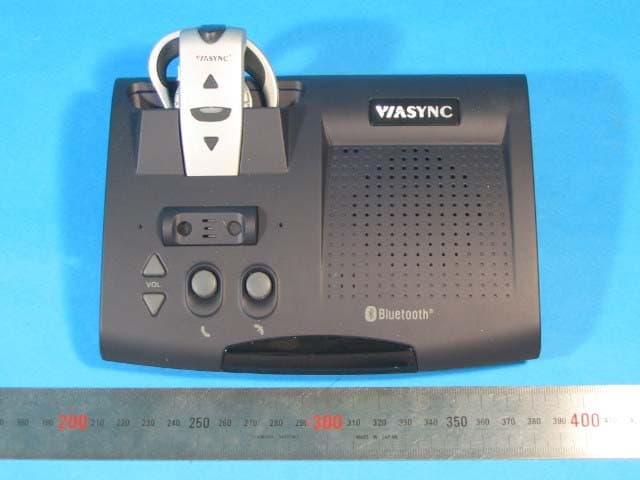
Click to zoom
Application Details
- Equipment Class
- DSS - Part 15 Spread Spectrum Transmitter
- Date of Grant
- Jun 13, 2004
- Application Purpose
- Original Equipment
- Date of Application
- Jun 13, 2004
- Equipment Note
- Audio Conference Equipment
- Frequency Range
- 2402.00000000 - 2480.00000000
- Company
- SEECODE Co., Ltd.
- Country
- South Korea
Documents & Files
Document Text
Text extracted from the exhibit documents filed with the FCC. Open a document above to read the original.
Users Manual
FEATURES 2 Easy & simple to use device as a Conference caller in the office as well as Wireless Hands free kit while you are in a car or at home as well. Composition Connection Usage Reference 1 I Wireless Headset Connect the Bluetooth USB dongle to your Lab top or Desk top PC, then you can reach and make voice chatting with the other party through the MSN messenger. I VoIP Phone Conference can be held through the mobile phone or PSTN telephone among multi parties in the office or at the meeting room. I Conference Caller among multi parities You just can leave your phone in your bag without touching it. I Wireless Hands free car kit Portable Bluetooth wireless headset usage paired with your Bluetooth mobile phone. CONTENTS 4 Composition Features····································· 1 Various Uses······························ 4 What the buttons work ··············· 5 Part Description ························· 7 Packages ································· 10 Connection Pairing with Bluetooth mobile phone·······································11 Pairing with PSTN adapter·······13 Pairing with PC using Bluetooth USB Dongle·····························14 Usage For the mobile phone supporting hadsfree profile ·Making a cal····························20 ·Answering a call······················23 ·Rejecting a call························23 ·Reach an extension number···23 Transferring audio during conversation·····························24 Audio conversation through the MSN messenger······················26 Making a call from the address book of the Outlook Express····27 Mobile phone's profile··············16 For the mobile phone supporting headset profile ·Make a call······························17 ·Answer a call···························19 Reference Troubleshooting·······················28 Precautions······························29 Specification·····························30 Warranty··································32 Composition 3 Bluetooth mobile phone Wireless handsfree kit / Wireless conference calling. Remote controller Making & Answering a call with a mobile phone supporting handsfree profile. PC Audio conversation through the MSN messenger, Making a call from the address book of Outlook express. Composition Connection Usage Reference ? PSTN adapter Making a call/conference calling using the PSTN telephone at home. ViaSync Bluetooth wireless handsfree kit/Wireless conference calling/hands free car kit/VoIP phone via ViaSync. 65 Composition Connection Usage Reference Checking the button's function For the handset supporting Headset profileFor the handset supporting Handsfree profile Press ( ). (In case of SonyEricsson, voice dialing works.) Button usage from each handset available. How to use button Press ( ). (In case of SonyEricsson, voice dialing works.) Press ( ). Press ( ). Press ( ). Press ( ). Press ( ). Press ( ). ViaSync status headset use only (detached separately) Waiting mode for pairing Last number calling Voice dialing (provided the phone supports this) Shortened number dial Answering a call Rejecting a call Ending a call Transferring audio (handsetViaSync) Transferring audio (ViaSynchandset) waiting mode waiting mode waiting mode waiting mode ringing ringing talking talking talking How to use button base station mounted headset use No function. Shortened numbering dial (press the last number longer). Numbering dial waiting mode No function. Numbering dial and press SEND. Press ( ). No function. Press ( ) short. Press from each handset. Extension number talking No function. extension number from the remote controller. Press ( ) short. Press ( ) short. Press ( ) short. Press ( ) long. Press ( ) long. Press ( ) short. Press ( ) long. Press ( ) short. Press ( ) short. Press ( ) long. ViaSync status base station mounted headset use headset use only (detached separately) Last number calling Answering a call Ending a call Transferring audio (ViaSyncHandset) waiting mode waiting mode ringing talking talking talking Waiting mode for pairing Function Function Press both ( ) & ( ) at the same time for more than 1 second. Press both ( ) & ( ) at the same time for more than 1 second. Transferring audio (HandsetViaSync) 8 PART DESCRIPTION 7 Base Station Headset Charging jack for headset Speaker 2 Internal Microphones Power On/Off Volume control button IrDA receiver SEND button END button Volume control (up) Speaker Ear hook Internal mic Volume control(down) SEND/END button LED display Pull the round shaped part of the ear hook to get taken out. IChange ear hook position per wearing directionI Composition Connection Usage Reference 1 Turn over the ear hook and take on to wear on the other ear. 2 Take off the adhesive from the back side of cradle, place it to the suitable position. IMounting cradle in the carI 12 Fix a cradle into the base station's bottom. 10 PART DESCRIPTION 9 Remote Controller Packaging Accessories Optional Items SEND button END button Volume control button Number dialing button Base StationHeadsetRemote Controller Bluetooth PSTN adapterBluetooth USB dongle External Mic. User manual/ Warranty card Cradle Data Cable for updating Battery for Remote Controller Cigar lighter jackDC adapter Composition Connection Usage Reference IHow to put the battery in the Remote controllerI Push the removable cover in the back toward the arrow. 1 Put the battery with '+' upper in it. 2 Fit the cover into the case. 3 12 When the headset is connected to the base station, charging works automatically. Press 2 volume control buttons of the base station at the same time for more than 1 second. •It becomes waiting status for pairing, and blue LED of the headset flashes every 1 second. 1 From the handset, search for and register the ViaSync. •Please consult with the user manual of the handset(refer to the P.11). •During the procesure, pincode(or passcode)will be demanded. Then, enter '0000'. •When the registration is completed, blue LED of the headset flashes every 4~5 seconds with a melody…
Text truncated - open the document above for the full version.
Block Diagram
Block Diagram of ViaSync Multicomm There are two crystals in the docking(base) station.
Cover Letter(s)
137-891 서울특별시 서초구 양재동 110-1 3 th & 4 th F1, A-min B/D 110-1, Yangjae-dong, 아민빌딩 3, 4 층 Seocho-gu, Seoul 137-891, Korea 전화:02-573-2620 팩스: 02-573-2503 Tel: 82-2-573-2620 Fax: 82-2-573-2503 http://www.seecode.com SEECODE Co., Ltd. SEECODE 3 rd Floor, Amin Bldg., 110-1, Yangjae-dong, Seocho-gu, Seoul 137-891, Korea Tel : +82-2-573-2620 / Fax : +82-2-573-2503 http://www.seecode.com Chief, Equipment Approval Services Federal Communications Commission PO Box 358315 Pittsburg, PA 15251-5315 Seoul, May 21, 2004 Authorization Letter Dear Sir or Madam: We, SEECODE Co., Ltd. , hereby authorize TÜV Rheinland Korea Ltd. 2F., Sehwa Bldg. 157-16 Samsung-dong, Gwangnam-Gu, Seoul 135-090, R.O.K. To act as our agent and to process and sign on our behalf for equipment authorization under FCC Part 15, Subpart C. This authorization is applicable for the product: ViaSync Multicomm (VSM403) with FCC ID: RPR4030101. Sincerely, Kim Young-Hwi Engineer, SEECODE Co., Ltd.
Cover Letter(s)
137-891 서울특별시 서초구 양재동 110-1 3 th & 4 th F1, A-min B/D 110-1, Yangjae-dong, 아민빌딩 3, 4 층 Seocho-gu, Seoul 137-891, Korea 전화:02-573-2620 팩스: 02-573-2503 Tel: 82-2-573-2620 Fax: 82-2-573-2503 http://www.seecode.com SEECODE Co., Ltd. SEECODE 3 rd Floor, Amin Bldg., 110-1, Yangjae-dong, Seocho-gu, Seoul 137-891, Korea Tel : +82-2-573-2620 / Fax : +82-2-573-2503 http://www.seecode.com Federal Communications Commission Authorization and Evaluation Division 7435 Oakland Mills Road Columbia, MD 21046 Seoul, May 21, 2004 REQUEST FOR CONFIDENTIALITY, FCC ID: RPR4030101 Pursuant to Sections 0.457(d)(1)(ii) and 0.459 of the Commission's Rules, the Applicant hereby requests confidential treatment of information accompanying as outlined below: • Schematic drawing • Bill of Materials The above materials contain trade secrets and proprietary information not customarily released to the public. Public disclosure of these matters might be harmful to the Applicant and provide unjustified benefits to its competitors. The Applicant understands that pursuant to Rule 0.457(d)(1)(ii), disclosure of this Application and accompanying documentation will not be made before the date of the Grant for this application. Sincerely, Kim Youhg-Hwi, Engineer, SEECODE Co., Ltd.
External Photos
TÜV Rheinland Product Safety GmbH External Photos 13002888 Revision No : 1.0 Page: 1 of 2 1. External view 1.1 Front side TÜV Rheinland Product Safety GmbH External Photos 13002888 Revision No : 1.0 Page: 2 of 2 1.2 Rear side
ID Label/Location Info
TÜV Rheinland Product Safety GmbH Label Information and Location 13002888 Rev 1.1 1/2 1. BASE Label Location 2. BASE Label TÜV Rheinland Product Safety GmbH Label Information and Location 13002888 Rev 1.1 2/2 3. HEADSET Label Location 4. HEADSET Label
Internal Photos
TÜV Rheinland Product Safety GmbH Internal Photos 13002888 Revision No : 1.0 Page: 1 of 4 1.Internal view 1.1 Inside View for Base Station 1.2 Inside View for Headset TÜV Rheinland Product Safety GmbH Internal Photos 13002888 Revision No : 1.0 Page: 2 of 4 1.3 The Front side of PCB for Base Station I 1.4 The Front side of PCB for Base Station II TÜV Rheinland Product Safety GmbH Internal Photos 13002888 Revision No : 1.0 Page: 3 of 4 1.5 The Rear side of PCB for Base Station I 1.6 The Rear side of PCB for Base Station II TÜV Rheinland Product Safety GmbH Internal Photos 13002888 Revision No : 1.0 Page: 4 of 4 1.7 The Front side of PCB for Headset 1.8 The Rear side of PCB for Headset
Operational Description
Bluetooth Multicom ViaSync TM Bluetooth Multicom-ViaSync Provides you with easy, secure, inexpensive existing voice networks & simply make a conference call with your partners or friends by using a ViaSync Bluetooth Conference device in your office or at home any time. You can easily make wireless phone call at a lower cost by connecting MSN in your PC or Laptop. Also, enable you to use as a standalone headset to make privacy talking. Main Functions --- DSP, PSTN & Bluetooth technology Combination --- Detachable Bluetooth Headset Bluetooth Conference Call Bluetooth Handsfree & Headset combination Bluetooth VoIP phone Function 1: On a ViaSync TM Bluetooth Headset You can use it as a Bluetooth Headset which is compatible for all Bluetooth mobile phones. Just sync (pair) it with Bluetooth mobile phone. Function 2: On a ViaSync TM Base Station included a detachable Bluetooth Headset You can use it as a Wireless Conference Caller in the office or at home via ViaSync. Just sync (pair) it with Bluetooth mobile phone or non Bluetooth mobile phone using 2.5mm universal jack. Function 3: On a ViaSync TM Base Station with a removable Bluetooth Headset You can use it as a Wireless Car Kit & Wireless Headset while privacy calling in a Car via ViaSync. Just sync (pair) it with Bluetooth mobile phone or non Bluetooth mobile phone using 2.5mm universal jack. Function 4: On a ViaSync TM B/T USB Dongle(Optional) You can use it as a wireless VoIP telephone via ViaSync by connecting the Bluetooth USB Dongle with your PC or Laptop. Just sync (pair) it with ViaSync Base Station included Headset.
RF Exposure Info
TÜV Rheinland Product Safety GmbH SAR Declaration 13002888 Revision No : 1.0 Page: 1 of 1 To : Federal Communications Commission SAR Declaration 1. Regulations According to § 15.247(b)(5) Systems operating under the provisions of this Section shall be operated in a manner that ensures that the public is not exposed to radio frequency energy levels in excess of the Commission's guidelines. See § 1.1307(b)(1) of this Chapter. 2. SAR Calculation This device is an audio conference equipment using Bluetooth Technologies. Therefore the distance between radiating parts of device and human body is more than 20cm. The maximum output power of the device measured at the antenna connector is -1.16dBm and the maximum antenna gain is 0dBi. Therefore the maximum radiated power is –1.16 dBm EIRP which equals 0.76mW The maximum power in 20cm distance can be calculated as follows: S= EIRP/( 4л R 2 ) = 0.76/( 4л* 400 ) = 0.00015 mW/cm 2 which is far below the MPE limits of 1 mW/cm 2 Therefore the device meets the requirements of the clause 1 regulations. June 4,2004 TUV Rheinland Korea Ltd. Uon-Chae Song
Test Report
TÜV Rheinland Product Safety GmbH Appendix1 : 13002888 Revision No : 1.0 Page: 1 of 29 AC Connected Emission Op. mode: Charging mode 1. Headset with AC/DC Adaptor II Live measurement Frequency (MHz) QP reading (dBμV) Av reading (dBμV) Results No Peak Limit No Peak Limit Pass TÜV Rheinland Product Safety GmbH Appendix1 : 13002888 Revision No : 1.0 Page: 2 of 29 Neutral measurement Frequency (MHz) QP reading (dBμV) Av reading (dBμV) Results No Peak Limit No Peak Limit Pass TÜV Rheinland Product Safety GmbH Appendix1 : 13002888 Revision No : 1.0 Page: 3 of 29 2. Complete Configuration with AC/DC Adaptor I Live measurement Frequency (MHz) QP reading (dBμV) Av reading (dBμV) Results No Peak Limit No Peak Limit Pass TÜV Rheinland Product Safety GmbH Appendix1 : 13002888 Revision No : 1.0 Page: 4 of 29 Neutral measurement Frequency (MHz) QP reading (dBμV) Av reading (dBμV) Results No Peak Limit No Peak Limit Pass TÜV Rheinland Product Safety GmbH Appendix1 : 13002888 Revision No : 1.0 Page: 5 of 29 Carrier Frequency Separation Op. mode: Hopping on Reference frequency (MHz) Channel Separation (MHz)Results 2441.000 998 Pass TÜV Rheinland Product Safety GmbH Appendix1 : 13002888 Revision No : 1.0 Page: 6 of 29 Time of Occupancy (Dwell time) Op. mode: Hopping on Burst Duration (ms) Results 2.900 Pass TÜV Rheinland Product Safety GmbH Appendix1 : 13002888 Revision No : 1.0 Page: 7 of 29 20dB Bandwidth Op. mode: TX mode, DH5 with PRBS9 payload Tx frequency (MHz) |∆f | (MHz) Results 2402 0.925 Pass 2441 0.920 Pass 2480 0.880 Pass Tx frequency: 2402MHz TÜV Rheinland Product Safety GmbH Appendix1 : 13002888 Revision No : 1.0 Page: 8 of 29 Tx frequency: 2441MHz TÜV Rheinland Product Safety GmbH Appendix1 : 13002888 Revision No : 1.0 Page: 9 of 29 Tx frequency: 2480MHz TÜV Rheinland Product Safety GmbH Appendix1 : 13002888 Revision No : 1.0 Page: 10 of 29 Number of Hopping Frequencies Requirements Op. mode: hopping mode, DH1 with PRBS9 payload TÜV Rheinland Product Safety GmbH Appendix1 : 13002888 Revision No : 1.0 Page: 11 of 29 Peak Output Power Op. mode: TX mode, DH1 with PRBS9 payload Tx Frequency (MHz) Cable Attenuation (dB) Power P PK (dBm) Actual Peak Power (dBm) Results 2402 1.80 -3.464 -1.16 Pass 2441 1.83 -4.539 -2.71 Pass 2480 1.85 -5.428 -3.58 Pass Tx frequency: 2402MHz TÜV Rheinland Product Safety GmbH Appendix1 : 13002888 Revision No : 1.0 Page: 12 of 29 Tx frequency: 2441MHz TÜV Rheinland Product Safety GmbH Appendix1 : 13002888 Revision No : 1.0 Page: 13 of 29 Tx frequency: 2480MHz TÜV Rheinland Product Safety GmbH Appendix1 : 13002888 Revision No : 1.0 Page: 14 of 29 Band-edge Compliance Op. mode: TX mode, DH1 with PRBS9 payload Tx Frequency (MHz) RF power outside 100kHz BW (MHz) RF power difference outside 100kHz BW (dB) Results 2402 No peak above 20dB 20dB below Pass 2441 No peak above 20dB 20dB below Pass 2480 No peak above 20dB 20dB below Pass Tx frequency: 2402MHz TÜV Rheinland Product Safety GmbH Appendix1 : 13002888 Revision No : 1.0 Page: 15 of 29 Tx frequency: 2441MHz TÜV Rheinland Product Safety GmbH Appendix1 : 13002888 Revision No : 1.0 Page: 16 of 29 Tx frequency: 2480MHz TÜV Rheinland Product Safety GmbH Appendix1 : 13002888 Revision No : 1.0 Page: 17 of 29 Spurious Conducted emissions Op. mode: TX mode, DH1 with PRBS9 payload Tx frequency : 2402MHz Spurious Frequency (MHz) Power level (dBm) Reference value (dBm) Delta to reference level (dB) Results No peak found - - - Pass Tx frequency : 2441MHz Spurious Frequency (MHz) Power level (dBm) Reference value (dBm) Delta to reference level (dB) Results No peak found - - - Pass Tx frequency : 2480MHz Spurious Frequency (MHz) Power level (dBm) Reference value (dBm) Delta to reference level (dB) Results No peak found - - - Pass TÜV Rheinland Product Safety GmbH Appendix1 : 13002888 Revision No : 1.0 Page: 18 of 29 Tx frequency: 2402MHz Tx frequency: 2402MHz TÜV Rheinland Product Safety GmbH Appendix1 : 13002888 Revision No : 1.0 Page: 19 of 29 Tx frequency: 2402MHz Tx frequency: 2441MHz TÜV Rheinland Product Safety GmbH Appendix1 : 13002888 Revision No : 1.0 Page: 20 of 29 Tx frequency: 2441MHz Tx frequency: 2441MHz TÜV Rheinland Product Safety GmbH Appendix1 : 13002888 Revision No : 1.0 Page: 21 of 29 Tx frequency: 2480MHz Tx frequency: 2480MHz TÜV Rheinland Product Safety GmbH Appendix1 : 13002888 Revision No : 1.0 Page: 22 of 29 frequency: 2480MHz TÜV Rheinland Product Safety GmbH Appendix1 : 13002888 Revision No : 1.0 Page: 23 of 29 Spurious Radiated emissions Op. mode: TX mode, DH1 with PRBS9 payload High power : maximum output power Tx frequency (MHz) Polarization Spurious Frequency (MHz) Power Level (dBuV/m) Detector (Peak) 2402 Horizontal - No Peak above the limit - Tx frequency (MHz) Polarization Spurious Frequency (MHz) Power Level (dBuV/m) Detector (Peak) 2402 Vertical - No Peak above the limit - Tx frequency (MHz) Polarization Spurious Frequency (MHz) Power Level (dBuV/m) Detector (Peak) 2441 Horizontal - No Peak above the limit - Tx frequency (MHz) Polarization Spurious Frequency (MHz) Power Level (dBuV/m) Detector (Peak) 2441 Vertical - No Peak above the limit - Tx frequency (MHz) Polarization Spurious Frequency (MHz) Power Level (dBuV/m) Detector (Peak) 2480 Horizontal - No Peak above the limit - Tx frequency (MHz) Polarization Spurious Frequency (MHz) Power Level (dBuV/m) Detector (Peak) 2480 Vertical - No Peak above the limit - TÜV Rheinland Product Safety GmbH Appendix1 : 13002888 Revision No : 1.0 Page: 24 of 29 2402 Mhz Horizontal May 13,2004 -20 0 20 40 60 80 100 Level [dB /m] 킮 30M100M 200M 400M1G2G 3G 5G10G25G Frequency [Hz] Marker: 6.963927856 GHz 65.06 dB /m킮 MES 20040513_003_pre LIM FCC Part 15.247 PEAK Level [dBuV/m] dBuV/m TÜV Rheinland Product Safety GmbH Appendix1 : 13002888 Revision No : 1.0 Page: 25 of 29 2402 Mhz Vertical May 13, 2004 -20 0 20 40 60 80 100 Level [dB /m] 킮 30M100M 200M 400M1G2G 3G 5G10G25G Frequency [Hz] Marker: 6.963927856 GHz 65.06 dB /m킮 MES 20040513_003_pre LIM FCC Part 15.247 PE…
Text truncated - open the document above for the full version.
Test Report
TÜV Rheinland Product Safety GmbH REPROT NO : 13002888 Revision No : 1.1 Page: 1 of 25 FCC Part 15 TEST REPORT EUT : ViaSync Multicomm MODEL : VSM403 FCC ID : RPR4030101 APPLICANT : SEECODE Co., Ltd. ADDRESS : 3rd Floor, Amin Bldg., 110-1 Yangjae-dong, Seocho-gu, Seoul, Korea May 24, 2004 TUV Rheinland Korea Ltd. TÜV Rheinland Product Safety GmbH REPROT NO : 13002888 Revision No : 1.1 Page: 2 of 25 TEST REPROT CERTIFICATION Applicant : SEECODE Co., Ltd. Adderss : 3rd Floor, Amin Bldg., 110-1 Yangjae-dong, Seocho-gu, Seoul, Korea EUT Name : ViaSync Multicomm Model no. : VSM403 Serial No. : Engineering Sample FCCID : RPR4030101 Testing location : LG Innotek Co.,Ltd. 133, Gongdan-dong, Gumi-City , Gyeongbuk 730-703, R.O.K Applied specification : FCC Part 15 , ANSI C63.4-2001 , CISPR 22:1997 Test result : The above mentioned test item passed. Tested by : Gui-Lim Woo Date Signature Reviewed by : Uon-Chae Song Date Signature I HEREBY CERTIFY THAT the data shown in this report were made in accordance with the Procedures given in the applied specification and I assume full responsibility for accuracy and completeness of these data. Note : This test report relates to the a. m. test item. Without permission of the test center this test report is not permitted to be duplicated in extracts. This test report does not entitle to carry any test mark on this or similar products. May 17,2004 May 17,2004 TÜV Rheinland Product Safety GmbH REPROT NO : 13002888 Revision No : 1.1 Page: 3 of 25 Contents 1. General Information -------------------------------------------------------------------5 1.1 Product Description ---------------------------------------------------------------------5 1.2 Project data---------------------------------------------------------------------------------5 1.3 Applicant-------------------------------------------------------------------------------------5 1.4 Manufacturer--------------------------------------------------------------------------------5 2. EUT Information---------------------------------------------------------------------------6 2.1 General EUT Information--------------------------------------------------------------6 2.2 Center Frequency of Tested Channel---------------------------------------------6 2.3 Test Environment------------------------------------------------------------------------6 2.4 Accessories and Ancillary Equipment--------------------------------------------6 3. Testing Facilities --------------------------------------------------------------------------7 4. EUT Description and Operational Description-----------------------------------7 4.1 General Description----------------------------------------------------------------------7 4.2 Product Function and Intended use------------------------------------------------7 5. Test Set-up-----------------------------------------------------------------------------------8 5.1 Principle of configuration-------------------------------------------------------------8 5.2 Operational Modes-----------------------------------------------------------------------8 5.3 Applied Specification-------------------------------------------------------------------8 6. Test Report Summary--------------------------------------------------------------------9 7. Test Results---------------------------------------------------------------------------------10 7.1 Antenna Connector Requirements-------------------------------------------------10 7.2 AC C ONNECTED EMISSION----------------------------------------------------------------11 7.3 Carrier Frequency Separation-------------------------------------------------------12 7.4 Time of Occupancy(Dwell time)----------------------------------------------------13 7.5 20dB Bandwidth-------------------------------------------------------------------------14 7.6 Number of Hopping Frequencies Requirements-----------------------------15 7.7 Pseudorandom Frequency Hopping Sequence and Equal Hopping Frequency use Requirements ----------------------------------------16 TÜV Rheinland Product Safety GmbH REPROT NO : 13002888 Revision No : 1.1 Page: 4 of 25 7.8 Receiver Input Bandwidth Requirements-------------------------------------18 7.9 Peak Output Power ------------------------------------------------------------------19 7.10 Band-edge Compliance------------------------------------------------------------20 7.11 Spurious Conducted emissions -----------------------------------------------21 7.12 Spurious Radiated emissions --------------------------------------------------22 8. List of Test and Measurement Instruments -----------------------------24 9. complementary Materials------------------------------------------------------------25 TÜV Rheinland Product Safety GmbH REPROT NO : 13002888 Revision No : 1.1 Page: 5 of 25 1. General Information 1.1 Product Description Product Name : ViaSync Multicomm Product ID : VSM403 Serial No. : Engineering Sample FCC ID : RPR4030101 1.2 Project data Receipt of EUT : May 4,2003 Date of Test : May 4, 2004 Data of report : May 17,2004 1.3 Applicant Company Name : SEECODE Co., Ltd. Address : 3rd Floor, Amin Bldg., 110-1 Yangjae-dong, Seocho-gu, Seoul, Korea Contact Person : Young-hwi, Kim 1.4 Manufacturer Company Name : SEECODE Co., Ltd. Address : 3rd Floor, Amin Bldg., 110-1 Yangjae-dong, Seocho-gu, Seoul, Korea Contact Person : Young-hwi, Kim TÜV Rheinland Product Safety GmbH REPROT NO : 13002888 Revision No : 1.1 Page: 6 of 25 2. EUT Information 2.1 General EUT Information Type Transmitter Receiver FCC Classification FHSS Sequence Spread Spectrum ( FHSS) FHSS Sequence Spread Spectrum ( FHSS) Frequency Range 2402 – 2480 MHz 2402 – 2480 MHz Number of Channels 79 79 Channel Separation 1MHz 1MHz Type of Antenna Surface Mountable Chip Antenna Surface Mountable Chip Antenna Power Supply DC 3.7V Lithum Polymer DC 3.7V Lithum Polymer 2.2 Center Frequency of Tested Channel Frequency Tx ( MHz ) Rx ( MHz) Lowest 2402 2402 Middle 2441 2441 Highest 2480 2480 2.3 Test Env…
Text truncated - open the document above for the full version.
Test Setup Photos
TÜV Rheinland Product Safety GmbH Test setup photos 13002888 Revision No : 1.0 Page: 1 of 6 1 Test set-up 1.1 Conducted Emissions TÜV Rheinland Product Safety GmbH Test setup photos 13002888 Revision No : 1.0 Page: 2 of 6 1.2 Spurious Radiated Emissions 1.2.1 Radiated test Sample TÜV Rheinland Product Safety GmbH Test setup photos 13002888 Revision No : 1.0 Page: 3 of 6 1.2.2 Radiated test ( 30 MHz ~ 1GHz ) TÜV Rheinland Product Safety GmbH Test setup photos 13002888 Revision No : 1.0 Page: 4 of 6 1.2.3 Radiated test ( 1 GHz ~ 13GHz ) TÜV Rheinland Product Safety GmbH Test setup photos 13002888 Revision No : 1.0 Page: 5 of 6 1.2.4 Radiated test ( 13 GHz ~ 18GHz ) TÜV Rheinland Product Safety GmbH Test setup photos 13002888 Revision No : 1.0 Page: 6 of 6 1.2.4 Radiated test ( 18 GHz ~ 25GHz )
Contact Information
Applicant
Hyun-seok Nam(Manager)
Technical Contact
T�V Rheinland Korea Ltd.Uon-Chae Song
[email protected]+82 2 539 1781
2F., Sehwa Bldg. 157-16 · Seoul · South Korea
Non-Technical Contact
SEECODE Co., Ltd.Young-Hwi Lim
[email protected]+82 2 573 2620
Test Firm
LIG Nex1 Co., Ltd.Hyo-Jeung Cho
Technical Specifications
| # | Rule Parts | Frequency Range | Power Output |
|---|---|---|---|
| 1 | 15C | 2.40 GHz - 2.48 GHz | 770.00 µW |
Other Applications from SEECODE Co., Ltd.
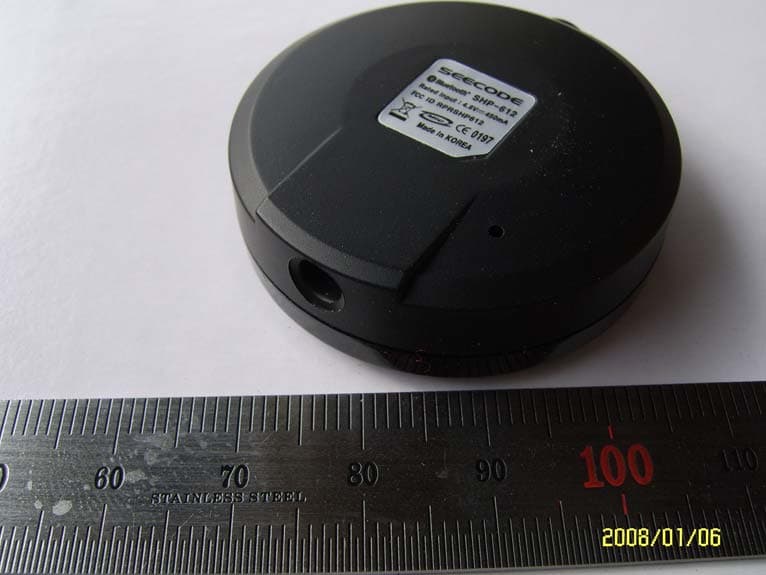
RPRSHP612
Jan 23, 2008Bluetooth Push to Talk Button
Equipment Class
DSS - Part 15 Spread Spectrum Transmitter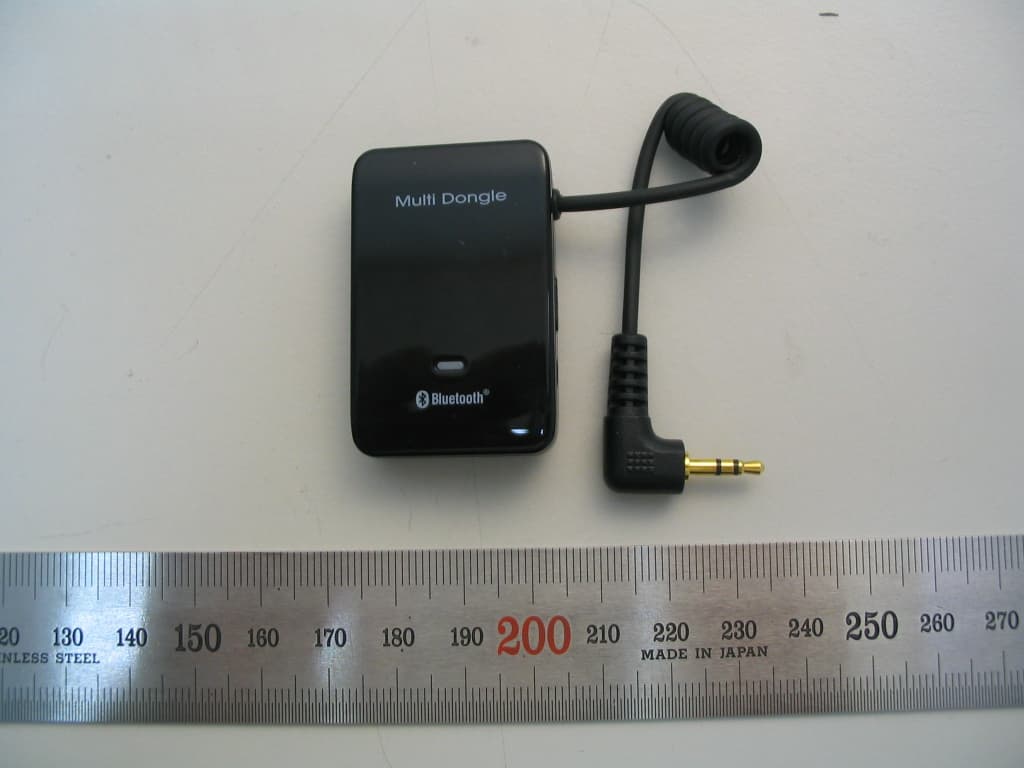
RPRSHD612
May 20, 2007Bluetooth Dongle
Equipment Class
DSS - Part 15 Spread Spectrum Transmitter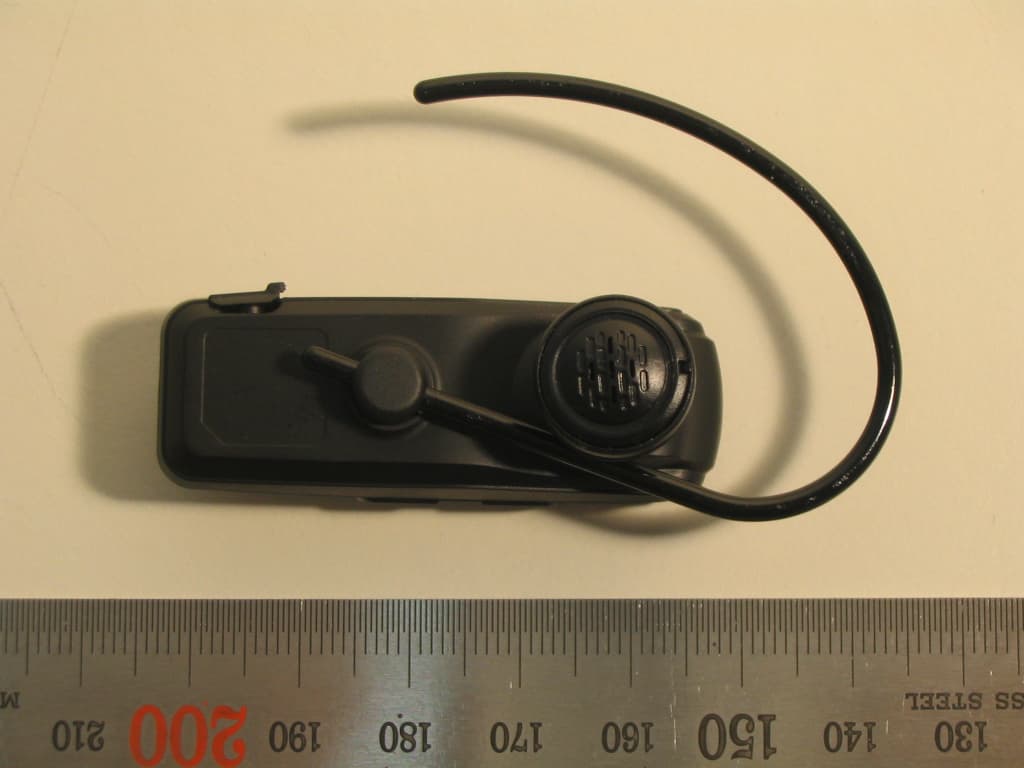
RPRSHM612
Mar 18, 2007Bluetooth Headset
Equipment Class
DSS - Part 15 Spread Spectrum Transmitter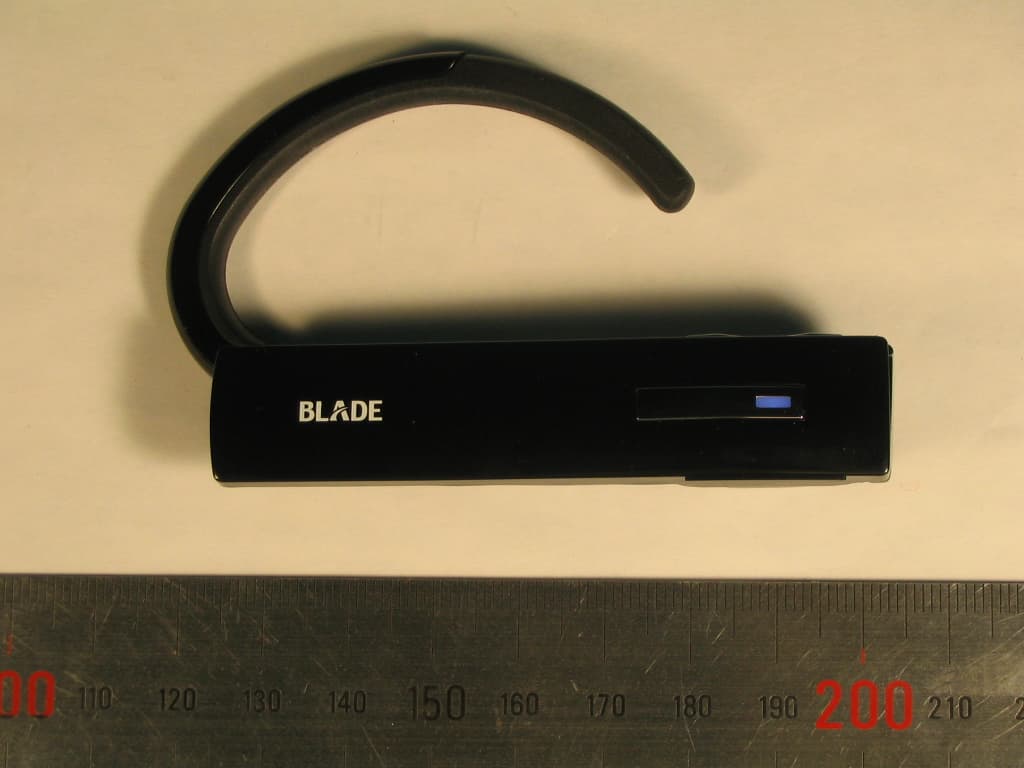
RPRVSH511
Mar 02, 2006Bluetooth Headset
Equipment Class
DSS - Part 15 Spread Spectrum Transmitter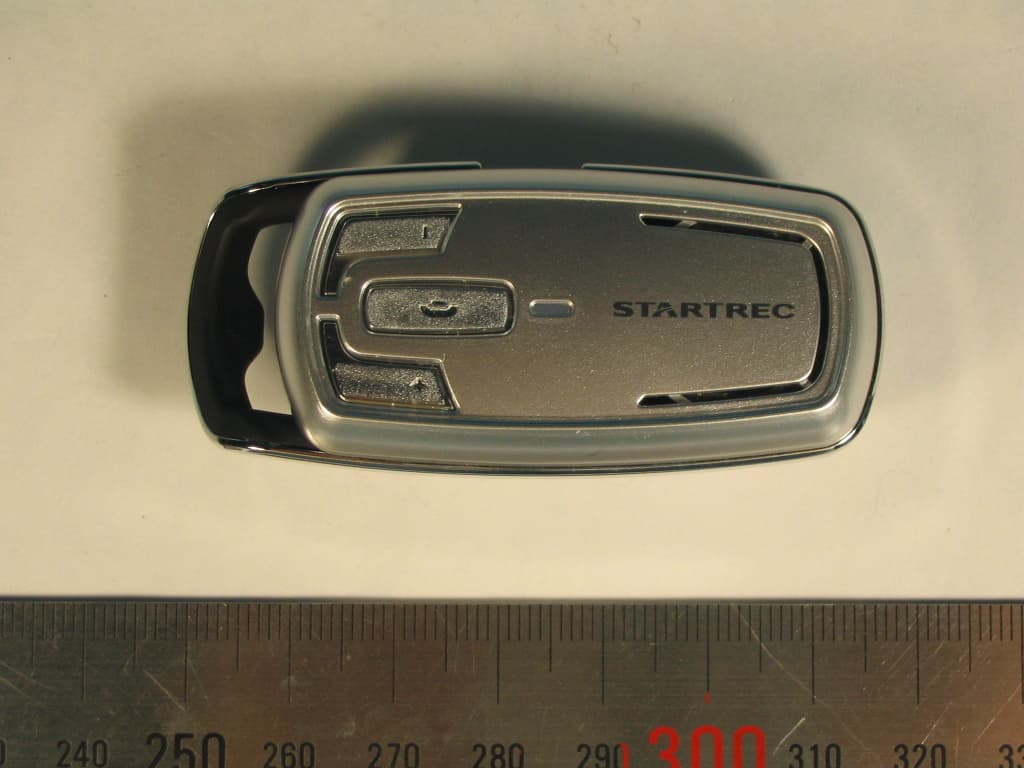
RPRSFK509
Feb 12, 2006Bluetooth Handsfree Kit
Equipment Class
DSS - Part 15 Spread Spectrum Transmitter