S9O-WT1000-3GSMART PHONE WITH INTEGRATED BARCODE SCANNER
WIREDTIME INC.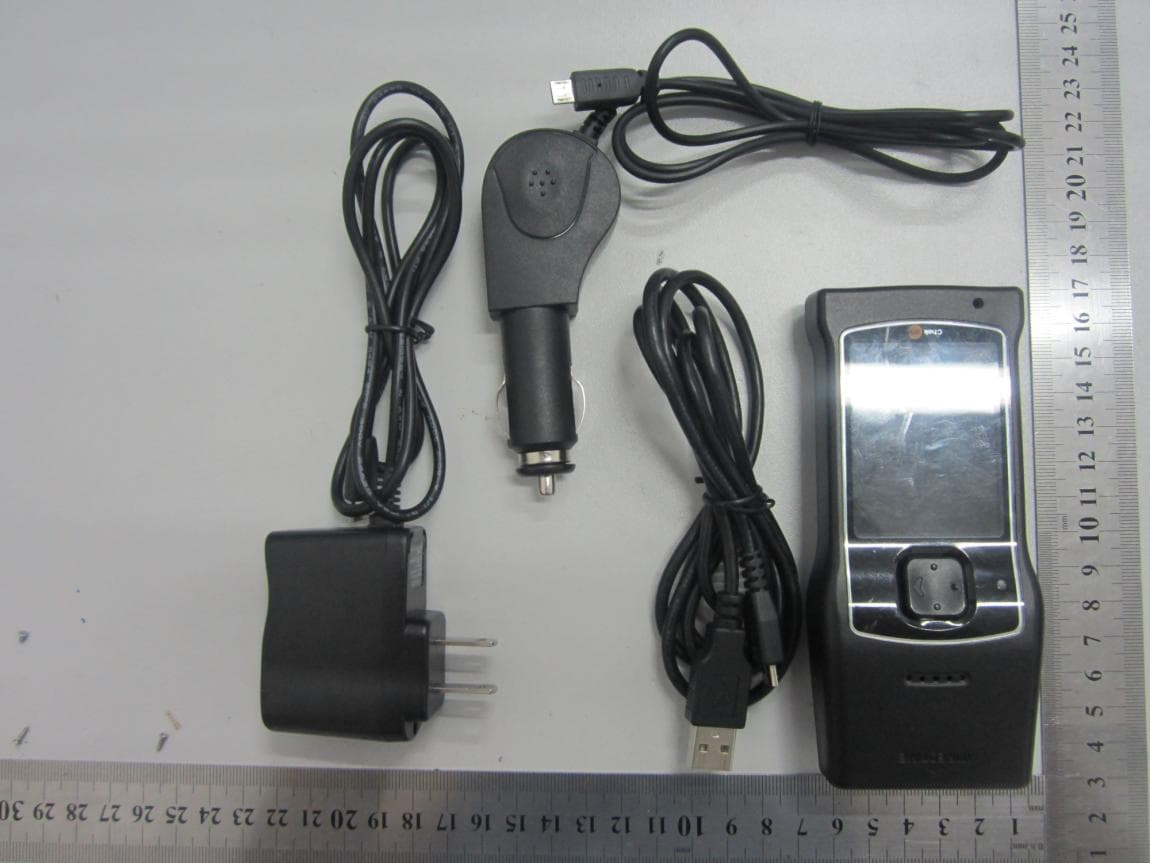
Click to zoom
Application Details
- Equipment Class
- PCE - PCS Licensed Transmitter held to ear
- Date of Grant
- Jan 05, 2014
- Application Purpose
- Original Equipment
- Date of Application
- Jan 05, 2014
- Equipment Note
- SMART PHONE WITH INTEGRATED BARCODE SCANNER
- Frequency Range
- 1712.40000000 - 1752.60000000
- Company
- WIREDTIME INC.
- Country
- Canada
Documents & Files
Document Text
Text extracted from the exhibit documents filed with the FCC. Open a document above to read the original.
Users Manual
Copyright © 2012 WiredTime Inc., All rights reserved. Patents pending. Some conditions and restrictions apply. Specific functions dependent on cellular transmission may not be available when cellular service is restricted. Some features under development at time of printing may be provided at extra cost when available. The WiredTime, ChekOne and families of related marks, images and symbols are the exclusive properties and trademarks, or registered trademarks, of WiredTime Inc. SecurTek and related images are trademarks of SecurTek a SaskTel Company. ChekOne Device User Guide 6 CALL MESSAGE LONE WORKER - ON SAFE WORKER - ON SCAN EMERGENCY PRESS AND HOLD 11:42 Wireless Phone Safety Tips 2 Getting Started3 Whats in The Box? ChekOne Features & Functions-4 Start Up 5 How To Begin Charging your device Resetting your device Finding Function Tree6 Navigating the Menu7 Display Symbol Using the Menu How To Scan8 Calling Features9-10 Making a Call Answering a Call Dialing an emergency number Adjusting the volume Caller ID Missed Calls Call History Phonebook Using Call Waiting Using Voicemail Messages 11 Messages Receiving and reading messages Loneworker12 Safe Worker13 Crew Mode14 Menu15 Device Operation and Cautions 16-17 Technical Specifications18 Limited Warranty19-21 ------------------------------------------------------------ ----------------------------------------------------------------------------- ------------------------------------------------------ ------------------------------------------------------------------------------------- -------------------------------------------------------------------- ---------------------------------------------------------------------- ------------------------------------------------------------------------------- --------------------------------------------------------------------------- ----------------------------------------------------------------------------------- --------------------------------------------------------------------------------- -------------------------------------------------------------------------------- ---------------------------------------------------------------------------------- ----------------------------------------------------------------------------------------- ------------------------------------------------------ ----------------------------------------------------------------- -------------------------------------------------------------------------- TABLE OF CONTENTS Powered By “Safety is your most important call!" Your ChekOne wireless device gives you the powerful ability to communicate by voice almost anywhere, anytime, wherever wireless phone service is available and safe conditions allow. But an important responsibility accompanies the benefits of wireless phones, one that every user must uphold. When driving a car, driving is your first responsibility. If you find it necessary to use your wireless phone while behind the wheel of a car, practice good common sense and remember the following tips: Abstain from talking on a cell phone while you are actively driving. If you need to answer a call or make one, try and pull off the road into a safe parking area. If you answer a call while driving, avoid making handwritten notes. Make sure your phone is within easy reach, not in the glove compartment or a purse where you might have to dig for it. If you have a passenger, consider asking them to dial, answer calls and take messages for you. Postpone conversations that are either emotional or complex. Do not send an sms text message or try and read incoming messages while driving. Use your cell phone only in the event of an emergency in which you need help or someone else needs help. Avoid giving important numbers over wireless phones as someone scanning frequencies could hear it. Check the laws and regulations on the use of wireless telephones and their accessories in the areas where you drive. Always obey them. The use of these devices may be prohibited or restricted in certain areas. For more information, please visit the CTIA Web site at www.ctia.org ? ? ? ? ? ? ? ? ? Page 02 CHEKONE PHONE SAFETY TIPS Powered By Congratulations on your purchase of the ChekOne smartphone. ChekOne has been engineered to be rugged and serviceable in commercial and industrial applications. The ChekOne has been designed to streamline communications and improve safety for mobile workers, simply to improve the work experience. The benefits of reading this manual first are: ?Know where the controls are ?Know how to access the functions by using the Flex Navigator ?Quickly complete tasks from the ChekOne ?Access safety and panic functions Let’s Get Started, By following the instructions in this guide you will receive the benefit of the features designed into the ChekOne. What's in the Box Your ChekOne device has a removeabe battery, and typically comes equipped with a wall charger. Other accessory options can customize your ChekOne for maximum performance and portability. To purchase ChekOne™ original accessories, please contact the Customer Call Center at 1-866-570-3225 in Canada. Page 03 GETTING STARTED Powered By BASIC NAVIGATION PAD FUNCTIONS Scroll down Select and/or Next Back to previous screen Scroll up Scan HOME SCREEN Page 04 ChekOne FEATURES & FUNCTIONS Replaceable scan lens Navigation button Large colour display W 38mm X L 49mm Micro USB/charging port Lithium Ion battery Replaceable 1300 mAh Replaceable display cover Service indicator light Programmable CCD scan engine Compact Size: L 135mm X W 60mm X D 28mm Weight:180 g Internal Antenna Microphone Speaker Service Status Panel Menu 6 CALL CALL HISTORY MSG LONE WORKER - OFF SCAN EMERGENCY PRESS AND HOLD 11:42 SAFE WORKER - OFF GPS - ON MENU USER - WiredTime TM No barcode scanned Charging Terminals Water Resistant Battery Retainer Powered By Signal Strength Battery Strength Selected Item 6 CALL CALL HISTORY MSG LONE WORKER - OFF SCAN EMERGENCY PRESS AND HOLD 11:42 SAFE WORKE…
Text truncated - open the document above for the full version.
External Photos
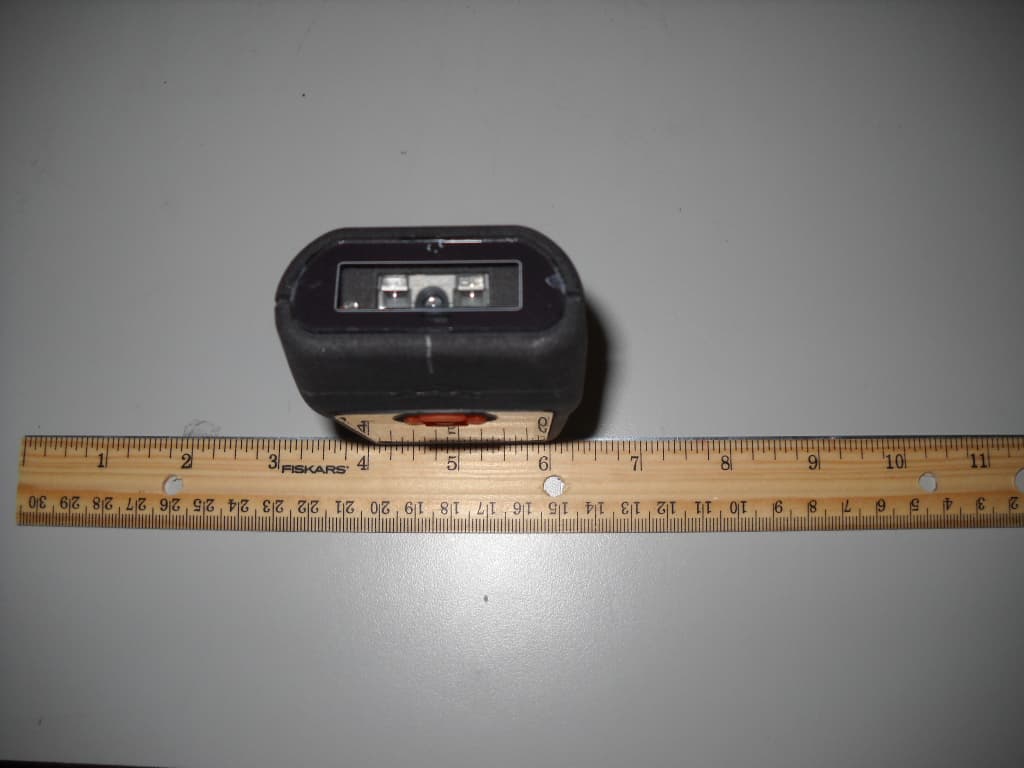
External Photos 1. EUT full view with accessories 2. EUT front view 3. EUT rear view 4. EUT left side view 5. EUT right side view 6. EUT top view 7. EUT bottom view
ID Label/Location Info
FCC/IC label and label location 1. label 2. label location Label Location
Internal Photos
Internal Photos 1. EUT uncover view 2. Mainboard front view 3. Mainboard rear view with shielding 4. Mainboard rear view without shielding 5. Sub board view 6. GSM/WCDMA chip view 7. CPU chip view 8. GSM/WCDMA antenna view
RF Exposure Info
SZ13110056S01&S02 1 EUT Right Head Touch Cheek Position 2 EUT Right Head Tilt15 Position SZ13110056S01&S02 3 EUT Left Head Touch Cheek Position 4 EUT Left Head Tilt15 Position SZ13110056S01&S02 5 Side Position with earphone 6 Side Position 15mm 15mm SZ13110056S01&S02 Liquid Level Photo Head Liquid Liquid depth: 15.1cm Liquid Level Photo Body Liquid Liquid depth : 15.5cm
RF Exposure Info
SZ13110056S01 Page 2 of 114 DIRECTORY 1. TESTING LABORATORY ......................................................................................................... 4 1.1. Identification of the Responsible Testing Location .............................................................. 4 1.2. Accreditation Certificate ........................................................................................................ 4 1.3. List of Test Equipments .......................................................................................................... 4 2. TECHNICAL INFORMATION ............................................................................................... 5 2.1. Identification of Applicant ..................................................................................................... 5 2.2. Identification of Manufacturer .............................................................................................. 5 2.3. Equipment Under Test (EUT) ................................................................................................ 5 2.3.1. Photographs of the EUT .................................................................................................. 5 2.3.2. Identification of all used EUT ......................................................................................... 6 2.4. Applied Reference Documents ............................................................................................... 6 2.5. Device Category and SAR Limits .......................................................................................... 6 2.6. Test Environment/Conditions ................................................................................................ 7 3. SPECIFIC ABSORPTION RATE (SAR) ................................................................................ 8 3.1. Introduction ............................................................................................................................. 8 3.2. SAR Definition......................................................................................................................... 8 4. SAR MEASUREMENT SETUP ............................................................................................... 9 4.1. The Measurement System ...................................................................................................... 9 4.2. Probe ........................................................................................................................................ 9 4.3. Probe Calibration Process .................................................................................................... 11 4.3.1 Dosimetric Assessment Procedure ........................................................................................ 11 4.3.2 Free Space Assessment Procedure ........................................................................................ 11 4.3.2 Temperature Assessment Procedure..................................................................................... 11 4.4. Phantom ................................................................................................................................. 12 4.5. Device Holder ........................................................................................................................ 12 5. TISSUE SIMULATING LIQUIDS ......................................................................................... 13 6. UNCERTAINTY ASSESSMENT ........................................................................................... 15 6.1. UNCERTAINTY EVALUATION FOR EUT SAR TEST ................................................. 15 6.2. UNCERTAINTY FOR SYSTEM PERFORMANCE CHECK ........................................ 16 7. SAR MEASUREMENT EVALUATION ............................................................................... 18 7.1. System Setup .......................................................................................................................... 18 SZ13110056S01 Page 3 of 114 7.2. Validation Results .................................................................................................................. 19 8. OPERATIONAL CONDITIONS DURING TEST ................................................................ 20 8.1. Information on the testing .................................................................................................... 20 8.2. Body-worn Configurations ................................................................................................... 21 8.3. Measurement procedure ....................................................................................................... 21 8.4. Description of interpolation/extrapolation scheme ............................................................ 21 9. MEASUREMENT OF CONDUCTED PEAK OUTPUT POWER ..................................... 23 10. TEST RESULTS LIST .............................................................................................................. 26 ANNEX A GRAPH TEST RESULTS ............................................................................................ 29 Change History Issue Date Reason for change 1.0 Dec. 3, 2013 First edition SZ13110056S01 Page 4 of 114 1. Testing Laboratory 1.1. Identification of the Responsible Testing Location Name: Shenzhen Morlab Communications Technology Co., Ltd. Morlab Laboratory Address: FL.3, Building A, FeiYang Science Park, No.8 LongChang Road, Block 67, BaoAn District, ShenZhen, GuangDong Province, P. R. China 518101 1.2. Accreditation Certificate Accredited Testing Laboratory: No. CNAS L3572 1.3. List of Test Equipments No. Instrument Type Cal. Date Cal. Due 1 PC Dell (Pentium IV 2.4GHz, SN:X10-23533) (n.a) (n.a) 2 Network Emulator Aglient (8960, SN:10752) 2012-9-26 1year 3 Network Analyzer Agilent(E5071B ,SN:MY42404762 ) 2012-9-26 1year 4 Voltmeter Keithley (2000, SN:1000572) 2012-9-24 1year 5 Signal Generato…
Text truncated - open the document above for the full version.
Test Report
Report No.: SZ13110056W01 Page 2 of 168 TABLE OF CONTENTS 1. GENERAL INFORMATION .................................................................................................... 3 1.1 EUT Description ......................................................................................................................... 3 1.2 Test Standards and Results ........................................................................................................ 5 1.3 Facilities and Accreditations ...................................................................................................... 6 2. 47 CFR PART 2, PART 22H & 24E,27L REQUIREMENTS (IC RSS-GEN, RSS-132, RSS-133, RSS-139) ............................................................................................................... 7 2.1 Conducted RF Output Power .................................................................................................... 7 2.2 Peak to Average Radio .............................................................................................................. 19 2.3 99% Occupied Bandwidth ....................................................................................................... 26 2.4 Frequency Stability ................................................................................................................... 51 2.5 Conducted Out of Band Emissions ......................................................................................... 59 2.6 Band Edge ............................................................................................................................... 100 2.7 Transmitter Radiated Power (EIRP/ERP) ........................................................................... 115 2.8 Radiated Out of Band Emissions .......................................................................................... 127 Change History Issue Date Reason for change 1.0 Dec 11, 2013 First edition Report No.: SZ13110056W01 Page 3 of 168 1. GENERAL INFORMATION 1.1 EUT Description EUT Type ............................. : SMART PHONE WITH INTEGRATED BARCODE SCANNER Serial No. .............................. : (n.a, marked #1 by test site) Hardware Version ................. : 6 Software Version .................. : Applicant .............................. : Manufacturer ........................ : 13.03.03 WIREDTIME INC 350 SHIRLEY AVENUE UNIT 5, KITCHENER, ON, CANADA N2B 2E1 WIREDTIME INC 5-350 SHIRLEY AVENUE, KITCHENER, ON CANADA N2B 2E1 Frequency Range .................. : GSM 850MHz: Tx: 824.20 - 848.80MHz (at intervals of 200kHz); Rx: 869.20 - 893.80MHz (at intervals of 200kHz) GSM 1900MHz: Tx: 1850.20 - 1909.80MHz (at intervals of 200kHz); Rx: 1930.20 - 1989.80MHz (at intervals of 200kHz) WCDMA 850MHz Tx: 826.4 - 846.6MHz (at intervals of 200kHz); Rx: 871.4 - 891.6MHz (at intervals of 200kHz) WCDMA 1900MHz Tx: 1852.4 - 1907.6MHz (at intervals of 200kHz); Rx: 1932.4 - 1987.6MHz (at intervals of 200kHz) WCDMA 1700MHz Tx: 1712.4 - 1752.6MHz (at intervals of 200kHz); Rx: 2112.4 - 2152.6MHz (at intervals of 200kHz) Modulation Type................... : GSM,GPRS Mode with GMSK Modulation EDGE Mode with 8PSK Modulation WCDMA Mode with QPSK Modulation HSDPA Mode with QPSK Modulation HSUPA Mode with QPSK Modulation HSPA+ Mode with QPSK Modulation Multislot Class ...................... : GPRS: Multislot Class12,EGPRS: Multislot Class12 Antenna Type ........................ : PIFA Antenna Emission Designators ........... : GSM 850:249KGXW,GSM 1900:249KGXW EGPRS850:249KG7W, EGPRS1900:248KG7W, WCDMA 850:4M18F9W ,WCDMA1900:4M18F9W WCDMA1700:4M18F9W Report No.: SZ13110056W01 Page 4 of 168 Note 1: The transmitter (Tx) frequency arrangement of the Cellular 850MHz band used by the EUT can be represented with the formula F(n)=824.2+0.2*(n-128), 128<=n<=251; the lowest, middle, highest channel numbers (ARFCHs) used and tested in this report are separately 128 (824.2MHz), 190 (836.6MHz) and 251 (848.8MHz). Note 2: The transmitter (Tx) frequency arrangement of the PCS 1900MHz band used by the EUT can be represented with the formula F(n)=1850.2+0.2*(n-512), 512<=n<=810; the lowest, middle and highest channel numbers (ARFCHs) used and tested in this report are separately 512 (1850.2MHz), 661 (1880.0MHz) and 810 (1909.8MHz). Note 3: The transmitter (Tx) frequency arrangement of the WCDMA 850MHz band used by the EUT can be represented with the formula F(n)=826.4+0.2*(n-4132), 4132<=n<=4233; the lowest, middle and highest channel numbers (ARFCHs) used and tested in this report are separately 4132 (826.4MHz), 4175(835MHz) and 4233 (846.6MHz). Note 4: The transmitter (Tx) frequency arrangement of the WCDMA 1900MHz band used by the EUT can be represented with the formula F(n)=1852.4+0.2*(n-9262), 9262<=n<=9538; the lowest, middle and highest channel numbers (ARFCHs) used and tested in this report are separately 9262 (1852.4MHz), 9400 (1880MHz) and 9538 (1907.6MHz). Note 5: The transmitter (Tx) frequency arrangement of the WCDMA 1700MHz band used by the EUT can be represented with the formula F(n)=1712.4+0.2*(n-1312), 1312<=n<=1513; the lowest, middle and highest channel numbers (ARFCHs) used and tested in this report are separately 1312 (1712.4MHz), 1412 (1732.4MHz) and 1513 (1752.6MHz). Note 6: For a more detailed description, please refer to Specification or User’s Manual supplied by the applicant and/or manufacturer. Report No.: SZ13110056W01 Page 5 of 168 1.2 Test Standards and Results The objective of the report is to perform testing according to 47 CFR Part 2, Part 22 and Part 24 ,27for the EUT FCC ID Certification: No. Identity (FCC) Identity (IC) Document Title 1 47 CFR Part 2 (10-1-09 Edition) RSS-Gen (Issue 3, December 2010) Frequency Allocations and Radio Treaty Matters; General Rules and Regulations 2 47 CFR Part 22 (10-1-09 Edition) RSS-132 (Issue 2, September 2005) Public Mobile Services 3 47 CFR Part 24 (10-1-09 Edition) RSS-133 (Issue 5, February 2009) Personal Communicati…
Text truncated - open the document above for the full version.
Test Setup Photos
Test Setup Photos 1. Conducted Spurious Emission 2. Radiated Spurious Emission
Contact Information
Applicant
Eric Keller(Owner)
Technical Contact
Shenzhen Morlab Communications Technology Co.,LtdIvy Zhu
[email protected]86-755-36698618
FL.3, Building A, FeiYang Science Park · ShenZhen, GuangDong Province · China
Test Firm
Shenzhen Morlab Communications Technology Co., LtdIvy zhu
Technical Specifications
| # | Rule Parts | Frequency Range | Power Output | Emission | Tolerance |
|---|---|---|---|---|---|
| 7 | 27 | 1.71 GHz - 1.75 GHz | 975.00 mW | 4M18F9W | 0.019 ppm |
Other Applications from WIREDTIME INC.
S9O-WT1000
Nov 14, 2011WIRELESS CDMA BARCODE SCANNER WITH GPS AND VOICE
Equipment Class
JBC - Part 15 Class B Computing Device/Personal Computer
S9O-WT500
May 26, 2005Wireless CDMA Barcode Scanner
Equipment Class
PCB - PCS Licensed Transmitter