SNMC600CDMA 1X Digital Mobile Phone
Ningbo Bird Co., Ltd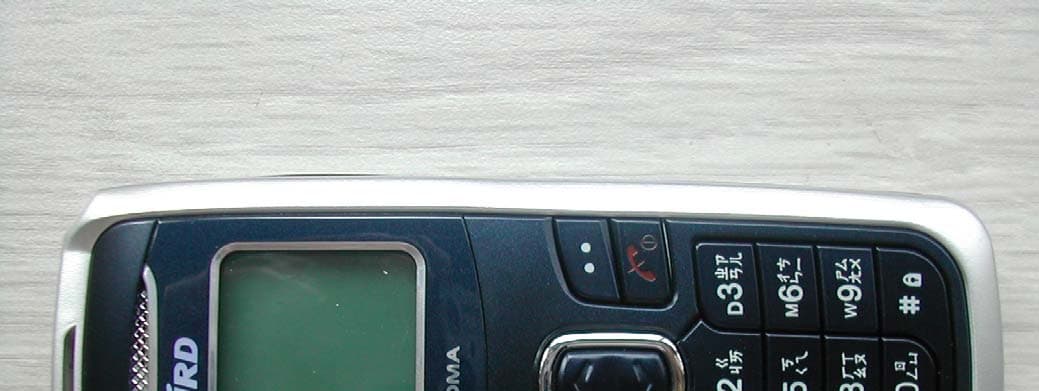
Click to zoom
Application Details
- Equipment Class
- TNE - Licensed Non-Broadcast Transmitter Held to Ear
- Date of Grant
- Sep 11, 2006
- Application Purpose
- Original Equipment
- Date of Application
- Sep 11, 2006
- Equipment Note
- CDMA 1X Digital Mobile Phone
- Frequency Range
- 824.12000000 - 848.76000000
- Company
- Ningbo Bird Co., Ltd
- Country
- China
Documents & Files
Document Text
Text extracted from the exhibit documents filed with the FCC. Open a document above to read the original.
Users Manual
I. Messages Write Message (Write msg) Write Inbox Out Box Archive Archives Delete Message (Delete msg) Delete Message Settings (Msg setting) Settings Messages This feature is network dependent, it provides short messages service. CDMA networks do not need message center number, it is available once you have subscribed to a network. After entering the destination number (recipient), you will be prompted to enter a Callback number, it is use to notify the SMS recipient to make a return call to that number. This function can only be realized if the recipient is a CDMA unit too, GSM phones do not support this feature. You may leave the Callback number empty. Write Messages Under this function you can write, edit, save, or send short messages. Press“确定”to select write messages and enter the editing page, you can press # key to shift between input methods, and the * key to shift between lower and upper case. The maximum number of characters per message is 130, but if there are non ASCII strings, the maximum is 70 characters. Press“发送” to enter Destination number edit page, you could input multiple destination numbers by using the UP/DOWN key to move between number input lines, you could press “左软键” (Search) to search and input numbers or groups from Recent SMS Numbers, Recent Call Numbers, or Phone Book, the selected number will be displayed in the edit number page. After inputting the destination number, press “左软键” (OK) to go to the Callback number input page, the callback number may be left blank. Press “左软键” (OK) again to enter the Send option page and select between Send and save, Send, or Save options. Save and save – send the SMS and save it to the Outbox. Send – send the SMS only, without saving it. Save – Save the SMS to the Outbox only, without sending. If message sending is unsuccessful, your message will be saved to the Outbox regardless of your send option selection. Saved SMS displays only the first recipient’s number when sending to multiple numbers or groups. Inbox The phone will alert you of new incoming messages, the display will show new message icon and the number of unread messages, press “左软键” (OK) to read, display will now show the SMS details such as sender’s name (if the contact number is saved in Phone Book) or number and the message content. To read messages in the Inbox, select Inbox in the Messages menu, press UP/DOWN key to scroll to the desired SMS, press “左软键” (OK) to read. Here you can perform the following operations by pressing “左软键” (Options): Reply – to write a reply to the sender; Forward – to send or forward the message to a third party; Delete – to delete the SMS; Save Number – to save the sender’s phone number in the Phone Book; Dial – to dial the sender’s number; Go to Archive (Move to Archive) – to transfer the SMS to Archives box. Outbox This item contains recently sent or unsent messages. After entering the Outbox, press the UP/DOWN key to scroll to the desired SMS, press “左软键” (OK) to read selected message, then press “左软键” (Options) to perform the following operations: Forward – send the SMS to a third party; Delete – delete the SMS from memory; Send Again – to resend the SMS; Save Number – to save the recipient’s number in the Phone Book; Dial – to call the recipient; Go to Archive (Move to Archive) – to transfer the SMS to Archives box.. Archive Archives All messages transferred to the Archives are displayed here. Press the UP/DOWN key to scroll to the desired SMS, press “左软键” (OK) to read selected message inside the Archives menu. If the selected SMS is transferred to Inbox, please refer to the Inbox for detail operations; if it is transferred to Outbox, refer to the Outbox for detail operations. Pressing the “左软键” (Options) will make the operations such as forward, delete, send again, save number, and dial available, the detail operation and function is similar to that of the Inbox or Outbox depending on where the SMS is transferred from. Delete Messages This function allows you to clear Inbox, Outbox, Archives, or All Messages. The memory capacity of your phone is:50 inbox messages; 50 outbox messages; and 15 archived messages, please always make sure that there are available memory space. Note: If the phone supports RUIM card, then the SMS may be saved to RUIM card, the capacity depends on the RUIM card capacity. Message Settings Set or change your message settings here. Priority – select the priority of your SMS: Normal; Important; Urgent; Immediate. II. Call Records Missed Received Dialed Rejected Duration Durations Delete History (Del history) Call Records Missed Displays list of your recent unanswered calls. Use the UP/DOWN key to browse the numbers, press the Left Soft key to enter options menu, again use the UP/DOWN key (to scroll) and Left Soft key (to select) to browse, save, or delete record. Received Displays you recent answered calls, the operations are similar to that of the Missed calls. Dialed Displays list of your recent dialed numbers, the operations are similar to that of the Missed calls. Rejected Displays you recent refused calls, the operations are similar to that of the Missed calls. Durations Displays the duration of your Last Call; Received calls; outgoing Dialed calls; and All Calls, you can also reset the timers here. Scroll to the desired item and press Left Soft key to view air time. When an option is selected, press Left Soft key to delete the duration. For example, inside the Last Call view, press the Left Soft key to delete the duration, press Right Soft key to go back. Of course, all call durations cannot be deleted. 删除通话记录 Delete your Missed, Received, Dialed, Rejected, or All call record using this function. Choose one item using the UP/DOWN key and select OK (Left Soft key) to enter, use the UP/DOWN key to select YES (if you wanted to delete) or NO (if you do not want to delete) and press OK (Left Soft key). III. Phone Book (Phonebook) Search New Entry Add Delete Phone Book (Del phonebook) Empty Groups Own N…
Text truncated - open the document above for the full version.
ID Label/Location Info
Label for EUT Label for adapter
Operational Description
Picture Brand BIRD ModelC600 Tecnología y BandasTechnology CDMA Frequency 800 Servicios SoportadosWAP navigator versionNO SMS SI MMS NO GPRS classNO I-mode NO DOJA NO EDGE NO UMTS NO AMPS NO Evdo (RevO or Reva) NO 1 x RTT SI LBS (GPS one or only AFLT control plane NO Video conference NO Ringtone download NO Picture download NO Game download NO Video download NO Video Streaming NO Push To Talk NO Number of games included 2 Codec AMR NO XHTML NO Tamaño y DiseñoVolume (cc) 75 Weight (grams) 71 Dimensions (mm x mm xmm) 104 * 44.5 * 16 QWERTY keyboard (hardware or software SI Type of antenna Interna Form factor Candy Bar Vibrator SI MemoriaTotal internal memory (kb) 8Mb Available memory (kb) 300K(Ringtones) External memory card NO Type of external memory card (SD,MMC) NO Capacity of external memory card (Mb) NO SonidosPolyphonic sounds SI Equipo Nber of polyphonics 25 True tones NO Stereo sound NO Aplicaciones y JuegosJava NO Java version Brew NO Brew version BateriaType of battery Li-on Capacity (mAh) 650mAh Talk time (hours) 2H Stand-by time 80-100H AgendaPhonebook capacity 300 Pantalla PrincipalType of screen LCD Nber of colors B&W Resolution (pixel x pixel) 112*80 Color/ Black and white/ Virtual color scree Blanco y Negro Pantalla SecundariaType of screen Nber of colors Resolution (pixel x pixel) Color/ Black and white/ Virtual color screen Cámara DigitalIntegrated NO As accessory Type of camera Resolution (pixel x pixel) Flash Zoom Video ConectividadInfra red NO Data cable USB cable WIFI Bluetooth Modem ExtrasIntegrated FM radio NO FM radio as accessory NO Integrated MP3 player NO MP3 player as accessory NO AAC player NO AAC+ player NO Content protection (DRM) NO Video player NO Integrated loudspeaker SI Headset as accessory NO Voide dialing NO Digital recorder NO Changeable covers NO Email client (POP3, IMAP) NO Email client Push NO Predictive input SI Sistema OperativoOperating systen REX Colores DisponiblesAvailable colors 3 Posibilidad Print logo on the casing de personalizaciónSoftware SIMlock/Minlock NO Special covers Logo on the box Logo on the manuals Logo on the charger
RF Exposure Info
APPENDIX A: TEST DATA Liquid Level Photo Tissue HSL835MHz D=155mm Tissue MSL835MHz D=151mm Date/Time: 2006/8/31 09:52:19 Test Laboratory: Advance Data Technology Right Head-Cheek-CDMA2000-CH1013-Mode 1 DUT: CDMA 1X Digital Mobile Phone ; Type: C600 ; Test Frequency: 824.2 MHz Communication System: CDMA ; Frequency: 824.2 MHz ; Duty Cycle: 1:1 Medium: HSL835 Medium parameters used: f = 824.2 MHz; σ = 0.88 mho/m; ε r = 40.7; ρ = 1000 kg/m 3 ; Liquid level: 155 mm Phantom section: Right Section ; DUT test position : Cheek ; Modulation type: QPSK Antenna type : Internal Antenna ; Air temp. : 22.6 degrees ; Liquid temp. : 21.5 degrees DASY4 Configuration: - Probe: ET3DV6 - SN1687; ConvF(6.34, 6.34, 6.34) ; Calibrated: 2005/9/15 - Sensor-Surface: 4mm (Mechanical Surface Detection) - Electronics: DAE3 Sn579; Calibrated: 2006/3/15 - Phantom: SAM 12; Type: SAM V4.0; Serial: TP 1202 - Measurement SW: DASY4, V4.7 Build 44; Postprocessing SW: SEMCAD, V1.8 Build 171 Touch position - Low Channel 1013/Area Scan (6x9x1): Measurement grid: dx=15mm, dy=15mm Maximum value of SAR (measured) = 0.782 mW/g Touch position - Low Channel 1013/Zoom Scan (7x7x7) (7x7x7)/Cube 0: Measurement grid: dx=5mm, dy=5mm, dz=5mm Reference Value = 21.9 V/m Peak SAR (extrapolated) = 1.29 W/kg SAR(1 g) = 0.725 mW/g; SAR(10 g) = 0.455 mW/g Maximum value of SAR (measured) = 0.772 mW/g Date/Time: 2006/8/31 10:09:02 Test Laboratory: Advance Data Technology Right Head-Cheek-CDMA2000-CH384-Mode 1 DUT: CDMA 1X Digital Mobile Phone ; Type: C600 ; Test Frequency: 836.6 MHz Communication System: CDMA ; Frequency: 836.6 MHz ; Duty Cycle: 1:1 Medium: HSL835 Medium parameters used: f = 836.6 MHz; σ = 0.89 mho/m; ε r = 40.6; ρ = 1000 kg/m 3 ; Liquid level: 155 mm Phantom section: Right Section ; DUT test position : Cheek ; Modulation type: QPSK Antenna type : Internal Antenna ; Air temp. : 22.6 degrees ; Liquid temp. : 21.5 degrees DASY4 Configuration: - Probe: ET3DV6 - SN1687; ConvF(6.34, 6.34, 6.34) ; Calibrated: 2005/9/15 - Sensor-Surface: 4mm (Mechanical Surface Detection) - Electronics: DAE3 Sn579; Calibrated: 2006/3/15 - Phantom: SAM 12; Type: SAM V4.0; Serial: TP 1202 - Measurement SW: DASY4, V4.7 Build 44; Postprocessing SW: SEMCAD, V1.8 Build 171 Touch position - Mid Channel 384/Area Scan (6x9x1): Measurement grid: dx=15mm, dy=15mm Maximum value of SAR (measured) = 1.15 mW/g Touch position - Mid Channel 384/Zoom Scan (7x7x7) (7x7x7)/Cube 0: Measurement grid: dx=5mm, dy=5mm, dz=5mm Reference Value = 25.2 V/m Peak SAR (extrapolated) = 2.22 W/kg SAR(1 g) = 1.24 mW/g; SAR(10 g) = 0.780 mW/g Maximum value of SAR (measured) = 1.35 mW/g Date/Time: 2006/8/31 10:26:22 Test Laboratory: Advance Data Technology Right Head-Cheek-CDMA2000-CH777-Mode 1 DUT: CDMA 1X Digital Mobile Phone ; Type: C600 ; Test Frequency: 848.8 MHz Communication System: CDMA ; Frequency: 848.8 MHz ; Duty Cycle: 1:1 Medium: HSL835 Medium parameters used: f = 848.8 MHz; σ = 0.9 mho/m; ε r = 40.5; ρ = 1000 kg/m 3 ; Liquid level: 155 mm Phantom section: Right Section ; DUT test position : Cheek ; Modulation type: QPSK Antenna type : Internal Antenna ; Air temp. : 22.6 degrees ; Liquid temp. : 21.5 degrees DASY4 Configuration: - Probe: ET3DV6 - SN1687; ConvF(6.34, 6.34, 6.34) ; Calibrated: 2005/9/15 - Sensor-Surface: 4mm (Mechanical Surface Detection) - Electronics: DAE3 Sn579; Calibrated: 2006/3/15 - Phantom: SAM 12; Type: SAM V4.0; Serial: TP 1202 - Measurement SW: DASY4, V4.7 Build 44; Postprocessing SW: SEMCAD, V1.8 Build 171 Touch position - High Channel 777/Area Scan (6x9x1): Measurement grid: dx=15mm, dy=15mm Maximum value of SAR (measured) = 1.27 mW/g Touch position - High Channel 777/Zoom Scan (7x7x7) (7x7x7)/Cube 0: Measurement grid: dx=5mm, dy=5mm, dz=5mm Reference Value = 27.4 V/m Peak SAR (extrapolated) = 1.94 W/kg SAR(1 g) = 1.17 mW/g; SAR(10 g) = 0.728 mW/g Maximum value of SAR (measured) = 1.26 mW/g Date/Time: 2006/8/31 11:01:18 Test Laboratory: Advance Data Technology Right Head-Tilt-CDMA2000-CH1013-Mode 2 DUT: CDMA 1X Digital Mobile Phone ; Type: C600 ; Test Frequency: 824.2 MHz Communication System: CDMA ; Frequency: 824.2 MHz; Duty Cycle: 1:1 Medium: HSL835 Medium parameters used: f = 824.2 MHz; σ = 0.88 mho/m; ε r = 40.7; ρ = 1000 kg/m 3 ; Liquid level: 155 mm Phantom section: Right Section ; DUT test position : Tilt ; Modulation type: QPSK Antenna type : Internal Antenna ; Air temp. : 22.6 degrees ; Liquid temp. : 21.5 degrees DASY4 Configuration: - Probe: ET3DV6 - SN1687 ; ConvF(6.34, 6.34, 6.34) ; Calibrated: 2005/9/15 - Sensor-Surface: 4mm (Mechanical Surface Detection) - Electronics: DAE3 Sn579; Calibrated: 2006/3/15 - Phantom: SAM 12; Type: SAM V4.0; Serial: TP 1202 - Measurement SW: DASY4, V4.7 Build 44; Postprocessing SW: SEMCAD, V1.8 Build 171 Tilt position - Low Channel 1013/Area Scan (6x9x1): Measurement grid: dx=15mm, dy=15mm Maximum value of SAR (measured) = 0.677 mW/g Tilt position - Low Channel 1013/Zoom Scan (7x7x7) (7x7x7)/Cube 0: Measurement grid: dx=5mm, dy=5mm, dz=5mm Reference Value = 19.0 V/m Peak SAR (extrapolated) = 1.94 W/kg SAR(1 g) = 0.654 mW/g; SAR(10 g) = 0.339 mW/g Maximum value of SAR (measured) = 0.734 mW/g Date/Time: 2006/8/31 11:18:42 Test Laboratory: Advance Data Technology Right Head-Tilt-CDMA2000-CH384-Mode 2 DUT: CDMA 1X Digital Mobile Phone ; Type: C600 ; Test Frequency: 836.6 MHz Communication System: CDMA ; Frequency: 836.6 MHz; Duty Cycle: 1:1 Medium: HSL835 Medium parameters used: f = 836.6 MHz; σ = 0.89 mho/m; ε r = 40.6; ρ = 1000 kg/m 3 ; Liquid level: 155 mm Phantom section: Right Section ; DUT test position : Tilt ; Modulation type: QPSK Antenna type : Internal Antenna ; Air temp. : 22.6 degrees ; Liquid temp. : 21.5 degrees DASY4 Configuration: - Probe: ET3DV6 - SN1687 ; ConvF(6.34, 6.34, 6.34) ; Calibrated: 2005/9/15 - Sensor-Surface: 4mm (Mechanical Surface Detection) - Electronics: DAE3 Sn579; Calibrated: 2006/3/15 - Phantom: SAM 12; Type: SAM V4.0; Serial: TP 1202 - Measurement SW: DASY4, V4.7 Build 44; …
Text truncated - open the document above for the full version.
RF Exposure Info
Report no.: SA950704L091Report Format Version 2.0.3 SAR TEST REPORT REPORT NO.: SA950704L09 MODEL NO.: C600 RECEIVED: Jul. 04, 2006 TESTED: Aug. 31, 2006 ISSUED: Sep. 05, 2006 APPLICANT: NINGBO BIRD CO., LTD ADDRESS: No. 999, Dacheng East Road, Fenghua City, Zhejiang, China ISSUED BY: Advance Data Technology Corporation LAB ADDRESS: No. 47, 14 th Ling, Chia Pau Tsuen, Lin Kou Hsiang 244, Taipei Hsien, Taiwan, R.O.C. TEST LOCATION: No. 19, Hwa Ya 2 nd Rd., Kwei Shan Hsiang, Taoyuan Hsien 333, Taiwan, R.O.C. This test report consists of 40 pages in total except Appendix. It may be duplicated completely for legal use with the approval of the applicant. It should not be reproduced except in full, without the written approval of our laboratory. The client should not use it to claim product endorsement by CNLA, A2LA or any government agencies. The test results in the report only apply to the tested sample. No. 2177-01 Report no.: SA950704L092Report Format Version 2.0.3 TABLE OF CONTENTS 1.CERTIFICATION................................................................................................................3 2.GENERAL INFORMATION................................................................................................4 2.1GENERAL DESCRIPTION OF EUT...................................................................................4 2.2GENERAL DESCRIPTION OF APPLIED STANDARDS.....................................................5 2.3GENERAL INOFRMATION OF THE SAR SYSTEM...........................................................5 2.4GENERAL DESCRIPTION OF THE SPATIAL PEAK SAR EVALUATION............................8 3.DESCRIPTION OF SUPPORT UNITS.............................................................................11 4.DESCRIPTION OF TEST MODES AND CONFIGURATIONS...........................................12 4.1.DESCRIPTION OF ANTENNA LOCATION.......................................................................12 4.2.DESCRIPTION OF ASSESSMENT POSITION................................................................14 4.3.DESCRIPTION OF TEST MODE.....................................................................................18 4.4.SUMMARY OF TEST RESULTS......................................................................................18 5.TEST RESULTS..............................................................................................................19 5.1TEST PROCEDURES......................................................................................................19 5.2MEASURED SAR RESULTS...........................................................................................21 5.3SAR LIMITS.....................................................................................................................24 5.4RECIPES FOR TISSUE SIMULATING LIQUIDS..............................................................25 5.5TEST EQUIPMENT FOR TISSUE PROPERTY................................................................27 6.SYSTEM VALIDATION.....................................................................................................28 6.1TEST EQUIPMENT.........................................................................................................28 6.2TEST PROCEDURE........................................................................................................29 6.3VALIDATION RESULTS...................................................................................................31 6.4SYSTEM VALIDATION UNCERTAINTIES........................................................................32 7.MEASUREMENT SAR PROCEDURE UNCERTAINTIES.................................................33 7.1.PROBE CALIBRATION UNCERTAINTY..........................................................................33 7.2.ISOTROPY UNCERTAINTY............................................................................................34 7.3.BOUNDARY EFFECT UNCERTAINTY............................................................................34 7.4.PROBE LINEARITY UNCERTAINTY...............................................................................35 7.5.READOUT ELECTRONICS UNCERTAINTY....................................................................35 7.6.RESPONSE TIME UNCERTAINTY..................................................................................35 7.7.INTEGRATION TIME UNCERTAINTY.............................................................................36 7.8.PROBE POSITIONER MECHANICAL TOLERANCE.......................................................37 7.9.PROBE POSITIONING....................................................................................................37 7.10.PHANTOM UNCERTAINTY.............................................................................................38 7.11.DASY4 UNCERTAINTY BUDGET...................................................................................39 8.INFORMATION ON THE TESTING LABORATORIES......................................................40 APPENDIX A: TEST CONFIGURATIONS AND TEST DATA APPENDIX B: ADT SAR MEASUREMENT SYSTEM APPENDIX C: PHOTOGRAPHS OF SYSTEM VALIDATION APPENDIX D: SYSTEM CERTIFICATE & CALIBRATION Report no.: SA950704L093Report Format Version 2.0.3 1. CERTIFICATION PRODUCT: CDMA 1X Digital Mobile Phone MODEL: C600 BRAND: bird (refer to page 4 for other brands) APPLICANT: NINGBO BIRD CO., LTD TESTED: Aug. 31, 2006 TEST SAMPLE: MASS-PRODUCTION STANDARDS: FCC Part 2 (Section 2.1093), RSS-102 FCC OET Bulletin 65, Supplement C (01-01) The above equipment has been tested by Advance Data Technology Corporation, and found compliance with the requirement of the above standards. The test record, data evaluation & Equipment Under Test (EUT) configurations represented herein are true and accurate accounts of the measurements of the sample’s EMC characteristics under the conditions specified in this report. PREPARED BY :, DATE:Sep. 05, 2006 Jessie Wang TECHNICAL ACCEPTANCE:, DATE:Se…
Text truncated - open the document above for the full version.
Test Report
FCC ID: SNMC600 Report no.: 060624FIA01 1 Report Format Version 2.0.1 FCC TEST REPORT (PART 22) REPORT NO.: 060624FIA01 MODEL NO.: C600 RECEIVED: Jun. 27, 2006 TESTED: Jun. 27 ~ Jul. 16, 2006 ISSUED: Jul. 17, 2006 APPLICANT: NINGBO BIRD CO., LTD. ADDRESS: No. 999 Dacheng East Road, Fenghua City, Zhejiang ISSUED BY: ADT (Shanghai) Corporation ADDRESS: 2F, Building C, No.1618, Yishan Rd., 201103, Shanghai, China This test report consists of 54 pages in total. It may be duplicated completely for legal use with the approval of the applicant. It should not be reproduced except in full, without the written approval of our laboratory. The client should not use it to claim product endorsement by A2LA or any government agencies. The test results in the report only apply to the tested sample. ADT (Shanghai) Corporation. FCC ID: SNMC600 Report no.: 060624FIA01 2 Report Format Version 2.0.1 TABLE OF CONTENTS 1 CERTIFICATION .......................................................................................................4 2 SUMMARY OF TEST RESULTS ...............................................................................5 2.1 MEASUREMENT UNCERTAINTY ............................................................................6 3 GENERAL INFORMATION........................................................................................7 3.1 GENERAL DESCRIPTION OF EUT ..........................................................................7 3.2 DESCRIPTION OF TEST MODES ............................................................................8 3.3 GENERAL DESCRIPTION OF APPLIED STANDARDS ...........................................9 3.4 DESCRIPTION OF SUPPORT UNITS ......................................................................9 4 TEST TYPES AND RESULTS .................................................................................10 4.1 MODULATION CHARACTERISTICS ......................................................................10 4.1.1 DESCRIPTION OF MODULATION TECHNIQUE ...................................................10 4.1.2 THE ACTIVE TIME SLOT 8 MODULATED FRAME PLOT...................................... 11 4.2 OUTPUT POWER MEASUREMENT ......................................................................12 4.2.1 LIMITS OF OUTPUT POWER MEASUREMENT....................................................12 4.2.2 TEST INSTRUMENTS.............................................................................................13 4.2.3 TEST PROCEDURES .............................................................................................14 4.2.4 TEST SETUP...........................................................................................................15 4.2.5 EUT OPERATING CONDITIONS ............................................................................16 4.2.6 TEST RESULTS ......................................................................................................17 4.3 FREQUENCY STABILITY MEASUREMENT...........................................................18 4.3.1 LIMITS OF FREQUENCY STABILIITY MEASUREMENT .......................................18 4.3.2 TEST INSTRUMENTS.............................................................................................18 4.3.3 TEST PROCEDURE................................................................................................19 4.3.4 TEST SETUP...........................................................................................................20 4.3.5 TEST RESULTS ......................................................................................................21 4.4 OCCUPIED BANDWIDTH MEASUREMENT ..........................................................23 4.4.1 LIMITS OF OCCUPIED BANDWIDTH MEASUREMENT .......................................23 4.4.2 TEST INSTRUMENTS.............................................................................................23 4.4.3 TEST SETUP...........................................................................................................23 4.4.4 TEST PROCEDURES .............................................................................................24 4.4.5 EUT OPERATING CONDITION ..............................................................................24 4.4.6 TEST RESULTS ......................................................................................................25 4.5 BAND EDGE MEASUREMENT...............................................................................27 4.5.1 LIMITS OF BAND EDGE MEASUREMENT ............................................................27 4.5.2 TEST INSTRUMENTS.............................................................................................27 4.5.3 TEST SETUP...........................................................................................................27 4.5.4 TEST PROCEDURES .............................................................................................28 4.5.5 EUT OPERATING CONDITION ..............................................................................28 4.5.6 TEST RESULTS ......................................................................................................29 FCC ID: SNMC600 Report no.: 060624FIA01 3 Report Format Version 2.0.1 4.6 CONDUCTED SPURIOUS EMISSIONS .................................................................30 4.6.1 LIMITS OF CONDUCTED SPURIOUS EMISSIONS MEASUREMENT .................30 4.6.2 TEST INSTRUMENTS.............................................................................................30 4.6.3 TEST PROCEDURE................................................................................................31 4.6.4 TEST SETUP...........................................................................................................31 4.6.5 EUT OPERATING CONDITIONS ............................................................................31 4.6.6 TEST RESULTS ........................................…
Text truncated - open the document above for the full version.
Contact Information
Applicant
Changlong Chen(Vice Manager)
Test Firm
BUREAU VERITAS ADT (Shanghai) CorporationZhaoqian YU
Technical Specifications
| # | Rule Parts | Frequency Range | Power Output | Emission | Tolerance |
|---|---|---|---|---|---|
| 1 | 22H | 824.12 MHz - 848.76 MHz | 174.00 mW | 1M42F9W | 48.0000000000 Hz |
Other Applications from Ningbo Bird Co., Ltd

SNM-5005
May 07, 2015Mobile phone
Equipment Class
PCE - PCS Licensed Transmitter held to ear
SNMS700
Nov 11, 2007Dual Band GSM GPRS Mobile Phone
Equipment Class
PCE - PCS Licensed Transmitter held to ear
SNMS701
Nov 08, 2007Dual Band GSM GPRS Mobile Phone
Equipment Class
PCE - PCS Licensed Transmitter held to ear
SNMM19
Jul 26, 2006GSM GPRS Mobile Phone
Equipment Class
PCE - PCS Licensed Transmitter held to ear
SNMS198P
Jul 02, 2006Dual Band GSM Mobile Phone
Equipment Class
PCE - PCS Licensed Transmitter held to ear